

Note: This article contains affiliate links. If you click on these links and make a purchase, I may earn a small commission at no extra cost to you. This helps support my research and content. Read my full affiliate disclosure here.
If your lawn is suffering from compacted thatch, a gas-powered dethatcher can restore air, water, and nutrient flow quickly across larger areas. You want a machine that penetrates dense layers of dead grass without tearing healthy turf, runs reliably across uneven ground, and is straightforward to maintain through a season of heavy use. This guide covers seven shortlisted gas lawn dethatchers chosen for real-world lawn care, assessing engine performance, tine design, handling, and ease of upkeep. Use the shortlist and the evaluation criteria that follow to match a machine to your lawn size, turf type, and maintenance habits. The product blocks below list the top options; the rest of this guide explains what matters when choosing and using a gas dethatcher.
Top Picks at a Glance
| Best Overall The best all-around choice for most situations | Homonova 2-in-1 Gas Lawn Dethatcher and Scarifier, 16-inch |  |
| Best Quality Built to a higher standard if you want something more solid | PROGREEN 2-in-1 Gas Scarifier and Aerator, 16 in, 212cc |  |
| Best Value The sweet spot between price and what you get | ZeHuoGe 2-in-1 Gas Scarifier and Dethatcher, 16-inch, 7 HP |  |
| Best Budget The cheapest option that still gets the job done reliably | AKHLSASK 2-in-1 16-Inch Gas Lawn Dethatcher and Scarifier |  |
| Highest Rated A top-rated pick with lots of positive feedback | NOXJUQU 212cc Gas Dethatcher Scarifier with 45L Collection Bag | |
| Most Popular A crowd favorite that many people choose with confidence | ALYIAMXL 2-in-1 Gas-Powered Lawn Dethatcher and Scarifier, 16-inch |  |
| Best Seller A high-volume bestseller chosen again and again | NOXJUQU 2-in-1 Gas Dethatcher Scarifier with 212cc Engine | |
Homonova 2-in-1 Gas Lawn Dethatcher and Scarifier, 16-inch

| Engine displacement | 212 CC |
|---|---|
| Power | 7HP |
| Fuel tank | 1 Gallon |
| Collection bag | 13.2 Gallon |
| Depth positions | 5 (-0.6 to +0.6in) |
This Homonova machine combines dethatching and scarifying in one gas-powered unit aimed at homeowners who need periodic lawn restoration. A 212cc 4-stroke engine delivers roughly 7 HP to drive a 16-inch working path, which is wide enough to make steady progress on medium to larger yards while remaining maneuverable around obstacles. The central 5-position depth lever (-0.6 to +0.6 inch) lets you choose light surface raking or deeper scarifying, and the included interchangeable cassettes let you switch modes without tools. Debris is collected into a 13.2-gallon bag as you work, cutting down on follow-up cleanup. Practical features include a 1-gallon fuel tank for longer runs and a metal alloy construction meant for backyard use. Expect some typical gas-equipment maintenance such as fueling, oil changes, and occasional blade or cassette servicing, and note the unit is relatively heavy which affects carrying and storage. For routine spring and fall dethatching on established lawns this unit delivers power, adjustable control, and integrated cleanup in one package.
Best for: Homeowners who want a robust, gas-powered dethatcher that handles regular spring and fall lawn care across medium to larger yards and values integrated debris collection and adjustable depth control.
Less Ideal for: Small-yard owners, people who prefer electric or battery-powered tools, or those who need a lightweight, easy-to-store machine for occasional spot work.
- Two tools in one with interchangeable dethatching and aerating cassettes for seasonal use
- Powerful 212cc 4-stroke engine (about 7 HP) suitable for medium to larger lawns
- Five-position central depth control for quick adjustment between light and deeper passes
- 13.2-gallon collection bag reduces time spent on post-ride cleanup
- 16-inch working width balances coverage and maneuverability around yard features
- Relatively heavy and bulky which can make transport and storage more difficult
- Requires regular gas-engine maintenance such as fueling and oil changes
Verdict: Choose this machine if you want a gas-powered, two-in-one dethatcher/scarifier that delivers reliable power, adjustable depth control, and built-in debris collection for seasonal lawn restoration.
PROGREEN 2-in-1 Gas Scarifier and Aerator, 16 in, 212cc

| Engine | 212cc 4-stroke |
|---|---|
| Collection bag capacity | 13.2 gallon |
| Function | Scarifier and aerator |
| Height adjustment | 5-step central |
This PROGREEN 2-in-1 scarifier and aerator is built for performance-focused lawn care: a 212cc 4-stroke gas engine drives interchangeable cassettes so you can alternate between dethatching and core aeration without tools. In use you deploy the scarifier to slice and lift moss and heavy thatch, or swap to the aerator to pull plugs for improved drainage and root gas exchange. A five-step central height lever adjusts working depth for seasonal needs, and the large 13.2 gallon collection bag captures debris so cleanup is faster. The machine’s steel construction and commercial-style engine deliver the consistent power needed for medium to large lawns and frequent jobs. Expect straightforward operation and less downtime thanks to the tool-free cassette change, though the unit’s weight and footprint mean it is better suited to open lawns than tight, complex beds. Fuel maintenance and storage space are additional practical considerations for regular users.
Best for: Gardeners who prioritize effective, engine-driven dethatching and aeration on medium to large lawns and want a single machine that handles both tasks with commercial-style power.
Less Ideal for: Small-yard owners, balcony gardeners, or people who prefer electric or battery tools due to noise, maintenance, or storage constraints.
- Powerful 212cc 4-stroke engine for steady, high-performance operation
- Interchangeable scarifier and aerator cassettes allow tool-free switching of functions
- Large 13.2 gallon (45 L) collection bag reduces trips to empty debris
- Five-step central height adjustment for precise working depth control
- Steel construction for durability during frequent, heavy-duty use
- Relatively heavy and wide, so maneuvering in tight or uneven areas can be difficult
- Requires regular fuel and engine maintenance typical of gas equipment
Verdict: Choose this unit if you need a robust, gas-powered machine that delivers professional-level dethatching and aeration in one tool.
ZeHuoGe 2-in-1 Gas Scarifier and Dethatcher, 16-inch, 7 HP

| Power Source | Gas Powered |
|---|---|
| Engine | 212cc 4-stroke |
| Number of Positions | 5 |
| Working Width | 16 Inch |
| Collection Bag Capacity | 13.2 Gallon |
This ZeHuoGe 2-in-1 scarifier and dethatcher is built for homeowners who want a gas-powered, no-compromise tool to remove thatch, moss, and loosen compacted soil across medium to large lawns. It switches between scarifying and dethatching with tool-free cassettes so you can address dense thatch or lighter moss without buying two machines. The 212cc 4-stroke engine delivers steady, sustained power that keeps the 16-inch working width moving through thicker material, and the 13.2 gallon collection bag reduces trips to the compost pile. A single-lever, 5-position height adjuster makes it straightforward to set working depth for different seasons and grass types. The alloy steel frame and manual operation keep the unit simple and serviceable, but the machine is heavy and requires regular maintenance like any gas engine. Expect some vibration and storage/transport considerations due to its weight, and plan for routine fuel and oil care. For someone prioritizing effective dethatching performance on larger turf areas, this is a practical, capable option.
Best for: Homeowners who need a robust, gas-powered dethatching solution for medium to large lawns and prefer one machine that tackles both moss and thatch efficiently.
Less Ideal for: Small-lot gardeners, renters, or users who prefer cordless or electric tools for lighter yards and reduced maintenance responsibilities.
- Tool-free interchangeable cassettes let you switch between scarifying and dethatching quickly
- Powerful 212cc 4-stroke engine provides consistent power for medium to large lawns
- Single-lever 5-position height adjustment for easy depth control
- Large 13.2 gallon collection bag reduces interruptions to empty debris
- Durable alloy steel frame designed for long-term yard use
- Heavy overall weight makes moving and storing the unit more difficult
- Requires routine gas engine maintenance and produces vibration during use
Verdict: Choose this machine if you want a single, gas-powered unit that reliably dethatches and scarifies medium to large lawns with minimal interruptions.
AKHLSASK 2-in-1 16-Inch Gas Lawn Dethatcher and Scarifier

| Power Source | Gas Powered |
|---|---|
| Item Highlight | 7HP 212cc 4-Stroke EPA Engine, 5 Heights, 13.2Gal Collection Bag, Tool-Free Switch for Aeration |
| Operation Mode | Manual |
| Material Type | Alloy Steel |
This AKHLSASK machine is a gas-powered 2-in-1 dethatcher and scarifier designed to remove thatch and moss or aerate compacted soil across a 16-inch swath. It uses interchangeable steel-tine cassettes that slide in and out without tools so you can switch between scarifying and aerating quickly. A 212cc 4-stroke EPA-certified engine supplies steady power and a 13.2-gallon collection bag catches debris to cut down on trips to the compost pile. Five central height settings let you control tine depth for seasonal work from light dethatching to deeper scarifying. Practical benefits include faster coverage than manual raking, more thorough debris removal, and the convenience of a tool-free cassette swap. The machine is fairly heavy and manual to operate, so it demands some physical handling and basic engine maintenance. If you need a compact electric option, cheaper manual tools, or lightweight battery equipment for small yards, this heavier gas unit may be more than required.
Best for: Buyers who prioritize getting gas-powered performance and quicker lawn restoration on medium to large yards while keeping initial cost lower than premium brands.
Less Ideal for: Those with very small lawns, limited storage space, or who prefer quieter, low-maintenance electric or battery tools should consider lighter alternatives.
- Two-in-one interchangeable scarifier and aerator cassettes for quick mode switching without tools
- 16-inch steel-tine working width for faster coverage than hand rakes
- 212cc 4-stroke EPA-certified engine for consistent power on thicker lawns
- Five-position central height adjustment for precise tine depth control
- Large 13.2-gallon collection bag reduces how often you need to stop and empty debris
- Relatively heavy and bulky which makes handling and storage more demanding
- Requires regular gasoline engine maintenance and fuel handling
- No electric or battery option for quieter, lower-maintenance operation
Verdict: A no-frills gas 2-in-1 dethatcher that gives faster, tool-free switching between scarifying and aerating for budget-conscious buyers who need robust performance.
NOXJUQU 212cc Gas Dethatcher Scarifier with 45L Collection Bag
| Power Source | Gas Powered |
|---|---|
| Number of Positions | 5 |
| Cutting width | 22 inches |
| Material Type | Alloy Steel |
| Unit Count | 1 Count |
This NOXJUQU machine combines dethatching and scarifying in a single, easy-to-switch unit so you can remove thatch or slice into compacted soil without swapping machines. It runs on a 212cc four-stroke gas engine that delivers steady power for medium to large yards and uses interchangeable cassettes to switch between aerating and scarifying modes without tools. A central five-step height lever adjusts working depth from -0.6 to +0.6 inches to match seasonal needs, and the included 45L collection bag cuts back on stops to empty debris. The alloy steel build and manual-push operation keep the design straightforward and serviceable. Expect solid performance where reliable, continuous power is needed and less dependence on electrical outlets. Be prepared for the typical maintenance of gas equipment and a heavier unit to maneuver compared with electric models, and plan for occasional bag emptying on dense moss or thick thatch runs.
Best for: Homeowners who want a reliable, gas-powered dethatcher/scarifier for medium to large lawns and who prioritize steady performance and durability over lighter electric alternatives.
Less Ideal for: People with very small yards, those who prefer low-maintenance electric tools, or buyers who need ultra-light portable equipment for frequent lifting or storage.
- 2-in-1 interchangeable cassettes let you dethatch or scarify without buying separate machines
- 212cc four-stroke gas engine provides continuous power for larger lawns
- Five-step central height adjustment for precise control of working depth
- 45L collection bag reduces how often you need to stop and empty debris
- Alloy steel construction for durable, serviceable components
- Gas engine requires routine maintenance and fuel storage
- Manual push design can be tiring on uneven or very large properties
Verdict: Choose this unit if you need a durable, gas-powered 2-in-1 dethatcher and scarifier that delivers consistent power for dependable seasonal lawn care.
ALYIAMXL 2-in-1 Gas-Powered Lawn Dethatcher and Scarifier, 16-inch
| Power Source | Hand_powered |
|---|---|
| Number of Positions | 5 |
| Material Type | Alloy Steel |
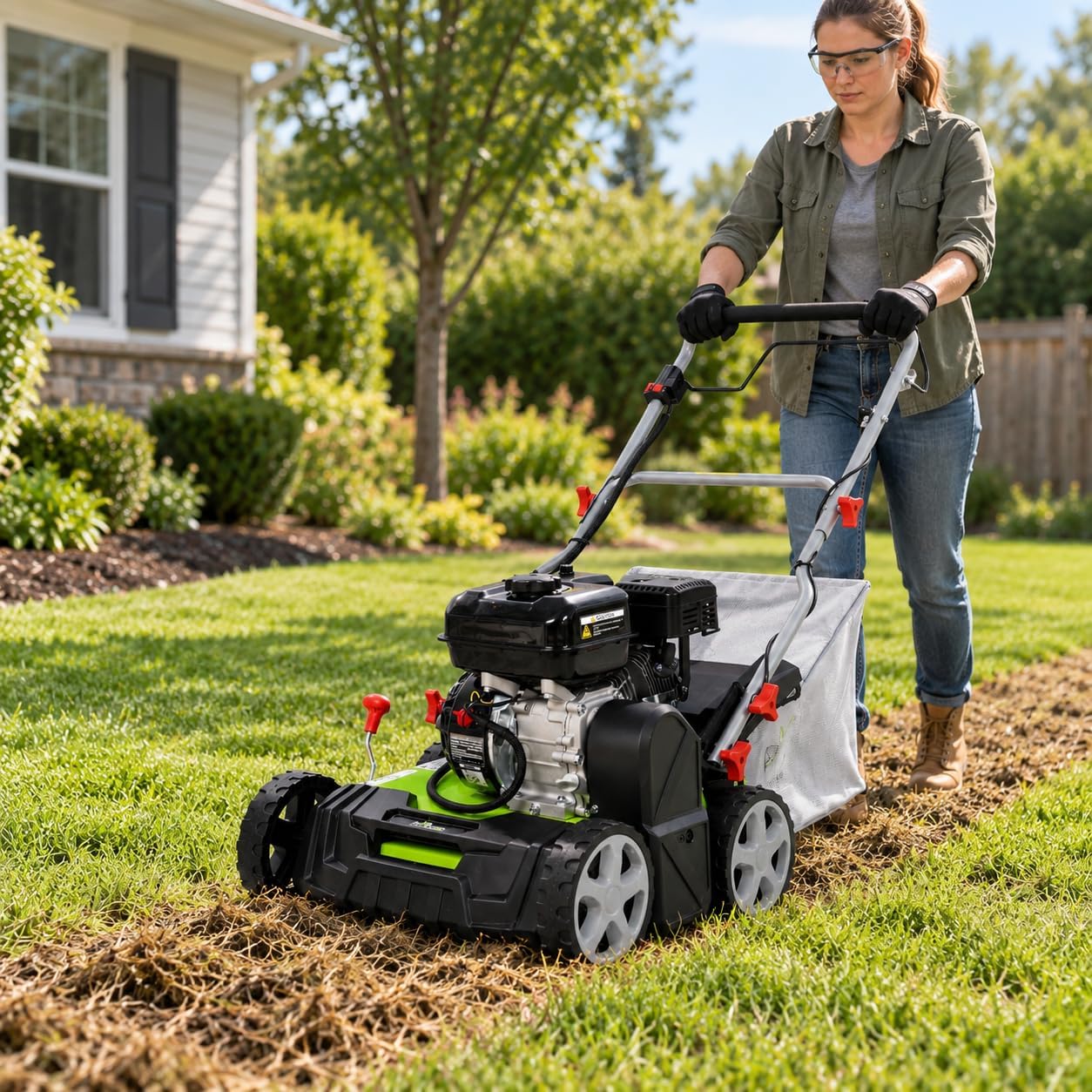
This walk-behind machine combines a 212cc 4-stroke gas engine with interchangeable cassettes so you can switch between dethatching/scarifying and aerating without a separate tool. It runs a 16-inch working width driven by a 7HP-rated engine and uses a five-position central lever to set depth from -0.6 to +0.6 inches for light surface raking or deeper thatch removal. The integrated 13.2-gallon collection bag captures loosened moss and debris as you work, cutting down on follow-up cleanup. Its gasoline power and 1-gallon tank make it practical for medium to larger residential lawns where corded or battery units would be limited by range or runtime. The unit is built from alloy steel and designed for seasonal spring and fall maintenance, but it is fairly heavy and needs basic engine upkeep and fueling before use. Expect a straightforward setup and the usual gas-engine considerations such as noise, vibration, and regular oil and spark plug service. For homeowners who want a single machine to both dethatch and aerate larger yards, this is a capable, no-cord option.
Best for: Homeowners with medium to large lawns who need a single, mobile machine for seasonal dethatching and aeration and who prefer gas-powered performance over corded or battery options.
Less Ideal for: Small-lot owners, renters, or gardeners who want a lightweight, low-maintenance electric or battery tool for occasional use.
- 2-in-1 interchangeable cassettes allow both dethatching/scarifying and aerating without extra machines
- 212cc 4-stroke gas engine provides sustained power and mobility across larger lawns
- Five-position depth control lets you tailor passes from light raking to deeper scarifying
- 13.2-gallon collection bag reduces manual cleanup by capturing loosened debris
- Heavy unit that requires physical effort to maneuver and store
- Requires regular gas-engine maintenance and handling of fuel and oil
Verdict: Choose this gas-powered 2-in-1 dethatcher if you need a single, powerful machine to dethatch and aerate medium to large residential lawns efficiently.
NOXJUQU 2-in-1 Gas Dethatcher Scarifier with 212cc Engine
| Power Source | Gas Powered |
|---|---|
| Operation Mode | Manual Push |
| Cutting width | 22 inches |
| Number of Positions | 5 |
| Material Type | Alloy Steel |
This NOXJUQU 2-in-1 dethatcher scarifier combines dethatching and aerating in a single gas-powered machine so you can tackle thatch, moss, and compacted soil without renting separate tools. It runs on a 212cc 4-stroke engine that delivers steady power for working medium to larger lawns, while tool-free interchangeable cassettes let you switch between scarifying and aerating quickly. A central five-position height lever adjusts working depth for seasonal tasks, and the 45L collection bag collects debris to reduce stops for emptying. The machine is a manual-push design built with alloy steel components and a 22-inch working width, which makes it practical for homeowners who need a durable, all-in-one solution. Expect typical gas-engine maintenance and fuel handling, and the unit’s weight and size mean it is best for users comfortable with heavier outdoor equipment. It performs well where persistent thatch or compaction is present, but it is not as maneuverable as lighter, electric models for very small or tight yards.
Best for: Homeowners with medium to large lawns who want a robust, gas-powered machine that combines dethatching and aerating into one tool and who are comfortable with routine engine upkeep and handling heavier equipment.
Less Ideal for: People with very small or highly landscaped yards, or buyers who prioritize low-noise, low-maintenance electric alternatives and easier maneuverability.
- Two-in-one design lets you dethatch or aerate with the same machine using tool-free cassette changes
- Powered by a 212cc 4-stroke gas engine for steady performance on larger lawns
- Central five-position height adjustment for precise control of working depth
- Large 45L collection bag reduces how often you need to stop and empty debris
- Manual push operation and substantial machine weight make it less convenient for users who prefer lightweight or self-propelled equipment
- Requires regular gas-engine maintenance and fuel storage
Verdict: If you need a durable, gas-powered machine that handles both dethatching and aerating for medium to large lawns, this all-in-one unit delivers reliable power and fewer tool changes.
Choosing the Right Gas Lawn Dethatcher: Key Factors to Consider
Engine Size and Performance
Engine size matters because dethatching puts a constant load on the motor as tines hit dense layers of dead grass and soil. A higher-displacement engine generally offers more torque and steadier RPM under load, which keeps tine speed consistent and reduces the risk of stalling on thicker thatch.
For larger yards you will want an engine that can maintain speed across long runs without overheating. Consider engines with simple service access for oil changes, air filter checks, and spark plug replacement so the machine stays reliable through a season.
Tine Material and Configuration
Tine design determines how effectively the machine pulls out thatch without ripping healthy crowns. Stiff, tempered steel tines penetrate and pull material more aggressively; spring or flexible tines are gentler and better for delicate turf. The number of tines and their spacing directly affect how much thatch is removed per pass.
Adjustable tine depth is essential. Being able to set a shallow pass for light maintenance and a deeper pass for heavy thatch lets you protect turf while achieving good results in stages.
Working Width and Maneuverability
Working width dictates how quickly you can cover a lawn. Wider machines finish faster but may be harder to steer around trees, beds, and narrow gates. If you have a large open lawn, a wider path reduces run time. For yards with obstacles or tight access, a narrower, more maneuverable unit will reduce frustration and the need for repeated passes.
Also consider how the machine handles turns and how easy it is to adjust tracking. Good balance between width and control improves overall efficiency.
Frame and Component Durability
Dethatchers operate in abrasive conditions where blades, belts, and housings take repeated impacts. A sturdy frame and replaceable wear parts extend service life. Look for robust axle mounts, reinforced tine drums, and corrosion-resistant finishes on exposed metal parts.
Machines with straightforward parts access and commonly available replacement components reduce downtime and long-term ownership costs.
Operator Comfort and Controls
Operator comfort influences how effectively you can work for long stretches. Lightweight but stable handling prevents fatigue. Controls that are ergonomically placed, with clear depth adjustment mechanisms and vibration-damping handles, let you maintain consistent passes.
Simple choke and throttle controls, easy-to-reach shutoffs, and a comfortable grip improve both safety and the precision of your dethatching work.
Maintenance and Serviceability
Routine upkeep keeps a gas dethatcher running well from season to season. Machines that offer tool-free access to the air filter, easily reachable oil fill and drain points, and simple belt or tine replacement save time. Clear adjustment marks for depth and quick-release features for transport or storage also reduce hassle.
Consider the availability of common spare parts and how straightforward the user manual is when evaluating long-term ownership.
When to Dethatch Your Lawn
Timing dethatching correctly makes the job gentler on your lawn. Most cool-season grasses benefit from spring or early fall dethatching when growth is active and the turf can recover quickly. Warm-season grasses are best dethatched in late spring to early summer after the lawn has greened up.
Avoid dethatching during heat waves, drought, or dormancy. Also do not dethatch immediately before seeding; plan enough recovery time so crowns are not weakened when new seedlings need to establish.
- Check thatch depth with a small trowel; over 1/2 inch indicates heavy thatch
- Water lightly a few days before dethatching if the soil is very dry
- Plan follow-up care like aeration or overseeding based on turf condition
Preparing Your Lawn and Machine
Clear debris, sticks, and toys from the lawn before you start to avoid damage to tines and reduce the chance of throwing objects. Mow slightly lower than usual to allow tines to reach the thatch layer more effectively.
Inspect the dethatcher before use: check oil, fuel, air filter, and that all fasteners are tight. Make a test pass in a small area to confirm tine depth, engine response, and handling.
- Mark sprinkler heads and shallow irrigation lines to avoid accidental strikes
- Wear eye and hearing protection when operating gas equipment
- Adjust depth in small increments and make multiple light passes rather than a single aggressive pass
Using a Gas Dethatcher Safely and Effectively
Start with conservative depth settings and increase only if the initial pass leaves behind significant thatch. Work in overlapping passes for even coverage and scan frequently for turf stress.
Keep a steady walking pace to allow tines to engage consistently. If the engine bogs down, reduce depth or increase speed rather than forcing the unit, which can cause excessive wear or damage.
- Avoid sharp turns at high speed to prevent turf tearing
- Do not operate on steep slopes where footing is uncertain
- Shut the engine and disconnect spark plug before servicing tines
Aftercare: Recovery and Follow-Up
Rake up the loosened thatch promptly to prevent it from reestablishing and to reduce the risk of disease. Lightly water and, if appropriate, topdress or overseed bare spots created during dethatching.
Apply fertilizer only after the turf shows signs of recovery, typically two to four weeks, depending on grass type and weather. Monitor for increased weed pressure and treat as needed once the grass has regained vigor.
- Collect debris with a lawn sweeper or a thatch rake for best cleanup
- Avoid heavy foot traffic on recovering turf for at least a couple of weeks
- Consider aeration later the same season if compaction is also a problem
Storage and Off-Season Care
Prepare the machine for storage by draining or stabilizing fuel, changing oil if recommended, and cleaning tines and housing to remove organic matter that can corrode parts. Store in a dry, ventilated area to prevent rust and rodent damage.
Inspect belts, tines, and other wear parts before the next season and replace as needed so the unit is ready when you need it again.
- Keep a small spare parts kit with common wear items
- Lubricate moving linkages lightly before long storage
- Label maintenance dates and work performed for seasonal tracking
How We Chose the Best Gas Lawn Dethatcher
We selected machines that meet the needs of homeowners who want gas-powered dethatching for medium to large yards. Our filters prioritized engine output and consistency, tine configuration and adjustability, build durability for repeated seasonal use, and operator controls that reduce fatigue during long runs. We also considered ease of maintenance including access to routine service points, availability of common replacement tines and belts, and the simplicity of depth and speed adjustments. Excluded from consideration were electric-only or purely manual raking options and lightweight consumer tools intended for spot treatments rather than whole-lawns. We focused on equipment designed to handle continuous use across at least a half-acre without frequent overheating or excessive vibration. Durability of critical wear parts, clear depth control, and safe transport or storage features all influenced selection. These practical, garden-focused criteria align with the scoring metrics used on each product card.
FAQ
How deep should I set a gas dethatcher for my lawn?
Start shallow and increase depth gradually. A series of light passes is safer than one deep pass. Adjust until you remove visible thatch without uprooting healthy crowns.
Can I dethatch and overseed on the same day?
It usually depends on turf stress. Removing thatch can expose soil and make seeding effective, but if you create many bare spots consider waiting a few days for the turf to settle and then seed. Follow up with light watering to protect new seed.
Will dethatching damage my grass?
Dethatching can injure grass if done too aggressively or at the wrong time of year. Using conservative depth settings and timing passes for active growth periods reduces the risk and promotes quicker recovery.
How often should I dethatch a healthy lawn?
Most healthy lawns require dethatching only occasionally. Every two to three years is common for lawns that build up thick thatch quickly. Assess thatch depth annually and dethatch only when buildup exceeds recommended levels.
Is a gas dethatcher better than manual raking?
A gas dethatcher covers large areas much faster and can remove denser thatch layers more consistently. Manual raking is effective for small areas or light maintenance and avoids fuel and engine upkeep.
Final Verdict
Choosing the right gas lawn dethatcher means balancing engine capacity, tine aggressiveness, and working width with how your lawn is laid out and how frequently you will use the machine. Prioritize reliable torque and clear depth adjustment if you have heavy thatch or varied turf conditions. If access and maneuverability matter more, favor a narrower, easier-to-handle unit. Match the dethatcher to your yard size and maintenance plan, keep safety and routine maintenance front of mind, and plan follow-up care after dethatching to help turf recover quickly. With those priorities in place, you can select a gas dethatcher that does the job efficiently and reliably over multiple seasons.
