

Note: This article contains affiliate links. If you click on these links and make a purchase, I may earn a small commission at no extra cost to you. This helps support my research and content. Read my full affiliate disclosure here.
A greenhouse changes how and when you garden by letting you control temperature, humidity, and light so plants grow outside their normal season. Choosing the right use for a greenhouse matters because different uses demand different setups: seed starting and propagation need benches and humidity control, while year-round vegetable production needs reliable heating and ventilation. This guide covers seven practical ways gardeners use a greenhouse, each shortlisted for real-world utility and ease of implementation. We evaluated options based on climate management, space efficiency, and workflow so you can match a use to your site and goals.
Top Picks at a Glance
| Best Overall The best all-around choice for most situations | EAGLE PEAK 6×4 Walk-In Pop-Up Greenhouse |  |
| Best Quality Built to a higher standard if you want something more solid | AMERLIFE 8x12x7 ft Polycarbonate Walk-in Greenhouse with Quick-Connect Frame |  |
| Best Value The sweet spot between price and what you get | U'Artlines Portable Mini Greenhouse with PE Cover |  |
| Best Budget The cheapest option that still gets the job done reliably | Gardzen 27 x 27 x 31 in Pop-Up Mini Greenhouse |  |
| Highest Rated A top-rated pick with lots of positive feedback | RUIJOROO Walk-In Tunnel Greenhouse with PE Cover and Mesh Windows (9.8 x 6.5 x 6.5 ft) |  |
| Most Popular A crowd favorite that many people choose with confidence | Pure Garden 4-Tier Mini Greenhouse with Zippered PVC Cover |  |
| Best Seller A high-volume bestseller chosen again and again | Ohuhu 4-Tier Walk-In Greenhouse with 11 Shelves (PE Cover, Metal Frame) |  |
EAGLE PEAK 6×4 Walk-In Pop-Up Greenhouse

| Cover Material | Polyethylene (PE) |
|---|---|
| Frame Material | Alloy Steel |
| Indoor Outdoor Usage | Outdoor |
| Number Of Vents | 2 |
This EAGLE PEAK 6×4 walk-in pop-up greenhouse is built for gardeners who want a quick, usable protected space without a long assembly. The frame arrives mostly pre-assembled and uses a patented PeakPush center lock so one person can open and secure the structure in minutes. The polyethylene cover is plant-safe, UV-resistant, and reinforced at corners to retain humidity and diffuse sunlight for seasonal protection. Practical features include a wide zippered roll-up door for easy access and mesh windows to manage airflow and reduce overheating. The alloy-steel frame is powder-coated and comes with wind ropes and stakes for added stability, but because it is a lightweight pop-up style it is best suited to sheltered backyards or patios rather than exposed, high-wind sites. At 24 square feet it provides a tidy workspace for seed starting, overwintering pots, or staging plants between cold nights, and it accepts common greenhouse shelving and potting benches. Expect a fast setup, solid short-term protection, and modest durability compared with permanent polycarbonate or cedar greenhouses.
Best for: Gardeners who want a ready-to-use sheltered workspace for seed starting, overwintering, or seasonal growing and prefer fast single-person setup and portability.
Less Ideal for: People needing a permanent, heavy-duty greenhouse for year-round growing in exposed locations or for large-scale production should consider rigid-frame or enclosed polycarbonate options instead.
- One-person PeakPush center-lock design for very fast setup
- Plant-safe, UV-resistant PE cover with reinforced corners for moisture retention
- Alloy steel frame with powder-coated finish and included wind ropes and stakes for improved stability
- Zippered roll-up door and mesh windows allow easy access and ventilation control
- Pop-up design is less durable in high winds or long-term outdoor exposure compared with rigid-frame greenhouses
Verdict: If you want a quick, one-person setup greenhouse to extend the growing season and protect plants on a patio or sheltered yard, this 6×4 pop-up is an efficient, easy choice.
AMERLIFE 8x12x7 ft Polycarbonate Walk-in Greenhouse with Quick-Connect Frame

| Cover Material | Polycarbonate (PC) |
|---|---|
| Frame Material | Aluminum |
| Nominal Wall Thickness | 4 mm |
| Number Of Vents | 4 |
| Number of Doors | 1 |
This AMERLIFE 8x12x7 ft greenhouse is built for gardeners who need a stable, weather-resistant grow space without a complicated build. The quick-connect aluminum frame and reinforced corner columns simplify assembly so two people can complete it in a single day. Twin-wall polycarbonate panels provide UV protection and help retain heat for all-season planting while four roof vents and a hinged swing door let you manage airflow and humidity. Practical touches include a built-in gutter system that allows rainwater collection and a recommended anchoring approach for stability on concrete, wood, or compacted gravel. The greenhouse offers about 480 cu ft of usable space suitable for seed starting, overwintering perennials, or running several shelving units. Expect a multi-hour assembly and the need to anchor the structure and clear snow in heavy winters; the panel-to-frame seal may benefit from added silicone in windy locations. For gardeners prioritizing durability and thermal performance over a lightweight pop-up solution, this greenhouse delivers a robust, functional grow room.
Best for: Gardeners who want a durable, year-round growing space and value thermal performance, ventilation control, and a relatively quick but solid assembly process.
Less Ideal for: People who need a lightweight, easily portable pop-up greenhouse or who cannot provide a solid, level foundation and regular maintenance like snow clearing.
- Quick-connect aluminum frame designed for faster two-person assembly
- Twin-wall polycarbonate panels that block UV and improve heat retention
- Four vents plus a hinged swing door for effective ventilation control
- Built-in gutter system for water drainage and rainwater collection
- Requires anchoring to a solid level foundation for safety and stability
- Assembly takes several hours and benefits from two people
- Roof snow must be cleared in snowy climates to avoid excess load
Verdict: Choose this greenhouse if you want a sturdy, thermally efficient outdoor grow room that assembles quickly and supports year-round plant production.
U'Artlines Portable Mini Greenhouse with PE Cover

| Material | Steel frame, PE cover |
|---|---|
| Includes | Waterproof mat |
This compact mini greenhouse is designed to give seedlings and potted plants a controlled microclimate in small spaces. The steel frame and tear-resistant PE cover create a sheltered environment that holds heat and humidity for earlier starts, cold protection, or overwintering tender plants. Setup is straightforward and the roll-up zipper door with straps makes it easy to access plants and monitor growth while keeping conditions stable. The included waterproof mat helps contain spills and keeps soil off the ground when watering or pruning. Because it is small and lightweight it is easy to move around a patio, balcony, or garage to follow the sun or protect plants from a late frost. The trade-offs are predictable: its limited footprint only fits a few planter pots and it is not a substitute for a larger rigid greenhouse if you need full-year heavy-duty weather resistance or extensive staging space.
Best for: Practical gardeners who want an inexpensive, movable shelter to start seedlings, protect a few potted plants from cold, or extend the growing season in a small patio or balcony.
Less Ideal for: Gardeners who need large-scale staging, year-round heavy-duty weather protection, or space to grow many plants should consider a larger, rigid greenhouse instead.
- Steel frame plus tear-resistant PE cover provides a durable sheltered microclimate
- Zippered roll-up door with straps for easy access and observation
- Includes waterproof mat to protect surfaces and contain spills
- Portable and lightweight so it can be repositioned around small patios or indoors
- Small internal space limits number and size of pots you can grow
- Not designed for heavy weather or long-term structural use
Verdict: A low-cost, portable shelter that efficiently extends the season and protects a few pots or seedlings in small outdoor or indoor spaces.
Gardzen 27 x 27 x 31 in Pop-Up Mini Greenhouse
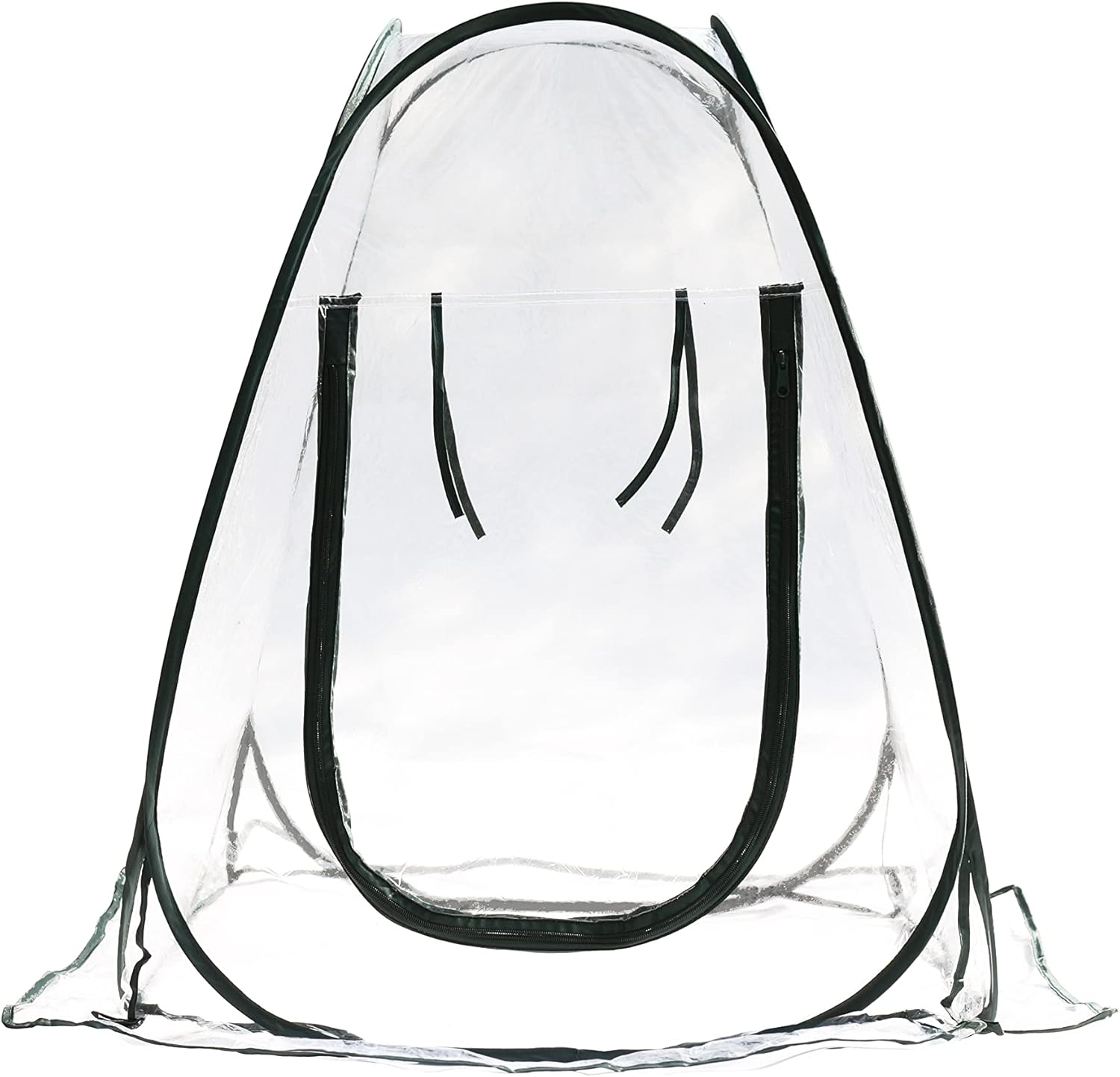
| Indoor Outdoor Usage | Outdoor |
|---|---|
| Closure Type | Zipper |
| Cover Material | Polyvinyl Chloride (PVC) |
| Frame Material | Metal |
| Number of Doors | 1 |
This Gardzen pop-up mini greenhouse is a budget-friendly way to extend the growing season for seedlings, potted herbs, and small vegetables. The tent pops up in seconds with no assembly, and the transparent PVC cover lets sunlight in while retaining warmth and humidity for faster root establishment. A roll-up zippered door provides easy access and ventilation when needed, and the included ground nails plus the long side flap let you weigh the edges down for added stability in wind or light snow. Metal side supports add structure and help keep pests and small animals out. Because it is small and lightweight the greenhouse is best used for protecting a handful of plants rather than as a permanent structure; the PVC cover will also wear faster than heavy-duty greenhouse film in harsh sun or abrasive weather. Expect to reposition and secure it during storms and to replace the cover sooner than with sturdier, costlier greenhouses. For the price it is an effective, portable solution for adding a bit of season extension on a tight budget.
Best for: Buyers who want an inexpensive, no-fuss way to protect seedlings and a few potted plants and who prioritize easy setup and portability over permanence.
Less Ideal for: Gardeners looking for a larger, long-term greenhouse for full-season production or for growing many plants at once should choose a bigger, more robust structure.
- Quick pop-up setup with no tools required
- Clear PVC cover provides good light transmission and allows growth observation
- Roll-up zippered door for simple access and ventilation
- Includes ground nails and side flap options for anchoring in wind
- Small footprint limits how many plants it can protect at once
- PVC cover is less durable long-term than thicker greenhouse materials
Verdict: A very affordable, quick-to-deploy mini greenhouse that reliably protects a few seedlings or pots and extends the growing season on a small budget.
RUIJOROO Walk-In Tunnel Greenhouse with PE Cover and Mesh Windows (9.8 x 6.5 x 6.5 ft)

| Size | 9.8×6.5×6.5 |
|---|---|
| Cover Material | Polyethylene (PE) |
| Number of Doors | 1 |
| Number Of Vents | 6 |
| Indoor Outdoor Usage | Outdoor |
This RUIJOROO walk-in tunnel greenhouse provides a straightforward, no-frills shelter for seedlings, vegetables and potted plants through cool or wet seasons. The powder-coated iron frame with a triangular base design gives the structure extra stability, while the 140 g/m² PE cover is described as sunproof and waterproof to help retain humidity and protect plants from light rain and wind. Ventilation is practical: a zippered mesh door plus six mesh windows let you manage airflow and reduce excess heat build-up on sunny days. Assembly is simple with clear instructions and is suitable for a single person with basic tools. Expect a portable setup that works well on a patio or lawn but requires staking or anchoring in exposed sites because lightweight tunnel greenhouses can struggle in high winds. The PE cover will perform seasonally but is less durable long-term than rigid polycarbonate options, so plan to store it indoors in winter or replace the cover after a few seasons if exposed to intense sun or abrasion.
Best for: Buyers who prioritize a dependable, easy-to-assemble seasonal greenhouse to protect seedlings and vegetable beds and who value straightforward, practical construction over permanent rigidity.
Less Ideal for: Gardeners seeking a permanent, all-weather greenhouse for year-round heavy snow or hurricane-prone locations should choose a rigid-frame or polycarbonate structure instead.
- Sturdy powder-coated iron frame with triangular base for improved stability
- 140 g/m² PE cover that is sunproof and waterproof to retain humidity
- Good ventilation via one zippered mesh door plus six mesh windows
- Walk-in size gives easy access for potting and moving plants
- Simple assembly with clear instructions
- PE cover is less long-lasting than rigid greenhouse panels and may need replacement after several seasons
- Lightweight tunnel design will need secure anchoring in windy locations
Verdict: A reliable, easy-to-assemble walk-in tunnel greenhouse that delivers seasonal protection and ventilation for backyard vegetable and seedling gardening.
Pure Garden 4-Tier Mini Greenhouse with Zippered PVC Cover

| Number of Doors | 1 |
|---|---|
| Closure Type | Zipper |
| Cover Material | Polyvinyl Chloride (PVC) |
| Frame Material | Metal |
| Size | 4 Tier |
This Pure Garden 4-tier mini greenhouse is a small, portable hot house designed to protect seedlings and potted plants from cold, wind, and light rain while maximizing vertical growing space. It assembles into a narrow footprint that fits on decks, patios, and balconies and uses four metal shelves to hold multiple flats, small pots, or gardening supplies. The powder-coated steel frame offers rust resistance and the PVC cover traps heat and moisture; the cover has a roll-up zippered door that can be secured open for easy access. In practice it is best for starting seeds, hardening off seedlings, or extending the growing season for herbs and small vegetables rather than housing large plants. Limitations include the thin PVC cover that can yellow or tear over time and modest structural strength in very windy conditions, so anchoring and periodic replacement of the cover may be necessary for long-term outdoor use. For small-space gardeners who want a simple, affordable way to protect young plants this greenhouse delivers useful, space-efficient protection.
Best for: Buyers who need an inexpensive, space-efficient way to start seedlings and protect small pots on a deck, patio, or balcony and value straightforward assembly and practicality backed by existing reviews.
Less Ideal for: Gardeners who need a heavy-duty or large greenhouse for full-size plants or year-round outdoor use in exposed, windy locations should consider sturdier framed options.
- Compact four-tier shelving maximizes growing area on small patios or balconies
- Powder-coated metal frame resists rust for outdoor durability
- Zippered PVC cover traps heat and moisture to protect seedlings and young plants
- Roll-up door with straps provides easy access and ventilation control
- PVC cover is susceptible to UV degradation and may need replacement over time
- Lightweight frame can struggle in strong winds without additional anchoring
Verdict: A budget-friendly, space-saving greenhouse that reliably protects seedlings and small potted plants on patios and balconies.
Ohuhu 4-Tier Walk-In Greenhouse with 11 Shelves (PE Cover, Metal Frame)

| Size | 4 Tier 11 Shelves |
|---|---|
| Cover Material | Green PE |
| Frame Material | Metal |
| Number Of Vents | 3 |
| Closure Type | Zipper |
This Ohuhu walk-in greenhouse is designed as a small, portable growing space for seedlings and potted plants. It assembles without tools using metal poles and connectors and is covered in a PE sheet that blocks UV and sheds water while admitting light. The interior layout places 11 shelves around three sides so you can organize trays, pots and seedling flats vertically to maximize limited space. Ventilation is handled by a roll-up zippered door and three mesh windows that help control airflow and keep out pests. Anchoring stakes and guy ropes improve stability in breezy conditions, and the cover and powder-coated tubes aim to resist corrosion. Expect easy seasonal use and quick setup, but keep in mind this is a lightweight, temporary structure best suited to sheltered spots rather than permanent heavy-duty protection in very high winds or heavy snow. The greenhouse is a practical, space-efficient option for hobby gardeners who want more control over microclimates without committing to a large permanent structure.
Best for: Gardeners who want an affordable, space-efficient portable greenhouse to start seedlings, organize potted plants, and extend the growing season in a backyard or patio.
Less Ideal for: Those needing a permanent or heavy-duty greenhouse for large plants, year-round shelter in exposed sites, or snow-bearing conditions should consider sturdier framed alternatives.
- High shelf count (11) lets you grow many seedlings and small pots in a compact footprint
- Tool-free assembly with simple metal connectors makes setup fast
- PE cover offers UV protection and water resistance while admitting light
- Roll-up zippered door and three mesh windows provide adjustable ventilation and pest control
- Lightweight design is not intended for prolonged exposure to heavy snow or very strong winds
- Shelves support moderate loads only (manufacturer lists per-shelf capacity), so large heavy pots may be unsuitable
Verdict: A compact, easy-to-assemble walk-in greenhouse that maximizes growing space with 11 shelves for hobby gardeners seeking an affordable all-around solution.
Choosing the Right Use of a Greenhouse: Key Factors to Consider
Intended Plant Types
Different plants have different environmental needs, and that drives everything from greenhouse layout to equipment choices. Tender annual flowers and tropical houseplants need warmer, more humid conditions and often require consistent shading and higher bench capacity for pots. Vegetables and seedlings can tolerate wider temperature swings but benefit from sturdy benches, good airflow, and easy access for frequent harvesting or transplanting.
Knowing whether you will focus on propagation, overwintering perennials, or continuous vegetable production helps determine bench height, shelving, irrigation type, and whether you need supplemental heat. Planning plant groupings by microclimate inside the structure reduces stress and simplifies management.
Local Climate and Season Extension Goals
Your regional climate dictates how much active heating or cooling a greenhouse will need. In cold climates, retaining heat and preventing frost require insulated glazing choices, thermal mass, and reliable supplemental heating. In hot, sunny regions, shading, ventilation, and evaporative cooling become primary concerns to avoid heat stress.
Decide how many months you want to extend the growing season and whether you want true year-round production. That target affects upfront costs and the complexity of systems you should plan for, from passive southern exposure and thermal curtains to thermostatically controlled heaters and vents.
Available Space and Layout Constraints
Greenhouse footprint and interior layout determine how many plants you can manage comfortably. Narrow, long structures favor aisle access and linear benching for propagation, while wider spaces support multi-use zones for staging, potting, and production. Consider path width for wheelbarrows or carts, bench heights for ergonomic work, and vertical space for hanging plants or tall varieties.
Efficient layout minimizes wasted floor area and creates logical work zones: propagation, growing, and staging. Measure your available site carefully and plan for service access around the outside for maintenance.
Ventilation and Humidity Control
Humidity drives disease pressure and plant vigor inside a greenhouse. Good ventilation and airflow reduce fungal diseases and help regulate temperature. Passive vents and automatic roof vents can be effective in smaller structures, while larger spaces may need powered fans and exhaust systems. Consider the ease of adding misting or drip irrigation for humidity control and how screens or insect netting will affect airflow.
Proper humidity control also ties into heater selection; some heating systems dry the air and may require supplemental humidification for sensitive crops.
Irrigation and Water Management
How you water affects labor, disease risk, and plant uniformity. Manual hand-watering offers control but increases time spent inside the greenhouse. Automated drip systems or overhead misters reduce daily labor and improve consistency but need planning for pressure, filtration, and winterizing. Ensure water access near the greenhouse footprint and design drainage so excess water does not pool inside or around the structure.
Consider water storage or rain capture if your site has limited supply, and plan for easy flushing or sterilization of lines to reduce pathogen buildup.
Durability and Maintenance
The expected lifespan and upkeep of the greenhouse influence long-term satisfaction. Frame material, glazing type, and fastening methods determine how well a greenhouse withstands wind, snow, and UV exposure. Lighter coverings may save money initially but require more frequent replacement. Durable glazing and a robust frame reduce surprises and lower cumulative labor.
Also factor in access for cleaning, replacing panels, and servicing mechanical systems. Easy-to-replace parts and straightforward layouts reduce downtime and keep plants healthy.
Season Extension and Succession Planting
Using a greenhouse to extend the season is one of the most common and practical strategies for home gardeners. By starting transplants earlier in spring and protecting late-season crops into fall, you stretch harvest windows and get more plantings per year. Focus on bench space for flats and reliable ventilation so young plants do not overheat while you still need warmth at night.
Succession planting benefits from modular benches and labeled staging areas so trays can be rotated quickly. Consider movable shelving or carts to shift plants between the warmest and coolest microclimates inside the structure as seedlings progress.
- Prioritize bench space and germination humidity control
- Plan for easy movement of trays to manage staging
- Use thermal mass or small heaters for consistent night temperatures
Propagation and Nursery-Style Production
A greenhouse used primarily for propagation emphasizes bench depth, humidity, and uniform light. Shallow trays on adjustable benches maximize capacity and make misting or fogging effective for cuttings and seeds. Bright, diffused light is preferable to harsh direct sun during the early stages.
Set up dedicated propagation benches with close access to water and a stable surface for heat mats or humidity domes. Good labeling and row organization reduce transplant errors and speed up workflow.
- Install nearby water and a labeled staging system
- Use diffused light and consistent humidity controls
- Design benches for high tray density and ergonomic access
Year-Round Vegetable Production
Turning a greenhouse into a year-round vegetable space requires attention to heating, light, and pest exclusion. Cold-climate gardeners should plan for insulated glazing, efficient heaters, and thermal curtains for overnight heat retention. In mild climates, passive solar gain combined with hardy crop selection can provide continuous harvests with minimal supplemental heat.
Plan crop rotations and spacing to reduce disease buildup. Durable benches, accessible harvest paths, and integrated irrigation speed up regular care and harvesting during winter months.
- Balance heating needs with crop selection and insulation
- Create easy-to-clean surfaces to manage disease pressure
- Organize beds for rotation and easy access at harvest time
Overwintering and Protecting Tender Plants
Using a greenhouse to overwinter potted shrubs, tender perennials, or tropical houseplants protects them from destructive freezes while still allowing light and airflow. This use emphasizes gentle, consistent temperatures and protection from drying winds. Shelving that keeps containers off cold floors and grouped plantings that raise local humidity help keep specimens healthy.
Keep an eye on light levels during short winter days and supplement with grow lamps if necessary for long-term health. Allow brief daytime ventilation on mild days to reduce pests and fungal issues.
- Group pots for shared microclimates and humidity
- Use raised shelving to prevent cold soak from floors
- Supplement light on short winter days if needed
Drying, Curing, and Plant Processing
A greenhouse can double as a low-tech drying or curing area for herbs, flowers, and seed crops when you need gentle, consistent warmth. This use requires good airflow and protection from direct, fast sun that can bleach or overheat materials. Hang lines, drying racks, and screens make it easy to process harvests without moving them far from the production area.
Plan for easy cleaning and a pest-free environment because drying plant material attracts insects and can reintroduce diseases if not handled carefully.
- Install removable racks and hanging lines for small-batch drying
- Ensure steady airflow and protection from direct scorching sun
- Keep drying and production areas separate to avoid cross-contamination
Integrated Research and Learning Space
Many gardeners use a greenhouse as a controlled space for trials, whether testing varieties, soil mixes, or irrigation methods. A dedicated research layout includes clearly labeled test beds, data recording areas, and flexible benching to change treatments quickly. This approach benefits gardeners who want to refine techniques and compare results over time.
Keep experiments small and well-documented so findings are repeatable. Simple sensors for temperature and soil moisture make tracking differences practical without needing complex instrumentation.
- Designate tidy test areas with clear labels and protocols
- Use simple sensors to log environmental differences
- Keep experimental areas small and change one variable at a time
Cut Flower and Specialty Crop Production
Producing cut flowers or specialty crops in a greenhouse focuses on consistent light, airflow, and staging areas for postharvest handling. Long, narrow benches often work well for cut flower production because they simplify stem handling and bunching. Postharvest tables close to the production area speed up processing and reduce damage to stems.
Include shaded staging for delicate blooms and a water source for conditioning stems. Plan for pest exclusion and regular sanitation to protect high-value crops.
- Design benches for long-stem handling and bunching
- Add postharvest tables and shaded staging nearby
- Prioritize sanitation and insect exclusion for clean harvests
How We Chose the Best Use of a Greenhouse
We prioritized practical, repeatable criteria that reflect how gardeners actually use greenhouses rather than abstract features. Key evaluation points included climate control capability, which looks at passive and active heating and cooling options; space efficiency, which measures usable bench and shelving area relative to footprint; workflow and accessibility, covering door placement, bench height, and path width for daily tasks; humidity and pest management, assessing ventilation, screening, and irrigation compatibility; and construction durability, focusing on frame strength and glazing options that affect long-term performance. We excluded niche or experimental setups that require specialized equipment or commercial-scale investment. We also filtered out concepts that duplicate the same basic use under different names. The shortlist favors approaches that are achievable for home gardeners and that scale to different greenhouse sizes. These criteria align with the scoring metrics used in our product blocks and helped ensure each recommended use offers clear, measurable benefits for typical garden situations.
FAQ
Can I use a small greenhouse to grow vegetables year-round?
Often yes, depending on your climate and crop choices. Small greenhouses in mild regions can support hardy vegetables through winter with passive solar gain and row covers. In colder areas you will likely need supplemental heating and good insulation to avoid frost damage.
How much ventilation does a greenhouse need for seedlings?
Seedlings need consistent air exchange to reduce damping-off and strengthen stems. Passive vents or automatic roof vents that open with temperature changes usually suffice for small structures. For larger spaces, a small circulation fan helps maintain even conditions.
Is automated irrigation worth adding to a greenhouse?
Automated irrigation is often worth the investment if you manage many trays or run year-round production. Drip systems and timers reduce daily labor and deliver consistent moisture, but they require planning for filtration, pressure, and winter draining.
What is the best way to overwinter potted shrubs in a greenhouse?
Group pots together on raised benches to share heat and humidity, and keep them away from drafty doors. Monitor soil moisture closely; many shrubs need less water in cool conditions. Provide gentle heating if overnight temperatures regularly drop below a plant's tolerance.
Can a greenhouse be used for drying herbs and flowers without affecting other plants?
Yes, but it requires separation and airflow control. Use removable racks or a dedicated section to keep drying material from competing for space and to avoid attracting pests into the production area. Good ventilation prevents mold during drying.
Final Verdict
Think about what you want the greenhouse to do first, then fit the structure and systems to those needs. Prioritize climate control, ventilation, and a layout that supports the daily tasks specific to your chosen use. Tradeoffs are inevitable: more heating and automation increase complexity but expand what you can grow year-round. Choose the use that matches your time, local climate, and production goals. With the right focus on the decision factors above, a greenhouse becomes a flexible tool that reliably extends productivity and makes seasonal gardening more predictable.
