

Note: This article contains affiliate links. If you click on these links and make a purchase, I may earn a small commission at no extra cost to you. This helps support my research and content. Read my full affiliate disclosure here.
A sturdy greenhouse changes how you garden by giving plants reliable protection from wind, cold snaps, and heavy rain. Choosing the right structure affects how long your crops and ornamentals survive, how much maintenance the structure needs, and whether you can use it for year-round propagation or seasonal extension. This guide shortlists seven top-performing sturdy greenhouses and explains how we evaluated them for real garden use. We focus on construction strength, wind and snow resistance, ventilation control, and usability so you can pick the right shelter for your plot or patio. Below are the top picks followed by practical buying guidance and answers to common gardener questions.
Top Picks at a Glance
| Best Overall The best all-around choice for most situations | IDEALHOUSE 6×10 ft Aluminum Frame Greenhouse with Polycarbonate Panels |  |
| Best Quality Built to a higher standard if you want something more solid | Backyard Discovery Bellerose XL Cedar Walk-In Greenhouse with Polycarbonate Panels and Pergola |  |
| Best Value The sweet spot between price and what you get | KING BIRD Premium 20'x10'x6.6' Tunnel Greenhouse with Galvanized Steel Frame |  |
| Best Budget The cheapest option that still gets the job done reliably | Greengro Small Walk‑In Greenhouse with Zippered Door and PE Cover |  |
| Highest Rated A top-rated pick with lots of positive feedback | Ruelyn 8×12 ft Outdoor Polycarbonate Greenhouse with Hygrometer |  |
| Most Popular A crowd favorite that many people choose with confidence | Pure Garden Walk-In Greenhouse, 56 x 56 x 76 inch |  |
| Best Seller A high-volume bestseller chosen again and again | EAGLE PEAK 8×6 Pop-Up Walk-In Greenhouse |  |
IDEALHOUSE 6×10 ft Aluminum Frame Greenhouse with Polycarbonate Panels

| Size | 6×10 FT |
|---|---|
| Cover Material | Polycarbonate (PC) |
| Frame Material | Aluminum |
| Number Of Vents | 2 |
| Indoor Outdoor Usage | Outdoor |
This IDEALHOUSE 6×10 ft greenhouse provides a roomy, sheltered growing area built around a reinforced aluminum frame and clear polycarbonate panels. It is intended as a backyard walk-in greenhouse for seed starting, overwintering tender plants, or arranging pots and shelving for small-scale production. The slide-in panel assembly and included assembly video make setup more straightforward than riveted kits, and heavy-duty ground spikes plus multiple base anchoring options give the structure added stability on soil, concrete, or wooden planks. Practical touches include adjustable roof vents for airflow control, rain gutters to manage runoff, and a smooth sliding, lockable door for easy access. The polycarbonate panels transmit light while reducing UV exposure, which helps protect plants and extend the growing season. Important limitations are that assembly still requires time and at least two people for handling panels, and like most lightweight backyard greenhouses it will not match the durability of permanent glass-and-frame structures in extreme weather without good anchoring and occasional reinforcement.
Best for: Gardeners who want a sturdy, year-round backyard greenhouse that balances ease of assembly with reliable structure for seed starting, overwintering, and organized potting space.
Less Ideal for: People looking for a permanent, heavy masonry or full-glass greenhouse for commercial heavy-duty use or those unwilling to perform multi-person assembly and anchoring.
- Reinforced aluminum frame and heavy-duty ground spikes improve stability compared with basic pop-up shelters
- 720g/m² polycarbonate panels provide good light transmission while blocking significant UV
- Slide-in panel system and assembly video simplify construction versus complicated fittings
- Adjustable roof vents and rain gutters support ventilation and water management for healthier plants
- Requires time and at least two people to assemble and handle large panels
- Not as durable as permanent glass greenhouses in very high winds or heavy snow without additional anchoring
Verdict: A solid mid-size walk-in greenhouse that balances a reinforced aluminum frame and weather-ready polycarbonate panels for reliable year-round backyard growing.
Backyard Discovery Bellerose XL Cedar Walk-In Greenhouse with Polycarbonate Panels and Pergola

| Size | 13×11 ft |
|---|---|
| Cover Material | Polycarbonate (PC) |
| Frame Material | Wood |
| Number Of Vents | 2 |
| Closure Type | Sliding Doors |
The Bellerose XL is a purpose-built backyard greenhouse that gives hobby and performance-minded gardeners a robust year-round growing space. It combines a cedar structural frame with commercial-grade 4-wall polycarbonate panels to improve heat retention and withstand heavy snow and high winds when properly anchored. Use it as a seed-starting nursery, winter protection for tender plants, or a staging area for larger projects thanks to five fixed staging shelves, eight moveable plant hooks, hose hook-ups inside and out, and a built-in workstation. The temperature-activated exhaust fan plus two easy-open windows provide both forced and natural ventilation for better climate control. The integrated PowerPort (three outlets and three USB ports) makes it simple to add lights, fans, or heaters. Practical strengths are its weather-tested durability, generous interior space, and thoughtful utility features that reduce trips for extension cords and hoses. Expect a multi-person assembly and the need for a solid foundation and anchoring; it is heavy and requires planning for installation and electrical hookup.
Best for: Gardeners who want a durable, high-capacity backyard greenhouse to extend seasons and run serious growing projects and who are prepared to plan for installation and utilities.
Less Ideal for: Casual gardeners seeking a small, portable greenhouse or anyone who needs a simple, instant setup without hiring help or preparing a permanent foundation.
- Commercial-grade 4-wall polycarbonate panels for improved heat retention and durability
- Cedar frame naturally resistant to rot and engineered to handle heavy snow loads and high winds when anchored
- Integrated PowerPort with three outlets and three USB ports for powering lights, fans, and accessories
- Built-in workstation with multiple fixed shelves, moveable hooks, and interior/exterior hose hook-ups for organized, efficient workflow
- Temperature-activated exhaust fan and two operable windows for active and passive ventilation control
- Large, heavy kit requires multiple people, a stable foundation, and time-consuming assembly
- Electrical supply and anchoring are required but not included
- Stain saturation may vary across panels which could affect appearance
Verdict: If you need a rugged, well-equipped backyard greenhouse for season extension and high-performance growing, this cedar-built Bellerose XL delivers the space, insulation, and utility features to support serious gardening.
KING BIRD Premium 20'x10'x6.6' Tunnel Greenhouse with Galvanized Steel Frame

| Cover Material | Polyethylene (PE) |
|---|---|
| Frame Material | Alloy Steel |
| Nominal Wall Thickness | 150 GSM |
| Number of Vents | 8 |
| Number of Doors | 2 |
This KING BIRD tunnel greenhouse is designed for gardeners who need a roomy, season-extending structure that stands up to routine weather. The galvanized steel frame includes extra crossbars, diagonal supports and two stiffeners to improve rigidity, and the 150 GSM PE cover with UVI 6 protection gives thicker, longer-lasting weather and UV resistance than thin covers. Two zippered doors with both PE and mesh layers plus eight roll-up windows make it easy to control temperature and ventilation for seedlings, vegetables and overwintering potted plants. Assembly requires time and some effort given the number of poles and stakes, and like all tarp-style greenhouses it can act as a sail in high winds so additional anchoring or removing the cover in storms is recommended. For everyday use it provides a large, accessible workspace and better durability than basic hobby greenhouses, with practical features focused on ventilation and cover longevity.
Best for: Gardeners who prioritize a durable, roomy greenhouse to extend seasons and protect many plants while minimizing frequent replacements and maintenance.
Less Ideal for: People who need a near-permanent rigid structure or who cannot dedicate time to assembly and anchoring should consider framed polycarbonate or permanent greenhouses instead.
- Reinforced galvanized-steel frame with extra crossbars and stiffeners for improved stability
- Thicker 150 GSM PE cover with UVI 6 protection for longer UV and weather resistance
- Multiple ventilation options: eight roll-up windows and dual mesh/PE zippered doors for climate control
- Large 20'x10' interior provides ample planting and work space
- Includes stakes, ropes and upgraded zipper components to help secure cover and extend service life
- Requires time and moderate effort to assemble and anchor securely
- Tarp-style cover can catch wind in storms and may need removal or extra anchoring during high winds
Verdict: Choose this model when you want a large, reinforced tunnel greenhouse that balances roomy growing space with a thicker, longer‑lasting PE cover for reliable seasonal protection.
Greengro Small Walk‑In Greenhouse with Zippered Door and PE Cover
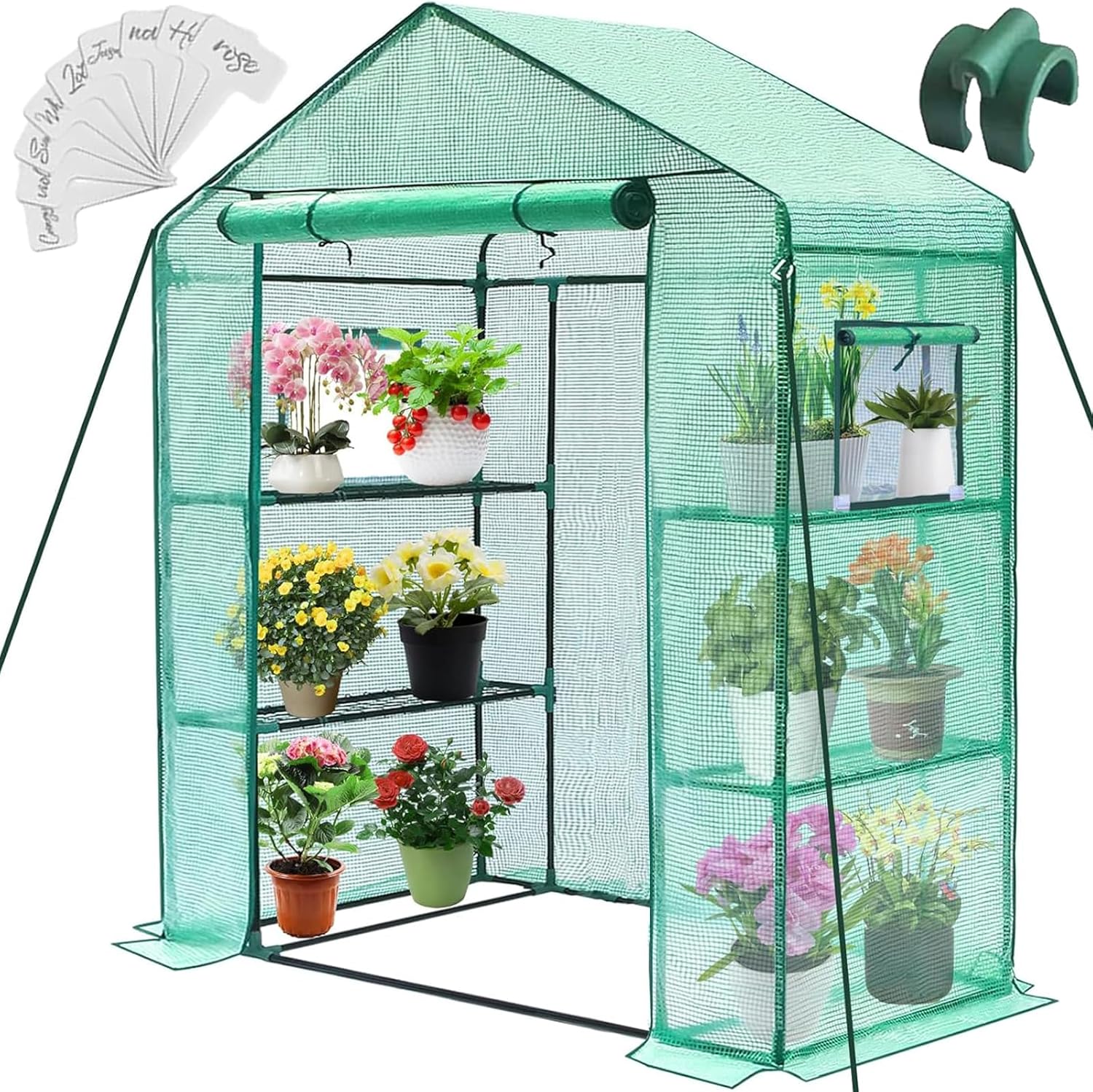
| Cover Material | Polyethylene (PE) |
|---|---|
| Frame Material | Metal |
| Closure Type | Zipper |
| Included Accessories | Ropes and ground stakes, plant tags, watering globes |
This Greengro small walk-in greenhouse creates a sheltered microclimate for potted plants and seedlings through winter and transitional seasons. It assembles without tools and uses a metal frame with a heavy PE cover, zippered door and screened ventilation windows to balance protection and airflow. The kit includes shelves, guy ropes and ground stakes so you can store up to a dozen small to medium pots and keep plants off the ground. The thick, grid-reinforced cover is waterproof and designed to cut UV exposure while resisting wind gusts commonly encountered in backyard settings. Because it is portable and detachable you can move it to a porch or garage when storms approach or take it down for storage. Important limitations are its small footprint and relatively light-duty frame compared with permanent greenhouses, so it is best for overwintering tender pots and starting seedlings rather than long-term heavy staging or large plants. Expect some care with anchoring in strong winds and routine inspection of the PE cover for wear.
Best for: Buyers wanting an inexpensive, no-fuss way to protect potted plants and seedlings through cold months who value portability and easy setup over permanent construction.
Less Ideal for: Gardeners who need a heavy-duty, permanent greenhouse to house large plants or long-term benching should consider sturdier, framed options instead.
- Thick, grid-reinforced PE cover provides waterproofing and UV reduction for winter protection
- Zippered door and screened windows offer easy access and adjustable ventilation
- Includes shelves, ropes and ground stakes so plants can be organized and the structure secured
- Tool-free assembly and detachable design make it easy to set up, relocate or store
- Small footprint limits the number and size of plants you can overwinter
- Lightweight frame and PE cover are less durable than rigid, permanent greenhouses in severe weather
Verdict: A budget-friendly, portable greenhouse that reliably shelters small pots and seedlings through winter while remaining easy to assemble and move.
Ruelyn 8×12 ft Outdoor Polycarbonate Greenhouse with Hygrometer

| Cover Material | Polycarbonate (PC) |
|---|---|
| Frame Material | Aluminum |
| Number of Doors | 1 |
| Number Of Vents | 2 |
| Indoor Outdoor Usage | Outdoor |
This Ruelyn 8×12 ft greenhouse provides a solid, budget-friendly growing space for gardeners who need reliable year-round protection. The rust-proof aluminum frame combined with 4mm twin-wall polycarbonate panels offers good light diffusion, UV blocking, and thermal insulation to keep seedlings, vegetables, and potted plants more stable through temperature swings. Assembly is a kit-style process for two people and the included hygrometer makes monitoring temperature and humidity straightforward. Practical touches like adjustable roof vents, dual rain gutters, and three anchoring methods help manage airflow, runoff, and wind exposure in typical backyard conditions. The unit is best suited to gardeners who will install it on stable ground and perform routine maintenance such as sealing panel gaps and securing anchors. Expect assembly time and occasional tightening or resealing over seasons; the polycarbonate panels are durable but not immune to extreme impact. For someone prioritizing a heavy-duty but affordable greenhouse that extends the season and simplifies climate control, this model strikes a good balance of durability and value.
Best for: Gardeners who want a durable, no-frills greenhouse to protect plants year-round and who prioritize structural reliability and simple climate control over premium finishes.
Less Ideal for: Buyers seeking a plug-and-play or permanently installed greenhouse with professional-grade storm resistance or those who want a very compact or decorative garden structure.
- Aluminum frame resists rust for long-term structural durability
- 4mm twin-wall polycarbonate panels provide insulation and UV protection
- Built-in hygrometer and adjustable vents simplify climate monitoring and control
- Multiple anchoring options (soil, concrete, wood) improve stability in wind
- Integrated rain gutters manage runoff to protect plants and foundation
- Assembly requires time and at least two people for safe, correct installation
- Panels may need periodic sealing and maintenance to keep weatherproof performance
Verdict: A sturdy, value-oriented walk-in greenhouse built for reliable year-round plant protection with simple climate monitoring.
Pure Garden Walk-In Greenhouse, 56 x 56 x 76 inch

| Materials | Steel frame and PVC cover |
|---|---|
| Shelves | 8 shelves included |
| Includes | Stakes, guy lines, zip ties |
| Intended use | Indoor or outdoor |
The Pure Garden walk-in greenhouse is a simple, budget-friendly frame greenhouse intended for small-scale season extension and seedling staging. It assembles without tools by slotting steel poles together and zipping the clear PVC cover over the frame; stakes, guy lines, and zip ties are included to improve stability. The eight wire shelves give room for multiple trays, pots, or planters and attach to the frame so items do not tip. In practice it works well for protecting herbs, seedlings, and small vegetable starts from light frost, pests, and wind when sited in a sheltered spot. Expect basic weather protection rather than a rigid, permanent structure: the PVC cover and lightweight frame are vulnerable to heavy snow, strong wind, or prolonged UV exposure, and periodic tightening of ties and stakes is necessary. Its portability and compact footprint make it useful for patios, decks, or garage use where a full greenhouse is not practical.
Best for: Buyers who want an inexpensive, portable greenhouse to protect seedlings and extend the season on a patio or small yard and who prefer straightforward, tool-free setup with some customer-provided upkeep.
Less Ideal for: People needing a permanent, heavy-duty greenhouse for large-scale production or locations with frequent severe weather should choose a sturdier, permanent structure instead.
- Eight shelves provide organized space for trays and multiple plants
- Tool-free assembly makes setup fast and accessible
- Includes stakes, guy lines, and zip ties for improved anchoring
- Clear PVC cover protects seedlings from light frost and pests
- Lightweight frame and PVC cover are not suited for heavy snow or high winds
- PVC cover may degrade over time with prolonged sun exposure
Verdict: A low-cost, easy-to-assemble walk-in greenhouse that gives patios and small yards reliable short-term protection for seedlings and small plantings.
EAGLE PEAK 8×6 Pop-Up Walk-In Greenhouse

| Size | 8×6 |
|---|---|
| Cover Material | Polyethylene (PE) |
| Frame Material | Alloy Steel |
| Number of Doors | 1 |
| Number Of Vents | 2 |
The EAGLE PEAK 8×6 pop-up greenhouse is a walk-in shelter aimed at extending the growing season and protecting plants from frost and light weather. Its preassembled alloy-steel frame uses extra steel reinforcement and a patented PeakPush center lock so one person can set it up quickly without tools. The PE cover is water-resistant and UV-filtering to help retain warmth and humidity, while the roll-up zippered door and mesh vents let you manage airflow and pest access. It includes stakes and guy ropes for added stability and a ground skirt you can weight down for windy conditions. Practical benefits include ample interior space for shelving or multiple pots, straightforward seasonal use for seed starting or fall protection, and replaceable covers or frames if components wear. Important limitations are that pop-up greenhouses are not engineered for heavy snow loads or sustained high winds so you will need to clear snow and add extra anchoring or weights during storms, and the PE cover will age faster than rigid glazing in strong sun over many seasons.
Best for: Gardeners who want an easy-to-assemble, walk-in greenhouse to start seeds, protect pots, and extend the growing season with minimal setup time and hands-on maintenance.
Less Ideal for: People needing a permanent, year-round structure for heavy snow loads or high-wind exposed sites should choose a rigid-glazed or anchored greenhouse instead.
- One-person, tool-free setup with patented center lock for fast assembly.
- Sturdy alloy-steel frame reinforced for better stability than typical pop-ups.
- Water-resistant, UV-filtering PE cover that traps warmth for season extension.
- Zippered roll-up door and mesh vents for adjustable ventilation and pest control.
- Not built to withstand heavy snow or severe winds without additional reinforcement.
- PE cover will wear faster than rigid glazing and may need replacement after prolonged sun exposure.
Verdict: Buy this if you want a roomy, one-person pop-up greenhouse that balances easy setup with a stronger steel frame for reliable seasonal protection.
Choosing the Right Sturdy Greenhouse: Key Factors to Consider
Frame Material and Structural Design
Frame material determines long-term durability in an exposed garden setting. Aluminum frames resist rust and are lightweight, but wall thickness and cross-bracing still matter for stiffness. Steel frames can be stronger but need corrosion protection and durable coatings to avoid rust long-term. The geometry of the structure plays a role too: peaked roofs shed snow better than low-slope tops, and integrated cross-bracing or reinforced corners reduce sway in gusty conditions.
When assessing design, look for continuous rails and secure connection points. Welded joints or well-designed bracket systems are less likely to loosen over years of thermal cycling. Consider whether the frame allows for retrofit upgrades such as extra bracing or scaffolded shelving if you plan heavier use.
Glazing Type, Thickness, and UV Performance
Glazing affects light quality, insulation, and longevity. Polycarbonate sheet glazing is common for sturdy greenhouses because it balances impact resistance with thermal performance; multiwall panels trap air for insulation but require thicker ribs and precise seals. Single-pane glass offers excellent light transmission but is heavier and more fragile, increasing the need for a strong frame and safer anchoring.
Also check for UV-stabilized coatings and warranty details on light transmission loss. Sealing and drip channels matter to prevent leaks where panels meet frames. For colder climates, thicker or multiwall glazing reduces heating demand; in hot regions consider glazing that diffuses light to prevent scorching.
Ventilation and Microclimate Control
A durable greenhouse must still breathe. Proper ventilation prevents heat spikes, reduces fungal disease risk, and helps manage humidity for seedlings and fruiting crops. Look for adjustable roof vents, louvered side vents, or provision to add automatic vent openers and exhaust fans. Door fit and placement influence cross-breeze effectiveness; double-door layouts or screened vents can improve airflow while limiting pest access.
Consider how you will control temperature passively versus actively. Automatic vent openers that respond to temperature are useful if you cannot manage vents manually every day. Evaluate whether the structure provides enough space to add shade cloth, thermal curtains, or a small heater if you plan winter growing.
Anchoring, Wind, and Snow Management
Anchoring systems translate frame strength into real-world resistance to wind. A greenhouse without a proper base or ground anchors can become a sail in gusty conditions. Look for bolted base rails, ground stakes, or concrete anchoring options suited to your soil. Some kits offer integrated foundation rails that accept lag bolts or anchor screws for solid attachment.
Snow management is as important as wind resistance in colder climates. A steep roof pitch helps snow slide off, reducing load on the frame. If you expect heavy snow, verify the structure's stated snow load capacity and plan for safe snow removal access. Consider proximity to trees and buildings that might drop heavy limbs during storms.
Access, Layout, and Internal Fittings
How you use the interior determines the practicality of a greenhouse. Wide doors, clear interior height, and unobstructed floor area make it easier to move benches, pots, and tools. Integrated shelving rails, hanging points, or optional accessory kits increase usable growing area and organization.
Think about irrigation and electrical needs. If you plan automated watering or supplemental lighting, check whether the greenhouse has convenient mounting points and routes for wiring and hoses. Ease of cleaning is also a factor: panels that can be removed or cleaned from the outside reduce maintenance time and keep light transmission high.
Sizing the Greenhouse for Your Goals
Match greenhouse size to intended use. Seed starting for a few flats needs only a small footprint and minimal heating, while year-round vegetable production or overwintering shrubs requires a larger volume to stabilize temperature. Remember that interior usable space is reduced by benches, shelving, and circulation paths, so plan for those when choosing dimensions.
- Small greenhouses suit patios and focused propagation.
- Medium structures support multi-shelf crop staging and seasonal vegetables.
- Large greenhouses allow walk-in access, worktables, and more stable microclimates.
Site Preparation and Orientation
Choose a level, well-drained site with full sun exposure for most of the day. Orient the long axis east-west for even morning and afternoon sun, or adjust to local shading patterns from buildings and trees. Good drainage prevents water pooling around the base and reduces corrosion risk at connections.
- Avoid low spots where cold air pools.
- Leave access room on all sides for maintenance.
- Consider windbreaks but avoid placing the greenhouse directly under large trees.
Anchors, Bases, and Permanent Foundations
Decide whether to use a simple ground-anchoring kit or build a permanent base. Anchors can be screw-in types for loose soils, concrete pads for permanent installations, or perimeter timber or block foundations that raise the greenhouse above wet ground. A solid base reduces differential movement and simplifies door alignment over time.
- Screw anchors are fast and minimally invasive.
- Concrete footings provide maximum permanence.
- Raised timber bases improve drainage and give a clean interior floor edge.
Climate Adaptations and Seasonal Use
Plan how you will operate the greenhouse across seasons. Passive solar gain is useful in shoulder seasons, but summer ventilation and shade are essential to avoid heat stress. In winter, add insulation, thermal curtains, or a small heater if hardening off or overwintering tender plants. Removable shade cloth and roll-up sides increase versatility for changing seasons.
- Use thermal mass to moderate nighttime temperature drops.
- Install adjustable vents for summer cooling.
- Store heavy tools inside during storms to prevent roof damage from falling objects.
Maintenance and Replacement Parts
Regular maintenance extends the life of a sturdy greenhouse. Clean glazing to maximize light, check fasteners and anchors each season, and replace worn seals to prevent leaks. Choose products with readily available replacement panels, doors, and hardware so repairs are quick and affordable.
- Keep an inventory of spare fasteners and seal strips.
- Inspect the frame after severe weather.
- Replace warped or cracked panels promptly to maintain insulation.
How We Chose the Best Sturdy Greenhouse
We evaluated candidates using criteria that matter for long-term greenhouse performance in real gardens. First, structural durability: frame material, cross-bracing, and connection quality determine how the greenhouse handles wind and snow loads. Second, glazing and weatherproofing: panel thickness, UV resistance, and seal systems affect insulation, light transmission, and leak prevention. Third, ventilation and climate control options: vents, door fit, and compatibility with passive or powered ventilation influence temperature and humidity management. Fourth, ease of assembly and maintenance: how straightforward the kit is to erect, access for repairs, and availability of replaceable parts. Fifth, footprint and anchoring options: base styles and anchoring systems determine stability on different soils and small yards. We excluded flimsy, temporary tunnel-style structures and novelty decorative sheds that lack adequate bracing or glazing for seasons with wind or snow. We also filtered out products with unclear material specs or missing anchoring solutions. The resulting shortlist emphasizes long-term weather resistance, practical venting, and build details gardeners can verify before buying.
FAQ
What foundation is best for a greenhouse on uneven ground?
A raised timber or block perimeter base works well on uneven ground because it can be built to level. Timber bases also lift the greenhouse above wet soil. For greater permanence, step the foundation in sections or use poured concrete footings at regular intervals to stabilize the structure.
How much wind can a sturdy greenhouse handle?
Wind tolerance depends on frame design, anchoring, and glazing. A well-anchored, braced frame with a solid base and multi-point anchors can withstand typical gusts for your area. Verify stated wind ratings if available, and add extra anchors or a windbreak in exposed locations.
Is polycarbonate glazing better than glass for a durable greenhouse?
Polycarbonate is often preferred for impact resistance and insulation in sturdy greenhouses because multiwall panels trap air and reduce breakage risk. Glass offers superior light transmission but requires a stronger frame and careful anchoring to handle snow and wind. Choice depends on your priorities for light, durability, and maintenance.
Can I install ventilation and heating later if the greenhouse does not include them?
Yes. Many structures accept add-on vents, automatic openers, fans, heaters, and thermostatic controllers. Check mounting points, roof profiles, and available space before purchase to ensure the accessories you want will fit easily.
How do I avoid condensation and mold inside the greenhouse?
Good ventilation and air circulation are the main defenses against condensation. Use vents, fans, and spacing between plants to improve airflow. Clean surfaces regularly, avoid overwatering, and consider passive dehumidification methods like desiccant trays or increased ventilation during cooler nights.
Final Verdict
A sturdy greenhouse is an investment in longer growing seasons and better control over plant conditions. Prioritize frame strength and proper anchoring first, then match glazing and ventilation to your climate and crop needs. Consider ease of assembly and access to replacement parts so the structure remains useful for years. Balance tradeoffs between light transmission and impact resistance, and size the greenhouse to the work you plan to do inside. With the right priorities you can pick a structure that holds up to weather, gives predictable microclimates, and fits your gardening routine.
