

Note: This article contains affiliate links. If you click on these links and make a purchase, I may earn a small commission at no extra cost to you. This helps support my research and content. Read my full affiliate disclosure here.
If you want a finished flagstone patio or pathway that looks natural, resists weeds, and stays pleasant underfoot, the right ground cover makes all the difference. Choosing the best ground cover for flagstone affects drainage, how the surface handles foot traffic, and how much season-long maintenance you will do. This guide covers seven shortlisted ground covers suited to flagstone use and explains the garden-tested traits you should weigh. Below we summarize the key pros and tradeoffs for each option and outline the practical criteria we used to evaluate them, so you can pick the one that matches your climate, traffic level, and maintenance appetite.
Top Picks at a Glance
| Best Overall The best all-around choice for most situations | Asiatic (Asian) Jasmine Live Plants — 18-Pack, 3-inch Pots |  |
| Best Quality Built to a higher standard if you want something more solid | Plants for Pets 10" x 20" Sedum Groundcover Mat |  |
| Best Value The sweet spot between price and what you get | PLANTMEW Lemon Thyme Seeds (10,000+) |  |
| Best Budget The cheapest option that still gets the job done reliably | Carpet Creeping Creeping Thyme Seeds (21,500 Count) |  |
| Highest Rated A top-rated pick with lots of positive feedback | Isotoma fluviatilis (Blue Star Creeper) Groundcover, 1 Quart |  |
| Most Popular A crowd favorite that many people choose with confidence | Outsidepride Perennial White MiniClover Seed (1 lb) |  |
| Best Seller A high-volume bestseller chosen again and again | Outsidepride Dichondra Repens Ground Cover Seeds (32 oz) |  |
Asiatic (Asian) Jasmine Live Plants — 18-Pack, 3-inch Pots

| Indoor Outdoor Usage | Outdoor |
|---|---|
| Sunlight Exposure | Partial Shade To Full Sun |
| USDA Hardiness Zone | 7-10 |
| Unit Count | 18 Count |
| Moisture Needs | Moderate Watering |
These Asiatic jasmine plants arrive as 18 healthy 3-inch pots intended to establish quickly into a dense, evergreen ground cover. They are typically planted 12 to 18 inches apart to create continuous coverage for slopes, under trees, or shady patio beds where grass struggles. Key features are shade tolerance, year-round glossy foliage, and a vigorous spreading habit that stabilizes soil and reduces mowing and weeding. In practice you will water regularly until the root systems are established, then expect low maintenance beyond occasional trimming to control spread. They tolerate a range of soils and perform across USDA zones 7 to 10, making them a practical choice for temperate to warm climates. Important limitations are that the plants can become invasive in confined beds without edging and they require protection from hard frost in cooler winters. Also, if you want a formal lawn alternative with uniform height, these will produce a more naturalized, spreading mat rather than a clipped turf.
Best for: Gardeners who need a performance-oriented ground cover for shady patio beds, slopes, or under trees and want rapid, low-effort coverage to reduce lawn maintenance.
Less Ideal for: Those seeking a formal, low-growing turf replacement that stays neatly contained without regular edge control or pruning.
- Shade tolerant and also performs in full sun, suitable for varied patio shade conditions
- Evergreen foliage provides year-round ground cover and visual consistency
- Fast-spreading habit quickly fills bare areas for erosion control and reduced maintenance
- Low maintenance once established, with only occasional trimming required
- Can spread aggressively and needs edging or trimming to prevent encroachment
- Requires frost protection in colder winters outside USDA zones 7 to 10
Verdict: Choose this 18-pack of Asiatic jasmine when you want a fast-establishing, low-maintenance evergreen ground cover that performs well in shady patio areas.
Plants for Pets 10" x 20" Sedum Groundcover Mat

| Indoor Outdoor Usage | Indoor, Outdoor |
|---|---|
| Sunlight Exposure | Full Sun |
| USDA Hardiness Zone | 3, 4, 5, 6, 7 |
| Soil Type | Sandy Soil |
| Moisture Needs | Moderate Watering |
This pre-planted sedum mat arrives as a 10 by 20 live tile of mixed sedum varieties intended for fast groundcover and vertical accents in full-sun locations. You can lay the mat directly into a well-drained, sandy bed, separate it into sections for multiple small plantings, or attach it to a living wall frame; the drought- and heat-tolerant succulents need bright sun and infrequent watering once established. Notable features include a ready-to-plant live mat that blooms in late spring to early summer, biodegradable material, and plant mixes that tolerate neglect and resume growth after dry periods. Practical benefits are quick visual coverage without transplanting many small pots, low watering needs for waterwise landscapes, and suitability for hardiness zones listed by the maker. Important limitations are the small tray size that covers only a modest area per unit and the seasonal sensitivities of some sedum types which may go semi-dormant under 50°F, so multiple tiles or dividing the mat is necessary for larger projects.
Best for: Buyers who want a low-maintenance, fast-establishing groundcover for sunny beds or living walls and prioritize reliable drought performance and easy installation.
Less Ideal for: Not a great fit for large-scale monoculture lawns where bulk coverage and uniformity are needed or for gardeners who need shade-tolerant groundcovers.
- Ready-to-plant live mat simplifies installation and speeds groundcover establishment
- Drought and heat tolerant sedum mix reduces watering and maintenance needs
- Versatile use for beds, edging, green roofs and vertical gardens
- Biodegradable mat material integrates into soil over time
- Small 10×20 mat covers a limited area so larger projects require multiple tiles
- Some varieties may go dormant or thin in cooler temperatures below about 50°F
Verdict: An easy-to-install live sedum mat that delivers fast, drought-tolerant groundcover for sunny spots where low maintenance and quick coverage matter.
PLANTMEW Lemon Thyme Seeds (10,000+)

| Unit Count | 1.05 Ounce |
|---|---|
| Sunlight Exposure | Full Sun |
| USDA Hardiness Zone | 4-11 |
| Expected Blooming Period | Summer to Fall |
| Moisture Needs | Moderate Watering |
These PLANTMEW lemon thyme seeds provide a large quantity of creeping thyme suitable for creating fragrant, pollinator-friendly ground cover in sunny, well-drained spots. Typically sown in summer into sandy or well-draining soil, the seedlings form low mats about 3 inches tall that tolerate drought once established and release a lemony aroma when crushed. The listing highlights high germination, perennial habit in USDA zones 4 to 11, and summer to fall bloom that attracts bees and butterflies, which makes it useful for pathways, rock gardens, borders, and containers. Practical benefits include low ongoing maintenance, resistance to hot dry conditions, and multiuse landscaping value as both an herb and a groundcover. Limitations to plan for are the slow, creeping spread compared with aggressive groundcovers and the need for full sun and good drainage to avoid rot in heavy soils. If you want quick instant cover you will need to combine seeding with plugs or mats, but for a budget-friendly, long-term full-sun groundcover this seed packet is a sensible choice.
Best for: Gardeners who want an economical, low-maintenance perennial ground cover for sunny, well-drained beds or paths and who are prepared to seed and wait for plants to establish.
Less Ideal for: People needing immediate, dense coverage or working with heavy, poorly drained soils should consider plugs, mats, or different species better suited to shade or wet conditions.
- Large seed quantity (over 10,000) suitable for seeding sizable areas
- Tolerates full sun and drought once established, reducing watering needs
- Attracts pollinators with summer to fall flowers, supporting garden ecology
- Heirloom seed variety with reportedly high germination rate
- Requires well-drained, sandy soil and full sun to perform well
- Spreads slowly compared with faster-establishing groundcovers
Verdict: A cost-effective seed option for establishing fragrant, drought-tolerant ground cover in full-sun, well-drained areas.
Carpet Creeping Creeping Thyme Seeds (21,500 Count)

| Indoor Outdoor Usage | Outdoor |
|---|---|
| Other Special Features of the Product | Drought Tolerant, High Germination Rate |
| Sunlight Exposure | Full Sun |
| Expected Planting Period | Summer |
| Unit Count | 21500 Count |
This packet contains a very large quantity of creeping thyme seeds intended for establishing a low-growing ground cover. You sow the seeds thinly on moist, well-drained soil, keep them lightly covered, and expect germination in roughly 14–28 days. The variety is described as drought tolerant and suitable for full-sun sites and sandy soils, so once established it will fill gaps and form a flowering carpet with modest watering and routine light pruning. Practical benefits include a high seed count for covering larger areas or multiple projects, heirloom non-GMO seed stock, and a recommended planting window in summer. Limitations to consider are the slow initial germination and the need to harden off seedlings before transplanting if started indoors. Also, creeping thyme performs best in USDA zones where thyme is perennial, so in colder climates it may require seasonal replanting or protection. Seed quality can vary, so expect some patchiness and plan for reseeding or supplemental plugs if you need instant coverage.
Best for: Buyers who need an affordable, high-volume seed option to establish low-growing ground cover across larger beds or multiple areas and who are willing to seed and wait for natural establishment.
Less Ideal for: Gardeners who need instant, uniform coverage or who prefer transplanting mature plants for immediate results should consider nursery-grown mats or plugs instead.
- Very large 21,500 seed count suitable for covering sizable areas or multiple beds
- Non-GMO heirloom seed stock for traditional plant characteristics
- Drought tolerant once established, good for low-water landscapes
- Designed for full sun and sandy soils common to dry, sunny sites
- Germination can take 2–4 weeks so ground cover is not instantaneous
- May produce uneven coverage requiring overseeding or added plugs
Verdict: If you want the most seed per dollar to establish a drought-tolerant flowering carpet over a large area, this high-count creeping thyme pack is a cost-effective choice.
Isotoma fluviatilis (Blue Star Creeper) Groundcover, 1 Quart
| Manufacturer | Perennial Farm Marketplace |
|---|---|
| Pot size | 1 Quart |
| Flower color | Sky-blue |
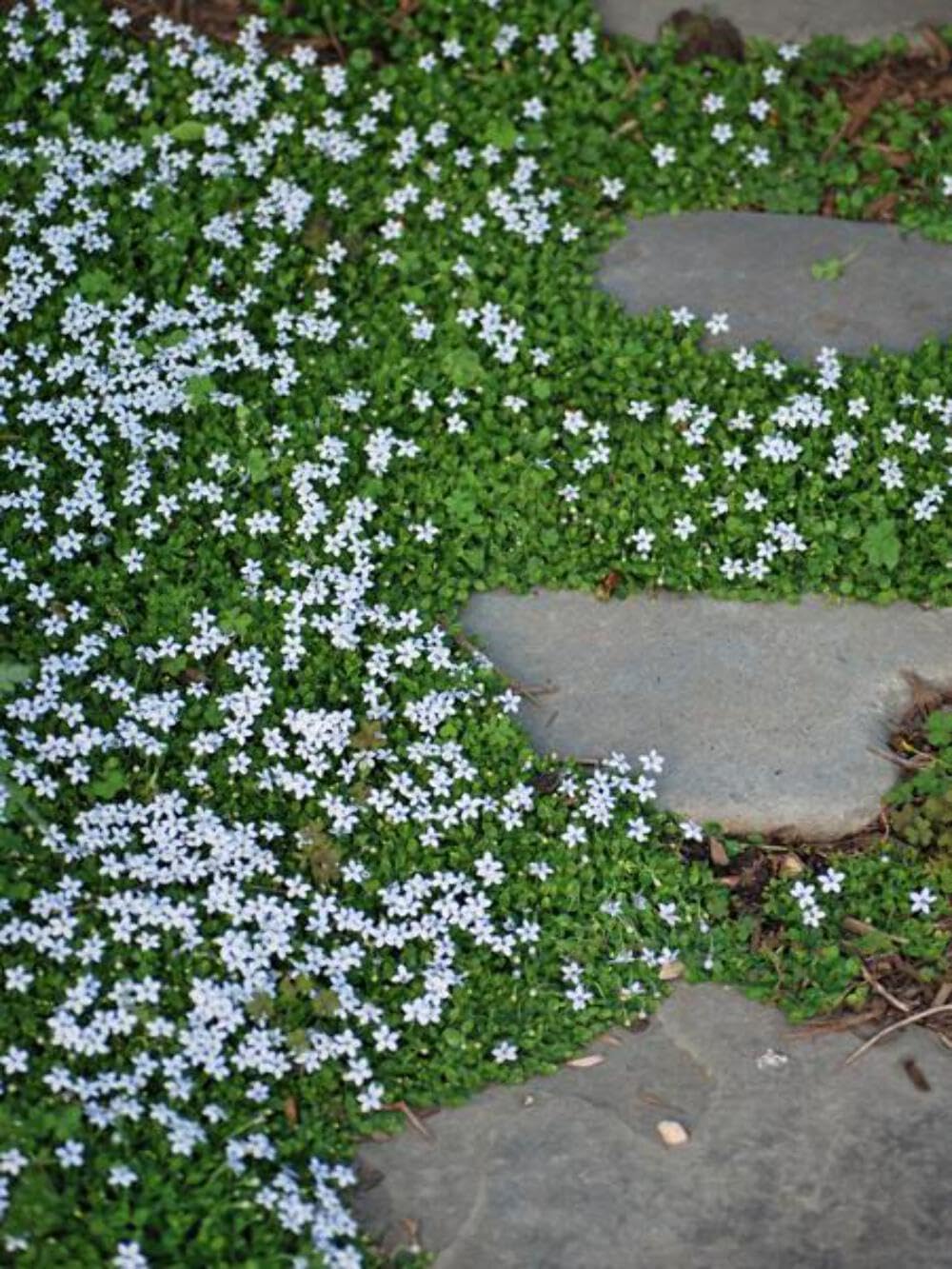
Isotoma fluviatilis (Blue Star Creeper) is a hardy, low-growing groundcover that forms a 2–3 inch dense mat dotted with sky-blue, star-shaped flowers from late spring through summer. It is typically planted in 1-quart pots around stepping stones, in small sunny patches, or as a replacement for small lawn areas where a fine-textured groundcover is desired. Key features are its tolerance of varied moisture levels and heavy foot traffic, plus its ability to creep into tight joints which helps suppress weeds and soften pathways. The immediate benefit is quick visual fill-in and seasonal color without frequent mowing. Limitations are that this is a shallow, mat-forming plant so it is best for small areas rather than large lawns, and it requires establishment time before it can handle regular traffic at full density. Expect to give it a season to spread and occasional trimming at edges to keep it neat.
Best for: Gardeners who need a tough, low-growing groundcover for sunny spots and want quick seasonal blooms and a durable mat for pathways or small lawn replacements.
Less Ideal for: People looking to cover large lawn areas quickly or those who need a tall, plush turf substitute for heavy continuous use.
- Produces sky-blue star-shaped flowers from late spring through summer for seasonal interest
- Forms a dense 2–3 inch mat that creeps between stepping stones to reduce weed growth
- Tolerant of heavy foot traffic once established, suitable for pathways and small lawn replacements
- Adapts to a range of moisture levels and soil types, easing site selection
- Slow to fully establish across larger areas so not ideal for instant full coverage
- Best suited to small patches rather than large lawns due to low mat height
Verdict: Choose this Blue Star Creeper when you want a durable, flowering low mat that fills gaps between stepping stones and handles occasional foot traffic in sunny small areas.
Outsidepride Perennial White MiniClover Seed (1 lb)

| Indoor Outdoor Usage | Outdoor |
|---|---|
| Other Special Features of the Product | Drought Tolerant |
| Expected Blooming Period | Summer |
| Moisture Needs | Moderate Watering |
Outsidepride Perennial White MiniClover is a micro clover seed intended as a low‑maintenance ground cover or lawn mix‑in. It is typically used for overseeding bare patches, creating a low-mow lawn alternative, stabilizing slopes or pathways, and improving soil nitrogen naturally. Notable features include very small leaves and stoloniferous growth that allow it to form a dense mat, low watering needs once established, and a short summer flowering period that attracts pollinators if left unmowed. Practical benefits are reduced mowing and irrigation, improved soil fertility through nitrogen fixation, and rapid establishment when sown at recommended rates. Limitations to consider are its preference for full sun to partial sun rather than deep shade, a modest one‑month bloom period if mowed regularly, and that it will reach only a few inches tall so it does not replace taller shade-tolerant groundcovers. For shaded areas this clover can work at garden edges or spots with filtered light, but it is not the best choice for densely shaded understories where true shade specialists perform better.
Best for: Gardeners who want a low‑maintenance, eco‑friendly ground cover or lawn mix‑in that reduces mowing and fertilizing and works well in sunny to partly shaded spots.
Less Ideal for: People seeking a groundcover for deep shade or for taller, year‑round ornamental coverage should consider shade‑specialist plants instead.
- Drought tolerant once established, reducing watering needs
- Fixes atmospheric nitrogen to improve soil fertility naturally
- Very small leaves and stolons create a dense, low-mow ground cover
- Suitable for erosion control on slopes and quick establishment of bare areas
- Not well suited to deep, heavily shaded areas and performs best in sun or partial sun
- Short seasonal flowering window if regularly mowed
Verdict: Choose this micro clover if you want an easy, low‑mow ground cover that improves soil naturally and cuts maintenance in sun or partly shaded areas.
Outsidepride Dichondra Repens Ground Cover Seeds (32 oz)

| Sunlight Exposure | Partial Sun |
|---|---|
| Expected Planting Period | Spring |
| USDA Hardiness Zone | 7 |
| Material Features | Heirloom |
| Unit Count | 32 Ounce |
Outsidepride Dichondra Repens is a bulk packet of ground cover seeds intended to establish a dense, low-maintenance carpet of green in warm, low-traffic areas. Gardeners sow these heirloom seeds in spring on prepared loam soil where they germinate and spread into a mat of rounded leaves that stays low to the ground and is soft underfoot. Notable features from the listing include suitability for partial sun, moderate moisture needs, and hardiness geared toward warmer zones where heat and drought tolerance matter. Practical benefits are reduced mowing and erosion control on slopes or bare spots, plus quick fill-in when overseeding or planting containers and hanging baskets. Limitations to consider are the climatic range: this variety is aimed at USDA zones listed for warm climates and may brown back in colder winters, and it is best for light to moderate foot traffic rather than high-traffic lawns. Expect a spring planting schedule and some time for seed-to-mat establishment rather than instant coverage.
Best for: Buyers who want an attractive, low-maintenance lawn alternative for warm gardens, containers, or erosion-prone slopes and prioritize quick establishment and reduced upkeep.
Less Ideal for: Homeowners in cold-climate regions seeking a durable, year-round turf substitute or anyone needing a high-traffic lawn replacement.
- Produces a dense, low-growing carpet that suppresses weeds and reduces mowing
- Heirloom seed in a large 32 ounce unit suitable for covering sizable areas or multiple projects
- Good heat and drought tolerance for warm-climate landscaping and erosion control
- Works well in containers, hanging baskets, slopes, and shaded to partially sunny spots
- Targeted to warmer USDA zones so performance and winter color may decline in cold climates
- Not suited for heavy foot traffic or athletic lawns
Verdict: Choose this Dichondra seed if you want a fast-establishing, low-maintenance green ground cover that creates a soft, attractive lawn alternative in warm, low-traffic landscapes.
Choosing the Right Ground Cover for Flagstone: Key Factors to Consider
Foot Traffic and Wear Tolerance
How often the area will be walked on determines the type of ground cover you need. Some low-growing plants can resist occasional barefoot or light-boot traffic but will thin quickly under heavy use. For high-traffic patios or frequently used paths choose covers that cushion without crushing and that recover quickly after trampling.
Texture matters too. Softer, denser mats feel better underfoot but may trap moisture in shady sites, while coarse, resilient species shed wear but can feel rough. Consider intended use and select a cover rated for the expected frequency of foot traffic.
Water Needs and Drought Tolerance
Flagstone areas often lie in full sun and sit on shallow soil, so drought tolerance is critical. Ground covers that survive with minimal supplemental water reduce maintenance and protect against dieback during hot, dry spells. Evaluate how much supplemental irrigation you will realistically provide and match the cover to that level.
Some covers establish quickly with regular watering then need little irrigation once settled. Others require consistent moisture to stay lush and will become patchy in drought-prone sites. Aim for plants whose long-term water needs align with your local climate and watering habits.
Growth Habit and Spread Control
The rate and manner in which a ground cover spreads determines how well it fills joints without overwhelming nearby beds. Some covers spread by tight mats that stay within narrow joints, while others send up runners that can colonize surrounding planting areas. Choose a spreading habit that suits the width of your flagstone gaps and the amount of ongoing edge control you are willing to do.
Fast-spreading species reduce initial replanting but may need edging or regular trimming to prevent invasion. Slow, clumping covers may require more planting plugs but stay neater over time.
Rooting Depth and Stone Stability
Shallow-rooted covers are preferable for flagstone because they are less likely to lift or shift stones. Deep or woody root systems can disturb the bed and create uneven surfaces. Examine typical rooting patterns when selecting a cover, favoring species that form surface mats or shallow fibrous roots.
Also consider how roots behave in winter and wet seasons. Plants that die back dramatically can leave voids that fill with weeds or sediment, while evergreen mat-formers maintain coverage year-round and help lock stones in place.
Maintenance and Seasonal Care
Maintenance needs vary widely. Some covers require frequent trimming, division, or replanting to stay dense, while others are effectively maintenance-free once established. Consider how much time you will spend weeding, trimming runners, or refreshing plugs between stones.
Seasonal behavior matters too. Species that sporadically flower or seed may need light cleanup after bloom to prevent unwanted seedlings. Choose covers whose seasonal demands fit your maintenance schedule.
Pest and Weed Resistance
A good flagstone ground cover should resist common pests and compete strongly with weeds so joints do not become patchy. Some covers release less debris and make it harder for weed seeds to germinate, while others create gaps where weeds quickly take hold.
Assess local pest pressures and the likelihood of birds or wind bringing in weed seed. Opt for covers with dense coverage and minimal debris to reduce ongoing weed control tasks.
Preparing Flagstone Joints for Planting
Proper preparation makes establishing ground cover much easier and reduces the chance of future problems. Clear out loose mortar, debris, and perennial weeds so the planting medium contacts the underlying stone edges and substrate.
Add a shallow layer of well-draining, gritty soil or coarse sand in wider joints to give plugs a rooting medium without holding excess moisture. For very narrow joints, pressing plants or moss into compacted sand often works better than adding deep soil.
Water lightly after planting to settle root contact, but avoid puddling. Good initial contact helps shallow-rooted covers establish faster and reduces washout in heavy rain.
- Remove persistent weeds and roots before planting
- Use gritty, free-draining mix in gaps wider than 1/2 inch
- Firm plants in place to improve root-soil contact
Installing Living Mats Versus Non-plant Infill
Decide whether you want a living plant mat or a non-plant infill like gravel, sand, or polymeric mixes. Living mats provide soft texture, seasonal color, and ecological benefits such as pollinator habitat. Non-plant infill is lower-maintenance but lacks the living character of plant covers.
If using plants, stagger plugs and avoid straight rows for quicker visual filling. If using inorganic infill, choose particle sizes and colors that complement the stone and allow surface drainage.
- Living mats: ecological benefits, softer surface, seasonal change
- Inorganic infill: minimal upkeep, consistent texture, excellent drainage
- Mixing approaches: combine sparse plants with gravel for a hybrid look
Seasonal Care and Troubleshooting
Monitor new plantings through the first two growing seasons. Address bare spots early by adding new plugs or top-dressing with soil and seed to prevent weed colonization. Light hand-weeding and spot treatments will keep coverage intact without heavy intervention.
In winter-prone areas inspect for frost heave or sediment build-up between stones. Rake out settled soil and replant or top-dress as needed in early spring when the ground is workable.
- Patch thin areas in early spring or fall for best establishment
- Avoid heavy fertilizers that promote lanky growth susceptible to trampling
- Use light pruning to control runners and maintain neat edges
Matching Cover to Microclimate
Microclimates created by stone, shade, and reflected heat strongly influence which ground cover will thrive. South-facing, sun-baked patios favor drought-tolerant, heat-loving covers. Shaded, moist flagstone might need species that tolerate less light and stay dense without constant sun.
Observe the site for a few days to note moisture retention and shade patterns before selecting a cover. This simple step prevents mismatches between plant water needs and actual site conditions.
- Full sun areas: pick drought-tolerant, low-growing mats
- Shady areas: choose shade-tolerant, moisture-friendly species
- Transitional spots: consider mixes that handle variable light
Design and Aesthetic Considerations
Ground cover can define a style. Fine-textured mats create a soft, cottage look while coarse foliage reads more natural or Mediterranean. Flowering covers add seasonal highlights but may alter maintenance needs when blooms drop seed or debris.
Think about color palettes and seasonal interest. Evergreen mats maintain year-round color, while deciduous covers may have attractive spring flowers but thin in winter. Pair covers with edging plants or mulch to form a cohesive design.
- Fine texture for formal joints, coarse texture for rustic paths
- Evergreen mats for constant coverage, flowering covers for seasonal accents
- Coordinate with stone color for harmonious contrast
How We Chose the Best Ground Cover for Flagstone
We chose ground covers for flagstone by focusing on measurable, garden-relevant traits that determine long-term success between stones. Our shortlist emphasizes plants and materials that establish reliably in joints or shallow soil, tolerate repeated foot traffic, and suppress weeds. We prioritized drought tolerance and water needs to match a variety of landscapes, followed by growth habit and spread rate so each selection fits narrow joints or wider gaps. We also considered root behavior and potential to disturb flagstones, evaluating whether a cover is shallow-rooted or aggressive. Load tolerance and texture were assessed to ensure a comfortable surface under barefoot or light-boot use. Establishment speed and maintenance needs rounded out the selection filters so options that need constant trimming or frequent replanting were excluded. Exclusions included ground covers that require deep soil, plants known to be invasive in many regions, and species with brittle stems that die back and leave bare patches. The result is a practical group of covers that balance durability, aesthetics, and ease of care for flagstone installations.
FAQ
How soon after installing flagstone can I plant ground cover?
You can plant most ground covers once the stone setting is stable and any fresh mortar or adhesive has cured. For plugs and mat-type plants, allow the substrate to settle for a few days and then plant so roots can contact soil without being disturbed.
Which ground covers handle regular barefoot traffic best?
Low, dense mat-formers with flexible stems usually tolerate occasional barefoot traffic best. Tolerance depends on species and how well the plants are established. Expect better performance once plants have filled gaps and developed a fibrous root network.
Will ground cover between flagstones cause the stones to shift?
Shallow, fibrous-rooted covers are unlikely to lift properly set stones. Deep-rooted or woody plants can create pressure and should be avoided. Proper joint preparation and using shallow-rooted species minimizes movement risk.
How do I prevent weeds from taking over newly planted joints?
Keep newly planted areas well-watered but hand-weed promptly when weeds appear. Dense planting and quick patching of thin spots reduce light for weed seeds. Inorganic infill can also limit weed establishment in very high-weed-pressure sites.
Can I combine plants and gravel between stones?
Yes. Combining sparse plantings with coarse gravel or sand offers a hybrid solution that reduces maintenance while preserving living texture. Ensure the gravel size allows root access and does not smother young plugs.
When is the best time to plant ground cover around flagstone?
Early spring or early fall is usually best because soil temperatures and moisture favor root establishment. Avoid the hottest, driest part of summer unless you can provide consistent irrigation during establishment.
Final Verdict
Choose a ground cover for flagstone by matching the plant or infill to how the area will be used and the local climate. Prioritize foot-traffic tolerance, shallow rooting, and a growth habit that fits your joint width and maintenance appetite. Expect tradeoffs between instant coverage and long-term control: faster spreaders need more edging, while slower mat-formers require more planting but stay tidier. With clear priorities on drought tolerance, establishment speed, and spread control, you can confidently select a cover that keeps your flagstone stable, attractive, and comfortable underfoot.
