

Note: This article contains affiliate links. If you click on these links and make a purchase, I may earn a small commission at no extra cost to you. This helps support my research and content. Read my full affiliate disclosure here.
Diatomaceous Earth is a versatile dusty amendment that gardeners use to control crawling pests, improve soil drainage, and gently condition planting mixes. Choosing the right form matters because particle grade and purity determine whether the product is appropriate for use around edible plants, pets, or indoor soil mixes. This guide presents seven shortlisted Diatomaceous Earth options that fit common garden situations and explains how we evaluated them on the most practical criteria for outdoor and container gardening. Read on to see the factors we weighed and what to consider when picking a formulation for your beds, pots, or stored crops.
Top Picks at a Glance
| Best Overall The best all-around choice for most situations | HARRIS Food Grade Diatomaceous Earth, 10 lb with Powder Duster |  |
| Best Quality Built to a higher standard if you want something more solid | Natures Wisdom Food Grade Diatomaceous Earth, 5 lb |  |
| Best Value The sweet spot between price and what you get | Permaguard Fresh Water Food Grade Diatomaceous Earth, 50 lb |  |
| Best Budget The cheapest option that still gets the job done reliably | HARRIS Diatomaceous Earth Food Grade, 8 oz with Puffer Tip |  |
| Highest Rated A top-rated pick with lots of positive feedback | Dicalite Minerals DE25BOX Diatomaceous Earth Pool Filter, 25 lb |  |
| Most Popular A crowd favorite that many people choose with confidence | Diatomaceous Earth Food Grade Powder, 10 lb |  |
| Best Seller A high-volume bestseller chosen again and again | Harris Food-Grade Diatomaceous Earth, 5 lb (with Powder Duster) |  |
HARRIS Food Grade Diatomaceous Earth, 10 lb with Powder Duster

| Net weight | 10 lb |
|---|---|
| Grade | Food grade |
| Organic listing | OMRI listed |
| Includes | Powder duster |
This 10 lb bag of HARRIS food-grade diatomaceous earth is a straightforward, chemical-free pest control and drying agent for indoor and outdoor use. The powder is OMRI listed for organic use and comes with a powder duster packed inside the bag, which makes applying the fine dust into cracks, baseboards, and garden beds much easier and less messy. It is sourced and packaged in the U.S., which supports consistent quality, and the pure formulation means it can be used around pets and children when directions are followed. Practical benefits include long shelf life, multiple uses from insect control to moisture absorption, and the included duster saves you from buying separate applicators. Limitations are inherent to diatomaceous earth: it works by physical contact so applications must be dry and re-applied after heavy rain or watering, and it requires careful dust control during application to avoid inhalation. For someone wanting a simple, organic option for routine pest management and moisture control, this is a usable, no-frills choice.
Best for: Buyers who want a simple, organic, low-chemical pest control solution for routine indoor and outdoor use and value an included applicator for easy spot treatments.
Less Ideal for: People who need a fast-acting chemical pesticide for immediate knockdown or those unwilling to take precautions to avoid inhaling fine dust.
- Food-grade, chemical-free formulation suitable for organic use
- Included powder duster allows precise application into tight spaces
- Packaged in the U.S. with consistent sourcing and quality control
- Multi-purpose for insect control and moisture absorption around home and garden
- Effectiveness depends on direct contact and dry conditions so it must be reapplied after wetting or rain
- Fine dust can be irritating if inhaled during application
Verdict: A dependable, food-grade diatomaceous earth bag with an included duster that makes organic, contact-based pest control and moisture absorption easy for routine home and garden use.
Natures Wisdom Food Grade Diatomaceous Earth, 5 lb

| Item Form | Powder |
|---|---|
| Unit Count | 80 Ounce |
| Target Species | plants |
| Item Weight | 5.3 pounds |
Natures Wisdom Food Grade Diatomaceous Earth is a finely milled, freshwater DE powder sold as a pure, additive-free product for garden and pest control. It is typically dusted onto soil, around plant bases, or along entry points to control crawling insects and can be lightly mixed into potting mixes for moisture management. The product emphasizes a consistent tubular diatom shape from a single freshwater deposit, which the manufacturer says improves effectiveness and reduces sediment. Packaged in sealed bags and processed on dedicated equipment, it is presented as a refill-size supply for small-plot gardeners or repeated seasonal use. Practical benefits include long shelf life, inert chemistry safe for exterior use when applied as directed, and easy application with a shaker or duster. Important limitations are that DE works by physical abrasion and requires dry conditions to be effective, it does not provide residual chemical control, and users should avoid inhaling the fine powder and avoid applying when plants or soil are wet for best results.
Best for: Buyers who prioritize a high-purity, physical pest-control option for garden beds, potted plants, or organic gardening and who plan seasonal, hands-on applications.
Less Ideal for: People seeking fast-acting chemical control, systemic pest solutions, or a product for continuous wet or humid conditions should consider other options.
- Food-grade freshwater DE with no added fillers according to the manufacturer
- Fine powdered form suitable for shaker or duster application
- Sealed packaging processed on dedicated lines to reduce cross-contamination
- Long shelf life and inert chemistry safe for outdoor use when used as directed
- Effectiveness depends on dry conditions and physical contact with pests rather than chemical action
- Fine powder can be inhaled if applied without a mask, requiring basic PPE
Verdict: Choose this DE if you want a high-purity, food-grade freshwater powder for seasonal, nonchemical pest control and soil management.
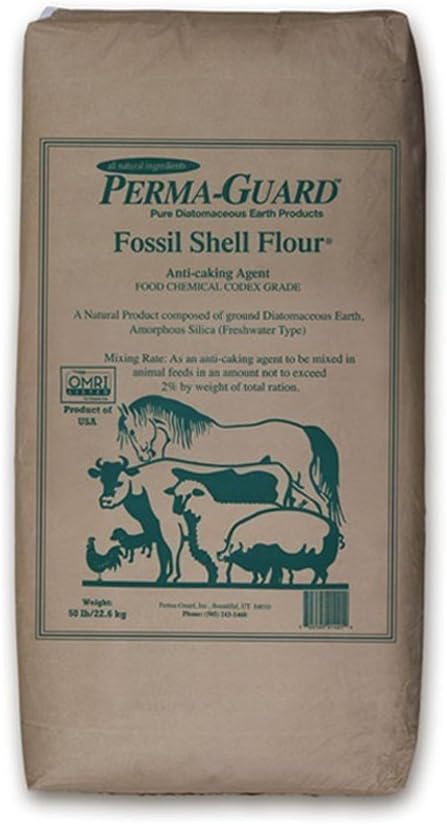
Permaguard Fresh Water Food Grade Diatomaceous Earth, 50 lb
| Special Ingredients | diatomaceous earth |
|---|---|
| Specific Uses For Product | Aquarium Maintenance, Parasite Control, Water Clarification |
| Additional Features | organic |
| Unit Count | 800 Ounce |
Permaguard Fresh Water Food Grade Diatomaceous Earth is a large 50-pound supply of food-grade silica powder intended for freshwater and animal-health uses. It is typically used as a nonchemical option for parasite control in poultry and water systems, and for clarifying aquarium or pond water by binding fine particles. In practice you apply it sparingly where insects or parasites are present or add according to guidance for water treatment; the organic, inert mineral works mechanically rather than chemically, so it is low-toxicity when used as directed. The bagged bulk size makes this convenient for farms, co-ops, or gardeners who need regular, repeated applications, and the food-grade designation gives flexibility for use around animals. Important limitations are the large single-bag size, which can be heavy to handle and is more than most home users need, and that dust can irritate eyes and lungs so a mask and careful application are recommended. There are no added insecticides so efficacy depends on correct application and dry contact for pest control.
Best for: Buyers who prioritize practical, low-chemical pest control and water clarification for poultry, ponds, or aquaria and who need a bulk supply for regular use.
Less Ideal for: Casual gardeners or buyers who need a small, easy-to-handle package for occasional home use or those unwilling to use protective equipment during application.
- Food-grade diatomaceous earth suitable for use around animals and in freshwater systems.
- Large 50-pound bag provides long-term supply for farms, co-ops, or heavy users.
- Organic, inert mineral works mechanically so no chemical pesticides are added.
- Large 50-pound bag can be difficult to lift and control for single-person use.
- Fine dust can irritate eyes and respiratory system without protective gear.
- Effectiveness requires dry contact and correct application so it is not an instant or broad-spectrum kill for all pests.
Verdict: Choose this 50 lb food-grade diatomaceous earth when you need an economical, chemical-free bulk supply for routine parasite control and freshwater clarification.
HARRIS Diatomaceous Earth Food Grade, 8 oz with Puffer Tip

| Unit Count | 8 Ounce |
|---|---|
| Item Form | Powder |
| Specific Uses For Product | Soil Conditioning |
| Application Method | puffer tip |
This 8 oz bag of HARRIS food-grade diatomaceous earth is a straightforward, no-frills option for gardeners and homeowners who want a chemical-free insect control and soil conditioner. The powder is OMRI listed for organic use and sourced in the USA, so it suits organic gardening and safe use around pets and kids when applied as directed. The included puffer tip makes it easy to apply small, controlled amounts into cracks, crevices, or along garden rows without clouding the area. In practical use it works best as a spot treatment for crawling insects, for light soil amendment, or as a preventative barrier; it is not a broadcast solution for large acreage because the package is small. Directions note light, uniform application and recommend testing surfaces first to avoid visible deposits. If you want a compact, certified food-grade product for targeted home and garden tasks, this is a sensible choice, but plan to buy multiple bags for regular use over bigger gardens.
Best for: Gardeners and homeowners who want an affordable, certified food-grade diatomaceous earth for spot treatments, organic gardens, and pet-safe use around the yard.
Less Ideal for: People needing a bulk supply for large beds, lawns, or commercial use should choose a larger quantity or a product designed for heavy broadcast application.
- Food-grade, OMRI listed so suitable for organic gardening
- Puffer tip allows precise application into cracks and tight spaces
- Sourced and packaged in the USA for consistent quality
- Simple powder form works for both insect control and light soil conditioning
- Small 8 ounce unit is not ideal for large-area or frequent broadcast applications
- Requires careful, light application to avoid dust and visible residues
Verdict: A budget-friendly, certified food-grade diatomaceous earth in a handy puffer-tip package for precise, organic-friendly spot treatments.
Dicalite Minerals DE25BOX Diatomaceous Earth Pool Filter, 25 lb

| Item Weight | 25 pounds |
|---|---|
| Manufacturer | EASYGO PRODUCTS |
This 25 lb Dicalite Minerals diatomaceous earth is formulated for use in both aboveground and inground DE pool filters to capture fine particles and leave water clear. You add the white powder to the skimmer or filter as directed and the DE coats the filter grids, creating a fine porous layer that traps debris smaller than sand or cartridge filters. Notable features are its all-natural composition and powder form that resists clumping when used correctly. The practical benefit is markedly clearer, sparkling water without frequent backwashing, and an easy refill size for homeowners who service their own filters. Limitations are inherent to any DE product: correct dosing and careful handling are required to avoid airborne dust, and it only works with DE-style filters rather than sand or cartridge systems. For reliability-focused pool owners this product provides consistent filtration performance when applied per manufacturer instructions.
Best for: Homeowners who maintain DE pool filters themselves and prioritize reliable, fine-particle filtration for consistently clear water.
Less Ideal for: People using sand or cartridge filter systems or those unwilling to follow dosing and safety precautions when handling powdered filter media.
- All-natural diatomaceous earth formulated for pool DE filters
- 25 lb size suitable for multiple filter refills or regular maintenance
- Powder form designed to coat filter grids for fine particle capture
- Helps produce noticeably clearer, sparkling pool water
- Requires careful handling to avoid inhaling dust
- Only compatible with DE-style pool filters, not sand or cartridge systems
Verdict: Choose this 25 lb DE filter media when you want dependable, all-natural filtration that keeps pool water clear in DE-style systems.
Diatomaceous Earth Food Grade Powder, 10 lb

| Unit Count | 160 Ounce |
|---|---|
| Included Components | Diamateous Earth Powder |
| Item Type Name | food grade diatomaceous earth |
| Manufacturer | DiatomaceousEarth |
| Ingredients | 100% Diatomaceous Earth |
This 10 lb bag of food-grade diatomaceous earth is a straightforward, all-natural powder for gardeners and homeowners who want an inert, silicon-rich soil amendment and pest control option. It is OMRI listed, meaning it meets organic standards for use around edible plants, and the product is labeled 100 percent pure with no additives. Use it dry as a soil conditioner by lightly working it into topsoil or sprinkling around plant bases to deter crawling insects; the manufacturer also notes a powder duster is included for targeted application. Practical benefits include a large enough quantity for several garden beds and a multipurpose role across soil health and pest management tasks. Important limitations are the safety precautions: avoid inhaling the fine dust and keep it away from children's and pets' airways during application, and it works by physical contact so it is less effective when wet. Buyers should plan for careful, dust-controlled application and not expect an immediate chemical-style knockdown of pests.
Best for: Gardeners and homesteaders who prioritize certified organic inputs and want a multipurpose, nonchemical option for soil conditioning and crawling-pest control.
Less Ideal for: People who need fast-acting chemical pest control or who cannot manage dusty applications around children, pets, or dusty indoor areas.
- OMRI listed for organic use so acceptable for edible gardens
- Sold as 100% pure diatomaceous earth with no additives
- Large 10 lb bag covers multiple beds or repeated treatments
- Includes powder duster for controlled application
- Fine powder can be hazardous if inhaled and requires caution during application
- Effectiveness diminishes when wet and needs reapplication after rain
Verdict: Choose this OMRI-listed, 100% pure 10 lb diatomaceous earth if you want a certified organic, multipurpose powder for soil conditioning and nonchemical pest control.
Harris Food-Grade Diatomaceous Earth, 5 lb (with Powder Duster)

| Net weight | 5 pounds |
|---|---|
| OMRI status | OMRI listed |
| Grade | Food grade |
| Includes | Powder duster |
Harris Food-Grade Diatomaceous Earth is a fine, chemical-free powder mined from freshwater deposits and packaged in a 5 lb resealable bag with a small powder duster included for application. Typical uses include dry pest control around foundations and garden beds, mixing a small amount into animal feed as an anti-caking agent, or dusting in cracks and crevices where insects travel. The product is OMRI listed which supports use in organic gardening, and the included duster makes targeted, low-waste application easier than pouring from the bag. Because it is a physical desiccant rather than a chemical insecticide, it is safe to use around people and pets when applied as directed and kept dry. Limitations are that DE must remain dry to be effective, it works slowly compared with chemical sprays, and repeated applications are necessary after rain or irrigation. Users should also avoid inhaling the fine dust during application.
Best for: Buyers who prioritize low-toxicity, organic-approved pest control and want a straightforward, physical option for dusting garden areas or mixing small amounts into feed.
Less Ideal for: Those who need fast knockdown of heavy infestations or require a rainproof solution should consider other pest-control methods.
- OMRI listed for organic use, suitable for organic gardening and farming practices
- 100% food-grade, chemical-free formulation safe for use around people and pets when used as directed
- Includes a powder duster in the bag for precise, low-waste application
- Sourced and packaged in the USA, supporting consistent quality control
- Ineffective when wet and requires reapplication after rain or watering
- Works by physical contact and is slower to control active infestations compared with chemical insecticides
Verdict: A safe, OMRI-listed food-grade diatomaceous earth that gives risk-averse gardeners a low-toxicity, easy-to-apply option for organic pest control.
Choosing the Right Diatomaceous Earth: Key Factors to Consider
Purity and Food-Grade Certification
Knowing whether a Diatomaceous Earth product is food grade is essential for safe garden use. Food-grade material is processed and tested to meet standards that limit crystalline silica and other contaminants, making it suitable for use around edible plants and pets. Pure food-grade deposits are less likely to contain additives or binders that could harm soil life or plant roots. When a product lacks clear certification, you should treat it as for non-edible uses only and avoid applying it where it could contact produce or be inhaled by household members working close to treated soil.
Lab reports or clear labeling from the manufacturer help verify claims. Even with food-grade material, follow safe handling guidance to limit dust inhalation. Purity affects both effectiveness against pests and the long-term safety of soil amendments.
Particle Grade and Intended Use
Diatomaceous Earth is sold in different particle grades that influence how it behaves in the garden. Fine grades provide more surface area and are typically better for dusting plant stems and creating barrier treatments against crawling insects. Coarser grades are more useful as a soil conditioner because they improve drainage and porosity without blowing away as easily. Choose a grade that matches the intended task: a very fine powder for spot pest control and a coarser granule for mixing into potting mixes and beds.
Particle size also affects how long the product remains effective in outdoor conditions. Coarser particles tend to persist longer after rain, while fine powders lose efficacy more quickly but may adhere better to insect exoskeletons when applied properly.
Contaminant Testing and Safety Data
Confirming that a product has been tested for contaminants is a key safety step. Test reports should address crystalline silica levels, heavy metals, and any residual processing chemicals. Elevated crystalline silica content increases respiratory risk for people and pets when dust is inhaled. Heavy metals can accumulate in soil over repeated applications, which matters if you plan long-term use in vegetable beds.
Reliable suppliers provide easily accessible safety data sheets or third-party lab results. If such documentation is absent, factor that uncertainty into your decision and consider limiting use to non-food parts of the landscape where direct human or animal contact with treated soil is minimal.
Application Method and Ease of Use
Practical application matters in everyday gardening. Packaging that allows controlled dusting or shaking reduces waste and limits dust clouds that can irritate lungs and eyes. For treating garden beds and container soil, look for products that spread evenly and are easy to incorporate into the topsoil. For spot treatments on stems and under leaves, a product that clings or can be applied from a shaker performs better than one that turns into airborne dust.
Consider whether the product needs to be reapplied after rain and how convenient that will be for your planting area. Ease of use also covers how simple it is to measure and mix the material into potting mixes without creating a big mess.
Packaging, Storage, and Quantity
Diatomaceous Earth must stay dry to remain free-flowing and effective. Resealable, moisture-resistant packaging prevents clumping and contamination. Packaging size should align with your garden scale: small resealable pouches work for container growers, while larger bags make more sense for bed owners who plan repeated applications. Consider storage conditions in your shed or garage; a sturdy container that can be closed tightly will protect the material from humidity and pests.
Also think about sustainability and waste. Some gardeners prefer packaging that is simple to transfer into reusable dispensers or that can be recycled with local facilities.
Environmental and Non-target Effects
Although Diatomaceous Earth is a physical insecticide, it can affect non-target beneficial arthropods if applied indiscriminately. Dusting flowering plants can harm pollinators that contact treated surfaces, and overuse in soil can reduce populations of beneficial soil arthropods. Use targeted applications and avoid broadcasting the material across flowering periods when bees and other pollinators are active.
Consider the timing and placement of treatments to limit exposure to non-target organisms. A gardener focused on integrated pest management should balance the need for pest control with practices that conserve beneficial insects and soil health.
How Diatomaceous Earth Works in the Garden
Diatomaceous Earth works by a physical mechanism, abrading insect exoskeletons and absorbing lipids, which leads to dehydration. That means it does not rely on chemical toxicity and pests do not develop traditional resistance the way they can to synthetic pesticides. Its effectiveness depends on good contact with the target insect and relatively dry conditions because moisture reduces the abrasive action.
In soil mixes the angular particles create tiny air pockets that improve drainage and reduce compaction. This can be particularly helpful in heavy container mixes and clay soils where increased porosity helps root aeration. Expect more noticeable effects in potting media and raised beds than in heavy in-ground soil unless you work the material into loosened areas.
- Physical mode of action rather than chemical toxicity
- Works best when dry; loses effectiveness when wet
- Improves drainage and porosity when mixed into soil
Safe Application Tips for Home Gardens
Minimize airborne dust during application by using a hand duster, shaker, or slightly dampening the application surface. Wear a dust mask and eye protection when spreading fine powder, especially if you are working in enclosed spaces such as greenhouses. Keep children and pets away from areas while you apply dust and until it settles.
Avoid applying Diatomaceous Earth directly to open flowers or during times of active pollinator flights. For crawling pests around foundations or on lower stems, apply in narrow bands or spot treatments rather than broad broadcast applications to reduce non-target exposure.
- Use a mask and goggles when applying fine dust
- Prefer targeted bands or spot treatments to broad coverage
- Reapply after heavy rain if product has been washed away
Using Diatomaceous Earth in Potting Mixes and Containers
When mixed into potting soil, coarser grades of Diatomaceous Earth can improve drainage and help prevent compaction without affecting nutrient balance. Use modest amounts-small percentages of the total mix-to avoid excessively drying media. Blend thoroughly to distribute particles evenly and reduce clumping.
For container pest problems, you can top-dress with a thin layer of the appropriate grade to create a barrier against fungus gnats and surface-feeding pests. Monitor moisture levels closely, because added porosity may increase drainage and modify watering frequency.
- Mix coarser grades into soil at low proportions
- Top-dress containers to deter surface pests
- Adjust watering to compensate for increased drainage
Managing Common Garden Pests with Diatomaceous Earth
Diatomaceous Earth is widely used against crawling insects such as slugs, ants, pillbugs, and certain beetles when applied properly. It is most effective where insects walk across treated surfaces or come into direct contact with the powder. For slug control, combine physical barriers and habitat modification with targeted applications to avoid overuse.
For stored bulbs or tubers, a light dusting can reduce storage pests, but ensure the product used is appropriate for storage contact. In outdoor beds, reapplication after heavy rain or when the powder has been disturbed will be necessary to maintain effectiveness.
- Best for crawling insects that contact treated surfaces
- Combine with habitat management for slugs
- Reapply after rain or soil disturbance
Legal and Label Considerations
Check labels for permitted uses and any restrictions, especially if you plan to use Diatomaceous Earth on edible crops or in spaces with livestock and pets. Some formulations are labeled for agricultural or horticultural use and include specific application rates and safety instructions. Label directions also clarify whether a product is food grade or intended for other uses.
Adhere to recommended precautions on the label, including personal protective equipment and reentry intervals if specified. Labels are the primary legal guidance for safe and effective use and should be followed closely.
- Labels indicate intended uses and safety requirements
- Look for clear application rates for horticultural use
- Follow PPE and reentry guidance on the label
How We Chose the Best Diatomaceous Earth
We focused on attributes that directly affect safety and effectiveness in gardens. Key evaluation criteria included purity and food-grade certification, particle grade and intended use, contaminant testing for heavy metals and crystalline silica, ease of application in beds and containers, and packaging that preserves dryness and prevents clumping. We gave extra weight to products with clear labeling about agricultural or horticultural use and manufacturer-provided lab testing. Exclusions included formulations intended solely for industrial filtration, pool diatomite products not marketed for horticulture, or mixes that add other active ingredients. We examined declared particle size ranges and safety statements to distinguish between food-grade and non-food-grade material, and we looked for packaging formats that make field use practical, such as resealable bags or shaker-style containers. The result is a curated set of choices suitable for common garden tasks, from pest barrier treatments to soil texture improvement.
FAQ
Is Diatomaceous Earth safe to use around edible plants?
Often yes when the product is food-grade and applied as directed. Food-grade Diatomaceous Earth has lower contaminant levels, but you should avoid heavy dusting directly on produce and follow label instructions for edible crop use.
How often do I need to reapply after rain?
It usually needs reapplication after heavy rain washes the powder away. Coarser grades persist longer, but expect to monitor treated areas and reapply as needed when you see reduced coverage.
Can Diatomaceous Earth harm beneficial insects?
It can affect non-target arthropods if they contact treated surfaces. Avoid applying it to flowering plants during bloom and focus treatments on specific problem zones to reduce impacts on pollinators and predators.
Which grade should I use in potting soil versus dusting for pests?
Coarser grades are better for mixing into potting soils to improve drainage, while finer grades are more effective for dusting plant surfaces and creating insect barriers. Choose based on whether you need soil structure improvement or direct pest contact.
Are there storage concerns for Diatomaceous Earth?
Keep it dry in resealable, moisture-resistant packaging to prevent clumping and loss of flowability. Store in a cool, dry place away from high humidity and pests.
Final Verdict
Prioritize purity and particle grade when choosing Diatomaceous Earth for garden use. Food-grade certification and contaminant testing reduce health risks and broaden where you can safely apply the material. Match particle size to your task: fine powders for contact pest control and coarser material for soil amendment. Balance efficacy with protection for beneficial insects by using targeted applications, and pay attention to packaging and storage so the product stays effective over time. With those tradeoffs in mind, you can select a formulation that fits your beds, containers, and pest management strategy with confidence.
