

Note: This article contains affiliate links. If you click on these links and make a purchase, I may earn a small commission at no extra cost to you. This helps support my research and content. Read my full affiliate disclosure here.
If you want container plants that stay consistently moist without daily attention, an outdoor self watering planter can make a big difference. These planters store water in a reservoir and deliver it to roots as needed, which reduces stress on plants during hot spells and cuts down on watering chores. This guide covers five shortlisted outdoor self watering planters selected for reliable watering performance, drainage behavior, and suitability for common outdoor uses from patios to raised decks. Read on to understand the practical differences that matter when you choose a self-watering container for vegetables, herbs, or ornamental plantings.
Top Picks at a Glance
| Best Overall The best all-around choice for most situations | Mayne Nantucket 16in Square Self-Watering Planter |  |
| Best Quality Built to a higher standard if you want something more solid | Mayne Fairfield 28in Self-Watering Tall Square Planter |  |
| Best Value The sweet spot between price and what you get | KUGAZ Self-Watering Planter Set (12/10/8 inch, 3-Pack) |  |
| Best Budget The cheapest option that still gets the job done reliably | FaithLand 2-Pack 10 Inch Self-Watering Planter Pots (Green with Terracotta) |  |
| Most Popular A crowd favorite that many people choose with confidence | Fielda 8/10/12 Inch Self-Watering Plastic Planter Set (3-Pack) with Tray |  |
Mayne Nantucket 16in Square Self-Watering Planter

| Capacity | 3.7 gallons |
|---|---|
| Material | Polyethylene (PE) |
| Special features | Self Watering, UV Resistant, Weather Resistant, Fade Resistant |
| Mounting Type | Floor Standing |
The Mayne Nantucket 16in Square planter is a durable, low-maintenance container designed for outdoor decorative plantings. Its built-in self-watering reservoir supplies consistent moisture from below, reducing daily watering and helping potted flowers and mixed annuals stay healthy between checks. The polyethylene double-wall construction is UV fade resistant and weather resistant, so the planter keeps its finish and resists cracking in seasonal temperature swings. Practical features include an overflow drain to prevent root rot and a fill port plug for easy refilling. At 3.7 gallons capacity the pot suits compact shrublets, perennials, and seasonal mixes on patios, porches, and entryways. Trade-offs are that it is a single-piece floor-standing planter without a removable insert, so larger replanting can be a bit messier than planters with liners, and its capacity limits very large root systems. For gardeners who want a durable, low-fuss container that looks good year after year, this planter delivers reliable performance and minimal upkeep.
Best for: Gardeners who prioritize low-maintenance, long-lasting outdoor containers for patios, entryways, and small-scale displays and want a planter that minimizes daily watering and holds up to weather.
Less Ideal for: Those who need very large containers for big shrubs or want planters with removable liners for easy replanting should consider other options.
- Built-in self-watering reservoir maintains consistent moisture and reduces watering frequency
- UV fade resistant polyethylene construction stands up to sun and weather without cracking
- Double-wall design insulates roots and adds durability for year-round outdoor use
- Overflow drainage and fill port plug help prevent overwatering and make refilling simple
- No removable planting insert makes seasonal repots or swaps messier
- 3.7 gallon capacity is small for large shrubs or plants with extensive root systems
Verdict: Choose this planter if you want a high-end, weatherproof, self-watering container that reduces maintenance and keeps plants healthy in outdoor settings.
Mayne Fairfield 28in Self-Watering Tall Square Planter

| Capacity | 8 gallons |
|---|---|
| Self-Watering Feature | Yes |
| Material Type | Polyethylene |
| Included Components | Saucer |
The Mayne Fairfield 28in planter is built for dependable outdoor performance and extended, low-maintenance displays. It uses a reversible tray to create a self-watering reservoir that supplies consistent moisture to roots or flips to improve drainage for potted inserts, so you can water less while maintaining healthy plants. Made from UV fade-resistant polyethylene the pot resists sun, rain, snow, and common weathering without painting or sealing, and the lightweight construction makes repositioning easier than ceramic or concrete alternatives. The removable planting insert simplifies planting, seasonal changes, and winter prep. Practical limitations include its plastic construction, which while durable and weatherproof lacks the heft and premium feel of stone, and the 8-gallon capacity limits very large specimen root volumes. Installation is straightforward since it is floor standing with no special mounting required. With a long residential warranty and simple maintenance, this planter suits gardeners who want a performance-focused, low-fuss solution for year-round outdoor containers.
Best for: Gardeners who prioritize reliable, low-maintenance outdoor containers and consistent plant hydration with minimal effort, especially for ornamental grasses, perennials, and mixed seasonal displays.
Less Ideal for: Buyers seeking a heavy, high-end stone or concrete aesthetic or those who need very large root volumes for big specimen trees should consider other options.
- Built-in self-watering reservoir with reversible tray for consistent moisture or improved drainage
- UV fade-resistant polyethylene resists sun and weather for year-round outdoor use
- Removable planting insert makes planting and seasonal changes easier
- Lightweight compared with stone or concrete, so it is easier to move and reposition
- Plastic construction lacks the weight and premium look of heavier materials
- 8-gallon capacity may be too small for very large shrubs or trees
Verdict: Choose this planter when you want a durable, self-watering outdoor container that delivers consistent moisture and low maintenance for dependable seasonal displays.
KUGAZ Self-Watering Planter Set (12/10/8 inch, 3-Pack)

| Capacity | 22.6 liters |
|---|---|
| Number of Pieces | 3 |
| Material Type | Plastic |
| Other Special Features of the Product | Breathable, Lightweight, Self Watering |
| Indoor Outdoor Usage | Indoor, Outdoor |
These KUGAZ planters are designed to simplify routine care for larger houseplants like monstera. Each pot includes a deep reservoir and an absorbent wick plus a visible water level window so you can top up the reservoir without disturbing the root ball. The set contains three sizes suited to young plants through more established specimens, and the plastic construction keeps each pot light and easy to move for repotting or repositioning. Built-in drainage holes and a breathable design help prevent overwatering and encourage healthier roots compared with sealed pots. Practical extras include a saucer and watering lip for cleaner filling. Expect the pots to perform well for routine watering and to save time between hand-watering sessions, though the plastic finish is not decorative like ceramic and large heavy plants will still need a stable stand or saucer. If you need a long-term decorative pot or heavier, premium materials, look elsewhere, but for straightforward, low-maintenance container growing these planters are a solid, efficient choice.
Best for: Buyers who prioritize low-maintenance, reliable watering for houseplants and want a practical set that covers small to medium monstera stages without fuss.
Less Ideal for: Gardeners seeking decorative, high-end materials or very large, mature plants that require heavy, long-term stable pots should consider sturdier ceramic or resin alternatives.
- Self-watering reservoir with wick and visible water level makes watering predictable and hands-off
- Includes three practical sizes suitable for progressive repotting
- Drainage holes and breathable design reduce risk of root rot
- Lightweight plastic construction is easy to move and reposition
- Includes saucer and watering lip for cleaner filling
- Plastic construction is utilitarian and less decorative than ceramic or terracotta
- Not a heavy-duty planter for very large, top-heavy specimens
Verdict: If you want a practical, low-maintenance planter set that keeps monsteras consistently hydrated with minimal effort, this self-watering trio delivers.
FaithLand 2-Pack 10 Inch Self-Watering Planter Pots (Green with Terracotta)

| Material Type | Cotton, Plastic, Polypropylene (PP) |
|---|---|
| Included Components | Watering lip, Saucer, Cotton Rope |
| Features | Self Watering |
| Mounting Type | Tabletop,Floor Standing |
| Indoor Outdoor Usage | Indoor, Outdoor |
These FaithLand 10-inch planters are plastic, self-watering pots sold as a two-pack for routine low-maintenance container gardening. Each pot has a detachable deep reservoir and a clip-on watering lip so you can add water to the base without wetting the soil surface. Multiple drainage holes and a cotton wick move moisture to the root zone while improving air flow to reduce root rot risk. Made from thick polypropylene, the pots are lightweight, weather and UV resistant, and suitable for tabletop or floor use around patios, balconies, and windowsills. Practical benefits include up to 7 to 14 days between refills depending on conditions, easy twist-on base installation, and included saucers and a cotton rope for wicking. Limitations are inherent to plastic planters: they do not offer the insulation or premium look of ceramic or fiberstone and the size and reservoir limit how large a plant or heavy feeder it can support long-term without more frequent top-ups.
Best for: Practical plant owners who want an affordable, low-maintenance planter for herbs, succulents or medium houseplants and who prioritize convenience over premium materials.
Less Ideal for: Buyers seeking decorative, high-end materials or planters for very large, heavy, or heavy-feeding plants should consider heavier ceramic, fiberstone, or larger-capacity containers.
- Built-in deep reservoir for 7–14 day watering intervals
- Bottom-watering clip and wick system to reduce overwatering and mess
- Durable, UV-resistant polypropylene suitable for indoor or outdoor use
- Comes as a two-pack with saucers and a watering lip for immediate use
- Plastic construction lacks the thermal mass and premium finish of ceramic or stone pots
Verdict: If you need an inexpensive, low-effort outdoor self-watering pot for herbs and medium plants, this two-pack delivers practical reservoir watering and weather-resistant plastic construction.
Fielda 8/10/12 Inch Self-Watering Plastic Planter Set (3-Pack) with Tray
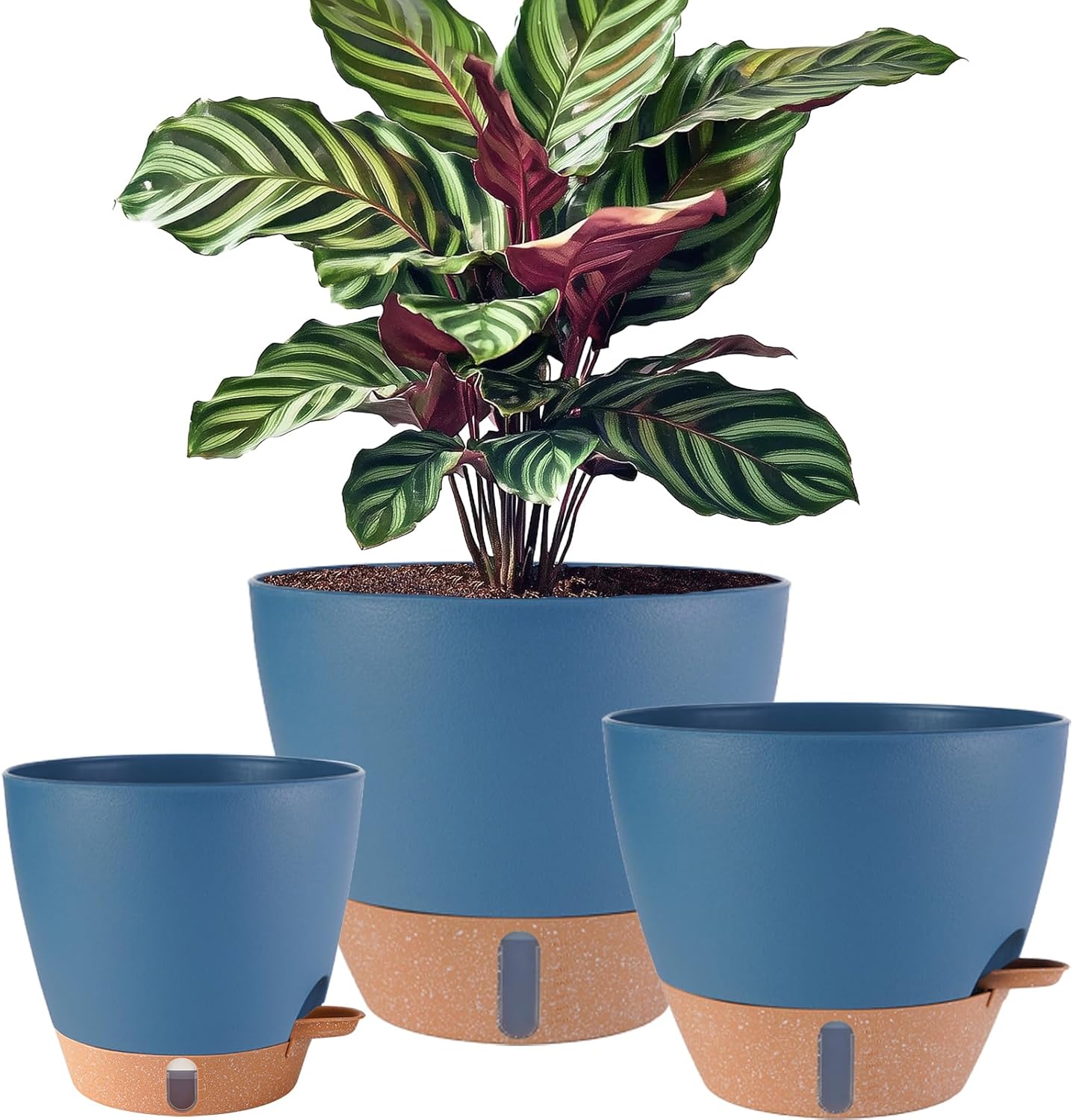
| Material Type | Plastic |
|---|---|
| Included Components | Tray |
| Indoor Outdoor Usage | Indoor, Outdoor |
| Other Special Features of the Product | Breathable, Drainage Hole, Portable, Self Watering |
These Fielda planters are a practical option for shade-loving flowers and foliage because their self-watering reservoir and visible water-level window help maintain consistent moisture without daily attention. Each set includes 8-, 10-, and 12-inch pots with removable trays and a cotton-wick system that draws water from the bottom reservoir into the soil, which reduces the risk of over- or under-watering in low-light conditions where soil dries slowly. The pots are made from thick, weather-resistant plastic that resists cracking and fading for outdoor use on a shaded patio, and multiple drainage holes plus an airflow gap aim to keep roots healthy. Typical use is potting a nursery container into the planter, filling the reservoir, and checking the window periodically rather than watering from the top. Limitations to note are the reduced usable planting depth because of the reservoir and that the system still requires occasional monitoring and cleaning to prevent residue buildup in the tray. For gardeners who prefer a low-maintenance approach, these planters simplify moisture management for shade plants but are not a zero-maintenance substitute for routine checks.
Best for: Buyers who want low-maintenance planters for shade-tolerant flowers and houseplants and prefer predictable, monitored watering rather than frequent top-watering.
Less Ideal for: Gardeners wanting the deepest possible root space for large shrubs or trees or those who prefer traditional soil-only pots without a built-in reservoir.
- Built-in self-watering reservoir with cotton-wick system for steady moisture
- Transparent water-level window for easy monitoring without moving the pot
- Durable, thick plastic construction suitable for indoor and sheltered outdoor use
- Removable tray and multiple drainage holes simplify cleaning and prevent waterlogging
- Reservoir reduces usable planting depth, which limits larger root balls
- Requires occasional tray cleaning and monitoring to prevent residue buildup
Verdict: If you want a low-effort, reliable way to keep shade-loving plants evenly moist, this self-watering 3-pack makes plant care simpler and more predictable.
Choosing the Right Outdoor Self Watering Planter: Key Factors to Consider
Reservoir Size and Water Delivery Method
A larger reservoir extends the time between refills, which matters if you travel or have limited time for routine care. Reservoirs that feed by wicking or a soil-spike system deliver water differently; wicking tends to keep the root zone uniformly moist while spike systems can provide a more direct supply to deeper roots.
Consider the planter's refill port location and whether the reservoir has a visible water-level indicator. A clear indicator removes guesswork and prevents overfilling. Also check whether the delivery mechanism can be flushed or cleaned to prevent mineral buildup, which is especially important in areas with hard water.
Drainage Performance and Overflow Management
Outdoor planters need reliable drainage to survive heavy rain. Good designs include overflow ports or channels that route excess water away from the root zone and prevent the reservoir from backing up.
Look at how the planter separates soil from the reservoir and whether there are multiple overflow points. Planters that trap standing water in the soil layer increase the risk of root diseases. A well-designed overflow path keeps the soil in the active root zone at the right moisture without flooding it during storms.
Durability and UV Resistance
Materials determine how a planter performs over seasons. UV exposure and temperature swings can cause thin plastics to crack, while porous materials may degrade or leach over time. Choose thick-walled plastics, rot-resistant composite materials, or well-fired ceramics for long-term outdoor use.
Also consider how the planter handles freeze-thaw cycles if you live where temperatures dip below freezing. Some materials can be drained and stored, while others are rated to remain outside year-round. Hardware such as fill caps and indicators should also resist corrosion and sunlight-induced brittleness.
Planting Volume and Root Access
The available soil volume affects what you can grow. Deep-rooted vegetables and perennials need more planting depth and loose, well-aerated soil. Many self-watering planters reduce usable soil volume because of the reservoir, so check effective root depth and width before planting.
Design features that allow easier root access or replanting are valuable. Removable liners or wide top openings make it simpler to refresh soil, divide plants, or change crops seasonally. If you plan to move heavy plantings, consider the planter's empty weight and whether it has integrated handles or caster options.
Ease of Filling, Monitoring, and Maintenance
A good self-watering planter should make routine tasks straightforward. Look for easy-access refill ports, visible water-level indicators, and reservoirs that can be flushed to remove salts and debris. Complicated fill systems or hidden chambers make maintenance a chore and reduce long-term reliability.
Think about how often you can realistically maintain the planter. If you rely on the reservoir for weeks at a time, choose designs with larger capacity and simple cleaning access. Consider whether the planter requires special tools to open or if parts are secured with fasteners that will corrode outdoors.
Plant Compatibility and Crop Types
Not every plant thrives in constantly moist conditions. Self-watering planters suit many vegetables, herbs, and moisture-loving ornamentals, but drought-tolerant shrubs or Mediterranean herbs may prefer drier soil and less frequent reservoir contact.
Match the planter to the crops you intend to grow. If you want a mixed container of moisture lovers and drier species, choose a planter with a shallow reservoir or the ability to modify delivery. Also consider whether the planter's microclimate-heat retention from dark materials or restricted airflow-will affect sensitive roots.
Where to Use Outdoor Self Watering Planters
Self-watering planters work well on patios, balconies, and raised decks where container watering is frequent and spills are a concern. They keep moisture steady in sunny spots that would otherwise need daily attention and are useful for vegetable beds in spaces without easy hose access.
Avoid placing reservoir planters directly on soft turf for long periods because trapped moisture beneath the base can damage grass. For rooftop or balcony use, check weight when filled and ensure the surface can bear the load.
- Patios and decks where regular watering is inconvenient
- Balconies and urban spaces with limited soil area
- Temporary garden setups and movable vegetable beds
Preparing Potting Mix for Best Results
Use a well-draining mix with good water-holding components for self-watering planters. A blend of coarse compost, coconut coir or peat alternative, and perlite or vermiculite balances moisture retention and aeration so roots can access stored reservoir water without sitting in saturated soil.
Avoid heavy garden soil or mixes high in fines that can compact and block wicking channels. Adding slow-release fertilizer tailored for containers ensures steady nutrient supply because frequent reservoir use can dilute nutrients in the root zone.
- Include coarse organic matter for structure
- Add perlite or similar to prevent compaction
- Choose fertilizers formulated for container gardens
Managing Reservoirs Through the Seasons
In warm months, check water levels more often because heat and wind increase plant demand. Top off reservoirs during heat waves and monitor water indicators rather than relying on calendar intervals. During heavy rain periods, confirm overflow ports are clear so excess water drains away.
Before winter, empty reservoirs if the planter material is not freeze-resistant and store the container in a protected spot. If you leave a planter outside, remove delicate fill caps and inspect plastic fittings for signs of brittle cracking after cold weather.
- Monitor more in hot, dry weather
- Clear overflow channels before storms
- Drain and store or protect non-freeze-rated containers for winter
Modifying Delivery for Different Plants
Some planters allow you to adjust how quickly water moves from the reservoir to the soil. You can slow delivery by adding a coarser layer above the reservoir or speed it by blending more moisture-retentive components into the topsoil. These tweaks let a single planter host a wider range of species.
If a planter consistently over-wets a particular crop, try raising the planting level with an internal liner or adding drainage material between the reservoir and soil. Conversely, if the reservoir is not supplying enough moisture, check for clogged wicks or compacted soil and refresh the mix as needed.
- Raise or lower planting depth to change moisture exposure
- Use internal liners to adjust soil volume
- Refresh soil when wicking slows
Accessibility and Ergonomics
Consider how you will fill and inspect planters on a daily or weekly basis. Tall, narrow planters can be awkward to reach into, while wide, shallow options may allow easier planting and harvesting. Handles, pour ports near the top, and visible indicators improve everyday ergonomics.
If you move containers seasonally, look for models with integrated handholds or flat sections to attach casters. Avoid designs that require tipping or disassembly for basic maintenance.
- Look for high, easy-to-reach fill ports
- Choose stable shapes to prevent tipping
- Prefer integrated handles or caster-ready bases for mobility
How We Chose the Best Outdoor Self Watering Planter
We focused on practical, garden-focused criteria that predict real-world performance for outdoor self watering planters. Key evaluation dimensions included reservoir capacity and delivery method, because how much water a planter holds and how it distributes moisture determines how long plants can go between fills. Drainage and overflow management was another essential filter, since outdoor planters must shed excess water during heavy rain to prevent root rot. Material durability and UV/weather resistance were assessed to estimate how the container will age on a deck or in full sun. Planting depth and root-access design were considered to ensure the container suits vegetables and larger ornamentals. Finally, ease of filling and routine maintenance were judged so gardeners can keep reservoirs clean and functioning. We excluded planters that rely solely on passive capillary mats without a defined reservoir or that are intended only for indoor use. We also filtered out designs that make maintenance impractical, such as reservoirs that cannot be flushed or accessed. The resulting selections emphasize water delivery reliability, weatherproof construction, appropriate planting volume, and straightforward upkeep.
FAQ
How often should I fill the reservoir?
It depends on reservoir size, plant type, and weather. In full sun you may refill every few days to a week, while shaded setups can go longer. Use the water-level indicator if provided and check soil moisture at the root zone.
Will self-watering planters cause root rot?
They can if drainage and overflow are poor or if soil compacts. Properly designed planters separate soil from standing water and include overflow paths. Use a well-draining mix and clear overflow channels to reduce rot risk.
Can I use regular potting soil in a self-watering planter?
Regular potting soil often works, but mixes that retain moisture yet stay airy perform better. Avoid heavy garden soils that can compact and block wicking. Amendments like perlite and coir improve water movement and aeration.
Are these planters suitable for edible crops?
Yes, many self-watering planters are well-suited to vegetables and herbs because they maintain consistent moisture. Ensure materials are food-safe, use fresh potting mix, and manage nutrients appropriately for edibles.
What should I do before winter?
If the planter is not rated for freeze-thaw cycles, drain the reservoir and store it indoors or in a protected area. Remove caps and indicators for storage and inspect components for damage before returning the planter to service in spring.
Final Verdict
Choose an outdoor self-watering planter by prioritizing reservoir behavior, drainage, and planting volume for the crops you intend to grow. Consider material durability and how easy the reservoir is to fill and maintain, because those factors determine long-term reliability. Balance the tradeoff between larger reservoirs for low-maintenance watering and sufficient planting depth for root development. With the right match to your site and plants, a self-watering planter will reduce daily watering chores and help keep container-grown vegetables and ornamentals healthier.
