

Note: This article contains affiliate links. If you click on these links and make a purchase, I may earn a small commission at no extra cost to you. This helps support my research and content. Read my full affiliate disclosure here.
If mice have found their way into your home, garage, or shed you need a clear plan that balances effectiveness with safety. Choosing the right rodent poison for mice matters because bait type, placement, and resistance patterns affect how quickly you see results and how safe the approach is for people and nontarget animals. This guide shortlists six top options and explains how they behave in typical indoor and near-structure settings. We'll evaluate products on bait performance, dosing stability, and safety considerations so you can pick an approach that fits your property and tolerance for risk. Read on for practical guidance before you set any bait.
Top Picks at a Glance
| Best Overall The best all-around choice for most situations | Bell Laboratories Final Blocks Rodenticide 18 lb |  |
| Best Quality Built to a higher standard if you want something more solid | Tomcat Bromethalin Place Pacs Rodent Bait, 4.1 lb pail |  |
| Best Value The sweet spot between price and what you get | Victor M925 Rodent Killer, 4 lb Fish‑Flavored Bait Balls | 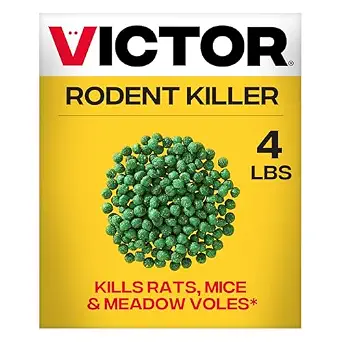 |
| Best Budget The cheapest option that still gets the job done reliably | d-Con Corner Fit Refillable Mouse Bait Station Refills, 10 Count |  |
| Highest Rated A top-rated pick with lots of positive feedback | Farnam Just One Bite II Rat & Mouse Bait Bars (8 pack) |  |
| Most Popular A crowd favorite that many people choose with confidence | Tomcat Bromethalin Bait Chunx Pail, 4.25 lb |  |
Bell Laboratories Final Blocks Rodenticide 18 lb

| Item Form | Spray |
|---|---|
| Target Species | Rodents |
| Item Weight | 19.9 pounds |
Final Blocks Rodenticide is a bulk block-style poison formulated for controlling rodents indoors and in outbuildings. It is presented as solid bait blocks designed to be placed in secure bait stations or locations rodents frequent; the block form helps keep bait in place and reduces scattering. Typical use is by distributing blocks around burrows, along runways, or inside tamper-resistant bait stations on a routine monitoring schedule. Practical benefits include a large 18 pound supply for sustained control programs and a concentrated formulation suited to professional or heavy residential infestations. Important limitations are that it is a toxic pesticide requiring careful placement in secured stations to keep pets and non-target wildlife away, and it assumes the user understands local regulations and safe handling. It does not include bait stations or measuring tools, so buyers should plan for storage and safe deployment accessories.
Best for: People managing moderate to heavy indoor or outbuilding rodent problems who prioritize an effective, long-lasting bait supply and will use tamper-resistant bait stations and proper safety practices.
Less Ideal for: Those with small, occasional mouse sightings, households with unsupervised pets or children, or anyone unwilling to follow pesticide safety rules should choose non-chemical or smaller packaged options.
- Large 18 lb supply suitable for multi-location or long-term control programs
- Block form resists scattering and stays in place along runways
- Designed for targeting rodents specifically, reducing wasted product
- Bulk pack is convenient for maintenance schedules without frequent repurchasing
- Contains toxic active ingredients and requires strict use in tamper-resistant bait stations
- No bait stations or placement accessories are included
- Not formulated or sold with child or pet-proof packaging integrated
Verdict: A bulk, block-style rodenticide that gives sustained, professional-strength bait supply for serious mouse control when used responsibly.
Tomcat Bromethalin Place Pacs Rodent Bait, 4.1 lb pail

| Unit Count | 1 Count |
|---|---|
| Item Type Name | Bait Pail |
| Target Species | Mouse |
| Item Form | Other |
Tomcat Bromethalin Place Pacs are a pre-portioned rodenticide intended to kill Norway rats, roof rats, and house mice, including some anticoagulant-resistant rodents. The product comes as individual 3-oz. place pacs in a refillable pail so you can deploy bait without measuring, and the instructions call for placing pacs in tamper-resistant stations for above-ground outdoor use or where children and pets may access them. Typical use is along walls, in corners, or near gnawed openings; for mice the pac is opened and a smaller portion is applied. Practical benefits include single-use dosing that simplifies placement, suitability for farm and home structures, and efficacy against rodents that resist anticoagulant baits. Important limitations are safety and handling requirements: gloves and protective clothing are required, carcass retrieval must be handled carefully, and label restrictions prohibit use on certain species in California. Also, this is a toxic chemical that requires responsible stationing and monitoring rather than a hands-off pest solution.
Best for: Buyers who need a high‑performance, ready‑to‑deploy rodenticide for persistent mouse infestations around homes, outbuildings, or farms and who are comfortable following label safety procedures.
Less Ideal for: People who prioritize nonchemical control methods, have children or pets in unsupervised areas without secure bait stations, or cannot comply with protective handling and disposal requirements.
- Pre-measured place pacs remove guesswork and simplify deployment
- Effective bromethalin formula for rodents including some anticoagulant-resistant strains
- Designed for both indoor and outdoor use when used in tamper-resistant stations
- Comes in a large pail with multiple pacs suitable for sustained control around structures
- Requires strict safety precautions and protective equipment during handling
- Not permitted for use on several listed non-target species in California
Verdict: If you want a performance-focused, pre-measured rodent bait that works on anticoagulant-resistant mice and rats, this Tomcat bromethalin pail delivers reliable, deployable dosing around structures.
Victor M925 Rodent Killer, 4 lb Fish‑Flavored Bait Balls

| Item Form | Soft Bait |
|---|---|
| Target Species | Rodents |
| Specification Met | EPA |
| Active Ingredients | Diphacinone 0.005% |
Victor M925 is a ready-to-use rodenticide sold as fish-flavored soft bait balls in a 4 pound bag for indoor and outdoor use. It is typically placed along walls, in concealed spots, or inside tamper-resistant bait stations to target mice, rats, and meadow voles. The low-dose anticoagulant formulation is palatable, which encourages repeated feeding until a lethal dose is consumed, and the weather-resistant bait holds up in wet outdoor conditions. The large bag supplies multiple placements, useful for treating larger homes, outbuildings, or property perimeters without frequent refills. Important practical considerations are safety and placement: the product must be kept away from children, pets, and non-target wildlife and used inside secure bait stations where required. It contains an active anticoagulant agent and requires following label directions for storage, deployment, and disposal. For someone tackling an established infestation, this bait offers a straightforward, long-lasting option when combined with proper stationing and safety precautions.
Best for: Homeowners or property managers who need a practical, no‑mix rodent bait to treat active mouse infestations across indoor and outdoor spots and who prioritize ease of deployment and long-lasting supply.
Less Ideal for: People who cannot reliably secure bait from children, pets, or wildlife or who prefer non-toxic or live-capture methods should consider alternative solutions.
- Ready-to-use soft bait that requires no preparation
- Weather-resistant formula suitable for outdoor placements
- Large 4 lb bag provides multiple bait stations and extended coverage
- Palatable fish flavor encourages repeated feeding by rodents
- Contains an anticoagulant active ingredient that is toxic to non-target animals if accessed
- Must be used in tamper-resistant bait stations in many situations, adding extra cost and setup
Verdict: A convenient, weather-resistant 4 lb bait that delivers straightforward, long-lasting rodent control when used safely in bait stations.
d-Con Corner Fit Refillable Mouse Bait Station Refills, 10 Count

| Unit Count | 10 Count |
|---|---|
| Target Species | Mouse |
| Active Ingredients | Cholecalciferol |
These 10-count refill baits are made for the low-profile d-Con corner-fit bait station and use cholecalciferol as the active ingredient. You place the refill inside the station where mice can enter, feed, and leave; the package is sized to fit tight spaces such as corners, behind appliances, attics, basements and garages. The formula is not an anticoagulant or classic neurotoxin, which some buyers prefer, and the station design lets you see bait consumption so you can tell if mice are feeding. The refills are suitable for indoor or protected outdoor use and are intended to stop mouse activity within a few days when mice consume the bait. Important limitations are that this is a toxic bait so placement must prevent access by children and pets and some infestations or resistant populations may require professional control or different active ingredients. Also you must own the compatible refillable station or buy one to use these refills.
Best for: Buyers who want an affordable, easy-to-monitor bait option to handle routine house mouse problems and who plan to use or already own a refillable corner-fit bait station.
Less Ideal for: People needing immediate elimination of large or established infestations, households with unsupervised children or pets who cannot guarantee secure placement, or those seeking non-toxic exclusion-based solutions.
- Made for corner-fit refillable stations so it fits tight spaces where mice travel
- Uses cholecalciferol rather than anticoagulants
- Visible bait in station lets you monitor consumption
- Weather-resistant formulation suitable for indoor or protected outdoor use
- Contains a toxic active ingredient requiring careful placement away from children and pets
- Refills only; a compatible bait station is required to use them
Verdict: A budget-friendly refill pack that delivers visible, station-based mouse control using cholecalciferol for routine household mouse problems.
Farnam Just One Bite II Rat & Mouse Bait Bars (8 pack)

| Item Form | Bar |
|---|---|
| Target Species | Rat,Mouse |
| Active Ingredients | Bromadiolone |
| Unit Count | 128 Ounce |
Farnam Just One Bite II is a second-generation anticoagulant bait in bar form intended for controlling Norway rats, roof rats and house mice around agricultural structures. The bars have nibble ridges to encourage chewing and the active ingredient bromadiolone is potent enough to deliver a lethal dose in a single night for many rodents, with death delayed four to five days to reduce bait shyness. It comes as eight individually wrapped 1 pound bars, which makes placement and storage straightforward, and the formulation targets warfarin-resistant rats as well. Practical use is as a targeted indoor or outdoor agricultural baiting program where secure placement in bait stations is possible and label directions are followed. Important limitations are that this is a toxic anticoagulant so it requires careful handling, secure stationing away from children and non-target animals, and it is intended for use in and around agricultural buildings rather than general household or landscape applications.
Best for: Buyers who prioritize dependable, professional-grade rodent control for agricultural buildings and want a bait that works against resistant rodent populations.
Less Ideal for: Homeowners seeking a low-risk household solution or users who cannot reliably secure bait stations around children, pets, or wildlife should consider non-toxic or alternative control methods.
- Contains bromadiolone effective against warfarin-resistant rodents
- Nibble ridges encourage chewing to increase likelihood of ingestion
- Individually wrapped 1 lb bars simplify placement and reduce mess
- Delayed mortality reduces bait shyness and can improve control success
- Toxic anticoagulant requiring strict placement and safety precautions
- Label restricts use to in and around agricultural buildings which limits general household use
Verdict: Choose this bait when you need a reliable, single-feeding anticoagulant that works against warfarin-resistant rats and mice in agricultural settings.
Tomcat Bromethalin Bait Chunx Pail, 4.25 lb

| Item Form | Bar |
|---|---|
| Target Species | Rodents |
| Net Weight | 4.25 lb |
Tomcat Bromethalin Bait Chunx is a bulk rodenticide intended for agricultural and professional applicators who need a fast-acting solution for mice and rats. The product is supplied as one-ounce bait blocks in a 4.25 pound pail that are designed to be placed inside tamper-resistant bait stations for indoor or outdoor, above-ground applications near buildings. Each block is formulated with bromethalin and is reported to deliver lethal doses quickly, often after a single night's feeding, making it useful when rapid knockdown of infestations is the priority. Practical benefits include easy-to-handle preformed blocks, compatibility with standard bait stations, and effectiveness against anticoagulant-resistant Norway rats, roof rats, house mice, and meadow voles. Important limitations are regulatory and safety requirements: outdoor use must be within 100 feet of structures and blocks must be used in tamper-resistant stations to protect children, pets, and non-target wildlife. This product is intended for trained users and must be applied according to label directions and local regulations.
Best for: People managing active mouse or rat problems who prioritize a fast, professional-strength bait and who will use tamper-resistant stations and follow label safety rules.
Less Ideal for: Casual homeowners wanting a low-risk, consumer-grade option for small, occasional problems or anyone unwilling to follow regulatory and safety application requirements.
- Preformed 1 oz bait blocks for consistent dosing and easy placement
- Effective against anticoagulant-resistant Norway rats, roof rats, and house mice
- Fast-acting bromethalin formula that can kill after a single night's feeding
- Large 4.25 lb pail supplies many bait placements for professional-scale jobs
- Requires tamper-resistant bait stations for safe indoor or outdoor use
- Not permitted for certain species in some jurisdictions and subject to label restrictions
Verdict: Choose this if you need a fast-acting, professional-strength bromethalin bait in preformed blocks for serious mouse and rat infestations used with tamper-resistant stations.
Choosing the Right Rodent Poison for Mice: Key Factors to Consider
Active Ingredient and Mode of Action
Different poisons use different chemicals and kill mechanisms which affect effectiveness and safety. Anticoagulant compounds disrupt blood clotting and often require repeated feedings to be lethal, while non-anticoagulant toxicants may act faster but carry different exposure risks. Understanding the active ingredient helps you anticipate how quickly mouse numbers will fall and whether the bait will still work if resistance is present.
Knowing the mode of action also informs post-exposure steps. Anticoagulant poisonings can sometimes be treated with specific antidotes if accidental exposure occurs, whereas other chemistries might not have an antidote readily available. That reality affects where and how you are willing to place bait around children, pets, and wildlife.
Bait Formulation and Palatability
Formulation determines whether mice will readily eat the bait. Baits come as blocks, pellets, wax, or liquid gels and may include attractants that appeal to local mouse populations. In cluttered indoor spaces a more palatable formulation increases the chance rodents feed enough to be affected. Hard blocks resist humidity and mess, while gels or pastes can be more attractive but may dry out or be accessible to non-targets.
Palatability also affects how much bait must be used. Highly accepted baits require smaller quantities and less frequent replacement. If you have persistent infestations or fragmented bait uptake among a colony, choosing a formulation proven to attract mice in similar settings will speed control efforts.
Resistance Patterns and Local Effectiveness
Mice populations can develop resistance to certain active ingredients over time. Local use patterns and history of control efforts can influence whether a common anticoagulant will be effective. If treatments in your area have been failing repeatedly, resistance may be a factor and using an alternative mode of action could be necessary.
Resistance considerations affect long-term planning. Rotating active ingredient types or combining mechanical controls with baits reduces the risk that a population will survive and rebound. Before selecting a product, consider whether local pest-control resources or extension services report resistance issues in your region.
Placement, Bait Stations, and Accessibility
Where and how you place bait is as important as what bait you buy. Mice prefer to travel along edges, inside wall voids, and behind appliances, so secure placement in tamper-resistant bait stations along known runways maximizes uptake and reduces accidental access by children and pets. Some formulations are intended only for interior use while others are labeled for outdoor perimeter placement; mismatch can lead to reduced effectiveness or safety violations.
Consider the stability of the bait in the intended placement. Moist basements or outdoor eaves may degrade certain baits faster. Bait stations that lock and hide toxicant reduce secondary poisoning risk and make monitoring consumption easier, which helps you know when to replace or remove bait.
Safety, Nontarget Risk, and Legal Label Requirements
Toxicants carry varying risks to people, pets, and wildlife. Read and follow label directions because they are legally binding and written to reduce nontarget exposure. Some products are formulated so they are less likely to transfer toxicosis to scavengers, others have clear restrictions on indoor use if children or companion animals are present.
Safety planning also covers storage and disposal. Keep bait in original containers, locked away and out of reach, and follow label guidance for disposing of unused material and carcasses. Effective rodent control minimizes the time toxicants remain in the environment and reduces the chance of accidental exposures.
Speed of Kill Versus Bait Persistence
A faster-acting toxicant will reduce visible activity sooner, which is important in sensitive indoor situations where quick control is desired. However, fast-acting poisons can increase the likelihood of mice dying in inaccessible voids and creating odor problems. Slow-acting anticoagulants may allow mice to feed multiple times and die in places you can reach for sanitary removal.
Balance the need for rapid reduction with the logistics of carcass retrieval and odor control. In areas where carcasses would be hard to access, a more persistent and slower-acting option paired with good monitoring and placement choices may produce a cleaner outcome.
When to Use Poison Versus Other Control Methods
Poison is one tool among several for controlling mice. Use toxicants when exclusion and trapping have not reduced activity sufficiently or when infestation size makes traps impractical. Poisons are most effective as part of an integrated approach that includes sealing entry points, reducing food and shelter, and sanitation.
If children, pets, or wildlife have regular access to the area, prioritize non-chemical measures first and use tamper-resistant stations and targeted placements if you must use bait. In confined indoor spaces, trapping and exclusion may avoid many of the risks associated with toxicants.
- Combine baiting with exclusion for longer-term control
- Use stations to limit nontarget access
- Choose traps for small, localized problems where carcass retrieval matters
Safe Placement and Monitoring Practices
Place tamper-resistant bait stations along walls, in corners, and near signs of activity like droppings or gnaw marks. Avoid placing loose bait on countertops, open shelves, or areas accessed by children and pets.
Check bait stations regularly and record consumption. Monitoring helps you know whether bait is being eaten and whether you can reduce the amount used. Replace stale or contaminated bait promptly and follow label directions for handling and personal protective equipment.
- Prefer stations that lock and hide the bait
- Document bait checks and consumption levels
- Maintain hygiene when handling stations and carcasses
Dealing with Dead Rodents and Odor Control
Expect some carcasses after bait use and plan for removal. Use gloves and a disposable bag to retrieve dead rodents and dispose of them following local regulations and label guidance. If a carcass is in an inaccessible void, increased ventilation and odor-absorbing materials may help while decomposition runs its course.
To minimize odor issues choose baits and strategies that reduce the chance of mice dying in walls or ceilings. Regular monitoring and strategic placement near accessible runways make retrieval more likely and reduce complaints from occupants.
- Wear gloves and wash hands after handling carcasses
- Use sealed bags for disposal where required
- Increase ventilation and use odor absorbers if removal is delayed
Integrating Poison with Long-Term Prevention
Treating an active infestation is only the first step. Seal gaps larger than a quarter inch where mice can enter, store food in sealed containers, and reduce clutter that offers nesting sites. These steps reduce the need for repeated toxicant use and make future treatments more effective.
Maintain a regular inspection schedule around potential entry points and food sources. Over time, consistent prevention measures reduce dependence on poisons and lower nontarget risk.
- Inspect foundations, utility penetrations, and doors regularly
- Keep compost and bird feed away from house walls
- Repair screens and vents to limit access
Legal and Label Considerations
Always follow federal, state, and local regulations when using rodent toxicants. Labels carry legally required directions on where and how a product may be used, permitted application rates, and required protective equipment. Misuse can increase risks and may violate local ordinances.
If you are unsure about label language, consult local extension services or regulatory guidance before applying a bait. Proper record-keeping of where and when products were used helps if questions arise later.
- Treat label instructions as the authoritative legal guidance
- Record application locations and dates for future reference
- Check local rules for carcass disposal and pesticide storage
How We Chose the Best Rodent Poison for Mice
We focused on attributes that determine how well a rodent poison for mice performs in real household and outbuilding settings. Primary evaluation criteria included bait efficacy under indoor conditions, measured by palatability and persistence; formulation safety, considering toxicity to children, pets, and nontarget wildlife as well as documented antidote availability; resistance profile, looking at whether the active ingredient is known to face anticoagulant resistance in mice; placement flexibility, meaning what environments and bait stations the formulation works in; and handling and storage requirements such as shelf life and whether the bait requires special PPE. We also considered the clarity of label instructions because safe, correct use depends on clear dosing and disposal guidance. We excluded products intended only for outdoor agricultural broadcast use and options that require professional licensing to apply. We filtered out baits with incomplete safety information or labels that do not specify indoor use. The final shortlist represents formulations and delivery methods that balance field-proven bait acceptance with manageable safety and handling needs for homeowners and property managers.
FAQ
How soon will I see a reduction in mouse activity after using poison?
It depends on the active ingredient and bait acceptance. Fast-acting toxicants can reduce visible activity in a few days, while anticoagulants may take several days to a week because rodents need to feed multiple times. Monitoring bait uptake gives the best early indicator of likely success.
Is rodent poison safe to use around pets and children?
Poison carries inherent risks and must be used with caution. Use tamper-resistant stations, place bait out of reach, and follow label restrictions closely. If exposure is suspected, contact a veterinary professional or poison control resource promptly.
Will mice develop resistance to rodent poison?
Resistance can develop, especially with repeated use of the same active ingredient over time. Rotating modes of action and combining baiting with exclusion and sanitation reduces the chance that a population will persist due to resistance.
Can I use outdoor baits inside my house?
No. Products labeled for outdoor use only may not be safe or effective indoors. Always use formulations that are explicitly permitted for interior placement and follow label instructions for indoor applications.
How should I dispose of unused bait and dead rodents?
Follow label disposal instructions and local regulations. Generally, unused bait should be kept in its original container and disposed of as directed, while carcasses should be placed in sealed bags and disposed of per local rules or collected by municipal services if required.
What should I do if a mouse dies in a wall cavity and causes an odor?
Increase ventilation and use odor absorbers; try to locate and retrieve the carcass if possible. If the smell persists or health concerns arise, consult a pest management professional or building specialist about access and remediation options.
Final Verdict
Choose a rodent poison for mice by balancing bait acceptance, active ingredient mode of action, and safety for people and nontarget animals. Prioritize tamper-resistant placements, clear label compliance, and integration with exclusion and sanitation to prevent reinfestation. If you expect odor or carcass retrieval issues, favor slower-acting approaches and careful monitoring. With these tradeoffs in mind you can select an option that controls mice effectively while minimizing risk to occupants and pets.
