

Note: This article contains affiliate links. If you click on these links and make a purchase, I may earn a small commission at no extra cost to you. This helps support my research and content. Read my full affiliate disclosure here.
You want weeds out and flowers safe and thriving. Picking the right herbicide for flower beds matters because some products remove broadleaf weeds while harming desirable plants or leaving a persistent soil residue that affects future plantings. This guide shortlists the top herbicide options suited to flower beds and explains how each was judged for selectivity, soil persistence, and application practicality. Read on to see which types of products match common flower-bed situations and which considerations matter most before you treat a border or mixed planting.
Top Picks at a Glance
| Best Overall The best all-around choice for most situations | Roundup Weed & Grass Killer with Sure Shot Wand, 1 gal |  |
| Best Quality Built to a higher standard if you want something more solid | Gordon's Ornamec 170 Grass Herbicide, 32 oz |  |
| Best Value The sweet spot between price and what you get | Spectracide Weed & Grass Killer Concentrate, 64 oz | 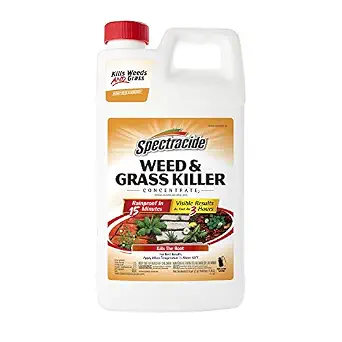 |
| Most Popular A crowd favorite that many people choose with confidence | Spectracide Weed & Grass Killer with AccuShot Power Sprayer, 1.33 Gal |  |
| Best Seller A high-volume bestseller chosen again and again | Roundup Weed & Grass Killer with Comfort Wand, 1.33 gal. |  |
Roundup Weed & Grass Killer with Sure Shot Wand, 1 gal

| Unit Count | 128 Fluid Ounces |
|---|---|
| Item Form | Spray |
| Coverage | 300 square feet |
| Liquid Volume | 1 gallons |
This ready-to-use Roundup formulation is built for targeted spot control around flower beds, walkways, and foundations. The included Sure Shot Wand extends spray reach about two feet and has a shield that helps contain spray so you can treat weeds next to desirable plants without as much drift. It kills common broadleaf weeds and grasses to the root with visible yellowing in hours and full dieback in one to two weeks, and it becomes rainproof in roughly 30 minutes. Practical benefits include a large 1 gallon container that covers up to 300 sq ft and simple application steps that let you treat hardscapes, mulch beds, and gravel areas. Important limitations are that it is a nonselective herbicide so care and precise targeting are required to avoid harming ornamentals, and you must keep people and pets away until the spray dries. Follow the stated application limits and replanting windows to avoid unintended damage to new plantings.
Best for: Gardeners who want a straightforward, targeted solution for clearing weeds around established flower beds, hardscapes, and edging and who value fast visible results with a shielded wand for control.
Less Ideal for: People managing lawns or seeking a selective herbicide that spares grasses or who prefer organic, non-chemical weed control methods.
- Shielded Sure Shot Wand concentrates spray and reduces drift when working near desirable plants
- Rainproof in as fast as 30 minutes so light rain shortly after application does not wash it away
- Visible results within hours and complete kill in 1 to 2 weeks for many common weeds
- Ready-to-use 1 gallon container covers up to 300 square feet for multiple spot treatments
- Nonselective formula will damage any plants it contacts, so careful targeting is required
- Contains usage restrictions and waiting periods before repeat application and replanting
Verdict: A convenient, shielded ready-to-use herbicide that lets you quickly and precisely remove weeds around flower beds and hardscapes.
Gordon's Ornamec 170 Grass Herbicide, 32 oz

| Unit Count | 32 Fluid Ounces |
|---|---|
| Item Form | Spray |
| Coverage | Annual |
| Active Ingredients | Herbicide |
Ornamec 170 is a targeted grass herbicide intended for maintenance of flower beds and landscape plantings. It is applied as a spray and designed for over-the-top use on many ornamentals, groundcovers, shrubs and trees without causing injury when used according to the label. The active chemistry halts grass growth within about 48 hours and produces visible death in one to three weeks, which is useful for rapid knockdown of annual and perennial grassy weeds. Typical use is mixing the concentrate with water (label notes a mixing guideline of roughly 10 ounces per gallon) and treating actively growing grass before it exceeds recommended stages. Practical benefits include broad ornamental labeling that reduces the need to protect nearby plants and relatively fast visible results. Important limitations are that it only controls grasses and will not affect broadleaf weeds, and it requires careful adherence to label directions to avoid injury to sensitive species and to time applications for best control.
Best for: Gardeners who prioritize fast, selective control of grass weeds in flower beds and want a product they can spray near established ornamentals when used as directed.
Less Ideal for: Buyers seeking a single product to manage both grassy and broadleaf weeds or those who prefer non-chemical weed control methods.
- Labelled for over-the-top use on many ornamentals, simplifying bed maintenance
- Rapid action on grassy weeds with growth stoppage in ~48 hours
- Concentrated liquid formula that mixes for spray application
- Approved for use in a wide range of landscape settings including beds and fence lines
- Controls only grassy weeds, not broadleaf species
- Requires careful timing and strict adherence to label to avoid plant damage
Verdict: Choose Ornamec 170 when you need a fast, ornamental-safe solution specifically to eliminate grass weeds in flower beds.
Spectracide Weed & Grass Killer Concentrate, 64 oz

| Unit Count | 64 Fluid Ounces |
|---|---|
| Coverage | 2742 square_feet |
| Item Form | Liquid |
| Liquid Volume | 64 fluid ounces |
| Active Ingredients | Herbicide |
Spectracide Weed & Grass Killer Concentrate is a mix-with-water, tank-sprayer formula for killing unwanted weeds and grasses down to the root on driveways, walkways and around planting areas. You mix the concentrate at the labeled rate and apply to thoroughly cover foliage; the formula becomes rainproof in about 15 minutes and can show visible browning in as fast as three hours. It is intended for spot treatment rather than blanket application and lets you replant in treated areas after roughly one day. Practical features include a concentrated liquid for treating multiple small areas from a single bottle and clear usage guidance about temperature and coverage. Important limitations for flower-bed use are that it is non-selective and will damage desirable plants if contacted, so extreme care, shielding, or hand-spot treatment is required when working near flowers and shrubs. Protective gear and following label directions are necessary for safe use.
Best for: A practical gardener who needs an effective spot-treatment herbicide to clear stubborn weeds from hardscape areas or to prepare small patches for replanting and values fast, reliable results.
Less Ideal for: Gardeners who want a selective product to control weeds inside flower beds without risk to ornamentals or those who prefer organic or non-chemical weed control methods.
- Concentrated formula treats multiple spot areas from one bottle
- Fast-acting with visible results in about three hours
- Becomes rainproof in 15 minutes so light rain won’t wash it away
- Can replant treated area after one day when label directions are followed
- Non-selective formula will kill any plants it contacts requiring careful shielding
- Requires mixing and a sprayer which adds setup time and potential for application error
Verdict: Buy this concentrate if you want a fast, rainproof spot herbicide to clear weeds and prepare small areas for replanting.
Spectracide Weed & Grass Killer with AccuShot Power Sprayer, 1.33 Gal

| Unit Count | 170 Fluid Ounces |
|---|---|
| Liquid Volume | 1.33 gallons |
| Active Ingredients | Diquat Dibromide 0.12%, Fluazifop-p-butyl 0.06%, Dicamba 0.04% |
| Form | Spray |
| Coverage | 1 gallon |
Spectracide Weed & Grass Killer is a ready-to-use non-selective herbicide designed to kill broadleaf weeds and grasses down to the root and comes with an AccuShot continuous-power sprayer for easier application. It is typically used on driveways, walkways, patios and around flower beds where you need to eliminate unwanted vegetation; aim and spray until leaves are covered, and results can appear in as little as three hours with rainfast protection after 15 minutes. The extendable wand and battery-powered trigger reduce hand fatigue and improve accuracy for targeted spot treatments. Practical benefits include fast visible results, the ability to replant treated areas within a day, and a reusable sprayer for future applications. Important limitations are that the formula is non-selective so it will damage desirable plants if contacted, safety precautions and PPE are required, and the sprayer uses four AA batteries which adds ongoing maintenance. Follow label directions closely to protect nearby flowers and avoid applying near water.
Best for: Gardeners who want a fast, reliable way to clear weeds from hard surfaces and the edges of planting areas while minimizing hand fatigue during application.
Less Ideal for: People who need a selective herbicide for use directly in established flower beds or who prefer an all-natural, non-chemical approach.
- Includes AccuShot battery-powered sprayer with extendable wand for accurate, continuous spraying
- Kills weeds and grasses down to the root with visible results in about three hours
- Rainproof in 15 minutes, allowing replanting in treated areas after a short wait
- Non-selective formula will harm desirable plants if accidentally sprayed
- Requires four AA batteries for the sprayer which must be replaced periodically
Verdict: Choose this product if you want a fast-acting, ready-to-use herbicide with an accurate battery-powered sprayer for quickly clearing weeds from paths, patios, and bed edges.
Roundup Weed & Grass Killer with Comfort Wand, 1.33 gal.

| Item Form | Liquid |
|---|---|
| Coverage | 400 sq. ft. |
| Liquid Volume | 1.33 gallons |
This 1.33 gallon Roundup Weed & Grass Killer is a ready-to-use liquid herbicide meant for spot treatment around flower beds, walkways, driveways, and foundations. The built-in Comfort Wand provides one-touch continuous spray, making it easier to treat larger patches without repeatedly pumping a separate sprayer. The formula claims visible results in as fast as six hours and becomes rainproof in about 30 minutes, which helps reduce the window of reapplication risk. It lists common targets such as dandelion, crabgrass, poison ivy and clover and is formulated to kill to the root so regrowth is less likely. Practical benefits for gardeners include broad-spectrum control without mixing concentrate and a quoted coverage up to 400 sq ft for simple planning. Important limitations: this is a non-selective herbicide so drift or contact with desirable flowers and perennials can cause damage, and treated areas should remain off-limits to people and pets until dry; follow the label guidance on replanting intervals. For small, precise use in and around beds it is convenient, but it requires careful application to protect surrounding plants.
Best for: Practical gardeners who want a straightforward, no-mix herbicide for targeted spot treatment around flower beds and hardscaping and who prioritize ease of application and quick results.
Less Ideal for: Homeowners who need a selective product that preserves surrounding flowers and perennials or who prefer organic, non-chemical weed control methods should consider alternatives.
- Integrated Comfort Wand with one-touch continuous spray simplifies spot treatment
- Ready-to-use liquid requires no mixing or measuring
- Fast visible results and quick rainproof time reduce reapplication risk
- Broad control of common broadleaf weeds and grasses, including crabgrass and dandelion
- Non-selective formula can harm nearby desirable plants if it drifts or contacts foliage
- Large container may be heavy to handle for some users despite the wand convenience
Verdict: A convenient ready-to-use herbicide with a comfort wand that delivers fast, broad-spectrum weed control for targeted treatments around flower beds.
Choosing the Right Herbicide for Flower Beds: Key Factors to Consider
Selectivity Versus Nonselective Action
Selectivity determines whether a product targets only weeds or will also damage desirable flowers. In mixed borders and perennial beds you usually need selective herbicides that target specific weed types, such as broadleaf weeds or grassy weeds, while leaving ornamentals intact. Nonselective options are useful for clearing beds before planting or treating hardscape edges, but they carry a higher risk of killing desirable plants by contact or root uptake.
Consider the life stage and root structure of both weeds and ornamentals. Some selective chemistries are safe on many mature perennials but can still harm seedlings. Plan applications for times when desirable plants are dormant or well-established if using stronger products.
Soil Residual and Replanting Intervals
Residue persistence affects how soon you can replant or introduce seeds after treatment. Products with long soil activity offer extended weed suppression but can block germination of new bedding plants or seeds for weeks to months. Short-residual or contact-only herbicides reduce the risk to future plantings but may require repeat treatments for persistent weeds.
Match residual expectations to your gardening plans. If you need quick cleanup before transplanting, pick a product labeled for short replant intervals. If you want season-long control in a mulched perennial bed, a longer-residual product might be acceptable, provided label directions are followed.
Method of Application and Spot Control
How you apply a herbicide affects precision and risk to nearby flowers. Handheld sprayers and wands with adjustable nozzles allow targeted spot treatment, which is ideal in mixed beds to minimize drift. Granular products can be easier to apply for bare soil areas but are less precise around plant roots. Foam or gel formulations that adhere to leaves can reduce runoff and movement.
Think about wind, nozzle type, and whether you need a shielded applicator for tight borders. Good technique reduces accidental contact with ornamentals and lowers the chance of reapplication caused by missed patches.
Weed Type and Growth Stage
Different herbicides work best on particular weed categories and growth stages. Annual broadleaf weeds are typically controlled by foliar-active products applied when plants are small and actively growing. Deep-rooted perennials and woody seedlings often require products with translocation into roots or repeat mechanical removal plus chemical treatment.
Identify the dominant weeds in your beds before choosing a product. Treat young, actively growing weeds when they are most susceptible, and plan follow-up treatments for regrowth or tough perennials.
Safety for Pollinators and Pets
Flower beds are commonly visited by pollinators, and many gardens are shared with pets. Choose products with clear label guidance about pollinator exposure, including whether to apply when blooms are present and recommended wait times until flowering resumes. Some formulations require that flowering plants be covered or removed from the treatment area until residues have degraded.
Also check pet safety instructions and reentry times for family members. Proper timing of applications and following label restrictions can reduce unintended harm while still delivering effective weed control.
Compatibility With Mulch and Irrigation
Mulches and irrigation patterns change how herbicides behave in flower beds. Mulch can intercept sprayed herbicides and reduce contact with soil, which may be useful for protecting roots but can also reduce efficacy on ground-level weeds. Water-activated granules and products with rainfast windows will behave differently depending on irrigation schedules and recent rainfall.
Plan applications relative to watering and mulching. Avoid applying certain formulations right before heavy watering unless the label specifies compatibility, and account for how mulch depth will alter movement and persistence.
When to Use Contact Versus Systemic Treatments
Contact herbicides kill only the plant tissue they touch, so they often provide quick visible results but may not prevent regrowth from roots. These are best for small, annual weeds or for reducing green mass before removing roots by hand.
Systemic herbicides move through the plant to reach roots and stored energy. They are generally more effective on deep-rooted perennials but need careful timing when applied to actively translocating plants. Consider systemic options when you want longer-lasting control of stubborn species.
- Contact treatments act fast but may require repeat applications.
- Systemic options work slower but can reduce regrowth from roots.
- Use spot treatment with systemic products to protect nearby ornamentals.
Application Timing and Weather Considerations
Apply herbicides during calm, dry weather to limit drift and to ensure foliar uptake. Wind increases the risk of off-target damage, and rain shortly after application can wash away contact treatments or activate certain granules prematurely.
Temperature can affect herbicide activity. Very hot or cold conditions may limit plant uptake or increase phytotoxicity to ornamentals. Follow label guidance for ideal temperature ranges and rainfast intervals.
- Avoid windy days and apply when forecasts are dry for 24 hours if possible.
- Treat weeds when they are actively growing rather than dormant.
- Steer clear of applications during bloom if pollinators are present unless product guidance permits it.
Mixing, Dilution, and Safe Handling
Accurate mixing is critical in a flower bed setting to avoid overdosing desirable plants. Use measuring tools and prepare only what you need for the area to be treated. Label directions specify dilution rates by weed type and application method.
Wear appropriate protective gear and keep pets and children away until reentry times have passed. Rinse equipment away from beds you will plant in to avoid unintended contamination.
- Measure concentrates carefully; small errors matter in small gardens.
- Clean sprayers after each use to prevent cross-contamination.
- Store leftover product securely and according to label instructions.
Nonchemical Alternatives and Integrated Control
Herbicides are one tool among many. Mulching, hand weeding, flame weeding on nonplant surfaces, and improved cultural practices reduce weed pressure and can lengthen the interval between chemical treatments.
Integrated approaches lower reliance on herbicides and reduce risks to pollinators and soil health. Rotate tactics seasonally and combine mechanical control with targeted herbicide use for persistent problems.
- Use dense planting and groundcovers to shade out annual weeds.
- Remove seed heads before they set to reduce future weeds.
- Use targeted chemical control only where other methods are impractical or ineffective.
Dealing With Tough Perennials and Recurrent Weeds
Persistent species may require repeated, well-timed treatments and a combination of mechanical and chemical control. Cutting back top growth before applying a systemic product can improve translocation to roots.
After treatment, monitor for regrowth and address escapes promptly with spot treatments or hand removal to prevent reseeding. Adjust expectations: some species take multiple seasons to control fully.
- Time systemic applications when plants are actively moving nutrients to roots.
- Follow up with manual removal of weakened root systems.
- Consider seasonal maintenance plans to prevent reinfestation.
How We Chose the Best Herbicide for Flower Beds
We focused on products and formulations that gardeners commonly use in flower beds and prioritized criteria that reflect real yard conditions. Our evaluation emphasized selectivity between weeds and ornamental plants, the length of soil activity after application, and application control options that reduce drift or splash. We also weighed ease of use in small-scale garden settings, including spray or spot-treatment ergonomics, and safety guidance for nearby pollinators and pets. Lab-style ingredient potency was considered alongside recommended dilution rates to judge practical effectiveness. We excluded general turf-only herbicides and treatments designed solely for agricultural row crops. Products that require specialized licensing or commercial equipment were also filtered out. The result is a list focused on options appropriate for home gardeners maintaining flower beds, with attention to both short-term weed control and longer-term bed health.
FAQ
Can I use a nonselective herbicide in a mixed flower bed?
You can, but only with extreme caution. Nonselective products will damage any green tissue they contact, so use them on bare soil or as spot treatments where ornamentals can be physically protected or temporarily removed.
How soon can I replant after applying a herbicide?
Replanting intervals vary by product. Short-residual, contact-only herbicides often allow replanting within days to weeks, while longer-residual options can require several weeks or months. Always follow the label's replanting guidance.
Are there herbicides safe for use around pollinator-attractive flowers?
Some products include instructions for avoiding applications during bloom or recommend treatments that minimize residue on nectar and pollen. Choosing formulations with clear pollinator guidance and timing applications outside peak bloom reduces risk.
Will mulch affect herbicide effectiveness?
Yes. Mulch can intercept sprays and reduce contact with soil-level weeds, which may be desirable or reduce efficacy depending on your goal. Some products are formulated for use with mulch, but you should adjust technique and placement accordingly.
What's the best way to treat weeds in narrow borders next to desirable plants?
Use a precise application method such as a handheld wand with a narrow nozzle, shielded sprayer, or spot-applied gel to limit drift and contact. Physical barriers like cardboard or plastic shields can also protect nearby roots during treatment.
Do organic herbicides work for deep-rooted perennials?
Organic, contact-based herbicides often suppress top growth but may not translocate enough to kill deep roots. They can be useful for temporary control or as part of an integrated plan, but persistent perennials usually need repeat treatment or a systemic option for full control.
Final Verdict
Choosing the right herbicide for flower beds is about matching product behavior to your planting plan. Prioritize selectivity when treating mixed borders, and weigh soil residual against your replanting schedule. Use precise application methods and timing to protect blooms and pollinators. By combining targeted chemical tools with good cultural practices you can manage weeds effectively while preserving the health and appearance of your flower beds.
