

Note: This article contains affiliate links. If you click on these links and make a purchase, I may earn a small commission at no extra cost to you. This helps support my research and content. Read my full affiliate disclosure here.
Ants form hidden colonies that can survive many surface treatments unless the bait reaches and is carried back to the nest. Choosing an ant bait that kills the nest matters because spot sprays or traps that only remove foragers leave the colony intact and allow reinfestation. This guide covers our shortlist of the top options for household situations where colony elimination is the goal. We evaluated how attractive each bait is to different ant species, how reliably worker ants carry the bait to nestmates, and practical use factors like placement and safety. Read on to compare the best choices for long-term control and to learn how to use them effectively.
Top Picks at a Glance
| Best Overall The best all-around choice for most situations | TERRO Liquid Ant Killer 3-Pack (T200-3SR) |  |
| Best Quality Built to a higher standard if you want something more solid | Syngenta Advion Ant Gel (4 Tubes, 30 g each) |  |
| Best Value The sweet spot between price and what you get | Combat Max 2‑in‑1 Ant Bait Station, 4 Count |  |
| Best Budget The cheapest option that still gets the job done reliably | Raid Indoor Ant Killer Baits, Child-Resistant, 4 Count |  |
| Highest Rated A top-rated pick with lots of positive feedback | ROUTADE 48-Pack Slow-Acting Ant Gel Bait Stations |  |
| Most Popular A crowd favorite that many people choose with confidence | TERRO Liquid Ant Killer Bait Stations, 12-Pack (T300B) |  |
| Best Seller A high-volume bestseller chosen again and again | Ortho Orthene Fire Ant Killer, 12 oz (2-Pack) |  |
TERRO Liquid Ant Killer 3-Pack (T200-3SR)

| Item Form | Liquid |
|---|---|
| Active Ingredients | Sodium Tetraborate Decahydrate (Borax) 5.40% |
| Target Species | Insects |
| Specification Met | EPA |
TERRO Liquid Ant Killer is a straightforward indoor bait system designed to eliminate common household ants by having workers feed on a borax-based liquid and transfer it to the colony. You apply drops of the bait onto the included cardboard tiles and place them along ant trails, baseboards, counters, and other activity hotspots. The 3-pack gives multiple bait stations for treating several rooms or repeated placements. The active ingredient, sodium tetraborate decahydrate, works slowly enough to be shared among nestmates so the queen and hidden workers are affected, which can produce visible reductions in a few days. Because the formulation is liquid and comes in drip bottles, placement and reapplication are simple and low-mess compared with granular or spray options. Limitations are that the product is intended for indoor use only and requires ants to find and feed on the bait, so heavily contaminated or outdoor nests may need additional measures. When used as directed it is a practical, low-effort solution for routine household infestations.
Best for: Homeowners wanting a low-effort, indoor-focused solution to eliminate sugar ants and other household species who prefer baiting over sprays.
Less Ideal for: People who need immediate knockdown of visible ants outdoors or who require a product for large external infestations should look at targeted outdoor nest treatments.
- Borax-based liquid attracts worker ants and allows transfer to the colony for more complete elimination
- Three 2 oz bottles provide multiple placements for whole-house coverage
- Simple drop application on included cardboard tiles makes setup and reapplication low-mess
- EPA specification met and formulated for common household ant species including sugar and ghost ants
- Only effective if ants discover and consume the bait, so results depend on placement and ant behavior
- Designed for indoor use and may not address outdoor nests feeding into the house
Verdict: A simple, effective indoor bait that uses borax to knock out sugar ant colonies by relying on worker-to-colony transfer.
Syngenta Advion Ant Gel (4 Tubes, 30 g each)

| Unit Count | 4.23 Ounce |
|---|---|
| Included Components | 4 Tubes x 30-Grams, 1 Plunger and 2 Tips |
| Item Form | Gel |
| Active Ingredients | 0.05% indoxacarb |
| Target Species | Insects |
Advion Ant Gel is a user-friendly gel bait intended to control common household and structural ant species by exploiting worker foraging behavior. You apply small spots or short lines of the odorless gel along active trails, in cracks and crevices, and near entry points; foraging workers consume the bait and carry it back to the nest where it is shared, helping to eliminate the queen and other nestmates. The kit ships with four 30 g tubes plus an applicator plunger and tips for precise placement, which makes targeting tight spaces straightforward. Its non-repellent formula with 0.05% indoxacarb is formulated to be attractive to a range of species including Argentine and carpenter ants, and it is labeled for both indoor and outdoor use. Limitations to note are that it is a chemical bait so safety precautions are needed around children and pets and efficacy depends on ants accepting the bait matrix versus other available food sources.
Best for: Homeowners and renters who want a targeted, easy-to-apply solution to eliminate established ant infestations and prefer a bait that works via worker-mediated transfer to treat whole colonies.
Less Ideal for: People seeking non-chemical or immediate-contact kill methods or those who need a one-time spray rather than ongoing baiting strategies should consider other options.
- Non-repellent gel formulation designed for worker ants to feed and transfer bait to the colony
- Includes four 30 g tubes plus a plunger and application tips for precise placement
- Labelled for both indoor and outdoor use, suitable for common pest species
- Odorless formula that is easy to place along trails, cracks, and crevices
- Contains a chemical active ingredient so it must be kept away from children and pets
- Effectiveness depends on ants preferring the bait over other available food sources
Verdict: Choose Advion Ant Gel when you want a precise, bait-based solution that encourages workers to carry poison back to the nest for colony-level control.
Combat Max 2‑in‑1 Ant Bait Station, 4 Count

| Unit Count | 4 Count |
|---|---|
| Item Form | Gel |
| Target Species | Ant |
| Active Ingredients | Fipronil |
Combat Max 2‑in‑1 Ant Bait Station is a simple, ready-to-use solution for bringing ant trails under control. Each compact station contains one of two gel formulas—one sugar‑based and one protein‑based—so it attracts ants across feeding cycles and lets foragers carry bait back to the nest. The snap‑off tab design and transparent housing make setup and monitoring easy without mess or tools. Because the active ingredient is fipronil at very low concentrations, bait stations begin affecting colonies within hours and the product is intended to eliminate the queen and colony over time. Practical benefits include discreet placement under sinks or behind appliances, no odors, and four stations per pack for treating multiple entry points. Limitations are that it excludes certain ant types such as carpenter and pharaoh ants, and stations need replacement about monthly or when empty, so ongoing purchases may be needed for long infestations.
Best for: Buyers who need an inexpensive, easy-to-deploy solution for common household sugar and protein-feeding ants and prefer minimal setup and monitoring.
Less Ideal for: Homes dealing specifically with carpenter or pharaoh ant infestations or users who want a single, long-term treatment without periodic replacement.
- Two bait formulas (sugar and protein) attract ants in different feeding cycles
- Transparent station lets you see bait level for timely replacement
- Compact, snap-off design provides quick, mess-free setup
- Includes four ready-to-use stations to treat multiple trails
- Does not target harvester, carpenter, or pharaoh ants
- Stations require replacement roughly every month or when empty
Verdict: A budget-friendly, no-fuss four-pack of bait stations that uses sugar and protein gels to attract and eliminate common household ants.
Raid Indoor Ant Killer Baits, Child-Resistant, 4 Count

| Unit Count | 4 Count |
|---|---|
| Item Form | SOLID |
| Target Species | Insects |
| Active Ingredient | Avermectin B1 0.01% |
Raid Indoor Ant Killer Baits are small, child-resistant bait stations designed for indoor spot placement where ants are seen. You place the four ready-to-use baits along baseboards, in cabinets, under sinks, or near trash where foraging ants will find them. Ants feed on the solid bait and carry it back to the nest, which helps eliminate the queen and reduce the entire colony rather than just the workers you see. The product lists Avermectin B1 as the active ingredient at a very low concentration and the manufacturer recommends using all baits at once and replacing them every three months for ongoing protection. Practical benefits include simple placement, discreet stations that can be put inside pantries and along walls, and clear safety and disposal instructions. Important limitations are that the formula excludes certain ant species and heavier infestations may require more than the four baits provided, so multiple packs or complementary control measures may be necessary for large kitchens or severe colonies.
Best for: Buyers who want a low-effort indoor solution to eliminate household ant colonies and prefer an easy, place-and-forget approach for kitchens, pantries, and baseboards.
Less Ideal for: Homes with large kitchens, heavy or persistent infestations, or those needing treatment for species specifically excluded by the label should consider larger-volume baits or professional services.
- Child-resistant, ready-to-use stations for safe indoor placement
- Bait formulation is carried back to the nest to target the colony and queen
- Discrete design suitable for placing along baseboards, in cabinets, and under sinks
- Simple instructions recommend using all baits together and replacing them every three months
- Only four bait stations in the pack which may be insufficient for large or heavy infestations
- Not effective against some ant species listed by the manufacturer
Verdict: A simple, child-resistant indoor bait that kills the colony by having ants carry poison back to the nest, ideal for quick, low-cost household ant control.
ROUTADE 48-Pack Slow-Acting Ant Gel Bait Stations
| Unit Count | 48 Count |
|---|---|
| Item Form | Gel |
| Target Species | Ants |
| Included Components | Ant gel bait |
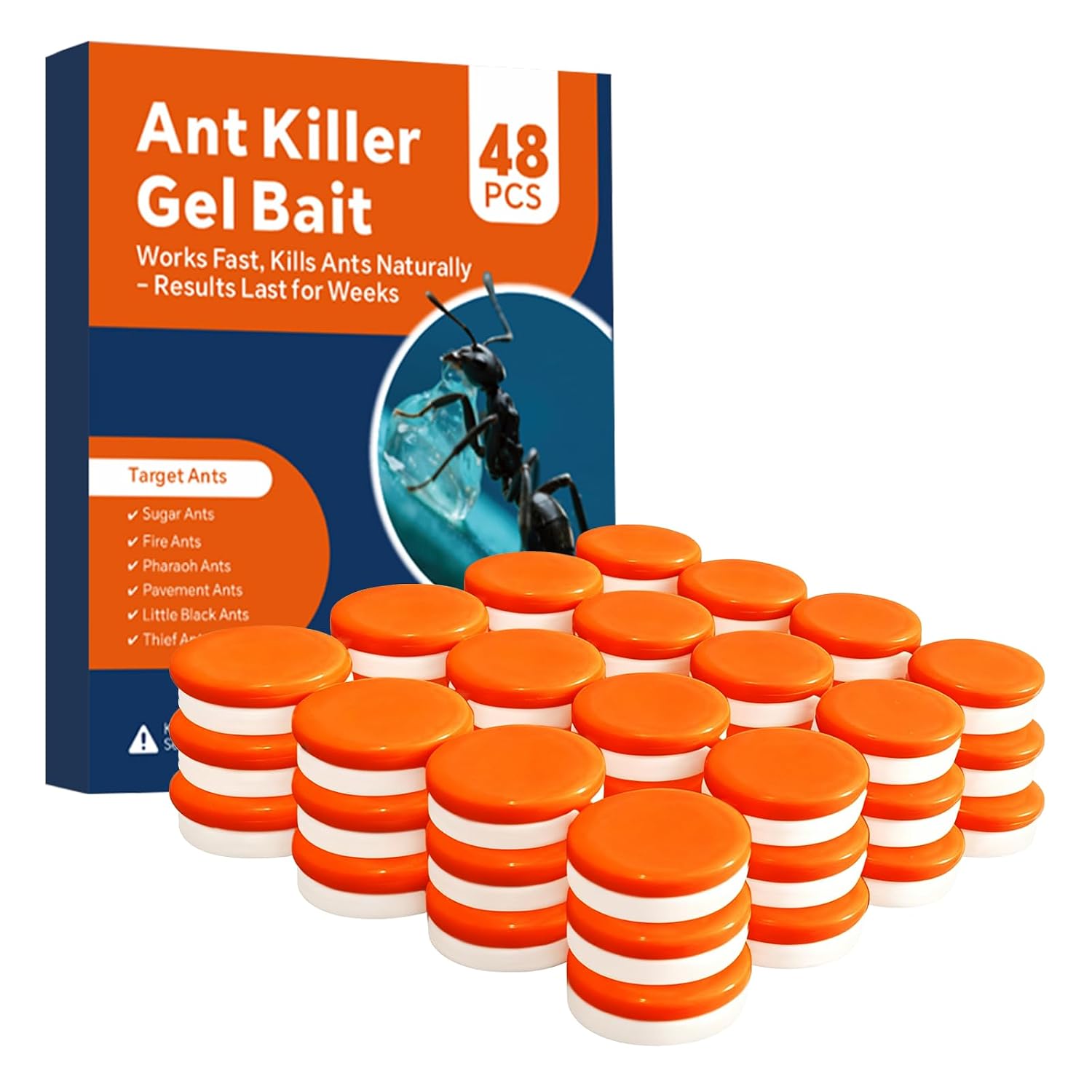
This 48-pack of ROUTADE slow-acting ant gel bait stations is built for systematic, long-term ant control in and around the kitchen. Each station contains a gel formula that worker ants consume and carry back to the nest, which helps reduce the entire colony rather than only visible foragers. The product is supplied in ready-to-use stations with adhesive tape so you can place them along baseboards, in cabinets, near sinks, and on entry thresholds without messy sprays or frequent repositioning. The large pack lets you deploy multiple stations in high-traffic areas and replace them over time for continuous coverage. Because the formula is slow-acting, it is effective against a range of common household species including carpenter ants and sugar ants, but it requires several days to weeks to knock down a colony and will not give instant removal of visible ants. Also the stations are small and contain gel rather than a tamper-resistant hard block, so keep them away from children and pets. For someone wanting a low-maintenance, colony-focused approach to kitchen ant problems, this kit makes it easy to set and forget while the bait works.
Best for: Homeowners who prioritize reliable, long-term elimination of ant colonies in kitchens and want a low-maintenance bait they can deploy across multiple hotspots.
Less Ideal for: People who need an immediate knockdown of visible ants or who require childproof solid bait stations should consider alternatives.
- Slow-acting gel designed for worker ants to carry bait back to the nest for colony-level control
- Ready-to-use bait stations with adhesive for easy placement along baseboards and in cabinets
- 48-count pack provides broad coverage around a kitchen and enough replacements for extended use
- Versatile for indoor and outdoor placement to block entry points and high-traffic ant routes
- Slow-acting formula takes days to weeks to eliminate a colony so visible results are not immediate
- Gel in small stations may require careful placement to keep away from children and pets
Verdict: A practical, deploy-and-forget gel bait kit for reliable colony-level control of kitchen ant infestations.
TERRO Liquid Ant Killer Bait Stations, 12-Pack (T300B)

| Unit Count | 12 Count |
|---|---|
| Item Form | Liquid |
| Target Species | Insects |
| Active Ingredients | Sodium Tetraborate Decahydrate (Borax), 5.40% |
Terro Liquid Ant Killer bait stations are prefilled, single-use traps designed for indoor control of common sugar-loving ants. You place the small stations along baseboards, in corners, under appliances, or on countertops where you see ant activity. Worker ants are drawn to the sweet liquid, feed on it, and take it back to the nest so the borax-based active ingredient can eliminate the colony over days to weeks. The product is easy to use with no mixing or setup and the 12-pack gives coverage for several rooms. Because the bait is contained inside a low-profile plastic station, it reduces incidental contact risk compared with loose sprays or powders and lasts for weeks while ants continue to visit. Limitations are that the formula targets sugar-preferring species so very protein- or grease-attracted ants may ignore it, and control can take 2 to 4 weeks for larger infestations. Also stations should be placed away from pets and children despite the contained design since the bait contains borax.
Best for: Homeowners who prioritize an easy, low-hassle indoor solution and want a bait that works at the colony level with minimal hands-on pest handling.
Less Ideal for: People who need immediate knockdown of ants or who have pets or children that frequently access treated areas and cannot reliably keep them away from placed stations.
- Ready-to-use stations require no mixing or setup
- Designed to be carried back to the nest for colony-level control
- Low-profile enclosed bait reduces messy exposure compared with loose liquids or sprays
- 12 stations provide coverage for multiple rooms or hotspots
- Formulation is sugar-based so less effective on ants that prefer protein or grease
- Control can take 2–4 weeks for large or established colonies
Verdict: A simple, low-contact indoor bait system that reliably reduces sugar-loving ant infestations by getting worker ants to carry borax back to the colony.
Ortho Orthene Fire Ant Killer, 12 oz (2-Pack)

| Unit Count | 24 Ounce |
|---|---|
| Item Form | Granules |
| Target Species | Insects |
| Active Ingredients | Acephate |
Ortho Orthene Fire Ant Killer is a ready-to-use granular mound treatment intended for spot control of fire ant colonies in lawns and landscape areas. You apply the powder directly over active mounds while ants are foraging and leave the mound undisturbed; the formula begins killing ants within about 60 minutes and is formulated to eliminate the queen and collapse the colony over several days. The product comes as two 12 oz. bottles, enough to treat many mounds without measuring or mixing, and is presented as step one in a broader Ortho two-step system for longer protection. Practical benefits include fast knockdown of visible mounds, simple application with no watering required, and clear manufacturer guidance on timing and post-application precautions. Important limitations are that it is a spot treatment rather than a broadcast preventive solution and it requires correct timing and dry conditions to work as directed, so it is not a one-time lawn-wide fix for future mound formation.
Best for: Buyers who want a proven, fast-acting spot treatment to remove existing fire ant mounds and prefer products with clear manufacturer guidance and broad user approval.
Less Ideal for: Homeowners seeking a single product to provide lawn-wide, long-term prevention of new mounds or users who need an immediate broadcast protection solution.
- Begins eliminating fire ants within about 60 minutes after application
- Designed to kill the queen and destroy the mound rather than just repel workers
- Simple, no-mix dry powder that is sprinkled directly over mounds
- Two 12 oz. bottles provide enough product to treat many individual mounds
- Formulated as a spot mound treatment and not intended for lawn-wide long-term prevention
- Requires application when ants are active and the treated area remains dry for best results
Verdict: A straightforward, fast-working mound treatment that reliably knocks down fire ant colonies when applied correctly.
Choosing the Right Ant Bait That Kills the Nest: Key Factors to Consider
Bait Attractiveness to Target Species
Different ant species prefer different food types at different times of year. Sugar-loving ants ignore protein-based baits and vice versa, so matching bait flavor and nutrient profile to the species you see dramatically increases the chance workers will carry it back to the nest.
Observe what foragers are collecting before you buy. Sticky trails, age of the infestation, and whether ants visit sweet spills or greasy crumbs give clues. A bait that is highly attractive will get more worker traffic, increasing the probability the bait reaches queens and brood.
Active Ingredient Mode of Action
The chemical or biological agent inside a bait determines how it affects colony members. Slow-acting agents allow workers to share bait within the colony before dying, which is important for eliminating the queen and larvae. Fast-acting contact toxins can be effective for foragers but often fail to stop the nest.
Understanding mode of action helps you pick between immediate knockdown for visible foragers and delayed colony-level control. Also consider whether the ingredient is labeled for indoor use and its documented efficacy against common household ant species.
Placement and Station Design
How and where you place bait influences uptake. Bait needs to be accessible to foragers yet placed where non-targets will not disturb it. Small stations or bait stations protect bait from dust, sunlight, and pets while concentrating ant activity.
Place stations along ant trails, near entry points, and close to nests if known. For outdoor sheltered placement, keep baits dry. Frequent checking and relocating a station to active trails often improves results.
Safety for Households and Pets
Homes with children, pets, or wildlife nearby need baits that minimize exposure risk. Enclosed bait stations and low-toxicity formulations reduce accidental contact. Read label precautions for handling, storage, and first-aid instructions.
Consider station locking features, mounting options out of reach, and whether the bait is granular, gel, or contained in a cartridge. Safer placement and clear labeling reduce liability and accidental ingestion risks.
Longevity and Environmental Stability
Baits should stay attractive long enough for foragers to repeatedly visit and carry material back to the nest. Heat, humidity, rain, and dust degrade some bait types faster than others. Gel and sealed cartridge baits often last longer indoors, while exposed granular baits can dry out or wash away outdoors.
Evaluate how often you can realistically check and refresh bait. Products that remain palatable for days to weeks reduce maintenance and increase chance of colony elimination.
Ease of Monitoring and Follow-Up
Successful nest elimination requires observation. Choose baits and stations that let you monitor ant activity easily so you can confirm uptake and judge when to remove or replace them. Transparent or low-profile stations let you see worker numbers without disturbing the bait.
A simple monitoring plan-check every two to three days during initial deployment, then weekly until activity ceases-helps confirm control. Good packaging and directions that explain expected timelines make follow-up straightforward.
Identifying Ant Activity Before You Treat
Start by mapping where you see ants and what they are carrying. Follow trails back toward likely entry points or nest sites. Look for loose soil, small holes under pavers, wall voids, or mulch edges where colonies often sit.
- Note whether ants are visiting sweet or greasy food sources.
- Check both inside and just outside the building for trails leading in.
- Document times of day when activity is highest; some species forage at night or during cooler hours.
Placing Baits for Best Uptake
Place bait stations directly on or adjacent to active trails and near entry points. If you find a nest, position a station between forager traffic and nest entrance to increase transfer chances. Avoid placing bait where it will be exposed to direct sun, heavy rain, or routine cleaning.
If a station shows little activity after 48 hours, move it a few inches closer to observed traffic or try a different station type. Consistent checking and small relocations often make the difference between failure and success.
- Use multiple small stations rather than one large pile of bait.
- Keep stations tucked away from children and pets.
- Replace dried or contaminated bait promptly.
When to Expect Visible Results
Because nest-targeting baits rely on worker transfer, visible decline in surface activity takes time. You may see fewer workers within a few days, but full colony reduction can take one to several weeks depending on colony size and species. Continue baiting until all activity stops for at least a week.
If activity temporarily increases around bait, that is often a sign bait is attractive and being recruited. Do not panic; maintain placement and observe whether numbers decline over subsequent checks.
- Expect initial uptake within 24 to 72 hours for attractive baits.
- Plan for at least two weeks of monitoring for small colonies.
- Large or multiple nests may need extended treatment and repositioning.
Combining Baiting with Habitat Changes
Baits are most effective when you also remove attractants and limit access to nesting sites. Clean up spilled food, store food in sealed containers, reduce outdoor moisture sources, and seal small entry gaps around doors and foundations. These changes reduce recruitment and make baits more appealing.
Avoid using broad-spectrum sprays near bait stations since sprays can repel foragers and reduce bait uptake. Integrated steps extend the longevity of control and lower the chance new colonies move in.
- Eliminate open food and fix leaky pipes to reduce indoor attraction.
- Trim vegetation away from foundations to reduce sheltered nest sites.
- Use exclusion techniques like door sweeps and caulking for long-term prevention.
How We Chose the Best Ant Bait That Kills the Nest
We focused on products and formulations that are designed to be carried by worker ants into nests and consumed or regurgitated to reach larvae and the queen. Selection criteria prioritized bait attractiveness across common household ant species, the active ingredient's mode of action and its colony-level effects, and how long baits remain palatable under typical indoor and sheltered outdoor conditions. We also evaluated ease of placement and monitoring, safety considerations for homes with children and pets, and whether the product includes clear usage directions for nest-targeting placement. Exclusions included contact-only sprays or devices that only kill foraging ants on contact, treatments intended solely for structural or perimeter barriers, and offerings without clear guidance on bait placement or species targeting. The final list favors baits that balance proven colony-impacting modes of action with practical deployment options and clear safety labeling. Scoring emphasized how likely a bait is to be taken back to the nest, speed of colony reduction, and the product's suitability for indoor and sheltered outdoor use.
FAQ
How long should I leave ant bait in place?
Leave bait until you see no ant activity at the station for at least seven consecutive days. Small colonies may clear in one to two weeks, while larger infestations or multiple nests can take longer. Replace bait if it becomes contaminated, wet, or dried out.
Will baiting alone always eliminate the nest?
Baiting often eliminates nests when workers reliably carry bait back to the queen and brood. However, success depends on correct bait type, placement, and whether multiple nests are present. Combining baiting with habitat fixes increases the chances of full colony control.
Can I use bait if I have pets or children?
You can use ant bait safely with pets and children by choosing enclosed stations and placing them out of reach. Follow label precautions for handling and storage. If you are concerned, choose tamper-resistant stations and monitor them regularly.
What if ants ignore the bait?
If ants ignore bait, they may prefer a different food type or the species may not be attracted to that formulation. Try a bait labeled for both sugar and protein preferences or switch bait flavors and station placement along active trails.
Should I spray when I see foraging ants?
Avoid spraying near bait stations because contact insecticides can repel foragers and prevent bait uptake. If you must reduce large numbers of visible foragers for sanitation, wait until baiting is underway and then use local spot treatments away from bait stations.
How do I know if there are multiple nests?
If ant activity continues despite several attractive bait stations and correct placement, multiple nests are likely. Look for separate trails emerging in different areas, activity peaks at different times, or rapid recolonization after baiting.
Final Verdict
Focus on matching bait type to the ants you see, placing stations along active trails, and committing to regular monitoring. Prioritize baits with colony-transfer modes of action and choose safe, enclosed stations when children or pets are present. Expect to trade patience for durable control: nest-targeting baits take longer than contact sprays but offer a better chance of eliminating the source. Use habitat changes and exclusion alongside baiting for the best long-term results.
