

Note: This article contains affiliate links. If you click on these links and make a purchase, I may earn a small commission at no extra cost to you. This helps support my research and content. Read my full affiliate disclosure here.
Growing corn that produces full, even ears starts with feeding ideas that match the crop's high nutrient needs. Natural fertilizers supply nitrogen, phosphorus, potassium, and trace elements while building soil biology rather than relying solely on synthetic salts. That makes them a good choice for gardeners who want robust stalks, improved soil structure, and lower runoff risk. This guide shortlists six top natural fertilizer approaches for corn, explaining how each behaves in the field or garden. We evaluate nutrient profile, release timing, and ease of application so you can pick the approach that fits your plot and planting schedule.
Top Picks at a Glance
| Best Overall The best all-around choice for most situations | HyR BRIX Slow-Release Sweet Corn Fertilizer, 16-7-10, 5 lb Bucket |  |
| Best Quality Built to a higher standard if you want something more solid | Down To Earth Organic Bio-Fish Plant Food 7-7-2, 5 lb |  |
| Best Budget The cheapest option that still gets the job done reliably | Down To Earth Blood Meal Organic Fertilizer 12-0-0, 0.5 lb |  |
| Highest Rated A top-rated pick with lots of positive feedback | Down To Earth Feather Meal Organic Fertilizer 12-0-0, 20 lb |  |
| Most Popular A crowd favorite that many people choose with confidence | True Organic Blood Meal — High‑Nitrogen Organic Fertilizer, 3 lb |  |
| Best Seller A high-volume bestseller chosen again and again | Dr. Earth Organic Tomato, Vegetable & Herb Fertilizer (64 oz) |  |
HyR BRIX Slow-Release Sweet Corn Fertilizer, 16-7-10, 5 lb Bucket

| NPK Analysis | 16-7-10 |
|---|---|
| Form | Granules |
| Application Method | Side-dress and Broadcast |
| Coverage | 450 square feet |
| Included Components | Measuring scoop |
This 5 lb HyR BRIX formula is a granular, slow-release fertilizer made for sweet corn, popcorn, ornamental corn, and field corn and is intended to feed a corn patch for the entire season with a single application. It uses a 16-7-10 NPK mix plus calcium and sulfur and multiple nitrogen sources so nitrogen is available steadily rather than in a single flush. The bucket includes a scoop and the label gives clear directions for side-dressing or broadcasting up to the stated coverage, which makes it easy to apply in raised beds or in-ground rows before or shortly after planting. The blend also contains earthworm castings and leonardite-derived humic acids to help improve nutrient uptake and soil health over time. Practical limitations are that the 5 lb size covers a modest area and repeated granular applications or larger sizes will be needed for extensive plantings, and direction-following is necessary to avoid placement too close to stems or seed. For gardeners who want a straightforward, one-application feeding tailored to corn, this product simplifies midseason nutrition.
Best for: Gardeners who prioritize reliable, low-maintenance feeding for corn and want a single, predictable application that supports steady growth and ear development.
Less Ideal for: Growers managing very large acres or commercial plots who need bulk coverage or those preferring liquid or foliar feeding methods for precise in-season adjustments.
- Slow-release 16-7-10 formula provides steady season-long nutrition in one application.
- Formulated specifically for all corn types so directions and NPK suit ear development and sweetness.
- Includes earthworm castings and humic acids to support nutrient uptake and soil health.
- Clear application instructions for side-dress and broadcast use and a measuring scoop included.
- 5 lb bucket covers a limited area so larger plots require multiple units or larger sizes.
- Granular form requires proper incorporation or watering after application to activate nutrients.
Verdict: Use this slow-release, corn-specific granular fertilizer when you want a dependable one-application feed that supports steady growth and better ear quality.
Down To Earth Organic Bio-Fish Plant Food 7-7-2, 5 lb
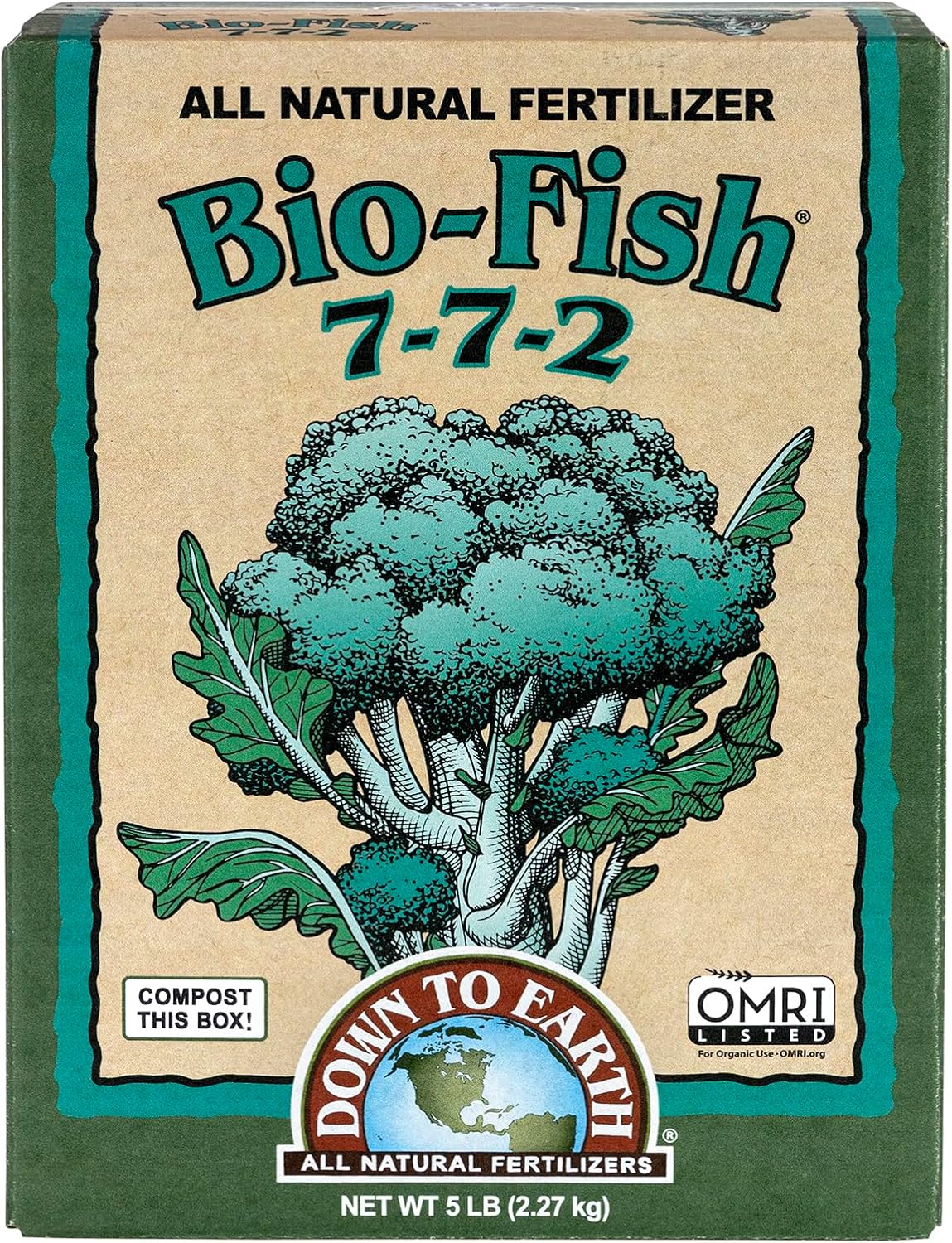
| NPK | 7-7-2 |
|---|---|
| Item Form | Granules |
| OMRI Listed | Yes |
| Unit Count | 80 Ounce |
This granular Bio-Fish fertilizer is a balanced organic option aimed at building long-term soil fertility while supplying nutrients broccoli needs for both leafy growth and root development. You apply it to beds, raised planters, or containers following the package mixing ratio; the fish- and bone-meal base slowly releases nitrogen and phosphorus and encourages beneficial soil microbes rather than a quick synthetic spike. Notable features are the 7-7-2 NPK balance that suits leafy brassicas, OMRI listing for organic use, and a medium coverage granule form that is easy to spread and incorporate. Practical benefits include steadier nutrient availability for successive broccoli feedings and improved soil biology that helps uptake over the season. Important limitations are that nutrient release is slower than soluble fertilizers so recovery from visible deficiencies will take longer and the product contains phosphorus, so local restrictions on phosphorus application may apply for non-agricultural turf areas.
Best for: Gardeners who prioritize consistent, organic soil building for winter-sown or spring broccoli and want a reliable, certified product that feeds plants slowly over the season.
Less Ideal for: Growers who need fast-acting correction for nutrient deficiency or who prefer precise, soluble feeds for hydroponics or fertility program tweaks.
- Balanced 7-7-2 NPK appropriate for broccoli vegetative and root development
- Made from fish meal and bone meal to feed soil microbes and improve long-term fertility
- OMRI listed for use in organic gardening and certified systems
- Granular form is easy to spread and work into garden beds or raised planters
- Slower nutrient release compared with soluble fertilizers, so it is not ideal for rapid correction of deficiencies
- Contains phosphorus which may be restricted in some local regulations for non-agricultural areas
Verdict: A dependable OMRI-listed granular fertilizer with a balanced 7-7-2 formula that steadily builds soil fertility and supports healthy broccoli growth.
Down To Earth Blood Meal Organic Fertilizer 12-0-0, 0.5 lb

| Item Form | Powder |
|---|---|
| Specific Uses For Product | Organic,Potting, Plant Growth |
| Target Species | corn, spinach, salad greens, garlic, tomatoes, peppers, melons |
| Mixing Ratio | 3-0-0 |
This half-pound box of Down To Earth Blood Meal is a concentrated organic nitrogen source (12-0-0) meant to quickly correct nitrogen deficiencies and drive leafy growth in heavy feeders like pumpkins. It is a dried powder intended for soil application: broadcast lightly, mix into the soil or compost, and water in so microbes can convert the meal into plant-available nitrogen. Practical benefits include rapid response in young vines and foliage, suitability for targeted applications in small plots or containers, and OMRI-listed organic formulation for use in organic gardens. Because it is fast acting, use should be measured to avoid leaf burn; follow the recommended application rates and avoid applying directly against stems or roots. It is not water soluble and relies on soil biology, so results depend on active microbial activity and adequate moisture. The compact size is convenient for trialing on a few plants or supplementing a fertilizer program, but gardens needing regular or large-scale feeding will require larger quantities or complementary feeds for balanced nutrition beyond nitrogen alone.
Best for: Gardeners focused on maximizing vine and foliage growth for fruit-setting crops who want a fast, organic nitrogen boost for a few pumpkin plants or starter beds.
Less Ideal for: Those managing large acreage pumpkin plantings or seeking a balanced all-in-one fertilizer for flowering and fruit development should consider bulk or complete NPK products instead.
- High 12-0-0 nitrogen analysis delivers quick correction of nitrogen deficiency
- OMRI-listed organic ingredient (dried blood meal) suitable for organic pumpkin production
- Convenient small package for targeted applications or container-grown plants
- Powder form mixes into soil or compost and is easy to apply by hand
- Can burn foliage or roots if overapplied because of concentrated nitrogen
- Not water soluble and depends on soil microbes and moisture to release nutrients
- Small 0.5 lb size may be insufficient for larger pumpkin patches
Verdict: Use this fast-acting organic blood meal when you need a quick, high-nitrogen boost to build strong pumpkin vines and foliage before fruit set.
Down To Earth Feather Meal Organic Fertilizer 12-0-0, 20 lb

| Item Form | Granules |
|---|---|
| Specific Uses For Product | Organic,Plant Growth,Potting |
| Coverage | Medium |
| Target Species | Vegetables, containers, trees, shrubs, row crops/acreage |
| Mixing Ratio | 12-0-0 |
Down To Earth Feather Meal is a granular, poultry-feather based fertilizer formulated as 12-0-0 to deliver slow-release nitrogen over the growing season. It is typically worked into the soil before planting or applied as a side dress for heavy-feeding crops like corn, tomatoes, brassicas and other long-season vegetables. Because the nitrogen releases gradually, it supports steady leaf and shoot development without the quick flush and potential burn of soluble synthetic fertilizers. The product is OMRI-listed for organic use and presented in a 20 pound bag, which is practical for backyard plots, raised beds, and small acreage. Practical benefits include long-lasting nitrogen supply, suitability for a wide range of plants, and minimal reapplication compared with fast-release formulas. Important limitations are that uptake can be slower in cool soils so benefits appear later in the season and it offers no phosphorus or potassium so you will need separate sources for a balanced feed when flowers or fruiting are the focus.
Best for: Gardeners who prioritize reliable, long-lasting organic nitrogen for vegetable beds, heavy-feeding annuals, and small acreage where steady growth is more important than instant greening.
Less Ideal for: Growers wanting a complete N-P-K single product, immediate quick-release nitrogen, or quick corrective feeds for deficiency symptoms should consider other options.
- High nitrogen analysis (12-0-0) for strong vegetative growth in heavy feeders
- Slow-release granular form reduces risk of burn and limits frequent reapplications
- OMRI-listed and made from natural poultry feather material suitable for organic systems
- Large 20 lb bag provides season-long feeding for small gardens or multiple beds
- No phosphorus or potassium included so additional fertilizers are needed for flowering and fruiting stages
- Nitrogen mineralization is temperature dependent so results are slower in cool soils
Verdict: Choose this feather meal when you want a dependable, slow-release organic source of nitrogen to keep heavy-feeding vegetables and plants growing steadily all season.
True Organic Blood Meal — High‑Nitrogen Organic Fertilizer, 3 lb

| Item Form | Granules |
|---|---|
| Unit Count | 48 Ounce |
| Mixing Ratio | 12-0-0 |
| Specific Uses For Product | Agriculture, Gardening |
True Organic Blood Meal is a simple, single-ingredient granular fertilizer that supplies a concentrated source of nitrogen for leafy, heavy-feeding vegetables and ornamentals. It is typically applied to soil in spring and fall or worked into potting mixes for container crops to encourage rapid green growth. The product is made from blood meal and labeled with a 12-0-0 analysis, so it delivers mostly nitrogen without added phosphorus or potassium. Practical benefits include easy application, suitability for both beds and containers, and an organic input that supports soil microbial activity rather than introducing synthetic chemicals. The 3 lb bag is sized for small to medium gardens and the stated coverage gives a clear guideline for treating around 100 sq ft. Important limitations are that it only supplies nitrogen so it should be paired with a balanced fertility plan for blooms or root development, and like all high-nitrogen amendments it can burn plants if overapplied or placed in direct contact with roots. For risk-averse gardeners, following the mixing ratio and recommended timing will help get vigorous foliage without surprises.
Best for: Gardeners who prioritize predictable, organic nitrogen boosts for leafy crops and want a straightforward product with established application timing and coverage guidance.
Less Ideal for: Growers seeking an all-in-one fertilizer for blooms, fruits, or complete feeding regimes should choose a balanced or blended product instead.
- High nitrogen content (12-0-0) that rapidly promotes leafy growth
- Single-ingredient blood meal with no synthetic additives
- Suitable for both in-ground beds and container plants
- Clear coverage guidance for planning applications
- Provides only nitrogen so additional nutrients are needed for flowering and fruiting
- Risk of root burn if overapplied or placed in direct contact with plant roots
Verdict: Use this concentrated organic blood meal when you need a reliable, high-nitrogen boost to rapidly green up heavy-feeding vegetables and leafy plants.
Dr. Earth Organic Tomato, Vegetable & Herb Fertilizer (64 oz)

| Unit Count | 64 Ounce |
|---|---|
| Item Form | Granules |
| Specific Uses For Product | Organic |
| Target Species | Herb |
| Coverage | Medium |
This granular organic fertilizer is designed to boost vegetable and herb production by supplying balanced nutrients and soil biology support. It is typically broadcast into beds, mixed into potting mixes, or applied at planting and midseason for a nutritional lift; the manufacturer recommends reapplying every six weeks for containers. Notable features include a fully organic ingredient list, fast but sustained nutrient release, and a blend of probiotic microbes plus ecto and endo mycorrhizae intended to improve nutrient uptake and drought tolerance. In practice that means healthier root systems and potentially better yields and flavor in crops like cucumbers when used as part of an organic program. Limitations are that it is a medium coverage product in a 64 ounce bag so larger plots will need more frequent purchases, and it contains phosphorus so local runoff rules should be checked before use. Follow the directions for pH and application timing to avoid overapplication in small containers.
Best for: Gardeners who prioritize organic soil health and want a single, biology‑focused fertilizer to support vegetables like cucumbers in beds or containers.
Less Ideal for: Large‑scale growers seeking a bulk, high‑coverage fertilizer or those who must avoid phosphorus due to local regulations should consider other options.
- 100 percent organic formula suitable for certified organic gardens
- Contains beneficial microbes and eight strains of mycorrhizae to support root health and nutrient uptake
- Granular form releases nutrients quickly and continues feeding for several months
- Works for beds, raised planters and containers and can be used at planting, transplanting or midseason
- Bag is medium coverage so not economical for very large vegetable plots
- Includes phosphorus which may be restricted in some local jurisdictions
Verdict: Choose this product if you want an organic, microbe‑rich granular fertilizer that supports root health and steady feeding for cucumber and other vegetable plantings.
Choosing the Right Natural Fertilizer for Corn: Key Factors to Consider
Nitrogen Supply and Timing
Corn is a heavy nitrogen feeder and responds more to timely nitrogen than to high phosphorus late in the season. A fertilizer that supplies readily available nitrogen early, but also includes slower-release forms, reduces the need for repeated applications.
Timing matters because early vegetative growth sets potential ear size. Materials that release nitrogen too slowly can limit early stalk vigor, while those that release it all at once increase loss risk. Match the product's release profile to planting date and soil temperature.
Nutrient Balance and Trace Elements
Corn benefits from a balanced supply of phosphorus and potassium in addition to nitrogen, and deficiencies in zinc, sulfur, or boron can limit yield even when N is adequate.
Check nutrient analyses and consider whether a fertilizer supplies trace elements or whether you will need to supplement them separately. In many soils, small additions of micronutrients at planting or early growth prevent common deficiencies that show up as stunting or poor grain fill.
Release Mechanism and Predictability
Natural fertilizers vary from fast-release materials like manure or compost teas to slow-release forms such as well-composted manure, bone meal, or legume cover crop residues.
Predictability matters for planning side-dressings and avoiding under- or over-supply. Choose materials whose release matches corn's uptake curve: some soluble N early, with continued supply through rapid vegetative growth and into tasseling and silking.
Application Method and Labor
How you apply fertilizer affects labor and nutrient placement. Broadcast applications are quick but can be less efficient than banding or side-dressing near the root zone.
Consider whether you have tools for banding or only hand tools. Some natural products require incorporation to reduce nitrogen loss or odor, while others can be top-dressed. Application method also affects how deeply nutrients are placed and their accessibility to young roots.
Soil Health and Organic Matter Contribution
One reason gardeners choose natural fertilizers is to build soil organic matter and microbial life, which improves water retention and nutrient cycling over time.
Materials that add carbon and diverse organic compounds feed soil biology and improve structure. However, fresh high-carbon materials may immobilize nitrogen temporarily, so factor in how a chosen product will affect short-term nutrient availability versus long-term soil health.
Environmental Risk and Safety
Natural does not always mean low risk. Manure or unaged amendments can contain pathogens or high soluble nutrient content that contributes to runoff if applied before heavy rain.
Consider setbacks from waterways, incorporation needs, and restrictions on applying high-nitrogen materials before heavy rains. Also assess odor, storage safety, and potential to attract pests when choosing a fertilizer strategy.
When to Apply Fertilizer to Corn
Start with a pre-plant application that supplies phosphorus and some starter nitrogen if soil tests show low P. Apply a larger portion of the season's nitrogen at planting or soon after emergence to support early vegetative growth.
Side-dress additional nitrogen when plants are knee-high or just before rapid growth begins. Timing side-dress to precede tassel and silk stages helps ensure nitrogen is available for grain fill. Split applications reduce loss and match supply to demand.
- Pre-plant or at-plant: phosphorus and starter nitrogen
- Early side-dress: significant portion of total nitrogen
- Late side-dress: only if deficiency is evident or soil organic release is slow
Matching Fertilizer Type to Your Soil Test
A recent soil test clarifies what's lacking and prevents over-application. If soil tests show adequate phosphorus and potassium, focus on nitrogen sources and organic matter. When tests indicate low P or K, select amendments that supply those nutrients or plan targeted additions at planting.
Soil pH affects nutrient availability. If pH limits micronutrient availability, correct pH before relying on fertilizers alone; adjusting pH can make existing soil nutrients more available and reduce the need for extra inputs.
- Test every 2 to 3 years for a stable baseline
- Adjust fertilizer plan to fill specific nutrient gaps
Using Cover Crops and Green Manures with Corn
Legume cover crops fix nitrogen and can be a valuable natural source when incorporated before planting. Nonlegume covers add organic matter and slow-release nutrients but may immobilize nitrogen until decomposition proceeds.
Terminate covers at the right stage to optimize nitrogen release. For example, legumes are often most effective when plowed or mowed and incorporated several weeks before planting to allow mineralization. Timing of termination affects the balance between weed suppression, nitrogen release, and soil moisture dynamics.
- Legumes contribute nitrogen when incorporated
- Nonlegumes build carbon but can tie up N temporarily
- Terminate and manage residues to match planting schedule
Practical Tips for Applying Bulk Organic Amendments
Bulk amendments like compost or well-rotted manure can be broadcast and incorporated during bed preparation. Spread evenly and aim for a predictable application rate by measuring volumes per area rather than guessing.
For small plots, mix compost into planting rows or band it at seeding. Avoid fresh manures at high rates close to planting to reduce burn and salt stress. Store materials covered and off the ground when possible to maintain consistency and reduce nutrient loss.
- Measure by volume for consistent application
- Avoid raw manure near seed or young plants
- Incorporate when needed to reduce nitrogen loss
Starter Fertilizers and Seed Safety
Starter fertilizers placed with the seed can help early root development but must be low-salt and used at safe rates to avoid seedling burn. Natural starter options include diluted compost extracts or small bands of well-composted amendments.
If using concentrated materials, keep them a few inches away from the seed row or side-band at planting depth. Starter applications are most useful in cool soils or when planting into low-fertility ground.
- Use low-salt natural starters to avoid burn
- Band rather than place directly with seed when using stronger materials
How We Chose the Best Natural Fertilizer for Corn
We focused on practical, garden-scale criteria a grower would use when choosing a natural fertilizer for corn. Primary evaluation dimensions were nutrient balance and release timing, because corn needs a steady supply of nitrogen and accessible phosphorus during vegetative and reproductive stages. We also scored application ease and handling to reflect whether a gardener can broadcast, side-dress, or band without specialized gear. Soil-building benefits were weighed, including organic matter addition and support for microbial activity. Environmental footprint and potential for nutrient loss were considered to favor options that reduce runoff or volatilization. Excluded items included synthetic or predominantly mineral-only formulations and experimental inputs lacking clear nutrient analysis. We prioritized fertilizers with documented nutrient content or consistent composition so gardeners can match application rates to soil test results. The selections reflect materials and approaches that are realistic for backyard to small-acreage corn production and that address timing, safety, and practicality in a working garden.
FAQ
How much natural fertilizer does corn usually need?
It depends on soil fertility, but corn often requires the most nitrogen of any garden crop. Use a soil test to guide total N and supplement with side-dressings during rapid growth. Typical backyard approaches split nitrogen across planting and one or two side-dressings.
Can I rely only on compost to feed corn?
Compost improves soil and supplies some nutrients, but it may not release nitrogen quickly enough for high-yield corn when used alone. Many gardeners use compost plus a concentrated natural N source or plant legumes in rotation to meet corn's needs.
Is fresh manure safe to apply before planting corn?
Fresh manure can be high in soluble nitrogen but also in salts and pathogens. Well-aged or composted manure is safer and more predictable. If using fresh manure, apply it well before planting and allow time for stabilization and mineralization.
When should I side-dress corn with natural fertilizer?
Side-dress when plants are about knee-high and again if necessary before tassel, depending on plant vigor and soil organic release. Timing to coincide with rapid vegetative growth provides the most benefit for yield.
Do cover crops reduce my need for fertilizer?
Yes, legumes can supply significant nitrogen when incorporated properly, and nonlegumes add organic matter that improves long-term nutrient cycling. However, cover crops rarely eliminate the need for targeted nutrient additions in a single corn season.
Final Verdict
Choose a natural fertilizer strategy that matches your soil test, labor capacity, and planting timetable. Prioritize nitrogen timing, predictable release, and whether you want short-term nutrient supply or long-term soil-building benefits. Balance application method against your tools and the scale of planting to reduce loss and maximize uptake. For most gardeners, a combined approach-using compost or well-aged manure for soil health plus a quicker natural nitrogen source applied at planting and as a side-dress-offers the best tradeoff between yield and soil improvement. Match the specific material's release profile to corn's growth stages and you will see more consistent stalks and fuller ears.
