

Note: This article contains affiliate links. If you click on these links and make a purchase, I may earn a small commission at no extra cost to you. This helps support my research and content. Read my full affiliate disclosure here.
If deer are browsing your flower beds, vegetable patch, or newly planted shrubs, the right deer repellent can be the difference between healthy plants and repeated damage. You want solutions that actually deter deer without harming landscape plants, pets, or beneficial wildlife, and that fit the time you have for maintenance. This guide shortlists seven top deer repellents that are practical for home gardeners and evaluates each for real-world factors like longevity and application effort. Read on for a concise explanation of what mattered in our selections and how each option performs against those criteria.
Top Picks at a Glance
| Best Overall The best all-around choice for most situations | Deer Out 32 oz Concentrate Deer Repellent (Minty Fresh) | 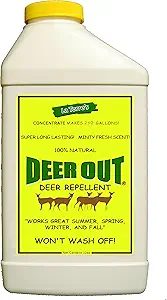 |
| Best Quality Built to a higher standard if you want something more solid | Deer Out 1 Gallon Concentrate Deer Repellent (Minty Fresh) |  |
| Best Value The sweet spot between price and what you get | Deer Out Ready-to-Use Deer Repellent, 40 oz |  |
| Best Budget The cheapest option that still gets the job done reliably | Deer Stopper Ready-to-Use Deer, Moose & Elk Repellent, 32 fl oz Trigger |  |
| Highest Rated A top-rated pick with lots of positive feedback | Peepst Solar Motion-Activated Ultrasonic Animal Repeller (2-Pack) |  |
| Most Popular A crowd favorite that many people choose with confidence | Liquid Fence Deer & Rabbit Repellent Ready‑to‑Use Spray, 1 Gallon |  |
| Best Seller A high-volume bestseller chosen again and again | Liquid Fence Deer and Rabbit Repellent Ready-To-Use Spray, 32 Ounces | 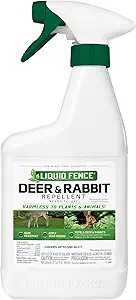 |
Deer Out 32 oz Concentrate Deer Repellent (Minty Fresh)

| Product type | Concentrate deer repellent |
|---|---|
| Scent | Minty Fresh |
| Intended use | Year-round on flowers, shrubs, vegetables, trees and vines |
| Safety | All natural, safe around children and pets |
Deer Out 32 oz Concentrate is a peppermint-scented, water-based concentrate intended to deter deer, rabbits, groundhogs, and other herbivores from ornamental and edible plants. You dilute the concentrate per label directions and spray it on foliage and stems; the formula includes natural stickers so the taste and scent cling to plants and resist light rain. In practice it is easy to apply with a pump or hose-end sprayer and pleasant for people to smell while being offensive to deer, making it suitable around patios and garden beds. Notable features are the all-natural ingredients, a long track record with many repeat customers, and a year-round label claim so it can be used through seasons. Limitations are that repeat applications are required after heavy rain or new growth and effectiveness can vary with local deer pressure and animal species; it is not an instant physical barrier. For gardeners wanting a low-toxicity, scent-based deterrent for regular maintenance, Deer Out provides a practical, user-friendly option, though very hungry deer or large-scale infestations may need additional exclusion methods.
Best for: Gardeners and homeowners who want a low-toxicity, scent-based deterrent they can apply regularly to protect ornamental beds and vegetables without harsh chemicals.
Less Ideal for: Large properties with heavy deer traffic or situations needing immediate, guaranteed protection where physical barriers or fencing are required.
- Concentrated formula that treats multiple applications from one bottle when diluted
- Minty scent pleasant to people but unappealing to deer and similar animals
- Contains natural stickers for rain resistance so repellent stays on foliage longer
- All-natural ingredients suitable for use around children and pets
- Requires periodic reapplication, especially after heavy rain or new plant growth
- Effectiveness varies by local wildlife pressure and may not deter very hungry deer
Verdict: A user-friendly, all-natural concentrate that provides a rain-resistant, mint-scented deterrent ideal for regular garden maintenance against deer and similar herbivores.
Deer Out 1 Gallon Concentrate Deer Repellent (Minty Fresh)

| Item model number | D00004 |
|---|---|
| Manufacturer | DEER OUT LLC |
| Date First Available | June 17, 2009 |
| ASIN | B002DQQ346 |
Deer Out 1 Gallon Concentrate is a mint-scented, ready-to-mix repellent that gardeners and landscapers apply to flowers, shrubs, vegetables and young trees to keep deer, rabbits and groundhogs from browsing. You dilute the concentrate per label directions and spray it on foliage; the formula includes natural sticky agents so the coating adheres and resists light rain. The product emphasizes an all-natural ingredient list and a pleasant scent to humans while remaining effective against cervids and small mammal pests. For performance-focused buyers, its key strengths are the long-lasting protection and suitability for year-round use, which reduce how often you need to reapply compared with water-soluble sprays. Important limitations are that it requires proper dilution and application for safety and effectiveness and that heavy downpours or irrigation may eventually reduce protection, requiring reapplication; it also does not physically exclude animals like fencing does. This concentrate is best used when you want a high-coverage, repeatable deterrent for ornamental beds, vegetable plots or perimeter plantings without permanent barriers.
Best for: Gardeners and property owners who prioritize reliable, long-lasting chemical deterrence over fencing and want a concentrated product to protect multiple plantings across a yard or small farm.
Less Ideal for: People seeking an immediate physical barrier, a zero-application solution, or those unwilling to mix and spray a concentrated product should consider fencing or pre-mixed alternatives.
- Concentrated gallon formula covers large areas after dilution
- Minty scent pleasant to people while deterring deer and similar animals
- Contains natural sticking agents that improve rain resistance
- All natural ingredients suitable for use around children and pets when used as directed
- Requires correct dilution and spraying equipment to apply effectively
- Not a physical barrier so determined animals may still reach plants under some conditions
Verdict: Choose Deer Out concentrate when you need a performance-focused, long-lasting, easy-to-cover deer deterrent for large gardens and landscape plantings.
Deer Out Ready-to-Use Deer Repellent, 40 oz

| Item model number | D00001 |
|---|---|
| Manufacturer | DEER OUT LLC |
| Date First Available | June 17, 2009 |
Deer Out Ready-to-Use is a spray deer repellent intended for gardens, shrubs, vegetables and small landscape plantings. It is applied by misting both tops and undersides of leaves and allowed about an hour to absorb before watering or rain. The formula emphasizes natural oils with a minty scent that people find pleasant while being unappealing to deer, and the product claims rain resistance due to two natural stickers so it stays on foliage longer than simple rinsable sprays. Typical use is routine maintenance every 30 to 90 days, with more frequent reapplication during heavy browsing, rapid growth, or after heavy rain. Practical benefits include a non-toxic ingredient profile suited to yards with kids and pets and a ready-to-use spray bottle that removes mixing steps. Limitations are that it requires thorough coverage and periodic reapplication under heavy pressure or wash-off conditions and it should not be applied to plants with harvestable food commodities present, which restricts use on edible crops near harvest.
Best for: Buyers who want a straightforward, low-maintenance deer deterrent for ornamental beds and landscape plants and prefer natural, ready-to-use products that minimize setup and fuss.
Less Ideal for: Gardeners who need a long-lasting solution for high deer pressure on large acreages or who plan to apply to edible crops close to harvest should consider other approaches.
- Ready-to-use spray requires no mixing and is easy to apply
- Minty scent pleasant to people while deterring deer, elk and moose
- Rain-resistant formulation designed to stay on foliage longer
- Made from natural ingredients and marketed as safe around children and pets
- Needs thorough coverage and periodic reapplication under heavy animal pressure or after heavy rain
- Not suitable for application on plants that have harvestable food commodities present
Verdict: A convenient, natural ready-to-use spray that keeps deer away from ornamental plants with minimal effort.
Deer Stopper Ready-to-Use Deer, Moose & Elk Repellent, 32 fl oz Trigger

| Unit Count | 32 Fluid Ounces |
|---|---|
| Target Species | Deer; Elk; Moose |
| Scent Name | Lavender |
| Item Form | Oil |
Deer Stopper is a 32-ounce trigger bottle of a plant-oil based repellent designed to keep deer, moose, and elk from browsing, bedding, and rubbing in gardens and around trees. You apply it as a fine mist over vulnerable plants and landscape areas; the manufacturer states one bottle covers about 1,000 sq ft and the effect lasts up to 30 days regardless of rain or watering. The formula uses natural ingredients such as rosemary and mint oils and carries a lavender scent profile, so it smells pleasant compared with harsh chemical repellents and is safe to use around kids, pets, and edible plants when applied as directed. Practical benefits include easy spray application and predictable monthly protection for small yards or flower beds. Limitations are coverage and ongoing maintenance: a single bottle is sized for modest areas, so larger yards will require multiple bottles or a concentrate, and you will need to reapply monthly through the season for continuous protection.
Best for: Home gardeners who want a low-effort, natural repellent for small to medium planting areas and prefer avoiding harsh chemicals while keeping costs modest.
Less Ideal for: Owners of large properties or acreage who need long‑lasting, wide-area protection should consider concentrated or commercial-scale options instead.
- Plant-based formula safe to use around children, pets, and vegetable gardens
- Ready-to-use trigger bottle for easy spot or area spraying
- Advertised weatherproof protection for up to 30 days per application
- Pleasant lavender/mint scent compared with chemical repellents
- 32 fl oz covers about 1,000 sq ft so multiple bottles are needed for larger yards
- Requires monthly reapplication to maintain protection throughout the season
Verdict: A user‑friendly, plant‑based spray that gives reliable 30‑day deer protection for small gardens without using harsh chemicals.
Peepst Solar Motion-Activated Ultrasonic Animal Repeller (2-Pack)

| Power Source | Solar Powered |
|---|---|
| Number of Pieces | 1 |
| Unit Count | 2 Count |
| IP Rating | IP44 |
The Peepst Solar Motion-Activated Ultrasonic Repeller is designed to keep deer and other yard pests away using motion-triggered ultrasonic pulses, an LED strobe, and selectable frequency profiles. You mount a unit where animals approach and leave it set to one of six frequency ranges and three operating modes so it emits audible sirens in daytime and reduced audible output at night while keeping ultrasonic waves active. The PIR sensor covers a wide angle and up to about 26 feet, so it responds to approaching deer, rabbits, raccoons, and squirrels without constant operation. Solar power with a USB-C backup makes continuous outdoor use practical, and the IP44-rated housing tolerates rain and typical yard conditions. Expect results to take a few days to a couple of weeks as animals learn to avoid the area, and you may need to switch frequencies occasionally to prevent habituation. Also, PIR sensors can false-trigger from vegetation or heat sources and very sensitive pets may notice the sound during initial setup.
Best for: Buyers who prioritize a low-maintenance, weatherproof deterrent that runs on solar power and who want an adjustable, motion-activated system to protect lawns and gardens from deer and other common wildlife.
Less Ideal for: People who need immediate guaranteed removal of persistent wildlife or who require a solution that works regardless of animal habituation should consider professional control methods or physical barriers instead.
- Solar-powered with USB-C backup for continuous outdoor operation
- Six adjustable ultrasonic frequency settings to target different pests
- Motion-activated PIR sensor with wide 110° angle and ~26 ft range
- Three operating modes including reduced nighttime audible output
- IP44 weather-resistant housing suitable for rain and snow exposure
- Ultrasonic repellents need days to weeks to show consistent results
- PIR sensor can produce false triggers from wind-blown vegetation or nearby heat sources
- Effectiveness may decrease if animals habituate without periodic frequency changes
Verdict: A dependable, low-maintenance solar motion repeller with adjustable frequencies and weatherproofing for homeowners wanting a hands-off way to discourage deer and other yard pests.
Liquid Fence Deer & Rabbit Repellent Ready‑to‑Use Spray, 1 Gallon

| Formulation | Ready‑to‑use liquid |
|---|---|
| Target pests | Deer and rabbits |
| Application areas | Gardens, flowers, shrubs, trees and vines |
| Reapplication interval | Approximately once per month; weekly in intense feeding areas |
| Active ingredients | Putrescent whole egg solids, garlic, sodium lauryl sulfate, thyme oil |
Liquid Fence Ready‑to‑Use Deer & Rabbit Repellent is a gallon spray designed to keep deer and rabbits away by using a scent and taste deterrent rather than a toxic ingredient. You spray it directly on foliage, stems and buds to create an invisible, rain‑resistant barrier that animals avoid without needing to bite. Typical use is monthly reapplication during normal pressure, or weekly treatments for three weeks in heavy‑feeding areas, and the label lists egg solids, garlic and thyme oil among active ingredients. The product is easy to apply from the container and is labeled safe for plants and animals when used as directed, which makes it suitable for ornamentals, shrubs and small trees. Limitations include the need for periodic reapplication and the fact that effectiveness can vary with local animal pressure and weather; it is not a one‑time permanent solution. Users should follow safety directions and keep it away from children.
Best for: Buyers who want a plant-safe, easy-to-apply deterrent and prefer proven products with widespread user adoption for protecting ornamentals and landscape plantings.
Less Ideal for: People seeking a permanent, maintenance-free solution or those who need a pest control method that requires no repeat treatments.
- Ready-to-use gallon size suitable for treating medium to large garden areas
- Works by scent so animals are often repelled before they bite plants
- Rain-resistant formula that stays effective through light weather
- Formulated to be harmless to plants and animals when used as directed
- Requires repeat applications on a monthly or weekly schedule under heavy pressure
- Contains food‑based ingredients that may have an odor noticeable to people nearby
Verdict: A plant-safe, scent-based gallon spray that reliably deters deer and rabbits when applied and maintained according to label instructions.
Liquid Fence Deer and Rabbit Repellent Ready-To-Use Spray, 32 Ounces

| Item model number | HG-83246 |
|---|---|
| Manufacturer | United Industries |
| Ingredients | Putrescent Whole Egg Solids, Garlic, Sodium Lauryl Sulfate, Potassium Sorbate, Thyme Oil, Water |
| Application | Apply to plants and perimeter; repeat after 1 week then monthly; weekly for 3 weeks in intense areas |
Liquid Fence Ready-To-Use Deer & Rabbit Repellent is a spray designed to protect ornamental gardens, shrubs, flowers and young trees by creating a scent-based barrier that most deer and rabbits avoid. It is applied directly to vegetation and perimeter areas during dry conditions; manufacturers recommend an initial application, a follow-up a week later, then monthly maintenance, or weekly treatments for three weeks in areas with heavy feeding pressure. The formula lists recognizable ingredients such as putrescent egg solids, garlic and thyme oil and is described as rain resistant once applied. Practical benefits include easy spray application from the bottle, suitability for year-round use, and a nonlethal, plant-safe approach when used as directed. Expect a noticeable odor during application that typically fades for humans but remains effective for animals. If you need long-lasting protection without trapping or toxic chemicals, this product is a straightforward option, though frequent reapplication may be necessary in high-pressure areas.
Best for: Gardeners who prefer a low-risk, nonlethal method to protect ornamental plants and who value an easy-to-apply, scent-based barrier over chemical or physical controls.
Less Ideal for: People who need a one-time, long-lasting solution without reapplication or who are extremely sensitive to strong smells should consider other options.
- Ready-to-use spray that is simple to apply to plants and perimeter areas
- Uses scent-based ingredients that repel deer and rabbits without harming animals or plants when used as directed
- Rain-resistant formula that remains effective after drying
- Suitable for year-round use and does not require rotation with other repellents
- Has a noticeable odor during and shortly after application
- Requires repeat applications for ongoing protection, especially where feeding pressure is intense
Verdict: A simple, nonlethal ready-to-use spray that provides reliable scent-based protection from deer and rabbits for gardeners who prioritize safe, easy-to-use solutions.
Choosing the Right Deer Repellent: Key Factors to Consider
Deterrent Mechanism and Local Deer Behavior
How a repellent works-scent, taste, visual barriers, or conditioned aversion-directly affects outcomes. Some deer become habituated to mild odors or tastes over time, so a mechanism that relies on one stimulus may lose effectiveness in high-pressure areas. Consider local deer density and whether animals have prior exposure to your yard; in neighborhoods with heavy deer traffic, stronger or multi-modal repellents are usually needed.
Also consider whether the repellent deters feeding versus entry. Taste and scent products can prevent browsing when applied to plant surfaces, while physical or visual barriers stop deer from entering beds entirely. Matching the mechanism to the problem you see most often will yield better results.
Duration and Weather Resistance
Longevity determines how often you must reapply treatments and how effective the product remains after rain or irrigation. Some formulas are designed to bond with foliage and last several weeks, while others wash off with the first heavy rain and require immediate reapplication. UV exposure, humidity, and seasonal temperature swings also accelerate breakdown.
Think about your ability to reapply treatments. If you cannot spray every week, prioritize products with proven residual action or choose physical measures that do not depend on frequent maintenance.
Plant Health and Phytotoxicity Risk
A repellent must protect plants without harming them. Certain chemical or concentrated natural formulations can cause leaf burn, discoloration, or stunted growth on tender foliage, especially in hot, sunny conditions. Always consider the sensitivity of the species you want to protect-new transplants, seedlings, and flowering annuals are often more vulnerable than mature shrubs.
Application technique and dilution also matter for plant safety. Products intended for foliage contact should include instructions on dilution and timing to minimize stress; applying during cooler parts of the day reduces the risk of damage.
Impact on Pets, Pollinators, and Wildlife
Gardeners frequently share outdoor space with pets and beneficial insects, so a responsible repellent minimizes harm to non-target animals. Some chemical agents are safe for deer but toxic to bees or small mammals. Evaluate whether the product has known toxicity to pollinators, whether it leaves residues that might concentrate in water sources, and whether it could attract scavengers or predators.
If you keep poultry, cats, dogs, or native pollinator beds, choose repellents labeled as safe for those species or opt for physical exclusion methods that pose no chemical risk.
Application Practicality and Coverage
Consider how the product is applied and how much area you need to cover. Sprays and concentrates are convenient for targeted beds but can be time consuming for large properties. Granular or broadcast options can cover broad areas faster but may require more product and careful placement to avoid runoff. Devices that need batteries, electricity, or regular repositioning add a maintenance burden.
Also factor in how easy it is to treat irregular plantings or potted containers. A user-friendly application method reduces missed spots and improves overall protection.
Cost Over Time and Reapplication Frequency
Upfront cost is only one part of the decision. A lower-priced option that requires weekly reapplication can be more expensive and time consuming over a season than a product with higher initial cost but better longevity. Calculate expected seasonal usage based on the product's stated residual life and your garden size.
Account for hidden costs such as protective gear, equipment rental, or additional materials needed for effective application. Budgeting for the season helps you choose a solution you can maintain consistently.
Matching Repellent Type to Your Garden Situation
Different repellent types suit different needs. For small beds and container gardens, targeted sprays that coat foliage are easy to use and reduce waste. Larger lawns or perimeter protection benefit from scatterable options or perimeter sprays that cover more ground with fewer passes.
If deer pressure is occasional, short-term treatments after planting or during key growth phases can be sufficient. In areas with persistent deer activity, consider combining methods, such as pairing a long-lasting spray with visual barriers or timed motion devices to reduce habituation.
- Sprays: good for targeted protection of vulnerable plants.
- Granular/perimeter products: efficient for larger areas.
- Physical or visual barriers: best for preventing entry rather than just feeding.
Seasonal Timing and Treatment Windows
Timing treatments around plant growth stages increases protection when you need it most. Apply repellents when new shoots appear, during bloom for valuable ornamentals, and after transplanting when plants are most vulnerable. Reapply before expected heavy browsing windows such as late fall leaf drop or when natural food sources are scarce.
Winter strategies differ because some repellents are less effective on bare branches or when plants are dormant. In colder months, physical barriers and scent-masking products near high-value specimens can be more reliable.
- Protect new transplants for the first critical weeks.
- Reapply after heavy rain or irrigation.
- Increase protection during seasonal food shortages for deer.
Combining Methods to Reduce Habituation
Deer can become accustomed to a single stimulus, so rotating repellents or combining scent-based products with physical measures tends to maintain higher deterrent levels. Changing the active ingredient or using alternating schedules prevents animals from associating your yard with a predictable outcome.
Combine low-effort, long-lasting treatments with occasional high-intensity measures during peak pressure times. Visual deterrents, netting, and strategically placed barriers can work with repellents to create a layered defense that is harder for deer to overcome.
- Rotate different scent or taste profiles periodically.
- Use barriers around high-value plants and repellents elsewhere.
- Inspect treated areas regularly to spot signs of habituation.
Application Safety and Best Practices
Follow label directions for dilution rates and timing to protect plants and non-target species. Apply treatments during calm, dry weather to reduce drift and runoff, and avoid spraying during peak pollinator activity. Wear gloves and eye protection when handling concentrated formulations.
Mark treated areas to avoid accidental disturbance, and keep pets away from freshly treated foliage until instructions indicate it is safe. If you notice leaf damage after application, flush the area with water and reduce concentration on subsequent applications.
- Apply in early morning or late evening when pollinators are less active.
- Rinse spray equipment thoroughly between different product types.
- Store products according to label instructions out of reach of children and animals.
Measuring Effectiveness and Adjusting Strategy
Track browsing signs and the timing of damage to evaluate which treatments work best. Set up a simple monitoring routine with photos or notes that record plant condition before and after application. If damage continues in treated areas, increase application frequency, switch product type, or add physical exclusion.
Be patient but pragmatic. It can take a short period to determine whether deer are deterred or merely delaying their visits. Adjust your approach seasonally and be ready to combine tools if single measures are insufficient.
- Keep a log of application dates and observed browsing.
- Test different approaches in small, comparable sections of the garden.
- Expect diminishing returns from a single repeated tactic; plan changes ahead.
How We Chose the Best Deer Repellent
We focused on practical, garden-tested attributes that matter when protecting ornamental and edible plants from deer. Our evaluation prioritized deterrent effectiveness under typical suburban and rural conditions, then examined how long a treatment lasts in sun, rain, and wind to estimate real maintenance needs. We assessed plant safety across a range of common landscape species and checked whether repeated use risks phytotoxicity. Application practicality was a key filter: options had to be straightforward to apply from a homeowner perspective, whether as a spray, granular dressing, or physical placement. Environmental impact and non-target safety were evaluated, including toxicity to pets and pollinators and whether the method attracts or harms other wildlife. We excluded products and methods that rely on illegal substances, are known to cause plant damage, or require specialized commercial equipment to apply. The final list balances deterrent power, ease of use, plant and animal safety, and durability in outdoor conditions.
FAQ
How often do I need to reapply deer repellent?
Reapplication frequency depends on the product and weather. Many scent- or taste-based sprays need reapplication every few weeks or after heavy rain, while some longer-lasting formulations or granular perimeter products may last a month or more. Always follow label instructions and reapply after significant rainfall.
Will repellents harm my vegetable garden or fruit trees?
Some repellents can cause leaf burn on tender vegetables or fruit trees if applied at high concentration or in hot sun. Choose plant-safe formulations, test a small area first, and avoid applying during peak heat. Dilution and timing recommendations on the label help reduce phytotoxicity risk.
Can I use repellents if I have pets or chickens?
It depends on the product. Many repellents are formulated to be low-risk for common pets when used as directed, but others may be harmful to poultry or small mammals. Check product safety notes for non-target species and consider physical barriers if you have free-ranging animals.
Are natural repellents as effective as synthetic ones?
Natural repellents can be effective, especially when rotated and used as part of a layered strategy, but they often have shorter residual life and can require more frequent application. Effectiveness also depends on the specific active ingredients and local deer behavior.
What should I do if deer keep returning despite treatments?
If browsing continues, reassess your strategy by increasing coverage area, switching repellent types, or adding physical exclusion around high-value plants. Monitor for signs of habituation and consider combining deterrents to create a less predictable environment.
Final Verdict
Choose a deer repellent based on how deer interact with your specific garden, how much time you can spend on maintenance, and whether non-target safety is a priority. Prioritize treatments that balance effective deterrence with plant-safe formulations and realistic reapplication needs. For persistent deer pressure, a layered approach that mixes long-lasting treatments with physical exclusion usually offers the most reliable protection.
