

Note: This article contains affiliate links. If you click on these links and make a purchase, I may earn a small commission at no extra cost to you. This helps support my research and content. Read my full affiliate disclosure here.
A vigorous crabgrass infestation can thin a lawn, compete with desired turf, and make summer mowing a chore. Picking the right crabgrass killer matters because different formulas act at different stages of the weed life cycle, vary in safety for established grass, and demand different application timing and equipment. This guide covers seven shortlisted options that represent the best approaches for crabgrass control across common lawn situations. We evaluate each pick for speed of action, residual control, turf safety, and ease of use so you can choose the approach that suits your lawn care calendar and grass type.
Top Picks at a Glance
| Best Overall The best all-around choice for most situations | BASF Drive XLR8 Crabgrass Killer Concentrate, 64 oz |  |
| Best Quality Built to a higher standard if you want something more solid | Syngenta Tenacity Turf Herbicide, 8 oz |  |
| Best Value The sweet spot between price and what you get | Spectracide Weed Stop for Lawns Plus Crabgrass Killer, Ready-to-Use, 1 Gallon |  |
| Best Budget The cheapest option that still gets the job done reliably | Spectracide Weed Stop for Lawns Plus Crabgrass Killer Concentrate, 32 oz |  |
| Highest Rated A top-rated pick with lots of positive feedback | Target 6 Plus (MSMA 48.3%) Turf Herbicide, 2.5 Gallon |  |
| Most Popular A crowd favorite that many people choose with confidence | Spruce Weed & Grass Killer Kit with Power Wand and 64 oz Refillable Bottle |  |
| Best Seller A high-volume bestseller chosen again and again | Roundup Weed & Grass Killer4 Concentrate, 1 gal |  |
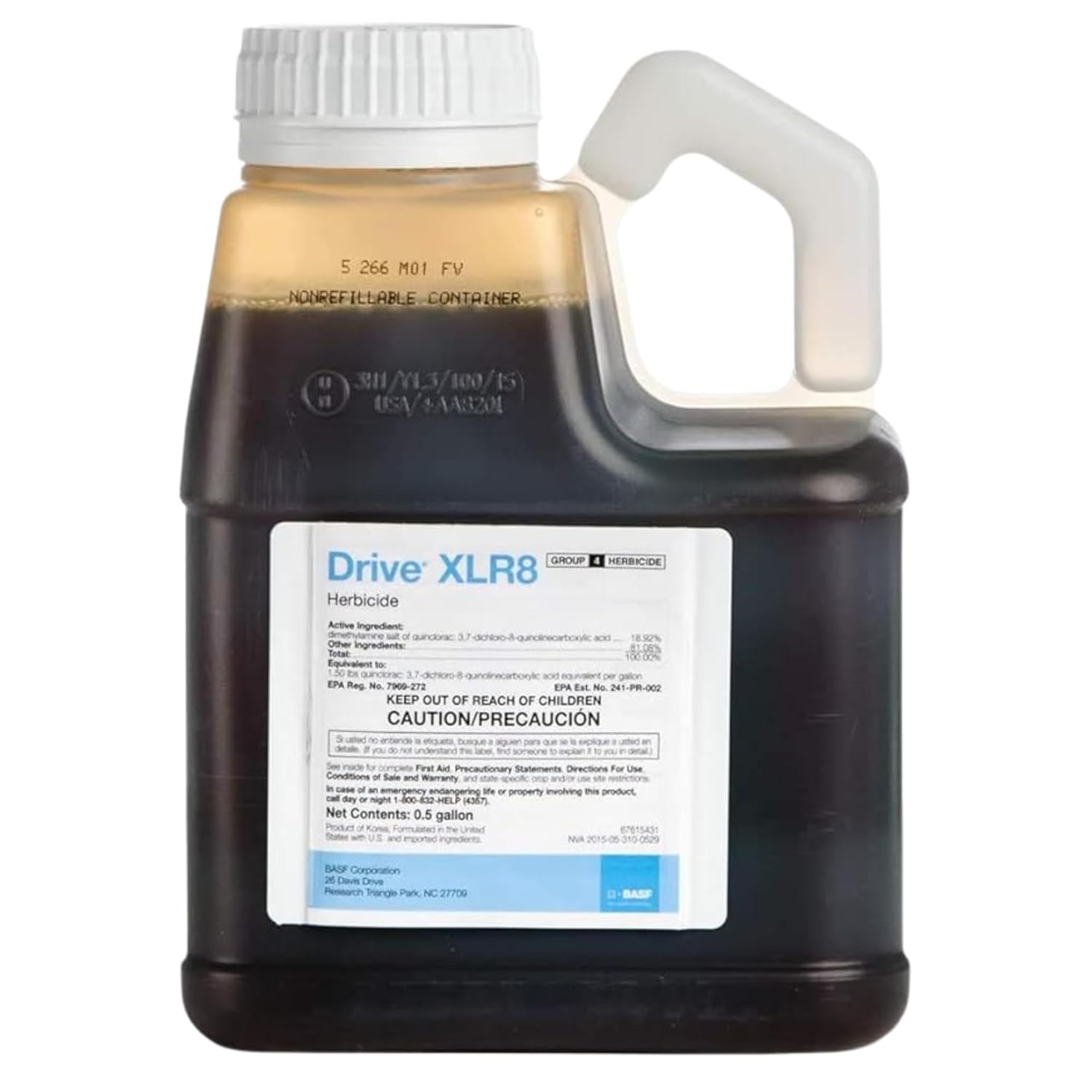
BASF Drive XLR8 Crabgrass Killer Concentrate, 64 oz
| Unit Count | 64 Ounce |
|---|---|
| Item Form | Liquid |
| Active Ingredients | Quinclorac 18.92% |
| Coverage | Full |
Drive XLR8 is a concentrated liquid herbicide built mainly to knock down crabgrass and other grassy and broadleaf weeds in turf. You mix a small measured amount with water and a methylated seed oil adjuvant and spray over the turf for spot or broadcast treatment. Its water-based formulation and quinclorac active ingredient deliver relatively fast uptake and labeled rainfast protection within about an hour, and the product advertises up to 30 days of residual control, which reduces how often you need to reapply. It is labeled for both warm- and cool-season turf and can be tank-mixed with other turf herbicides when label directions allow, giving flexibility for complicated weed problems. Important limitations are that it is a chemical herbicide that requires careful PPE and strict adherence to label directions, and some local restrictions apply, including reduced use patterns in certain states and spot-application limits. For gardeners who follow the label, it offers reliable, professional-strength control of crabgrass and many common lawn weeds.
Best for: Homeowners and groundskeepers who want a strong, professional-style postemergent solution to quickly reduce crabgrass and mixed weed populations and who are comfortable following label safety and application steps.
Less Ideal for: People seeking an organic or nonchemical approach to crabgrass control or users who prefer no-handling of concentrated herbicides should consider alternative cultural or nonchemical options.
- Concentrated 64 oz formula covers large areas when mixed per label directions
- Water-based formulation for faster plant uptake and rainfast protection in under an hour
- Provides up to 30 days of residual control against crabgrass and several grassy weeds
- Labeled for use on both warm-season and cool-season turf and compatible with some tank mixes
- Requires careful handling and PPE because it is a chemical herbicide
- Some state-specific use restrictions and label limitations apply
Verdict: Choose Drive XLR8 when you want a concentrated, fast-acting postemergent herbicide that delivers reliable crabgrass control and multi-week residual protection.
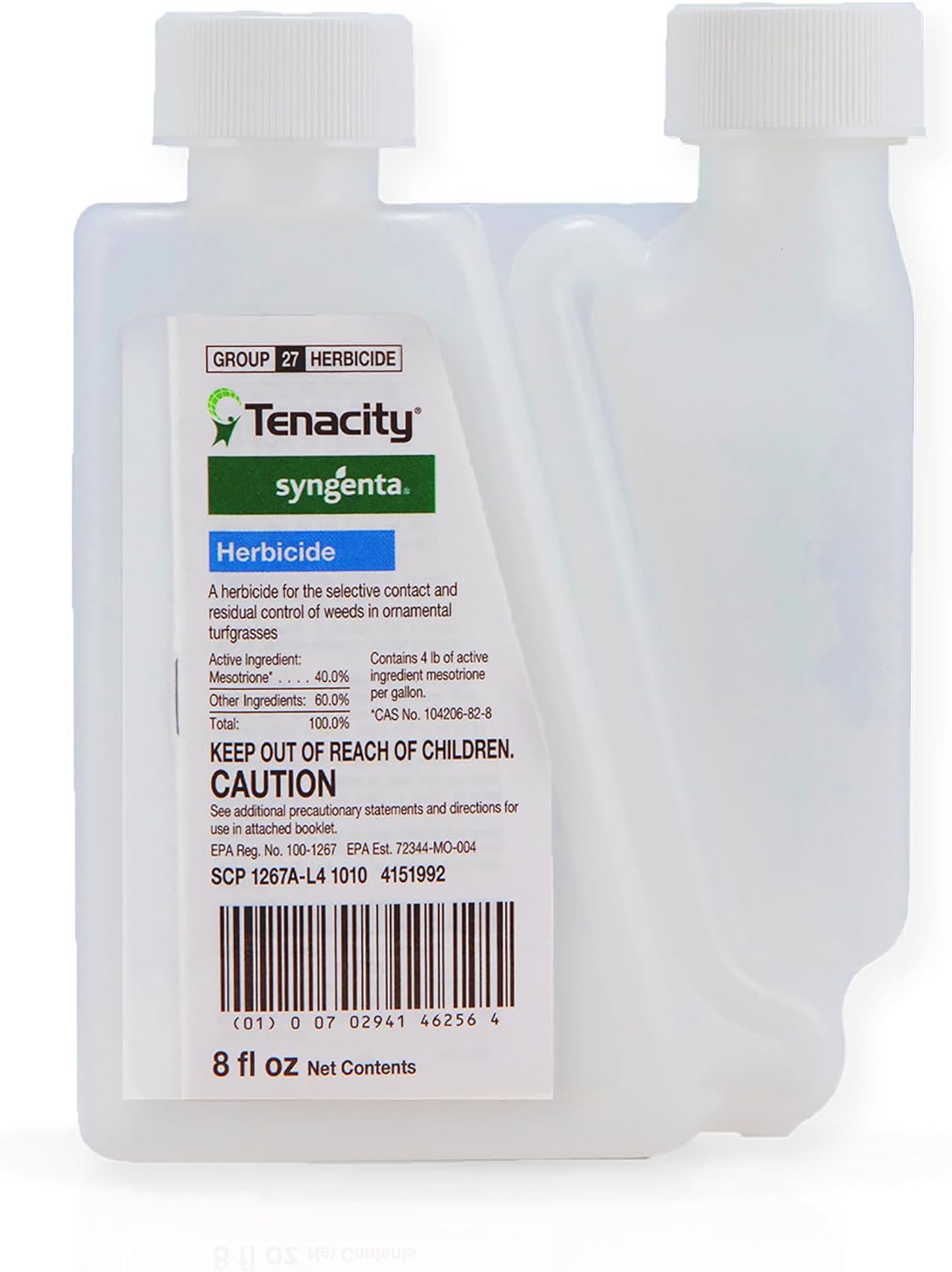
Syngenta Tenacity Turf Herbicide, 8 oz
| Unit Count | 8 Fluid Ounces |
|---|---|
| Item Form | Liquid |
| Coverage | 2000 ft^2 per 1sp of product |
| Active Ingredients | Mesotrione |
Tenacity Turf Herbicide is a concentrated mesotrione-based liquid designed for both pre-emergent and post-emergent control of common lawn weeds including crabgrass, clover, chickweed and dandelions. You apply it diluted according to label rates with a handheld or hose-end sprayer to target problem areas or broadcast across the lawn; when used as a pre-emergent it is taken up as weeds emerge and when applied post-emergent it acts systemically for selective control. The product covers a large area per bottle and the active ingredient provides residual control so you can expect longer suppression than a contact-only herbicide. Important practical points are that it is turf-selective so follow the label for grass species and mixing instructions to avoid turf injury, and results can take several days to appear. Also this is a concentrated chemical intended for careful, measured application rather than spot-use by people who prefer non-chemical methods.
Best for: Gardeners focused on strong, reliable crabgrass and broadleaf weed control who are comfortable using concentrated herbicides and following label directions for turf safety.
Less Ideal for: People seeking organic, mechanical, or spot-only solutions or those unwilling to follow detailed mixing and application instructions should consider other options.
- Systemic mesotrione active ingredient controls both pre- and post-emergent weeds
- Selective to turf when used per label, allowing treatment without killing desirable grass species
- Concentrated 8 oz liquid provides wide coverage per bottle
- Provides residual suppression, reducing frequency of repeat applications
- Requires careful mixing and adherence to label for turf safety
- Not a non-chemical or organic option for weed control
Verdict: Choose Tenacity when you want a concentrated, turf-selective herbicide that delivers pre- and post-emergent control of crabgrass and other common lawn weeds.
Spectracide Weed Stop for Lawns Plus Crabgrass Killer, Ready-to-Use, 1 Gallon

| Item Form | Spray |
|---|---|
| Coverage | Up to 5,000 sq ft |
| Liquid Volume | 1 gallons |
This ready-to-use Spectracide formula is designed for homeowners who want a fast, no-mix solution to spot-treat or cover larger lawn areas for crabgrass and common broadleaf weeds. It sprays on and acts by contact to kill weeds down to the root, with the manufacturer saying visible dying occurs in as little as five hours. The product lists coverage up to roughly 5,000 square feet and carries guidance to apply when temperatures are between 45 and 90 degrees F and to avoid certain temperature ranges on Bermudagrass to prevent temporary discoloration. Practical features include a full-gallon RTU container and a spray applicator for straightforward use; you should mow two to three days before treatment for best effect. Limitations are that it kills by contact, so thorough coverage matters, and temperature restrictions and turf-type cautions mean timing and grass species need attention to avoid stress or temporary yellowing.
Best for: Homeowners who want a straightforward, time-saving solution to control crabgrass and common lawn weeds across medium to large lawns and who prioritize ease of use and fast visible results.
Less Ideal for: People managing sensitive turf varieties or who need a preemergent crabgrass prevention strategy; also not ideal for those who require systemic long-term weed control programs.
- Ready-to-use spray requires no mixing and is simple to apply
- Kills a wide range of weeds including crabgrass and many broadleaf species
- Produces visible results quickly, often within about five hours
- Claims to kill down to the root rather than only top growth
- Performance depends on thorough contact so missed spots may regrow
- Has temperature and turf-type restrictions that can limit safe application windows
Verdict: A one-gallon ready-to-use spray that quickly knocks down crabgrass and many common lawn weeds with minimal setup, ideal for homeowners who want fast, practical results.
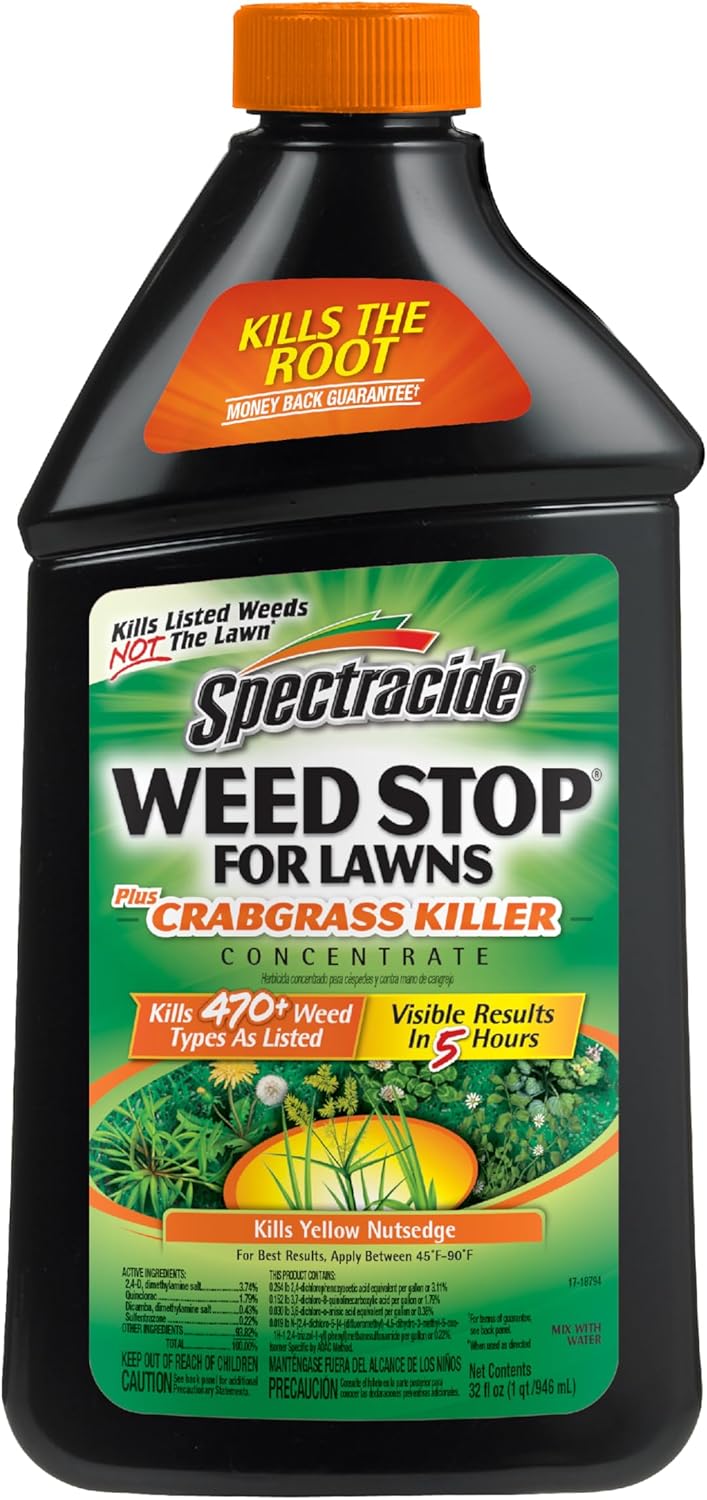
Spectracide Weed Stop for Lawns Plus Crabgrass Killer Concentrate, 32 oz
| Unit Count | 32 Ounce |
|---|---|
| Coverage | 5000 square_feet |
| Item Form | Liquid |
| Liquid Volume | 32 fluid ounces |
Spectracide Weed Stop Plus Crabgrass Killer is a liquid concentrate designed to be diluted and sprayed over established lawns to kill crabgrass and a long list of broadleaf and grassy weeds. You mix the product per label directions, spray until the weeds are wet, and see visible control in about five hours with rainfast performance in roughly three hours. It is intended for spot or whole-lawn applications and treats up to 5,000 sq ft from a 32 fl oz bottle, which makes it a practical choice for standard yards. Notable features include fast contact activity down to the root and clear temperature windows for safe use. Important limitations are that it should not be applied to newly seeded turf, and care is required with bermudagrass and high temperatures to avoid temporary discoloration or injury. Users must follow safety directions to keep people and pets off treated areas until dry and to wait before reseeding.
Best for: Budget-minded homeowners who need a straightforward, fast-acting product to control crabgrass and common lawn weeds across a typical yard and prefer a concentrate that treats a lot of area per bottle.
Less Ideal for: People reseeding lawns, owners of delicate or newly established turf, or those with large commercial properties needing continuous professional-level management.
- Controls crabgrass and over 470 listed broadleaf and grassy weeds
- Fast visible results in about five hours and becomes rainproof in roughly three hours
- 32 fl oz concentrate treats up to 5,000 square feet making it economical for typical lawns
- Not safe for newly seeded lawns and requires waiting several weeks before reseeding
- Can cause temporary yellowing or injury on bermudagrass and should not be applied above specified temperatures
Verdict: An economical, fast-acting concentrate that treats up to 5,000 sq ft and quickly knocks down crabgrass and common lawn weeds.
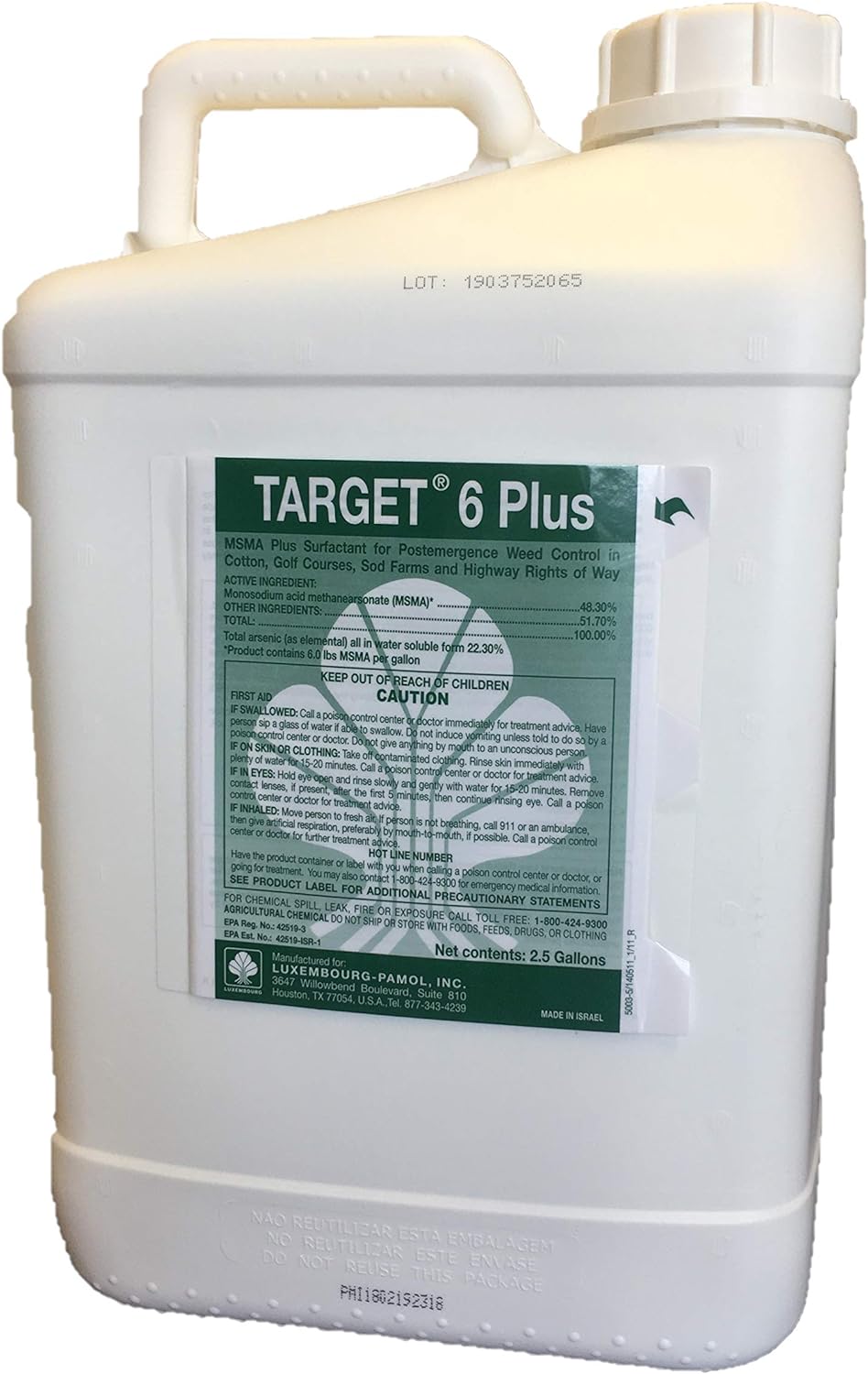
Target 6 Plus (MSMA 48.3%) Turf Herbicide, 2.5 Gallon
| Item Form | Liquid |
|---|---|
| Liquid Volume | 2.5 gallons |
| Active Ingredients | Monosodium acid Methanearsonate MSMA |
| Coverage | Selective: Crabgrass, Dallisgrass, Johnsongrass, Nutsedge, Pigweed, Chickweed |
Target 6 Plus is a professional-strength post-emergent herbicide that uses monosodium acid methanearsonate (MSMA) to control crabgrass, dallisgrass, johnsongrass, nutsedge, pigweed, and chickweed in turf. It is mixed with water (label suggests about 2 ounces per gallon) and applied as a coarse spray to actively growing weeds, making it suitable for large lawns, sod farms, golf courses, and rights-of-way. The 2.5 gallon concentrate supplies many applications and reduces the need for frequent repurchasing. Clear label directions and selective coverage make it effective when used at the right growth stage, and the liquid concentrate is easy to measure and tank-mix for targeted spot treatments. Important limitations are its toxicity and restricted use patterns: it can be harmful if inhaled, swallowed, or absorbed through skin and must not be applied where food is grown; strict adherence to label safety instructions and local regulations is required. This product is best handled by someone comfortable with concentrated herbicides and protective equipment.
Best for: Buyers who need a reliable, professional-strength post-emergent solution for recurring crabgrass and tough turf weeds and who are comfortable following label directions and using protective equipment.
Less Ideal for: Casual gardeners who prefer low-toxicity or ready-to-use products, or anyone unwilling to follow strict safety and application rules.
- High-concentration MSMA formula effective against crabgrass and several tough turf weeds
- Large 2.5 gallon jug reduces frequency of repurchase for big lawns or commercial use
- Liquid concentrate is easy to measure and mix for spot or broadcast applications
- Selective post-emergent action that targets listed grassy and broadleaf weeds
- Contains a toxic active ingredient that requires protective gear and careful handling
- Restricted use patterns and safety precautions limit where and when it can be applied
Verdict: Choose this concentrated MSMA herbicide when you need dependable, professional-strength post-emergent control of crabgrass and other persistent turf weeds.
Spruce Weed & Grass Killer Kit with Power Wand and 64 oz Refillable Bottle

| Unit Count | 64 Fluid Ounces |
|---|---|
| Coverage | 1 bottle treats up to 400 weeds. |
| Item Highlight | Pet Safe Weed Killer Spray, Reusable Weed Sprayer, 2 AA Batteries Included |
| Item Form | Multiple |
This Spruce kit combines a 64 oz no‑mix herbicide and a rechargeable-style power wand (runs on included AA batteries) for targeted spot treatments of broadleaf and grassy weeds. The formula uses water, essential oils, and a surfactant to dehydrate plants on contact, producing visible leaf darkening within an hour and complete weed death typically within 24 hours. It is intended for spot use on cracks, driveways, mulch beds, and garden edges rather than broadcast lawn spraying. The reusable wand and simple unlock/prime sprayer make quick, controlled applications easy and reduce mess compared with pouring and mixing concentrates. The product is designed to be rainproof within 10 minutes and is labeled safe around people, pets, and bees when used as directed. Limitations: it is nonselective so avoid overspray onto desirable turf or plants, and effectiveness depends on following climate and timing guidance such as applying above 60°F on a dry, calm day.
Best for: Buyers who want a quick, low-mess way to remove visible crabgrass and other weeds in small areas and who prioritize products with safety claims and clear user guidance.
Less Ideal for: People needing a systemic lawn-wide crabgrass prevention program or large-area treatments should choose a broadcast herbicide or professional service instead.
- Ready-to-use no-mix formula simplifies spot treatments without measuring or diluting
- Works fast with visible leaf damage within about an hour and plant death by 24 hours
- Comes with a battery-powered wand for precise spraying in cracks and edges
- Rainproof within 10 minutes, reducing reapplication risk from light showers
- Nonselective formula can damage desirable grass and plants if oversprayed
- Designed for spot treatments rather than large-area or broadcast crabgrass control
Verdict: A fast, ready-to-use spot treatment that delivers visible results quickly and is built around a reusable power wand for precise crabgrass removal in small areas.
Roundup Weed & Grass Killer4 Concentrate, 1 gal

| Unit Count | 128 Fluid Ounces |
|---|---|
| Item Form | Liquid |
| Coverage | 300 Square_Feet |
| Active Ingredients | Triclopyr,Triethylamine Salt,Puazifop-P-Butyl,Diquat Dibromide |
This 1 gallon concentrate from Roundup is formulated to kill broadleaf weeds and grasses, including crabgrass, dandelion, clover, and poison ivy. You mix the concentrate per the label and apply with a tank or hose-end sprayer; one gallon of product makes between 21 and 42 gallons of spray solution and the manufacturer says a gallon of spray covers about 300 sq ft. It is fast acting with visible results in hours and becomes rainproof in as little as 30 minutes, which helps when weather is uncertain. The formula is intended for use around flower beds, along fences, driveways and walkways, and for lawn replacement or garden prep, and the label provides replanting intervals and safety directions. Important limitations are typical for nonselective herbicides: you must avoid drift to desirable plants, keep people and pets out until treated areas are dry, and follow application rate limits and waiting periods to reduce risk. For risk-averse users, careful mixing and calm-weather application are essential to avoid accidental damage to lawns or ornamentals.
Best for: Homeowners who prioritize reliable, fast control of established crabgrass and broadleaf weeds and who will follow label directions and take precautions to avoid drift.
Less Ideal for: People who need a selective turf-safe product for spot treatments inside lawns or who prefer organic or non-chemical weed control methods.
- Concentrated formula covers large area when mixed, reducing trips to refill sprayer
- Fast visible action with results in hours and rainproof in about 30 minutes
- Effective on a wide range of common weeds and grasses including crabgrass and dandelion
- Label includes replanting guidance and specific application instructions for different uses
- Nonselective herbicide so nearby desirable plants can be damaged if spray drifts or contacts foliage
- Requires precise mixing and adherence to application limits and waiting periods to be used safely
Verdict: A concentrated, fast-acting herbicide that reliably kills crabgrass and other tough weeds when mixed and applied carefully.
Choosing the Right Crabgrass Killer: Key Factors to Consider
Treatment Timing and Life Stage
When you apply a crabgrass control product determines whether it prevents seedlings or treats established plants. Preemergent-style products must be applied before soil temperatures consistently reach the germination threshold for crabgrass. That timing often coincides with early spring in many regions and is critical because once seedlings are large, preemergents have little effect.
Postemergent controls work on young to moderate-sized plants but are usually less effective on older, well-established crabgrass. Understanding the life stage you are targeting helps you choose a preventative or curative approach and plan follow-up treatments if necessary.
Active Ingredient and Mode of Action
Different active ingredients act by preventing germination, disrupting cell growth, or causing desiccation. Some chemicals are systemic and move within the plant to root tissues, which can help control newly emerged seedlings, while others are contact herbicides that require thorough coverage to be effective.
Knowing the mode of action is important for timing applications and for rotating products across seasons to reduce the risk of resistance. It also affects how quickly you will see results and whether the product is suitable for spot treatments or whole-lawn applications.
Turfgrass Compatibility and Safety
Crabgrass treatments vary in how they affect different turf species. Some lawns tolerate certain chemistries better than others, and newly installed or overseeded turf can be especially vulnerable. Always consider the grass type and the age of the lawn when selecting a product.
Label directions often specify minimum turf age or recovery time after seeding. Choosing a formulation labeled safe for your turf and following post-application care reduces the risk of scorch, discoloration, or stunted recovery.
Residual Control and Reapplication Needs
Residual control describes how long a product prevents new crabgrass seeds from germinating or inhibits growth after application. A longer residual can reduce the need for repeat treatments during the peak germination window but may also limit reseeding or overseeding opportunities.
Consider the balance between residual length and your lawn management plan. If you plan to overseed, look for options with shorter residuals or follow label intervals. For low-maintenance lawns, a longer-lasting product can save time and labor.
Application Method and Equipment
Ease of application affects coverage consistency and the likelihood of application errors. Granular spreaders offer simple broadcast coverage but require calibration for even distribution. Liquids allow for spot treatments and tank-mixing but need careful measuring and compatible sprayer equipment.
Also consider weather constraints: wind, rain, and soil moisture at application time can influence effectiveness. Choose a product whose application method fits your equipment, physical ability, and typical weather windows in your area.
Environmental and Safety Considerations
Think about runoff risk, proximity to desirable plants, and safety around children and pets. Some chemistries bind tightly to soil and have low leaching potential while others require buffer zones near water features. Read label precautions for reentry intervals and irrigation timing.
Selecting a product with clear safety instructions and handling requirements reduces accidental exposure. Using targeted spot applications where possible also limits the overall quantity applied to the landscape.
When to Apply Preventative Treatments
Preventative treatments are most effective when timed before crabgrass seed germination. Many gardeners use local soil temperature cues or regional calendars to decide when to apply. A single well-timed application can prevent the bulk of spring germination and reduce summer pressure.
If you miss the ideal preemergence window, consider a targeted postemergent plan for newly emerged seedlings and adjust expectations for how quickly turf appearance will recover.
- Watch soil temps in the 50s to 60s Fahrenheit as a germination indicator.
- Apply to dry grass and water in according to label instructions when required.
- Avoid applying preemergents right before overseeding.
Spot Treatment Versus Whole-Lawn Programs
Decide whether to treat the entire lawn or focus on visible infestations. Spot treatments minimize chemical use and reduce risk to nearby desirable plants. They are practical for small, isolated patches of crabgrass.
Whole-lawn programs offer broader protection and work well when you have a history of widespread infestation. These programs typically rely on broadcast applications timed to the main germination period and may combine preemergent and postemergent tactics.
- Spot treat with a postemergent when crabgrass is localized and small.
- Use whole-lawn preemergents if crabgrass has been recurring across the yard.
Integrating Cultural Controls
Cultural practices that thicken turf reduce the space available for crabgrass to establish. Raising mowing height, following a balanced fertility program, and ensuring consistent irrigation encourage a dense stand of desirable grass that competes with weeds.
Core aeration and overseeding during recommended windows help repair thin spots. When combined with chemical controls, these cultural steps improve long-term suppression and lessen reliance on repeated applications.
- Mow at the taller end of the recommended height for your grass species.
- Fertilize based on soil test results rather than a fixed schedule.
- Water deeply and infrequently to promote deep root growth in turf.
Application Weather and Aftercare
Weather at the time of application affects how well a product works. Avoid spraying on windy days or just before heavy rain unless the label specifies it is rainfast. Some products need irrigation to activate while others must remain dry for a set period.
Aftercare also matters: do not dethatch or heavily traffic treated areas until the product has settled and the turf has recovered from any visible effects. Follow reentry and irrigation instructions precisely to protect turf and non-target plants.
- Check the forecast and aim for a calm, dry window when required.
- Follow label-specified irrigation timing to activate or avoid washing away the product.
- Delay overseeding until label intervals have passed for residual products.
Dealing With Heavy Infestations
For extensive crabgrass stands, a phased approach often works best. Start with products that target emerged plants to reduce seed production, then follow up with preventative measures the following season to break the infestation cycle.
Combine mechanical control, such as pulling or targeted cultivation in small areas, with chemical options to reduce the overall weed seedbank. Re-establishing dense desirable turf in treated areas will limit reinfestation over time.
- Treat existing plants before seed set to avoid adding to the soil seedbank.
- Plan for follow-up prevention next spring to stop new cohorts from establishing.
How We Chose the Best Crabgrass Killer
We focused on products and formulations that reliably target crabgrass at the right stage in its lifecycle and that integrate into typical lawn care schedules. Selection prioritized active ingredients known to suppress germination or kill existing seedlings, with attention to how long they remain effective in the soil and how they interact with common turfgrasses. We also weighted application practicality, including compatibility with handheld sprayers or spreaders, label clarity for timing and rates, and whether a product fits late-spring or summer treatment windows. Excluded from consideration were experimental treatments lacking established field performance and any formulations explicitly labeled for non-turf uses only. We looked for options that balance rapid visible control with acceptable turf safety when used per label directions. Final filters included availability of clear usage instructions, compatibility with typical lawn maintenance (mowing, irrigation schedules), and evidence of consistent results in homeowner settings. The evaluation criteria reported below reflect these priorities and guided the shortlist.
FAQ
When is the best time to apply a preemergent crabgrass treatment?
The best time is before soil temperatures consistently reach crabgrass germination levels, often in early spring. Local climate and seasonal variation matter, so use soil temperature or regional timing guides rather than calendar dates alone.
Can I apply a crabgrass killer after overseeding my lawn?
Many residual preemergents require a waiting period before overseeding to avoid harming new grass seedlings. The necessary interval varies by product, so check label directions. If you need to overseed soon, choose non-residual or low-residual options and follow the recommended timing.
Are spot treatments effective for small crabgrass patches?
Yes. Targeted postemergent spot treatments are often effective on small, young patches and reduce the amount of product used across the lawn. Thorough coverage and timing while plants are small improve results.
How soon will I see results after applying a postemergent crabgrass product?
Response time depends on the active ingredient and plant size. Many systemic products show visible decline within a week to two weeks, while contact herbicides can show symptoms faster but may not kill deep-rooted or older plants as reliably.
Will crabgrass control products harm nearby flowerbeds or vegetables?
Some chemistries can affect non-target plants if drift or runoff occurs. Maintain buffer zones, avoid application on windy days, and follow label precautions about contact with desirable plants. Use spot treatments to limit exposure near sensitive areas.
Final Verdict
Choose a crabgrass control approach that matches the stage of the infestation and your lawn management plan. Preventative preemergents work best when timed correctly to stop germination, while postemergent options handle existing seedlings and small patches. Balance residual length with overseeding or lawn renovation plans, and integrate cultural practices to strengthen turf and reduce future pressure. Prioritize product compatibility with your turf species, ease of application, and safety instructions. With a clear timeline and consistent follow-through, you can reduce crabgrass presence and maintain a healthier, denser lawn.
