

Note: This article contains affiliate links. If you click on these links and make a purchase, I may earn a small commission at no extra cost to you. This helps support my research and content. Read my full affiliate disclosure here.
When you plan outdoor time with a baby or toddler, the right insect spray reduces bites without irritating delicate skin. Choosing an infant-safe bug spray matters because formula safety, application method, and duration of protection all affect comfort and health for little ones. This guide highlights six shortlisted options that meet strict safety and performance checks for young children. We evaluated ingredient transparency, age-appropriate use, and real-world usability so you can pick a spray that fits stroller walks, backyard play, or travel days. Read on to understand the tradeoffs and which product attributes matter most.
Top Picks at a Glance
| Best Overall The best all-around choice for most situations | YAYA Organics Baby Bug Ban Natural Mosquito Repellent Spray, 4 oz |  |
| Best Quality Built to a higher standard if you want something more solid | Babyganics Mosquito Repellent Lotion — Plant and Essential Oils, 4 oz |  |
| Best Budget The cheapest option that still gets the job done reliably | All Terrain Kids Herbal Armor DEET-Free Pump Spray, 2 oz Travel Size |  |
| Highest Rated A top-rated pick with lots of positive feedback | OFF! Adults & Kids Insect & Mosquito Repellent Lotion, 3.8 oz |  |
| Most Popular A crowd favorite that many people choose with confidence | OFF! Kids Plant-Based Insect & Mosquito Repellent Spray, 4 oz |  |
| Best Seller A high-volume bestseller chosen again and again | OFF! Clean Feel Picaridin Insect & Mosquito Repellent Spray, 5 oz, 2-pack |  |
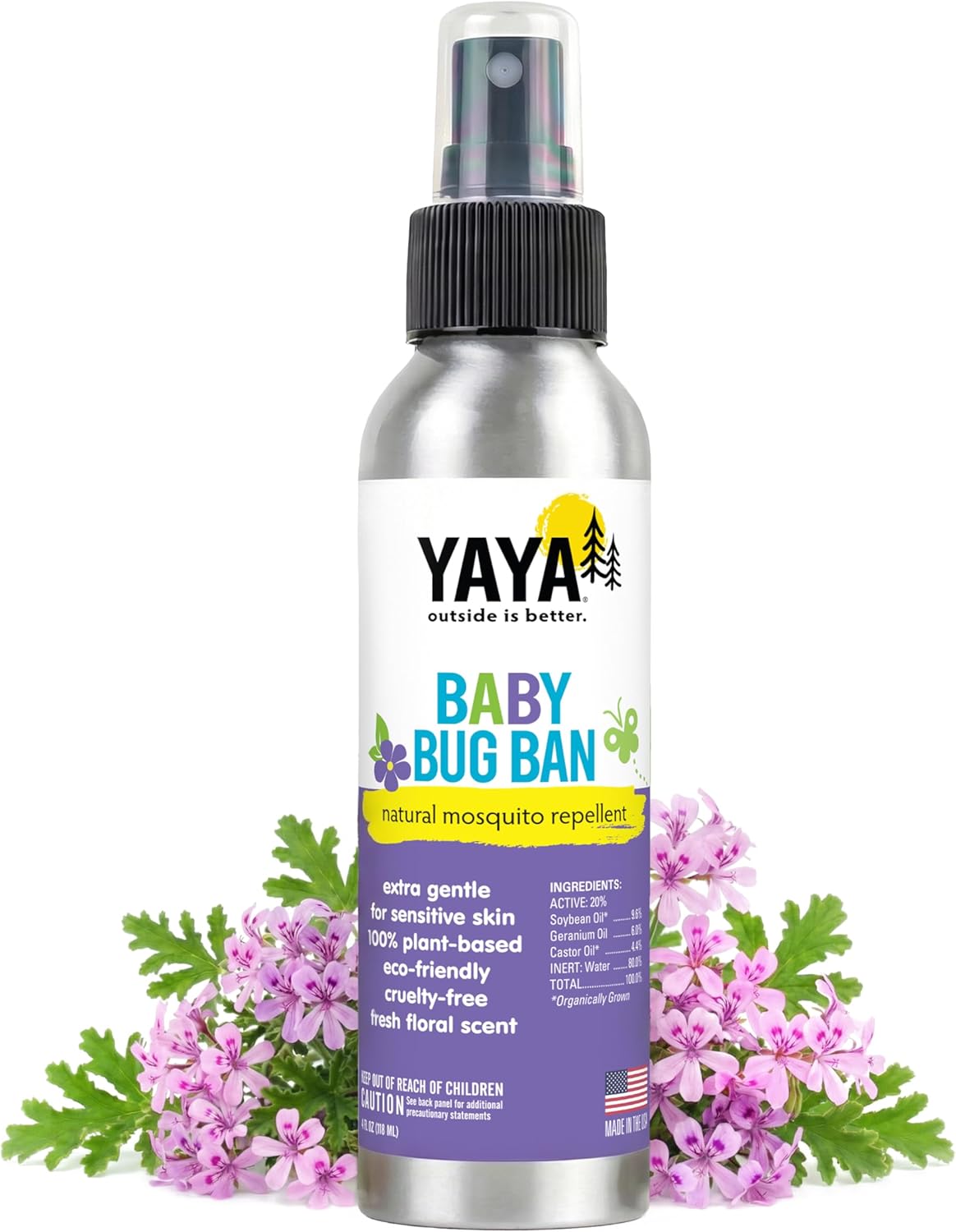
YAYA Organics Baby Bug Ban Natural Mosquito Repellent Spray, 4 oz
| Net volume | 4 oz |
|---|---|
| Intended age | 6+ months |
| Ingredients | water, organic soybean oil, organic castor oil, geranium oil |
| Made in | USA |
YAYA Organics Baby Bug Ban is a small, travel-friendly spray designed to keep babies and sensitive skin comfortable outdoors using plant-derived ingredients rather than DEET. It is typically used by spraying a fine mist directly onto skin, clothing, strollers, or other baby gear before outings; the bottle size and lightweight spray make reapplication on the go easy. The formula lists rose geranium essential oil with organic soybean and castor oils and emphasizes a fresh, non-greasy feel that most parents will find pleasant compared with heavy chemical repellents. Practical benefits include suitability for infants 6 months and older, vegan and cruelty-free formulation, and recyclable packaging. Limits to consider are that ingredient lists rely on essential oils rather than long-duration synthetic actives, so protection time may be shorter than DEET-based products and may require more frequent reapplication during extended exposure. Also anyone with known sensitivities to essential oils should test a small area first.
Best for: Parents or caregivers who prioritize gentler, plant-based protection for infants and small children and want a portable spray for short outdoor trips and everyday play.
Less Ideal for: People needing long-duration protection in high mosquito or disease-risk areas or those who prefer evidence-backed synthetic actives for extended outings.
- Formulated for babies 6+ months and sensitive skin
- Plant-based DEET-free formula using rose geranium and organic oils
- Light, non-greasy mist suitable for skin and baby gear
- Vegan, cruelty-free, and packaged in recyclable material
- Uses essential oils as active ingredients so protection duration is likely shorter than DEET-based repellents
Verdict: Choose this if you want a gentle, DEET-free spray made for babies and sensitive skin for everyday outdoor use.
Babyganics Mosquito Repellent Lotion — Plant and Essential Oils, 4 oz

| Active ingredients | Rosemary Oil 1.50%, Citronella Oil 0.95%, Geranium Oil 0.75%, Cedarwood Oil 0.70%, Peppermint Oil 0.60%, Lemongrass Oil 0.25% |
|---|---|
| Form | Lotion |
| Net weight | 4 oz |
| Directions | Reapply every 60 minutes; adults apply to children |
This Babyganics lotion combines a moisturising base with a blend of plant-derived essential oils — rosemary, citronella, geranium, cedarwood, peppermint and lemongrass — intended to help keep mosquitoes away while being gentle enough for infant use. It is applied like any lotion: shake, rub into exposed skin and avoid hands, eyes and mouth; the manufacturer recommends adults apply it to children rather than letting kids handle the bottle. The formula is free of parabens, sulfates, phthalates, synthetic fragrances and dyes, so it suits parents seeking a gentler repellent option for babies. Reapplication is required about every 60 minutes, which makes it practical for short outdoor windows like stroller walks or yard play but less convenient for long outings. The product is water resistant and meant for easy, non-greasy wear, though its effectiveness depends on natural oils rather than DEET or picaridin so protection may be milder against heavy mosquito pressure. For parents who prioritize plant-based ingredients and skin-friendly moisturization, this is a sensible everyday choice with the limitation that frequent reapplication may be needed in high-exposure situations.
Best for: Parents who prioritize gentle, plant-based products and want a moisturizing mosquito repellent for short outdoor trips with infants.
Less Ideal for: Families who need long-lasting, high-strength mosquito protection for extended outdoor activities or travel to areas with heavy mosquito-borne disease risk should choose a product with longer duration or an EPA-registered active ingredient.
- Uses recognizable essential oils (citronella, rosemary, geranium, cedarwood, peppermint, lemongrass) as active repellents
- Free from parabens, sulfates, phthalates, synthetic fragrances and dyes, which reduces irritation risk for sensitive infant skin
- Lightweight, non-greasy lotion base that doubles as a moisturizer and is easy to rub in
- Clear application guidance for adult-applied use to avoid accidental ingestion or eye contact
- Requires reapplication approximately every 60 minutes so it is not suitable for long continuous outdoor protection
- Relies on essential oils rather than EPA-registered synthetic active ingredients so repellency may be less robust in high mosquito populations
Verdict: A skin-friendly, plant-based repellent that doubles as a moisturizer for short outdoor use with infants.
All Terrain Kids Herbal Armor DEET-Free Pump Spray, 2 oz Travel Size

| Unit Count | 2 Fluid Ounces |
|---|---|
| Item Volume | 60 ml |
| Scent Name | Lemongrass |
| Item Form | Aerosol |
| Material Features | Biodegradable |
All Terrain Kids Herbal Armor is a 2 oz pump spray that uses plant-derived oils to repel mosquitoes and other bugs without DEET. It is typically used as a quick on-the-go protector for children during backyard play, short hikes, or travel; you shake and spray onto exposed skin or apply to hands for the face. The formula lists soybean, citronella, peppermint, cedar, lemongrass, and geranium oils as active ingredients and is described as biodegradable and nonstaining to clothing. Practical benefits include a compact travel size that fits in a daypack or diaper bag and a nonchemical, DEET-free option for families who prefer botanical repellents. Important limitations are that botanical repellents usually provide shorter duration protection than EPA-registered DEET or picaridin products and may require more frequent reapplication, especially in high-bite environments. The pump spray delivery is convenient but means you must be careful to apply evenly and supervise young children during use.
Best for: Parents who prioritize a natural, DEET-free repellent for short outings and want a compact spray to keep on hand for children and family use.
Less Ideal for: Families planning extended outdoor exposure in high mosquito activity or areas with disease-carrying insects should consider longer-lasting, EPA-registered repellents instead.
- DEET-free formula using plant oils suitable for families seeking botanical repellents
- Travel-friendly 2 fl oz pump bottle that fits in a diaper bag or small pack
- Nonstaining and biodegradable formulation safe to apply to fabric as directed
- Plant-oil active ingredients typically offer shorter protection intervals and need more frequent reapplication
Verdict: A compact, DEET-free travel spray that gives parents a convenient botanical option for short outdoor outings with children.
OFF! Adults & Kids Insect & Mosquito Repellent Lotion, 3.8 oz

| Active ingredient | Picaridin 10% |
|---|---|
| Form | Lotion |
| Recommended age | 6 months and up* |
| Net weight | 3.8 oz |
This OFF! picaridin lotion is designed for everyday family use as a skin-applied mosquito repellent that feels like a moisturizer rather than a sticky spray. You apply a thin, even layer to exposed skin and reapply as directed; the lotion spreads easily and leaves no oily residue, which makes it simple to use on squirming infants and toddlers when following the age and frequency limits on the label. The active ingredient is 10% picaridin, a proven alternative to DEET that provides effective mosquito protection while being gentle on skin and odor free. Practical benefits include precise coverage for small areas, a soft skin feel from added emollients, and clear directions for children as young as six months. Important limitations are that it must be used exactly as labeled for infants and young children, it is for external use only, and protection time depends on activity and reapplication frequency, so you may need to reapply during long outdoor sessions.
Best for: Parents and caregivers who prioritize a reliable, low-odor topical repellent that can be applied carefully to young children for routine outdoor activities.
Less Ideal for: People who prefer aerosol sprays for very rapid whole-body coverage or those who need a single long-duration protection claim for extended outdoor work.
- Uses 10% picaridin, an effective repellent alternative to DEET
- Fragrance-free lotion that goes on smooth and is not greasy or sticky
- Formulated and labeled for use on children from 6 months with clear directions
- Includes emollients for improved skin feel and easier application on young skin
- Requires careful adherence to label directions for infants and reapplication limits
- Does not state a single fixed duration of protection so reapplication may be needed during long outdoor exposure
Verdict: Choose this picaridin lotion when you want a dependable, non-greasy topical repellent that is labeled for use on infants and young children when applied as directed.
OFF! Kids Plant-Based Insect & Mosquito Repellent Spray, 4 oz

| Active ingredients | Rosemary, Citronella, Geranium, Cedarwood, Peppermint, Lemongrass oils |
|---|---|
| Other ingredients | Soybean oil (95.25%) |
| Protection duration | Up to 90 minutes |
| Application | Pump spray; reapply every 90 minutes as needed |
This OFF! Kids spray is a botanically inspired, pump‑style repellent designed for quick application before outdoor play. It uses a blend of essential oils — including rosemary, citronella, geranium, cedarwood, peppermint, and lemongrass — suspended in a soybean oil base to provide up to 90 minutes of mosquito protection without added fragrance or greasy residue. The pump bottle makes it easy to spray and spread on exposed skin for pre‑play routines, and the shorter reapplication interval keeps use predictable during picnics, park visits, or backyard time. It is explicitly labeled for use on children six months and older when directions are followed, which fits an infant‑safe focus. Limitations are the relatively short protection window compared with DEET or picaridin products and the potential for skin sensitivity in people prone to allergies to essential oils, so testing on a small area first is wise. For families wanting a fragrance‑free, plant‑based option for routine outdoor use, this offers a familiar brand and straightforward performance.
Best for: Parents and caregivers who prioritize a botanical, fragrance‑free repellent for routine outdoor use with young children and prefer a simple pump application ritual.
Less Ideal for: People who need multi‑hour, high‑strength mosquito protection for long hikes or high‑risk areas, or those who prefer clinical synthetic actives for maximum duration.
- Formulated for children six months and older when used as directed
- Plant-based active blend with no added fragrance or dyes
- Pump spray design enables quick, even application before outdoor activities
- Feels non-greasy on skin and suitable for frequent reapplication during play
- Provides up to 90 minutes of protection, shorter than many DEET or picaridin repellents
- Contains multiple essential oils which may cause irritation in sensitive skin
Verdict: A fragrance‑free, plant‑based pump spray that gives caregivers a gentle, easy-to-use option for routine mosquito protection on infants and young children.
OFF! Clean Feel Picaridin Insect & Mosquito Repellent Spray, 5 oz, 2-pack

| Active ingredient | Picaridin 20% |
|---|---|
| Form | Aerosol spray |
| Protection duration | Up to 8 hours (when used as directed) |
| Size | 5 oz per can (pack of 2) |
This OFF! Clean Feel spray uses 20% picaridin in a lightweight, non-greasy aerosol that goes on clear and is designed for everyday outdoor use. Typical use is spraying exposed skin from a few inches away and then spreading lightly by hand; the label emphasizes limited applications per day and careful application to children by an adult. The main strengths are the picaridin active ingredient, which is widely used as an effective alternative to DEET, and the odorless, non-staining formula that dries quickly and is comfortable for regular backyard or travel use. The spray format makes it fast to apply to adults and older children, and the manufacturer states protection can last up to eight hours when used as directed. Important limitations are that it is for external use only, should not be applied to damaged skin or directly to a child’s hands or face, and the aerosol delivery can be harder to control for very young infants; the label also restricts frequency of application. These points make it practical for cautious parents who follow label directions but less suited for direct application on infants without careful adult application and hygiene afterward.
Best for: Parents who prioritize proven, non-greasy insect protection for everyday outdoor activities and plan to apply repellent carefully to children themselves.
Less Ideal for: Caregivers who need a product for direct self-application on very young infants or who prefer non-aerosol formats should consider lotions or wipes formulated specifically for infants instead.
- Contains 20% picaridin, an effective alternative to DEET
- Fragrance-free, non-greasy formula that dries quickly and does not stain clothing
- Aerosol spray is quick and easy to apply for routine outdoor activities
- Label restricts application frequency and warns against direct use on children’s hands or face
- Aerosol delivery can be harder to control around infants compared with lotions or wipes
Verdict: A reliable, fragrance-free picaridin spray that gives long-lasting, non-greasy protection when parents apply it carefully to children.
Choosing the Right Infant Safe Bug Spray: Key Factors to Consider
Active Ingredient Profile
Which active repellent is used determines both safety guidance and how well the spray prevents bites. Some actives have clearer pediatric recommendations than others, and concentration matters. Look for formulations that state the active ingredient and its percentage so you can compare against pediatric guidance and public-health recommendations.
Different actives behave differently in the field. Some offer longer hours of protection but are recommended only for older children, while others provide shorter protection windows but are acceptable for infants. Knowing the active ingredient helps you plan reapplication and complementary protection like clothing or mosquito netting.
Age and Usage Instructions
Clear labeling about the minimum recommended age and how to apply to infants is critical. Safety guidance should specify whether the spray is suitable for newborns, for babies over a certain number of months, and whether caregivers should apply sparingly or avoid certain body areas like hands and face.
Instructions that include handling for accidental ingestion, recommended reapplication intervals, and bath-after-use guidance reduce caregiver uncertainty. Products with ambiguous age recommendations should be treated cautiously for infants and will often be excluded by parents seeking the strictest safety standards.
Skin Compatibility and Fragrance
Infant skin is thinner and more sensitive, so formulations with minimal additives and hypoallergenic claims are preferable. Fragrances, essential oils, and alcohol can sting or cause dermatitis on babies. Products designed for infants typically minimize or eliminate these irritants and may include moisturizing or soothing carriers.
Patch-testing on a small area before wide application helps detect reactions. Consider whether the spray is labeled hypoallergenic, dermatologist-tested, or free from common allergens; these indicators reduce but do not eliminate the risk of skin sensitivity.
Application Method and Practicality
How you apply the repellent affects safety and convenience with an infant. Sprays, pump bottles, and wipe formats each have pros and cons: sprays can cover larger areas quickly but risk inhalation, pump bottles reduce aerosol exposure, and wipes give precise application. The container design and spray pattern influence how easy it is to treat a squirming baby safely.
Caregivers should prefer formats that minimize mist inhalation and allow targeted application to clothing and exposed skin. Clear guidance on how much to use and whether to apply on clothing versus directly on skin is important for real-world use.
Duration and Water Resistance
How long protection lasts determines how often you need to reapply during outings. Short-duration infant-safe options may require reapplication for long trips, while longer-lasting formulations reduce interruptions. Water resistance matters for sweaty play or near water because moisture can shorten protection time.
Balance duration needs against safety: extended protection often comes from stronger actives that may not be suitable for the youngest infants. Choose a product whose protection window matches typical outing lengths and follow reapplication guidance carefully.
Packaging Safety and Storage
Packaging affects both safety and convenience. Child-resistant caps, clear expiration dates, and leak-proof design prevent accidental exposure. Smaller travel-friendly bottles can be carried in diaper bags, but watch for packaging that could crush or leak.
Proper storage instructions reduce degradation of active ingredients. If a product requires refrigeration or must be kept away from sunlight, that affects how feasible it is to use during travel or outdoor days.
When to Use Insect Repellent on Infants
Deciding whether to apply bug spray depends on local insect activity, time of day, and whether protective clothing or netting is available. For brief, low-risk exposures such as a quick stroller walk, covering skin with long sleeves and using a canopy may be preferable to topical repellent.
Use a repellent when mosquitoes or biting flies are present in sufficient numbers that clothing and barriers cannot prevent bites, or when infants will be outdoors during peak biting hours. Also consider repellents when traveling to areas known for vector-borne illnesses, but follow pediatric guidance and choose formulas labeled for the infant's age.
- Prioritize physical barriers first: clothing, mesh covers, and shaded areas
- Apply repellent only to exposed skin and clothing as directed
- Avoid applying near eyes, mouth, and hands that infants put in their mouths
Safe Application Technique for Caregivers
To minimize risk, apply repellent to your hands and then gently rub it onto the infant instead of spraying directly on the child. Keep sprays away from the face; apply sparingly to the neck and outer limbs and avoid hands so infants do not ingest residue.
If using a spray directly on clothing, hold the bottle at arm's length and lightly mist the fabric outdoors, then allow it to dry before dressing the baby. Always read and follow the product's instruction for wait times before returning the infant to enclosed carriers or car seats.
- Apply outdoors or in well-ventilated areas
- Let treated clothing and skin dry before contact
- Wash treated skin with mild soap and water after the exposure period
Alternatives and Complementary Protections
Repellent is one part of an overall insect bite prevention strategy. Clothing treated with approved repellents, physical netting for strollers and cribs, and avoiding peak insect hours reduce dependence on topical sprays. For infants too young for certain actives, rely more on barriers and environmental controls.
Environmental measures include reducing standing water near play areas, using fans to keep mosquitoes away on patios, and ensuring screens are intact on windows and doors. These steps lower overall bite risk without increasing chemical exposure.
- Use stroller and crib nets for prolonged outdoor stays
- Dress infants in lightweight long sleeves and pants in mosquito-prone settings
- Employ fans on patios to deter flying insects
Reading Labels: What To Watch For
Look for explicit statements about minimum recommended age and follow them strictly. Labels should list active ingredients and their concentrations as well as any cautions about use on infants or ingestion risks.
Watch for application limits, reapplication intervals, and guidance on areas to avoid. Warnings about use with other products or on irritated skin are important. If the label is vague about infant use, choose a product with clearer pediatric guidance.
- Confirm minimum age and exactly how much product to use
- Check for hypoallergenic or pediatric dermatologist testing notes
- Avoid products with alcohol, strong fragrances, or multiple essential oils for infants
Packing and Travel Tips for Outings with Infants
When traveling with an infant, bring a small, clearly labeled bottle that fits local guidelines for carry-on or checked baggage if flying. Keep repellents in a sealed pouch away from food and toys, and store them where curious hands cannot access them.
Plan for reapplication by noting the product's protection window, and carry wipes and mild soap to clean treated skin when needed. If you are unsure about a product at your destination, lean on physical barriers and shaded activities until you can confirm local suitability.
- Pack an extra small bottle to match outing length
- Carry a waterproof bag for used wipes and contaminated clothing
- Check local insect activity forecasts when planning outdoor days
How We Chose the Best Infant Safe Bug Spray
Our shortlist focused on sprays formulated and labeled for infants and very young children, then filtered by ingredient transparency and real-world suitability. We prioritized products that disclose active and inactive ingredients, avoid known skin irritants and strong synthetic repellents for the youngest age groups, and rely on evidence-backed actives or repellents with established pediatric guidance. Safety for sensitive skin, clear age-usage instructions, and minimal fragrance were required editorial filters. We also assessed application format and ergonomics, because ease of spraying or wiping matters when working with squirming infants. Finally, we considered reported duration of protection and water resistance for outdoor play. Exclusions included products labeled only for adults, sprays with undisclosed chemical concentrations, and formulations intended for pets or agricultural use. The result is a focused group that balances gentleness, usability, and practical bite protection for caregivers of infants.
FAQ
At what age can infants safely use bug spray?
Guidance depends on the active ingredient. Some infant-specific products are labeled for use from a few months old, while others are not recommended until after infancy. Always follow the product label and pediatric advice before applying any repellent to a baby.
How often should I reapply infant-safe bug spray?
Reapplication intervals vary by formula and activity level. Many gentle, infant-safe options provide shorter protection windows and need reapplication every few hours. Follow the label instructions and consider shorter intervals when infants are sweating or in water.
Can I spray repellent on my baby's clothing instead of skin?
Yes. Treating clothing and then allowing it to dry before dressing reduces skin exposure. Avoid spraying areas infants put in their mouths and reapply only as directed for fabric treatments.
Are natural or essential oil repellents safe for infants?
Natural does not always mean safe for babies. Some essential oils can irritate or sensitize infant skin and may pose inhalation risks. Choose products specifically formulated and labeled for infant use and check for allergen warnings.
What should I do if my infant has a skin reaction?
Stop using the product immediately and gently wash the area with mild soap and water. If redness or irritation persists, contact a pediatrician. Keep a record of the product used to help identify the cause.
Is it safe to use repellent and sunscreen together?
Combining products is sometimes necessary. Apply sunscreen first, let it absorb, and then apply repellent. When possible, use products formulated for simultaneous use and follow label guidance to avoid over-application.
Final Verdict
For outings with babies and toddlers, prioritize products that explicitly state infant suitability, list active ingredients, and minimize potential skin irritants. Balance protection duration against the gentleness of the formula and prefer application methods that reduce inhalation and hand contact. When in doubt, use physical barriers and avoid unnecessary chemical exposure. Choosing a spray that aligns with your typical outing length and your child's sensitivity will make outdoor time safer and more comfortable.
