

Note: This article contains affiliate links. If you click on these links and make a purchase, I may earn a small commission at no extra cost to you. This helps support my research and content. Read my full affiliate disclosure here.
Choosing the right landscape fabric for flower beds makes day-to-day gardening easier and keeps plants healthier. The wrong fabric can trap water, restrict roots, or tear in the first season. This guide looks at seven shortlisted landscape fabrics suited for flower beds of different sizes and styles. We evaluate materials on durability, breathability, ease of planting, and how they affect soil moisture and weed pressure. Read on to understand the tradeoffs so you can pick fabric that fits your planting style and bed maintenance routine.
Top Picks at a Glance
| Best Overall The best all-around choice for most situations | DeWitt Pro-5 Heavy-Duty Woven Weed Barrier Fabric, 4 x 250 ft |  |
| Best Quality Built to a higher standard if you want something more solid | Super Geotextile Heavy Duty 5 oz Weed Barrier Fabric, 3 x 100 ft |  |
| Best Value The sweet spot between price and what you get | Sunocity 4 ft x 300 ft Heavy Duty Woven Weed Barrier Fabric (3.5 oz) |  |
| Best Budget The cheapest option that still gets the job done reliably | HANWRAPS 3.3 ft x 13 ft Heavy-Duty Weed Barrier Fabric (3.2 oz) |  |
| Highest Rated A top-rated pick with lots of positive feedback | TOONARS 4 ft x 100 ft 3.2 oz Landscape Weed Barrier Fabric |  |
| Most Popular A crowd favorite that many people choose with confidence | LAVEVE Heavy Duty Weed Barrier Landscape Fabric, 4 ft x 100 ft (two 4×50 ft rolls) |  |
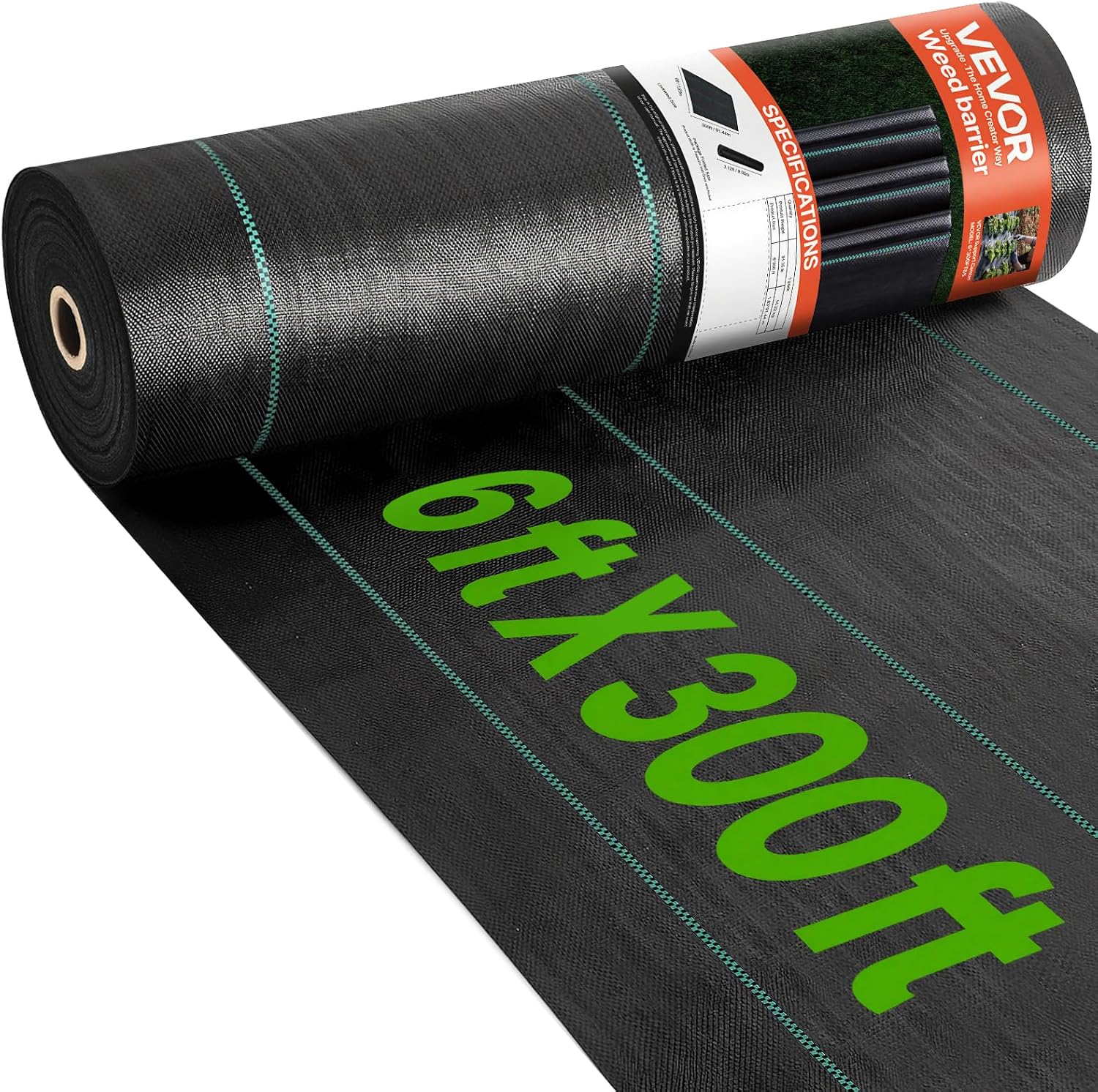
| Best Seller A high-volume bestseller chosen again and again | Happybuy 6 ft x 300 ft Heavy-Duty Weed Barrier Landscape Fabric |  |
DeWitt Pro-5 Heavy-Duty Woven Weed Barrier Fabric, 4 x 250 ft

| Material weight | 5 oz |
|---|---|
| Roll length | 250 ft |
| Manufacturer | Dewitt |
The DeWitt Pro-5 is a commercial-grade woven weed barrier made for long runs and high-traffic landscape installations. It is typically rolled out under mulch, gravel, or around long planting beds where durable, long-term weed suppression is needed. The fabric is strong and puncture-resistant, so it stands up to installation with staples, foot traffic, and edging work better than lightweight nonwoven covers. Gold alignment stripes every 12 inches make it easy to lay straight rows and space plants consistently in beds or garden rows. Because it is woven, the material permits water, air, and nutrients to pass through to the soil while still blocking sunlight that fuels weed growth. The main compromises are that heavy woven fabric is less flexible to conform to very irregular terrain and it requires cutting and careful anchoring at edges to prevent lifting. For large landscapes, commercial beds, and raised-row gardens where longevity and mechanical strength matter, this fabric performs reliably.
Best for: Gardeners and contractors who prioritize durable, long-lasting weed control for large beds, long rows, or commercial landscaping projects and need a fabric that stands up to heavy use.
Less Ideal for: Home gardeners with small, highly contoured planting areas or those who want a very flexible, lightweight fabric for tight curves should consider more pliable options.
- Commercial-grade woven construction resists tears and punctures during installation and use
- Allows air, water, and nutrients to reach soil while blocking weed growth
- Gold alignment stripes every 12 inches simplify straight-row layout and plant spacing
- Sized for long runs and large projects, suitable for pathways, borders, and raised beds
- Stiffer woven material is less conformable on very uneven or contoured ground
- Requires careful cutting and anchoring at edges to prevent lifting in windy areas
Verdict: Choose this heavy-duty woven fabric when you need long-lasting, tear-resistant weed control for large or commercial landscape projects.
Super Geotextile Heavy Duty 5 oz Weed Barrier Fabric, 3 x 100 ft

| Material | Woven polypropylene with needle-punched layer |
|---|---|
| Weight | 5 oz |
| Length | 100 ft |
| Width | 3 ft |
This Super Geotextile 5 oz weed barrier is a thick, dual-layer landscape fabric built for long-term weed control in beds, raised planters, and under mulch or gravel. The fabric combines a woven polypropylene layer for tear resistance with a needle-punched layer that helps filter soil and retain moisture, so water and nutrients still reach plant roots. It is UV stabilized and marketed as dimensionally stable, which makes it suitable for multi-year installations where you want fewer replacements. Installation is straightforward: roll out, cut to fit beds, and secure with landscape staples before covering with mulch or decorative stone. The practical benefits are durability, reduced maintenance, and reduced weed growth without impeding irrigation. Limitations are that it is a physical barrier that can complicate future planting or deep cultivation in the covered area and that very persistent weeds with strong roots may still find gaps at edges or seams. Also it does not replace proper bed preparation or edging to prevent encroachment from surrounding turf.
Best for: Practical gardeners who want a long-lasting, no-nonsense barrier for flower beds, raised beds, or mulched landscapes and prioritize fewer replacements and lower ongoing maintenance costs.
Less Ideal for: People who frequently change planting layouts, dig beds regularly, or prefer organic no-barrier mulching methods should consider more flexible alternatives.
- True 5 oz dual-layer construction offers heavier, more durable fabric than lighter consumer options
- Woven layer provides tear resistance while needle-punched layer aids water filtration and moisture retention
- UV stabilized for long-term outdoor exposure and dimensionally stable for multi-year use
- Sold in a large 3 x 100 ft roll which reduces seams and installation time for bigger projects
- Permanent installation can make future planting or deep soil work more difficult
- May require careful edge treatment to stop aggressive weeds from bypassing the fabric
Verdict: Choose this heavy 5 oz fabric when you want a durable, long-lasting weed barrier that minimizes replacements for larger garden and landscape projects.
Sunocity 4 ft x 300 ft Heavy Duty Woven Weed Barrier Fabric (3.5 oz)

| Manufacturer | Sunocity |
|---|---|
| Material | Woven polypropylene |
| Weight | 3.5 oz |
| Coverage | 4 ft x 300 ft |
This Sunocity woven landscape fabric is a straightforward solution for covering large areas like rock gardens, paths, and under gravel. The 4 ft by 300 ft roll gives long continuous coverage so you can limit seams, and the cross-woven polypropylene construction is made to resist UV exposure while remaining permeable to water and air. Typical use is to roll the fabric out, cut to fit, secure with landscape staples and cover with rock or mulch; the manufacturer includes staples information and the material accepts standard cutting tools. In practice the fabric is durable and lets water drain through so it helps control weeds without creating puddling, and the heavier 3.5 oz weight gives better tear resistance than ultra-light options. Expect some handling bulk when unrolling a 300 ft length and note the product ships folded so it needs time to open to full width. It does not solve deep-rooted perennial weeds on its own so combine it with good site prep and edging for best, long-term results in rock garden installations.
Best for: Gardeners installing medium to large rock gardens or gravel paths who want a durable, permeable fabric that covers long runs with fewer seams and holds up under rock cover.
Less Ideal for: Small container plantings, fragile ornamental beds where fabric would be visible, or projects that require a biodegradable fabric option.
- Large 4 ft x 300 ft roll reduces seams and speeds installation for extensive rock gardens
- Woven polypropylene construction offers UV resistance while remaining permeable to water and air
- Heavier 3.5 oz weight improves tear resistance and durability compared with lightweight fabrics
- Can be cut to shape with scissors or a utility knife and secured with standard landscape staples
- Folded shipping packaging means the roll may need time and effort to lay flat across its full width
- Does not prevent regrowth from deep-rooted perennials without prior removal or supplementary measures
Verdict: A heavy-duty, permeable fabric roll built to cover large rock garden and gravel areas with fewer seams and long-term durability.
HANWRAPS 3.3 ft x 13 ft Heavy-Duty Weed Barrier Fabric (3.2 oz)

| Material | Polypropylene |
|---|---|
| Fabric weight | 3.2 oz |
| Size | 3.3 ft x 13 ft |
| Manufacturer | HANWRAPS |
HANWRAPS weed barrier fabric is a budget-friendly woven polypropylene cloth sold in a 3.3 ft by 13 ft roll intended for garden beds, pathways, and light landscaping. It is a 3.2 oz heavy-duty fabric with a high-density weave that resists tearing and holds up to sun and cold exposure, yet remains permeable so water and air reach the soil. Typical use is to lay the fabric over prepared soil, cut to shape, secure with pins, and cover with mulch or gravel to suppress weeds while retaining soil moisture. The material is easy to cut for custom beds and can be butted or overlapped to cover larger areas. Practical benefits include simple installation, decent durability for seasonal projects, and versatility for small home gardens or underlayment tasks. Limitations are the single-roll size that may require several pieces for larger beds and that woven polypropylene will eventually degrade under prolonged UV exposure, so it is better for medium-term rather than permanent installations.
Best for: A gardener on a budget who needs an affordable, easy-to-install weed barrier for small to medium beds, pathways, or under mulch and gravel.
Less Ideal for: People planning permanent, heavy-traffic installations or covering large areas who prefer industrial-grade geotextiles designed for long-term civil projects.
- High-density woven polypropylene offers good tear resistance for routine garden use
- Permeable weave lets water and air reach roots while reducing weed growth
- Easy to cut and splice for custom bed shapes and modular coverage
- Single 3.3 ft x 13 ft roll is small for larger landscapes so multiple rolls may be needed
- Woven polypropylene will slowly break down with long-term UV exposure and heavy wear
Verdict: A cost-conscious, easy-to-cut woven fabric that reliably suppresses weeds and retains soil moisture for small to medium garden projects.
TOONARS 4 ft x 100 ft 3.2 oz Landscape Weed Barrier Fabric

| Material | Polypropylene |
|---|---|
| Weight | 3.2 oz |
| Length | 100 ft |
| Width | 4 ft |
This TOONARS landscape fabric is a straightforward, reliability-minded option for mulched flower beds. The 3.2 oz cross-woven polypropylene resists tearing and stands up to foot traffic and routine garden work, so it will hold its position under mulch and around plantings. Permeable weaving lets water, air, and fertilizer reach the soil while blocking most surface weeds, and the printed planting guides make aligning rows and cutting to size easier. Installation is simple: unroll, cut with scissors or a knife, and secure with U-pins; sealing cut edges with heat can reduce fray. Expect a durable, no-frills barrier that performs well under mulch and gravel but will eventually degrade if exposed without cover for many seasons. It is not a replacement for proper bed preparation or long-term invasive-root control, and thicker commercial geotextiles will outperform it where heavy machinery or permanent hardscape is involved.
Best for: Gardeners and landscapers who prioritize a dependable, durable fabric to protect mulched flower beds and simplify planting layout without complex installation.
Less Ideal for: Users needing a permanent structural geotextile for driveway base work or sites that require long-term intrusion barriers for aggressive perennial roots.
- 3.2 oz cross-woven polypropylene construction offers good tear resistance for everyday garden use
- Permeable fabric allows water, air, and fertilizer to reach plant roots while suppressing surface weeds
- Printed planting guides simplify layout and cutting for flower bed installations
- Supplied half-folded for compact handling and includes U-shaped fixing staples for quick installation
- Designed for surface weed suppression but not for stopping deep invasive roots over the long term
- Edges can fray after cutting unless sealed with heat
Verdict: A practical, heavy-duty landscape fabric that reliably suppresses weeds while keeping water and nutrients flowing to flower bed roots.
LAVEVE Heavy Duty Weed Barrier Landscape Fabric, 4 ft x 100 ft (two 4×50 ft rolls)

| Material | Polypropylene |
|---|---|
| Permeability | Breathable, allows water and air flow |
| UV resistance | Resistant to sun exposure |
| Package | Two rolls totaling 4 ft x 100 ft |
This LAVEVE landscape fabric is a heavy-duty woven polypropylene ground cover intended to suppress weeds while letting moisture and air reach the soil. It ships as two 4 ft x 50 ft rolls (total 4 ft x 100 ft) with printed guide lines that make cutting and alignment straightforward. In practice it is laid over prepared beds, cut for plantings, and secured with U-shaped pegs; the fabric’s permeability helps reduce erosion and allows irrigation to penetrate. The material is UV-resistant and built for typical garden uses such as flower beds, vegetable plots, gravel paths, and sidewalks. Because it is a woven polypropylene, it is sturdier than thin nonwoven mats and stands up to foot traffic when covered with mulch or gravel. Limitations to expect are that surface-seeded weeds or seeds blown onto mulch can still germinate on top, and long-term burial or heavy soil compaction can reduce effectiveness; occasional maintenance and proper installation around plants are required to keep beds weed-free.
Best for: Gardeners who want a durable, breathable ground cover to reduce routine weeding and tidy beds across medium-length runs of pathway or planting area, and who value a product with solid usage feedback.
Less Ideal for: People seeking a permanent, maintenance-free solution or those who prefer chemical weed control methods; also not the best choice for beds where frequent deep digging or planting changes are required.
- Woven polypropylene construction provides durable, tear-resistant coverage
- Permeable design allows water and air to reach soil, reducing erosion
- Printed guide lines make measuring and cutting easier during installation
- Suitable for multiple applications including beds, paths, and under gravel
- Comes as two rolls totaling 4 ft x 100 ft for extended coverage
- Does not prevent weeds that germinate in mulch or on top of the fabric
- Requires proper securing and occasional maintenance to stay effective
Verdict: A sturdy, breathable woven fabric that gives reliable, easy-to-install weed suppression for medium garden beds and paths backed by strong user approval.
Happybuy 6 ft x 300 ft Heavy-Duty Weed Barrier Landscape Fabric
| Material | Polypropylene fabric |
|---|---|
| Size | 6 ft x 300 ft |
| Weight (fabric density) | 2.4 oz (density 12) |
This Happybuy landscape fabric is a heavy-duty woven polypropylene weed barrier sold as a 6 by 300 foot roll that covers roughly 1800 square feet when unrolled. It is used as an underlayer for beds, paths, driveways, and around plantings to suppress weeds while letting water and air reach the soil. Notable features include a tear-resistant woven construction, green guide lines for cutting and layout, and a breathable design that helps retain soil moisture without puddling. In practice the fabric is easy to cut and position and works well under mulch, gravel, or pavers; staples or landscape pins (not included) are recommended to keep edges secure. Limitations are that the black fabric will eventually show wear in high-traffic areas and persistent perennial weeds can grow through seams or holes, so occasional maintenance and careful overlap are needed. Also the roll is bulky to handle solo, so two people make installation faster on larger areas.
Best for: Gardeners or homeowners who want a practical, durable fabric to reduce routine weeding across medium to large beds and hardscape underlayers and who value easy installation and long coverage.
Less Ideal for: People needing a decorative surface finish as this is a functional underlayer rather than a visible landscape material and those with very small container or indoor plantings where a roll this large is impractical.
- Large coverage area reduces number of seams for medium to large beds
- Woven polypropylene construction offers tear resistance and weatherproofing
- Permeable design lets water and air through to protect soil health
- Printed guide lines make cutting and aligning plants easier
- Bulky roll can be awkward for one person to unroll and position
- Not a permanent barrier against aggressive perennial weeds that can exploit gaps or edges
Verdict: Choose this heavy-duty 6×300 ft woven polypropylene fabric when you need broad, breathable weed suppression that is easy to cut and lay for medium to large garden projects.
Choosing the Right Landscape Fabric for Flower Beds: Key Factors to Consider
Material and Weave
Material and weave determine how the fabric interacts with soil and roots. Woven polypropylene tends to be stronger and resists tearing when you step on it or push stakes through it, while nonwoven fabrics can offer a softer, denser barrier that blocks small weeds but may compress over time.
Weave density affects permeability. A tight weave blocks more sunlight and weed seeds but can limit water flow and oxygen movement. For flower beds, balance is key: choose a material and weave that keeps most weeds out while still allowing consistent water percolation to roots.
Permeability and Drainage
Permeability rates influence how quickly water drains through the fabric into the root zone. Fabrics that shed water or channel it laterally can create dry pockets or divert moisture away from plants, increasing irrigation needs.
Good flower-bed fabric should let water and air pass while preventing soil from clogging the weave. Consider how heavy your beds are watered and whether you rely on drip irrigation, soaker hoses, or overhead watering when judging how much permeability you need.
UV Stability and Expected Lifespan
Sun exposure breaks down many polymer fabrics over time. UV-stabilized materials resist brittleness and tearing, which matters if fabric will be exposed between rows or near bed edges.
Think about how long you want the fabric to last before replacement. Some fabrics are marketed for several years of outdoor use if buried under mulch; others will degrade faster in full sun. Lifespan affects the total maintenance effort and how often you need to lift mulch to replace or repair fabric.
Planting and Maintenance Ease
Flower beds require regular additions, transplanting, and deadheading. Fabrics that are easy to cut and fold for planting holes, or that work well with planting collars and fabric-friendly staples, reduce frustration.
Maintenance ease also includes how the fabric behaves under mulch and when roots thicken. Fabrics that mat down or cling to soil make seasonal lifting harder. Consider whether you prefer a fabric that you can slit for individual plants or roll back for larger bed overhauls.
Edge Treatments and Installation Options
How the fabric interfaces with bed edges and borders affects weed ingress and overall appearance. Options that come in wider rolls or pre-cut shapes reduce seams, which are common entry points for weeds.
Installation-friendly features like printed cutting lines, reinforced edges, and compatibility with common landscape staples speed up setup and give a cleaner finish. Also assess whether the fabric can be anchored under edging or held in place with mulch weight alone.
Mulch Compatibility and Soil Health
Landscape fabric is often used under organic mulch. Some fabrics help mulch stay in place and prevent soil splash, while others trap moisture against the surface in ways that encourage fungal problems.
Consider how the fabric affects long-term soil biology. Fabrics that excessively restrict leaf litter and surface decomposition can reduce beneficial microbe activity near the soil surface. If you rely on organic soil building, choose a fabric that balances weed control with allowing natural breakdown and moisture exchange.
When to Use Landscape Fabric in Flower Beds
Landscape fabric is most useful where you want long-term suppression of perennial weeds, to reduce the need for hand-weeding, or to stabilize mulch on sloped beds. It performs best under a layer of mulch rather than as a visible surface, because mulch protects the fabric from UV exposure and physical wear.
Avoid fabric in beds where you plan frequent annual replanting or heavy soil amending, because lifting fabric to change plants or add compost adds labor. For new flower beds where you want to establish groundcover plants or protect young perennials from aggressive weeds, fabric can be a useful tool when combined with proper bed preparation.
- Good for stabilizing mulch on slopes and preventing soil erosion
- Helpful in beds with stubborn perennial weeds when used with a thick mulch layer
- Less ideal for high-turnover or annual-only beds that require frequent digging
How Fabric Affects Watering and Irrigation
Different fabrics interact with irrigation methods differently. Drip irrigation under the fabric delivers water directly to roots with minimal evaporation, while overhead watering relies on surface percolation through the mulch and fabric. If your irrigation is primarily overhead, choose a fabric with higher permeability.
Check how the fabric performs after heavy rain. Some materials allow rapid drainage and stay loose, while others can compress and create perched water layers. Matching fabric permeability to your irrigation style and rainfall patterns reduces stress on plants.
- Use higher-permeability fabric with overhead watering
- Drip systems work well beneath most fabrics if emitters are placed correctly
- Watch for fabric compression in clay soils that hold moisture
Installation Tips for Long-Lasting Results
Prepare the bed by removing large weeds and perennial roots before laying fabric. Over time, tough roots can grow through or under fabric if not removed first. Overlap seams by several inches and avoid stretched installations that will tear when walked on.
Anchor the fabric securely at the edges and over seams using landscape staples or by burying edges under edging material. Add a generous layer of mulch on top to protect the fabric from sun and wear; a thin mulch layer reduces the fabric life and increases visible edges.
- Remove perennial roots and invasive plants before installation
- Overlap seams and anchor edges to prevent weed ingress
- Cover with at least 2 to 3 inches of mulch for protection
Repair and Replacement Best Practices
Small tears and holes can be patched with fabric cut from spare sections and secured with staples or landscape tape. Larger damaged areas are often best replaced, especially where water flow has eroded soil under the fabric.
Plan for eventual replacement by choosing fabrics you can lift without shredding. If you intend to renovate beds regularly, select a fabric that tears cleanly so it can be removed in sections rather than pulling apart into fibers that mix with the soil.
- Patch small holes with spare fabric and staples
- Replace large damaged sections rather than repeated patching
- Choose removable fabrics if you foresee frequent bed reworking
Alternatives and Complementary Strategies
Consider combining fabric with thick organic mulch or a weed-suppressing groundcover to reduce reliance on fabric alone. In some cases, sheet mulch or layered organic approaches build soil while suppressing weeds without synthetic materials.
For gardeners focused on soil health, seasonal mulch and manual weeding plus dense planting can reduce weed pressure without fabric. Use fabric selectively in problem areas such as walkways, edges, or where particularly aggressive weeds occur.
- Pair fabric with organic mulch for best longevity
- Use sheet-mulching or groundcovers where soil building is a priority
- Reserve fabric for persistent weed hotspots rather than entire gardens
How We Chose the Best Landscape Fabric for Flower Beds
We started by focusing on materials and performance attributes that directly affect flower-bed health and gardener workflow. Our selection filters prioritized fabrics with proven tear resistance in garden conditions, permeability ratings that let air and water pass while limiting weed germination, and options that accommodate planting and seasonal maintenance. We examined fabric weight and tensile strength as indicators of long-term durability, plus UV resistance to avoid rapid breakdown in sunny beds. Ease of installation and practical features such as pre-marked grids, available widths, and compatibility with common mulch types were included so the fabric works with typical flower-bed practices. We excluded landscaping fabrics designed only for heavy-duty paving or driveway use because those prioritize load-bearing over plant-friendly permeability. We also filtered out extremely thin, short-lifespan options that shed fibers or tear easily. The result is a curated set of fabrics that balance breathability, weed suppression, and handling for typical flower-bed planting, maintenance, and seasonal changes.
FAQ
Will landscape fabric stop all weeds in flower beds?
No. Properly installed fabric greatly reduces seedling weeds and slows many perennial weeds, but roots and runners can work around or under fabric over time. Combining fabric with a thick mulch and spot-treating persistent weeds gives the best control.
Can I plant directly through landscape fabric?
Yes. You can cut X-shaped slits or circles for plants, or remove a small patch for larger plantings. Cutting makes planting easier but requires careful patching around stems to keep weeds out and maintain fabric integrity.
How thick should mulch be over landscape fabric?
Aim for at least 2 to 3 inches of mulch to protect fabric from UV exposure and wear. In some cases a thicker layer helps suppress weeds more effectively, but avoid piling mulch against plant crowns where it can cause rot.
Does fabric harm soil life or drainage?
Some fabrics can reduce surface litter decomposition and slightly change moisture dynamics. Breathable, permeable fabrics minimize negative effects by allowing air and water exchange. If soil biology is a top priority, use fabric sparingly or choose high-permeability options.
How long does landscape fabric last in flower beds?
Lifespan varies with material, UV exposure, and whether it is covered by mulch. UV-stabilized woven fabrics under mulch often last several years. Expect shorter life for thin or non-UV-stabilized materials exposed to sun and traffic.
Can I use landscape fabric on sloped flower beds?
Yes. Fabric helps hold mulch in place and reduce erosion on slopes when properly anchored and covered with mulch. Secure edges and use ample staples or edging to prevent slipping.
Final Verdict
For flower beds, prioritize breathable, UV-stable fabrics that balance weed suppression with steady water and air exchange to roots. Think about how often you will plant or renovate a bed; easier-to-cut, removable fabrics suit high-turnover beds, while heavier, tear-resistant weaves fit long-term plantings. Weigh tradeoffs between durability and permeability, and plan installation with careful edging and ample mulch. With the right fabric and proper installation, you can reduce weed pressure and make bed maintenance more predictable without sacrificing plant health.
