

Note: This article contains affiliate links. If you click on these links and make a purchase, I may earn a small commission at no extra cost to you. This helps support my research and content. Read my full affiliate disclosure here.
If you want homegrown fruit but lack space for multiple trees or worry about finding pollinators, self pollinating fruit trees can be the easiest route to harvest. These trees are bred or selected to set fruit with minimal cross-pollination, so a single specimen in a patio, courtyard, or small backyard can still produce a respectable crop. This guide covers seven top self pollinating fruit trees shortlisted for real garden situations, with attention to cold hardiness, disease resistance, size control, and maintenance needs. Read on to see which characteristics matter most for your plot and what we evaluated when choosing the best options.
Top Picks at a Glance
| Best Overall The best all-around choice for most situations | Red Haven Peach Tree (5 gal) — Freestone, Heavy-Bearing, Self-Pollinating |  |
| Best Quality Built to a higher standard if you want something more solid | Pixies Gardens Contender Peach Tree (5 Gallon, Live Potted) |  |
| Best Value The sweet spot between price and what you get | MicroStarts Jujube (GA-866) Live Fruit Tree – 1 Plant |  |
| Best Budget The cheapest option that still gets the job done reliably | Donut Peach Fruiting Tree (1 gal) |  |
| Highest Rated A top-rated pick with lots of positive feedback | Elberta Peach Tree (2–3 ft) in 5‑gal Nursery Pot |  |
| Most Popular A crowd favorite that many people choose with confidence | PERFECT PLANTS Chicago Hardy Fig Tree, 3 Gallon (Live Plant) |  |
| Best Seller A high-volume bestseller chosen again and again | Perfect Plants Wonderful Pomegranate Tree, 2 Gallon, Live Plant |  |
Red Haven Peach Tree (5 gal) — Freestone, Heavy-Bearing, Self-Pollinating

| USDA Hardiness Zone | 5,6,7,8 |
|---|---|
| Sunlight Exposure | Full Sun |
| Moisture Needs | Regular Watering |
| Expected Blooming Period | Spring |
| Expected Planting Period | spring to fall |
The Red Haven peach tree is a classic freestone variety grown for sweet, nearly fuzzless peaches and reliable heavy yields. Supplied in a 5 gallon nursery pot, it is intended for outdoor planting in full sun and well-drained loam; it prefers regular watering and benefits from late-winter pruning and mulch. Notable features include self-pollination, disease resistance especially to leaf spot, and attraction of pollinators which helps overall orchard health. It needs 800–900 chill hours and will mature into a large tree if left unpruned, so it is commonly used as a backyard fruit tree or in small orchards where space allows. Practical benefits are easy maintenance compared with some cultivars, good suitability for canning and freezing, and predictable late-July ripening. Limitations are its potential mature height up to 25 feet which requires long-term site planning and the chill-hour requirement that restricts reliable fruiting to cooler-winter climates within zones 5–8.
Best for: Home growers who want an easy-to-manage, self-pollinating peach tree that produces reliable, flavorful fruit and are planning a permanent planting site in a cool-winter climate.
Less Ideal for: People with very small urban yards or those living in warm-winter regions that cannot meet the chill-hour requirement should consider dwarf cultivars or different fruit types.
- Self-pollinating variety so it sets fruit without a second cultivar nearby
- Freestone fruit with firm, creamy yellow flesh that is good for eating, canning, and freezing
- Resistant to common leaf spot disease which reduces maintenance
- Attracts pollinators, supporting broader garden biodiversity
- Matures to a large tree (up to 25 feet) and may be too big for very small yards
- Requires 800–900 chill hours so it is unsuitable where winters are too mild
Verdict: Choose this Red Haven if you want a low-fuss, self-pollinating peach tree that delivers good eating fruit and reliable yields in USDA zones 5–8.
Pixies Gardens Contender Peach Tree (5 Gallon, Live Potted)

| USDA Hardiness Zone | 4 to 8 |
|---|---|
| Sunlight Exposure | Full Sun |
| Soil Type | Well-draining, Loamy Soil With Ph 6.0-7.0 |
| Moisture Needs | Moderate Watering |
| Other Special Features | Cold hardy, late-blooming, self-pollinating, freestone fruit |
The Contender Peach Tree is a compact, cold-hardy freestone peach offered as a live potted plant ready for planting in a home orchard or backyard. It is self-pollinating, so a single tree will produce fruit without a second variety, and it blooms late to reduce frost risk in colder zones. Typical use is planting in full sun into well-drained, loamy soil, watering regularly the first year and pruning each late winter to maintain shape and productivity. Notable features include consistent heavy production, sweet freestone fruit suited to fresh eating and preserving, and ornamental spring blossoms. Practical benefits for growers include dependable harvests in USDA zones 4 to 8 and a manageable mature habit that fits small spaces. Limitations are that it still requires seasonal care like watering, annual pruning, and spring fertilization to reach its yield potential, and performance outside the stated hardiness zones or in poorly drained soils will be compromised.
Best for: Growers who prioritize dependable, high-yield fruit production in a small-space home orchard and want a low-hassle single-tree solution that tolerates colder winters.
Less Ideal for: People seeking a maintenance-free edible or those gardening in very warm tropical climates or waterlogged sites should consider other varieties or rootstocks.
- Self-pollinating so a single tree will set fruit without a pollinator
- Cold-hardy, late-blooming variety reduces frost damage risk
- Freestone, sweet peaches suitable for fresh eating and preserving
- Compact, backyard-friendly size that fits small orchards and patios
- Requires regular first-year watering and annual pruning to perform well
- Will not perform reliably outside USDA zones 4 to 8 or in poorly drained soils
Verdict: Choose this Contender Peach if you want a single, cold-hardy tree that reliably produces sweet freestone peaches for a small backyard orchard.
MicroStarts Jujube (GA-866) Live Fruit Tree – 1 Plant

| Indoor Outdoor Usage | Outdoor |
|---|---|
| Other Special Features of the Product | Disease Resistant, Drought Tolerant |
| Product Care Instructions | Plant in full sun; water while establishing; minimal pruning once mature |
The MicroStarts Jujube GA-866 arrives as a potted, ready-to-grow tree that produces large, crisp, apple-like fruits suitable for fresh eating or drying. As a self-fertile variety it sets fruit without a pollinizer, which simplifies planting in small yards or solitary spots. The tree is promoted for heat and drought tolerance, low maintenance once established, and natural resistance to common pests and diseases, so it fits into low-water landscapes or arid-region gardens. Expect regular watering while the tree establishes, then much reduced irrigation needs later. Practical buyers will appreciate the high-yielding habit and the versatility of fruit that stores well when dried. Limitations are mainly that young trees need care to establish and full sun for best production, and specifics such as mature size and cold hardiness are not provided here so placement should be chosen conservatively for space and climate compatibility.
Best for: Buyers who want a low-maintenance, self-fruiting tree for a small yard or dry-climate landscape and prioritize reliable fruit production with minimal ongoing input.
Less Ideal for: Gardeners seeking a tree for cool, wet climates or those who need precise mature size and rootspread details for tight planting spaces should consider other options.
- Self-fertile so a single tree will set fruit without a pollinizer
- Heat and drought tolerant once established, suited to low-water or arid regions
- Naturally resistant to pests and diseases, reducing ongoing care
- Arrives as a live nursery plant in a pot ready for planting
- Produces versatile fruit good for fresh eating and drying
- No specific cold hardiness or mature size details provided in the listing
Verdict: A self-fertile, drought-tolerant jujube tree ideal for growers who want dependable fruit from a low-maintenance plant in hot, dry gardens.
Donut Peach Fruiting Tree (1 gal)

| USDA Hardiness Zone | 5-9 |
|---|---|
| Sunlight Exposure | Full Sun |
| Expected Planting Period | Spring to Fall |
| Moisture Needs | Regular Watering |
| Expected Blooming Period | Spring |
This young Donut Peach tree arrives in a 1-gallon grower pot and is grown for its saucer-shaped, extra-sweet fruit and early-spring pink blossoms. It is self-pollinating so a single tree will set fruit without a second cultivar, which makes it a convenient choice for small yards or compact home orchards. The tree prefers full sun, well-drained loam soil and regular watering during the growing season; annual pruning and mulch will help maintain a rounded canopy and encourage fruiting. It typically needs about 300–400 chill hours and will mature to roughly 12–15 feet with pruning, so it is manageable for backyard spaces. As a young specimen it establishes quickly but will require a few seasons before reaching full production. Buyers should plan on routine care through the first years to get the best flavor and yields. For gardeners who want a single-tree solution that provides ornamental blossoms and sweet fresh peaches, this is a practical, space-friendly option.
Best for: Home gardeners who want a low-fuss, single-tree fruit solution for a small yard or patio orchard and who prioritize fresh, sweet fruit over immediate high yields.
Less Ideal for: Growers seeking instant heavy production or those in regions without sufficient chill hours should consider alternatives better suited to warm climates or commercial-scale planting.
- Self-pollinating so it produces fruit without a second tree
- Compact mature size that is suitable for backyard orchards
- Ships in a 1-gallon pot ready for planting to establish quickly
- Produces distinctive extra-sweet, low-acid fruit prized for fresh eating
- Requires 300–400 chill hours, which limits reliable fruiting in warmer climates
- Young tree may take several seasons before reaching full production
Verdict: A single, self-pollinating Donut Peach tree is an affordable, space-conscious pick for gardeners who want sweet fresh peaches from one manageable tree.
Elberta Peach Tree (2–3 ft) in 5‑gal Nursery Pot

| Sunlight Exposure | Full Sun |
|---|---|
| USDA Hardiness Zone | 5, 6, 7, 8 |
| Expected Blooming Period | Summer |
| Soil Type | Sandy Soil |
This Elberta peach tree is a classic freestone variety offered as a 2–3 foot nursery specimen in a 5-gallon pot intended for outdoor planting. It is self-pollinating, produces large sweet yellow peaches that ripen mid to late summer, and begins with a showy display of pink spring blossoms. Planting into well-drained sandy-loam in full sun and spacing trees 8–12 feet apart follows the provided care notes; regular watering through dry spells and a balanced spring fertilizer will support flowering and fruit set. Notable practical points are the 800–950 chill-hour requirement during dormancy, which makes this reliable in colder parts of zones 5–8, and the freestone fruit which eases processing for eating or canning. Because the tree will mature to a much larger specimen, it needs room and seasonal pruning in late winter to maintain shape and airflow. Buyers should plan for the chill-hour need and space commitment rather than expecting rapid, container-sized production right away.
Best for: Gardeners who value a dependable, self-fertile fruit tree that consistently produces flavorful peaches in climates with adequate winter chill and who can commit space and seasonal care.
Less Ideal for: People in warm-winter regions that cannot meet chill-hour requirements or gardeners with only small patios and no room for a medium to large fruit tree.
- Self-pollinating heirloom variety so it can set fruit without a companion tree
- Freestone peaches with large, juicy fruit good for fresh eating and canning
- Suitable for USDA zones 5–8 with clear care and planting guidance provided
- Requires 800–950 chill hours so it is not suitable where winters are too mild
- Matures to a large tree requiring 8–12 ft spacing and regular pruning
Verdict: Choose this self-pollinating Elberta peach if you want a reliable, heirloom freestone tree that produces large, flavorful peaches in zones 5–8.
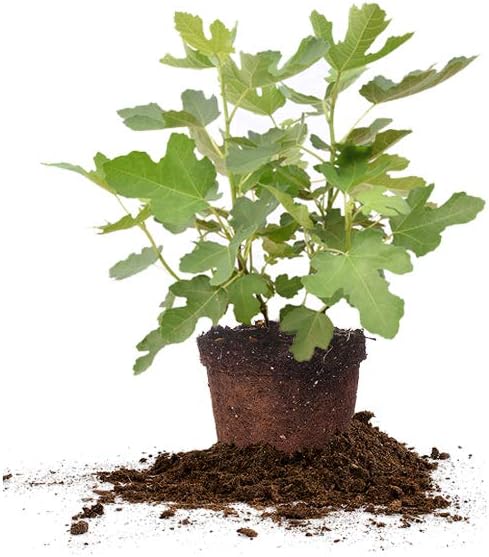
PERFECT PLANTS Chicago Hardy Fig Tree, 3 Gallon (Live Plant)
| Sunlight Exposure | Full Sun |
|---|---|
| Moisture Needs | Moderate Watering |
| Other Special Features of the Product | Easy To Use |
| Plant or Animal Product Type | Fruit |
The Chicago Hardy fig arrives as a 3-gallon live plant intended for gardeners who want a cold-hardy, self-pollinating fig for full-sun spots or large containers. It is typically planted in the landscape or a patio pot where it will receive strong sun; the listing notes easy-to-use fig food is included to help establish the tree. Notable features are its tolerance of below-freezing temperatures, upright branching with ample foliage that leaves room for fruit to develop, and production of deep purple fruit with maroon tones. Practical benefits include low pollination fuss because it is self-fertile, annual fruit production in favorable climates, and straightforward care with moderate watering needs. Important limitations are the potential mature size—this variety can reach large heights and widths so it needs space or regular pruning—and it cannot be shipped to certain states. Buyers should also expect seasonal dormancy in colder climates and plan for winter protection where necessary.
Best for: Buyers who want a low-fuss fruit tree that reliably sets fruit on its own and who have room in a sunny yard or a large patio container and prefer plants with solid customer feedback.
Less Ideal for: Those with very small balconies or strictly restricted space or shoppers who need delivery to states listed as excluded should consider smaller fig cultivars or alternatives.
- Self-pollinating variety so no other fig tree is required for fruit set
- Cold-hardy and reported to tolerate below-freezing temperatures
- Suitable for landscape planting or large containers and includes fig food to aid establishment
- Can reach a large mature size requiring space or regular pruning
- Cannot be shipped to certain states which limits availability for some buyers
Verdict: Buy this if you want a self-pollinating, cold-hardy fig tree that produces reliable fruit with minimal pollination effort.
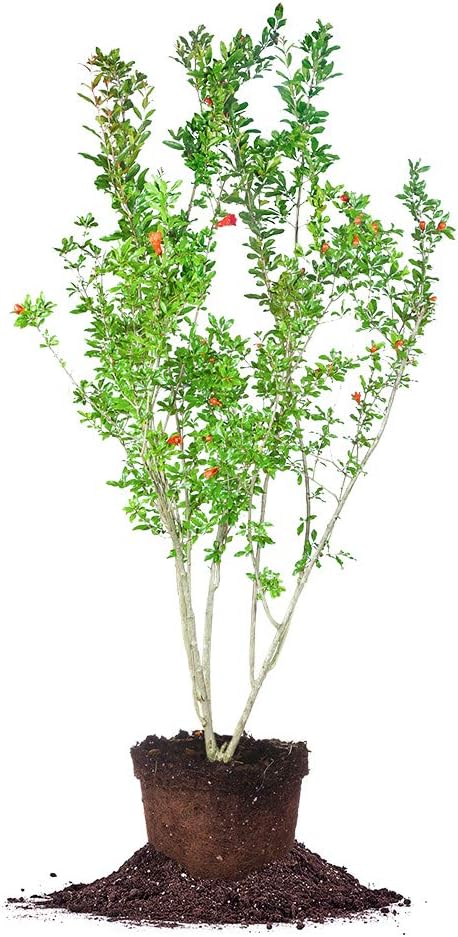
Perfect Plants Wonderful Pomegranate Tree, 2 Gallon, Live Plant
| Expected Blooming Period | Spring |
|---|---|
| Sunlight Exposure | Full Sun |
| Expected Planting Period | Spring |
| Soil Type | Clay Soil |
| Moisture Needs | Moderate Watering |
The Perfect Plants Wonderful Pomegranate is a self-fertile fruit tree sold as a 2-gallon live plant that combines ornamental flowers with edible fruit for small warm-climate landscapes. It is typically planted in spring in full sun and moderate-moisture soil and will begin flowering in early spring with fruit ripening in mid to late September. Notable features are its self-pollinating habit, showy spring blooms, and the promise of large, red pomegranates from a relatively young age. Practical benefits include easy fruit set without needing companion trees, attractive seasonal interest from flowers and fruit, and suitability for gardeners in USDA zones 8 to 11 who need a compact specimen for limited space. Important limitations are climate specificity and legal shipping restrictions to some states, and buyers should plan for regular watering while the tree establishes. Expect gradual growth to a medium-sized specimen that will take a few seasons to reach full production.
Best for: A cautious buyer who wants a low-effort, self-pollinating fruit tree for a warm-climate yard or patio and values reliable fruit set and ornamental blooms without needing companion trees.
Less Ideal for: Gardeners in cool climates or anyone who needs a fruit tree that tolerates heavy shade or very cold winters should choose a different species.
- Self-pollinating so it produces fruit without a second tree
- Attractive spring flowers that add ornamental value
- Produces large, flavorful pomegranates starting at a relatively young age
- Compact mature size suitable for smaller yards and landscapes
- Recommended for warm climates (zones 8-11) so it is unsuitable for cold regions
- May require consistent moderate watering during establishment
- Cannot be shipped to certain states due to regulatory restrictions
Verdict: Choose this self-fertile Wonderful pomegranate if you want an attractive, easy-to-set fruit tree that reliably produces large pomegranates in warm, sunny yards.
Choosing the Right Self Pollinating Fruit Trees: Key Factors to Consider
Pollination Reliability and Blooms
How reliably a tree sets fruit without a partner determines whether it is truly useful for small gardens. Self pollinating trees vary: some are fully self-fertile and set abundant fruit from their own blossoms, while others are partially self-fertile and perform better with another compatible tree nearby.
Assess bloom overlap and blossom quantity for your site. Late frosts, poor bloom due to shade, or short flowering windows reduce fruit set even for self-fertile types. A tree with abundant, staggered blooms and demonstrated self-fertility gives the best chance of consistent harvests in a solo planting.
Cold Hardiness and Local Climate Fit
Winter survival is the baseline for long-term success. Match a tree's hardiness range to your USDA zone or local microclimate. Some self pollinating varieties are bred for milder areas and will struggle with deep freezes, while others tolerate harsh cold and short growing seasons.
Also consider late spring frosts during bloom. Even a hardy tree can lose a season's crop if blossoms are killed by a late freeze. Choose varieties with bloom timing that avoids your area's usual frost dates when possible.
Disease and Pest Resistance
Low-maintenance fruiting depends on resistance traits. Trees that resist common fungal diseases, bacterial issues, and key insect pests reduce the need for frequent sprays and heavy intervention. Resistance is not immunity, but it lowers the frequency and severity of outbreaks.
When choosing, look for varieties noted for resistance to the major problems in your region, and plan cultural controls such as sanitation and spacing to further reduce pressure.
Mature Size and Training Options
Size matters in small spaces and containers. A tree's mature height and spreading habit determine whether it fits a narrow yard, patio, or espalier against a wall. Rootstock choice and pruning can strongly influence final size for many grafted fruit trees.
Consider dwarfing rootstocks, espalier training, or regular pruning if you need to limit height. Also factor in canopy spread so the tree does not shade out other garden areas or conflict with structures.
Maintenance, Pruning, and Yield Management
Some self pollinating trees fruit heavily and require yearly thinning to prevent branch breakage and to improve fruit size. Pruning shapes the tree, maintains airflow, and reduces disease risk but takes time and skill.
Understand the pruning season and techniques for the species you choose. If you want minimal upkeep, prioritize trees with moderate natural productivity and straightforward pruning requirements.
Flower Timing and Harvest Window
Flowering time affects both pollination success and frost risk, while harvest timing impacts how fruit fits into your seasonal plans. Early bloomers may be at greater risk from spring frost, and late-season trees may need a longer warm period to ripen fruit fully.
Select trees whose bloom and harvest windows align with your local climate and your desire for fresh fruit distribution across the season. Staggered harvests can reduce workload and provide fruit over several weeks.
Best Planting Sites and Soil Preparation
Self pollinating fruit trees still need good soil and sun to perform. Choose a planting site with full sun for most of the day and well-draining soil. Heavy clay can be improved with organic matter and drainage amendments, while sandy soils benefit from added compost to retain moisture and nutrients.
Dig a generous planting hole and avoid planting deeper than the nursery root collar. Backfill with native soil amended sparingly; excessive high-nutrient mixes can encourage vegetative growth at the expense of fruiting. Mulch around the root zone to conserve moisture and suppress weeds, but keep mulch pulled away from the trunk to prevent rot.
- Plant in full sun for best bloom and fruit set.
- Ensure good drainage to avoid root rot.
- Amend soil with compost rather than heavy fertilizer at planting.
Training and Pruning for Small Yards
Pruning keeps size manageable and improves light penetration for consistent fruiting. For limited space, consider espalier, cordon, or fan training forms that flatten the canopy and allow closer planting.
Annual pruning focuses on removing dead or crossing branches, opening the center for light, and shortening vigorous leaders. Late winter to early spring is the common pruning window before sap flow begins, but avoid heavy pruning if spring frost is likely to affect new shoots.
- Use structural pruning to control height and spread.
- Thin fruit clusters to prevent limb breakage and increase fruit size.
- Sanitize tools between cuts to limit disease spread.
Managing Pollination in Urban and Container Gardens
Although these trees are self pollinating, pollinators still improve fruit set. Encourage bees and other insects by planting companion flowers and leaving small areas of undisturbed habitat. In tight urban settings, solitary bee activity and honeybee foraging can be limited, so flowering companions are especially useful.
If pollinator activity is low, hand pollination on calm, warm days during peak bloom can boost yields. Use a small paintbrush to transfer pollen between blossoms or gently shake flowering branches mid-morning when pollen is dry.
- Provide nectar-rich plants nearby to invite pollinators.
- Hand-pollinate if insect activity is insufficient.
- Avoid pesticide sprays during bloom to protect pollinators.
Watering and Fertilization Practices
Young trees need consistent moisture while establishing their root systems. Water deeply and less frequently to encourage deep rooting rather than shallow surface roots. Established trees typically require supplemental irrigation during prolonged dry spells, especially when fruit is developing.
Fertilize based on soil tests and visible tree vigor. Excess nitrogen can produce lush leafy growth at the expense of blossoms and fruit. A balanced approach matched to the species and local soil fertility will give the best long-term results.
- Water deeply to encourage strong roots.
- Avoid over-fertilizing with high-nitrogen products.
- Time fertilizer applications in early spring or after harvest depending on species needs.
Common Problems and Simple Cultural Fixes
Even self pollinating trees can face pests, fungal diseases, and physiological disorders. Regular monitoring lets you catch issues early. Remove fallen fruit and diseased branches, thin crowded limbs, and maintain good airflow through pruning to lower disease incidence.
Many issues respond well to cultural solutions such as improved sanitation, balanced watering, and targeted pruning. Reserve chemical controls for outbreaks that cannot be managed culturally, and follow integrated pest management principles to protect beneficial insects.
- Inspect trees weekly during the growing season.
- Practice good sanitation to reduce disease reservoirs.
- Use physical barriers or hand-picking for small pest problems.
How We Chose the Best Self Pollinating Fruit Trees
We focused on characteristics that determine how well a self pollinating fruit tree will perform in real garden conditions. Important evaluation criteria included flowering and pollination reliability to confirm whether the tree consistently sets fruit alone, winter cold hardiness so the tree will survive and fruit in a given climate, disease and pest resistance because lower-susceptibility trees reduce chemical or labor inputs, mature size and habit to match small yards and containers, and maintenance needs including pruning and thinning requirements. We also considered ripening window and productivity so you can plan harvest timing and avoid excessive crop loads. Excluded from consideration were trees that require forced pollinators, specialized grafting techniques for pollination, or niche cultivars with little trial data in diverse gardens. The final shortlist favors trees with documented self-fertility, practical size control options, and sensible disease profiles that suit typical home gardeners.
FAQ
Are self pollinating fruit trees truly capable of bearing fruit alone?
Often yes. Many self pollinating varieties will set fruit with their own flowers, but success depends on healthy blossom production, weather during bloom, and local pollinator activity. Some cultivars are only partially self-fertile and will perform better with another tree nearby.
Can I grow self pollinating fruit trees in containers?
Usually. Many self pollinating trees are available in dwarf forms or can be grafted onto dwarfing rootstocks that suit containers. Ensure the container is large enough, use high-quality potting mix, and provide regular watering and feeding because pots dry out faster than in-ground plantings.
Do self pollinating trees require less maintenance than cross-pollinated types?
They can require less attention regarding pollination logistics, but maintenance needs for pruning, thinning, and disease management depend on the species and variety. Some self-fertile trees are heavy bearers and need seasonal thinning to prevent limb damage.
How do I hand-pollinate if pollinators are scarce?
On calm, dry days during peak bloom, use a small soft brush or cotton swab to transfer pollen from one blossom to another. Gently brush the anthers and then the stigmas. Repeat across many flowers to improve overall fruit set.
Will a late frost ruin fruit production for self pollinating trees?
It depends. Late frosts that kill blossoms will prevent fruit that season regardless of pollination capability. Choosing varieties with bloom times that avoid your area's typical frost dates reduces this risk, and using frost protection measures can help in marginal years.
Can a single self pollinating tree provide enough fruit for a family?
That depends on the species, the tree's vigor, and how much fruit you want. Some trees are productive enough for several people, while others give modest yields suitable for occasional fresh eating. Productivity is influenced by pruning, thinning, and overall tree health.
Final Verdict
When selecting self pollinating fruit trees, prioritize pollination reliability, climate suitability, and manageable mature size for your space. Tradeoffs include higher productivity that may demand more thinning and pruning versus low-maintenance varieties that yield smaller crops. Focus on trees with good disease resistance and appropriate bloom timing for your local frost dates to maximize consistent harvests. With a careful match between tree traits and garden conditions, a single self pollinating tree can be a dependable source of homegrown fruit.
