

Note: This article contains affiliate links. If you click on these links and make a purchase, I may earn a small commission at no extra cost to you. This helps support my research and content. Read my full affiliate disclosure here.
If you spend time tending beds, borders, or container groups, a stand up weeding tool can save your back and speed up chore time. The right long-handled weeder lets you remove deep taproots and surface weeds without kneeling or constant stooping. This guide covers six strong contenders that made our shortlist and explains the practical differences that matter in the garden. We evaluated how well each tool reaches into beds, how the blades and tips perform on different weed types, and how comfortable the handle and shaft feel during repetitive use. Read on to understand which features match your yard, posture needs, and soil conditions.
Top Picks at a Glance
| Best Overall The best all-around choice for most situations | Fiskars 39" Deluxe Stand-Up 4-Claw Weed Puller | 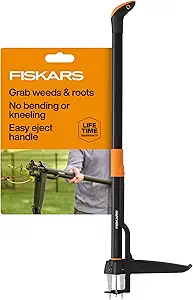 |
| Best Quality Built to a higher standard if you want something more solid | Grootpow WP5 Stand-Up Weed Puller with Tri-Dragon 3-Claw Grip, 40" Handle |  |
| Best Value The sweet spot between price and what you get | NICOFPHY 60" Long-Handle 2-in-1 Weed Puller Rake and Hoe |  |
| Highest Rated A top-rated pick with lots of positive feedback | RexWeed Stand-Up Weed Puller with 4-Claw Steel Head and Dual Eject |  |
| Most Popular A crowd favorite that many people choose with confidence | Grampa's Weeder Original Stand-Up Weed Puller with Bamboo Handle |  |
Fiskars 39" Deluxe Stand-Up 4-Claw Weed Puller

| Head Material | Stainless Steel |
|---|---|
| Handle Material | Aluminum |
| Grip Material | Thermoplastic Elastomer (TPE) |
| Number of Items | 1 |
The Fiskars 39" Deluxe Stand-Up Weeder is built for fast, permanent removal of dandelions, thistles, and other deep-rooted weeds without kneeling or herbicides. You position the head over the weed, step on the reinforced foot pedal to drive four serrated stainless-steel claws into the soil, pull back to extract the root, then use the easy-eject mechanism to clear the head. The long aluminum shaft and offset handle reduce back and wrist strain for longer sessions, while the viewing window in the pedal helps accurate placement. It performs best in moist or recently watered soil; in hard, compacted, or clay-heavy ground you will need to pre-soften the area for the claws to penetrate fully. The tool is light enough for extended use yet feels sturdy when you step down, and the stainless blades are made to stay sharp through repeated use. If you want a durable, ergonomically designed manual weeder that prioritizes effective root removal and less physical strain, this is a practical choice.
Best for: Buyers who want an efficient, ergonomic hand tool to remove broadleaf and taproot weeds by the root while avoiding bending and repeated chemical treatments.
Less Ideal for: Gardeners who need a tool for cutting large woody roots, heavy-duty excavation, or frequent use in hard, compacted clay without pre-wetting the soil should consider more heavy-duty or powered options.
- Long 39-inch shaft and offset handle reduce bending and wrist strain for extended use
- Four serrated stainless-steel claws grab roots for thorough removal
- Reinforced foot pedal and viewing window enable confident placement and penetration
- Easy-eject mechanism clears pulled weeds quickly for faster repetition
- Requires moist or softened soil to penetrate compacted or clay-heavy ground effectively
- Not suited for very large woody roots or extremely dense turf
Verdict: Choose this weeder if you want a durable, ergonomic stand-up tool that reliably extracts weeds by the root with minimal bending.
Grootpow WP5 Stand-Up Weed Puller with Tri-Dragon 3-Claw Grip, 40" Handle

| Handle length | 40 inches |
|---|---|
| Claw material | 420 stainless steel |
| Foot pedal material | Aluminum and fiberglass |
| Load capacity (claws) | 99 lbs |
The Grootpow WP5 is a stand-up weeder built for repeatable root removal across lawns, garden beds, sidewalks and gravel. You use it by placing the claw over the weed, stepping on the pedal to drive the claws into the soil, pulling the long handle to extract the root, then sliding the ejector to release the plant. The Tri-Dragon 3-claw head (two serrated prongs plus a shovel-style claw) concentrates grip on deep or fibrous roots, and the stainless 420 claws and reinforced aluminum connections are designed to resist bending and corrosion. The 40-inch L-shaped handle keeps you upright, reducing back strain during long sessions, and the quick-release slider makes clearing pulled weeds tidy and hands-free. Important limitations are that it is a single-purpose manual tool best for individual weeds rather than clearing large patches quickly, and performance depends on soil conditions since very compacted or rocky ground will require more force or pre-loosening.
Best for: Gardeners who prioritize effective, root-to-root removal and want a tool that minimizes bending for longer weeding sessions.
Less Ideal for: People who need to clear large patches of shallow weeds rapidly or who prefer motorized or hoe-style weed removal tools.
- Tri-Dragon 3-claw design provides concentrated grip for removing deep and fibrous roots
- 40-inch ergonomic L-shaped handle lets you weed standing to reduce back strain
- Quick-release ejector lets you remove and discard weeds hands-free
- Durable materials: 420 stainless steel claws, aluminum connectors and reinforced foot pedal resist bending and corrosion
- Not suited to clearing large areas quickly since it extracts weeds one at a time
- Less effective in very rocky or heavily compacted soil without prior loosening
Verdict: Choose the WP5 if you want a durable stand-up weeder that pulls weeds by the root with minimal bending and a hands-free quick-release.
NICOFPHY 60" Long-Handle 2-in-1 Weed Puller Rake and Hoe

| Head Material | Cast Steel |
|---|---|
| Handle Material | Metal |
| Item Weight | 0.83 kg |
| Head Size | 6 inches |
This NICOFPHY 60-inch weed puller is designed to let you stand while removing weeds and doing light soil work. The tool ships as a head with four stainless-steel poles that screw together to reach 60 inches or shorter lengths, so you can use it from a comfortable upright position. One side of the head has six sharp tines for levering out deep-rooted weeds like dandelions and crabgrass while the broad, sharpened shovel side doubles as a hoe for loosening soil, leveling small patches, and scraping away larger areas of growth. The cast-steel head and welded construction make the working end feel solid and resistant to bending, and the metal handle/grip keeps things simple and durable. Expect to use it for beds, lawns, and small yards where you need to remove roots or tidy soil without kneeling. The tool is practical and low-maintenance, though the all-metal grip may be less comfortable on long jobs and the screw-together poles add a little setup time compared with a one-piece shaft.
Best for: Gardeners who prioritize efficient, back-friendly weeding and want a durable, no-frills tool to remove roots and tidy small lawns or beds without kneeling.
Less Ideal for: People who need cushioned handles for extended use or who prefer a single-piece shaft with no assembly.
- 60-inch adjustable pole lets you work standing up and reduce bending
- Two-head design (six tines plus broad hoe) handles both deep-rooted weeds and surface weeding or soil leveling
- Cast steel head and welded construction provide strength and resistance to deformation
- Screwed pole connections allow compact storage and adjustable length
- All-metal grip offers little cushioning for long sessions
- Screw-together poles require assembly and can loosen over heavy use
Verdict: Choose this tool if you want a sturdy, stand-up 2-in-1 weeder that removes deep roots and also works as a hoe for quick soil work.
RexWeed Stand-Up Weed Puller with 4-Claw Steel Head and Dual Eject

| Handle material | Bamboo |
|---|---|
| Head material | Hardened steel |
| Claw depth | Approximately 3-inch tapered depth |
| Ejection methods | Hand lever and foot pedal |
This RexWeed stand-up weed puller is designed to remove common lawn weeds while you remain upright. It uses a 4-claw hardened steel head that penetrates up to about 3 inches to grip taproots, and a dual-eject system (hand lever plus an anti-slip foot pedal) to release pulled plants cleanly. Typical use is inserting the claws around a weed, twisting or stepping to set the claws, then using the lever or pedal to eject the weed into a bin. The long bamboo handle with a threaded connection aims to reduce wobble and provides a comfortable reach for back-friendly gardening. Practical benefits include chemical-free removal, less strain on knees and lower back, and a durable metal footplate that resists cracking. Limitations are that the tool is most effective when soil is slightly damp and may struggle in very compacted or rocky ground; very deep-rooted species might still require follow-up work. If you need a straightforward, no-chemicals solution for routine weed maintenance, this tool performs predictably well.
Best for: Buyers who prioritize a reliable, low-maintenance tool for regular backyard or lawn weed control and want to avoid bending or chemical methods.
Less Ideal for: Not the best choice for people needing a tool for rocky, heavily compacted ground or for removing very deep-running perennials and shrubs.
- Stand-up design reduces bending and protects lower back and knees
- Four hardened steel claws for firmer grip on taproots and one-pass pulls in favorable soil
- Dual ejection (hand lever and foot pedal) keeps hands clean when disposing weeds
- Bamboo handle with threaded connection minimizes wobble and provides a comfortable reach
- All-steel anti-slip footplate built to withstand repeated stepping force
- Less effective in very compacted, rocky, or extremely dry soil where claws cannot penetrate fully
- May not remove exceptionally deep or running-root weeds in a single pull
Verdict: A durable, back-friendly manual weeder that reliably removes common taproot weeds without chemicals for routine lawn and garden maintenance.
Grampa's Weeder Original Stand-Up Weed Puller with Bamboo Handle

| Handle Material | Bamboo |
|---|---|
| Head Material | Alloy Steel |
| Item Weight | 2.3 pounds |
| Head Size | Small |
Grampa's Weeder is a simple, hand-operated stand-up tool that uses a 4-claw alloy steel head and a long bamboo handle to pinch and extract weeds by their roots. To use it you press the footpad into soft or recently watered soil, lean the handle toward the footpad so the forks close around the weed, then lift to remove the root. The lightweight bamboo handle and footpad make repeated weeding less strenuous on the back and knees than traditional hand pulling or kneeling. The steel claws are effective on dandelions, crabgrass, and similar taproot weeds in softer soils but the tool is not intended for very hard clay or rocky ground. Its straightforward design requires no power, so it is quiet and chemical-free, and the lifetime guarantee reflects a confidence in build quality. If you have compacted soil or deep-rooted tough perennial weeds you may need additional leverage or a different tool, but for routine weeding in beds and lawns after watering this is a durable, low-effort solution.
Best for: Gardeners who value proven, low-effort hand tools and want a durable, chemical-free way to remove common taproot weeds while protecting their back and knees.
Less Ideal for: People who need to clear large weedy areas quickly or who work primarily in compacted clay or rocky ground should consider heavier-duty or powered alternatives.
- Stand-up design reduces bending and kneeling for gentler, ergonomically easier weeding
- 4-claw alloy steel head grips and pulls taproots effectively in soft or recently watered soil
- Bamboo long handle keeps the tool lightweight while providing comfortable reach
- Simple mechanical operation requires no power or chemicals and is easy to maintain
- Performance drops on hard clay or rocky soil where forks cannot penetrate easily
- Small head size can be slow for very large infestations or broad areas
Verdict: A lightweight, reliable stand-up weeder that removes taproot weeds without bending, ideal for routine gardening in soft or watered soil.
Choosing the Right Stand Up Weeding Tool: Key Factors to Consider
Handle Ergonomics
A long-handled weeder is only comfortable if the grip and handle shape suit your posture. Handles that are too thin force a tight grip and increase muscle strain in the hands and forearms. A contoured or oversized grip spreads pressure and reduces hotspots during repeated pulls. Grip material matters outdoors: tacky rubber helps when hands are sweaty or wet, while smooth wood can feel warmer in cool weather.
Consider whether the handle allows two-handed use for stubborn roots. A secondary hand position lower on the shaft can provide extra leverage without bending. Also note whether the tool offers a cushioned end or a hanging loop for storage.
Blade Tip Shape and Function
Different tip geometries do different jobs. Narrow forked tips are good for gripping taproots and prying from narrow spots. Spoon-shaped or curved blades cut under stolons and runners and can sever shallow roots cleanly. A pointed chisel tip excels at driving into compacted soil and levering out deep-rooted weeds.
You should match tip style to the weeds you most commonly face. Turf-edge weeds and shallow runners favor thin scraping or slicing tips, while dandelions and thistles need a design that can reach and extract a long taproot intact.
Shaft Length and Strength
Shaft length determines how upright you can stay. Longer shafts reduce bending but can increase torque on the head during levering, so shaft construction must be stiff. Fiberglass and steel shafts offer different tradeoffs: fiberglass is lighter and reduces vibration, while steel is often stiffer and resists flex during tough extractions.
Also consider whether the shaft is adjustable. An adjustable-length shaft lets multiple household members use the same tool comfortably and allows you to adapt posture for work on benches or in raised beds.
Material Durability and Corrosion Resistance
Garden soils, grit, and moisture are hard on metal. Blades made from hardened stainless steel resist bending and keep a working edge longer, while softer steels may chip or roll. Coatings can delay rust but may wear away where the blade contacts soil.
Pay attention to the head-to-shaft joint: welded or bolted connections can fail under repeated leverage. Look for corrosion-resistant fasteners and replaceable heads where possible to extend the tool's service life.
Ease of Use in Different Soils
A tool that works well in loose, friable soil might struggle in compacted clay or heavy root mats. Narrow, pointed tips penetrate dense ground more readily. Wider scraping blades displace loose soil quickly and are useful for surface weeding and edging. Consider the typical condition of your beds and paths when choosing a design.
Also evaluate how the tool performs in mulched beds and between pavers. Some designs collect debris on the blade and require frequent cleaning, while others shed soil and remain effective for longer.
Matching Tool Style to Garden Tasks
Upright weeders are not one-size-fits-all. If you spend time cleaning gravel paths or between pavers, look for a narrow, sturdy tip that can slip into joints. For broad flower beds where you pull lots of taproot weeds, a forked or spoon tip that can extract and cradle the root will be more efficient.
For raised beds and containers, a slightly shorter shaft and a lighter construction can improve control without negating the upright benefit. Consider how you store and maneuver the tool in tighter spaces when choosing length and head size.
- Narrow tips for pavers and tight spots
- Curved blades for severing runners and stolons
- Stiffer shafts for prying heavy roots
Maintenance and Sharpening Tips
Keep the blade clean after use to delay corrosion and to prevent soil from gumming up pivot points. Scrape off caked soil and wipe dry before storage. A light coat of oil on metal parts helps slow rust formation.
Most blades benefit from occasional sharpening. Use a flat file or sharpening stone to restore a keen edge on spoon or chisel tips. Avoid aggressive grinding that removes temper from hardened steel. Tighten or inspect fasteners seasonally and replace any worn connections.
- Clean and dry after each use
- Light oiling to protect metal
- Sharpen with a file or stone when the edge dulls
Using Upright Weeders Safely and Efficiently
Start each session by loosening compacted soil around stubborn weeds. A short stab with the tip to break the surrounding soil reduces the force needed to extract the root. Work with the grain of the soil and avoid jerking motions that can strain the lower back or shoulders.
Shift hand positions if you feel fatigue. Using both hands at different positions along the shaft spreads load and increases leverage. Keep your feet shoulder-width apart and use leg drive when pushing the tool into the ground, rather than relying entirely on upper-body strength.
- Loosen soil first for easier extraction
- Alternate hand positions to reduce strain
- Use leg and core muscles when applying force
Adapting Tools for Different Gardeners
People vary in height, strength, and reach. If more than one person will use the tool, prioritize adjustable shafts or look for intermediate-length options that fit the tallest and shortest users reasonably well. Add a secondary foam grip lower on the shaft if two-handed leverage is common in your garden tasks.
Lightweight constructions help gardeners with limited upper-body strength, while heavier, stiffer tools suit those who expect to pry out very stubborn roots. Consider combinations: a lightweight shaft with a hardened steel tip can balance comfort and cutting performance.
- Adjustable shafts for multiple users
- Add secondary grip for two-handed leverage
- Balance weight against stiffness for your strength
Working Around Plants and Mulch
When weeding near desirable plants, choose a tool with a thin profile to avoid disturbing roots. Spoon-style tips can remove weeds from under mulch with less disruption than broad blades. In densely planted beds, precise, short strokes reduce damage to surrounding stems and roots.
Mulch can hide weed bases, so push the tool gently beneath the layer until you feel the root, then extract. For heavy mulch, clear a small circle before applying levering motions to prevent tearing roots of nearby ornamentals.
- Use thin profiles to protect nearby plants
- Work gently under mulch to locate roots
- Short, precise strokes minimize disturbance
How We Chose the Best Stand Up Weeding Tool
We screened tools that are explicitly designed for upright weeding and that let a gardener remove roots without repeated bending. Selection favored proven tip and blade shapes for pulling taproots and for slicing runners, long enough shafts for an upright stance, and handles that reduce wrist and shoulder strain during repetitive motions. We prioritized blade material and hardness because durability and the ability to hold a sharp edge determine long-term cutting performance in gritty soil. Shaft strength and shaft-to-head connection were judged for durability under levering and prying forces. Ergonomics received close attention: handle shape, grip material, shaft length options, and overall balance influence how long a gardener can use the tool without fatigue. Excluded items included short-handled hand tools, multihead novelty tools that do not offer a solid upright weeding action, and implements intended strictly for cultivating rather than root extraction. Our final list reflects real-world gardening needs across common soil types, from loose loam to compacted clay, and across typical garden tasks like edging, weeding between pavers, and working in raised beds. The evaluation criteria described above guided selection and ranking and align with the scoring metrics used for each tool.
FAQ
Will a stand up weeding tool work in compacted clay soil?
Often it depends on tip geometry and shaft strength. Narrow, pointed tips and a stiff shaft penetrate and pry better in compacted clay. You may need to loosen soil first with a fork or digger before attempting to extract deep taproots.
Can these tools remove deep taproots without breaking them?
They often can if the tip reaches under the root and you lever slowly while keeping the root intact. Very deep or brittle roots may still break, so sometimes supplemental loosening or digging is needed to get the full root.
Are adjustable-length shafts worth it?
Adjustable shafts are usually worth it for households with users of different heights or for alternating between raised beds and ground-level work. They can add slight complexity and potential wear points, so look for robust locking mechanisms.
How do I keep the blade from rusting?
Wipe the blade clean and dry after use, and apply a thin film of oil to metal surfaces before storage. Removing grit promptly prevents micro-abrasions that accelerate corrosion.
Is a heavier tool always better for stubborn weeds?
Not always. Heavier, stiffer tools provide more prying power, but they can fatigue you faster. A stiffer shaft with a relatively lightweight overall construction often gives the best balance between power and endurance.
Final Verdict
Prioritize ergonomics and blade function when choosing an upright weeder. Decide which weeds and soils you face most often, then match tip geometry and shaft stiffness to those tasks. Remember that handle comfort and material durability determine whether the tool stays useful season after season. If you need to protect your back, pick the tool that lets you work upright with minimal stooping and that offers a secure grip and stiff shaft. Tradeoffs exist between weight, stiffness, and tip style, so choose the combination that aligns with your garden layout and physical comfort for the most effective long-term results.
