

Note: This article contains affiliate links. If you click on these links and make a purchase, I may earn a small commission at no extra cost to you. This helps support my research and content. Read my full affiliate disclosure here.
If you want larger, cleaner melons from a small patch or vertical garden, the right trellis makes a big difference. Vining melons trained upright save ground space, improve air circulation around fruit, and make harvesting easier. But not every support is built for heavy, swollen melons or long growing seasons. This guide covers five shortlisted trellises for melons chosen for real garden use. We evaluate each option on structural strength, how they protect developing fruit, installation and maintenance, and how they perform over a season. Read on to understand the tradeoffs so you can pick a trellis that suits your space and melon variety.
Top Picks at a Glance
| Best Overall The best all-around choice for most situations | HIHADUUM Heavy-Duty Adjustable A-Frame Trellis, 2-Pack |  |
| Best Quality Built to a higher standard if you want something more solid | PyraLine 50" x 17" Heavy-Duty Steel A-Frame Garden Trellis (1 Pack) |  |
| Best Value The sweet spot between price and what you get | K-Brands 50 x 50" A‑Frame Vegetable Trellis with Netting |  |
| Highest Rated A top-rated pick with lots of positive feedback | HIHADUUM 50" A‑Frame Adjustable Metal Trellis (1‑Pack) |  |
| Most Popular A crowd favorite that many people choose with confidence | LZRS Rustic Iron Garden Trellis 2-Pack with Rust-Resistant Powder Coating |  |
HIHADUUM Heavy-Duty Adjustable A-Frame Trellis, 2-Pack

| Material Type | Iron, Metal |
|---|---|
| Finish Type | Powder Coated |
| Grid Size | 3.15"×3.94" |
| Frame Thickness | 1.2 cm outer frame |
| Number of Items | 2 |
These HIHADUUM A-frame trellises are built to support climbing vegetables like cucumbers, tomatoes, peas, and beans in raised beds and small garden plots. Each kit includes two preassembled panels that fold flat and bolt together to create a 17 to 50 inch tall A-frame with dense 3.15"×3.94" grid spacing that guides vines and spreads fruit weight across the frame. The powder-coated iron construction and reinforced 1.2 cm outer frame make the trellis noticeably stiffer than thin-wire options, and the factory-forged hinge avoids wobble at the top. Setup is straightforward: panels connect with a few hand-tightened bolts and the unit collapses for compact storage. The box also includes plant clips, twist wire, tape, and gloves so you can tie and protect stems without buying extras. Expect a sturdy, low-maintenance support for medium to heavy vine crops, though the fixed grid spacing and A-frame shape suit vertical training more than sprawling varieties and the pair is sized for raised beds rather than large field rows.
Best for: Gardeners who want a durable, no-nonsense support for vertical vegetable production in raised beds and who value easy assembly and included accessories.
Less Ideal for: Growers who need trellises for wide sprawling crops or long single-row trellises for large-scale beds should consider different shapes or longer panels.
- Reinforced 1.2 cm powder-coated steel frame resists sagging and corrosion
- Adjustable 17" to 50" height and fold-flat design for flexible use and compact storage
- Dense grid spacing provides more attachment points to support heavy fruit
- Includes clips, twist ties, tape, and gloves so no extra accessories are required
- A-frame shape and dimensions are optimized for raised beds and may not fit larger garden rows
- Fixed grid spacing limits training options for very large sprawling plants
Verdict: A practical, heavy-duty trellis pair that gives raised-bed gardeners a sturdy, easy-to-install vertical support with all the accessories needed to train medium and heavy vine crops.
PyraLine 50" x 17" Heavy-Duty Steel A-Frame Garden Trellis (1 Pack)
| Material | Steel |
|---|---|
| Finish | Powder Coated |
| Shape | A-Shape |
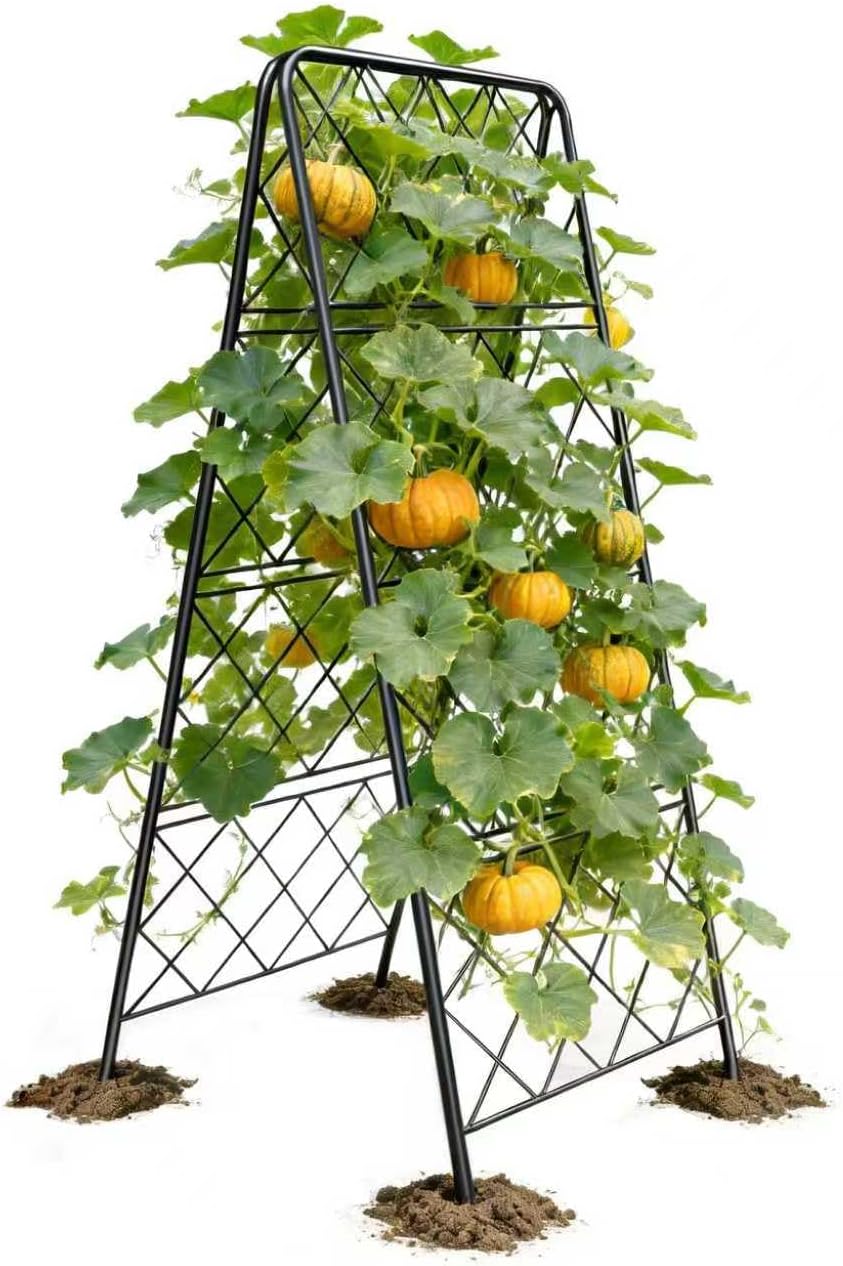
This PyraLine A-frame trellis is a one-piece, powder-coated steel support designed to hold heavy vines and fruiting crops. It sets up as a stable A-frame with high-density rhombus steel grids that distribute weight across the panel, so cucumbers, tomatoes, beans, and even small melons can climb without overly stressing individual bars. The hinge is factory-fused rather than bolted, which keeps the frame rigid under load and reduces the need for periodic tightening. The trellis adjusts from a low height to full 50 inches as plants grow and then folds flat for compact storage after the season. Practical benefits include strong wind resistance from the thick steel frame, rust protection from the powder coating, and quick deployment in raised beds or containers. Limitations are that it is a single-panel solution so larger climbs may require multiple units or additional anchoring, and its steel construction makes it heavier to move compared with lightweight bamboo or plastic supports.
Best for: Gardeners who prioritize long-lasting, load-bearing plant supports and want a sturdy, low-maintenance trellis for heavy fruiting vines in raised beds or containers.
Less Ideal for: People who need long continuous trellis runs, extremely lightweight temporary supports, or those who prefer completely tool-free, ultra-light structures for annual annuals.
- High-density rhombus steel grid evenly distributes plant weight and reduces sagging
- Factory-fused one-piece hinge increases rigidity and stays solid under heavy vines
- Powder-coated steel finish resists rust, UV, and outdoor weathering
- Collapses flat for compact off-season storage
- Single 1-pack panel may require multiple units for longer trellising runs
- Heavier steel construction is less portable than bamboo or plastic options
Verdict: Buy this trellis if you need a durable, rust-resistant steel support that holds heavy cucumbers and tomatoes upright season after season.
K-Brands 50 x 50" A‑Frame Vegetable Trellis with Netting
| Material Type | Metal, Plastic |
|---|---|
| Finish Type | Powder Coated |
| Product Style | Classic |
| Shape | A-Shape |
| Unit Count | 1 Count |
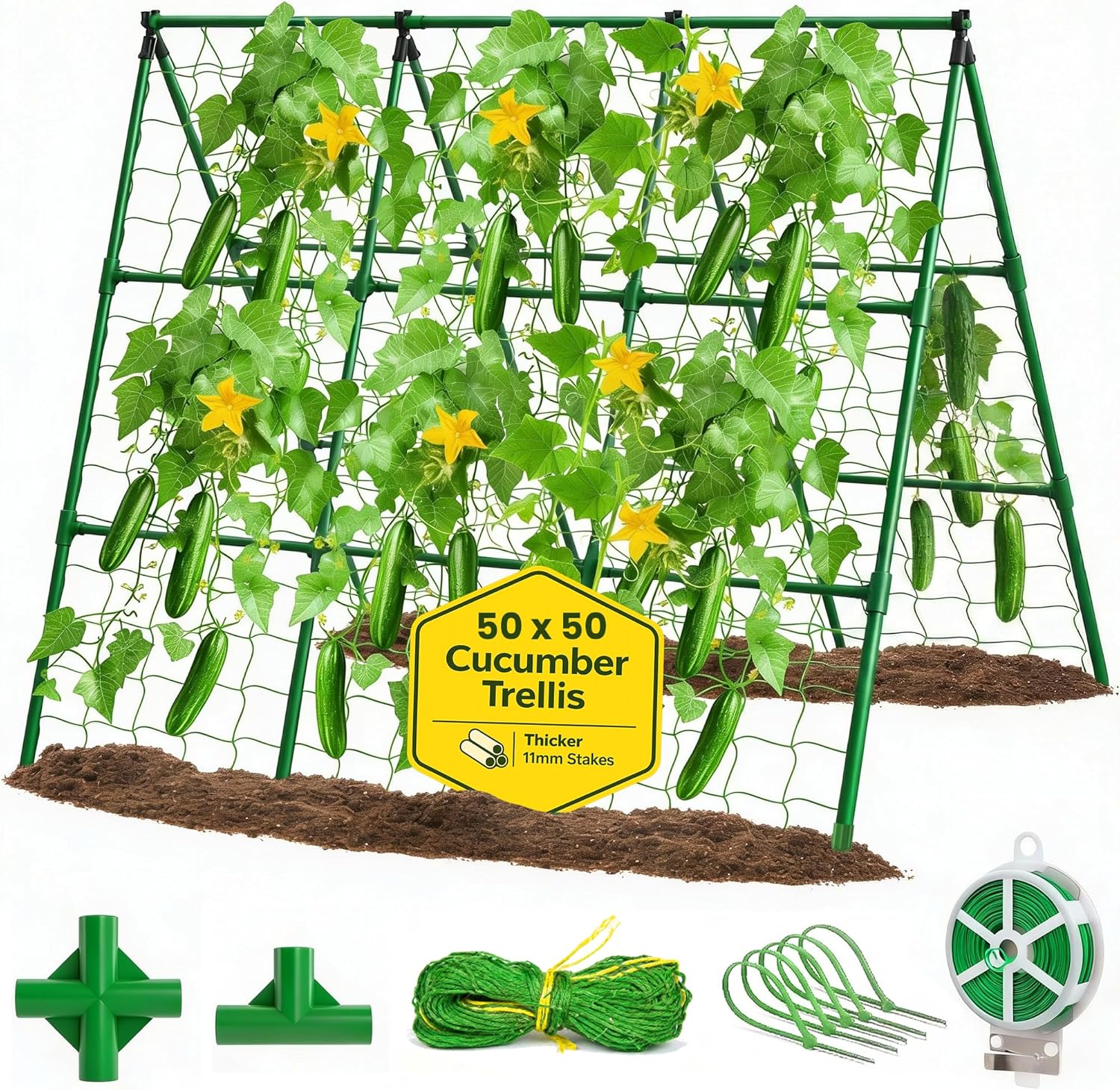
This A-frame trellis provides a quick way to add vertical support to a raised bed or large container. The kit snaps together without tools using easy-connect joints and includes heavy-duty netting, twist ties and zip ties so you can install it and train vines the same day. Powder-coated steel tubing resists rust and the A-frame shape gives a stable two-sided support that works well for pole beans and lighter vining crops. The trellis is compact enough to fit inside raised beds while still offering generous vertical area for multiple plants. Because it is relatively lightweight, it can be moved or repositioned during the season but should be secured in windy locations. The included netting and ties simplify setup, though very heavy fruiting vines may need additional anchoring or stronger supports as they mature. Sharp edges are noted in the safety info, so handle assembly with care.
Best for: Gardeners who want a practical, no‑fuss trellis to maximize vertical space in raised beds or containers and prefer ready-to-use kits that minimize extra purchases and setup time.
Less Ideal for: Growers planning to support very heavy fruiting vines or large pumpkins who need heavier, permanent structures should consider sturdier, anchored supports.
- Tool-free, quick assembly with easy-connect joints
- Powder-coated steel frame for rust resistance
- Includes netting and multiple ties so no extra purchases are required
- A-frame design offers two-sided support and fits well inside raised beds
- Lightweight frame may need extra anchoring for very heavy or mature vines
- Sharp edges reported so careful handling during assembly is required
Verdict: A fast, ready-to-use A-frame trellis that saves bed space and gets beans and other vining vegetables up and off the soil with minimal fuss.
HIHADUUM 50" A‑Frame Adjustable Metal Trellis (1‑Pack)

| Material Type | Metal |
|---|---|
| Finish Type | Powder Coated |
| Shape | A-Shape |
| Size | 50" X 17" |
| Number of Packs | 1 |
This HIHADUUM A‑frame trellis is designed for steady, long‑term support of climbing vegetables and melons. The 1.2 cm powder‑coated steel frame and a 10‑prong stabilizing base give it a much sturdier feel than thin wire trellises, and the pre‑assembled steel hinge lets you set angles from flat to upright without fiddly connectors. It stacks from 13" up to 50", so you can start seedlings low and raise the structure as vines grow. The large 5.3" x 6.1" mesh keeps big fruit from becoming pinched and makes harvesting with gloves easy. Setup is tool‑free and the kit includes clips, twist ties, and garden tape, which speeds installation and seasonal storage. Limitations to note are that it is a single standalone frame (so covering wide beds requires multiple units) and the stated 50 lb capacity means very heavy melons may still need additional bracing or slings. For gardeners who prioritize a robust, low‑maintenance trellis for melons and other heavy vines this is a practical, reliable option.
Best for: Gardeners who value a dependable, no‑fuss support that can handle heavy vining crops and who prefer a durable metal frame that requires little maintenance as plants mature.
Less Ideal for: Those needing to cover long rows or large raised beds with one unit or gardeners who want a lightweight, temporary trellis solution.
- Thicker 1.2 cm powder‑coated steel frame for durable outdoor use
- Pre‑assembled steel hinge with 0–180° adjustment for stable positioning
- Adjustable height (13" to 50") so the trellis grows with plants
- Large mesh openings prevent fruit trapping and simplify harvest
- Includes clips, twist ties, and garden tape for tool‑free setup
- Single frame covers a narrow span so multiple units are needed for larger beds
- 50 lb load rating may require extra bracing or fruit slings for very heavy melons
Verdict: Buy this trellis if you want a stout, adjustable metal frame that reliably supports melons and other heavy vining crops.
LZRS Rustic Iron Garden Trellis 2-Pack with Rust-Resistant Powder Coating

| Material Type | Iron, Metal |
|---|---|
| Finish Type | Powder |
| Number of Items | 2 |
This LZRS two-pack iron trellis is built to support climbing roses, vines, vegetables, and other vigorous climbers while adding a rustic vertical accent to beds or large planters. Each panel is tall and rectangular and finished with a black powder coat intended to resist rust and outdoor wear. Typical use is to insert the stake ends into soil or a planter, position panels side-by-side or interlock them at angles for screens or corner accents, then train plants up the lattice as they grow. Notable features are the heavy-gauge metal construction, powder finish for weather resistance, and an adjustable hook connection that lets you customize angles. In practice the trellis gives dependable support for heavier vines when anchored deeply, and two panels installed together add stability in windy spots. Limitations are that it requires ground or deep planters for secure installation and basic assembly to connect panels, and it is a permanent garden element rather than a seasonal, easily storable frame.
Best for: Gardeners who prioritize a durable, low-maintenance support for heavier climbers and want a long-lasting decorative structure for beds or large containers.
Less Ideal for: People who need a lightweight, temporary, or frequently movable trellis for small pots or seasonal displays should consider simpler or foldable supports instead.
- Heavy-gauge iron construction provides rigid support for large climbing plants
- Powder-coated finish designed to resist rust and weathering for long outdoor life
- Adjustable hook connection allows panels to be joined straight or at angles
- Two-panel set lets you create a wider support or double-reinforce in windy locations
- Requires deep soil or a large planter for secure anchoring and wind resistance
- Not collapsible so takes permanent space and is less convenient to store
Verdict: Buy this if you want a sturdy, weather-resistant metal trellis that reliably supports heavy climbing plants season after season.
Choosing the Right Trellis for Melons: Key Factors to Consider
Frame Strength and Load Capacity
Melons swell into heavy, often lopsided fruits that can pull a trellis out of shape. A trellis with a rigid frame that resists bending under the concentrated weight of several fruits is essential. Look for thicker tubing, reinforced joints, or bracing that spreads load across multiple attachment points.
Frame strength matters because a sagging support lets fruit rub against the structure or ground, increasing the risk of blemishes and rot. Strong frames also make it possible to use larger cultivar types and to train multiple vines on one support without frequent repairs.
Fruit Support and Sling Options
A bare grid or netting may not protect developing melons from pressure points. Fruit-support systems such as soft slings, mesh hammocks, or individual cradle attachments distribute weight and prevent stems from snapping. Consider whether the trellis allows easy addition of slings and whether attachment points are adjustable as melons grow.
The material of slings should be soft, breathable, and nonabrasive. Ease of installing or repositioning slings midseason matters because fruit grow at different rates and you may need to add supports after fruit set.
Anchoring and Soil Conditions
How you anchor a trellis determines whether it stays upright during wind or when fruit make the structure top-heavy. In loose or sandy soils you will need deeper footings or ground anchors, while firm clay or compacted beds may hold simple stakes well. Some trellises include ground spikes, while others require you to set posts in concrete or use screw-in anchors.
Consider whether the trellis is meant for a raised bed, in-ground row, or container. Anchoring solutions that work in all three settings offer greater flexibility for gardeners who move plants or switch layouts between seasons.
Ease of Training and Vine Access
Melon vines can be vigorous and need regular guidance to stay on the trellis. Wide grid spacing makes it easier to weave and tie vines without damaging tendrils. Trellises that allow good access from both sides reduce strain during tasks like tying, pruning, inspecting for pests, and harvesting.
Practical features include horizontal crossbars at reachable heights, removable panels that open for harvest, and compatibility with common garden ties. A trellis that speeds routine care saves time and lowers the chance of accidental stem injury.
Durability and Weather Resistance
Outdoor supports face sun, rain, temperature swings, and occasionally pests. Materials that resist corrosion, rot, and UV degradation last longer and keep structural integrity through a season. Coated metals, rot-resistant woods, and heavy-duty synthetic nets each have tradeoffs in longevity and maintenance needs.
Durable finishes reduce long-term costs and the risk of sudden failure under load. Consider whether the trellis can be disassembled for winter storage or whether it is built to stay in place year-round.
Size, Spacing, and Garden Footprint
The trellis height and width affect which melon varieties you can grow and how many vines it can support. Tall, narrow trellises are space-efficient and work well against fences or in alleyways, while wider frames support multiple vines but take more ground space. Match trellis size to the mature vine habit and expected fruit weight.
Also think about row spacing and the distance between trellises so vines do not tangle. In container or patio setups, choose a design that fits pot diameter and provides stable anchoring without excessive leverage.
Training Melons Vertically: Timing and Technique
Begin training when vines are young and the first few true leaves have formed. Early guidance prevents vines from becoming entangled or growing outward onto the ground. Use soft garden ties or cloth strips to anchor the main stem to the trellis without constricting growth.
- Start with a single main leader and remove competing shoots to focus energy on fruit development.
- As fruits set, add slings beneath each developing melon and adjust ties to avoid rubbing.
- Check ties weekly and loosen them as stems thicken to prevent girdling.
Creating and Installing Fruit Slings
Fruit slings are simple to make from breathable materials like mesh produce bags, old pantyhose, or garden netting. Attach slings to the trellis with durable ties so the melon sits gently in a cradle that supports weight without compressing the fruit. Position slings before fruit get heavy; retrofitting slings after large fruits form is harder and risks injury.
- Use soft, wide materials for slings to spread load and avoid pressure marks.
- Ensure slings are attached to strong anchor points and can be adjusted as fruit grow.
Adaptations for Containers and Raised Beds
Container and raised-bed gardeners can still grow melons vertically but must pay extra attention to anchoring and root volume. Use heavy-duty trellises with bases that can be fixed to the container or set into the bed. Increase pot size or add extra compost to help vines produce large fruit while constrained in a container.
- Choose trellises with compact footings that fit inside pots or that can be lashed to the container rim.
- Monitor moisture closely; vertical melons in containers dry faster and need consistent water for steady fruit growth.
Common Problems and How to Prevent Them
Watch for stem bruising where ties are too tight and for uneven ripening caused by poor air circulation. If a vine tries to loop back toward the ground, re-route it quickly to reduce fruit contact with soil. Regular inspection helps catch pest or disease issues before they spread.
- Replace worn ties and slings midseason to maintain support integrity.
- Prune crowded foliage to improve airflow and reduce disease risk.
How We Chose the Best Trellis for Melons
We selected trellises for melons by focusing on the physical demands of supporting heavy, irregular fruit and the practical needs of gardeners who train melons vertically. Our process prioritized sturdy construction that resists sagging, attachment systems that prevent rubbing or bruising, and designs that let you monitor and harvest fruit easily. We also considered ease of installation in typical backyard soils, long-term weather resistance for multi-season use, and the ability to add slings or supports for very heavy melons. Excluded were lightweight decorative screens and temporary plant stakes that cannot hold fruit weight. We favored solutions that balance strength and accessibility rather than purely aesthetic structures. Key evaluation dimensions included frame strength under load, fruit-support compatibility, anchoring and stability in garden soils, ease of training and tying vines, and durability against weathering and pests. Those same dimensions guided which trellises made the final list.
FAQ
Can all melon varieties be grown on a trellis?
Many melon varieties will climb, but suitability depends on fruit size and vine vigor. Smaller, cantaloupe-type and some Asian varieties adapt better to vertical growing. Very large watermelons usually require extra support or ground growing.
How do I prevent fruit from falling off the vine when suspended?
Use soft slings to cradle the fruit and attach them to strong points on the trellis to distribute weight. Avoid tying directly to the stem. Check attachments regularly as fruit gain weight.
When should I put slings under developing melons?
Add slings as soon as fruit is about the size of a tennis ball or earlier if you expect rapid growth. Installing supports before the melon becomes heavy is easier and less likely to injure the stem.
What maintenance does a trellis for melons need during the season?
Inspect anchors and ties weekly, adjust or replace slings as fruit grow, and clear dense foliage to keep airflow. Tighten any sagging connections and repair or reinforce weak points promptly.
Are plastic nets strong enough to support melons?
Heavy-duty plastic or synthetic nets can work if they are rated for plant support and attached to a rigid frame. Thin decorative netting will usually stretch or tear under melon weight, so choose reinforced materials.
Final Verdict
Choosing the right trellis for melons means balancing strength, accessibility, and how you plan to grow. Prioritize a rigid frame and reliable anchoring if you expect heavy fruit, and plan for removable or adjustable slings to protect individual melons. Consider garden location, soil, and whether you need a design suited to containers or raised beds. Focus on the tradeoffs between footprint and load capacity. A compact, strong trellis may support fewer vines but will be more reliable, while a wider structure can handle multiple plants at the cost of space. Use the evaluation criteria above to match a trellis to your melon varieties and growing style so you get cleaner fruit and an easier harvest.
