

Note: This article contains affiliate links. If you click on these links and make a purchase, I may earn a small commission at no extra cost to you. This helps support my research and content. Read my full affiliate disclosure here.
If you spend time outdoors with a baby, picking the right insect repellent matters for comfort and safety. Infants have thinner skin and a developing immune system, so repellents designed for young children focus on gentle ingredients, nonirritating application formats, and realistic protection windows. This guide shortlists the top infant-safe insect repellent options gardeners and parents rely on, and it explains the practical tradeoffs between ingredient profiles, application methods, and wear time. Below you will find our top picks and an explanation of how we evaluated each product based on safety, ease of use, and real-world effectiveness.
Top Picks at a Glance
| Best Overall The best all-around choice for most situations | YAYA Organics Baby Bug Ban Natural Mosquito Repellent Spray, 4 oz |  |
| Best Quality Built to a higher standard if you want something more solid | Buzzie Bug Spray — 1.7 fl oz Travel-Sized Plant-Based Insect Repellent |  |
| Best Value The sweet spot between price and what you get | YAYA Organics Baby Bug Ban Natural Mosquito Repellent Spray, 4 oz, 2-Pack |  |
| Best Budget The cheapest option that still gets the job done reliably | OFF! Adults & Kids Insect & Mosquito Repellent Lotion (3.8 oz) |  |
| Highest Rated A top-rated pick with lots of positive feedback | Babyganics Mosquito Repellent Lotion, Plant and Essential Oils, 4 oz |  |
| Most Popular A crowd favorite that many people choose with confidence | OFF! Kids Plant-Based Insect & Mosquito Repellent Spray, 4 oz |  |
YAYA Organics Baby Bug Ban Natural Mosquito Repellent Spray, 4 oz

| Ingredients | water, organic soybean oil, organic castor oil, geranium oil |
|---|---|
| Recommended age | 6+ months |
| Bottle size | 4 oz |
| Made in | USA |
YAYA Organics Baby Bug Ban is a 4 oz plant-powered spray made for babies 6 months and up and people with sensitive skin. It uses organic oils, notably rose geranium, blended into a water and plant-oil base to produce a fine, weightless mist that can be sprayed on skin, clothing, strollers, and gear. In practice it is convenient for short outings like backyard play, park trips, or hikes where you want a gentle DEET-free option; the aluminum bottle is portable and the formula is non-greasy and lightly scented. The product highlights eco-conscious credentials—vegan, cruelty-free, and recyclable packaging—which matter to buyers seeking cleaner ingredients. Limitations are that this is an all-natural repellent so protection window and effectiveness against heavy mosquito pressure may be shorter than DEET- or picaridin-based alternatives, and repeated reapplication may be necessary during long exposures. For everyday family use, though, it balances gentleness with practical bite protection for infants and sensitive users.
Best for: Parents and caregivers who prioritize a gentle, plant-based repellent for infants and sensitive skin and need a portable option for everyday outdoor trips.
Less Ideal for: People traveling to high-risk mosquito areas or those who need long-lasting, heavy-duty protection for extended outdoor exposure should consider stronger, clinically proven repellents.
- Formulated for babies and sensitive skin with plant-based ingredients and no DEET
- Lightweight, non-greasy mist that can be applied to skin and baby gear
- Eco-conscious packaging and vegan cruelty-free formulation
- Portable 4 oz aluminum bottle suitable for outings
- Natural ingredients typically require more frequent reapplication than DEET or picaridin alternatives
- May provide less reliable protection in areas with high mosquito or vector pressure
Verdict: Choose this spray if you want a gentle, plant-based, portable mosquito repellent designed specifically for babies and sensitive skin.
Buzzie Bug Spray — 1.7 fl oz Travel-Sized Plant-Based Insect Repellent

| Volume | 1.7 fl oz |
|---|---|
| Active ingredients | Rosemary, Lemongrass, Peppermint, Cedarwood, Geranium oils |
| Protection time | Up to 3 hours |
| Suitable age | 6 months and up |
| Material | Post-consumer recycled (PCR) plastic bottle |
Buzzie Bug Spray is a travel-sized, essential oil–based repellent designed for full head-to-toe use on families and sensitive skin. You spray it on exposed skin when heading outdoors — backyard play, parks, beach days, hiking, or camping — and the rosemary, lemongrass, peppermint, cedarwood and geranium oils create a natural scent profile that deters mosquitoes for up to three hours per application. The 1.7 ounce bottle is pocketable and made from post-consumer recycled PCR plastic, which makes it convenient to carry for quick reapplication. It is formulated to be nonsticky and free of common irritants and synthetic fragrances, and the brand states it is safe for babies 6 months and older and expectant mothers when directions are followed. Important limitations are that protection time is shorter than many DEET or picaridin products, so frequent reapplication is needed for longer outings or heavy mosquito pressure, and plant-based repellents can be less reliable in high-risk tick or mosquito zones. For parents prioritizing gentle, natural ingredients and portability, this offers a practical balance of safety and everyday protection.
Best for: Parents and caregivers who want a gentle, natural repellent they can use confidently on infants and the whole family for everyday outdoor activities.
Less Ideal for: People who need long-lasting, high-performance protection for extended outdoor exposure or travel in high mosquito or tick risk areas should consider stronger synthetic repellents.
- Plant-based formula using five essential oils suited for sensitive skin
- Compact 1.7 fl oz bottle easy to carry for travel and quick reapplication
- Formulated to be non-sticky and free of synthetic fragrances and common irritants
- Advertised safe for infants 6 months+, pregnant people, and seniors when used as directed
- Advertised protection lasts up to three hours which is shorter than many synthetic repellents
- May be less effective in areas with heavy mosquito populations or for tick protection
Verdict: Choose this travel-sized, plant-based repellent when you want a gentle, family-safe option for short outdoor outings with infants and young children.
YAYA Organics Baby Bug Ban Natural Mosquito Repellent Spray, 4 oz, 2-Pack
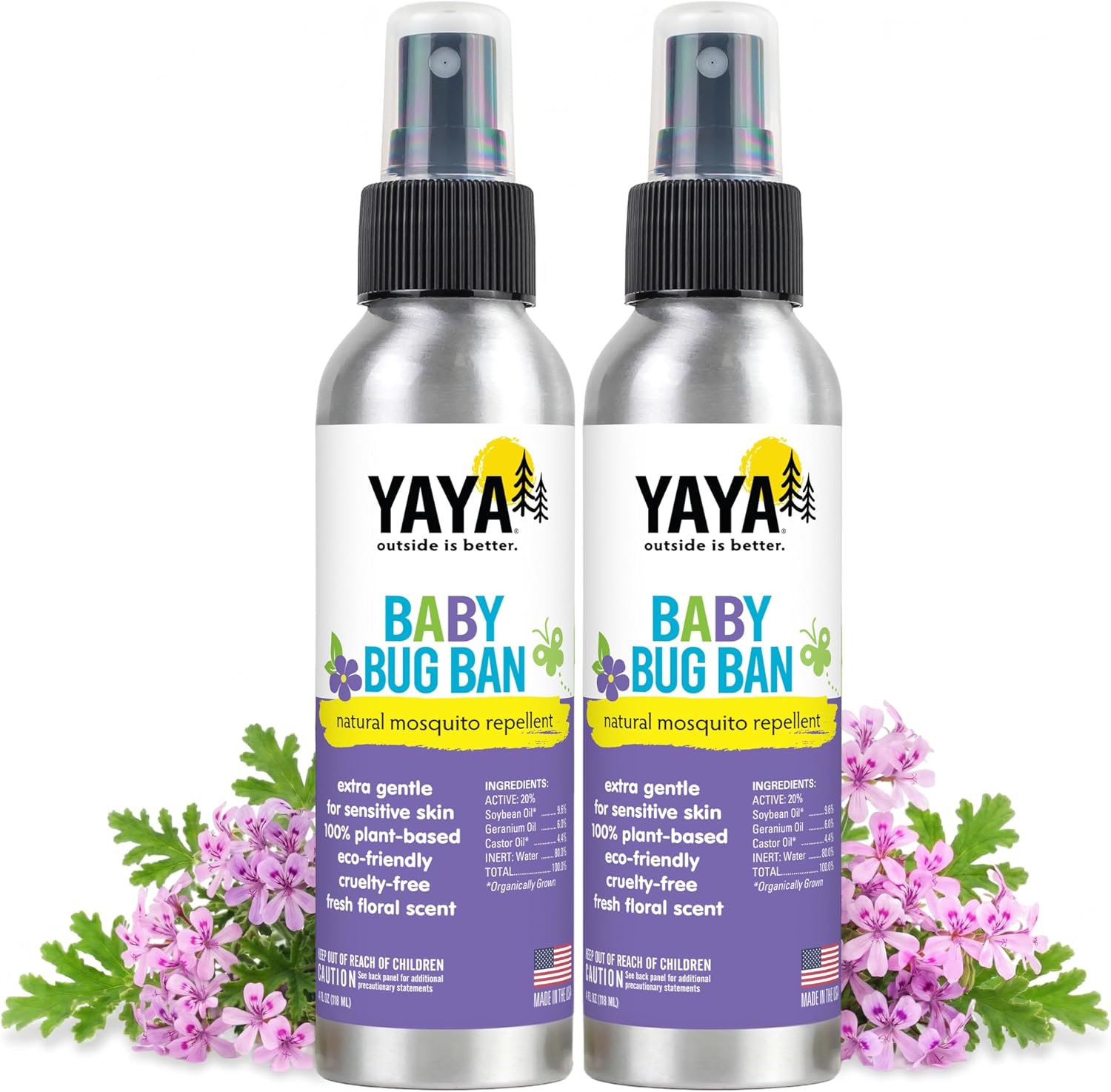
| Manufacturer | YAYA Organics |
|---|---|
| Suitable for | Babies 6+ months, toddlers, pregnant and nursing mothers |
| Ingredients | Organic soybean oil, geranium oil, organic castor oil, water |
| Package | 4 oz spray (2-pack) |
YAYA Organics Baby Bug Ban is a small, plant-powered spray designed to protect babies, toddlers, and sensitive skin from mosquitoes and other biting insects. It is intended to be used directly on skin or on clothing and baby gear and comes as an ultra-fine, non-greasy mist that is easy to apply during outdoor activities like backyard play, walks, and park visits. The formula lists organic soybean oil, geranium oil, castor oil, and water and advertises DEET-free protection with a focus on gentle ingredients suitable for babies six months and up as well as pregnant and nursing mothers. Practical benefits include lightweight feel, suitability for repeated use on fabrics and strollers, and recyclable packaging with vegan and cruelty-free claims. Important limitations are that the ingredient list does not state a measured duration of protection and natural essential oil repellents typically need more frequent reapplication than synthetic alternatives, so expect to reapply during longer outings. Patch testing is recommended for sensitive skin before full use.
Best for: Parents or caregivers who prioritize gentle, natural ingredients and want a convenient spray they can use on both skin and gear for short outdoor outings.
Less Ideal for: People who need long-lasting, high-strength protection for prolonged exposure in high mosquito or tick areas should consider a product with a validated hours-of-protection claim.
- Formulated for babies 6+ months and sensitive skin with plant-based ingredients
- Non-greasy, fine mist suitable for skin, clothing, strollers, and baby gear
- DEET-free and free of alcohol, parabens, and GMOs
- Vegan, cruelty-free formulation and recyclable aluminum packaging
- No specific hours-of-protection claim provided, so reapplication is likely needed for extended outdoor time
- Effectiveness relies on essential oils which generally require more frequent reapplication than DEET-based products
Verdict: Choose this if you want a gentle, DEET-free spray made for babies and sensitive skin that is easy to apply to both skin and baby gear for everyday outdoor play.
OFF! Adults & Kids Insect & Mosquito Repellent Lotion (3.8 oz)

| Active ingredient | Picaridin 10% |
|---|---|
| Formulation | Lotion |
| Suitable age | Children 6 months and up (when used as directed) |
This OFF! lotion uses 10% picaridin in a lightweight, unscented base to protect infants (from 6 months) and adults from mosquitoes during outdoor time. It applies like a moisturizer so it spreads evenly, does not feel greasy or sticky, and is easy to rub into small hands and exposed skin without leaving residue. The label gives clear age-specific directions and limits on reapplication, which helps caregivers use it safely on young children. Because it is a lotion rather than a spray, it is a good option for targeted application and for kids who dislike aerosols. Practical limits are that protection duration is not specified on the front label here and you must follow the reapplication limits for different ages, so close monitoring is needed during long outings. Also, lotions require hands-on application by an adult, which can be slower than a spray for large groups or quick reapplications.
Best for: Parents and caregivers who prioritize a non-spray, skin-friendly repellent for infants and young children and who prefer precise, lotion-based application.
Less Ideal for: People who need quick, whole-body coverage for groups or who want the convenience of a continuous spray for frequent reapplication outdoors.
- Contains 10% picaridin, an effective mosquito repellent ingredient
- Lotion formula is non-greasy and spreads smoothly for even coverage
- Fragrance-free and formulated for use on children 6 months and older when used as directed
- Requires hands-on application so it is slower to apply than aerosol or spray formats
- Label limits reapplication frequency for young children which can require planning on long outings
Verdict: Choose this lotion if you want a fragrance-free, non-greasy picaridin repellent designed for careful, hands-on protection of infants and young children.
Babyganics Mosquito Repellent Lotion, Plant and Essential Oils, 4 oz

| Active ingredients | Rosemary 1.50%, Citronella 0.95%, Geranium 0.75%, Cedarwood 0.70%, Peppermint 0.60%, Lemongrass 0.25% |
|---|---|
| Formulation | Lotion, non-greasy |
| Reapplication interval | Every 60 minutes |
| Made without | Parabens, sulfates, phthalates, synthetic fragrances or dyes |
Babyganics Mosquito Repellent Lotion is a lotion-style insect repellent that uses a blend of essential oils — including rosemary, citronella, geranium, cedarwood, peppermint and lemongrass — as the active ingredients to help deter mosquitoes. It rubs in easily and leaves a non-greasy finish, so it is simple to apply to exposed skin and to reapply every 60 minutes as directed. The product is formulated without parabens, sulfates, phthalates, synthetic fragrances or dyes and is not tested on animals, which will appeal to caregivers who prioritize gentler ingredient lists. Directions emphasize applying with adult hands and avoiding eyes, mouth and hands of young children, and the label calls for washing after returning indoors. Limitations to note are that protection is delivered by essential oils rather than EPA-registered synthetic actives, so duration and effectiveness can be shorter and more variable; frequent reapplication is required. The lotion format is convenient for spot application and for parents who prefer a moisturizing product with repellent properties, but those wanting long-duration, clinical-level protection should consider alternatives.
Best for: Caregivers who prioritize gentler, plant-based formulations and want an easy-to-apply repellent for short outdoor outings with infants and young children.
Less Ideal for: Families who need long-lasting, high-efficacy protection for extended outdoor exposure or who require an EPA-registered active ingredient should consider other products.
- Uses plant-derived essential oils as active ingredients
- Non-greasy, lotion texture that rubs in easily for quick application
- Formulated without parabens, sulfates, phthalates, synthetic fragrances or dyes
- Clear child-safe directions about applying with adult hands and avoiding eyes and mouth
- Active ingredients are essential oils which typically provide shorter and more variable protection than EPA-registered repellents
- Requires reapplication every 60 minutes according to the label
Verdict: A gentle, easy-to-apply lotion repellent for caregivers who prefer plant-based ingredients for short outdoor use with infants.
OFF! Kids Plant-Based Insect & Mosquito Repellent Spray, 4 oz

| Active ingredients | Rosemary oil 1.50%, Citronella oil 0.95%, Geranium oil 0.75%, Cedarwood oil 0.70%, Peppermint oil 0.60%, Lemongrass oil 0.25% |
|---|---|
| Other ingredients | Soybean oil 95.25% total |
| Application | Pump spray; reapply every 90 minutes as needed |
| Age suitability | Safe for children 6 months and older when used as directed |
This OFF! Kids spray is a plant-based mosquito repellent designed for quick, everyday use on young children. The pump-spray format makes application simple: shake, spray onto hands then spread over exposed skin while avoiding the face. Its active ingredients are a blend of essential oils including rosemary, citronella, geranium, cedarwood, peppermint and lemongrass in a soybean oil base, and the manufacturer states protection lasts up to 90 minutes between reapplications. The formula has no added fragrance or dyes and leaves a non-greasy feel, which is convenient for wiggly kids and frequent reapplication during outdoor play. Important limitations are the shorter protection window compared with DEET or picaridin options and the potential for skin sensitivity in some children; the label warns of allergic reactions from repeated contact and to avoid use on infants under six months. For parents who prefer botanical repellents and need something easy to apply for short outdoor sessions, this is a practical choice, but expect to reapply more often in mosquito-heavy conditions.
Best for: Parents who prioritize botanical, fragrance-free repellents for short outdoor activities with infants and toddlers and who are willing to reapply regularly.
Less Ideal for: Families needing long-duration protection for extended outdoor trips or caregivers of children with known sensitivities to essential oils should consider other repellent types.
- Botanical active blend suitable for parents seeking non-DEET options
- Pump spray is easy to use for quick application on children
- No added fragrance or dyes and a non-greasy finish that is comfortable for kids
- Labeled safe for use on children 6 months and older when directions are followed
- Protection duration is up to 90 minutes which is shorter than DEET or picaridin repellents
- Contains multiple essential oils that may cause allergic skin reactions in sensitive individuals
Verdict: A fragrance-free, plant-based pump spray that gives parents an easy to apply option for short outdoor protection of infants and toddlers.
Choosing the Right Infant Safe Insect Repellent: Key Factors to Consider
Ingredient Safety and Pediatric Guidance
Ingredients determine both how effective a repellent is and how likely it is to irritate an infant's skin. Look for formulations with ingredients that have established pediatric safety records or are explicitly recommended for young children by recognized health authorities.
Avoid high-concentration adult formulas and products with fragrances or multiple irritants, as these increase the risk of rashes and respiratory reactions. Where possible, choose products with transparent ingredient lists and clear age ranges on the label, and favor those that have been studied in children or carry pediatric usage guidance.
Application Format and Control
Format affects how easily you can apply the repellent without exposing the baby to excess product. Lotions and creams let you apply a measured amount to specific areas, reducing inhalation risk compared with pump sprays that can aerosolize ingredients.
Wipes are convenient for quick touch-ups and for targeting hands and ankles. Clothing treatments or wearable devices limit skin contact entirely, which is useful for very young infants, though they may offer different protection profiles. Consider how each format fits your routine, whether you need quick reapplication, and how to keep product away from the face and hands.
Skin Sensitivity and Test Patch Practices
Infant skin is more permeable and reacts differently than adult skin. Even gentle formulas can cause localized irritation. Always perform a small patch test on an area of the torso and wait the recommended observation time before broader use.
Look for hypoallergenic claims and minimal ingredient lists when sensitivity is a concern. If a baby has eczema, recent vaccinations, or known allergies, consult a pediatrician before regular use. Monitoring for any redness, swelling, or unusual fussiness after initial applications is important to catch reactions early.
Exposure Minimization Strategies
Reducing overall exposure is as important as picking the right active ingredient. Apply repellent to clothing rather than skin when appropriate, and use targeted application to lower the total amount of product needed. Avoid spraying near the face; instead, apply to your hands and then rub gently on the exposed cheeks or neck while keeping the infant's eyes and mouth closed.
Choose formulations that are designed for infants and have low volatility to reduce inhalation risk. Consider combining behavioral measures such as avoiding peak biting hours and using physical barriers like hats, long sleeves, and netting for added protection.
Duration of Protection and Reapplication
Different infant-safe repellents provide protection for varying lengths of time, and outdoor conditions such as sweat, water exposure, or rubbing can shorten that window. Understand the typical wear time recommended on the label and plan reapplication intervals around naps, feeds, and outings.
Keep reapplication frequency compatible with infant routines and choose formats that let you refresh protection without distressing the child. Carrying a small, clearly labeled container for short trips helps maintain protection while avoiding accidental overuse.
Label Clarity and Age Recommendations
Clear labeling makes safe use easier. Look for products that explicitly list recommended minimum ages, dosing instructions, and guidance on use near the face. Labels that include pediatric safety data, contraindications, and straightforward reapplication instructions reduce guesswork for caregivers.
Avoid products with vague age guidance or with labels that require adult interpretation. If labeling is unclear, consult a pediatric healthcare provider before use.
When to Use Repellent Versus Physical Protection
Repellent is one tool among many. For very young infants or when mosquitoes are not abundant, physical barriers like lightweight long-sleeve clothing, hats, and mesh carriers often provide sufficient protection without topical products. Repellents are most useful when physical barriers are impractical or when insect pressure is high.
Use repellent selectively: apply it on exposed skin or clothing for specific outings rather than as a daily routine. Combining approaches can reduce the need for frequent reapplication and lower overall chemical exposure.
- Use clothing and mesh whenever possible for babies under the recommended age.
- Reserve topical repellent for high-bite situations or extended outdoor time.
- Pair targeted repellent use with behavioral timing to avoid peak insect activity.
Safe Application Techniques
Apply repellent to your hand first and then spread it on the baby's exposed skin. Keep the product away from eyes, mouth, and hands to discourage ingestion through mouthing. For infants who frequently touch their faces, favor application to clothing rather than directly on the skin.
If using a spray format despite increased aerosol risk, spray onto clothing, not directly on the infant, and do it outdoors with the baby at a distance. Always follow product-specific dwell times and wait for the repellent to dry before allowing the baby to be in close contact with surfaces or other people.
- Perform a small patch test before full use.
- Avoid spraying near the face; use a cloth application for cheeks and neck.
- Wash hands after applying and before feeding or handling food.
Managing Reactions and When to Stop Use
If you notice redness, blistering, swelling, increased fussiness, or any respiratory signs after applying a repellent, stop use immediately and wash the area with mild soap and water. Contact a pediatrician if symptoms worsen or if you suspect a more serious reaction.
For minor irritation, discontinuing the product and using emollients or recommended soothing care is often sufficient. Keep a record of products used if your infant has recurrent reactions to help identify likely culprits.
- Discontinue product at first sign of skin irritation.
- Seek medical advice for persistent or systemic symptoms.
- Document ingredients to aid future product decisions.
Using Clothing Treatments and Wearables
Clothing treatments and wearable devices offer an alternative that limits direct skin contact. Treated clothing can provide steady protection without repeated topical application, though treatment longevity and wash durability vary by product.
Consider treated garments for longer outings or when infants will be in strollers or carriers for extended periods. Be mindful of wash instructions and treat clothing according to manufacturer guidance to maintain effectiveness.
- Prefer treated clothing for infants who resist topical application.
- Follow washing and re-treatment guidance to sustain protection.
- Combine treated clothing with other barriers for best effect.
Packing a Safe Repellent Kit for Outings
A simple repellent kit keeps you prepared without overdoing exposure. Include a small, clearly labeled container of the chosen infant formulation, fragrance-free wipes for removal, and a spare set of long-sleeve clothing. A small first-aid cloth and basic instructions help any caregiver use the product consistently.
Store repellent away from children and check expiration dates regularly. Train secondary caregivers on application limits and patch-test procedures so everyone uses the same safe practices.
- Carry a small container labeled with age guidance and dosing.
- Include wipes to remove product if needed.
- Ensure all caregivers follow the same application technique.
How We Chose the Best Infant Safe Insect Repellent
We prioritized formulations and delivery methods that reduce exposure while still providing usable insect protection for infants. Key evaluation criteria included ingredient safety, application format, and exposure control. Ingredient safety meant favoring repellents with ingredients that have pediatric safety data or are recommended by public-health guidance for young children. Application format looked at sprays, lotions, wipes, and clothing treatments for ease of targeted use and reduced inhalation risk. We also evaluated how long protection lasts in realistic outdoor conditions, and how easy it is to reapply safely. Packaging and labeling were checked for clear age guidance and simple dosing instructions. Products that relied on adult-strength concentrations, unclear pediatric guidance, or delivery methods likely to produce aerosol exposure were excluded. The final list focuses on options that balance gentle chemistry with practical protection, along with formats that let caregivers limit contact and control application on sensitive skin.
FAQ
What age is safe to start using infant insect repellent?
Recommendations depend on the formulation and local guidance, but many infant-specific options begin at a few months of age. Check the product label for minimum age guidance and consult a pediatrician for babies with health concerns.
Can I apply repellent to my baby's hands or face?
Avoid direct application to the hands or face. Instead, apply a small amount to your hands and then gently rub it on the cheeks and neck, keeping it away from eyes and mouth. For infants who put their hands in their mouths, prioritize clothing application.
How often should I reapply infant-safe repellent?
Reapplication intervals vary by product and outdoor conditions. Follow label instructions, and reapply after heavy sweating or water exposure. Plan reapplication around feeding and nap schedules to minimize disturbance.
Are natural or plant-based repellents safe for babies?
Some plant-based ingredients have lower irritation risks, but 'natural' does not automatically mean safer. Efficacy and allergenic potential vary, so choose products with pediatric guidance and test on a small skin area before broader use.
Can treated clothing replace topical repellent entirely?
Treated clothing can significantly reduce the need for topical repellent, especially for older infants. However, treated fabrics and topical products offer different protection patterns, so combining them when risk is high can be effective while minimizing skin contact.
What should I do if my baby has a skin reaction after using repellent?
Stop using the product immediately, wash the affected area with mild soap and water, and monitor symptoms. For persistent redness, swelling, blistering, or systemic signs, contact a pediatrician promptly.
Final Verdict
Prioritize formulations and formats that reduce skin exposure while still matching your outdoor needs. Focus on clear age guidance, minimal ingredient lists, and application methods that let you control where product goes. Balance protection duration against the need for reapplication, and use physical barriers whenever practical. Choosing an infant-safe insect repellent is about minimizing risk while maintaining comfort during outdoor time. Use patch tests, follow label directions, and favor targeted application to keep infants protected and comfortable.
