

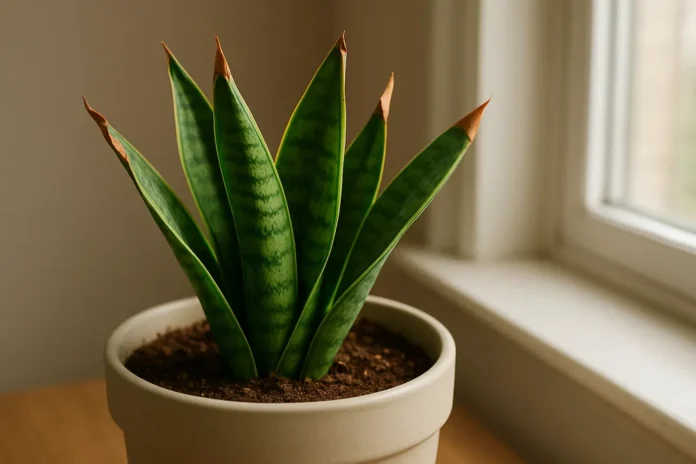
Snake plant leaf tips usually turn brown because the plant is under stress from watering problems, salt buildup, dry air, or root damage. In some cases, strong sun, cold exposure, or natural aging can also dry out the leaf ends.
A snake plant with brown leaf tips is a common sight, and in most cases it does not mean the whole plant is in trouble. These tough houseplants handle neglect better than many others, but when their growing conditions stay off for too long, the tips are often the first place they show it.
When I see brown tips on snake plant leaves, I do not assume disease right away. More often, the problem traces back to moisture stress, minerals in the water or fertilizer, or roots that are unhappy in their pot. The good news is that once you correct the cause, new growth usually comes in clean even if the damaged tips stay brown.
The key is to read the pattern. A crisp dry tip points to one kind of stress, while a soft yellowing base points to another. If you match the symptom to the cause, fixing your plant gets much easier.
What Brown Tips Usually Mean on a Snake Plant
Brown tips are a stress signal, not a disease diagnosis by themselves. The leaf tip is the farthest point from the roots, so it often dries out first when water movement through the plant is inconsistent. It is also where salt buildup and physical damage become easy to spot.
If the rest of the leaf looks firm and green, the problem is usually mild or early. If the brown tip comes with yellowing, mushy tissue, drooping leaves, or a foul smell from the pot, then the issue is deeper and often involves the roots.
- Dry, crispy brown tips often suggest underwatering, dry air, or salt buildup.
- Brown tips with yellow halos can point to inconsistent watering or fertilizer burn.
- Soft brown tissue near the base is more concerning and often signals rot.
- A few older leaves with browned ends may simply reflect age or past stress.
When I diagnose snake plants, I compare several leaves before I make changes. If every leaf tip is browning in a similar way, I suspect water quality, fertilizer, or general care. If only one or two leaves are affected, I look for physical damage, sun scorch, or an old leaf nearing the end of its life.
Watering Problems Are the Most Common Cause
Underwatering Can Dry the Tips First
Snake plants are drought tolerant, but that does not mean they want to stay bone dry for long stretches every time. If the soil becomes extremely dry and stays that way, the plant cannot move enough moisture to the ends of the leaves. The tips begin to crisp, turn tan, then dark brown.
This is especially common in a very warm room, in terracotta pots, or when the plant sits near heat vents. A thirsty snake plant may also have leaves that look slightly wrinkled, thinner than normal, or less upright.
Overwatering Can Cause Root Stress That Shows Up at the Tips
Too much water can lead to browning too, though the pattern is usually different. Soggy soil weakens roots and reduces their ability to take up moisture and nutrients. The result can be brown leaf ends, yellowing, and eventually soft patches or collapse.
Many growers think a plant with brown tips needs more water, but if the soil is already staying wet, adding more only makes things worse. Snake plants need their potting mix to dry substantially between waterings.
- If the pot feels feather light and the mix pulls from the sides, suspect underwatering.
- If the soil feels damp several days after watering, suspect overwatering or poor drainage.
- If leaves are wrinkled and crispy, the plant is likely too dry.
- If leaves are soft, yellowing, or smelly at the base, roots may be rotting.
I water snake plants thoroughly, then wait until the mix is mostly dry before watering again. A shallow sip every few days is worse than a full watering followed by a proper dry down, because it keeps the upper root zone unevenly moist and encourages stress.
Tap Water Minerals and Fertilizer Salts Can Burn the Tips
Snake plants are not the fussiest houseplants, but they can react to hard water and excess fertilizer. Minerals and salts build up in the soil over time, especially in pots that are watered lightly without enough runoff. That buildup can dehydrate root tissue and leave the leaf tips brown and dry.
This is a common reason for otherwise healthy plants to get neat little brown points on many leaves at once. The plant may still be growing, but the tips look singed. White crust on the soil surface or around the drainage hole is a strong clue that salts are accumulating.
When Fertilizer Is Part of the Problem
Snake plants need very little feeding. If you fertilize too often, apply too strong a dose, or feed in winter when growth is slow, the leaf tips can burn. This is even more likely if the plant is already dry when fertilizer is applied.
- Use a diluted houseplant fertilizer sparingly during active growth.
- Do not fertilize a stressed, dehydrated, or newly repotted snake plant.
- Flush the pot thoroughly once in a while to wash out excess salts if drainage is good.
- If your tap water is very hard or softened, filtered or distilled water may help prevent repeat tip burn.
Low Humidity, Heat, and Indoor Stress Can Dry Leaf Ends
Snake plants tolerate average indoor humidity well, so dry air alone is not always the main culprit. Still, extremely dry rooms, forced-air heat, and hot drafts can contribute to brown tips, especially when combined with inconsistent watering.
This tends to happen in winter when indoor air is driest or in summer if the plant sits near an air conditioner or a sunny window that gets intensely hot. The plant loses moisture faster than the roots can replace it, and the tips take the hit first.
- Keep the plant away from heating vents and direct blasts from air conditioners.
- Avoid placing it where temperatures swing sharply day to night.
- If your home is extremely dry, steadier watering matters more than misting.
- Group plants together if you want a modest humidity boost without overcomplicating care.
Light Problems, Sun Scorch, and Temperature Shock
Snake plants can handle a wide range of light, but sudden exposure to harsh direct sun can scorch the leaves. Sun damage often looks like bleached, tan, or crispy patches, and the tips can dry out as part of that injury. This is more likely if a plant that lived in dim light is moved straight into a hot south or west window.
Cold damage can also brown tips or edges. If the plant touches a freezing window, sits in a chilly draft, or gets left outside in cool weather, cells in the leaf can collapse. The damaged areas may first look water-soaked, then turn tan or brown.
How to Tell This Apart From Watering Stress
Light and temperature injury usually appear on the exposed side of the plant, not evenly on every leaf. If the side facing the window is damaged while shaded leaves look fine, think sun or cold before you blame the watering can.
Pot Size, Root Health, and Soil Mix Matter More than Many People Realize
A snake plant in poor potting mix can develop brown tips even when your watering schedule sounds right. Heavy soil stays wet too long, while exhausted compacted mix may repel water and leave roots partly dry. In both cases, the plant struggles to take up moisture evenly.
Pot size matters too. A container that is too large dries slowly and raises the risk of root problems. A severely root-bound plant can also struggle if water rushes around the root mass without soaking in well.
- Use a pot with a drainage hole.
- Choose a fast-draining mix, often with cactus mix, perlite, or coarse bark blended in.
- Repot only one size up when needed rather than jumping to a much larger container.
- Inspect roots if you suspect trouble. Healthy roots are firm and pale, while rotted roots are dark, mushy, or smelly.
I have found that many chronic brown-tip cases are really soil problems disguised as watering problems. If a snake plant gets brown tips no matter how careful you are, I would question the potting mix and root condition before I blame humidity.
Natural Aging and Physical Damage Can Also Brown the Tips
Not every brown tip means something is wrong with your care. Older leaves can slowly decline at the end, especially on mature plants. Minor bumps, bends, pet chewing, or abrasion during transport can also leave the tip damaged, and that injured tissue will not turn green again.
Because snake plant leaves are stiff and upright, they crease easily if knocked. Once the tip is bent, that small area often dries and browns even if the rest of the plant stays healthy.
How to Fix a Snake Plant with Brown Leaf Tips
Start by correcting the underlying stress instead of trimming first. Brown tips are cosmetic damage, but fresh growth tells you whether the plant is actually recovering. If new leaves emerge clean and existing leaves stop worsening, your changes are working.
- Check the soil moisture before watering again. Let the mix dry well between waterings, but do not leave it bone dry for weeks on end.
- Make sure the pot drains freely and never sits in water.
- Reduce or pause fertilizer if you have been feeding regularly.
- Flush the pot with clean water if you suspect mineral or salt buildup.
- Move the plant out of harsh direct sun or away from heat and cold drafts.
- Repot into a better-draining mix if the soil stays soggy, compacted, or hard to rewet.
Should You Cut Off the Brown Tips?
You can trim them if the look bothers you, but do it carefully. Use clean scissors and follow the natural point of the leaf, removing only the dead brown tissue or leaving a very thin brown edge so you do not cut into healthy green tissue. A blunt cut across the leaf tip often looks more obvious than the original damage.
What Recovery Looks Like
Damaged tips stay damaged. Success shows up as stable leaves, firm growth, and clean new foliage. Give the plant several weeks to respond, and avoid changing five things at once or you will not know what helped.
If the plant is stressed, I change one variable first and watch the newest growth. For example, I fix watering and drainage before I start adding fertilizer or moving the plant around, because too many changes at once can create a second problem.
When Brown Tips Are a Sign of a Bigger Problem
Brown tips alone are usually manageable, but some symptoms suggest the plant needs faster intervention. If the browning is spreading down the leaf, the base is soft, the pot smells sour, or whole leaves are collapsing, root rot is likely. In that case, unpot the plant, trim away dead roots, and repot into fresh dry mix.
Pests are less common on snake plants than on many houseplants, but they are possible. Mealybugs and spider mites can weaken leaves and contribute to browning or poor growth. If you see sticky residue, webbing, cottony clusters, or a dusty stippled look, inspect closely and treat the infestation.
- Act quickly if tissue is mushy rather than crisp.
- Remove severely rotted leaves at the base with a clean cut.
- Do not reuse sour, compacted soil after rot.
- Isolate a pest-affected plant until the problem is under control.
How to Prevent Brown Tips in the Future
Prevention is mostly about consistency. Snake plants prefer a simple routine: bright indirect light or gentle direct light, a fast-draining mix, and watering only when the pot has dried enough. Once you learn how quickly your home dries the pot in each season, the plant becomes very easy to keep tidy.
- Water deeply, then wait until the mix is mostly dry before watering again.
- Use a well-draining potting mix and a pot with a drainage hole.
- Feed lightly during spring and summer, if at all.
- Flush salts occasionally if you use tap water or fertilizer.
- Protect the plant from harsh midday sun, cold windows, and hot vents.
- Judge recovery by new growth rather than expecting old damaged tips to heal.
FAQ
Will Brown Snake Plant Tips Turn Green Again?
No. Once the tip tissue has dried and turned brown, it will not recover. Focus on correcting the cause so new growth comes in healthy.
Should I Mist My Snake Plant to Stop Brown Tips?
Usually no. Misting gives only a temporary humidity boost and does little for the underlying problem. Better watering habits, cleaner water, and better placement help more.
How Often Should I Water a Snake Plant with Brown Tips?
Water based on soil dryness, not the calendar. In many homes that means every couple of weeks in active growth and less often in winter, but always let the mix dry well first.
Can Hard Tap Water Cause Brown Tips on Snake Plants?
Yes. Hard water and softened water can leave mineral salts in the soil, and over time that buildup can burn leaf tips. Filtered or distilled water can help if your tap water is very mineral-heavy.
Is It Better to Cut Off the Whole Leaf or Just the Brown Tip?
If only the tip is brown, trim just the damaged area for appearance. Remove the whole leaf only if it is badly damaged, mushy, or declining from the base.
Do Snake Plants Get Brown Tips From Too Much Sun?
They can. Sudden exposure to strong direct sun may scorch the leaves and dry the tips or edges. Gradual light changes are much safer.
Can Root Rot Start with Brown Tips?
Yes, especially if brown tips are paired with yellowing, soft leaves, or constantly wet soil. Brown tips by themselves are not proof of rot, but they can be an early warning sign when roots are stressed.
Still troubleshooting your plant care setup? Read our guide to the best soil mixes and pots for snake plants so you can fix drainage problems fast and prevent brown tips from coming back.
