

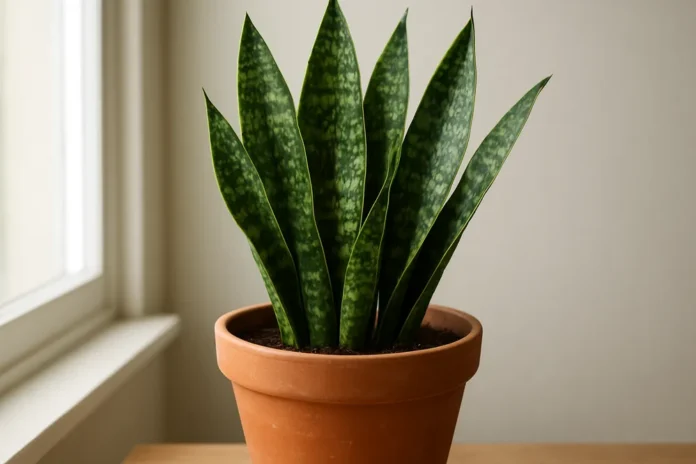
Snake plant white spots are most often caused by mineral residue, pest damage, fungal problems, or leaf stress from too much direct sun. The cause depends on whether the spots wipe off, look raised, or appear as bleached patches.
When a snake plant with white spots shows up on my bench, I do not assume the worst right away. Sansevieria, now commonly sold under Dracaena trifasciata, is tough, but its leaves still react to water quality, light, pests, and moisture sitting too long on the foliage.
The tricky part is that white spots on snake plant leaves can mean very different things. Some wipe away with your finger because they are just mineral deposits. Others are fixed in the leaf tissue, which points more toward sunscald, pest feeding, or a fungal problem. The shape, texture, and location of the spots matter more than the color alone.
If you look closely before treating, you can usually separate a harmless cosmetic issue from something that needs quick action. Below, I will walk through the most common causes, how to tell them apart, and what I would do for each one.
What the White Spots Usually Mean
White spotting on snake plants tends to fall into a few categories. The first is surface residue, usually from hard water, misting, or fertilizer splash. The second is pest-related spotting, especially mealybugs, scale, or spider mites. The third is tissue damage, where the leaf itself has been bleached or scarred by sun, edema, or disease.
Before you reach for neem oil or fungicide, rub one spot gently with a damp cloth. If it smears, flakes, or disappears, it is probably on the surface. If it stays put and looks embedded in the leaf, you are dealing with actual damage.
I always compare old leaves and new leaves before deciding what the problem is. If only older outer leaves are marked, I suspect past stress or residue. If fresh inner growth is showing white spotting too, I start looking much harder for pests or an ongoing care issue.
Mineral Residue From Water Is the Simplest Cause
How Hard Water Leaves Spots
If you water from above, mist the leaves, or splash fertilizer solution on them, dissolved minerals can dry into pale white dots, rings, or chalky patches. This is especially common in homes with hard tap water. Snake plant leaves are upright and smooth, so dried residue often stands out clearly.
Signs It Is Just Residue
- The spots sit on the surface and partially wipe off
- They look powdery, crusty, or like dried droplets
- The leaf underneath still feels firm and healthy
- The pattern matches where water tends to drip or dry
What to Do
Wipe the leaves with a soft cloth dampened with distilled water or filtered water. For stubborn buildup, use a very diluted mix of water with a small splash of white vinegar, then wipe again with plain water so nothing acidic sits on the foliage. Going forward, water the soil directly instead of wetting the leaves.
This kind of spotting is mostly cosmetic. The plant is usually fine unless heavy residue is happening over and over, which can dull the leaves and make it harder to notice real problems later.
Mealybugs and Scale Can Look Like White Spots at First
Why Pests Are Often Mistaken for Spotting
Mealybugs look like tiny bits of white cotton, while some scale insects appear pale or waxy before darkening. On a snake plant, they often hide where leaves meet at the base, along leaf creases, or on the undersides of foliage. At a glance, they can look like random white specks.
Clues That Pests Are Involved
- The spots are raised rather than flat
- They collect in clusters near the leaf base or in tight folds
- The plant may feel sticky from honeydew
- Leaves can yellow, weaken, or develop scarred patches nearby
- You may notice slow growth or distorted new leaves
How to Treat Mealybugs or Scale
Isolate the plant first so pests do not spread. Then remove visible insects with a cotton swab dipped in isopropyl alcohol. After that, wipe the leaves carefully and repeat every few days as needed. For a larger infestation, use insecticidal soap on the foliage, following the label closely and avoiding heavy application deep into the crown where moisture can linger.
When I treat snake plants for mealybugs, I pay extra attention to the inside of the rosette and the soil line. Pests often hide low on the plant, so leaves can look cleaner than the base actually is.
Do not expect damaged spots to turn green again. The goal is to stop new feeding damage. Healthy new growth is the real sign that treatment worked.
Spider Mites Can Leave Fine Pale Stippling
Spider mites do not usually make big chalky white spots, but they can leave many tiny pale dots that make the leaf look dusty, speckled, or washed out. In very dry indoor air, they can multiply fast. On snake plants, the damage often shows as light stippling rather than obvious bugs.
Look for faint webbing, especially near the leaf bases or between crowded leaves. If you tap a leaf over white paper, you may see tiny moving specks. The spotting from mites is part of the leaf tissue, so it will not wipe away.
Treat by rinsing the foliage, wiping leaves thoroughly, and applying insecticidal soap or horticultural oil labeled for mites. Repeat treatments are important because one pass rarely catches every life stage.
Fungal Leaf Spot Can Start Pale Before Turning Tan or Brown
When Disease Is More Likely
Fungal issues are more common when leaves stay wet, air circulation is poor, and the potting mix remains damp too long. Snake plants are drought tolerant, so chronic moisture creates exactly the kind of stress that invites disease. Some fungal spots begin as pale, grayish, or whitish lesions before they darken.
What Fungal Spotting Looks Like
- Spots are flat and embedded in the leaf
- They may have a pale center with a darker border
- Affected tissue can feel dry, sunken, or papery
- Spots may slowly enlarge over time
- Heavily affected leaves may soften near the base if rot is also present
How to Respond
Move the plant into brighter indirect light, stop misting, and make sure the pot drains quickly. Remove badly damaged leaves with a clean blade if the spotting is spreading or if tissue is turning soft. Water only when the potting mix has dried well. If the problem continues and clearly behaves like fungal leaf spot, a houseplant-safe copper fungicide may help, but better drying conditions matter more than spraying alone.
Disease spots already present usually stay visible. What you are watching for is whether new leaves emerge clean and existing lesions stop spreading.
Sunscald Can Create Bleached White or Silvery Patches
Snake plants tolerate bright conditions, but they can still scorch if moved suddenly into harsh afternoon sun or intense outdoor light. Sunscald often shows as irregular bleached patches that look white, tan, or silvery. Unlike mineral residue, these marks are part of the leaf and do not wipe off.
The damaged areas are usually on the side of the plant facing the window or strongest light source. The leaf may also feel thinner, slightly papery, or scarred in those spots. I see this most often after a plant has been moved from a dim corner to a sunny windowsill without a transition period.
Move the plant to bright indirect light or gentler morning sun. Damaged tissue will not turn green again, but the plant can still recover well if the roots and crown are healthy. Rotate the pot occasionally so one side does not take all the stress.
Edema and Physical Scarring Can Leave Pale Marks
Not every white mark is a pest or disease. Sometimes the plant takes up water faster than it can use it, especially in cool, low-light conditions. That can cause edema, where cells burst and heal into corky or pale spots. Physical rubbing, bends, or pressure damage can also leave whitish scars.
These spots are usually irregular and stable. They do not spread rapidly, and they are often tied to a past event such as overwatering during winter, bumping a leaf, or squeezing the plant into a tight spot near a wall or window frame.
A scarred snake plant leaf often tells an old story rather than an active problem. If the mark is dry, firm, and unchanged for weeks, I usually focus less on the blemish itself and more on making sure new growth comes in clean.
Correct the care issue if one exists, especially overwatering or poor light. If the mark is cosmetic and the plant is otherwise growing normally, no treatment is needed.
How to Tell Which Cause You Are Dealing With
A fast diagnosis comes from texture, pattern, and plant condition. Surface residue behaves differently from pest clusters, and embedded tissue damage behaves differently from both.
- If the spot wipes off, think mineral residue, dust, or dried splash
- If the spot looks cottony or raised, think mealybugs or scale
- If there are many tiny pale dots plus webbing, think spider mites
- If the patch looks bleached on the sunny side, think sunscald
- If the spot has a defined edge and may enlarge, think fungal leaf spot
- If the mark is dry, firm, and unchanged after a stress event, think scarring or edema
Also check the rest of the plant. Soft bases, mushy roots, or a sour pot smell suggest a moisture problem that may be feeding disease. A sticky leaf surface points more toward sap-sucking pests.
How to Fix the Problem Without Making It Worse
Snake plants are easy to over-correct. I see gardeners respond to a few spots by watering less, then spraying oils, then repotting, then moving the plant into harsh light. That kind of pile-on can stress the plant more than the original issue.
- Identify whether the spots are on the surface or in the leaf tissue.
- Inspect closely for pests at the leaf base, folds, and undersides.
- Adjust the obvious care trigger, such as wet foliage, harsh sun, or soggy soil.
- Treat only the likely cause instead of applying every product at once.
- Judge success by clean new growth, not by expecting old spots to disappear.
If overwatering may be part of the problem, check the roots before repotting automatically. Healthy roots are firm and pale. Rotting roots are dark, soft, and often smelly. Repot only if the mix stays wet too long or root damage is clearly present.
Prevention Habits That Keep Snake Plant Leaves Clean
Most white spotting problems become less common when the plant is kept on the dry side, watered at the soil level, and inspected occasionally. Snake plants do best with a simple routine rather than frequent fussing.
- Use a fast-draining potting mix and a pot with drainage holes
- Let the soil dry well between waterings
- Avoid misting the leaves
- Wipe dust and residue off leaves every few weeks
- Acclimate the plant gradually to brighter light
- Inspect new plants before placing them near your collection
- Use filtered or distilled water on the foliage if your tap water leaves residue
A clean leaf surface also makes it easier to spot real trouble early. That matters with snake plants because pests often settle in quietly before the plant shows obvious decline.
FAQ
Can White Spots on a Snake Plant Go Away on Their Own?
Surface residue can be wiped away, but damage in the leaf tissue usually stays. Recovery is measured by healthy new growth rather than old spots disappearing.
Are White Spots on Snake Plants Usually a Sign of Overwatering?
Not always. Overwatering can contribute to fungal issues and edema, but white spots are also commonly caused by mineral residue, pests, or sunscald.
Should I Cut Off Leaves with White Spots?
Only remove leaves if they are badly damaged, spreading disease, or turning soft at the base. Light cosmetic spotting on otherwise healthy leaves does not require pruning.
Can I Use Neem Oil for White Spots on My Snake Plant?
Neem oil can help with some pests, but it will not fix mineral residue or sunscald. It is best used only when insects are actually present and according to the label.
Do Hard Water Spots Hurt a Snake Plant?
Usually no. They are mostly cosmetic, though frequent buildup can make leaves look dull and can hide early signs of other issues.
How Do I Know if the White Spots Are Mealybugs?
Mealybugs look raised, fuzzy, or cottony and often gather near the leaf base or in creases. They do not look like flat bleached patches embedded in the leaf.
Can Too Much Sun Cause White Marks on Snake Plant Leaves?
Yes. Sudden strong direct sun can bleach the tissue and leave pale white or silvery patches that do not wipe off.
Need the right fix fast? Explore our guide to the best houseplant pest treatments and soil mixes so you can protect your snake plant and prevent repeat damage.
