

Note: This article contains affiliate links. If you click on these links and make a purchase, I may earn a small commission at no extra cost to you. This helps support my research and content. Read my full affiliate disclosure here.
Raised bed vegetables change how you garden by improving drainage, concentrating fertility, and making maintenance easier in small or awkward spaces. For gardeners with limited ground area, poor native soil, or accessibility concerns, the right vegetable varieties for raised beds can mean faster harvests, better flavor, and less backache. This guide highlights seven top choices suited to raised beds and explains the traits that make them perform well in confined soil volumes. We shortlisted varieties based on yield potential, ease of care, and compatibility with typical raised bed depths and soil mixes. Read on for practical notes on planting, spacing, and seasonal timing before the product list.
Top Picks at a Glance
| Best Overall The best all-around choice for most situations | Vego Garden 17" Tall Modular Metal Raised Garden Bed Kit (6-in-1) |  |
| Best Quality Built to a higher standard if you want something more solid | Vego Garden 17" Tall Modular Metal Raised Garden Bed Kit (10-in-1) |  |
| Best Value The sweet spot between price and what you get | Utopia Home Galvanized Raised Garden Bed Kit, 4 x 2 x 1 ft |  |
| Best Budget The cheapest option that still gets the job done reliably | SnugNiture Galvanized Raised Garden Bed, 4x2x1 ft Oval Metal Planter Box |  |
| Highest Rated A top-rated pick with lots of positive feedback | Vego Garden 17" Tall Modular Metal Raised Garden Bed Kit (8ft x 2ft) |  |
| Most Popular A crowd favorite that many people choose with confidence | Land Guard Galvanized Oval Raised Garden Bed Kit (4×2×1 ft) |  |
| Best Seller A high-volume bestseller chosen again and again | Land Guard 2-Pack Galvanized Raised Garden Beds (4×2×1 ft) |  |
Vego Garden 17" Tall Modular Metal Raised Garden Bed Kit (6-in-1)

| Material Type | Metal |
|---|---|
| Other Special Features of the Product | Rust Resistant, UV Resistant, Weather Resistant |
| Mounting Type | Wall Mount |
| Indoor Outdoor Usage | Outdoor |
This Vego Garden 17" tall raised bed kit is a modular metal planter aimed at gardeners who want a durable, configurable planting solution. The kit assembles into six possible layouts so you can adapt it to different garden footprints or scale over time. Constructed from a zinc-magnesium-aluminum coated steel with painted finish, it is marketed for rust, UV, and weather resistance and includes rubber edging and an oval design to reduce sharp corners during installation. At 17 inches deep it provides good rooting space and makes planting and harvesting easier because you do not have to bend as far. The system is straightforward to assemble with fasteners and yields a tidy modern look for patios, decks, or ground placement. Limitations to note are that the kit is metal rather than wood, so it conducts heat more readily and may warm soil faster in hot climates, and the included capacity and footprint are fixed per panel sizes so very large vegetable plots require multiple kits or larger models. Overall it is a robust, low-maintenance option for gardeners who prioritize durability and flexible layout.
Best for: Gardeners who want a long-lasting, performance-focused raised bed system they can reconfigure to match changing plots and who prioritize durability and low maintenance over a traditional wooden aesthetic.
Less Ideal for: People seeking a natural wood look or those who only need a very small container for a few herbs should consider simpler pots or wooden planters instead.
- Modular 6-in-1 design lets you build multiple layouts to fit different spaces
- Corrosion-resistant VZ 2.0 metal coating and painted finish for long outdoor life
- 17-inch planting depth supports healthier root development and less bending
- Oval panels with rubber edging reduce sharp corners and simplify installation
- Metal walls can heat the soil more than wood, which may affect heat-sensitive plants
- To cover large vegetable beds you will need multiple kits or larger models
Verdict: Buy this if you want a durable, configurable raised bed that gives deep planting space and long-term weather resistance for serious vegetable gardening.
Vego Garden 17" Tall Modular Metal Raised Garden Bed Kit (10-in-1)

| Capacity | 21 cubic feet |
|---|---|
| Material Type | Metal |
| Other Special Features of the Product | Rust Resistant |
| Mounting Type | Floor Standing |
| Indoor Outdoor Usage | Outdoor |
This Vego Garden raised bed kit is a heavy-duty metal planter built for performance-focused vegetable growing. Its modular 10-in-1 design lets you configure the kit into multiple layouts to match available space and planting plans, and the 17" planting depth supports deeper root systems and better drainage for larger vegetables. The metal panels use a zinc-magnesium-aluminum coating plus painted finish that the brand says is corrosion-tested, and the kit includes a base, side panels, connecting hardware, and basic tools so you can assemble without advanced construction skills. Practical benefits include less bending when tending crops, the oval shape with covered rubber edges for safer handling, and compatibility with add-ons such as trellises, covers, and irrigation. Expect a fairly robust, long-lived bed but plan for a substantial unit weight and the need to level a floor-standing location. This is not a lightweight portable solution, and while the system is modular it requires some physical effort to assemble and position once filled with soil.
Best for: Gardeners who prioritize durable, high-performing vegetable planters and want a configurable metal raised bed that supports deeper-rooted crops and integrates with irrigation and trellis add-ons.
Less Ideal for: People who need a lightweight, easily moved planter or those who prefer natural wood aesthetics should consider other options.
- Modular 10-in-1 design adapts to different garden layouts and needs
- 17" planting depth promotes healthier roots and improved drainage for vegetables
- Corrosion-resistant metal construction with painted finish tested for long life
- Includes base, side panels, connecting hardware, and tools for self-assembly
- Heavy when assembled and filled, making relocation difficult
- Requires physical effort and time to assemble and place before planting
Verdict: Choose this modular 17" metal raised bed when you want a durable, configurable planter that supports performance vegetable growing and deeper root development.
Utopia Home Galvanized Raised Garden Bed Kit, 4 x 2 x 1 ft
| Capacity | 216 liters |
|---|---|
| Material Type | Alloy Steel |
| Finish Types | Powder Coated |
| Mounting Type | Floor Standing |
| Indoor Outdoor Usage | Outdoor |
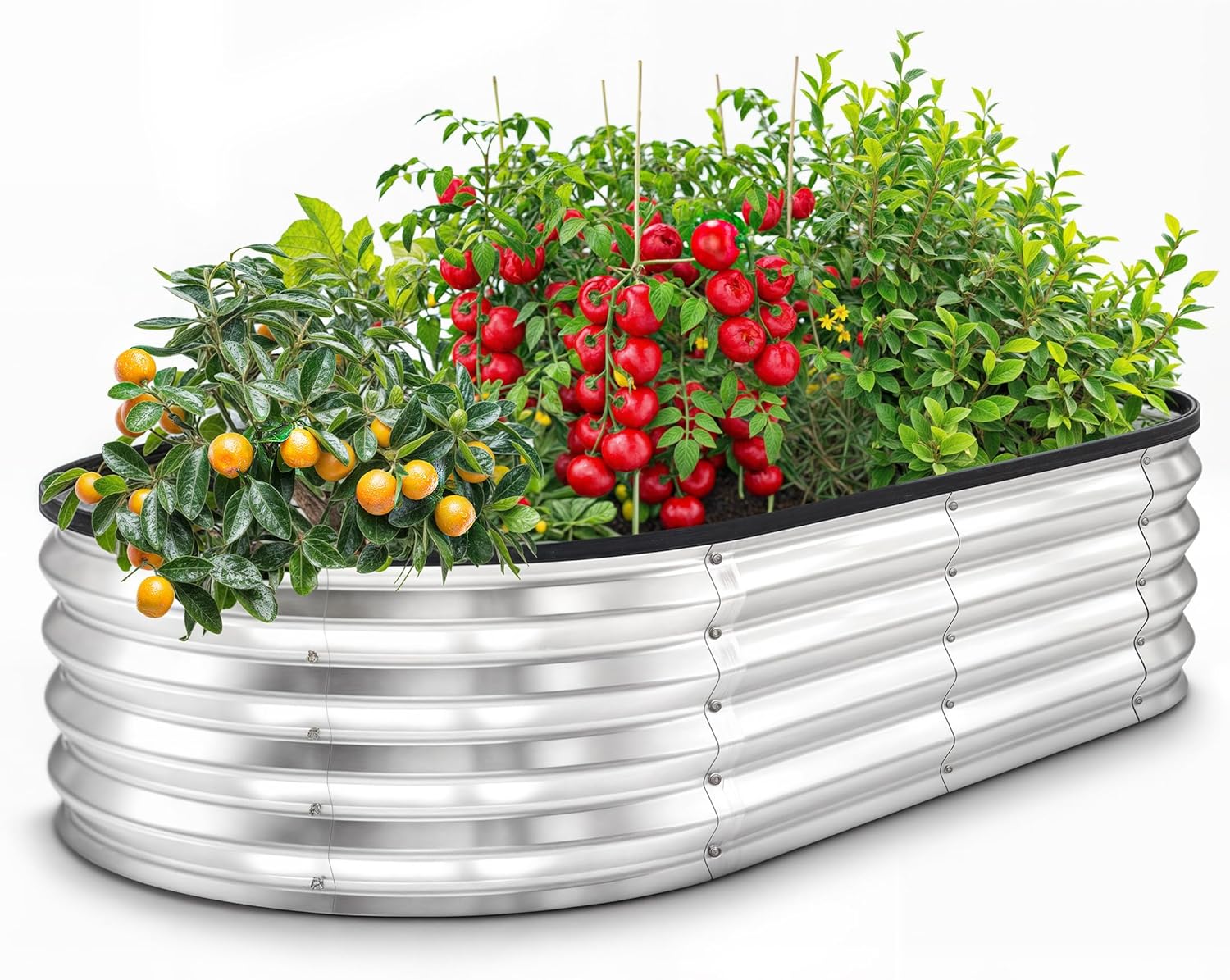
This Utopia Home galvanized raised garden bed is a simple, no-frills metal planter that turns a patch of yard or patio into a contained growing area. The kit arrives as flat panels that lock together around an open base so roots can grow into the ground while the box keeps soil and beds organized. Made from powder-coated alloy steel and described as lightweight, it is corrosion-resistant compared with untreated metal and includes a center support strip for added rigidity. Typical uses are starting vegetables, herbs, or flowers where you want clearer edges, better drainage, and less bending to tend plants. Assembly is straightforward and tool-light, so it is practical for quick seasonal setups or moving around the yard. Limitations are its modest 4 x 2 ft footprint and single-level depth, which limits the number of plants and makes it better for shallow-rooted crops; heavier-duty raised beds with thicker panels or built-in liners will suit long-term heavy use better than this lighter kit.
Best for: Buyers looking for an inexpensive, easy-to-assemble raised bed to start vegetables or herbs in small outdoor spaces and who prioritize low upfront cost and portability.
Less Ideal for: People who need large or permanent heavy-duty beds for long-term, high-yield vegetable production or who prefer deep, multi-level planters.
- Galvanized alloy steel with powder coat offers rust resistance for outdoor use.
- Open-base design allows roots to grow into native soil and improves drainage.
- Lightweight panels make assembly and relocation easy for seasonal use.
- Center support strip increases rigidity compared with basic panel-only kits.
- Small 4 x 2 ft footprint limits planting area for larger vegetable gardens.
- Lightweight construction is less robust than thicker steel or heavy-duty wooden beds.
Verdict: A budget-friendly, rust-resistant galvanized steel raised bed that is quick to assemble and easy to move, ideal for small-scale vegetable and herb gardening.
SnugNiture Galvanized Raised Garden Bed, 4x2x1 ft Oval Metal Planter Box

| Capacity | 7.68 cubic feet |
|---|---|
| Material Type | Metal |
| Other Special Features of the Product | Drainage Hole |
| Mounting Type | Floor Standing |
| Indoor Outdoor Usage | Outdoor |
This SnugNiture galvanized raised garden bed is a simple, no-frills metal planter built for outdoor vegetable and herb growing. The oval, open-bottom design is intended to sit directly on soil so roots can access native ground and excess water drains naturally. Made from painted or coated galvanized steel with folded panel edges and a protective rubber strip, it aims to resist corrosion and reduce sharp edges during planting and maintenance. Assembly is straightforward with included components and basic instructions, and the wavy panel plus horizontal pull rods add rigidity so the bed holds its shape under load. At about 12 inches tall it provides a shallow but usable planting depth suited to shallow-rooted vegetables, salad greens, and herbs. It is lightweight for easy repositioning but that also means it will rely on the soil and the pull rods for long-term stability rather than heavy mass. If you want an affordable, durable metal option for creating a tidy vegetable patch on a patio or lawn, this bed delivers practical functionality with minimal fuss.
Best for: Gardeners who want an inexpensive, durable metal raised bed to grow vegetables and herbs in a patio or backyard with minimal setup and maintenance.
Less Ideal for: Growers who need deep, high-capacity beds for root crops or who want a heavy, permanent structure that will not move once placed.
- Galvanized steel construction resists rust for outdoor use
- Open-bottom design allows natural drainage and root extension into native soil
- Protective rubber strip and folded edges reduce sharpness and improve safety
- Wavy panel and horizontal pull rods increase structural stability
- Includes components and clear instructions for easy assembly
- Only about 12 inches tall, which limits planting depth for deep-rooted vegetables
- Lightweight build may shift on uneven ground without added anchoring
Verdict: A budget-friendly, galvanized metal raised bed that gives patio and backyard gardeners a durable, easy-to-assemble planting solution for vegetables and herbs.
Vego Garden 17" Tall Modular Metal Raised Garden Bed Kit (8ft x 2ft)

| Material Type | Metal |
|---|---|
| Finish Types | Powder Coated |
| Capacity | 23 cubic feet |
| Number of Pieces | 20 |
| Indoor Outdoor Usage | Outdoor |
This Vego Garden raised bed kit is a modular metal planter designed for growing vegetables and flowers without bending to ground level. The 9-in-1 system assembles into multiple layouts so you can build an 8ft x 2ft oval bed or reconfigure panels to fit different garden footprints. Constructed from a Zn-Mg-Al coated steel with a powder-coated finish, the kit is marketed for long durability and corrosion resistance and includes rubber edging to cover panel edges for safer handling. At 17 inches deep it gives room for healthy root development and better drainage compared with shallow containers, which makes it suitable for most common vegetables. Installation is straightforward and uses fasteners and preformed panels so no specialized carpentry is required, though assembly of 20 pieces still takes time and two people make alignment easier. The system accepts add-ons such as trellises, covers, and irrigation to expand functionality, but those accessories are sold separately. This is a solid, low-maintenance option if you want a long-lasting, reconfigurable metal raised bed for productive vegetable planting.
Best for: Gardeners who want a durable, reconfigurable raised bed that supports productive vegetable growing and reduces bending while working. It suits practical owners who value long-term weather resistance and modular flexibility over a quick, one-piece planter.
Less Ideal for: People who need a ready-to-plant, lightweight single-piece container or those who prefer untreated wood or plastic planters for aesthetic or budget reasons.
- Modular 9-in-1 design lets you reconfigure layout to fit different garden spaces
- 17" planting depth supports deeper root systems and improved drainage for vegetables
- Powder-coated, Zn-Mg-Al treated steel construction for weather resistance and long life
- Rubber-edged panels reduce sharp edges for safer handling during assembly
- Accessories like trellises, covers, and irrigation are not included and must be purchased separately
- Assembly involves multiple panels and fasteners so it requires time and at least one helper
Verdict: A durable, 17" deep modular metal raised bed that gives serious vegetable growers a reconfigurable, low-maintenance planting system.
Land Guard Galvanized Oval Raised Garden Bed Kit (4×2×1 ft)

| Material Type | Metal |
|---|---|
| Finish Types | Double-layer galvanized |
| Capacity | 7.14 cubic feet |
| Mounting Type | Floor Standing |
This Land Guard raised garden bed is a simple, durable option for planting vegetables, herbs, or mixed annuals in a compact outdoor space. The kit arrives as flat panels that assemble into an oval planter about 4 by 2 feet and 1 foot deep, and setup is straightforward so you can fill and plant in minutes. Its double-layer galvanized steel construction and wave-shaped panels are intended to resist corrosion and add rigidity, and the manufacturer states thicker panels at stress points to reduce deformation. An open base design lets excess water drain and helps avoid root rot if placed on soil or lawn. Practical benefits include low maintenance, a tidy planted border that keeps soil contained, and a metal finish that lasts longer than untreated steel. Limitations are the shallow depth for deep-rooted crops and the likelihood the metal will warm quickly in hot sun, which may require more frequent watering or shade management. It is best used as a portable, long-lasting planter for raised-bed style container gardening rather than a full replacement for deeper in-ground beds.
Best for: Gardeners who want a quick-to-assemble, durable raised planter to grow vegetables or herbs in small outdoor spaces and who prioritize evidence of longevity over decorative complexity.
Less Ideal for: Growers who need deep soil for large root crops, or those looking for insulated or fully enclosed beds to control soil temperature and moisture long-term.
- Galvanized double-layer steel resists corrosion for multi-season outdoor use
- Oval, interlocking panel design assembles quickly with included tools
- Open base allows natural drainage to reduce standing water and root rot
- Compact footprint fits small patios, balconies, and tight garden beds
- Only 12 inches deep which limits planting of larger, deep-rooted vegetables or shrubs
- Metal surface can heat up in full sun and increase watering needs
Verdict: A tough, easy-to-assemble galvanized oval raised bed that gives small-space gardeners a durable, low-maintenance container for vegetables and herbs.
Land Guard 2-Pack Galvanized Raised Garden Beds (4×2×1 ft)

| Material Type | Galvanized Metal |
|---|---|
| Capacity | 54 gallons |
| Included Components | 2x Planter, Instruction manual, Tools |
| Set Name | Land Guard 2-Pack Raised Garden Bed Set |
These Land Guard raised beds are a straightforward option for growing vegetables and herbs in a backyard or patio. Each set includes two 4×2×1 ft galvanized steel planters that assemble with the supplied nuts and bolts; the metal panels and hardware create a sturdy, low-maintenance frame that will hold soil and seedlings easily. The open-bottom design sits directly on the ground so soil can interface with the native soil for drainage and root expansion while helping reduce standing water and weed intrusion. The thickened zinc galvanizing is intended to resist rust and weathering, which makes the beds suitable for season-long outdoor use with typical vegetable crops. Expect simple installation and durable performance, but keep in mind these are shallow beds better suited to shallow-rooted vegetables, herbs, and annuals rather than deep-rooted perennials or large root crops. Also plan for soil settlement over time and use good-quality compost to maximize fertility in the smaller soil volume.
Best for: Buyers who want a low-maintenance, durable raised bed to reliably grow vegetables and herbs in a small yard or patio and prefer a product that is straightforward to assemble and weather-resistant.
Less Ideal for: Gardeners who need deep soil for large root vegetables, long-term perennial beds, or who want larger single raised beds for extensive vegetable production.
- Galvanized steel with thick zinc coating provides corrosion and weather resistance
- Open-bottom design improves drainage and allows root access to native soil
- Comes as a two-pack with hardware and instructions for easy assembly
- Shallow footprint fits small yards, patios, and raised-row vegetable planting
- 12-inch depth limits suitability for deep-rooted vegetables and large root crops
- Metal sides can heat more than wood or fabric beds in full sun
Verdict: A practical, rust-resistant two-pack of shallow galvanized raised beds that makes establishing dependable vegetable and herb beds quick and low-maintenance.
Choosing the Right Raised Bed Vegetables: Key Factors to Consider
Root Depth and Soil Volume
Root depth determines whether a vegetable will reach the nutrients and moisture it needs inside a raised bed. Many raised beds are 8 to 12 inches deep, so shallow-rooted greens and compact root crops perform much better than deep-rooted plants.
If you choose crops with conservative root systems, you can plant more densely and use shallower beds. For deeper-rooted vegetables, plan for beds that are at least 12 to 18 inches or consider deeper planters. Remember that root-bound stress reduces yield and increases susceptibility to drought and nutrient deficiencies.
Spread and Growth Habit
The horizontal space a plant needs affects spacing and how many plants a raised bed can hold. Vining or sprawling crops can quickly crowd neighbors and shade low-growing plants, reducing overall productivity.
Select compact, bush, or dwarf habit varieties when space is limited, or allocate trellising along bed edges for vertical growers. Matching growth habit to bed layout helps maintain airflow, simplifies pest monitoring, and makes harvesting easier.
Watering Needs and Drainage
Raised beds often drain more quickly than in-ground soil, which means they can dry out faster in hot weather. Vegetables sensitive to inconsistent moisture may bolt, drop blooms, or produce poor-quality fruit if watering is irregular.
Consider crops that tolerate slight moisture fluctuation or adapt your watering system with drip irrigation or frequent hand checks. Good soil mix with moisture-retentive organic matter helps stabilize water availability, while ensuring proper drainage prevents root rot.
Nutrient Demand and Fertility Management
Because raised beds contain a limited volume of soil, nutrient reserves are finite and can be exhausted by heavy-feeding vegetables. High-demand crops may require regular side-dressing or incorporated compost to sustain production across the season.
Plan a fertility routine based on crop needs: light feeders can rely on an initial rich soil mix, whereas heavy feeders benefit from periodic applications of balanced fertilizer and compost. Monitoring plant vigor and leaf color is a quick way to spot nutrient shortfalls early.
Pest and Disease Pressure
Plants in raised beds are not immune to insects and fungal diseases, and dense planting can increase humidity and disease spread. Choosing varieties with good disease resistance reduces the need for interventions and keeps yields steadier.
Rotate plant families between beds where possible and remove crop debris promptly. Use physical controls like row covers for early-season pests and prioritize varieties known to set well under local disease pressure.
Season Length and Harvest Timing
Time to maturity affects how well a crop fits into a raised bed plan, especially if you want multiple successions in a single season. Faster-maturing vegetables let you harvest and replant, increasing total seasonal production.
Match variety days-to-harvest to your local frost dates and think about succession and interplanting strategies to keep beds productive. Consider cool-season crops for spring and fall and quick-turn warm-season crops for mid-summer fills.
Best Soil Mixes for Raised Bed Vegetables
A well-draining, fertile soil mix is the foundation of raised bed success. Aim for a blend that holds moisture without becoming waterlogged and includes a balance of organic matter, mineral components for structure, and a light amount of soluble nutrients.
Amend with compost to supply slow-release nutrients and beneficial microbes. For moisture retention, include components like coconut coir or well-rotted compost, and add coarse sand or grit if your mix tends to compact. Refresh the top few inches with compost between seasons to maintain fertility.
- Target a loose, crumbly texture that roots can penetrate easily
- Avoid heavy native topsoil as a sole component in shallow beds
- Topdress with compost midseason for heavy feeders
Planting Layouts and Square-Foot Strategies
Raised beds reward thoughtful layout because every square foot is valuable. Use square-foot gardening principles to mix fast-maturing crops with slower growers and to stagger plantings for continuous harvest.
Group plants by height and water requirement to simplify irrigation and reduce shading. Position tall trellised crops at the north edge so they do not cast shade across sun-loving beds.
- Interplant quick radishes or lettuces between slower-growing brassicas
- Reserve bed edges for vining crops trained vertically
- Leave room for hand access and harvesting paths
Season Extension and Cold-Season Options
Raised beds warm up faster in spring and can be combined with row covers, low tunnels, or cloches to extend the season. This makes cold-tolerant vegetables especially valuable for early and late harvests.
Choose varieties that set well in cool soil and consider succession plantings to fill gaps when warm-season crops finish. Using covers during cold snaps protects transplants and allows an earlier start.
- Use mini-hoops and fabric covers to protect seedlings from frost
- Plant cold-hardy greens for fall and early spring production
- Stagger sowings to smooth harvest curves
Managing Fertility in Confined Soil
Because raised beds hold a finite amount of soil, fertility must be managed deliberately. A single application of rich mix at planting is often insufficient for long-season heavy feeders.
Incorporate slow-release amendments at planting and plan light sidedressings of compost or balanced fertilizer every few weeks for high-demand crops. Mulching reduces nutrient loss and helps maintain even moisture.
- Topdress with compost between crops
- Use controlled-release fertilizers if you prefer low-maintenance feeding
- Monitor plant performance and adjust feeding as needed
Accessibility and Bed Height Considerations
Raised beds can be built at a variety of heights to suit mobility needs and gardening comfort. Taller beds reduce bending and are especially useful for gardeners with back issues or limited mobility.
Keep in mind that taller beds will contain more soil and thus may require more initial amendment, but they also support deeper-rooted crops if you plan to grow them. For small patios, compact shallow beds can still host many productive vegetables.
- Choose bed depth based on root needs of intended crops
- Consider waist-height beds for ergonomic harvesting
- Balance bed height with space and soil amendment logistics
How We Chose the Best Raised Bed Vegetables
We prioritized raised bed suitability by focusing on traits that affect performance in limited soil volume and container-style beds. Key evaluation criteria included root depth and spread to ensure compatibility with common raised bed depths, productivity per square foot to favor varieties that maximize harvest in small areas, and tolerance for frequent watering cycles since raised beds drain faster than in-ground plots. We also assessed disease resistance and vigor because high-density planting in beds can increase disease pressure, and assessed ease of succession planting to support continuous harvests. Excluded items included crops that require deep in-ground rooting, large sprawling growth habit that cannot be contained in a typical bed, or varieties that need extensive trellising beyond what most raised beds can support. We considered both beginner-friendly and experienced-gardener options, emphasizing varieties that reliably set fruit or heads in common raised bed conditions. The final list reflects plants that balance yield, manageability, and consistent performance in raised bed systems.
FAQ
How deep should a raised bed be for most vegetables?
Many leafy greens and shallow-rooted vegetables do well in 8 to 12 inches of soil. For root crops like carrots or larger plants, aim for 12 to 18 inches. Depth needs depend on the crop's root system and whether you plan succession planting.
Can I grow tomatoes and peppers in raised beds?
Yes. Tomatoes and peppers adapt well to raised beds if the bed is deep enough and soil fertility is maintained. Provide support or staking and regular feeding because they are heavier feeders than many greens.
How often should raised bed vegetables be watered?
Frequency depends on weather, soil mix, and crop. In warm weather, shallow beds may need daily checks and watering every one to three days. Using mulch and a moisture-retentive soil mix reduces watering frequency.
Is crop rotation necessary in raised beds?
Rotation helps reduce disease and nutrient depletion even in raised beds. If space is limited, rotate plant families between seasons when possible and practice good sanitation and soil replenishment.
What are good short-season vegetables for quick harvests?
Fast-maturing lettuces, radishes, baby greens, and early bush beans are typical quick-turn crops. These let you harvest and replant within a single season to maximize bed productivity.
Should I use potting mix or garden soil in raised beds?
Avoid using only heavy garden soil in shallow beds because it can compact and drain poorly. A blended raised bed mix with compost, mineral components, and some moisture-retentive material gives the best balance for vegetables.
Final Verdict
Choosing the right vegetables for raised beds comes down to matching plant habit and root demands to your bed depth, available sunlight, and how much time you will spend on watering and fertility. Favor compact, quick-maturing, and disease-tolerant varieties when space is tight, and plan for extra fertility when growing heavy feeders. Prioritize soil quality, sensible layout, and a watering plan to maximize yields from limited space. With those tradeoffs in mind, you can confidently select vegetables that make the most of your raised beds and keep harvests steady throughout the season.
