

Note: This article contains affiliate links. If you click on these links and make a purchase, I may earn a small commission at no extra cost to you. This helps support my research and content. Read my full affiliate disclosure here.
If you want steady heads of lettuce without a full garden plot, the right planter for lettuce makes all the difference. A properly sized container controls soil depth, moisture, and root space so you get tender, fast-maturing leaves whether you grow on a balcony, patio, or in-ground raised bed. This guide covers six shortlisted planters for lettuce chosen for real garden performance. We focus on easy drainage, appropriate soil volume, and practical handling so you can pick a container that fits your space and growing style. Below we summarize what matters and why, then walk through complementary topics to help you plant with confidence.
Top Picks at a Glance
| Best Overall The best all-around choice for most situations | LEETOLLA 31.6" Elevated Raised Garden Bed with Wheels and Storage Shelf |  |
| Best Quality Built to a higher standard if you want something more solid | GreenStalk 5-Tier Vertical Garden Planter with Internal Self-Watering System |  |
| Best Value The sweet spot between price and what you get | Cavisoo 10‑Gallon Fabric Grow Bags (5‑Pack) |  |
| Best Budget The cheapest option that still gets the job done reliably | Land Guard 4-Pack 5-Gallon Nonwoven Fabric Grow Bags with Handles |  |
| Highest Rated A top-rated pick with lots of positive feedback | Veradek Demi Series Long Planter (30 inch) – 2 Pack |  |
| Most Popular A crowd favorite that many people choose with confidence | CHUKEMAOYI Plastic Window Box Planters, 7-Pack |  |
LEETOLLA 31.6" Elevated Raised Garden Bed with Wheels and Storage Shelf

| Capacity | 2.5 cubic feet |
|---|---|
| Number of Levels | 2 |
| Material Type | Iron |
| Indoor Outdoor Usage | Indoor, Outdoor |
| Other Special Features of the Product | 2 universal wheels + 2 stabilizing feet, 5 drainage holes + 2 cross-lines, Handle Bar, Storage Shelf |
This LEETOLLA elevated raised bed lifts container gardening to waist height so you can plant, water, and harvest without kneeling. It is built from painted iron with a powder-coat finish, includes two all-terrain wheels and an ergonomic handle for moving the filled bed, and has a lower shelf for tools or extra pots. The planting area holds about 2.5 cubic feet of soil and features five drainage holes plus cross-channels to help prevent waterlogging. Assembly is straightforward with the included hardware and takes roughly 30 to 45 minutes with two people. Practical benefits include reduced back strain, mobility to follow sun patterns or shelter plants from storms, and tidy storage on the attached shelf. Limitations are the metal construction, which will require touch-up care over time to avoid surface rust in very wet or coastal conditions, and the relatively narrow planting depth compared with deep beds, so very large root crops may be less suitable. The unit fits small balconies and patios but is best for mixed vegetables, herbs, and compact varieties rather than large, heavy crops.
Best for: Buyers who want comfortable, low-effort vegetable or herb gardening on a balcony, patio, or small yard and prioritize mobility and ease of use over maximal soil depth.
Less Ideal for: Gardeners seeking very deep beds for large root vegetables or those who prefer untreated wood or plastic planters that do not require metal maintenance.
- Elevated height reduces bending and kneeling for easier planting and harvesting
- Two large wheels and a handle let you reposition the bed to follow sun or avoid bad weather
- Built-in drainage holes and cross-channels reduce risk of overwatering
- Lower storage shelf keeps small tools and supplies handy
- Powder-coated iron construction for sturdier, decorative outdoor use
- Metal finish can require periodic touch-up to prevent corrosion in very wet or salty environments
- Planting depth is modest so very deep-rooted crops may be limited
Verdict: A mobile, waist-height metal raised bed that makes growing herbs and compact vegetables easier by cutting bending and letting you move plants to the best light.
GreenStalk 5-Tier Vertical Garden Planter with Internal Self-Watering System

| Number of Levels | 5 |
|---|---|
| Capacity | 120 quarts |
| Material Type | BPA-Free Food Grade Polypropylene Plastic #5 |
| Other Special Features of the Product | Self Watering |
| Mounting Type | Floor Standing |
The GreenStalk 5-Tier Vertical Garden Planter is a soil-based, stackable planter that lets you grow multiple crops in a small footprint using a patented internal watering reservoir. Typical use is outdoor container gardening for strawberries, herbs, lettuces and compact vegetables; you assemble the tiers, fill each with potting mix, then fill the top reservoir to water all levels evenly. Notable features include BPA-free, UV-resistant plastic construction, a 5-tier layout that holds a substantial planting volume, and a self-watering system that reduces the need for daily hand watering. Practical benefits are efficient vertical use of space, consistent moisture distribution to lower tiers without over-saturating the top, and durable materials backed by a five-year crack/fade guarantee for outdoor exposure. Important limitations are that it is a soil-based system so it requires regular potting mix replenishment and does not support hydroponics or electricity-based automation, and its vertical design is better for shallow-rooted plants rather than large indeterminate tomatoes or heavy root crops without additional support.
Best for: Gardeners who prioritize reliable, low-maintenance production of strawberries and other small edibles in tight outdoor spaces and want consistent watering without daily fuss.
Less Ideal for: Growers seeking hydroponic setups, automated irrigation with timers, or those planning to grow very large, heavy root crops in the same planter.
- Patented internal reservoir waters all five tiers from the top for even moisture distribution
- Made from BPA-free, UV-resistant polypropylene with a five-year outdoor durability guarantee
- Compact vertical footprint maximizes planting area for small gardens, balconies, and patios
- Soil-based design works with regular potting mix—no special nutrients or power required
- Not suitable for hydroponic growing or automated, electricity-driven systems
- Better for shallow-rooted or compact plants; large, heavy-rooted crops may need extra support
Verdict: For small-space growers who want reliable, low-effort strawberry production, this 5-tier self-watering planter delivers consistent moisture and durable outdoor performance.
Cavisoo 10‑Gallon Fabric Grow Bags (5‑Pack)
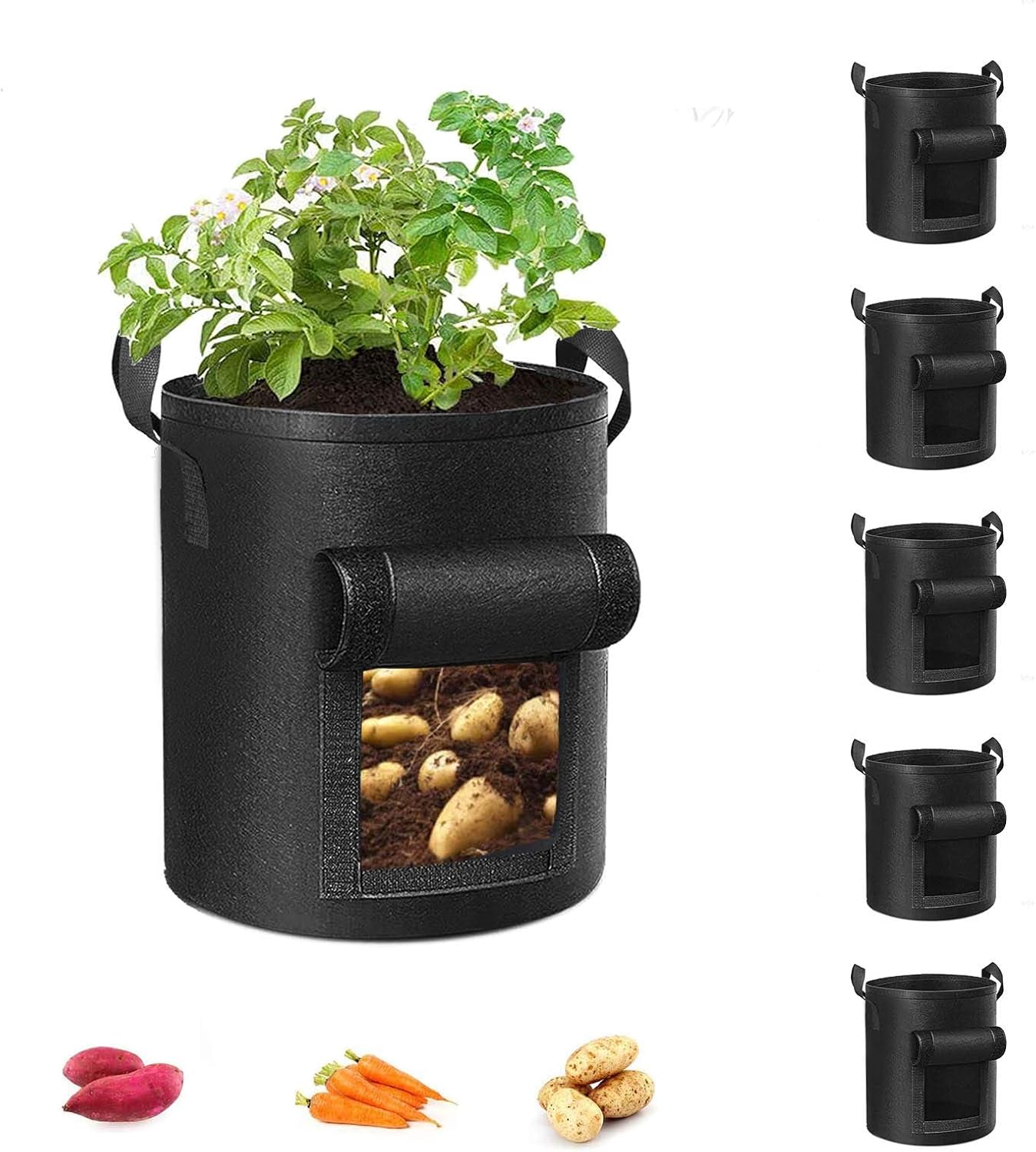
| Capacity | 10 gallons |
|---|---|
| Unit Count | 5 |
| Material Type | Fabric |
| Other Special Features of the Product | Drainage Hole |
| Indoor Outdoor Usage | Outdoor |
These Cavisoo fabric grow bags are basic, reusable containers intended for planting vegetables and small leafy greens outdoors. Made from thick 300g nonwoven fabric, each 10‑gallon bag breathes and drains well, which helps prevent waterlogging and root circling while keeping soil aerated. The set includes reinforced polypropylene webbing handles with X‑stitched seams so you can move filled bags short distances and position them on a patio or balcony. A visual harvesting window is useful for crops grown belowground, and the lightweight, washable fabric makes storage between seasons simple. For lettuce specifically, the 10‑gallon size gives enough volume for several plants or a small dense planting, and the breathable sides help moderate soil temperature and moisture. Limitations are that these are outdoor bags only and will require regular watering compared with buried beds, and their fabric construction means they need a flat, well‑draining surface to avoid excessive sagging when full of soil.
Best for: Buyers who want a practical, reusable container solution for outdoor vegetable or lettuce beds and value good drainage and easy storage between seasons.
Less Ideal for: Those seeking a rigid decorative planter or an indoor hydroponic setup should consider rigid pots or purpose-built indoor systems instead.
- Breathable 300g nonwoven fabric improves drainage and prevents root circling
- Reinforced X‑stitched handles allow easier repositioning when filled
- Reusable and washable construction for multiple seasons
- Visual harvesting window useful for checking root crops and soil level
- Fabric sides can sag when filled so bags need a flat, supportive surface
- Designed for outdoor use only, not specified for indoor setups
Verdict: A durable, breathable five‑pack of 10‑gallon fabric grow bags that gives practical, reusable outdoor container space ideal for growing lettuce and other vegetables.
Land Guard 4-Pack 5-Gallon Nonwoven Fabric Grow Bags with Handles

| Capacity | 18.93 liters |
|---|---|
| Number of Pieces | 4 |
| Material Type | Nonwoven Fabric |
| Other Special Features of the Product | Breathable |
| Indoor Outdoor Usage | Outdoor |
These Land Guard grow bags are simple, inexpensive containers for growing herbs and small vegetables in limited space. The nonwoven fabric lets air and water pass through the soil, which reduces root circling and improves drainage so herbs like basil, parsley, and thyme establish healthier root systems. Each set includes four 5‑gallon bags with reinforced handles that make moving filled bags easier for repositioning or harvesting. The material is lightweight and folds flat for storage when not in use, and the breathable fabric provides modest insulation for roots during warm weather. Expect them to last multiple seasons with gentle use but know they are not indestructible; rough edges, constant sun exposure, or heavy abrasion can shorten their life. These are best for small-scale container herb gardens on patios, balconies, or raised beds where cost and portability matter more than decorative appearance or long-term commercial durability.
Best for: Budget-minded home gardeners who want an easy, portable way to grow several culinary herbs in containers on a patio, balcony, or small garden area.
Less Ideal for: Those seeking decorative or long-lasting hard planters for permanent displays or commercial growers who need very heavy-duty containers.
- Breathable nonwoven fabric improves drainage and reduces root circling.
- Includes reinforced handles for easier lifting and repositioning filled bags.
- Pack of four gives multiple planting spots for a small herb collection.
- Lightweight and foldable for compact storage when not in use.
- Material is not as durable as rigid planters and can wear faster with heavy use.
- Not decorative—plain utilitarian look that may not suit all outdoor aesthetics.
Verdict: An affordable, practical set of breathable 5‑gallon grow bags that gives budget gardeners a quick way to start a small container herb garden.
Veradek Demi Series Long Planter (30 inch) – 2 Pack

| Capacity | 53.7 liters |
|---|---|
| Number of Pieces | 2 |
| Material Type | Plastic-stone composite |
| Other Special Features of the Product | UV Resistant, Weather Resistant |
| Mounting Type | Floor Standing |
The Veradek Demi Series Long Planter comes as a two-pack of 30-inch rectangular troughs intended for outdoor use. Made from a patented plastic-stone composite, these planters are lightweight yet built to resist UV, cracking, scratching, and weather extremes, so they will reliably hold up through seasonal changes. Each unit includes pre-drilled drainage holes which help prevent overwatering and root rot, making them practical for shallow-rooted crops like lettuce. The modern fluted finish provides a clean aesthetic for patios or balconies while the 53.7 liter capacity per planter gives enough soil volume to support multiple lettuce plants or a continuous harvest along the length. Because they are designed for floor standing use and are frost- and heat-resistant across a wide temperature range, you can expect steady performance in most climates. The main limitations are that the planters are relatively shallow for deep-rooted vegetables and they come as a fixed two-pack, which may be more than a small-space gardener needs.
Best for: Gardeners who prioritize durable, low-maintenance outdoor containers for reliable seasonal use and want a clean, modern trough to grow compact crops like lettuce on patios or balconies.
Less Ideal for: Growers who need deep single large beds for tap-rooted vegetables or those who want a single planter rather than a matched two-pack.
- Plastic-stone composite resists UV, cracking, and weather for long-term outdoor durability
- Pre-drilled drainage holes reduce risk of overwatering and root rot
- Lightweight enough to move while sturdy enough for outdoor use
- Generous soil capacity suitable for multiple lettuce plants along the trough
- Shallow profile compared with deep garden beds limits suitability for deeper-rooted crops
- Sold only as a two-pack which may be excess for very small patios
Verdict: Choose these tough, weather-resistant troughs when you want reliable, low-maintenance planters ideal for growing lettuce on a patio or balcony.
CHUKEMAOYI Plastic Window Box Planters, 7-Pack

| Material Type | Plastic |
|---|---|
| Capacity | 12.13 liters |
| Number of Pieces | 7 |
| Mounting Type | Window Mount |
| Indoor Outdoor Usage | Outdoor |
These CHUKEMAOYI window box planters are a practical, budget-friendly option for growing herbs and small vegetables on windowsills, balconies, or patios. Each rectangular planter is made of lightweight, durable plastic and includes a removable saucer and built-in drainage holes so excess water can escape while the tray helps prevent mess. The 16.6 by 7 by 5.9 inch footprint and roughly 12 liter capacity give enough soil volume for herbs, lettuce, baby greens, and small root vegetables like radishes. Because they are plastic and polished, they resist weathering and are easy to wipe clean between seasons. The seven-pack is convenient for creating a row of containers or using multiple varieties side by side. Limitations to note are the shallow depth for larger root crops and the lack of heavy-duty materials if you need a planter that will withstand rough handling or very hot sun long-term. For simple, low-cost vegetable container gardening where portability and easy maintenance matter, these boxes cover the basics well.
Best for: Buyers who need an affordable, space-saving solution to grow herbs and small vegetables on windowsills, balconies, or small patios and prefer lightweight, easy-to-move containers.
Less Ideal for: Gardeners who want deep beds for large root crops or who need heavy-duty, long-lasting materials for permanent outdoor installations should look elsewhere.
- Seven-pack provides multiple containers for planting several vegetables or herbs
- Lightweight plastic construction resists chipping and is easy to move
- Built-in drainage holes with attached saucers help prevent overwatering and spills
- Smooth polished surface is simple to clean between plantings
- Shallow depth limits use to shallow-rooted vegetables and herbs
- Plastic may degrade sooner than heavier materials under prolonged intense sun
Verdict: A low-cost, lightweight seven-pack of window boxes that makes starting a small vegetable or herb container garden simple and affordable.
Choosing the Right Planter for Lettuce: Key Factors to Consider
Drainage and Water Retention
Lettuce prefers consistently moist but not waterlogged soil, so a planter must remove excess water while holding enough moisture between waterings. Look for multiple drainage holes or a design that channels runoff away from roots. Some planters include a built-in reservoir; these can reduce daily watering but may increase the risk of root rot if not managed.
Drainage placement matters too. Holes positioned across the bottom allow uniform outflow, while side drainage or elevated feet improve airflow under the container. Consider how your watering habits and local rainfall interact with the planter's drainage to avoid soggy conditions that stress lettuce plants.
Soil Volume and Root Depth
Most head and loose-leaf lettuce need modest soil depth to develop a healthy root system. A planter with too little soil dries quickly and limits growth, while an overly deep container wastes space and retains more water than necessary. Aim for soil depth that supports 6 to 8 inches of active root zone for quick-maturing lettuces.
Soil volume also affects how many plants you can grow together. Higher volume improves nutrient buffering and reduces the frequency of feeding, which is helpful if you plan multiple successive sowings. Consider the planter's internal shape as well; narrow, deep pots behave differently from shallow, wide trays when it comes to moisture and root spread.
Material and Weather Resistance
Planters are exposed to sun, cold, and repeated wet-dry cycles, so material choice affects longevity and plant health. Plastic containers are lightweight and retain moisture longer but can become brittle under strong UV unless UV-stabilized. Terracotta breathes and reduces overwatering risk but loses moisture faster and can crack if frozen.
Metal planters heat quickly in sun and may stress shallow-rooted lettuce unless insulated or shaded. Fabric grow bags offer excellent drainage and air pruning of roots but need more frequent watering. Choose materials that match your climate and how often you can tend the plants.
Placement, Shape, and Space Efficiency
Where you plan to grow lettuce-balcony, windowsill, rooftop, or garden bed-determines the ideal planter shape and size. Wide, shallow planters allow multiple plants in a single unit and promote even light exposure. Tall, narrow pots save floor space but restrict root spread and can dry out faster.
Consider how the planter fits railing brackets, shelves, or narrow ledges. Some designs allow vertical stacking or attach to walls to increase production in limited footprints. Also think about sun patterns: portable planters that can be moved for shade or to follow light through the season are useful for temperature-sensitive lettuce.
Ease of Use and Maintenance
Regular tasks like sowing, thinning, watering, and harvesting should be straightforward with the planter you pick. Wide openings make planting and harvesting easier, while integrated water-level indicators or removable liners simplify maintenance. Ease of cleaning between crops is important to reduce soil-borne disease; smooth, non-porous surfaces and removable parts save time.
Also check whether the planter needs special liners, saucers, or stands. Planters that allow quick swapping of planting medium or that are easy to tip and clean help you maintain healthy successive crops of lettuce.
Weight and Portability
Weight matters both empty and filled. A heavy planter is stable in wind but harder to move for frost protection or repositioning. If you expect to relocate containers during the season, choose models with handles, lightweight materials, or modular sections that detach. Consider how filled weight affects balcony load limits or whether you will need a dolly for movement.
Portability also ties into storage: foldable fabric planters or stackable plastic troughs can be stored compactly off-season. Prioritize the balance between stability and ability to move containers as your garden microclimate changes.
Best Planter Sizes for Different Lettuce Types
Loose-leaf varieties tolerate closer spacing and shallow soil, so a 6 to 8-inch deep tray can work well for continuous harvests. Head lettuces develop larger roots and benefit from deeper, wider planters that give each plant room to form a head without competition.
If you grow a mix of types, choose a modular approach: shallow trays for baby greens and deeper pots for heading types. This allows you to manage watering differently for each group and reduces transplant shock when moving seedlings into larger containers.
- Shallow trays: good for microgreens and baby leaf lettuce
- Medium troughs: balance spacing for multiple plants
- Deep pots: best for full-sized heading lettuces
Soil Mix and Amendment Tips for Container Lettuce
A light, well-draining potting mix with good organic matter supports quick growth and easy watering. Add compost for nutrients and a small amount of slow-release fertilizer if you plan a longer crop cycle. Perlite or coarse sand improves drainage in denser mixes.
Refresh the top few inches of soil between successive plantings or replace the mix every growing season to avoid compaction and nutrient depletion. For continuous sowing, consider a slightly higher nutrient starter at planting followed by weekly light feedings.
- Use a mix that drains but holds moisture
- Include compost for steady nutrients
- Amend annually to prevent compaction
Watering Strategies for Container Lettuce
Containers dry out faster than beds, so set a watering routine based on planter size and local weather. Small shallow planters may need daily checks in warm weather, while deeper containers might only need watering every few days. Water early in the day to reduce evaporation and fungal risk.
Mulching the soil surface with shredded leaves or straw reduces surface evaporation and keeps young roots cool. For busy gardeners, use self-watering features or capillary mats sparingly and monitor for over-saturation.
- Water frequency depends on soil volume and heat
- Morning watering reduces fungal problems
- Mulch conserves moisture and keeps roots cool
Protecting Container Lettuce From Heat and Cold
Lettuce is cool-season tolerant and bolts quickly in heat. Use shade cloth, moving planters to shaded areas during peak sun, or sow heat-tolerant varieties in late spring. In cold snaps, group containers and cover them with frost cloth or move them to protected locations.
Insulating larger plastic or metal containers with foam or straw minimizes root temperature swings. Portable planters are easier to shelter under eaves or into a garage during unexpected weather extremes.
- Use shade cloth in hot weather
- Group and insulate pots for cold protection
- Move portable planters for short-term weather control
Maximizing Yield in Small Spaces
Stagger sowings every two to three weeks and use shallow planters for baby greens to keep a steady supply without crowding. Vertical solutions like tiered planters or wall-mounted troughs increase planting area while keeping each lettuce within easy reach.
Use succession planting and interplanting with compatible crops that do not shade lettuce to maximize production. Keep close tabs on nutrient levels in containers since limited soil can deplete quickly with successive crops.
- Succession sow every 2-3 weeks for continuous harvest
- Use vertical or tiered planters to expand area
- Avoid shading lettuce with taller companions
How We Chose the Best Planter for Lettuce
We evaluated planters for lettuce using criteria that reflect real garden use and seasonal lettuce culture. Important filters included drainage capability, measured as the number and size of outlets or design features that prevent waterlogging; soil capacity, expressed in liters of usable planting medium and how that affects root development and watering intervals; material durability against sun and moisture over multiple seasons; and handling features such as weight, integrated handles, or bracket compatibility for small-space placement. Ease of use in common lettuce setups was assessed by examining rim height, suitability for direct sowing or transplanting, and compatibility with row covers or shade cloth. We also considered portability and winter storage so gardeners can move containers for light or frost protection. Exclusions included items that were strictly decorative with poor drainage, planters designed only for heavy-rooted shrubs, and containers that required complex assembly not suitable for quick vegetable cycles. The final picks prioritize the practical specs gardeners care about: drainage, soil volume, material longevity, and ergonomic handling.
FAQ
How deep should a planter be for most lettuces?
Most loose-leaf and baby lettuces do well in 6 to 8 inches of soil, while heading varieties benefit from 8 to 10 inches to allow fuller root development. Depth affects watering frequency and root spread.
Can I grow lettuce in fabric grow bags or sacks?
Yes, fabric bags provide excellent drainage and air pruning, which can produce healthy roots. They dry faster than plastic so expect more frequent watering, and they may require a saucer or support on hard surfaces.
Is self-watering a good choice for container lettuce?
Self-watering planters can reduce daily attention and keep moisture consistent, but they also raise the risk of overly wet soil if not monitored. They work best when matched to the planter size and used with light, well-draining mixes.
How many lettuce plants fit in a 12-inch trough?
A 12-inch trough can typically hold two to three loose-leaf plants spaced for harvest or one small head lettuce with enough room for expansion. Spacing depends on the lettuce type and whether you plan to harvest leaves continuously.
What material is easiest to maintain for container lettuce?
Plastic and resin planters are low maintenance and retain moisture well, making them convenient for frequent growers. Terracotta breathes but needs more frequent watering and care to avoid cracking in freeze-thaw cycles.
Final Verdict
Pick a planter that matches the lettuce types you grow and how much time you can spend watering and moving containers. Prioritize drainage design and appropriate soil depth first, then consider material and portability based on your local climate and space constraints. By balancing soil capacity, handling, and moisture control, you can reliably produce tender lettuce in a range of small-space setups.
