

Note: This article contains affiliate links. If you click on these links and make a purchase, I may earn a small commission at no extra cost to you. This helps support my research and content. Read my full affiliate disclosure here.
If you want easier planting, better soil depth, and fewer back-straining chores, a raised planter box can change how your garden performs. The right box improves drainage, warms soil earlier in spring, and gives you more control over soil mix and pests. This guide covers seven shortlisted Raised Planter Boxes chosen for common garden situations including patios, small yards, and vegetable beds. We evaluate structural materials, drainage, ease of planting and ongoing maintenance so you can pick a box that suits your space and the plants you want to grow. Read on for the key criteria and practical considerations that shaped our selections.
Top Picks at a Glance
| Best Overall The best all-around choice for most situations | Best Choice Products 72in Fir Wood Raised Garden Bed (Acorn Brown) |  |
| Best Quality Built to a higher standard if you want something more solid | Vego Garden Elevated Raised Garden Bed 2' x 4' with Legs and Storage Rack |  |
| Best Value The sweet spot between price and what you get | FOYUEE Elevated Mobile Raised Garden Bed with Wheels and Shelf |  |
| Best Budget The cheapest option that still gets the job done reliably | JERIA Galvanized Raised Garden Bed 4×2×1 ft |  |
| Highest Rated A top-rated pick with lots of positive feedback | LDAILY Elevated Raised Garden Bed with Legs and Storage Shelf |  |
| Most Popular A crowd favorite that many people choose with confidence | Land Guard Galvanized Oval Raised Garden Bed Kit (4×2×1 ft) |  |
| Best Seller A high-volume bestseller chosen again and again | Land Guard 2-Pack 4×2×1 ft Galvanized Raised Garden Bed |  |
Best Choice Products 72in Fir Wood Raised Garden Bed (Acorn Brown)

| Capacity | 8.4 cubic feet |
|---|---|
| Plant or Animal Product Type | Vegetable |
| Material Type | Fir Wood |
| Other Special Features of the Product | Drainage Hole |
| Indoor Outdoor Usage | Outdoor |
This fir wood raised garden bed gives you a tall, easy-to-work planting area for vegetables, herbs, and ornamentals without bending to ground level. It is built from unfinished fir and stands about 30 inches high, so you can plant and tend from a comfortable height; the box holds roughly 8.4 cubic feet of soil for decent root room. The design includes multiple drainage holes to prevent waterlogging and encourage healthy root aeration, and the floor-standing mounting keeps it stable on decks, patios, or balconies. Because it is unfinished wood you can stain or seal it to extend life and match your outdoor style, but untreated timber will weather over time. Assembly is required and the bed is relatively heavy when filled, so plan for two people to move and set it up. The elevated sides also help deter small animals and keep soil contained for neat, accessible gardening in compact outdoor spaces.
Best for: Buyers who want a comfortable, elevated planting bed for a balcony, deck, or small yard and value a roomy, durable wooden planter they can customize with finishes.
Less Ideal for: Those who need a maintenance-free, rot-proof planter or a very lightweight portable option should consider composite or metal beds instead.
- Ergonomic 30-inch height reduces bending and protects back and knees
- Generous planting volume (8.4 cu ft) supports multiple vegetables or mixed plantings
- Built-in drainage holes improve root health and prevent waterlogging
- All-wood construction allows finishing or staining to match outdoor decor
- Unfinished fir is susceptible to weathering unless sealed or treated
- Relatively heavy and requires at least two people to move once filled
Verdict: A roomy, ergonomic wooden raised bed that makes vegetable and mixed-plant gardening easier for gardeners who prefer a customizable, elevated planting solution.
Vego Garden Elevated Raised Garden Bed 2' x 4' with Legs and Storage Rack

| Capacity | 700 pounds |
|---|---|
| Plant or Animal Product Type | Vegetable |
| Material Type | Metal |
| Finish Types | Powder Coated |
This Vego Garden 2' x 4' elevated raised bed is a heavy-duty metal planter built for vegetable production and repeated seasonal use. It arrives as a kit that bolts together without special skills and uses powder-coated VZ 2.0 metal to resist rust and rot. The 32-inch overall height reduces bending while the 12-inch planting depth gives roots room for most vegetables, and a stated 700-pound capacity means it will hold ample soil and mature plants. Practical touches include one-piece welded corners and a center support that improve rigidity and a rubber edging that covers sharp panels during assembly. Because it is metal, the bed warms up and drains faster than wood or plastic, which can speed early-season growth but may require more frequent watering in hot weather. The kit needs assembly and fastener tightening, so expect an hour or two to set up. If you want a durable, high-capacity raised bed that eases back strain and stands up to multi-year vegetable gardening, this model delivers strong, performance-focused value.
Best for: Gardeners who prioritize long-term performance and structural strength for vegetable production and want an elevated bed that reduces bending and holds a lot of soil.
Less Ideal for: People who want a no-assembly, lightweight seasonal planter or those who prefer the moisture retention and look of natural wood in ornamental beds.
- Robust VZ 2.0 powder-coated metal construction offers long-term rust and rot resistance
- High load capacity (700 lb) supports deep soil and heavy plantings
- 32-inch total height reduces bending and improves ergonomics for planting and harvest
- One-piece welded corners, center support, and storage rack add rigidity and utility
- Metal walls warm and dry soil faster than wood, increasing watering frequency in heat
- Requires assembly with fasteners which takes time and basic hand tools
Verdict: A durable, high-capacity elevated metal bed built for serious vegetable gardeners who want less bending and long-lasting performance.
FOYUEE Elevated Mobile Raised Garden Bed with Wheels and Shelf

| Capacity | 2.5 cubic feet |
|---|---|
| Material Type | Metal |
| Finish Types | Powder Coated |
| Mounting Type | Floor Standing |
| Indoor Outdoor Usage | Outdoor |
This FOYUEE elevated raised bed is a mobile planter built for productive container gardening without bending or kneeling. The powder-coated galvanized steel box sits at a standing height and includes a handle plus 6-inch all-terrain wheels so you can roll a full bed around a patio or balcony to follow sun or clear space for events. The planting box is wider than many compact planters, holds several cubic feet of soil, and has molded drainage channels plus a central drain to reduce waterlogging and protect roots. A lower shelf gives handy storage for tools and pots. Construction is heavy-duty enough to support substantial loads, and the rust-resistant finish makes it practical for outdoor seasons. Expect assembly and some metal hardware alignment during setup, and the steel construction makes it heavier to move before wheels are fitted. It is best used for herbs, salad greens, and shallow-rooted vegetables in small outdoor spaces rather than deep-root vegetables that need more soil depth.
Best for: Gardeners who prioritize durability and high performance in a compact, accessible planter and want to maximize yield from a patio, balcony, or small backyard while avoiding frequent bending.
Less Ideal for: Those who need very deep soil for root vegetables or who prefer ultra-lightweight, portable fabric or plastic planters for frequent long-distance moves.
- Sturdy galvanized steel with outdoor-grade powder coating resists rust and supports heavy loads.
- Built-in wheels and handle let you reposition a fully planted bed without lifting.
- Integrated drainage channels and a central drain reduce overwatering and improve root health.
- Wider planting area and a lower storage shelf increase usable space for plants and tools.
- Not suitable for deep-rooted crops because planting box depth is limited.
- Steel construction adds weight before wheels are attached, making initial placement harder.
Verdict: Choose this elevated, wheeled galvanized-steel planter when you want a heavy-duty, rust-resistant mobile bed that boosts productivity and saves your back.
JERIA Galvanized Raised Garden Bed 4×2×1 ft

| Capacity | 424.8 liters |
|---|---|
| Material Type | Galvanized sheet |
| Finish Types | Powder Coated |
| Included Components | Tools, Instruction manual, Hardware |
| Indoor Outdoor Usage | Outdoor |
This JERIA galvanized raised garden bed is a straightforward, no-frills planter built for small vegetable and herb projects. It assembles from pre-cut galvanized sheets with the included hardware and basic tools, and the kit also adds rubber edge strips and gloves for safer handling. The open base drains freely, so it is best used on soil, gravel, or with a liner if you want to hold potting mix. Powder-coated, galvanized steel resists rust and fading for season-long outdoor use, and the 4×2×1 ft footprint gives enough room for a few rows of lettuces, herbs, or a couple of tomato cages in a compact space. Because it is shallow, it suits shallow-rooted vegetables more than deep-rooted crops. The lightweight panels make the bed easy to move during setup, but that also means it can be less rigid than heavier framed beds and may need extra support if placed on uneven ground. For gardeners wanting an affordable, durable raised bed to start a small vegetable patch, this delivers the essentials without extras.
Best for: Gardeners on a tight budget who want a durable, easy-to-assemble raised bed to grow small vegetables and herbs in a limited space.
Less Ideal for: Growers planning deep-rooted crops like large carrot varieties or permanent heavy-duty beds should choose a deeper, more rigid option instead.
- Galvanized steel with powder coating offers rust resistance for outdoor use
- Includes assembly hardware, tools, rubber edge strips and gloves for safer setup
- Open base allows natural drainage without additional modifications
- Compact 4×2 ft footprint fits small patios, balconies, or tight garden spots
- Shallow 1 ft depth limits planting to shallow-rooted vegetables and herbs
- Lightweight panels can feel less sturdy and may require extra bracing on uneven ground
Verdict: An affordable, corrosion-resistant raised bed that gives budget gardeners a quick, compact planting area for vegetables and herbs.
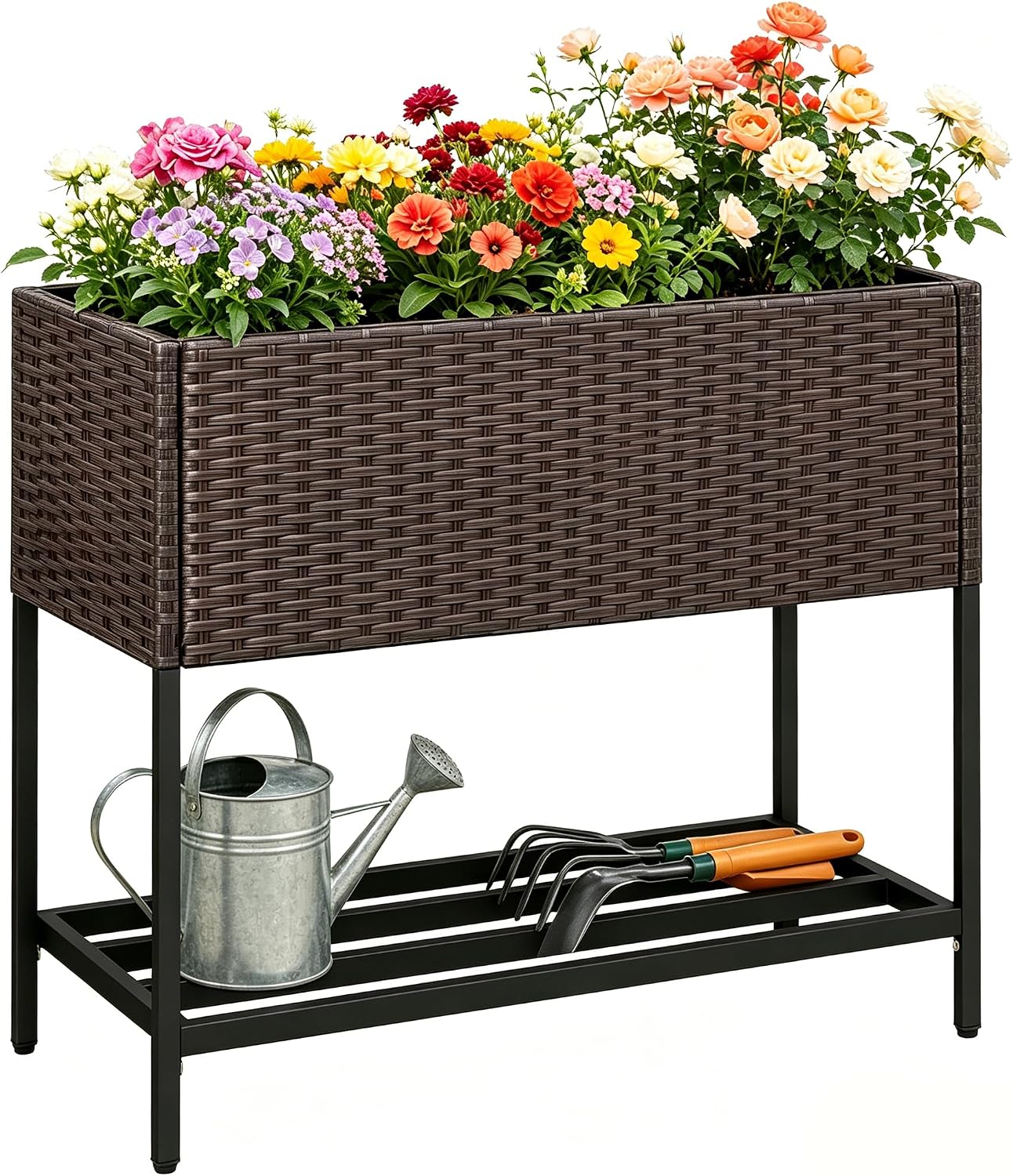
LDAILY Elevated Raised Garden Bed with Legs and Storage Shelf
| Capacity | 132 pounds |
|---|---|
| Included Components | Instruction, Raised Garden Bed with Legs |
| Material Type | Metal, Rattan |
| Other Special Features | Drainage Hole |
| Mounting Type | Floor Standing |
This elevated raised garden bed combines a sturdy metal frame with rattan panels to give you a durable, waist-high planting surface that is easy to use in small yards, patios, or balconies. It is designed to hold garden soil and plants while keeping you off your knees; the bottom drainage gap and included non-woven liner let excess water escape while retaining soil, which helps prevent waterlogging and keeps roots oxygenated. The lower shelf is handy for storing trowels, pots, or soil bags so tools stay within reach. The frame is rated to support up to 132 pounds in the planting box and 66 pounds on the shelf, so you can fill it with quality potting mix and a few heavier containers without worrying about collapse. Assembly is typical for metal-frame planters and will require basic tools and moderate effort. The rattan finish improves appearance but may need occasional cleaning and protection from prolonged wet conditions compared with all-metal alternatives. Overall it is a practical, space-saving planter for reliable, elevated gardening in outdoor settings.
Best for: Buyers who prioritize a dependable, no-fuss elevated planter for regular outdoor vegetable or ornamental planting and want a model that keeps tools handy and reduces bending while gardening.
Less Ideal for: People seeking a heavy-duty, all-weather commercial planter or those who need very large planting volumes for large perennial shrubs should consider larger or different construction options.
- Sturdy metal frame with stated capacity of 132 lb for the planting box and 66 lb for the shelf
- Built-in drainage gap plus non-woven liner to reduce waterlogging and improve root oxygenation
- Elevated height reduces bending and helps deter small ground animals
- Integrated bottom shelf provides convenient storage for tools and supplies
- Rattan panels may require extra care and could weather faster than all-metal planters
- Assembly requires tools and moderate effort
Verdict: A reliable elevated planter that combines a load-rated metal frame, drainage, and handy storage to make small-space vegetable and flower gardening easier and less physically demanding.
Land Guard Galvanized Oval Raised Garden Bed Kit (4×2×1 ft)

| Material Type | Metal |
|---|---|
| Finish Types | Double-layer galvanized |
| Capacity | 7.14 cubic feet |
| Mounting Type | Floor Standing |
This Land Guard raised garden bed is a simple, durable option for planting vegetables, herbs, or mixed annuals in a compact outdoor space. The kit arrives as flat panels that assemble into an oval planter about 4 by 2 feet and 1 foot deep, and setup is straightforward so you can fill and plant in minutes. Its double-layer galvanized steel construction and wave-shaped panels are intended to resist corrosion and add rigidity, and the manufacturer states thicker panels at stress points to reduce deformation. An open base design lets excess water drain and helps avoid root rot if placed on soil or lawn. Practical benefits include low maintenance, a tidy planted border that keeps soil contained, and a metal finish that lasts longer than untreated steel. Limitations are the shallow depth for deep-rooted crops and the likelihood the metal will warm quickly in hot sun, which may require more frequent watering or shade management. It is best used as a portable, long-lasting planter for raised-bed style container gardening rather than a full replacement for deeper in-ground beds.
Best for: Gardeners who want a quick-to-assemble, durable raised planter to grow vegetables or herbs in small outdoor spaces and who prioritize evidence of longevity over decorative complexity.
Less Ideal for: Growers who need deep soil for large root crops, or those looking for insulated or fully enclosed beds to control soil temperature and moisture long-term.
- Galvanized double-layer steel resists corrosion for multi-season outdoor use
- Oval, interlocking panel design assembles quickly with included tools
- Open base allows natural drainage to reduce standing water and root rot
- Compact footprint fits small patios, balconies, and tight garden beds
- Only 12 inches deep which limits planting of larger, deep-rooted vegetables or shrubs
- Metal surface can heat up in full sun and increase watering needs
Verdict: A tough, easy-to-assemble galvanized oval raised bed that gives small-space gardeners a durable, low-maintenance container for vegetables and herbs.
Land Guard 2-Pack 4×2×1 ft Galvanized Raised Garden Bed

| Capacity | 54 gallons |
|---|---|
| Material Type | Galvanized Metal |
| Included Components | 2x Planter, Instruction manual, Tools |
| Indoor Outdoor Usage | Outdoor |
These Land Guard raised beds are a practical two-pack of galvanized steel planters meant for patios, backyard beds, and small vegetable plots. Each 4×2×1 ft planter assembles from panels and included hardware to create an open-bottom raised bed that sits directly on soil or hard surfaces. The galvanized finish with a thickened zinc layer offers weather and rust resistance so the beds can stay outdoors through seasons without significant corrosion. The open base supports strong drainage and reduces trapped moisture, which helps prevent root rot and makes the beds easy to integrate into an existing garden or over a weed barrier. They arrive with basic tools and instructions, so assembly is straightforward for one person. Limitations are the shallow 1 ft depth, which restricts large root crops and long-term tree planting, and the metal will warm more in hot sun compared with wood or composite. For gardeners who prioritize durability, easy setup, and tidy planting zones, these planters are a low-maintenance option; heavy-duty growers wanting deeper soil will need a different solution.
Best for: Gardeners who want a durable, low-maintenance raised bed solution to organize vegetable, herb, or flower planting in small yards or patios and who prefer quick assembly and long-lasting materials.
Less Ideal for: Growers who need deep soil for root vegetables, large perennials, or who prefer insulating materials like wood or composite to moderate soil temperature.
- Galvanized steel construction with thick zinc coating provides strong rust and weather resistance
- Open-bottom design promotes excellent drainage and easier integration with ground soil
- Two-planter set covers multiple planting rows or doubles planting area without buying extra units
- Includes hardware and instructions for relatively simple assembly
- Only 12 inches deep, limiting suitability for deeper-rooted vegetables and perennial shrubs
- Metal surfaces can heat up in full sun, which may affect soil temperature and moisture
Verdict: A durable, easy-to-assemble two-pack of galvanized raised beds that gives practical, low-maintenance planting space for small-scale veggie and flower gardens.
Choosing the Right Raised Planter Box: Key Factors to Consider
Material and Weather Resistance
The material determines how long a raised planter box lasts outside. Wood needs to be rot-resistant or treated for ground contact because constant wetting from soil and irrigation accelerates decay. Metal can be strong and thin but may rust unless it is powder-coated or stainless. Composite and recycled-plastic boards resist rot and insect damage but vary in UV stability and heat retention. Consider how the material will behave in your climate: wet regions demand better rot protection, while hot, sunny locations need materials that resist UV breakdown.
Material also affects heat transfer. Dark metal or plastic can warm soil more quickly in spring but may overheat roots in summer. Plan for liners or shade if your chosen material conducts a lot of heat. Finally, check whether the material allows for straightforward repairs or replacement of panels if a section fails over time.
Drainage and Soil Depth
Good drainage keeps roots healthy and prevents standing water that invites root rot. A raised planter box should provide both a way for excess water to escape and sufficient soil depth for the plants you intend to grow. Shallow boxes are fine for herbs and salad greens but not for tomatoes, carrots, or bush beans that need more rooting depth.
Design features that help include bottom drainage holes, removable base boards, or elevated legs that allow water to flow freely. Consider whether you will add a drainage layer such as coarse gravel or a weed fabric separator. The ability to adjust or improve drainage later is helpful if you change crops or move the box to a different site.
Height and Ergonomics
Height affects comfort and what you can grow. Taller boxes reduce bending and are easier on knees and backs, which matters if you garden frequently or have mobility limits. Standard waist-high boxes make planting, pruning, and harvesting more comfortable, while lower boxes are often less expensive and easier to move.
Edge design and access matter too. Wide top rails can serve as a seat or a place to rest tools, while narrow rails limit comfortable positioning of hands and knees. If you plan to do mixed planting or use trellises, consider how the box height interacts with supports and reach for pruning and harvesting.
Assembly, Transport, and Placement
Think about how the planter will get from delivery to its final position and how easy it is to assemble on site. Some boxes arrive as flat panels that bolt together quickly; others require cutting or more complex assembly. If installation needs heavy tools or skills, factor that into your decision or arrange help.
Also consider whether the box will sit on soil, concrete, or decking. Boxes on decking may need feet or a protective barrier to prevent staining and moisture buildup. Transport and repositioning are easier with lighter materials or modular designs that disassemble. For permanent installations, more robust fasteners and anchoring options matter.
Soil Management and Refillability
Raised planter boxes make it easier to control soil mix, but you will need to refresh or replace soil over time. Look for boxes that allow partial refill or that have removable sides or internal liners to reduce the work of soil changes. The ability to top-dress easily will extend soil life and keep nutrients balanced for successive planting seasons.
Also consider whether the box design reduces compaction and allows root aeration. Some growers prefer boxes that can be forked into from the top or have removable sections to make deep cultivation easier. Practical soil management reduces long-term maintenance and supports healthy crops year after year.
Pest Control and Plant Protection
Raised planter boxes can reduce some pests but may concentrate others. A box elevated from ground level helps limit slug and vole access, but open bottoms can still allow burrowing pests. Look at how the design interfaces with pest barriers: can you add hardware cloth under the box, attach netting, or mount protective covers?
Also evaluate whether the material or finish deters certain pests. Smooth plastic or metal is harder for insects to tunnel into compared with untreated wood. Consider how easily you can secure covers or supports for row covers and frost protection. Thoughtful pest-control compatibility reduces crop losses without heavy chemical use.
Sizing for Different Garden Uses
Match planter dimensions to the crops and the space. For herbs and salad greens, narrow, shallow boxes that fit a balcony railing or small patio work well. For larger vegetables you will need wider and deeper boxes to avoid root crowding.
Consider footprint and spacing between boxes. Taller, deeper boxes require more soil and therefore more initial filling effort, but they also give plants room to thrive and reduce watering frequency for larger root systems.
- Shallow boxes: best for shallow-rooted annuals and herbs
- Medium depth: flexible for most vegetables and flowers
- Deep boxes: necessary for root crops and larger shrubs
Site Preparation and Placement Tips
Choose a level, well-drained site that receives the right amount of sun for your intended plants. Prepare the ground under the box by removing weeds and adding a layer of coarse material or landscape fabric if drainage is poor.
Think about proximity to water; boxes near a hose or drip line reduce daily watering labor. If placing on a hard surface, add feet or a spacer to allow airflow beneath the box and protect decking or pavers from prolonged moisture contact.
- Avoid placing boxes under tree canopies that compete for water
- Allow at least a foot of access on one side for maintenance
- Orient long edges north-south for even sun exposure in many climates
Soil Mix and Filling Strategies
Use a light, well-draining soil mix tailored to what you plan to grow. A mix with compost, good-quality topsoil, and a light aeration component provides nutrients without compacting. Avoid heavy clay garden soil unless amended for drainage.
Fill in layers if the box is very deep. A lightweight filler at the bottom, such as coarse wood chunks or clean builder's foam blocks, can reduce the volume of expensive soil while still allowing roots room. Ensure the filler does not trap water against the base.
- Topsoil plus compost for vegetables
- Higher organic content for containers used only for annuals
- Consider pre-planting soil testing for nutrient balance
Seasonal Care and Winterizing
Plan how you will protect soil life and structure over winter. Drainage must remain clear to avoid heaving from freeze-thaw cycles. In colder regions consider insulating the exterior or moving boxes to sheltered spots to reduce root exposure.
Reduce watering in fall and remove spent plants to limit pest habitat. If you use liners, check them for damage before winter and replace or repair as needed.
- Remove heavy mulch that holds excess moisture during winter
- Store lightweight components indoors when not in use
- Top-dress with compost in late fall to feed spring growth
Integrating Supports and Irrigation
Raised planter boxes are easier to pair with drip irrigation, soaker hoses, or automated timers. Plan routing at installation so lines are hidden and do not interfere with planting access. Built-in irrigation grooves or channels can simplify watering for multiple boxes.
If you intend to grow vining plants, attach trellises to the box or choose a design that supports stakes and netting. Ensure any supports are anchored securely and do not damage the box structure when loaded with fruit or heavy foliage.
- Drip irrigation reduces surface evaporation
- Removable trellis panels make seasonal changes easier
- Avoid rigid anchors that press into thin panel materials
How We Chose the Best Raised Planter Box
We focused on criteria that matter in working gardens: material durability under outdoor exposure, drainage and soil access, planting ergonomics, build and assembly simplicity, and maintenance needs. For material durability we prioritized rot resistance or corrosion resistance and how a box handles repeated wetting and drying. Drainage and soil depth were evaluated to ensure boxes support vegetables, perennials, and annuals without waterlogging or root crowding. Planting ergonomics covered height and edge design so gardeners can plant and tend without excessive bending. Build and assembly factors included whether common tools are required and how repeatable the construction is for a range of skill levels. Maintenance considerations looked at how easy it is to refresh soil, clean the box, and replace liners or drainage components. We excluded products that are clearly decorative only with insufficient depth for vegetables, and boxes that rely on unverified proprietary materials without performance details. The final list favors solutions that balance real garden performance, straightforward installation, and longevity in outdoor conditions.
FAQ
How deep should a raised planter box be for vegetables?
It depends on the crop. Most vegetables do well in 10 to 18 inches of soil, but root crops and larger plants often need 18 inches or more. Match depth to the mature root depth of your intended crops.
Can I put a raised planter box directly on a patio or deck?
Yes, but add feet or a barrier to allow airflow and prevent moisture damage to the surface below. Also protect decking finishes and check for weight limits if the box will be filled with wet soil.
What is the best soil mix for a raised planter box?
A blend of quality topsoil, compost, and a light aeration material gives good drainage and fertility. Avoid compacted garden clay unless heavily amended and consider a soil test to tailor nutrient levels.
How do I improve drainage if water pools in the box?
Check that bottom drainage holes or gaps are clear, add coarse material under the soil to improve percolation, and consider raising the box slightly to allow water to escape. In extreme cases install a simple drainage pipe to lead away excess water.
Are raised planter boxes suitable for small balconies?
They can be, if you choose a shallow, lightweight design and confirm the balcony can support the loaded weight. Use narrow trough-style boxes and prioritize lightweight soil mixes to reduce load.
How often should I refresh the soil in a raised planter box?
Many gardeners top-dress with compost each season and do a more thorough soil refresh every two to three years depending on cropping intensity. Frequent heavy feeding or continuous vegetable production may require earlier replacement.
Final Verdict
Choose a raised planter box by prioritizing the features that match how you garden. Focus first on material and drainage for longevity and plant health, then on height and access to reduce daily strain and make routine tasks easier. Consider assembly and placement needs so the box fits your space and skill level while allowing future soil maintenance. Accept tradeoffs between initial fill effort and long-term usability: deeper, sturdier boxes take more soil but support a wider range of crops and reduce watering frequency. Use the criteria above to weigh options and pick a box that keeps gardening comfortable and productive for seasons to come.
