

Note: This article contains affiliate links. If you click on these links and make a purchase, I may earn a small commission at no extra cost to you. This helps support my research and content. Read my full affiliate disclosure here.
Ferns thrive in steady moisture, good airflow around roots, and shaded spots. Choosing the right planter for ferns matters because container selection affects watering frequency, root oxygenation, and the microclimate around delicate fronds. The wrong pot can lead to soggy soil, compacted roots, or excessive drying between waterings. This guide covers six well-chosen planters for ferns, shortlisted for real garden use from patio pots to indoor setups. We evaluate each option on practical criteria gardeners care about, including drainage performance, material breathability, and ease of routine care. Read on to find the planter type that will keep your ferns lush and thriving, with tips for placement and care.
Top Picks at a Glance
| Best Overall The best all-around choice for most situations | Fox & Fern Fiberstone Large Planter, Matte White, 14.6 Inch |  |
| Best Quality Built to a higher standard if you want something more solid | Veradek Demi Series Large Round Outdoor Planter (2‑Pack) |  |
| Best Value The sweet spot between price and what you get | UOUZ 13" Self-Watering Hanging Planter 2-Pack (50 oz Reservoir) |  |
| Highest Rated A top-rated pick with lots of positive feedback | Veradek Pure Series Tall Tapered Outdoor Planter with Removable Shelf (2-pack) |  |
| Most Popular A crowd favorite that many people choose with confidence | Fox & Fern 12" Fiberstone Planter, Matte White |  |
| Best Seller A high-volume bestseller chosen again and again | Arcadia Garden Products Classic 13×15" Plastic Urn Planter, Brushed Copper |  |
Fox & Fern Fiberstone Large Planter, Matte White, 14.6 Inch

| Capacity | 0.97 cubic feet |
|---|---|
| Included Components | Drainage Plug, Pot |
| Material Type | Ceramic, Fiberglass, Fiberstone, Stone |
| Other Special Features | Drainage Hole, Frost Resistant, UV Resistant, Weather Resistant |
| Indoor Outdoor Usage | Indoor, Outdoor |
This Fox & Fern 14.6-inch fiberstone planter gives you the look of ceramic with far less weight, so moving a large fern or other sizable houseplant is practical without heavy lifting. It is made from a fiberglass-reinforced stone exterior that is frost- and UV-resistant, so you can use it indoors on a stand or outdoors year-round on a balcony or patio. The pot ships with a removable drainage plug, which lets you run the planter with its original nursery pot inside or plant directly and choose whether to seal it for indoor floors or open it for outdoor drainage. The matte finish and clean round profile suit modern interiors and hide soil marks better than glossy surfaces. Expect a roomy interior that fits ferns with generous rootballs, but note the product description lists capacities and dimensions you should match to your plant and stand before planting. For buyers who want a durable, attractive pot that is easy to move and versatile for seasonal placement, this is a solid option.
Best for: Buyers who want a low-maintenance, attractive planter that can live indoors or outside and is easy to move when rearranging plants or changing seasonal displays.
Less Ideal for: People needing a very heavy, traditional ceramic or concrete look for a fixed landscape feature or gardeners who prefer planters without any drainage plug option.
- Fiberstone construction looks like ceramic but is significantly lighter for easier repositioning
- Frost-resistant and UV-resistant for year-round outdoor or indoor use
- Removable drainage plug allows easy switch between indoor sealed use and outdoor draining
- Matte finish and simple round design integrate well with modern interiors and plant stands
- Size and capacity require checking against your fern's rootball and stand before planting
Verdict: A lightweight, weatherproof fiberstone planter that makes housing large ferns easy to move and adaptable between indoor and outdoor use.
Veradek Demi Series Large Round Outdoor Planter (2‑Pack)

| Capacity | 14 liters |
|---|---|
| Number of Pieces | 2 |
| Other Special Features of the Product | UV Resistant, Weather Resistant |
| Material Type | Plastic-stone composite |
| Indoor Outdoor Usage | Outdoor |
The Veradek Demi large round planter is a lightweight, weatherproof pot intended for outdoor use on patios, balconies, and porches. Made from a patented plastic-stone composite it resists UV, cracking, and fading so it holds up through temperature swings and sun exposure. The fluted, modern profile suits contemporary planting schemes and the set includes two identical planters for paired displays. Pre-drilled drainage holes let you plant directly without worrying about root rot, and the floor-standing design works for container perennials, grasses, succulents, or small shrubs. Because the material is much lighter than full stone, it is easier to move for rearranging or seasonal storage but still looks substantial. Limitations are typical of composite planters: they do not have the natural weight and thermal buffering of real stone, and very large specimens will quickly outgrow the 14 liter capacity. For gardeners who want durable, low-maintenance containers with a modern look, these deliver reliable outdoor performance.
Best for: Buyers who want low-maintenance, attractive outdoor planters for paired displays on patios or balconies and prefer durable, weatherproof containers that are easy to move and style.
Less Ideal for: Those seeking heavy, natural stone planters for very large shrubs or for maximum thermal insulation should consider heavier materials or larger capacity pots instead.
- UV and weather resistant composite that resists cracking and fading
- Pre-drilled drainage holes for healthier container planting
- Lightweight compared with real stone so easier to move and rearrange
- Contemporary fluted design that pairs well with modern outdoor decor
- Smaller 14 liter capacity limits planting to small to medium plants or single specimens
- Composite material does not provide the same thermal mass or weight as real stone
Verdict: A practical, weatherproof two-pack of modern-looking planters for gardeners who want durable, easy-to-move outdoor containers.
UOUZ 13" Self-Watering Hanging Planter 2-Pack (50 oz Reservoir)
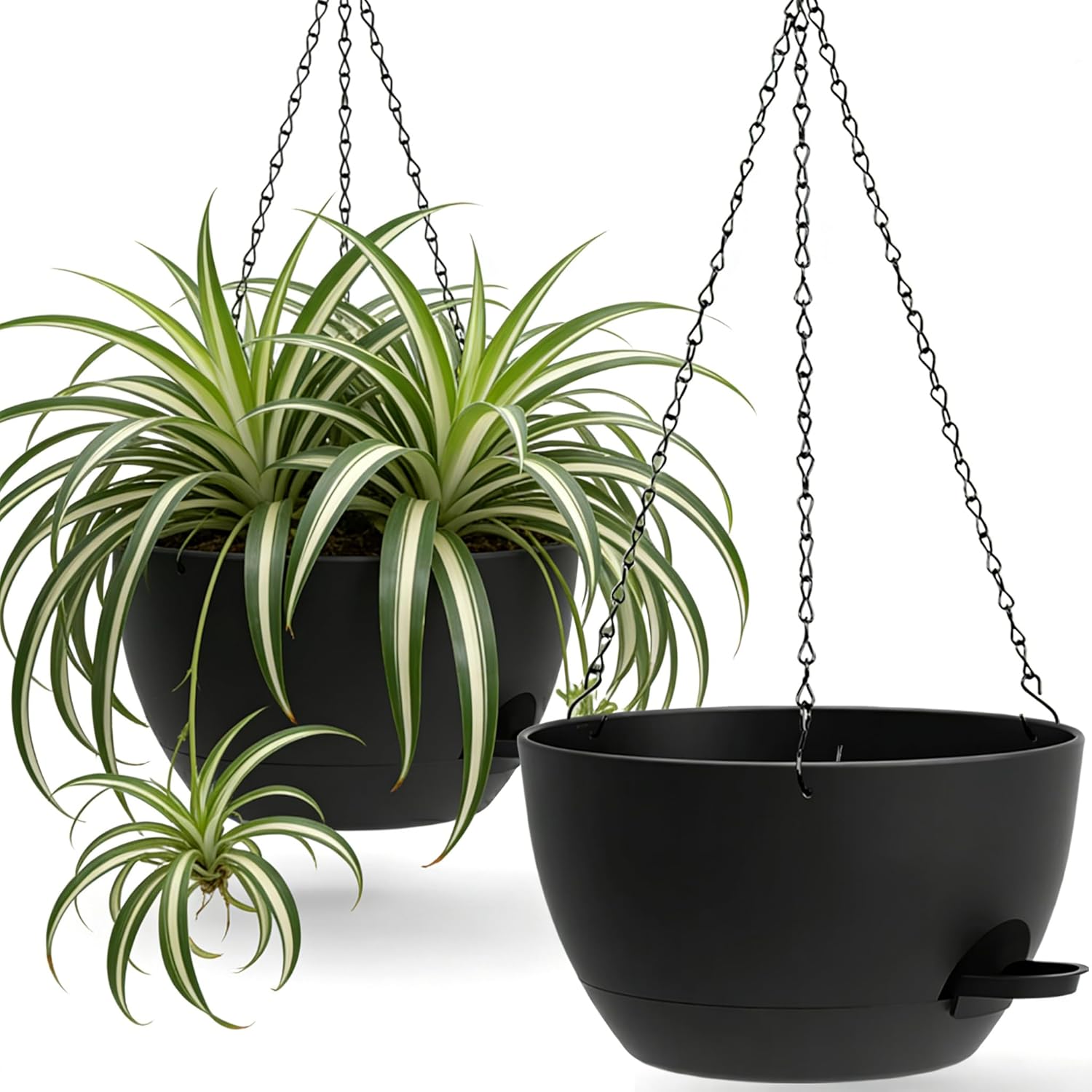
| Capacity | 50 fluid ounces |
|---|---|
| Item Count | 2 Count |
| Material Type | Plastic |
| Mounting Type | Wall Mount |
| Indoor Outdoor Usage | Outdoor |
These UOUZ hanging planters are a practical option for keeping outdoor hanging plants healthy with less daily maintenance. Each 13-inch basket includes a removable 50-ounce reservoir that supplies water to the root zone so containers can go 7 to 14 days between waterings, which is useful for busy homeowners or short trips. The planters are made of lightweight plastic and come with chains for hanging; the basket form and modern styling suit porches, balconies, and garden hooks. Setup is straightforward: assemble the chain, insert the reservoir, and add potting mix and plants. The main benefits are reduced watering frequency and a tidy, contained pot that limits mess when raining. Limitations are the plastic construction, which is less durable than ceramic or metal over many seasons, and the planters are sized for single-season planting rather than large specimen trees. These work best as low-maintenance containers for annuals, trailing vines, and ferns where consistent moisture helps performance.
Best for: Buyers who want reliable, low-maintenance outdoor hanging baskets that keep plants watered during short trips or busy weeks and prefer simple, fuss-free setup.
Less Ideal for: Gardeners seeking heavy-duty, decorative ceramic or metal planters or those who need very large containers for substantial soil volumes or big shrubs.
- Built-in 50 oz removable reservoir reduces watering frequency for 7–14 day care periods.
- Comes as a 2-pack with hanging chains for immediate outdoor installation.
- Lightweight plastic construction makes them easy to lift and rehang when needed.
- Plastic material may fade or become brittle with prolonged sun exposure.
- Capacity is moderate and may need more frequent watering for very thirsty plants in hot climates.
Verdict: Choose these self-watering hanging planters when you want low-effort outdoor baskets that keep plants hydrated for up to two weeks between waterings.
Veradek Pure Series Tall Tapered Outdoor Planter with Removable Shelf (2-pack)

| Capacity | 73.6 liters |
|---|---|
| Number of Pieces | 2 |
| Material Type | Polypropylene Plastic |
| Other Special Features | UV Resistant, Weather Resistant |
| Mounting Type | Floor Standing |
The Veradek Pure Series tall taper planters are designed to deliver durable, low-maintenance container planting for patios, entrances, and balconies. Made from molded polypropylene, the pots are lightweight yet impact resistant and treated for UV and weather exposure so they hold up through sun and colder conditions without cracking or heavy fading. Each set includes a removable insert shelf so you can either fill the body with soil for deep-rooted plantings or use the insert for shallower plant mixes and easier repotting; the insert also offers an optional drainage hole. At 30 inches tall these planters create height and presence for elevated displays of perennials, small shrubs, or dramatic succulents. The single-wall construction keeps them easy to move compared with heavy ceramic or metal alternatives but means they do not offer the insulating mass of heavier materials, so soil can warm and cool faster. For gardeners who prioritize robust, weatherproof planters that are simple to manage, these deliver strong real-world performance with a modern profile.
Best for: Gardeners who want durable, low-maintenance planters that create height and impact while remaining easy to move and manage, especially for patio, balcony, or entryway displays.
Less Ideal for: People seeking heavy, decorative materials with built-in insulation or those who prefer natural stone or ceramic aesthetics for formal garden designs.
- UV and weather resistant finish designed to resist fading and cracking
- Lightweight polypropylene construction makes placement and relocation easy
- Removable insert shelf gives flexibility for deep fills or contained inserts
- Tall 30 inch profile provides strong vertical presence for elevated plantings
- Single-wall plastic lacks the thermal mass of ceramic or stone, so root temperatures fluctuate more
- Not insulated; may need protection in extreme freeze-thaw conditions
Verdict: A weatherproof, lightweight pair of tall planters that deliver reliable, low-maintenance performance and strong vertical presence for outdoor container gardens.
Fox & Fern 12" Fiberstone Planter, Matte White

| Material Type | Ceramic, Fiberglass, Fiberstone, Stone |
|---|---|
| Other Special Features of the Product | Drainage Hole, Frost Resistant, Lightweight, UV Resistant, Weather Resistant |
| Included Components | Drainage Plug, Pot |
| Indoor Outdoor Usage | Indoor, Outdoor |
The Fox & Fern 12" fiberstone planter is a modern, round pot that looks like ceramic but is much lighter thanks to a fiberglass-reinforced core. It is intended for both indoor and outdoor use and includes a removable drainage plug that makes switching between protected indoor floors and open-air drainage straightforward. Notable features are its frost-resistant and UV-resistant finish, weather-ready construction, and the option to pot directly into the pot or keep plants in their nursery containers. For ferns this planter offers enough volume for healthy root growth and the drainage option helps prevent overwatering while the matte finish keeps the look clean on a stand or shelf. Practical limitations are that it is a single-piece decorative pot without an included inner liner, so very wet, constant-saturation sites may need extra saucing or a raised insert; also larger soil volumes will still dry faster in warm, sunny locations because of the material’s lighter weight. Overall it is a durable, attractive planter that simplifies care for moisture-loving houseplants while remaining easy to move and position.
Best for: Buyers who want a durable, low-hassle planter for moisture-loving houseplants like ferns that still need occasional repositioning and visual impact in shared spaces.
Less Ideal for: Gardeners who require heavy, immovable pots for windy exposed sites or those who prefer fully self-contained planter systems with integrated liners and reservoirs.
- Lightweight fiberstone construction makes the pot easy to move and position
- Removable drainage plug allows safe indoor use and outdoor drainage without extra saucers
- Frost-resistant and UV-resistant finish suitable for year-round outdoor exposure
- Matte modern finish pairs well with plant stands and interior décor
- No inner liner included so very wet setups may need an additional saucer or insert
- Lighter material can allow faster soil drying in hot, exposed spots
Verdict: A lightweight yet weatherproof fiberstone planter that makes keeping ferns healthy easier by combining removable drainage and a clean modern look.
Arcadia Garden Products Classic 13×15" Plastic Urn Planter, Brushed Copper

| Capacity | 6.2 quarts |
|---|---|
| Included Components | Pot |
| Material Type | Plastic |
| Indoor Outdoor Usage | Indoor, Outdoor |
| Mounting Type | Floor Standing |
This Arcadia 13×15" urn is a decorative, easy-to-use planter intended for porches, entryways, patios or indoor display. It ships as a two-piece pedestal that screws together without tools, so setup is quick and relocating the planter is straightforward thanks to the lightweight plastic construction. The fluted, traditional profile and brushed copper finish give a classic look suitable for seasonal plantings, faux arrangements, or holiday displays. The planter does not come with drainage holes, but the plastic can be drilled if you prefer planted specimens that need bottom drainage. With a roughly 6.2 quart capacity and an 11" opening it fits medium bedding plants or compact shrubs and offers a roomy interior for potting soil and root growth. Expect good weather resistance from the synthetic material and easy cleaning compared with ceramic or metal urns, though it lacks the heft of heavier materials that can resist tipping in strong wind. Overall it is a practical, attractive choice when you want the look of an urn without the weight or maintenance of traditional materials.
Best for: Someone who wants classic urn styling with minimal fuss and easy placement, especially buyers who prioritize low-maintenance, moveable outdoor decor.
Less Ideal for: People seeking heavy, wind-resistant stone or ceramic planters or gardeners who need built-in drainage and very large soil volume for big shrubs.
- Traditional fluted design adds curb appeal without extra work
- Tool-free two-piece assembly for fast setup
- Lightweight plastic makes it easy to move and reposition
- Durable synthetic material resists weather and UV exposure
- No factory drainage holes so you must drill them for planted specimens
- Lightweight construction can be less stable in strong winds or if top-heavy
Verdict: A lightweight, weather-resistant urn that delivers classic planter styling and quick tool-free assembly for low-maintenance outdoor or indoor displays.
Choosing the Right Planter for Ferns: Key Factors to Consider
Drainage and Overflow Management
Ferns are sensitive to both drought and waterlogged soil. A planter with reliable drainage prevents standing water at the crown and reduces the risk of root rot. Look for pots with drainage holes sized to allow excess water to escape while retaining enough moisture in the potting mix.
Think about how you will manage overflow when watering indoors or on a covered porch. Saucers or built-in reservoirs add convenience but can trap water if not monitored. Systems that allow you to remove excess water quickly or that include overflow channels make routine watering safer for ferns.
Material Breathability and Heat Behavior
The material determines how much air passes through the pot walls and how soil temperature fluctuates. Terracotta and unglazed ceramic breathe and help prevent overly soggy soil, while some plastics trap moisture and heat more readily. For ferns, a balance that keeps roots cool and aerated is ideal.
If the planter will sit in a sunny or warm spot, choose materials that do not overheat and that moderate moisture loss. For indoor or shaded patios, breathable surfaces help avoid compacted, poorly aerated root balls that can invite disease.
Size, Depth, and Root Architecture
Most common ferns have shallow, fibrous root systems that spread rather than dive deep. Selecting a planter with appropriate surface area and moderate depth gives room for rhizomes and feeder roots to expand. Too narrow a pot can crowd roots and increase water stress, while an overly deep container may hold excess moisture below the root zone.
Consider the mature size of the fern clump and whether you plan to pot up annually. A slightly larger diameter allows the plant to fill out without needing frequent repotting, and a shallow-to-moderate depth matches fern root habits.
Watering Ease and Moisture Retention
How you water will be shaped by the pot. Some planters are easy to soak thoroughly and drain, while others require careful top watering to avoid runoff. Moisture-retentive liners or double-pot setups can help maintain steady humidity for ferns, but they must be balanced with drainage to prevent stagnation.
Think about your typical watering routine and whether you want a setup that supports bottom-watering, top-watering, or a reservoir system. Easy access for routine watering and the ability to flush the potting mix occasionally are important for long-term plant health.
Weight, Mobility, and Placement
Ferns are often moved seasonally or rotated for light and humidity. Heavy stone or concrete pots are stable but hard to reposition, while lightweight plastic or resin makes rearranging easier. Mobility matters if you plan to bring plants indoors during cold nights or move them to catch morning sun.
Also consider how the pot will be positioned: hanging baskets, pedestal planters, and floor pots each have different handling needs. If you plan to hang ferns, select containers designed for secure suspension and with suitable drainage.
Maintenance, Cleaning, and Longevity
Ferns benefit from occasional repotting, dividing, and sanitation. Choose planters that allow easy access to roots and that can be cleaned to remove salts and algae build-up. Materials that resist staining and fungal growth reduce maintenance time.
Durability in humid, shaded environments is important because constant moisture and organic debris can degrade some materials. Consider whether the pot needs seasonal storage or will be exposed year-round to wet conditions.
Best Planter Types for Indoor Fern Displays
Indoor fern displays do well in pots that balance moisture retention and airflow. Unglazed ceramic or terracotta pots are common choices because they wick excess moisture from the soil surface and help keep roots aerated. For apartments with limited light, choose a wide, shallow pot that encourages horizontal root spread and pairs well with a moisture-retentive but well-draining potting mix.
If humidity is low indoors, consider double-potting with a decorative outer container and an inner breathable liner. That approach lets you keep the functional potting environment ideal for ferns while still matching interior decor.
- Unglazed terracotta helps reduce surface wetness
- Wide, shallow pots support spreading roots
- Double-potting improves aesthetics without sacrificing function
Outdoor and Patio Planters for Shaded Areas
On shaded patios or in woodland-style beds, heavier planters can anchor a fern display and resist tipping from wind or curious pets. Materials such as durable glazes, heavy ceramics, or composite stone hold moisture longer in cooler, shaded locations and reduce the need for constant watering.
Make sure outdoor pots have adequate drainage and consider elevating them slightly to allow air circulation beneath the base. Grouping multiple pots together can create a microclimate of higher humidity that benefits fronds.
- Group pots to raise local humidity
- Elevate pots for bottom air flow
- Choose stable containers for outdoor use
Hanging Planters and Ferns Suited to Suspension
Many fern species look great in hanging planters where fronds can spill freely. Hanging containers need secure attachment points, balanced drainage, and lightweight materials if suspended from ceilings or porch eaves. Coconut fiber liners and woven baskets provide breathability and a natural look but often need supplemental liners to hold potting mix.
Think about access for watering. Hanging ferns may benefit from a removable inner pot or a setup that allows bottom-watering to avoid dripping onto floors or furniture.
- Use removable liners for easy watering
- Ensure secure hanging hardware and balanced weight
- Select breathable liners to support root health
Using Self-Watering and Reservoir Pots with Ferns
Self-watering pots and reservoirs can stabilize moisture between waterings, which helps ferns in dry indoor environments or for gardeners who travel. These systems must still provide air exchange for roots, so choose designs that separate the water reservoir from the root zone or include a wicking layer rather than sitting the roots in standing water.
Regular monitoring is needed to avoid salt buildup in the soil. Periodic flushing of the potting mix and occasional top-watering to leach salts keeps the potting medium healthy for sensitive ferns.
- Prefer wicking reservoirs over root-sitting trays
- Flush soil periodically to manage salt buildup
- Good for stabilizing moisture on busy schedules
Potting Mix and Liner Options That Complement Planters
The planter works together with the potting mix. Choose a loose, well-draining mix high in organic matter that still holds moisture, such as blends with peat, compost, and perlite. Liners that retain some moisture can help, but they must not eliminate drainage.
If using a porous pot, match it with a soil that retains a little more moisture. For plastic or glazed pots that hold water, add drainage layers and increase the proportion of coarse material to encourage aeration.
- Match mix moisture retention to pot breathability
- Use coarse layers sparingly to prevent drought at the root crown
- Replace or refresh mix when plants are repotted
How We Chose the Best Planter for Ferns
We prioritized features that directly affect fern health in containers. Evaluation focused on drainage control to prevent waterlogged crowns, material breathability to maintain root oxygenation, and size and depth appropriate for typical fern root systems. We also assessed ease of maintenance, including how simple it is to repot, clean, and manage watering in everyday gardening routines. Durability for indoor and sheltered outdoor conditions and compatibility with typical potting mixes for ferns were included as selection filters. Excluded items included planters designed only for succulents or deep-rooted vegetables, containers without any drainage options, and decorative-only vessels that do not support basic cultural needs of ferns. We favored options that balance moisture retention with air exchange, that are practical to move and maintain, and that suit shaded patios, hanging displays, and indoor humid corners. These criteria informed which planter styles made the shortlist and align with the scoring metrics used across the review set.
FAQ
Do ferns need pots with drainage holes?
Usually yes. Drainage holes let excess water escape and reduce the risk of root rot. If using a decorative pot without holes, set the fern in a well-draining inner container or monitor water levels carefully and empty any collected water frequently.
Is terracotta the best material for all ferns?
Terracotta breathes and can be excellent for many ferns, but it also dries out faster. For ferns that prefer constant moisture, glazed ceramic or a double-pot setup may be better. Choice depends on light, ambient humidity, and how often you water.
Can I use hanging baskets for large fern varieties?
Often yes. Hanging baskets suit many trailing and medium-sized ferns, provided the basket is sturdy and drainage is managed. Ensure the basket supports the fern's mature size and that you can access it for watering and maintenance.
How often should I repot a fern in a new planter?
Repotting is usually needed every 1 to 3 years depending on growth rate. Repot when roots are crowded or growth slows, choosing a slightly larger diameter rather than a much deeper pot to suit typical fern root habits.
Are self-watering pots safe for ferns?
They can be, if designed to keep roots from sitting in standing water. Systems that wick moisture up into the soil are preferable. Monitor for salt buildup and flush the mix occasionally to maintain healthy roots.
Final Verdict
Pick a planter that balances moisture retention with airflow and provides the right surface area for spreading roots. Factor in where the fern will live, how often you can water, and whether you need mobility or a stable outdoor display. Prioritize drainage, breathable materials, and appropriate depth to reduce disease risk and support consistent frond growth. With an understanding of these tradeoffs you can choose a planter that fits your space and care routine, keeping ferns vigorous without unnecessary maintenance.
