

Note: This article contains affiliate links. If you click on these links and make a purchase, I may earn a small commission at no extra cost to you. This helps support my research and content. Read my full affiliate disclosure here.
When you want to enjoy the lawn, patio, or garden without chemical odors or harm to pollinators, choosing the right natural insect repellent for yards matters. The right option reduces biting insects and tick pressure while being safe around ornamental plants, vegetable beds, and family pets. This guide shortlists six top-rated yard-safe natural repellents and explains how each stands out for coverage, longevity, and plant safety. Read on to understand the practical tradeoffs and the evaluation criteria we used to assemble these top picks.
Top Picks at a Glance
| Best Overall The best all-around choice for most situations | First Saturday Lime Natural Outdoor Insect Deterrent, 20 lb |  |
| Best Value The sweet spot between price and what you get | Geomust Diatomaceous Earth with Peppermint Oil, Food Grade Insect Killer, 1 lb |  |
| Best Budget The cheapest option that still gets the job done reliably | Glovv Citronella Mosquito Repellent Incense Sticks, 60-Pack |  |
| Highest Rated A top-rated pick with lots of positive feedback | NatureShield Outdoor Insect & Pest Repellent, 64 fl oz (2-Pack) |  |
| Most Popular A crowd favorite that many people choose with confidence | Mighty Mint Peppermint Oil Insect Repellent Spray, 16 oz |  |
| Best Seller A high-volume bestseller chosen again and again | Wondercide Outdoor Pest Control Spray — 32 oz Ready-to-Use |  |
First Saturday Lime Natural Outdoor Insect Deterrent, 20 lb

| Net weight | 20 lb |
|---|---|
| Intended use | Outdoor perimeter, gardens, coops |
| Pest targets | Crawling insects (ants, ticks, fleas, cockroaches, mites) |
First Saturday Lime is a powdered, lime-based insect deterrent intended for outdoor use around gardens, foundations, patios, and animal housing. You apply a thin dusting around plant beds, along foundations, or a light layer in coop bedding to create a monthly barrier that crawling pests avoid. Key features are its natural ingredient formula, suitability for use around people, dogs, cats, and backyard chickens when used as directed, and claims of visible results within hours. In practice it is most useful as a preventive perimeter treatment and for reducing moisture and odors in coops while deterring mites. The product is simple to use and fast-acting, but it requires reapplication—monthly or more often after heavy rain—and is tailored to crawling pests rather than flying insects. Also, because it is a dust, wind and wet weather can reduce effectiveness and it is not a substitute for targeted treatments in severe infestations.
Best for: Buyers who want a natural, preventive perimeter treatment and a simple way to keep gardens and small animal housing drier and less attractive to crawling pests.
Less Ideal for: People seeking a one-time fix for severe infestations or a product to control flying insects should consider other targeted solutions.
- Uses natural lime so it is generally safe to use around people, pets, and backyard poultry when directions are followed
- Versatile application: dust around gardens, foundations, patios and in coop bedding to deter crawling pests and reduce odors
- Fast-acting barrier effect with visible avoidance by insects within hours
- Helps control moisture and mites in animal bedding while freshening stalls and coops
- Effectiveness is reduced by heavy rain and wind so it needs regular reapplication
- Targets crawling insects and will not control flying pests like mosquitoes or flies
- Application as a powder can be messy and may require care to avoid inhalation or runoff
Verdict: Pick this if you want a natural, easy-to-apply monthly barrier to reduce crawling pests and freshen outdoor animal areas.
Geomust Diatomaceous Earth with Peppermint Oil, Food Grade Insect Killer, 1 lb
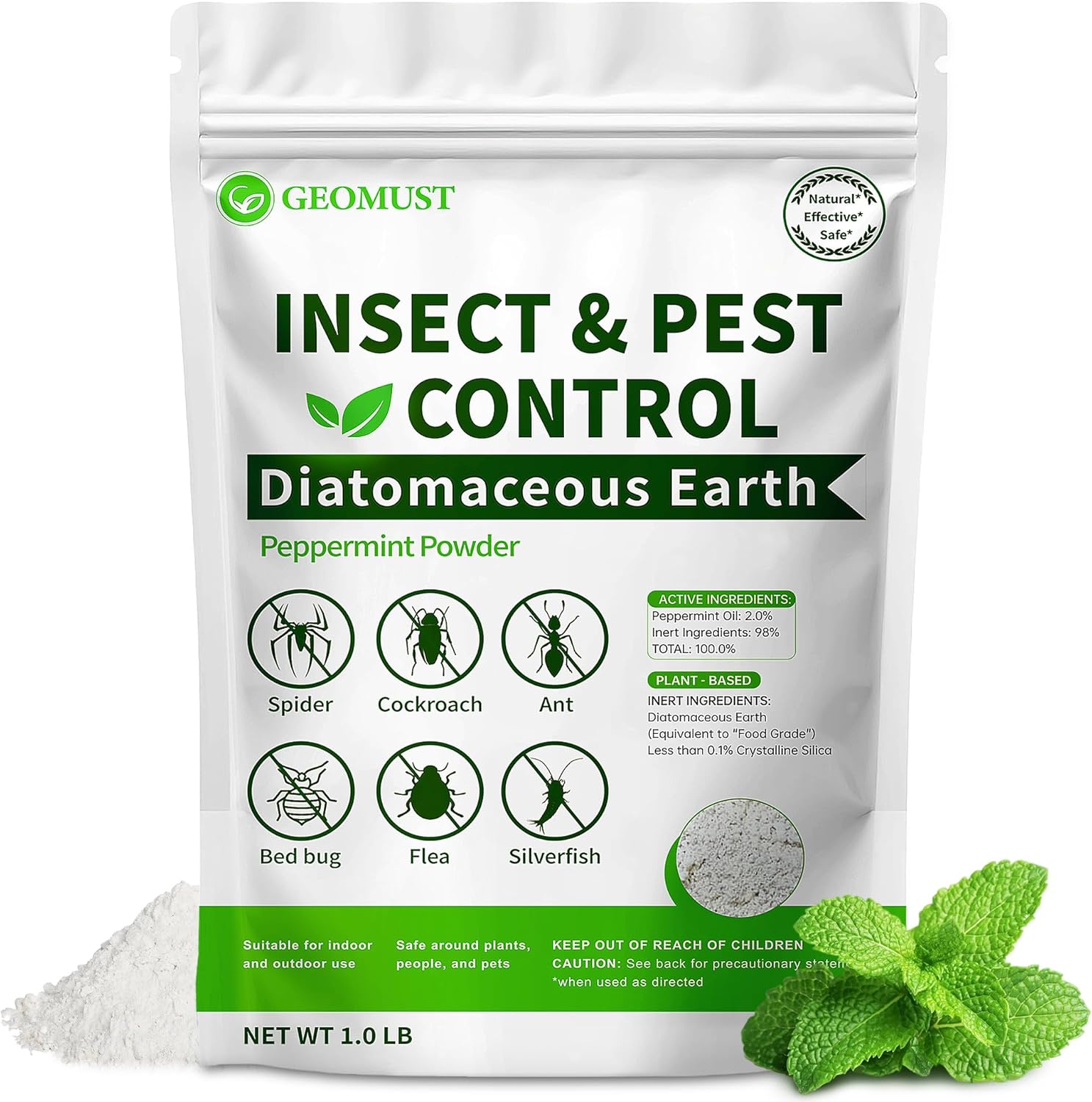
| Item Form | Powder |
|---|---|
| Target Species | Ants; Cockroaches; Fleas; Bed Bugs; Silverfish; Insects |
| Unit Count | 16 Ounce |
| Ingredients | Diatomaceous Earth; Peppermint Oil |
This Geomust product is a food-grade diatomaceous earth powder mixed with peppermint oil intended to control ants, roaches, fleas, bed bugs, silverfish and other crawling pests. You apply the dry powder to cracks, baseboards, entry points and around foundations or garden areas where insects travel; it works by dehydrating and abrading insect exoskeletons rather than poisoning them. The added peppermint oil gives a fresh scent and may help deter insects in treated zones. Because the formula is inert and labeled food grade it is suitable for use where households want a nonchemical option and safer handling around people and pets when used as directed. It must be kept dry to remain effective and its effects are contact-based, so it requires placement where insects will cross and occasional reapplication after cleaning or moisture exposure. For heavy, established infestations you may need repeated treatments or to combine this with exclusion and sanitation measures.
Best for: Homeowners who prioritize a low-toxicity, maintenance-friendly approach to crawling pests and want a straightforward, preventive product to use around living spaces and garden edges.
Less Ideal for: People needing a fast-acting or broad-spectrum solution for large, active infestations where immediate reduction is required.
- Food-grade diatomaceous earth provides a nonchemical, physical mode of kill safe for many home environments when used as directed
- Peppermint oil adds a pleasant scent and may increase deterrent effect in treated areas
- Versatile for indoor and outdoor use around baseboards, entry points, and garden perimeters
- Long-lasting when kept dry and simple to apply as a powder barrier
- Needs to stay dry and only works on insects that contact the powder, so wet areas reduce effectiveness
- Not an instant knockdown for heavy infestations and may require repeated applications or complementary controls
Verdict: Choose this if you want a simple, food-grade, nonchemical powder to prevent and reduce crawling pests with safe indoor and outdoor use when kept dry.
Glovv Citronella Mosquito Repellent Incense Sticks, 60-Pack

| Quantity | 60 sticks |
|---|---|
| Ingredients | Citronella Oil |
| Intended use | Indoor/Outdoor |
| Burn time | About 60 minutes |
These citronella mosquito incense sticks burn to emit a plant-based aroma that repels mosquitoes around a porch, patio, or campsite. Each stick contains citronella, lemongrass, and rosemary essential oils and is intended to burn roughly 60 minutes in sheltered conditions; the manufacturer recommends spacing sticks about 12 feet apart or using several around a seating area for better coverage. They are disposable and easy to carry, so you can light them, blow out the flame, and set them in dirt or a nonflammable holder without extra equipment. Practical benefits include a pleasant, natural scent instead of chemical odors and the convenience of single-use sticks for occasional gatherings. Important limitations are that wind shortens burn time and open-air conditions reduce effective range, so they work best on a covered porch or in semi-sheltered spots rather than exposed yards. Also there is no dedicated holder included, which means you need a safe place to insert each stick.
Best for: Buyers who want an affordable, easy-to-use natural repellent for routine porch or patio use and prefer disposable, low-fuss protection for small gatherings.
Less Ideal for: People needing long-range or wind-resistant mosquito control for large open yards should look at active fan-based systems or professional treatments instead.
- Plant-based repellent formula (citronella, lemongrass, rosemary) for a natural scent
- Each stick burns for about 60 minutes in sheltered conditions for extended coverage
- Portable single-use sticks that are easy to light and position around seating areas
- Works indoors or outdoors, giving flexibility for porch, patio, or living room use
- Burn time and effectiveness drop significantly in windy or fully open conditions
- No holder included so buyers must provide a safe place to set or insert sticks
Verdict: A budget-friendly, plant-based option for keeping mosquitoes off a porch during small gatherings when used in sheltered spots.
NatureShield Outdoor Insect & Pest Repellent, 64 fl oz (2-Pack)

| Item Form | Liquid |
|---|---|
| Scent Name | Cedarwood |
| Indoor Outdoor Usage | Outdoor |
| Material Features | Natural plant oils blend |
| Number of Items | 2 |
NatureShield is a concentrated, plant-oil based repellent intended for yard-scale pest control and automatic application through irrigation feeder systems or manual sprayers. It is typically used by diluting and injecting into a ProFeeder, Green Feeder Mini, Stow N' Flow, or applied with pump, tank, boom, or hose-end sprayers to create a perimeter barrier over lawns, gardens, and outdoor surfaces. The formula contains cedar and cinnamon oils and is EPA exempt and labeled safe for people, pets, and plants when used as directed. Practical benefits include broad pest coverage that lists mosquitoes, fleas, fire ants, and no-see-ums, and one gallon treats about 500 square feet which makes coverage planning straightforward. The product comes in two 64-ounce bottles so you have enough for repeated treatments; reapplication every five days is suggested for sustained protection. Limitations to note are that effectiveness depends on correct application and environmental factors like water pressure and wind, and it requires a compatible feeder or sprayer for the easiest, most consistent results.
Best for: Homeowners who prioritize a reliable, plant-based perimeter treatment for yards and want a product that can be applied automatically through irrigation systems or with common sprayers for consistent repeat protection.
Less Ideal for: People who need a simple ready-to-use handheld spray for spot treatments or those who do not have access to a feeder or sprayer system.
- Plant-oil formula (cedar and cinnamon oils) that is EPA exempt and labelled safe for people, pets, and plants when used as directed
- Compatible with irrigation feeder systems and a variety of sprayers for automatic or manual application
- Covers about 500 square feet per gallon, helping with predictable yard coverage
- Includes two 64 fl oz bottles to supply multiple treatments
- Requires a feeder or sprayer for easiest use and consistent coverage
- Effectiveness and coverage can vary with water pressure, walking speed, and environmental conditions
Verdict: Buy this if you want a dependable, plant-oil repellent that can be applied automatically through irrigation or with sprayers to protect yard-sized areas.
Mighty Mint Peppermint Oil Insect Repellent Spray, 16 oz
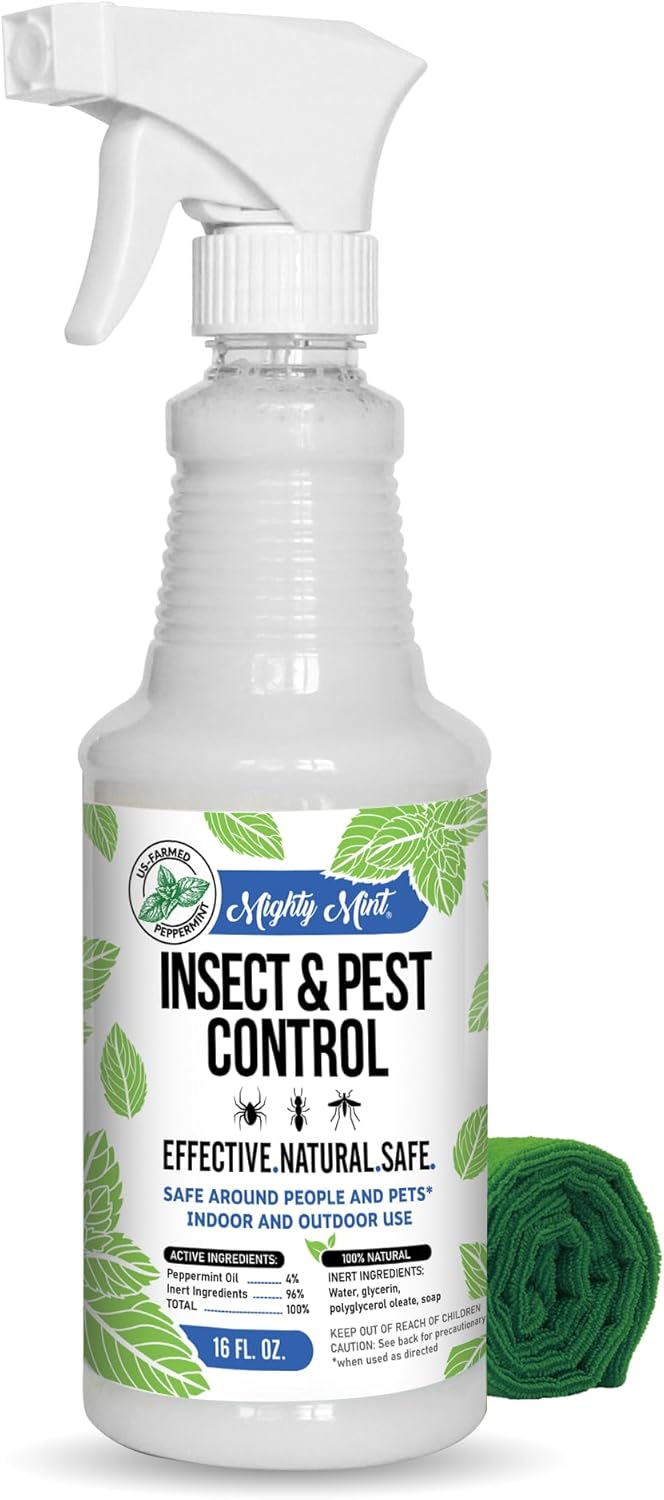
| Ingredients | Water, Glycerine, Polyglycerol oleate, Soap, Peppermint oil |
|---|---|
| Use Areas | Indoor / Outdoor |
| Size | 16 oz |
Mighty Mint is a plant-based, ready-to-use spray that uses concentrated peppermint oil to repel a broad range of household and patio pests. You apply it directly to problem areas such as baseboards, entryways, patios and around outdoor seating; the manufacturer recommends shaking and spraying until surfaces are covered and repeating applications two or more times per week for best results. Notable features include a peppermint-only scent profile, a formulation that avoids synthetic fragrances and the convenience of a 16 oz spray bottle for targeted spot treatments. Practical benefits are that it is safe to use around people and pets when dry and does not leave obvious stains on most surfaces, and the scent can make treated areas smell fresher than chemical alternatives. Important limitations are that it is a repellent rather than a pesticide so it works by discouraging pests rather than killing them, effectiveness depends on regular reapplication and it should not be applied when pollinators are present or to skin or food-contact surfaces.
Best for: Buyers who prioritize natural, low-toxicity solutions and want a targeted spray to reduce insects around patios and entryways while keeping family and pets in mind.
Less Ideal for: Anyone needing a one-time extermination or long-term residual pesticide for severe infestations should consider professional treatments or products formulated to kill pests rather than repel them.
- Plant-based peppermint formula that avoids synthetic fragrances
- Ready-to-use spray for quick, targeted indoor and outdoor applications
- Safe for people and pets when used as directed and allowed to dry
- Nonstaining on most surfaces and leaves a fresh mint scent
- Repels rather than kills insects so regular reapplication is needed to maintain protection
- Strong peppermint concentration may bother scent-sensitive individuals and requires keeping children and pets away until dry
Verdict: Choose Mighty Mint when you want a pet-friendly, plant-based spray to reduce patio and entryway insects with a fresh peppermint scent.
Wondercide Outdoor Pest Control Spray — 32 oz Ready-to-Use

| Format | Pre-mixed, hose-end spray |
|---|---|
| Active ingredients | Cedarwood Oil 12.63%, Sesame Oil 2.73% |
| Coverage | Up to 5,000 sq ft (general); 2,500 sq ft (ticks/mosquito repel) |
Wondercide Ready-to-Use Outdoor Pest Control is a hose‑end spray designed for treating yards up to 5,000 sq ft for general pests and 2,500 sq ft for ticks and mosquito repellency. You attach the bottle to a garden hose, sweep the nozzle across lawns, patios, and foundation lines, and the cedarwood‑based formula delivers quick coverage with no dry time required. Notable features include plant-powered active ingredients (cedarwood and sesame oils), ready-to-use convenience, and instructions for both active infestations and preventative maintenance. Practical benefits are that it is safe to use around people and pets when directions are followed, residues are reported to be non-harmful to pollinators, and the hose attachment makes treating large areas fast. Important limitations are that effectiveness depends on water pressure, walking speed, and weather, heavy rain may require reapplication, and spraying in temperatures above 90°F or direct sun can cause plant burn. Users who need an all‑season, high‑durability pesticide for heavy infestations should plan on repeated applications and follow label precautions to protect sensitive plants.
Best for: Buyers who prioritize effective, plant‑based mosquito and tick control for medium to large yards and want a fast hose‑attached solution that is safe around families and pets when used as directed.
Less Ideal for: Gardeners who need a single, long‑lasting professional‑grade pesticide for severe, persistent infestations or who cannot reapply after rain should consider alternative, heavier‑duty treatments.
- Ready-to-use hose-end applicator for fast coverage of large yards
- Plant-based active ingredients (cedarwood and sesame oils) that target common yard pests
- No dry time required so kids and pets can re-enter treated areas quickly
- Covers up to 5,000 sq ft for general pest control and 2,500 sq ft for ticks/mosquito repellency
- May cause phytotoxic burning if applied in direct sun or temperatures above 90°F
- Performance depends on water pressure and user walking speed which can lead to uneven coverage
- Heavy rain can wash it away and requires reapplication
Verdict: If you want a fast, family- and pet-friendly plant‑based spray to reduce mosquitoes and ticks across a medium to large yard, this ready‑to‑use hose‑end formula delivers practical, repeatable results.
Choosing the Right Natural Insect Repellent for Yards: Key Factors to Consider
Target Pest Spectrum
Different natural repellents control different pests. Some botanical actives are more effective against mosquitoes, while others reduce tick activity or deter biting flies.
Understanding which pests are most problematic in your yard helps you choose a repellent with the right active ingredients and application pattern. For homeowners with tick concerns near wooded edges, look for products with documented tick suppression. For patio mosquito relief, focus on residual repellency and perimeter treatments that disrupt mosquito landing and resting sites.
Coverage Area and Reapplication Frequency
Coverage describes how much square footage an application will protect and whether the product is meant for spot treatments, perimeter bands, or whole-yard broadcast use.
Natural botanicals often break down faster than synthetics, so reapplication intervals can be shorter. Consider how much product you need for seasonal use and whether the application method-pump sprayer, hose-end, or ready-to-use trigger-matches your yard size and willingness to reapply every few days to weeks.
Plant Safety and Phytotoxicity
Even natural ingredients can stress sensitive ornamentals, seedlings, or edible crops. Some oils and botanical extracts can cause leaf burn when applied in hot sun or at high concentrations.
Check label directions for crop and ornamental restrictions and recommended dilution. Apply to a small test area before treating valuable plants and avoid spraying blooms to protect pollinators. Timing applications for cooler parts of the day reduces the chance of foliar damage.
Pollinator and Pet Considerations
Gardeners need solutions that reduce biting pests without harming bees, butterflies, or neighborhood pets. Some natural repellents repel pollinators or leave residues that discourage beneficial insects from visiting flowers.
Choose products with clear guidance on where and when to spray to avoid open flowers. For pet-friendly yards, select products labeled safe for use around domestic animals and follow drying times before allowing pets into treated areas.
Application Method and Practicality
Ease of application affects whether a treatment will actually be used correctly and consistently. Hose-end and ready-to-use sprayers lower the barrier for large yards, while concentrated formulas can be more economical but require mixing.
Consider attachment compatibility with your existing equipment, the ergonomics of repeated spraying, and whether the product requires protective gear. Products that allow targeted perimeter or border treatments often use less material and reduce exposure to desirable plants.
Ingredient List and Environmental Persistence
Review active ingredients and any inert additives. Botanical actives like certain essential oils work by repelling or confusing insects but often degrade quickly in sunlight and rain. Persistence affects how often you must reapply and the product's effectiveness after rainfall.
Longer-lasting formulations may use microencapsulation or natural fixatives to extend activity. Weigh the desire for longer protection against potential impacts on non-target organisms and soil health when residues accumulate.
How Natural Actives Work in Garden Settings
Natural insect repellents typically use botanical oils and extracts that interfere with insect host-seeking behavior or mask attractants. In a yard setting you will mostly use these products on perimeter vegetation, shrub lines, and areas where mosquitoes rest to reduce landing rates near seating areas.
Because these actives are biodegradable, treatments often require frequent reapplication, especially after heavy rain. Applied correctly they provide a safer alternative to broad-spectrum insecticides for homeowners who want to protect pollinators and avoid residues on ornamental plants.
- Target shaded, humid resting spots where mosquitoes congregate.
- Avoid direct spray on open flowers to protect bees.
- Reapply after significant rainfall or every few days during peak pest pressure.
Best Application Timing and Weather Considerations
Apply repellents in the early morning or late evening when temperatures are cooler and pollinator activity is lower. This reduces phytotoxic risk and limits exposure of beneficial insects. Avoid spraying during high winds to prevent drift onto desirable plantings.
Check the forecast: expect to reapply after rain because natural actives wash off faster than many synthetic options. For patios and seating areas, schedule treatments an hour or two before use to allow residues to dry.
- Spray at dawn or dusk to minimize sunburn risk on foliage.
- Skip applications before heavy rain or wind.
- Allow treated areas to dry before allowing children or pets access, per label guidance.
Integrating Repellents with Landscape Practices
Natural repellents work best as part of an integrated approach. Reducing standing water, maintaining trimmed vegetation, and thinning dense shrub layers can lower breeding and resting habitat for biting insects. Combine physical habitat changes with targeted perimeter treatments for the most reliable relief.
Place seating and play areas away from wet depressions and dense border plantings. Use repellents to create a treated buffer around high-use zones instead of relying on broadcast sprays across the entire yard.
- Remove or treat small water sources like clogged gutters and birdbaths.
- Use targeted perimeter sprays around patios rather than blanket applications.
- Thin dense plantings to reduce shaded, humid microhabitats preferred by mosquitoes.
Safe Use Around Vegetable Beds and Edibles
If your yard includes vegetable gardens, protect edibles by using repellents labeled safe for use near food-bearing plants, or avoid spraying directly on vegetable foliage. Consider placing a treated perimeter barrier around garden beds instead of treating the crops themselves.
When using botanical sprays near harvestable plants, follow withholding or harvest interval guidance if provided. Washing produce before consumption is a good practice regardless of treatment history.
- Treat borders around beds rather than spraying garden interiors.
- Avoid spraying flowering vegetables during bloom to protect pollinators.
- Rinse homegrown produce before eating when treatments have been applied nearby.
Maintenance and Seasonal Planning
Plan repellent use seasonally by matching application frequency to local pest activity. In many regions, peak mosquito and tick activity occurs in late spring through early fall. Establish a schedule for perimeter treatments and revisit it after heavy storms or when pest pressure rises.
Keep records of application dates and observed pest reductions so you can adjust timing and dilution rates for the next season based on what worked in your specific yard.
- Start perimeter treatments before seasonal pest peaks if possible.
- Track applications and outcomes to refine timing year to year.
- Store concentrates and unused product according to label instructions to preserve efficacy.
How We Chose the Best Natural Insect Repellent for Yards
We evaluated candidate natural yard repellents using criteria that reflect real garden use. Efficacy Against Target Pests measured lab-backed or widely reported activity against mosquitoes, ticks, and biting flies under outdoor conditions. Coverage Area and Application Rate looked at how much area a product treats per container and how often reapplication is needed for typical yard sizes. Plant and Pollinator Safety considered labeled precautions, ingredient phytotoxicity risk, and any known impacts on bees and beneficial insects. Ease of Application covered available formats, sprayer compatibility, and how straightforward treatments are for borders, shrubs, and lawn edges. Ingredient Transparency and Natural Sourcing rated how clearly active botanical ingredients are disclosed and whether they are minimally processed. We excluded products with synthetic pyrethroids, unclear ingredient lists, or claims unsupported by usage directions. Our shortlist favors solutions designed for outdoor perimeter or localized treatments rather than personal wearable repellents. The scoring emphasized real-world coverage, measurable pest reduction, and documented safety guidance for gardens and pets.
FAQ
Are natural yard repellents safe for bees and other pollinators?
Many natural repellents are less harmful than broad-spectrum insecticides, but some botanical oils can deter or harm pollinators if sprayed directly on flowers. Apply treatments to non-blooming foliage and use timing that avoids peak pollinator foraging to reduce impacts.
How often do I need to reapply natural repellents outdoors?
Reapplication frequency varies widely depending on the active ingredient and weather. Many botanical-based products need reapplying every few days to a couple of weeks, and they usually require reapplication after heavy rain.
Can I use natural repellents around vegetable gardens?
Yes, with caution. Avoid spraying directly on edible parts and open flowers. Use perimeter treatments around beds and follow any label guidance about use near food crops and harvest intervals.
Will natural repellents completely eliminate mosquitoes and ticks?
No product guarantees complete elimination. Natural repellents reduce landing and biting activity and can lower local pest pressure when used with habitat reduction and other control measures. Expect partial control and plan for repeated applications during peak seasons.
Are concentrated formulas worth the extra mixing?
Concentrates can be economical for larger yards but require careful measuring and proper equipment. If you prefer convenience and smaller-scale use, ready-to-use sprayers or hose-end formulations may be a better fit.
Is it safe to let pets into treated areas?
Many natural repellents dry down to residues that are low risk, but follow the product label for wait times before allowing pets into treated areas. Keep pets away during application and until sprays have fully dried to minimize accidental contact.
Final Verdict
Choosing a natural insect repellent for yards means balancing pest reduction with plant health and pollinator safety. Prioritize products that match the pests you face, offer a coverage pattern that fits your yard size, and provide clear guidance for protecting flowers, edibles, and pets. Accept that botanical solutions often need more frequent reapplication than synthetic alternatives, and combine treatments with habitat management for the best results. Focus on practical tradeoffs-ease of application versus longevity, and plant safety versus pest spectrum-to pick the approach that keeps your yard comfortable and garden-friendly.
