

Note: This article contains affiliate links. If you click on these links and make a purchase, I may earn a small commission at no extra cost to you. This helps support my research and content. Read my full affiliate disclosure here.
Fleas can make life miserable for cats and their owners, causing itching, irritation, and the risk of secondary skin problems. Choosing the right cat flea spray matters because effectiveness, safety for sensitive skin, and ease of application all shape how quickly you and your cat get relief and how likely you are to keep up with treatment. This guide covers our shortlisted options across the most common use scenarios for indoor and outdoor cats and for households with multiple pets. We evaluate each spray for rapid flea knockdown, residual protection, and safety for cats with sensitive skin. Read on for practical guidance to match the spray you choose to your cat's lifestyle and health needs.
Top Picks at a Glance
| Best Overall The best all-around choice for most situations | Vet's Best Flea & Tick Home Spray for Cats, Cotton Spice, 32 oz |  |
| Best Quality Built to a higher standard if you want something more solid | ADAMS Plus Flea & Tick Spray for Dogs & Cats, 16 fl oz |  |
| Best Value The sweet spot between price and what you get | ADAMS Plus Flea & Tick Spray for Dogs & Cats, 8 fl oz |  |
| Best Budget The cheapest option that still gets the job done reliably | Hartz UltraGuard Plus Cat Flea & Tick Spray, 8 oz |  |
| Most Popular A crowd favorite that many people choose with confidence | Wondercide Flea, Tick & Mosquito Spray for Pets & Home — Rosemary, 16 fl oz |  |
Vet's Best Flea & Tick Home Spray for Cats, Cotton Spice, 32 oz
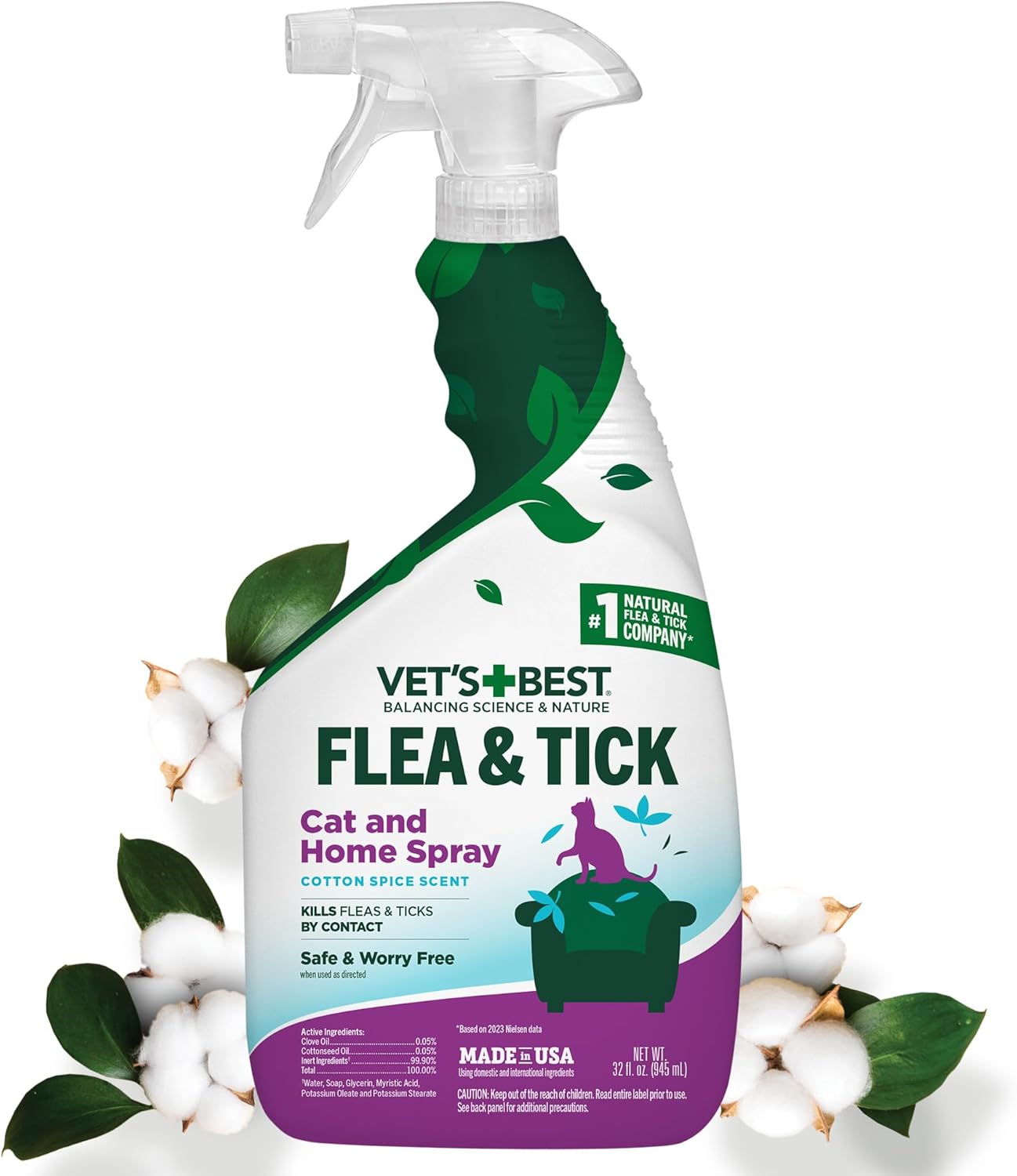
| Unit Count | 32 Fluid Ounces |
|---|---|
| Item Form | Spray |
| Scent Name | Cotton Spice |
| Target Species | Cat |
| Active Ingredients | Clove Oil 0.05%, Cottonseed Oil 0.05% |
Vet's Best Flea & Tick Home Spray for Cats is a plant-powered spray intended for indoor use on cats 12 weeks and older and for treating pet bedding, carpets, and furniture. The formula uses low concentrations of clove and cottonseed oils in a water-based carrier to kill fleas, flea eggs, ticks, and mosquitoes on contact while leaving a mild cotton spice scent. Typical use is a light spray on the cat’s coat (brushed in so it reaches the skin) up to twice weekly for infestations or once weekly for maintenance, plus spot treatment of bedding and rugs. Practical benefits include a gentler, non-chemical option for multi-cat homes and easy integration with other prevention methods. Important limitations are that sensitivity can occur with some cats so a small test application is required and the product is not intended for kittens under 12 weeks or for species not listed on the label. It is designed for environmental control rather than systemic protection, so it works best combined with a veterinarian-recommended flea control program for full-season prevention.
Best for: Buyers who want a gentler, natural-feeling indoor flea control option for cats and their living spaces and who plan to combine environmental treatment with other prevention methods.
Less Ideal for: Owners seeking a single, long-lasting systemic product or protection for kittens under 12 weeks should consider veterinarian-prescribed alternatives.
- Plant-based formula targets fleas, flea eggs, ticks, and mosquitoes on contact
- Versatile for use on cats (12 weeks+), bedding, carpets, and upholstery
- Mild cotton spice scent leaves home smelling fresh rather than medicinal
- Clear directions for weekly maintenance or twice-weekly treatment during infestations
- Not a systemic treatment so it will not provide long-lasting internal protection
- Some cats may show sensitivity so an initial patch test is required
Verdict: A plant-based indoor spray that offers a gentler, easy-to-use way to kill fleas and ticks on cats and in the home when used as part of a broader control plan.
ADAMS Plus Flea & Tick Spray for Dogs & Cats, 16 fl oz

| Unit Count | 16 Fluid Ounces |
|---|---|
| Item Form | Liquid |
| Scent Name | Unscented |
| Pet Type | Dog |
ADAMS Plus Flea & Tick Spray is a ready-to-use trigger bottle designed to give pets immediate relief from biting fleas and ticks while interrupting the flea life cycle. You apply it by spraying until the coat is damp, ruffling the hair to reach skin, and treating head and body areas as directed; dogs can be treated up to twice monthly and cats once monthly. The formula combines etofenprox and (S)-methoprene so it kills adult fleas and ticks on contact and also affects flea eggs and larvae to help prevent reinfestation around the home. Practical benefits include an unscented, quick-dry finish, suitability for multi-pet households, and a spray format that lets you spot-treat ticks directly. Important limitations are that it requires correct dosing by weight, is not for very young puppies or kittens, and treated pets and sprayed areas should be kept from contacting finished surfaces. For owners focused on strong, immediate control, this product performs as a straightforward topical spray rather than a monthly systemic treatment.
Best for: Pet owners who prioritize fast, performance-oriented flea and tick control and who prefer a convenient spray they can apply directly to pets for immediate relief and life-cycle control.
Less Ideal for: Owners who want a systemic monthly oral or spot-on product that requires less frequent application or who need treatment for very young puppies or kittens should look elsewhere.
- Kills adult fleas and ticks on contact while also targeting flea eggs and larvae
- Unscented quick-dry formula that is convenient for at-home use
- Trigger-spray bottle lets you treat specific areas and directly spray visible ticks
- Suitable for both dogs and cats, useful in multi-pet households
- Requires careful dosing by pet weight and periodic reapplication to maintain protection
- Not suitable for puppies under 10 weeks or kittens under 12 weeks of age
Verdict: Choose ADAMS Plus spray if you want a fast-acting, spray-on solution that kills fleas and ticks on contact and helps break the flea life cycle for multi-pet households.
ADAMS Plus Flea & Tick Spray for Dogs & Cats, 8 fl oz
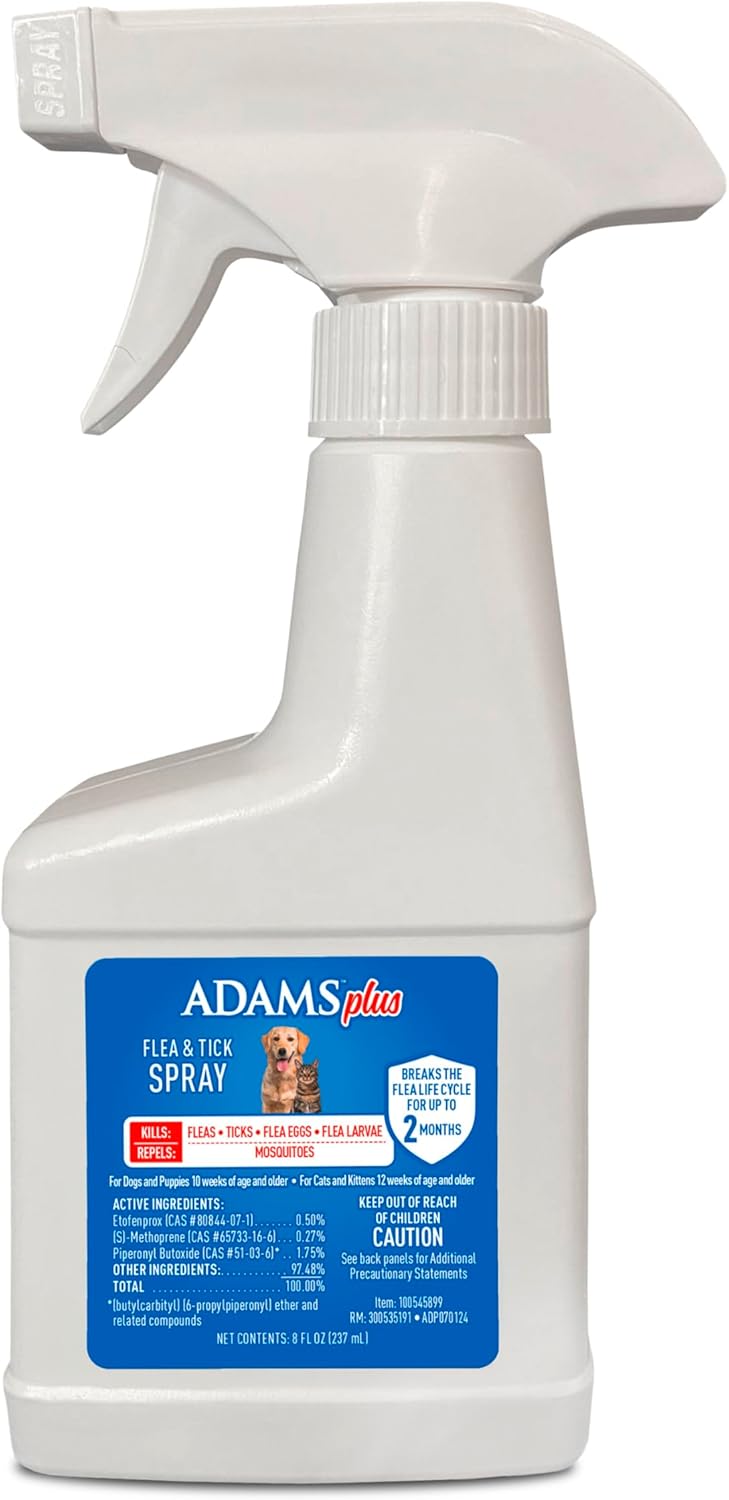
| Unit Count | 8 Fluid Ounces |
|---|---|
| Pet Type | Cat, Dog |
| Item Form | Liquid |
| Active Ingredients | Etofenprox 0.5%, S-Methoprene 0.27%, Piperonyl Butoxide 1.75% |
ADAMS Plus Flea & Tick Spray is a ready-to-use trigger bottle designed to treat dogs and cats and to reduce household reinfestation by attacking multiple flea life stages. You use it by spraying a light, even coverage onto the pet until the coat is damp, ruffling the hair to reach skin and targeting visible ticks directly. The formula combines etofenprox, S-methoprene and piperonyl butoxide so it kills adult fleas and ticks on contact while also preventing eggs and larvae from developing for extended protection. It is unscented and fast-drying, which makes application straightforward for multi-pet homes. Directions limit frequency of use by species and weight, so following label dosing is important to avoid overapplication. The trigger sprayer is convenient for spot treatments and monthly maintenance, but for heavy indoor infestations you will still need concurrent home or yard treatments because only a small percentage of fleas live on the pet at any time. Overall, this is a practical, versatile spray for monthly flea and tick control on cats and dogs when used as part of an integrated pest plan.
Best for: Buyers who want a straightforward, multipurpose spray to add monthly flea and tick protection for cats and dogs and who plan to use it alongside home or yard treatments for full control.
Less Ideal for: People looking for a one-step solution for heavy indoor infestations or those who need daily or very frequent protection for pets.
- Dual-action formula kills adult fleas and ticks and interrupts flea egg and larval development
- Ready-to-use trigger bottle is fast-drying and unscented for easier application
- Suitable for both dogs and cats, useful in multi-pet households
- Provides additional mosquito repellency for short periods after application
- Label restricts application frequency by species so it is not suitable for more frequent use
- Spray treats the pet but does not eliminate infestation sources in the home or yard alone
Verdict: A practical, ready-to-use spray that kills fleas and ticks and disrupts the flea life cycle, ideal for monthly maintenance on cats and dogs when used with broader home control.
Hartz UltraGuard Plus Cat Flea & Tick Spray, 8 oz

| Unit Count | 8 Fluid Ounces |
|---|---|
| Item Form | Spray |
| Scent Name | Fresh |
| Target Species | Fleas, Ticks, Flea Eggs |
| Active Ingredients | Methoprene; Tetrachlorvinphos |
Hartz UltraGuard Plus is a budget-friendly cat spray that delivers quick-contact control of fleas and ticks plus an insect growth regulator to target eggs and larvae. The trigger sprayer produces a broad, gentle stream so you can mist a cat’s coat, bedding, or furniture and then rub the product through the fur; instructions recommend reapplying weekly if needed. Active ingredients include tetrachlorvinphos and methoprene, which together kill adults and interrupt immature stages, and the formula claims to start killing fleas within about 10 minutes. Practical benefits are straightforward: easy topical application without messy baths and the ability to treat both the pet and its environment. Limitations to note are that the product contains older active ingredients that some owners avoid, it requires weekly application rather than a long-lasting single dose, and cats with sensitivity may need a patch test first. For simple, low-cost outbreak control or maintenance in multi-pet households this spray is a usable option; for chronic heavy infestations or pets with special sensitivities consider veterinary products with different chemistries.
Best for: Shoppers who need an inexpensive, easy-to-apply flea control to treat occasional outbreaks and household areas and who prioritize low upfront cost over long-duration prescriptions.
Less Ideal for: Owners managing severe, recurring infestations, pets with known sensitivities, or those who prefer prescription-strength monthly treatments should consider alternatives.
- Contains an insect growth regulator plus adulticide to target eggs and larvae as well as adult fleas and ticks
- Trigger spray allows quick application to coat, bedding, and upholstery
- Starts killing fleas rapidly and can be used weekly for prevention
- Affordable 8 oz size suited to occasional treatments
- Uses older active ingredients that some pet owners prefer to avoid
- Requires repeat weekly applications rather than a single long-duration treatment
Verdict: A low-cost, easy-to-use spray that kills adult fleas and interrupts immature stages, making it a practical choice for budget-focused, at-home flea control.
Wondercide Flea, Tick & Mosquito Spray for Pets & Home — Rosemary, 16 fl oz

| Unit Count | 16 Fluid Ounces |
|---|---|
| Item Form | Spray |
| Scent Name | Rosemary |
| Target Species | Dog |
| Active Ingredients | 4.2% Cedar Oil; 1.5% Rosemary Oil; 2.2% Sodium Lauryl Sulfate |
Wondercide Rosemary Flea, Tick & Mosquito Spray is a 3‑in‑1, plant‑powered spray formulated to kill and repel fleas, ticks, and mosquitoes on pets and in living spaces. You use it by misting the pet’s coat (rubbing against the fur) for spot or full‑body applications after a short patch test, and by spraying bedding, furniture, and floors from 8–12 inches away. The formula lists cedar oil, rosemary oil, and a mild surfactant as active ingredients and is presented as non‑chemical and safe for all life stages when directions are followed. Practical benefits include a pleasant rosemary scent, a non‑greasy, non‑staining finish, and the ability to treat both animals and environments with one product. Important limitations are that it is not EPA registered as an insecticide and relies on botanical actives, which may require more frequent reapplication than prescription or chemical treatments; some sensitive pets could still react and a patch test is advised. This product is best for owners looking for a gentler, natural alternative to conventional topical drugs who are comfortable following label directions closely.
Best for: Buyers who prioritize safer, plant‑based pest control and want a single spray they can use on both cats and household areas with proven customer backing.
Less Ideal for: Owners seeking a veterinary prescription‑level or long‑lasting chemical treatment for heavy infestations should consider clinical alternatives rather than this botanical spray.
- Plant‑based active ingredients (cedar oil and rosemary oil) for a more natural option
- Can be used on both pets and home surfaces to break the flea life cycle
- Non‑staining, non‑greasy formula with a pleasant rosemary scent
- Suitable for all life stages when directions are followed
- Not EPA registered as an insecticide so it is marketed under FIFRA 25(b) exemption
- May need more frequent applications compared with chemical prescription products
- Some pets can be sensitive so a patch test is required before full use
Verdict: A well‑reviewed, plant‑based spray that provides a gentler, multiuse way to kill and repel fleas, ticks, and mosquitoes on pets and in the home.
Choosing the Right Cat Flea Spray: Key Factors to Consider
Active Ingredient and Mode of Action
Knowing the active ingredient matters because it determines how the spray attacks fleas and what stages of the flea life cycle it affects. Some ingredients kill adult fleas quickly but do not affect eggs or larvae, which means you need follow-up treatments or environmental control. Other formulations include insect growth regulators that reduce egg viability and disrupt the next generation. The mode of action also influences whether the spray is safe for sensitive cats or households with birds or fish.
Always check that the active ingredients are labeled for use on cats. Ingredients safe for dogs are not always safe for cats, so ingredient-level transparency on the label is essential for making a safe choice.
Safety for Skin, Kittens, and Pregnant Cats
A cat's skin can be unusually sensitive, and kittens or pregnant cats need additional protection from harsh chemicals. Look for sprays formulated or labeled for use on kittens above a specified age and for pregnant or nursing cats if those cases apply. Hypoallergenic or fragrance-free formulations reduce irritation risk, while oils or alcohol-heavy bases can dry or sting delicate skin.
Consider whether the spray advises a patch test or delayed bathing after application. Follow label directions about age and weight limits and any required veterinary consultation for young, old, or medically compromised cats.
Speed and Duration of Effect
Speed of kill matters when fleas are already causing intense itching. A spray that produces rapid knockdown can provide quick relief while you address environmental infestation. Residual duration matters for ongoing protection; longer residual action reduces the frequency of reapplication and helps break the flea lifecycle when combined with other measures.
Be realistic about expectations: even sprays with residual action rarely replace broader integrated pest control when homes are heavily infested. Think about how fast you need relief and whether you can commit to follow-up applications as recommended.
Ease of Application and Handling
Application ease determines whether you can treat your cat safely at home. Sprays with a fine mist, clear usage instructions, and a nozzle that allows targeted application on the coat are easier to use than coarse, high-pressure sprays that cause stress. Consider bottle size, grip comfort, and whether the product requires dilution or additional mixing steps.
Handling guidance for minimizing exposure to household members and other pets is also important. The label should give clear instructions on drying time, when cats can be reintroduced to shared spaces, and whether treated cats should be kept separate from young children or other vulnerable pets until the product dries.
Environmental Impact and Home Control
A flea spray is only part of effective control because most infestations persist in the environment. Consider whether a spray includes an insect growth regulator or other components that target eggs and larvae, which helps reduce environmental re-infestation. Also assess the product's environmental profile, such as biodegradability of solvents or reliance on pyrethroids, which can affect non-target wildlife like aquatic organisms.
Plan to combine a topical spray with vacuuming, laundering bedding, and treating carpets or outdoor resting spots as needed. Choosing a product that fits into an integrated control strategy makes long-term success more likely.
When to Use a Spray Versus Other Flea Controls
Sprays are particularly useful when you need fast contact kill on the animal and want to target the coat directly. They work well for treating a single affected cat or for spot-treating localized areas of fur. Sprays are not a substitute for systemic treatments when heavy or persistent infestations are present, but they can provide quick relief and help limit flea transfer while you implement broader control measures.
Consider a spray if your cat resists topical spot-on treatments or if you prefer to avoid systemic delivery. Conversely, for severe household infestations or multi-cat homes, pairing a spray with environmental measures and longer-acting products gives better outcomes.
- Use sprays for immediate knockdown and targeted treatment
- Combine with vacuuming and washing bedding for best results
- Avoid using dog-only sprays or unapproved ingredient combinations
How to Apply a Cat Flea Spray Safely
Set up a calm, contained space where the cat can be gently restrained and will not rub against furniture during drying. Read the entire label before starting, including instructions for the amount to apply and any age or weight restrictions.
Spray from a short distance to wet the coat without soaking the skin, working from the neck backward. Avoid eyes, mouth, and genital areas, and ventilate the room if the product advises. After application, keep the treated cat separated from other pets and children until the spray has dried and the label indicates it is safe to resume normal contact.
- Perform a small patch test if the cat has known skin sensitivity
- Wear gloves and follow any household safety directions on the label
- Avoid bathing the cat immediately after treatment unless the label allows it
Managing Severe or Recurrent Infestations
If fleas return after initial treatment, focus on the environment as the likely source. Flea eggs and larvae in carpets, upholstery, and pet bedding will hatch over several weeks. Use repeated treatments as labeled, increase cleaning frequency, and consider integrating insect growth regulators to interrupt the life cycle.
In multi-pet households treat all animals appropriately and coordinate timing to prevent reintroduction. Persistent infestations may require veterinary consultation to rule out underlying health issues that make a cat more attractive to fleas or to consider prescription-level interventions.
- Treat all pets in the household according to label directions
- Vacuum and wash bedding frequently during control efforts
- Consider environmental treatments for heavy indoor infestations
Special Considerations for Outdoor and Barn Cats
Outdoor or barn cats encounter higher flea pressure and may need more frequent applications or products with stronger residual protection. Choose formulations labeled for outdoor use and check whether the spray maintains activity after exposure to rain or frequent movement between indoor and outdoor environments.
For free-roaming cats, coordinate treatment timing with handling opportunities and plan for periodic reapplication. Also consider non-chemical measures such as predator-prey management of rodent hosts and cleaning of sleeping areas where fleas thrive.
- Expect more frequent reapplication for outdoor cats
- Protect sleeping and resting spots by cleaning regularly
- Avoid using products outdoors in a way that exposes wildlife or aquatic habitats
Reading Labels and Understanding Warnings
Labels tell you which life stages the spray targets, age and weight limits, and whether the product is safe around kittens, pregnant cats, or pets with medical conditions. Look for clear first-aid instructions and any contraindications for combining with other flea products.
Pay attention to re-entry times for treated areas and directions about laundering bedding. If the label is unclear about feline safety or mixing instructions, choose a different product or consult a veterinarian for guidance.
- Confirm the product is explicitly labeled for use on cats
- Follow application frequency and storage guidance exactly
- Note any environmental hazard statements on the label
How We Chose the Best Cat Flea Spray
We prioritized products that balance rapid flea control with safety for cats and people. Our selection process focused on measurable performance, formulation transparency, and real-world handling. We evaluated sprays based on speed of kill against adult fleas, duration of residual protection, ingredient profile and suitability for cats with sensitive skin, and ease of application during routine care. Other practical filters included whether a spray is safe to use around kittens or pregnant cats when labeled accordingly, clarity of application instructions, and packaging that reduces accidental exposure. We excluded products that lacked clear feline-specific labeling or that relied solely on ingredients not recommended for cats. We also set aside treatments intended only for dogs, spot-on medications, or systemic prescription products because they fall outside the scope of over-the-counter topical sprays. The resulting list emphasizes sprays that offer reliable flea knockdown, reasonable residual activity, and clear safety guidance for typical household situations.
FAQ
Can I use a dog flea spray on my cat?
Usually not. Many dog flea sprays contain ingredients that are toxic to cats. Always use products specifically labeled for feline use and check ingredient lists if you are unsure.
How long after spraying will my cat stop scratching?
Relief often begins within hours with a fast-acting spray, but full reduction in scratching can take a day or more as dead fleas drop off and irritation subsides. Ongoing itching may indicate a secondary skin issue that needs veterinary attention.
Is it safe to treat kittens with flea spray?
It depends on the product. Some sprays are labeled for kittens above a certain age or weight, while others are not recommended. Always follow label age limits and consult a veterinarian for very young kittens.
Do flea sprays kill flea eggs and larvae in the home?
Some sprays include insect growth regulators or ovicidal ingredients that reduce egg viability and larval survival, but many contact sprays mainly kill adult fleas. Environmental cleaning and repeat treatments are usually necessary to address eggs and larvae.
How often should I reapply a flea spray?
Follow the product label for reapplication intervals. Frequency depends on residual protection claims and infestation severity. For heavy infestations, more frequent treatments and environmental control are often required.
Final Verdict
Choosing the right cat flea spray means balancing fast relief with safety for your cat and household. Prioritize products labeled for cats, check active ingredients and kitten or pregnancy guidance, and match the spray's residual claims to the level of flea pressure you face. Remember that sprays work best as part of an integrated approach that includes cleaning and treating the environment. If your cat has sensitive skin, medical conditions, or if infestations persist despite careful treatment, consult a veterinarian for tailored advice. With the right spray and a consistent control plan, most households can bring fleas under control and keep cats comfortable.
