

Note: This article contains affiliate links. If you click on these links and make a purchase, I may earn a small commission at no extra cost to you. This helps support my research and content. Read my full affiliate disclosure here.
A neat edge transforms a lawn from casual to cared-for, and the right hand lawn edger makes that finish quick and repeatable. If you garden in a small yard, front lawn, or around beds and walkways, choosing the correct tool affects the quality of the cut, how much physical strain you feel, and how often you need to touch up edges. This guide shortlists the top hand lawn edgers suited to home turf work and explains the practical differences between them. We evaluate each pick on cutting precision, durability, ergonomics, and maintenance demands to help you decide which style fits your routine.
Top Picks at a Glance
| Best Overall The best all-around choice for most situations | Root Slayer 22611 Serrated Garden Edger |  |
| Best Quality Built to a higher standard if you want something more solid | Fiskars 38.5" Steel Long-Handled Garden Edger |  |
| Best Value The sweet spot between price and what you get | KYEEN-TOOLS Half Moon Lawn Edger with Serrated Blade and T-Handle |  |
| Best Budget The cheapest option that still gets the job done reliably | DIIG Manual Lawn Edger with 8.5" Steel Blade and Long Handle |  |
| Highest Rated A top-rated pick with lots of positive feedback | CKLT 41" One-Piece Manual Lawn Edger with Replaceable Serrated Blade |  |
| Most Popular A crowd favorite that many people choose with confidence | CKLT 41in One-Piece Manual Lawn Edger with Serrated Spring Steel Blade |  |
| Best Seller A high-volume bestseller chosen again and again | CKLT 40-inch One-Piece Manual Lawn Edger with Serrated Spring Steel Blade |  |
Root Slayer 22611 Serrated Garden Edger

| Material Type | Alloy Steel |
|---|---|
| Blade Material | Carbon Steel |
| Handle Material | Fiberglass |
| Grip Type | Ergonomic |
| Gauge | 13 |
The Root Slayer 22611 is a heavy-duty manual edger built to create crisp lawn and planting-bed borders without power tools. Its half-moon, powder-coated carbon steel blade uses an inverted V tip and serrated teeth to bite into compacted soil and small roots, while the resin-encased steel shaft and fiberglass handle give a stiff, controlled feel when you step into the blade. Typical use is standing edging along sidewalks, driveways, or beds where you want straight lines or smooth curves; the ergonomic O-style grip helps leverage each cut and reduces wrist strain. Notable features are the aggressive serrations for cutting through turf and the corrosion-resistant blade finish for durability. The tool saves time compared with a regular shovel for edging tasks and removes the need for noisy equipment. Important limitations are its single-purpose design and the physical effort required for deep roots or very rocky soil, where a powered trencher or heavier spade would be more efficient.
Best for: A practical gardener who wants a reliable, manual tool for neat lawn and bed edges and prefers a durable, ergonomic hand tool over powered equipment.
Less Ideal for: People who need to remove large tree roots, dig deep trenches, or work primarily in rocky terrain should consider a heavier spade or powered trencher instead.
- Serrated half-moon blade and V-shaped tip that cut turf and minor roots effectively
- Powder-coated carbon steel blade resists corrosion and stands up to edging tasks
- Resin-encased steel shaft with fiberglass handle provides stiffness and control
- Ergonomic O-handle improves leverage and reduces wrist strain during repeated cuts
- Not suited for very large roots or extremely rocky ground where more force or powered tools are needed
Verdict: Choose the Root Slayer edger when you want a durable, ergonomic manual tool that cuts clean landscape edges and handles minor roots without power.
Fiskars 38.5" Steel Long-Handled Garden Edger

| Material Type | Alloy Steel |
|---|---|
| Item Type Name | 38.5" Steel Edger |
| Power Source | manual |
| Operation Mode | Manual |
The Fiskars 38.5" Steel Edger is a heavy-duty manual tool built for performance-oriented gardeners who need clean, repeatable lawn borders. Its welded 14-gauge hardened steel blade and large foot platform let you drive the blade into compact or turf-covered soil with focused force while the sharpened edge slices through grass for a neat cut. The long steel handle and T-grip enable two-handed control so you can apply more power without kneeling or stooping. Powder-coated steel resists rust and is easy to wipe clean after use. Because it is a straightforward manual edger there is no motor or moving parts to maintain, but it does require physical effort on very hard ground and periodic blade sharpening to keep the best results. For routine edging along sidewalks, garden beds, and pathways it delivers precise, durable performance, though users working in rock-heavy soil may find a powered alternative easier to use.
Best for: Gardening homeowners who prioritize durable, precise manual edging and want a tool that delivers clean borders without power equipment.
Less Ideal for: People with limited upper-body strength or yards with frequent buried rocks who would benefit from a powered or motorized edger.
- Welded 14-gauge hardened steel blade for long-lasting cutting performance
- Large foot platform concentrates force for easier penetration of compacted turf
- Long handle with T-grip gives two-handed control and reduces bending
- Powder-coated steel finish resists rust and cleans easily
- Requires physical effort and blade sharpening for best results on very hard or rocky soil
Verdict: Choose this Fiskars steel edger for reliable, high-performance manual edging that produces clean, long-lasting lawn borders.
KYEEN-TOOLS Half Moon Lawn Edger with Serrated Blade and T-Handle

| Blade material | High-carbon steel |
|---|---|
| Handle length | 38" |
| Blade type | Serrated |
| Weight | 2.75 pounds |
This KYEEN-TOOLS half-moon edger is a straightforward manual tool for creating crisp lawn and bed edges. The serrated high-carbon steel blade and weighted half-moon design slice through turf and compacted soil when used with controlled foot pressure, while the wide footrest helps stabilize each cut. A 38 inch T-handle keeps you more upright and reduces hand strain during longer edging sessions, and the rust-resistant coating simplifies cleaning and storage. It works well for straight and curved edges around sidewalks, flower beds, and decorative borders and can handle minor roots and moderately compacted soil without mechanical assistance. Limitations are the usual ones for manual edgers: it requires physical effort for long runs or very hard ground, and blade maintenance—cleaning and periodic sharpening—is necessary to keep performance consistent. The tool is compact to store but not suited to fully replacing powered sod cutters for large projects.
Best for: Buyers who want a durable, low-maintenance manual edger to create precise edges around lawns and beds and who prefer a simple tool that minimizes bending and hand strain.
Less Ideal for: People with large lawns, very rocky soil, or those who prefer a powered solution for long continuous edging should consider a mechanical edger instead.
- Serrated high-carbon steel blade for easier cuts through turf and compacted soil
- Ergonomic T-handle reduces bending and hand fatigue during use
- Wide footrest and weighted frame provide stable, controlled edging
- Rust-resistant finish simplifies cleaning and extends usable life
- Manual operation requires significant physical effort for long runs or very hard ground
- Blade needs periodic sharpening and drying to prevent corrosion over time
Verdict: A sturdy, ergonomic manual half-moon edger that delivers precise, controlled edges for gardeners who prioritize durability and reduced bending.
DIIG Manual Lawn Edger with 8.5" Steel Blade and Long Handle

| Blade width | 8.5 inches |
|---|---|
| Handle length | 39 inches |
| Material | Steel |
This DIIG manual lawn edger is a straightforward, budget-friendly tool for defining lawn edges and light sod cutting without gas or batteries. It uses an 8.5-inch thickened steel blade with a V-shaped cutting edge to slice through grass and shallow roots, while the wide foot plate and reinforced steel shaft let you apply controlled downward force from a standing position. Typical use is edging sidewalks, garden beds, and creating shallow trenches or sod lines where a precise, manual cut is needed. The long handle reduces bending and makes repeated passes less tiring than short-handled models. Practical benefits include low maintenance, simple construction, and portability for small to medium yards. Important limitations are that it is a manual tool intended for lighter sod and edging work rather than heavy-duty sod removal or deep trenching, and the steel blade will require occasional sharpening and rust prevention to keep cutting cleanly.
Best for: Buyers who want an inexpensive, no-frills manual tool to create tidy lawn edges and perform light sod cutting around beds and walkways without power equipment.
Less Ideal for: People with large areas of compacted soil, heavy clay, or who need to remove deep strips of sod regularly should choose a powered sod cutter or heavier-duty tool.
- Wide 8.5-inch steel blade with V-shaped edge for clean, precise cuts
- Long 39-inch handle allows edging from a standing position to reduce bending
- Wide foot plate improves stability and control when cutting
- Reinforced steel construction for routine garden use with low maintenance
- Designed for light to moderate sod cutting and not for heavy-duty sod removal
- Blade will need periodic sharpening and care to prevent rust
Verdict: A cost-conscious, low-maintenance manual edger that lets you cut clean lawn edges and light sod lines while avoiding power tools.
CKLT 41" One-Piece Manual Lawn Edger with Replaceable Serrated Blade

| Head Material | Spring Steel |
|---|---|
| Brand Name | CKLT |
| UPC | 663992368475 |
The CKLT 41-inch one-piece lawn edger is a straightforward, no-frills tool built for reliable, long-term yard care. Its integrated manganese steel tube construction and single-piece design make it sturdy enough to resist bending under regular use, so it feels solid when you drive the blade into turf or compact soil. The serrated spring steel blade slices cleanly through sod and retains edge better than a plain shovel blade, and the manufacturer includes an extra blade plus stainless fasteners for easy replacement. An 8-inch footplate gives good leverage and stability for consistent, straight cuts along sidewalks, driveways, and garden beds, and the black sand texture finish helps resist surface rust and simplifies cleaning. Because it is purely manual with no moving parts, maintenance is minimal, though heavy clay or rocky ground will still require more force and could dull the blade faster. If you need powered edging or adjustable handle options, this fixed-length, manual edger is not designed for those needs, but for dependable, low-maintenance edging it performs well.
Best for: Buyers who prioritize a durable, low-maintenance tool for regular lawn edging and want a dependable manual solution that stands up to repeated use.
Less Ideal for: Users who prefer powered edging, adjustable-handle ergonomics, or who regularly work in very rocky or compacted clay soils that require mechanized tools.
- One-piece manganese steel construction resists bending and adds durability
- Spring steel serrated blade provides cleaner cuts and holds edge longer
- Includes spare blade and stainless bolts for straightforward blade replacement
- 8-inch footplate increases leverage for easier, consistent edging
- Black sand texture finish improves rust resistance and eases cleaning
- Fixed-length, manual design can be tiring in heavy or rocky soil
- Blade will eventually dull with frequent use and needs periodic replacement
Verdict: A rugged, maintenance-light manual edger built to give homeowners reliable, long-lasting clean edges without depending on power tools.
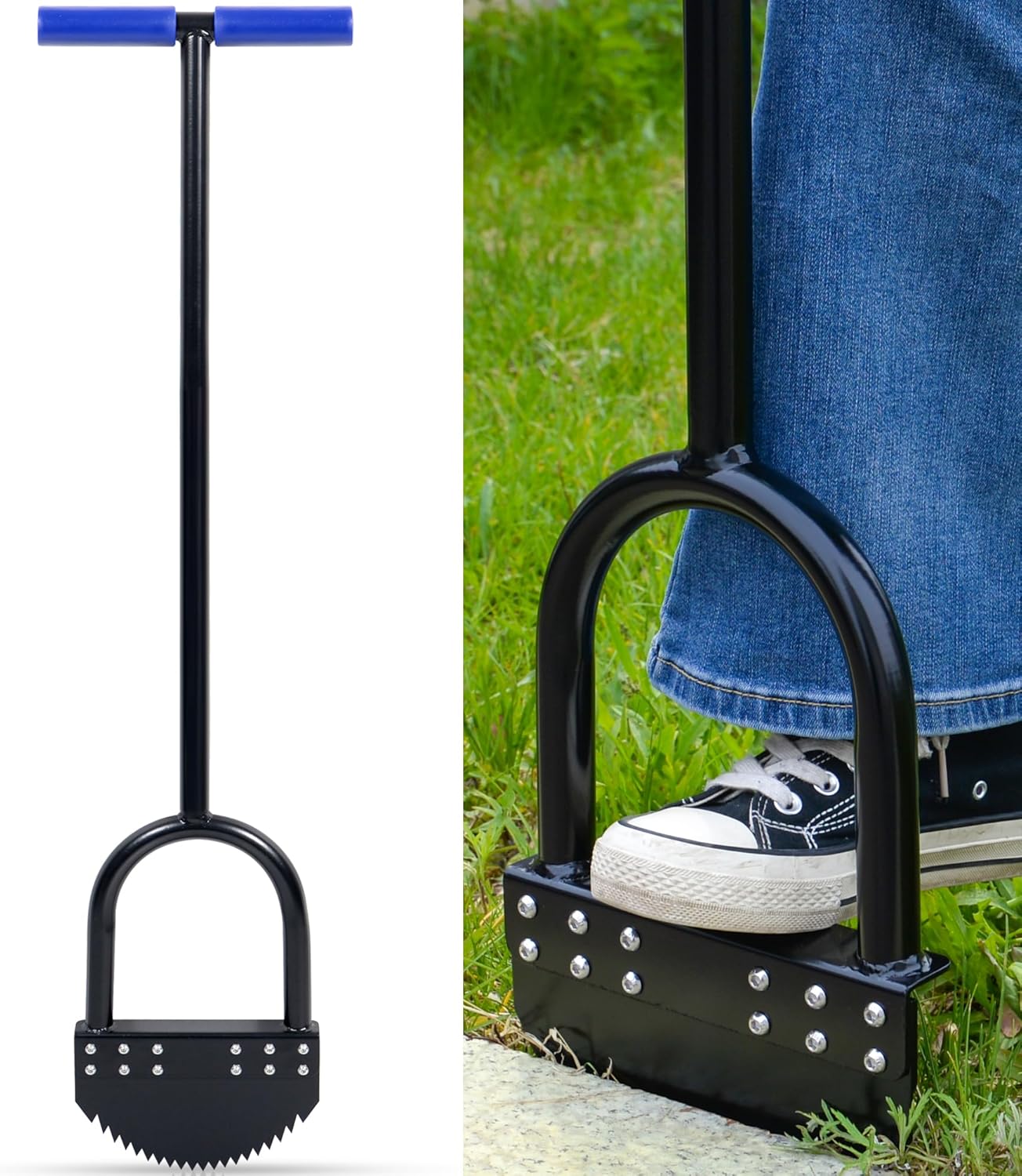
CKLT 41in One-Piece Manual Lawn Edger with Serrated Spring Steel Blade
| Material Type | Manganese Steel |
|---|---|
| Blade Type | Spring Steel Serrated |
| Footplate Width | 8-Inch Wide |
| Handle | Rubber Handle |
The CKLT 41-inch one-piece lawn edger is a straightforward, heavy-duty hand tool for creating crisp borders around lawns and planting beds. Its welded one-piece manganese steel shaft removes assembly and adds strength so the shaft resists bending during frequent use. The serrated spring steel blade is rust-resistant and holds an edge well, which helps cut through turf and soil more cleanly than a plain shovel edge. An 8-inch footplate provides extra leverage for comfortable pressure with any shoe size, and the rubber handle improves grip during repetitive steps. Typical uses include trimming edges along sidewalks and driveways, cutting shallow grooves for planting or irrigation, and refreshing established borders. Limitations are that it is a manual tool so it requires physical effort for compacted soil or heavy clay and it lacks adjustable features found on multi-part or telescoping edgers. For homeowners who prefer a simple, durable hand tool this model balances durability and cutting performance, but those needing power or mechanized speed should consider alternatives.
Best for: Homeowners who want a low-maintenance, robust manual edger for regular yard upkeep and tidy borders without fussing with assembly or complex controls.
Less Ideal for: People who need fast mechanized edging across large properties or who cannot perform repetitive manual tasks should consider powered or assisted edging tools instead.
- One-piece manganese steel construction for durability and no assembly required
- Serrated spring steel blade resists bending and stays sharper for cleaner cuts
- 8-inch wide footplate for improved leverage and comfortable use with most shoe sizes
- Rust-resistant blade and water-resistant design for easier cleaning and low maintenance
- Manual operation can be strenuous in compacted or heavy clay soils
- No telescoping or adjustable length for users who prefer variable handle reach
Verdict: Choose this edger if you want a simple, sturdy, no-assembly hand tool that delivers reliable, clean lawn edges with low maintenance.
CKLT 40-inch One-Piece Manual Lawn Edger with Serrated Spring Steel Blade

| Blade type | Serrated spring steel blade |
|---|---|
| Construction | One-piece manganese steel tube |
| Handle | Rubber grip |
| Fasteners | 304 stainless steel screws |
The CKLT 40-inch hand edger is a straightforward one-piece tool built for clean lawn and garden edges. Its serrated spring steel blade cuts into soil and turf with less effort than a plain blade, and the 40-inch shaft reduces stooping so you can work longer with less strain. One-piece manganese steel construction and an inserted handle aim to resist bending during heavier use, while stainless fasteners and rust-resistant materials keep the tool low-maintenance. The rubber grip improves comfort and control when levering the half-moon blade along sidewalks, driveways, and flower beds. Because it is a manual edger, it is best for routine edging and light-duty trenching rather than large commercial jobs or very compacted ground where a powered tool or sharpened replacement blade would perform better. It ships ready to use with a protective strip for the blade, and its simple design makes storage and cleaning easy for typical homeowners.
Best for: Homeowners who want a durable, low-maintenance manual edger for regular borders, sidewalks, and flower beds and who value ease of use over mechanized speed.
Less Ideal for: Landscapers or users who need to edge large properties quickly or break up extremely compacted ground should choose powered or specialized heavy-duty equipment instead.
- Serrated spring steel blade designed to maintain sharpness and cut soil efficiently
- One-piece manganese steel construction for rigidity and reduced risk of bending
- 40-inch length reduces bending and improves leverage for extended use
- Rust-resistant materials and stainless steel screws simplify cleaning and upkeep
- Manual operation can be slow on large areas or very compacted soil
- Not suited for commercial heavy-duty edging where powered equipment is preferred
Verdict: A durable, low-maintenance manual edger that delivers precise, comfortable edging for typical home lawns and garden borders.
Choosing the Right Hand Lawn Edger: Key Factors to Consider
Blade Shape and Edge Geometry
Blade profile determines the kind of edge you can cut. A half-moon or rounded blade is excellent for carving a clean vertical face along turf, while a flat, straight blade can slice through roots and compacted soil more aggressively. The angle of the cutting edge affects how easily the blade penetrates dense sod and clay. Sharper, acute bevels cut cleaner but can dull faster; blunter angles hold up longer but require more force. Consider the turf type and how much root material you expect to sever when choosing blade geometry.
Blade width also matters: narrower blades concentrate force for deeper, cleaner cuts in firm ground, while wider blades create a broader trench that is quicker for soft soils but can tear delicate grass crowns.
Blade Material and Coating
Steel grade and heat treatment determine how long an edge stays sharp and how well the blade resists bending when meeting stones or roots. High-carbon steels take and hold an edge better than softer steels, but they are more prone to corrosion if not finished properly. Stainless steels resist rust but may sacrifice some edge retention. Protective coatings can reduce surface corrosion and make soil slide off more easily, lowering cleaning frequency.
If you often work in damp soil or store tools outdoors, prioritize corrosion resistance. For frequent edging where shaving performance matters, a harder steel with an easy-to-sharpen profile is preferable.
Handle Design and Reach
Handle length affects how upright you can stay while edging. Longer handles reduce bending and lower back strain, which matters when edging long runs or doing frequent maintenance. Grip shape and material influence control and comfort; a cushioned or contoured grip reduces hand fatigue during repeated passes. Some handles include foot pegs or step plates to add downward force with your body weight rather than relying solely on arm strength.
Consider storage space and transport when evaluating handle length and whether any telescoping or removable handle features are useful for your situation.
Weight and Balance
A tool that is too heavy becomes tiring to use, but very light tools can require extra effort to force the blade into compacted soil. Balance between head weight and handle weight affects how precisely you can guide the blade along curves and borders. Heavier heads can improve soil penetration with less effort, while lighter heads are easier to maneuver around tight corners and obstacles.
Think about how long your typical edging sessions last and whether you need nimble handling for intricate beds or steady force for long straight runs.
Maintenance Needs and Replaceability
Regular maintenance keeps an edger cutting cleanly. Blade sharpening frequency depends on soil type and how often you nick the edge on stones. Tools with easily removable blades or common fasteners make sharpening, replacement, or regrinding more straightforward. Consider how simple it is to clean soil from joints and whether protective coatings will reduce rusting between seasons.
Also check whether replacement parts like blades or foot pegs use standard fittings; nonstandard parts can make repairs difficult and shorten a tool's useful life.
Footplate and Step Design
A well-placed footplate helps you transfer body weight into the blade for deeper, more consistent cuts. The width and grip of the footplate matter when wearing garden boots or working on wet surfaces. A reinforced or wider plate reduces the chance of bending or slippage under heavy downward force. Some designs position the plate where it contacts cleaner soil and distributes pressure to avoid cutting the edge of the blade.
If you often work in compacted clay or need very straight edges, prioritize a sturdy, well-sized step plate that lets you use leg strength rather than only arm force.
Edge Techniques for Different Yard Conditions
Edging technique varies with soil moisture and turf type. In moist soil you can often get a clean vertical cut in a single pass. In dry, compacted ground make multiple shallow passes rather than forcing a deep cut; this reduces strain and avoids tearing the turf. For thin or delicate grasses, keep blade angles shallow to avoid undermining the grass crown.
When edging curves, use shorter, more controlled strokes and rotate the tool gradually to maintain a steady line. For long straight runs, set your stance to use body weight and keep the blade perpendicular to the lawn surface for consistent depth.
- Moist soil: one firm pass often suffices
- Dry soil: several shallow passes reduce tearing
- Curves: short, controlled strokes
- Long runs: steady stance and perpendicular blade
Maintaining a Sharp Edge
Keeping the blade sharp prolongs cutting quality and reduces the effort required. After each session, brush off soil and debris and inspect the edge for nicks. Use a mill file or a dedicated sharpening stone to re-establish the bevel at a consistent angle. Hone lightly between sessions and perform a more thorough grind seasonally if needed.
Protect the metal during storage by drying the blade and applying a light film of oil if the steel is prone to rust. Tighten any fasteners and check for loose welds or cracks at the head-to-handle junction before each season.
- Brush soil off after use
- File nicks and maintain bevel
- Oil the blade if prone to rust
- Inspect joints and fasteners seasonally
When to Use a Hand Edger Versus Alternatives
Hand lawn edgers excel for precise borders around flower beds, paths, and small lawns where a crisp edge is a visual priority. They are quiet, require no fuel or electricity, and give you direct tactile control over the cut. For very long runs, steep slopes, or commercial work where speed is crucial, powered or wheeled edging tools may be more efficient.
Also consider a half-moon spade or a sod cutter for certain cleanup tasks. Those tools can remove strips of turf when you want to replace lawn edges with hardscape or planting beds, but they do different jobs from a hand edger's vertical face cut.
- Best for detailed borders and small yards
- Use alternatives for long runs or turf removal
- Hand edgers offer control and low maintenance
Protecting Lawn Edges After Cutting
After edging, give the newly exposed edge a light watering to help turf recover and reduce soil dust. If the edge will see heavy foot traffic, consider reinforcing it with a narrow border material or planting groundcover tolerant of wear. Avoid burying the turf crown when backfilling; keep the cut vertical face visible for a clean look.
Regularly trim turf blades that overhang the edge and remove loose clumps of soil to maintain the crisp appearance. Seasonal touch-ups keep the line sharp and reduce the workload at each maintenance session.
- Water lightly after edging
- Reinforce high-traffic edges if needed
- Trim overhanging grass regularly
- Perform seasonal touch-ups
Storing and Caring for Your Edger
Store the tool in a dry spot, preferably hanging to keep the blade off the ground. Clean off soil and dry the metal before storing to prevent corrosion. If the handle is wooden, a light sanding and application of linseed oil once a year extends life and prevents splitting.
For metal handles, inspect for dents or bends and repair or replace as needed. Keep a small sharpening kit and a replacement fastener set on hand; these simple parts are the most common maintenance items for hand edgers.
- Hang or rack in a dry area
- Dry and oil metal blades if needed
- Treat wooden handles annually
- Keep spare fasteners and a sharpening tool
How We Chose the Best Hand Lawn Edger
We focused on features that matter in real-world lawn edging chores and filtered out options that do not suit typical home use. Selection criteria emphasized cutting precision for crisp edge lines, build durability to withstand regular contact with soil and roots, and ergonomic design to reduce bending and wrist strain during repeated passes. We also considered blade material and edge geometry because these determine how cleanly turf and light roots are sliced and how often sharpening is required. Ease of maintenance and replacement parts availability were weighed to favor tools that stay serviceable season after season. Tools designed only for heavy commercial use, powered options, or devices requiring complex setup were excluded to keep the list practical for homeowners. Final choices reflect a balance of effective edge cutting, long-term serviceability, and comfortable handling.
FAQ
How deep should I cut when edging a lawn?
Depth depends on soil and turf. For most home lawns a 1.5 to 3 inch vertical face gives a clean line without damaging crowns. In compacted or root-filled ground take multiple shallow passes to reach the desired depth.
Can I sharpen a hand lawn edger blade at home?
Yes. A mill file or coarse sharpening stone works well for maintaining the bevel. Hone the edge lightly after each few uses and perform a more thorough grind if the blade becomes rounded or nicked.
Is a longer handle always better for reducing back strain?
A longer handle usually lets you work more upright, but reach is only one factor. Handle ergonomics, tool weight, and how you position your body all affect strain. Choose a length that lets you keep a neutral spine while still controlling the blade.
How often should I clean and oil the blade?
Brush off soil after every use and dry the blade before storing. If the blade is prone to rust or you store the edger in a damp space, apply a light oil film after cleaning and before storage.
Will a hand edger work on clay soil?
It can, but clay is more demanding. Use a narrow, strong blade and take multiple shallow passes rather than forcing a deep cut. Working when the soil is slightly moist rather than bone dry helps penetration.
Should I use the footplate every time I cut?
Using the footplate lets you add body weight for deeper, consistent cuts and is recommended for most edging tasks. If the plate is poorly placed or unstable, adjust your stance or consider a different tool design for safer use.
Final Verdict
When selecting a hand lawn edger prioritize blade shape and material for the type of turf and soil you have, and choose a handle and footplate design that keeps you comfortable during the task. Expect tradeoffs between weight, durability, and maneuverability: heavier heads aid penetration, lighter tools offer easier control. Regular sharpening and proper storage extend the tool's usefulness. Focus on the criteria that match how you will use the edger most often so you get clean, repeatable edges with the least effort.
