

Note: This article contains affiliate links. If you click on these links and make a purchase, I may earn a small commission at no extra cost to you. This helps support my research and content. Read my full affiliate disclosure here.
If you cut and split a lot of firewood, choosing the right gas log splitter matters for speed, safety, and how much work you actually need to do. A well-chosen machine turns long sessions of swinging an axe into a safer, more consistent process, and staying under the $1000 ceiling still allows for solid engine power and sturdy construction. This guide covers six shortlisted gas log splitters that fit the stated budget range. We evaluated each option for the factors that matter in a real yard: engine and splitting force, duty-cycle durability, portability, and how easy the machine is to operate and maintain. Read on to see which units match the type of wood you split and the amount of use you plan to get from a splitter.
Top Picks at a Glance
| Best Quality Built to a higher standard if you want something more solid | Landworks Portable 20-Ton Gas Log Splitter, 7 HP, Rapid Auto Return |  |
| Best Value The sweet spot between price and what you get | Mutaomay 20-Ton Portable Gas Log Splitter with 7HP Engine and Rapid Auto-Return |  |
| Best Budget The cheapest option that still gets the job done reliably | ZeHuoGe 20-Ton Portable Gas Log Splitter with 7HP Engine and Auto-Return |  |
| Highest Rated A top-rated pick with lots of positive feedback | GasXcel 20-Ton Gas-Powered Horizontal Log Splitter (209CC) |  |
| Most Popular A crowd favorite that many people choose with confidence | SuperHandy 20-Ton Portable Gas Log Splitter with 7HP Engine |  |
| Best Seller A high-volume bestseller chosen again and again | Ezasin 20-Ton Gas Log Splitter with 209cc 7HP Engine |  |
Landworks Portable 20-Ton Gas Log Splitter, 7 HP, Rapid Auto Return

| Engine | 7 HP gas |
|---|---|
| Splitting force | 20 ton |
| Max log length | 20 inches |
| Max log diameter | 16 inches |
This Landworks 20-ton log splitter is a gas-powered, horizontal beam machine designed to handle sizable firewood quickly. It pairs a 7 HP engine with a two-stage Bucher gear pump and a stainless steel wedge to split logs up to 20 inches long and 16 inches in diameter. The rapid auto-return ram and a quoted 7.5-second cycle time make it well suited to high-speed splitting tasks where you need to process a lot of wood. Built-in transport wheels and a full-steel beam simplify moving it around a yard or site. Practical benefits include consistent linear power for smoother splits and user-friendly control lever placement for prolonged use. Important limitations are that it is gas only, so it requires outdoor use, fuel and routine engine and hydraulic maintenance, and hydraulic fluid is not included. Assembly and familiarity with safe operating practices are required before use.
Best for: Buyers who need a fast, portable gas splitter for processing large volumes of firewood and who prefer a proven mechanical design over experimental electric alternatives.
Less Ideal for: People who need a low-maintenance, indoors-compatible, or electric-powered splitter or who cannot manage fuel storage and routine engine upkeep.
- High 20-ton rated splitting force for heavy logs
- Fast 7.5-second cycle time with rapid auto-return for high throughput
- 7 HP gas engine provides portable power without needing electricity
- Stainless steel wedge and steel thrust plate for durable splitting performance
- 10-inch transport wheels and compact horizontal design for easier site movement
- Requires gasoline and regular engine and hydraulic maintenance
- Hydraulic fluid is not included so you must supply AW32 or equivalent before use
Verdict: Choose this Landworks 20-ton gas splitter if you want a portable, high-speed machine that can quickly process large quantities of firewood without relying on electrical power.
Mutaomay 20-Ton Portable Gas Log Splitter with 7HP Engine and Rapid Auto-Return

| Splitting force | 20 tons |
|---|---|
| Engine | 7HP 4-stroke motor |
| Max splitting size | 21" x 16.5" |
| Cycle time | Approximately 8 seconds |
This Mutaomay 20-ton gas log splitter is built for high-volume splitting when you need power away from an outlet. It uses a 7HP 4-stroke motor paired with a dual-gear hydraulic pump to deliver the advertised 20 tons of force and a fast auto-return cycle that the manufacturer estimates at about eight seconds. Typical use is backyard or farm firewood prep and jobsite cleanup where seasoned hardwoods are common; the horizontal beam and alloy steel wedge handle large rounds up to the stated maximum. Practical benefits include cord-free portability thanks to rugged 10-inch tires and a foldable handle, plus heavy all-steel construction for durability under repeated use. Important limits are the upfront setup and maintenance needs for a gas/hydraulic machine — you must add specific hydraulic and engine oils and use proper fuel before starting — and the unit’s size and weight make it best for users with storage space and basic mechanical comfort. If you need continuous indoor or electric-only operation, this gas model will not be appropriate.
Best for: Buyers who want a powerful, portable splitter for frequent firewood work on a property or small commercial use and who are comfortable with routine gas engine and hydraulic maintenance.
Less Ideal for: People who need an electric, low-maintenance splitter for occasional indoor or garage use or those without space to store a sizable outdoor machine.
- High 20-ton splitting force suitable for seasoned hardwoods
- Fast cycle with rapid auto-return for efficient throughput
- Gas-powered mobility with 10-inch tires and foldable handle for off-grid use
- All-steel frame and alloy steel wedge designed for heavy-duty, repeated use
- Requires specific hydraulic and engine oil fills and fuel before first use
- Large and heavy unit that needs storage space and some mechanical familiarity
Verdict: Choose this gas-powered 20-ton splitter if you need robust, portable splitting performance for heavy seasonal or small commercial workloads.
ZeHuoGe 20-Ton Portable Gas Log Splitter with 7HP Engine and Auto-Return

| Load Capacity | 20 Ton |
|---|---|
| Engine | 7HP gasoline (170F / 196cc) |
| Cycle Time | 8.0S |
| Max Splitting Length | 20.5 inches |
| Max Log Diameter | 16 inches |
This ZeHuoGe log splitter is a budget-minded, gas-powered horizontal splitter designed for homeowners who need to process medium-size logs without relying on electricity. It uses a 7HP gasoline engine driving a 2-stage hydraulic gear pump to deliver a rated 20-ton splitting force and an auto-return ram for quicker repetitive work. Typical use is yard and firewood prep where portability matters: the full-beam steel frame, 10-inch transport wheels, and a steel wedge let you move it between sites and split logs up to about 20 inches long and 16 inches diameter. The 8-second cycle time and consistent hydraulic pressure make it reasonably efficient for multi-bag jobs. Important limitations are typical of entry-level gas splitters: assembly and routine maintenance are required, it is heavier than electric bench models, and operating it requires outdoor ventilation and fuel management. It is a practical choice if you need portable, non-electric splitting on a budget and can handle gas-engine upkeep.
Best for: Buyers who prioritize getting the most splitting power per dollar and need a portable, non-electric machine for seasonal firewood preparation. Ideal for homeowners who can manage routine engine maintenance and want efficient, repeated splits.
Less Ideal for: People who need a quieter, maintenance-free electric unit for small indoor storage or users who cannot or prefer not to handle gasoline and outdoor engine operation.
- 20-ton rated splitting force suitable for medium to large firewood
- 7HP gasoline engine provides portable power without needing an electrical outlet
- Auto-return ram and ~8 second cycle time speed repetitive splitting tasks
- Full-beam steel construction with 10-inch wheels for on-site mobility
- Can split logs up to roughly 20 inches long and 16 inches diameter for most homeowner needs
- Requires gas engine maintenance and safe outdoor operation
- Heavier and bulkier than electric home bench splitters, so less ideal for very small storage spaces
Verdict: A straightforward, portable 20-ton gas splitter that delivers solid splitting power and fast cycle times for budget-focused homeowners who want non-electric portability.
GasXcel 20-Ton Gas-Powered Horizontal Log Splitter (209CC)

| Power source | Gas (209CC four-stroke engine) |
|---|---|
| Splitting force | 20 tons |
| Max log length | 20 inches |
| Max log diameter | 18 inches |
This GasXcel 20-ton gas log splitter is built to clear large batches of firewood quickly for homeowners who need consistent performance. It uses a 209CC four-stroke engine and a two-stage gear pump to drive a hydraulic system that pushes a hardened steel wedge through logs up to 20 inches long and 18 inches in diameter. The machine cycles in about 8 seconds and features an automatic ram return, which speeds repetitive splitting and reduces fatigue during seasonal hauling and stacking. A steel frame, pneumatic 10-inch tires, and ergonomic handles make it reasonably portable around yards and driveways despite its 130 pound weight. Controls are straightforward, so operators with basic mechanical experience can run it without an electrical hookup. Notable limitations are its nonzero assembly and storage footprint and the need for routine engine and hydraulic maintenance typical of gas equipment. It is a practical, powerful choice when electric models lack the torque or mobility for large, knotted logs.
Best for: Homeowners who need a reliable, high‑power splitter to process large volumes of firewood quickly and who prioritize performance over minimal maintenance.
Less Ideal for: People who prefer near-silent operation, zero engine upkeep, or who only split small logs occasionally should consider electric or manual alternatives.
- High splitting force rated at 20 tons for large or knotted logs
- Fast 8-second cycle with automatic ram return for high throughput
- Powered by a 209CC gas engine so it runs off-grid without electricity
- Hardened steel wedge and sturdy steel frame for repeated heavy use
- Pneumatic tires and handles improve maneuverability across uneven yards
- At 130 pounds it still requires effort to move and needs storage space
- Being gas-powered requires regular engine and hydraulic maintenance
Verdict: Choose this splitter if you want a rugged, high‑torque gas unit that processes large, knotted logs quickly for heavy seasonal or ongoing firewood work.
SuperHandy 20-Ton Portable Gas Log Splitter with 7HP Engine

| Splitting force | 20 Ton |
|---|---|
| Engine | 7HP gas engine |
| Max log length | 20 inches |
| Max log diameter | 16 inches |
This SuperHandy log splitter is a portable, gas-powered horizontal splitter designed to handle large batches of firewood quickly. The 7HP engine drives a two-stage Bucher hydraulic gear pump to deliver a constant 20-ton splitting force, and the ram returns automatically so you can keep a steady rhythm while working through a woodpile. It splits logs up to about 20 inches long and 16 inches in diameter and uses a steel wedge and full-beam frame aimed at field durability. Mobility is practical for a machine this size thanks to 10-inch transport wheels and a setup that is straightforward on level ground. Cycle time is short, so it is suited to high-speed splitting tasks where you need throughput without an electrical outlet. Important limits are that it is gas powered so it needs outdoor, well-ventilated use and regular engine and hydraulic maintenance; hydraulic fluid is not included. Assembly and moving the unit alone may be awkward given the overall mass despite the wheels.
Best for: Buyers who need a fast, field-capable splitter to process large amounts of firewood without depending on electricity and who prefer a proven mechanical design backed by user feedback.
Less Ideal for: People who only split a few logs occasionally or who need a lightweight, fully portable unit for one-person lifting and storage.
- 20 tons of consistent splitting force driven by a 7HP gas engine for heavy-duty splitting
- Rapid auto-return ram and short cycle time for high throughput
- Portable horizontal design with 10-inch wheels for site-to-site movement
- Full-beam steel wedge construction for durability in field use
- Requires gasoline and outdoor ventilation which limits indoor or garage use
- Hydraulic fluid is not included and routine engine/hydraulic maintenance is necessary
Verdict: Choose this splitter if you want a high-throughput, gas-powered 20-ton machine built to move between sites and handle large firewood workloads.
Ezasin 20-Ton Gas Log Splitter with 209cc 7HP Engine
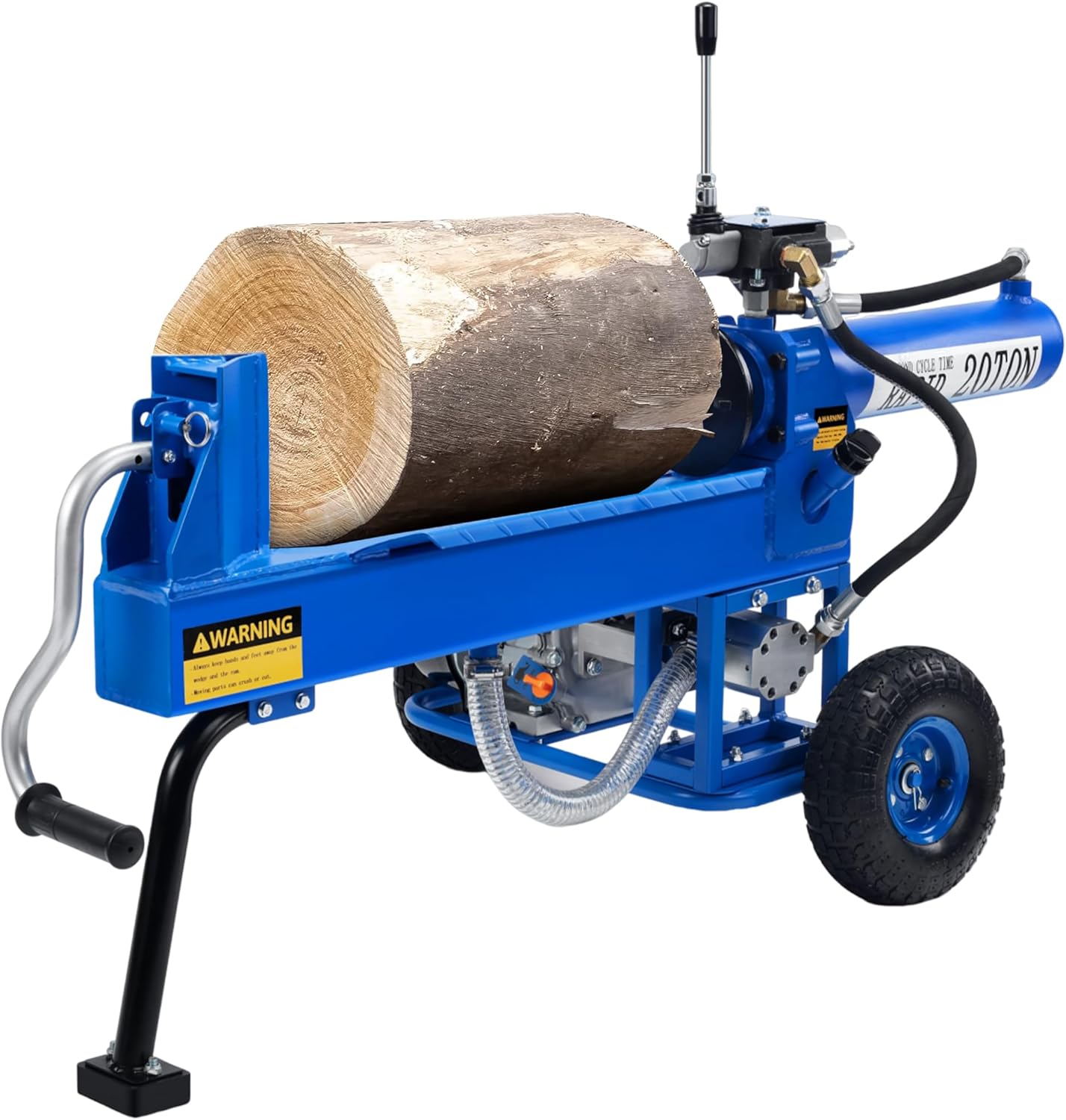
| Splitting force | 20 ton |
|---|---|
| Engine | 209CC 7HP |
| Cycle time | 8 seconds |
| Log capacity | Up to 20.5" long and 16" wide |
This Ezasin 20-ton gas log splitter pairs a 209cc 7HP engine with a dual-stage hydraulic pump to deliver fast, powerful splits for household and small-farm use. It is typically used on rounds and knotty hardwoods up to the listed capacity, with an alloy steel 90° wedge and an auto-return valve that speeds workflow by automatically retracting the ram after each split. The dual-stage pump gives quick approach speed for positioning the ram and switches to high pressure for stubborn logs, which together with an advertised 8-second cycle time makes it suitable for high-throughput tasks. Practical features include pneumatic 10-inch tires for yard mobility and a relatively low-maintenance layout, though it requires pre-filling specific hydraulic and engine oils and regular servicing like any gas unit. Expect typical gas-engine noise, the need for fuel storage, and occasional maintenance of the hydraulic system. For someone who wants fast, mechanical splitting without electric hookups, this model delivers strong performance with the usual upkeep of a gasoline hydraulic machine.
Best for: Buyers who prioritize fast, mechanical splitting for regular firewood or farm work and need a portable gas-powered solution that maximizes throughput over convenience.
Less Ideal for: Those who want a quieter, low-maintenance electric splitter or who lack space and resources for fuel storage and engine upkeep should consider other options.
- High 20-ton splitting force suitable for hardwoods and knotty logs
- Fast 8-second cycle time enabled by a dual-stage hydraulic pump
- Auto-return valve streamlines repeated splitting and reduces operator fatigue
- 209cc 7HP gas engine provides off-grid power and strong torque
- Pneumatic 10-inch tires and steel frame make it reasonably mobile around a yard or job site
- Requires gasoline and specific hydraulic and engine oils and routine maintenance
- Gas engine produces noise and emissions compared with electric alternatives
Verdict: If you need high-speed, off-grid splitting for hardwoods, this 20-ton gas splitter delivers strong, efficient performance with mobile convenience.
Choosing the Right Gas Log Splitter: Key Factors to Consider
Engine Power and Capacity
Engine power directly affects how quickly the splitter cycles and whether it can handle larger diameter or denser hardwoods without bogging down. A higher-displacement engine will generally provide steadier pressure to the hydraulic pump, reducing stall and maintaining consistent cycle times.
Consider the typical wood species and log diameter you work with. For softwoods and smaller rounds, a modest engine will suffice. For seasoned oak, hickory, or other dense hardwoods, you want enough capacity so the engine does not labor constantly, which shortens component life and increases fuel use.
Hydraulic Splitting Force
Splitting force, expressed in tons, determines the maximum work the ram can apply to a log. Higher rated force makes quick work of stubborn knots and large-diameter rounds, while lower force models are best reserved for split-friendly wood and lighter workloads.
Match the force rating to your workload. If you plan frequent splitting of thick hardwood, prioritize higher-rated units even within the price cap. For occasional use or softwood species, lower-force machines save weight and are often more portable.
Build Durability and Materials
A log splitter spends most of its life outdoors and under shifting loads, so frame construction, weld quality, and corrosion-resistant finishes matter. Thicker steel frames and quality welds prevent flexing and misalignment of the beam that can cause hydraulic strain.
Look for durable hydraulic hoses, fittings, and a well-protected pump. Components that are easier to access for inspection and replacement lengthen the useful life of the machine in a working yard.
Portability and Transport
Portability affects how easily you move the splitter between storage and the woodpile. Tow-ready frames, decent wheels, and a manageable overall weight make setup and relocation simpler, especially if you work at multiple sites on the property.
Consider how the splitter stores between seasons. Folding or compact beams, secure hitch-style attachments, and durable tires that resist flatting are practical features that save time and hassle in real use.
Controls, Safety, and Ease of Use
User controls and safety systems prevent accidents and reduce operator fatigue. Clear two-handed controls, guarded valves, and predictable ram behavior are important for safe splitting sessions. Controls that are mounted within reach and shielded from debris improve everyday usability.
Ease of maintenance falls under this factor as well. Accessible dipsticks, easy-to-drain tanks, and simple filter access cut service time and keep the unit performing reliably over years.
Serviceability and Parts Access
Even well-built machines need maintenance and occasional replacement parts. Units designed with common hydraulic fittings, straightforward pump access, and widely available engines simplify repairs and reduce downtime.
Check whether routine service points are exposed and labeled. Readily accessible bleed valves, hose routing that avoids pinch points, and a simple control-valve layout all make field repairs and seasonal servicing less of a chore.
Matching Splitter Capacity to Wood Type
Not all logs are created equal. Seasonal moisture, species, and the presence of knots change how a log reacts to force. Choose a splitter whose rated tons and engine capacity suit the toughest wood you expect to process most of the time.
If you mostly split small-diameter rounds or softwoods, prioritize faster cycle times and lighter weight. For larger hardwoods, favor higher splitting force and a sturdier beam that resists bending under repeated heavy loads.
- Softwoods and small rounds: favor portability and faster cycles.
- Large hardwoods: prioritize higher-tonnage hydraulic force.
- Knotted or twisted grain: a steady engine and robust frame reduce stalling.
Maintenance Tasks That Keep a Splitter Running
Regular maintenance extends life and prevents unexpected failures. Key chores include checking hydraulic fluid level and condition, inspecting hoses and fittings for wear, and keeping the engine tuned with fresh oil and an air filter.
A quick pre-use check for loose bolts or damaged tires saves time later. Clean sawdust and sap from moving parts to avoid buildup that can hide leaks or accelerate wear.
- Check hydraulic fluid level and top to the correct mark.
- Inspect hoses and replace any with cracks or fraying.
- Change engine oil and air filter per manufacturer intervals.
Safe Operating Practices
Safe splitting is a combination of machine features and sensible habits. Always use two-handed controls when provided, keep bystanders clear of the work area, and wear eye and hand protection. Position logs securely on the beam and avoid overreaching when feeding the splitter.
When splitting irregular or partially rotten logs, watch for unpredictable break patterns. Stand to the side, not directly in line with the beam, and ensure the splitter is on stable, level ground to prevent tipping.
- Use appropriate personal protective equipment.
- Keep the work area clear and stable.
- Follow safe feeding and handling for irregular logs.
Storing a Gas Splitter Between Seasons
Proper offseason storage reduces corrosion and startup trouble in spring. Run the engine dry of fuel or add a stabilizer before long storage, and clean the splitter of debris to prevent moisture trapping against metal surfaces.
Park the unit under cover or use a breathable cover to reduce condensation. Inspect fuel lines and tires before the first use after storage; replace any brittle hoses and inflate tires to recommended pressure.
- Drain or stabilize fuel for long storage.
- Clean debris and apply corrosion-inhibiting protectant to exposed metal.
- Check hoses and tire pressure before seasonal startup.
Transport and Site Preparation Tips
Plan how you will move the splitter to your woodpile. Tow-mounted machines need a compatible hitch and safe tie-downs. For units you lift, enlist assistance and use ramps to avoid straining frames or tires.
Prepare a flat, solid working area free of tripping hazards. Keep a short workable stack of rounds at shoulder height to minimize bending and repetitive strain while feeding the splitter.
- Secure the splitter properly when towing.
- Set up on level ground with good footing.
- Organize logs to reduce unnecessary handling.
How We Chose the Best Gas Log Splitter
We focused on practical, yard-level performance and long-term reliability when selecting gas log splitters under the $1000 limit. Evaluation centered on engine output and hydraulic force because those determine how quickly and effectively a splitter can process a range of hardwoods. We also measured duty-cycle and build durability, looking for robust frames, quality hydraulic components, and serviceability features that reduce downtime. Mobility and setup were judged for gardeners who need to move the machine between storage, driveway, or remote woodpiles; that includes tow-ready frames, weight, and wheel quality. Controls and user safety were checked to ensure straightforward operation, clear two-handed controls, and accessible maintenance points. Units were excluded if they lacked sufficient documented hydraulic force for common hardwoods, had poor access for routine maintenance, or relied on fragile components that commonly fail under regular use. We also filtered out models that exceeded the stated price modifier. The final shortlist balances usable splitting force, reliable engines, and practical features that matter in everyday yard use.
FAQ
What tonnage do I need for hardwood like oak?
Tonnage needs depend on diameter and seasoning. For large-diameter seasoned hardwoods, higher-rated splitters are usually recommended because they provide the sustained force necessary to split dense grain without stalling.
Can a lighter, more portable gas splitter handle winter use?
Lighter machines can handle winter use if their engine and hydraulic specs match your timber. Cold thickens hydraulic fluid and makes engines harder to start, so choose units with reliable winter starting traits and consider using lower-viscosity fluid when appropriate.
How often should I change hydraulic fluid?
Hydraulic fluid intervals vary by use, but many operators check levels before each session and change fluid annually or after heavy seasonal use. Contaminated or degraded fluid shortens pump life and should be replaced promptly.
Is it better to have a horizontal or vertical splitting option?
Horizontal operation is faster for most rounds because logs rest naturally on the beam. Vertical setups help with very large or awkward logs and reduce bending. Some machines offer both orientations to give flexibility for different tasks.
What maintenance will keep tires and axles serviceable?
Inflate tires to the recommended pressure and inspect for cracks before each move. Lubricate wheel bearings and check axle bolts for tightness periodically. Replace tires that show dry rot or significant gouging to maintain safe transport.
How do I judge whether an engine is underpowered for my needs?
Watch for frequent stalls, slow cycle times, or the engine running at unusually high throttle under load. Those are signs the engine is struggling and may indicate a mismatch with the intended wood species or log size.
Final Verdict
Choosing a gas log splitter under $1000 means balancing engine capacity, hydraulic force, and build durability against portability and serviceability. Prioritize the tonnage and engine output that handle the toughest wood you expect to process most often, while favoring a sturdy frame and accessible maintenance points to keep the unit running year after year. Accept tradeoffs: more force typically means more weight but fewer stalls when splitting hardwoods. Focus on the factors that match your workload and storage needs so you get a dependable splitter that reduces labor and stays reliable through seasons of use.
