

Note: This article contains affiliate links. If you click on these links and make a purchase, I may earn a small commission at no extra cost to you. This helps support my research and content. Read my full affiliate disclosure here.
If you prune shrubs, small trees, and overgrown perennials, the right Compound Loppers make the job faster and cleaner with less strain. You want tools that slice through live wood without crushing stems, reach slightly higher branches without a ladder, and feel comfortable during repetitious cuts. This guide lists the top shortlisted Compound Loppers for home and small-acreage pruning and explains the practical strengths that matter in the yard. Each pick was chosen for real garden performance: cut quality, mechanical advantage, build durability, handle ergonomics, and maintenance needs. Read on to match tools to your typical branch sizes and pruning style before the product block list below.
Top Picks at a Glance
| Best Overall The best all-around choice for most situations | Fiskars PowerGear2 25" Bypass Loppers |  |
| Best Value The sweet spot between price and what you get | PrunePro 28" Bypass Loppers with Stainless Steel Blades and Gear Drive |  |
| Best Budget The cheapest option that still gets the job done reliably | GARTOL 29-Inch Heavy Duty Anvil Lopper with Compound Action |  |
| Highest Rated A top-rated pick with lots of positive feedback | Fiskars 32" PowerGear Bypass Lopper |  |
| Most Popular A crowd favorite that many people choose with confidence | Fiskars PowerGear2 32" Bypass Lopper — 2" Cut Capacity |  |
Fiskars PowerGear2 25" Bypass Loppers
| Cutting width | 1.75 inches |
|---|---|
| Blade Type | Bypass |
| Blade Edge | Serrated |
| Hand Orientation | Ambidextrous |
| Blade Material | Alloy Steel |
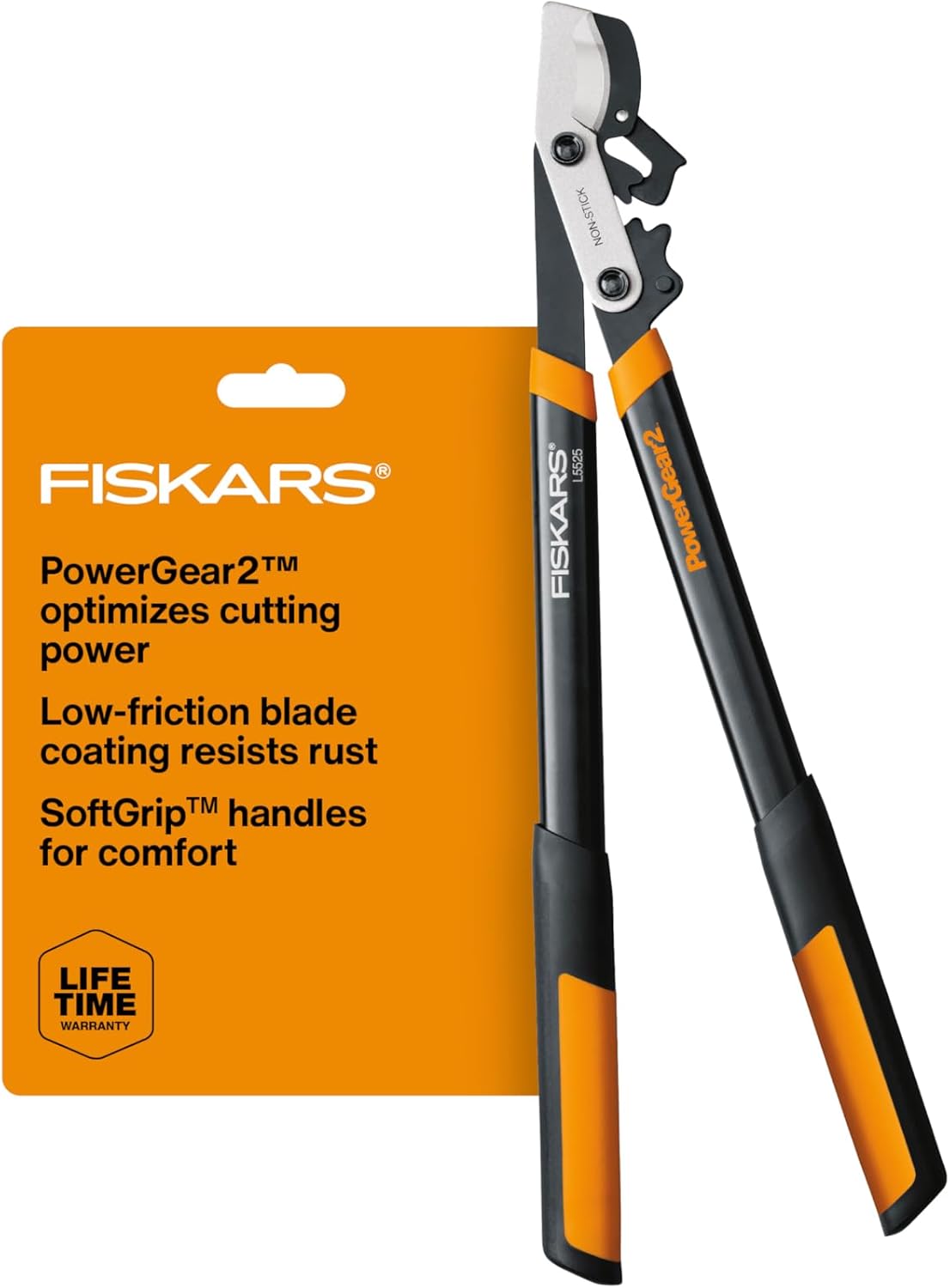
The Fiskars PowerGear2 25-inch bypass lopper is built for routine garden and yard pruning where you need more leverage than hand pruners provide. Its patented PowerGear2 gearing multiplies cutting force so the tool slices through branches up to about 1.75 inches in diameter with less hand strength. The fully hardened alloy-steel blades have a low-friction coating to resist sap and help cuts glide cleanly, and the serrated edge helps hold wood steady while cutting. Steel handles and cushioned SoftGrip areas deliver a sturdy feel and better control during longer sessions. Because it is a bypass design it makes cleaner cuts on living wood, which helps plant health. The main compromises are that the tool is a fixed-length, non-telescoping lopper so reach is limited to its 25-inch length, and the steel handles add weight compared with lighter aluminum models. For general gardening use this is a durable, low-maintenance choice that reduces effort on medium-diameter branches.
Best for: Gardeners who want a robust, easy-to-use lopper for routine pruning and medium branch removal and who prefer a durable tool that emphasizes cutting power and clean cuts.
Less Ideal for: People who need extra reach for high branches or who prioritize the lightest possible tool for long-duration use should consider extendable or lighter-material options.
- PowerGear2 gearing multiplies leverage to make cutting thicker branches easier
- Hardened alloy-steel bypass blades with low-friction coating for cleaner, less gummy cuts
- Serrated blade edge helps grip branches for controlled cuts
- Cushioned SoftGrip handles improve comfort and control during extended use
- Fixed 25-inch length limits reach compared with extendable loppers
- Steel handles make the tool heavier than aluminum alternatives
Verdict: Choose these PowerGear2 loppers if you want a durable, high-leverage bypass tool that makes clean cuts on medium-diameter branches with less effort.
PrunePro 28" Bypass Loppers with Stainless Steel Blades and Gear Drive

| Blade Type | Bypass |
|---|---|
| Blade Material | Stainless Steel |
| Handle Material | Aluminum, Polypropylene (PP) |
| Cutting width | 2 |
| Size | 28" |
The PrunePro 28" bypass loppers are a compound-gear manual tool built for heavier pruning tasks around the yard. The gear drive multiplies your hand force so cutting thicker 2" limbs is easier than with standard long-handled loppers, and the ambidextrous bypass blades give cleaner cuts for living wood. Stainless steel blades with a Teflon coating resist rust and stay sharper longer when you rinse and dry them after use. The aluminum handles keep weight down while the polypropylene non-slip grips improve control and reduce vibration during repeated cuts. For routine maintenance, the loppers require occasional cleaning and blade sharpening over time but are otherwise low maintenance. They suit homeowners who want a durable, higher-leverage tool without moving parts that require power. If you need motorized cutting or reach beyond 2" branches you will want a different tool, but for season-long trimming and shaping these loppers deliver reliable, efficient performance.
Best for: Gardening-minded homeowners who prefer efficient, manual tools that multiply their effort for seasonal pruning and shaping of small to medium branches.
Less Ideal for: Arborists or users who regularly need to cut very large trunks or want a powered solution for frequent heavy-duty work.
- Gear-assisted drive increases cutting power for thicker limbs
- Teflon-coated stainless steel blades resist rust and maintain sharpness
- Lightweight aluminum handles with non-slip grips reduce fatigue
- Ambidextrous bypass blade produces cleaner cuts on live wood
- Maximum cutting capacity is about 2 inches, not suitable for large-diameter branches
- Requires occasional sharpening and basic maintenance to preserve performance
Verdict: A compact compound-gear lopper that gives homeowners extra cutting leverage and rust-resistant blades for reliable seasonal pruning.
GARTOL 29-Inch Heavy Duty Anvil Lopper with Compound Action

| Cutting width | 2 inches |
|---|---|
| Blade Type | Anvil |
| Blade Material | High Carbon Steel (SK5) with Teflon coating |
| Handle Material | Iron with TPR grip |
The GARTOL 29-inch anvil lopper is built for heavy pruning of dry and woody growth where extra leverage is needed. Its four-bar compound linkage multiplies hand force to make cutting thicker branches noticeably easier, and the Teflon-coated SK5 carbon steel blade resists sap build-up and stays sharper longer. The tool is typically used for removing dead limbs, cutting back mature shrubs, and general yard cleanup where clean bypass cuts are not required. Handles are long and rigid iron tubes with non-slip TPR grips that give good control when applying force. Practical benefits include replaceable blade and anvil parts for longer service life and a 2-inch cutting capacity that covers most small-to-medium hardwood branches. Important limitations are that anvil-style cutting can crush live green wood and does not leave the same clean wound as bypass loppers, so it is best reserved for dead or woody material. Also the tool is sizeable and geared for leverage rather than precision around delicate plants.
Best for: Home gardeners and budget-conscious yard keepers who need a durable, high-leverage tool for removing dead or woody branches without frequent replacement.
Less Ideal for: Pruners focused on precise, live-wood pruning or working in dense, tight planting beds should choose a bypass lopper or smaller shears instead.
- Compound-action four-bar linkage increases cutting power about threefold compared with standard loppers
- Teflon-coated SK5 high-carbon steel blade resists sap and corrosion for smoother cuts
- Replaceable blade and anvil extend usable life and reduce long-term replacement cost
- Long, stiff handles with non-slip TPR grips provide strong leverage and control
- Anvil-style cutting can crush live green branches and is not ideal for making clean pruning cuts on healthy plants
- Heavier, longer design reduces maneuverability in tight spaces or for fine pruning
Verdict: A cost-conscious, heavy-duty anvil lopper that delivers extra cutting power and replaceable parts for long-term yard work on dead and woody branches.
Fiskars 32" PowerGear Bypass Lopper

| Cutting width | 2 inches |
|---|---|
| Blade Type | Bypass |
| Blade Material | Alloy Steel |
| Hand Orientation | Ambidextrous |
The Fiskars 32" PowerGear Bypass Lopper is built to make pruning larger live branches easier by multiplying your cutting force with a patented gearing mechanism. You use it like a traditional bypass lopper but the PowerGear system concentrates leverage near the middle of the cut, so pairs of long handles and a smooth action let you slice through up to 2-inch branches with noticeably less effort. The precision-ground alloy steel blades are bypass style and feature a low-friction coating to reduce gumming and resist corrosion, while SoftGrip handles and an ambidextrous design lower hand and wrist strain during longer jobs. The tool is relatively lightweight for its length thanks to reinforced composite handles, which helps prevent fatigue when trimming trees or large shrubs. Limitations are its 2-inch cutting capacity, which will not handle very thick limbs, and the fixed long handle length that may be awkward in tight spaces or for users who prefer telescoping reach. For routine yard maintenance and pruning of medium branches this lopper balances power, comfort, and durability.
Best for: A cautious buyer who wants a reliable, easy-to-use lopper for routine pruning of trees and medium shrubs and values ergonomic design and long-term durability.
Less Ideal for: Not the best choice for users who need to cut very large hardwood limbs or who primarily work in cramped spaces where a shorter or extendable tool is required.
- PowerGear mechanism multiplies leverage for easier cuts on medium branches
- Sharp, hardened alloy-steel bypass blades with low-friction coating for smoother, less gumming cuts
- SoftGrip, ambidextrous handles and lightweight composite construction reduce hand and arm fatigue
- Long 32" handles provide reach and mechanical advantage for tree and shrub pruning
- 2-inch maximum cutting capacity limits use on very thick limbs
- Fixed long handles can be cumbersome in tight or confined pruning spots
Verdict: Choose this lopper if you want a dependable, low-effort tool that reliably cuts up to 2-inch live branches while minimizing hand and arm strain.
Fiskars PowerGear2 32" Bypass Lopper — 2" Cut Capacity

| Cutting width | 32 inches |
|---|---|
| Cut capacity | 2 inches |
| Blade Type | Bypass |
| Blade Material | Alloy Steel |
| Handle Material | Aluminum |
The Fiskars PowerGear2 32" bypass lopper is built for pruning medium-thick branches with less wrist and hand strain. Its patented PowerGear2 leverage multiplies cutting force so a single-handed pull slices through up to 2" green wood that would otherwise need much more effort. The hardened alloy-steel blades have a low-friction coating to resist gumming and rust and the serrated edge helps hold the branch while you cut. Long aluminum handles with SoftGrip touchpoints give comfortable control and reach for higher or deeper cuts. Practical benefits include cleaner cuts on live growth, better mechanical advantage compared with basic loppers, and durable construction backed by a lifetime warranty. Limitations are that it is a fixed-length, non-telescoping tool so reach is limited to 32" and it is intended for live branches up to 2" in diameter rather than heavy deadwood or very large limbs. Users should still use pruning judgment for branch size and safety when working above shoulder height.
Best for: Buyers who want a proven, lower-effort lopper for routine pruning and shaping of trees and shrubs where social proof and reliability matter.
Less Ideal for: If you need extended reach for tall limbs or a tool for cutting very large or dead hardwood branches, choose an extendable or higher-capacity cutter instead.
- PowerGear2 gearing multiplies leverage for easier cutting of up to 2" branches
- Hardened alloy-steel blades with low-friction coating reduce gumming and resist rust
- Serrated bypass blade provides cleaner cuts on live growth
- Long aluminum handles with SoftGrip points improve comfort and control
- Fixed 32" length limits reach compared with extendable loppers
- Not designed for very large or heavily dead wood beyond the 2" cut capacity
Verdict: A reliable, easy-to-use lopper that delivers significantly more cutting power for everyday tree and shrub pruning.
Choosing the Right Compound Loppers: Key Factors to Consider
Cut Diameter and Rated Capacity
Knowing the typical branch sizes you cut is the first practical consideration. Loppers are rated for maximum branch diameter, but real-world performance depends on blade type and leverage. Choosing a tool with a slightly higher capacity than your largest routine branch reduces strain and the need to wrestle awkward limbs.
If you frequently tackle dead wood, a model with a higher rated cut diameter and stronger blades will last longer. For mostly green pruning of shrubs and small stems, a lighter-capacity lopper with better ergonomics may be preferable because it balances ease of use with adequate cutting performance.
Blade Type and Edge Geometry
Compound loppers combine multiple pivot points to increase cutting force, but blade design still determines cut quality. Bypass-style curved blades slice past each other like scissors and produce clean wounds that heal quickly on living plants. Anvil-style blades compress wood against a flat plate and can be effective on dead branches but may bruise live tissue.
Consider whether you need a clean surgical cut for shrubs and young trees or a tougher anvil cut for old, dry wood. Blade thickness, grind angle, and heat treatment affect how long an edge holds before requiring sharpening, which in turn influences maintenance frequency.
Handle Length and Reach
Longer handles increase leverage and reach but also add weight and reduce maneuverability in tight spaces. For small gardens or pruning in dense beds, mid-length handles offer a compromise: enough reach for higher branches without being cumbersome. If you manage larger hedges or want to avoid ladders for slightly taller branches, longer handles that provide extra reach and mechanical advantage are useful.
Also consider whether the handles telescope or lock. Adjustable reach can make a single tool cover multiple tasks, but moving parts must lock securely to remain safe and effective in use.
Grip Comfort and Vibration Control
Repeated cutting sessions expose hands and wrists to pressure and vibration. Cushioned, non-slip grips reduce hot spots and help maintain control when cutting thicker wood. Ergonomic shaping that fits common hand sizes reduces fatigue and keeps cuts accurate over longer periods.
Some loppers incorporate vibration-dampening materials or contoured handles to spread pressure across the palm. While these features add comfort, they should also be durable and resistant to moisture and sun exposure so the grips do not degrade quickly in outdoor storage.
Material Quality and Corrosion Resistance
Outdoor tools sit in humid or wet conditions and must resist rust and corrosion. Blade steel type, protective coatings, and the finish on metal components influence longevity. High-carbon steels take a sharp edge easily but need more care to avoid rust. Stainless steels resist corrosion but vary in edge retention.
Bodies and fasteners should be robust: loose or corroded pivot bolts reduce cutting efficiency and can create safety hazards. Protective finishes on handles and sealed pivot housings prolong life when tools are stored outdoors or used in damp conditions.
Maintenance Needs and Adjustability
A lopper that is easy to service will stay useful longer. Look for straightforward blade tension adjustment, accessible pivot fasteners, and blades that accept sharpening without complex disassembly. Some designs allow blade replacement if the cutting edge is damaged, extending overall tool life.
Regular cleaning, drying, and occasional lubrication are normal, but designs that simplify these tasks reduce the chance of neglect. Clear guidance on maintenance and easy access to replacement parts can make a noticeable difference for gardeners who use their tools often.
When Compound Loppers Make Sense
Compound loppers are the sweet spot between handheld pruning shears and pole saws for gardeners who regularly deal with branches roughly between 1/2 inch and 1 1/2 inches in diameter. Their multi-pivot mechanisms multiply your squeeze force so you can cut thicker material with less wrist strain.
Choose compound loppers when you need more cutting power than hand pruners provide but do not want the complexity or reach of a pole tool. They are particularly useful for hedge trimming, shaping small trees, and removing stubborn shoots around the base of shrubs.
- Good for medium-thickness live and dead branches
- Balances reach and control without needing a ladder
- Reduces hand and wrist fatigue on repetitive cuts
Using Loppers Without Damaging Plants
Make clean cuts at the branch collar to encourage quick healing. Position bypass blades so the sharp edge slices the stem cleanly rather than crushing it. For larger branches near the rated capacity, steady the branch and use multiple smaller cuts rather than forcing a single bind-prone cut.
Disinfect blades when pruning diseased plants to prevent spreading pathogens. Wipe sap and debris from the cutting surfaces after use and dry the tool before storage to minimize corrosion.
- Cut at an angle when appropriate to shed water
- Avoid twisting motions that tear bark
- Sharpen or lightly touch up blades when cuts start to feel crushing
Maintenance Routine That Keeps Loppers Working
A simple after-use routine lengthens tool life: clean sap and dirt with a rag, apply a light coat of oil to the pivot, and check blade alignment and tightness. Sharpening frequency depends on how often you cut and the wood you encounter; light touch-ups keep cuts clean and reduce the need for heavy regrinds.
Store loppers indoors or in a dry shed. Inspect grips and locking mechanisms periodically and replace or repair any parts that show excessive wear to maintain safety and cutting performance.
- Wipe blades with a solvent or soapy water to remove resin
- Lubricate pivot and moving parts quarterly or after wet use
- Sharpen marginally rather than waiting for a dull edge
Safety Tips for Two-Handed Cutting
Wear eye protection and gloves when using loppers to shield against flying debris and to improve grip. Stand with stable footing and keep bystanders out of reach of falling branches. Check the branch path before cutting to avoid unexpected obstacles.
Be cautious of pinching hazards around the pivot when opening and closing the handles. Use a controlled motion rather than sudden force to prevent loss of balance and to protect plant tissue from ragged cuts.
- Keep fingers away from the cutting head
- Support larger branches with the free hand while cutting
- Inspect blades and bolts before each use for secure assembly
Matching Loppers to Garden Tasks
If you focus on delicate ornamental shrubs, prioritize a lighter tool with excellent blade geometry and ergonomic grips to preserve plant health and reduce fatigue. For work on older, thicker wood found in established hedgerows, favor heavier-duty mechanisms and blades that handle compression without chipping.
Consider a secondary set of tools for tasks outside a single lopper's range: hand pruners for fine work and a pole saw or pruning saw for very large branches. A well-chosen compound lopper will reduce the frequency you need those other tools.
- Light-bodied models for precision and comfort
- Heavy-duty designs for thicker, tougher wood
- Adjustable handles for multi-purpose use
How We Chose the Best Compound Loppers
We evaluated candidate loppers using criteria that reflect how these tools behave in everyday garden tasks. Cutting capability was judged by blade geometry and how well a tool cleanly severs live and dead wood up to its rated diameter. Mechanical advantage and leverage were assessed to determine how much force a gardener needs for common branch sizes. Durability and corrosion resistance were considered from the perspective of repeated outdoor use, looking at materials, fastener quality, and protective finishes. Handle ergonomics and reach were evaluated for comfort during long sessions and for access to higher or deeper branches. Serviceability was included: ease of sharpening, blade replacement, and tension adjustment affect a tool's usable life. We excluded lightweight bypass shears and heavy two-handed saws that do not fit the lopper role. Tools that required specialty maintenance or whose specs did not match typical home-garden use were also removed. The remaining picks scored well across the practical dimensions above and represent a balance of cutting power, user comfort, and longevity.
FAQ
What branch size should I use compound loppers for?
Compound loppers are commonly used for branches roughly between half an inch and one and a half inches in diameter. The exact limit depends on blade quality and leverage; when in doubt, take multiple smaller cuts rather than forcing a single oversized cut.
Are bypass blades better than anvil blades for live shrubs?
Bypass blades generally give cleaner cuts on live wood and promote faster healing. Anvil blades can be effective on dry, dead branches but are more likely to crush green stems, so bypass is usually preferable for ornamental shrubs.
How often should I sharpen lopper blades?
Sharpening frequency varies with use but a light touch-up every few months of regular use keeps cuts clean. If you notice crushing or ragged cuts, sharpen the blade promptly rather than waiting for a major regrind.
Can I replace a damaged blade on a compound lopper?
Many loppers allow blade replacement, but it depends on the design. Look for models with accessible pivot fasteners and replacement parts availability. If blades are non-serviceable, secure maintenance and sharpening become even more important.
Is a longer handle always better for loppers?
Longer handles increase leverage and reach but add weight and reduce maneuverability in tight spaces. Choose handle length based on the typical reach you need and how comfortable you are using a slightly heavier tool.
Final Verdict
Prioritize the features that match how and where you prune most often. If you do frequent mid-thickness pruning, cutting power and mechanical advantage matter most. For precision ornamental work, blade geometry and handle comfort should take precedence. Consider corrosion resistance and ease of maintenance to ensure the tool performs season after season. Balance reach, weight, and serviceability when choosing a Compound Lopper so you get clean cuts with minimal strain. That approach helps you pick a tool that stays effective and comfortable across typical garden tasks.
