

Note: This article contains affiliate links. If you click on these links and make a purchase, I may earn a small commission at no extra cost to you. This helps support my research and content. Read my full affiliate disclosure here.
If you spend time maintaining shrubs, small trees, or woody perennials, the right lightweight loppers make pruning easier and less tiring. Lightweight loppers matter because they cut cleaner with less arm strain, letting you prune longer without losing control or precision. This guide covers seven shortlisted lightweight loppers that suit everyday garden pruning and will highlight the features that matter for typical yard tasks. We evaluated each tool on cutting reach and capacity, handle ergonomics, blade design, and durability under normal garden use. Read on to understand which attributes match your pruning style and which loppers fit small branches, maintenance pruning, or heavier seasonal cuts.
Top Picks at a Glance
| Best Overall The best all-around choice for most situations | Bahco P280-SL Super-Light Long Bypass Loppers (31.5", 2" cut) |  |
| Best Quality Built to a higher standard if you want something more solid | FELCO F211-60 24" Lightweight Swiss-Made Loppers with Curved Bypass Blade |  |
| Best Value The sweet spot between price and what you get | PrunePro 28" Bypass Loppers with Stainless Steel Blade and Gear Assist |  |
| Best Budget The cheapest option that still gets the job done reliably | Garden Guru 15" Bypass Loppers with High-Carbon Steel Blades |  |
| Highest Rated A top-rated pick with lots of positive feedback | FELCO F221-70 28" Swiss-Made Bypass Loppers |  |
| Most Popular A crowd favorite that many people choose with confidence | Fiskars 24" Garden Bypass Loppers with 1.5" Cut Capacity |  |
| Best Seller A high-volume bestseller chosen again and again | Fiskars 15" PowerGear Anvil Loppers (1.25" cut) |  |
Bahco P280-SL Super-Light Long Bypass Loppers (31.5", 2" cut)
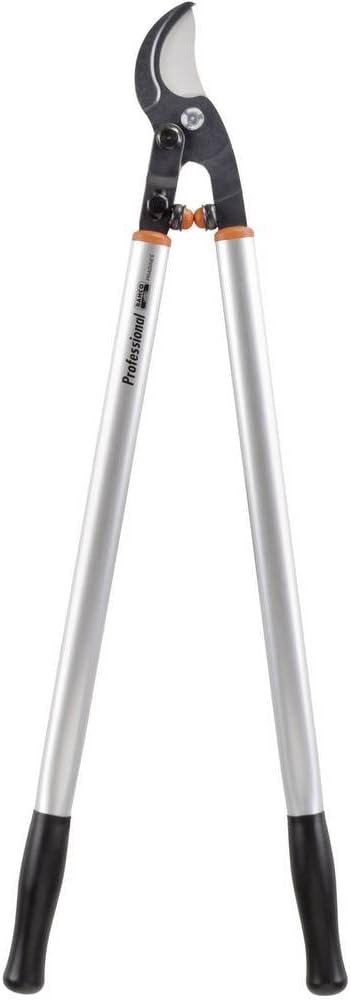
| Cutting width | 2 inches |
|---|---|
| Blade Type | Bypass |
| Hand Orientation | Ambidextrous |
| Handle Material | Metal |
The Bahco P280-SL is a long-reach bypass lopper built for heavier pruning while keeping weight and user strain low. It uses fully hardened steel blades with a low-friction Xylan coating and a sliding lever mechanism to multiply cutting force, so you can tackle up to about 2-inch limbs with noticeably less arm effort. The 31.5-inch aluminum handles extend reach for higher or deeper cuts without a ladder, and integrated rubber shock buffers soften impact and vibration during extended sessions. Practical touches like a narrow cutting head and center-bolt locking help with access and blade stability, making precise trims easier in tight spots. Because the handles are metal and the tool is optimized for power, it feels robust for frequent use but is not a telescoping or ultra-compact model for storage or travel. For gardeners who want a lighter alternative to heavier steel loppers while still cutting substantial branches, this balances reach, cutting capacity, and comfort effectively.
Best for: Gardeners who want a lightweight but powerful long-reach lopper for regular pruning and occasional heavy cuts and who prioritize reduced effort and comfort during longer sessions.
Less Ideal for: If you need a compact, folding, or telescoping lopper for storage or travel, or you mainly prune very small ornamental stems, this long-reach model is more tool than required.
- High 2-inch cutting capacity for thick limbs
- Sliding lever system reduces the user force required
- Lightweight aluminum handles increase reach and reduce fatigue
- Xylan-coated hardened blades resist sap and improve cut smoothness
- Handles are metal rather than composite so they may transmit more cold in low temperatures
Verdict: Choose the Bahco P280-SL if you want a lightweight long-reach lopper that delivers high cutting power with less user effort.
FELCO F211-60 24" Lightweight Swiss-Made Loppers with Curved Bypass Blade

| Blade Material | Carbon Steel |
|---|---|
| Handle Material | Aluminum |
| Blade Type | Parrot Beak |
| Hand Orientation | Ambidextrous |
| Cutting width | 1.2 inches |
The FELCO F211-60 is a performance-focused two-handed lopper built for clean cuts on branches up to about 1.2 inches. Designed with I-beam aluminum handles and a parrot-beak curved bypass blade of carbon steel, it balances low weight with cutting power so you can prune longer without tiring. Micrometric adjustment makes blade alignment and replacement straightforward, and replaceable parts and durable grips extend the tool's service life. In practice it shines on pruning fruit trees, shaping shrubs, and routine branch maintenance where precision and edge retention matter. Because it is a bypass-style cutter it produces cleaner wounds than an anvil cutter, which helps promote faster plant recovery. The tool is not oversized so it is best for light-to-medium branches rather than heavy-duty limbing, and the 24-inch length limits leverage compared with long-handled professional models. If you value a well-made, maintainable lopper that favors clean, accurate cuts, this is a strong option; if you consistently tackle very large-diameter wood you will want a longer or more heavy-duty cutter.
Best for: Gardeners and home orchard keepers who prioritize clean, precise cuts and a durable, serviceable tool for regular pruning and shaping tasks.
Less Ideal for: Landscapers or users who need maximum leverage for frequent heavy pruning of large-diameter branches should consider longer, heavier-duty loppers or a pruning saw instead.
- Lightweight I-beam aluminum handles reduce fatigue during extended use
- Carbon steel curved bypass blade offers good edge retention and clean cuts
- Micrometric adjustment and replaceable parts make maintenance and blade replacement simple
- Ambidextrous design and phthalate-free grips improve comfort and usability
- Cutting capacity around 1.2 inches limits use on larger limbs
- 24-inch length provides less leverage than longer professional loppers
Verdict: Buy this lopper if you want a lightweight, Swiss-made pruning tool that delivers precise, maintainable cuts for routine tree and shrub maintenance.
PrunePro 28" Bypass Loppers with Stainless Steel Blade and Gear Assist

| Blade Material | Stainless Steel |
|---|---|
| Blade Type | Bypass |
| Hand Orientation | Ambidextrous |
| Handle Material | Aluminum, Polypropylene (PP) |
| Cutting width | 2 |
These PrunePro 28" bypass loppers are a lightweight, gear-assisted tool designed for seasonal pruning and routine yard maintenance. The stainless steel blades have a Teflon coating for rust resistance and easier cleaning, while the gear system multiplies your leverage so you can cut thicker limbs with less effort. The ambidextrous bypass blade profile gives a clean cut suited to live-wood pruning and helps promote plant health. Handles made from aluminum with a non-slip polypropylene grip keep the tool light and reduce fatigue during longer sessions. Practical gardeners will appreciate the balance of power and weight for trimming shrubs, small trees, and overgrown branches up to 2 inches. Limitations to note are the fixed 28-inch length and manual operation, which mean it is not a substitute for a powered saw on very large limbs and offers no telescoping reach.
Best for: Gardeners who prioritize a lightweight, efficient hand tool for regular pruning and want more cutting power without adding bulk or a motor.
Less Ideal for: People who need extended reach for tall trees or who routinely cut very large diameter limbs and prefer power tools for heavy-duty work.
- Gear-assist mechanism increases cutting leverage for easier cuts on thicker branches
- Stainless steel blades with Teflon coating resist rust and are easier to clean
- Lightweight aluminum handles with non-slip grips reduce user fatigue
- Ambidextrous bypass blades deliver clean cuts suitable for live-wood pruning
- Fixed 28" length limits reach compared with telescoping loppers
- Manual tool not suitable for very large limbs where a powered saw is needed
Verdict: If you want a lightweight, gear-assisted lopper that makes 2-inch branch pruning easier without adding bulk, this PrunePro model is a solid pick.
Garden Guru 15" Bypass Loppers with High-Carbon Steel Blades

| Blade Material | High Carbon Steel |
|---|---|
| Blade Type | Bypass |
| Cutting width | 1.5 inches |
| Hand Orientation | Ambidextrous |
These 15-inch Garden Guru bypass loppers are built for everyday pruning where reach and maneuverability matter more than maximum cutting capacity. They use high-carbon steel, serrated bypass blades that hold an edge and make clean cuts on live wood up to about 1.5 inches thick. Shorter handles and a light balanced build make the tool easy to position for precise cuts close to the body and reduce shoulder and hand fatigue during longer sessions. Soft, ambidextrous rubber grips improve control and help prevent slipping when working in wet conditions. The compact size is handy for tight hedges, shrubs, and small tree limbs but limits leverage for larger-diameter branches where a longer-handled or ratcheting lopper would perform better. Overall this is a practical, no-frills pruning tool that suits routine garden maintenance and users watching their budget who still want durable steel blades and comfortable handles.
Best for: Gardeners who need a lightweight, affordable pair of loppers for regular pruning of shrubs, hedges, and small tree limbs and who prioritize ease of use and comfort over maximum cutting power.
Less Ideal for: Property owners with large trees or frequent heavy pruning needs who require greater leverage or a ratchet/anvil design for cutting very thick branches.
- High-carbon steel blades for sharp, clean cuts
- Lightweight, compact 15-inch design reduces arm and shoulder fatigue
- Soft non-slip grips provide comfortable, ambidextrous handling
- Serrated blade edge helps hold material for controlled cuts
- 1.5-inch cutting capacity limits use on thicker branches where long-handled or ratcheting loppers are better
Verdict: A lightweight, budget-friendly bypass lopper that delivers clean cuts and comfortable handling for routine pruning of small branches.
FELCO F221-70 28" Swiss-Made Bypass Loppers

| Cutting width | 1.8 inches |
|---|---|
| Size | 28 inches |
| Blade Type | Bypass |
| Blade Material | High Carbon Steel |
| Handle Material | Aluminum |
The FELCO F221-70 is a precision bypass lopper designed for clean cuts on small to medium branches. Its high-carbon steel curved blades and bypass action slice stems rather than crush them, which helps promote faster healing on fruit trees and ornamentals. The 28" aluminum I-beam handles keep overall weight down while still offering leverage for tougher cuts, and the ambidextrous design suits right- or left-handed users. A micrometric adjustment mechanism makes blade tensioning and replacement straightforward, and most parts are replaceable so the tool can be serviced rather than discarded. In practice this lopper excels for orchard work and regular pruning where sharp, repeatable performance matters. The trade-off is that at 28" it is not a long-reach pole tool, so very high or very thick branches will still require a saw or a dedicated long-reach lopper. There is also a modest learning curve to maintain and adjust the blades properly if you want the best edge retention over time.
Best for: Serious gardeners and orchard owners who prioritize clean-cutting performance and serviceable tools for regular pruning tasks.
Less Ideal for: Casual gardeners who need maximum reach for tall trees or those who prefer a no-maintenance disposable tool.
- Curved high-carbon steel blades for clean, long-lasting cuts
- Lightweight aluminum I-beam handles reduce fatigue while providing good leverage
- Micrometric adjustment for precise blade tensioning and easy replacement
- Ambidextrous design and replaceable parts extend service life
- 28" length limits reach compared with pole loppers for taller trees
- May require periodic sharpening and adjustment to maintain peak performance
Verdict: Buy this lopper if you want a lightweight, serviceable bypass tool that delivers clean, long-lasting cuts for orchard and pruning work.
Fiskars 24" Garden Bypass Loppers with 1.5" Cut Capacity

| Cutting width | 1.5 inches |
|---|---|
| Size | 24" |
| Blade Type | Bypass |
| Blade Material | Alloy Steel |
| Hand Orientation | Ambidextrous |
These Fiskars 24" bypass loppers are built for routine pruning of live branches up to about 1.5 inches thick. The precision-ground alloy-steel blade has a low-friction coating that helps the blade glide through wood and resist corrosion, while the shorter, lightweight handles make the tool easy to maneuver in tight spaces or when cutting at awkward angles. Softgrip handles and shock-absorbing bumpers reduce hand strain and blunt the impact at the end of a cut, which makes repeated use more comfortable. Because the design emphasizes maneuverability and comfort rather than long reach or maximum leverage, the loppers are best for small- to medium-diameter limbs and everyday garden maintenance rather than heavy-duty tree work. The ambidextrous bypass blades give cleaner cuts on living growth than anvil-style cutters, helping plants heal faster. If you want a dependable, easy-to-use pair of loppers for beds, shrubs, and light tree pruning, these deliver solid performance in a compact, user-friendly package.
Best for: Gardeners who prioritize a lightweight, easy-to-handle lopper for routine pruning of shrubs, small trees, and green growth and who prefer a tool with comfortable grips for frequent use.
Less Ideal for: People who need maximum cutting leverage or regularly trim large, dead, or very thick branches should choose a long-handle or heavy-duty lopper instead.
- Precision-ground alloy-steel blade with low-friction coating for smoother, rust-resistant cuts
- Lightweight shorter handles improve maneuverability in tight spaces and awkward angles
- Softgrip handles and shock-absorbing bumpers reduce hand fatigue during repeated use
- Ambidextrous bypass cutting action produces clean cuts on living branches
- Shorter handles limit leverage so larger or very hard wood requires more force or a larger tool
Verdict: A lightweight, easy-to-maneuver bypass lopper that delivers clean cuts and comfortable operation for everyday garden pruning.
Fiskars 15" PowerGear Anvil Loppers (1.25" cut)

| Cutting capacity | 1.25 inches |
|---|---|
| Blade material | Alloy Steel |
| Handle orientation | Ambidextrous |
| Product style | 15" PowerGear Anvil |
The Fiskars 15" PowerGear anvil lopper is a compact pruning tool built to make small tree and shrub pruning easier for weekend gardeners. Its PowerGear gearing multiplies leverage so the short handles still deliver strong cutting force through dry or dead branches up to 1.25" thick. The anvil-style hardened alloy-steel blade and low-friction coating help the blade glide through wood, resist gumming from sap, and limit corrosion. The reinforced frame and ambidextrous handle provide a balanced, lightweight feel that reduces fatigue during repeated cuts. This model is best used for routine pruning, deadwood removal, and trimming small limbs rather than fresh, fibrous growth where bypass blades work better. Because it is compact, reach is limited compared with long-handled loppers, but the tradeoff is easier storage and better control for precise cuts. Backed by Fiskars' long-standing reputation for durable garden tools, it suits gardeners who want a reliable, low-effort pruner for typical yard maintenance.
Best for: Gardeners who prioritize dependable, low-effort pruning for routine yard maintenance and want a compact tool that minimizes hand and wrist strain.
Less Ideal for: People who need long reach for high branches or who primarily prune live, green growth that benefits from bypass-style blades.
- PowerGear mechanism increases cutting leverage so smaller handles still cut up to 1.25" branches
- Anvil hardened alloy-steel blade with low-friction coating reduces gumming and resists corrosion
- Lightweight, compact design reduces wrist and arm strain and is easy to maneuver and store
- Ambidextrous handle and durable DuraFrame construction for balanced, reliable use
- Anvil blade style is best for dry or dead wood and is less suited to cleanly cutting live green shoots
Verdict: A compact, easy-to-use lopper that delivers strong leverage for reliable deadwood and small-branch pruning with minimal exertion.
Choosing the Right Lightweight Loppers: Key Factors to Consider
Cutting Capacity and Intended Branch Size
Know the maximum cutting diameter the loppers are rated for and match that to the branches you will prune. Lightweight loppers often excel at 3/4 to 1 1/4 inch cuts; trying to force larger cuts leads to crushed fibers, dulling, and potential tool damage.
Also consider the blade type. Bypass blades are best for live, green wood because they shear cleanly, promoting faster healing. Anvil-style cutters can compress or crush bark on live branches and are better for dead wood. For seasonal maintenance of shrubs and small trees, prioritize a bypass geometry with a stated cutting diameter that covers your common branch sizes.
Handle Length and Reach
Handle length determines leverage and cutting force versus maneuverability. Shorter handles reduce weight and improve control when working close to the body, which suits tight beds and decorative shrubs. Longer handles provide more leverage for thicker branches but add weight and can be harder to use overhead.
Think about your typical pruning posture. If you do a lot of low-to-medium height pruning, mid-length handles give the best balance. Also check whether the loppers have telescoping handles if you need occasional extra reach; these can increase versatility while keeping the base tool lightweight.
Tool Weight and Balance
Weight affects fatigue directly. A lighter tool reduces wrist and shoulder strain during extended sessions, but weight distribution matters too. Well-balanced loppers feel lighter in use because the center of mass sits close to the hands.
Materials like aluminum or composite handles cut overall weight but watch for flex or weak connection points. Some lightweight loppers combine a lighter shaft with reinforced joints to maintain cutting force without excessive mass. Try to pick a tool where you can comfortably hold and operate the blades without the handles pulling you off balance.
Handle Comfort and Grip
Comfortable grips reduce blisters and improve control when making tight cuts. Look for handles with ergonomic shaping and soft-touch zones where your hand naturally rests. Non-slip surfaces are important if you prune when hands are sweaty or damp.
Padding is helpful but should not be so thick that it reduces tactile feedback. Evaluate whether the loppers have offset or angled handles; these can reduce wrist strain and improve the cutting angle on standing stems. Also check clearance for two-handed use when you need extra force.
Blade Material and Maintenance
Blade steel, heat treatment, and edge geometry determine how long the cutting edge stays sharp and how easy it is to resharpen. Hardened and tempered steel holds an edge longer but may be more brittle if poorly heat-treated. Look for blades that note a hardened edge or are described as forged for durability.
Maintenance features matter for long-term ownership. Easy-to-access pivot bolts, replaceable blades, and straightforward tension adjustments make it simpler to keep the loppers cutting cleanly season after season. Regular cleaning and occasional lubrication dramatically extend blade life, so pick a tool you can service without special tools.
Construction Quality and Fasteners
Examine how the blade attaches to the handles and what type of fasteners are used. Solid rivets are common and robust, but bolt-and-nut pivots allow tension adjustments and easier servicing. Reinforced joints and gussets reduce flex where handles meet the head, which keeps cutting geometry stable.
For lightweight loppers, watch for thin-walled tubing that could dent or fail where leverage concentrates. Corrosion-resistant coatings or stainless fasteners help outdoor tools last through wet seasons. Good construction reduces wasted effort and keeps cuts predictable over time.
When Lightweight Loppers Make Sense
Lightweight loppers are ideal when you need precision and minimal fatigue for routine maintenance pruning. They are well suited to shaping shrubs, removing small suckers, and trimming ornamental branches where clean cuts and control matter more than maximum cutting force.
If you prune frequently or have limited upper-body strength, a lighter tool lets you work longer and with better control. They are also easier to carry around the garden and maneuver in tight beds or around plantings where long handles or heavy tools would be cumbersome.
- Best for live wood and routine seasonal maintenance
- Good choice for gardeners who prune often or have limited strength
- Easier to use in crowded beds and tight spaces
Common Tradeoffs With Lightweight Designs
Reducing weight usually means shorter handles or lighter materials, which can limit maximum cutting diameter. You may need more cuts or a different tool for thicker branches.
Some lightweight loppers rely on compound action to boost cutting force. That improves performance but can add mechanical complexity that requires occasional maintenance or adjustment. Expect a balance between portability and raw cutting power.
- Less weight can mean less leverage for heavy cuts
- Compound mechanisms add force but increase maintenance needs
- Watch for handle flex in very light designs
Maintaining Clean Cuts and Sharp Blades
Clean pruning reduces disease risk and speeds healing. Keep blades sharp and make smooth, decisive cuts rather than sawing. Wipe sap and debris after each use and apply a light coat of oil to pivot points to prevent corrosion and stickiness.
Check blade alignment and pivot tension periodically. A properly tensioned pair of loppers slices rather than crushes. When sharpening, follow the blade bevel and maintain a consistent angle to preserve edge geometry.
- Wipe sap off blades after use
- Lubricate pivot and check tension regularly
- Sharpen blades along the existing bevel
Using Lightweight Loppers Safely
Wear eye protection when cutting, because small chips and debris can fly. Position yourself so you cut with the blades in front of your body and avoid overreaching. Use both hands when additional force is necessary rather than twisting your torso to add leverage.
Inspect branches for tension before cutting; a loaded branch can spring back when released. For any branches near power lines or in unstable trees, consider professional assistance rather than attempting risky cuts with hand tools.
- Wear eye protection and gloves
- Use two hands for tough cuts and avoid overreaching
- Assess branch tension and hazards before cutting
Accessory Options That Improve Use
Consider accessories such as replacement blades, spare pivot hardware, or a small file for field sharpening. A compact sheath or clip can protect the blade and prevent accidents while transporting the tool around the yard.
If you frequently prune overhead, look for compatible telescoping extensions or a pole adapter system. These let you keep a lightweight cutting head while gaining reach without switching to a heavier pole lopper.
- Replacement blades and pivot hardware prolong service life
- Blade covers protect edges and users
- Pole adapters add reach while keeping the lightweight head
How We Chose the Best Lightweight Loppers
We focused on lightweight loppers intended for regular garden pruning rather than heavy forestry work. Selection favored tools with clear maximum cutting diameter ratings and blade geometries suited to clean pruning of live wood. We prioritized handle ergonomics and overall tool weight because reduced fatigue and control are the primary benefits gardeners expect from lightweight loppers. Durability and cutting performance were judged using material indicators such as blade steel type, heat treatment, and bolt or rivet construction. We also considered reach and leverage features including handle length and any built-in compound action that improves cutting force. Ease of maintenance, such as replaceable blades or simple tension adjustments, was included as a selection filter. Excluded from this list were heavy-duty anvil-style cutters intended for large-diameter deadwood and pole loppers beyond typical hand-reach lengths. We did not include specialty bypass pruning shears, battery-powered cutters, or tools without documented cutting capacity. The final picks represent a balance of low weight, reliable cutting capacity, comfortable grips, and maintainable construction.
FAQ
What branch diameter should I expect to cut with lightweight loppers?
Lightweight loppers usually handle small to medium branches, often around 3/4 to 1 1/4 inch in diameter. Actual capacity varies by design; if you commonly face thicker limbs, a longer-handled or heavy-duty cutter may be necessary.
Are bypass blades better than anvil blades for most garden pruning?
Yes, bypass blades are generally better for live wood because they produce clean shears that heal faster. Anvil blades can be useful for dead branches, but they may crush living stems and slow healing.
How do I keep loppers cutting well season after season?
Regular maintenance includes wiping sap from blades, oiling pivot points, checking and adjusting tension, and sharpening when the edge dulls. Replace worn hardware as needed to maintain proper cutting geometry.
Can a lightweight lopper damage a branch if used incorrectly?
Yes. Using a lightweight lopper on branches beyond its rated capacity or with loose pivot tension can crush fibers instead of making a clean cut. Match tool capacity to the task and ensure blades are sharp and aligned.
Is handle length or blade quality more important for comfort?
Both matter. Handle length affects leverage and reach, while blade quality determines how easily the tool slices. For comfort, prioritize a balanced tool with comfortable grips and a blade that stays sharp with minimal effort.
Final Verdict
Choose lightweight loppers that match the common branch sizes you prune and prioritize handle comfort to reduce fatigue. Expect tradeoffs between low weight and maximum cutting diameter; well-designed lightweight tools use blade geometry and compound action to extend capability without adding mass. Focus on cutting capacity, blade edge holding, and construction quality when deciding. With the right balance of these attributes you get a tool that makes routine pruning faster, cleaner, and less tiring.
