

Note: This article contains affiliate links. If you click on these links and make a purchase, I may earn a small commission at no extra cost to you. This helps support my research and content. Read my full affiliate disclosure here.
Picking the right organic fall lawn fertilizer makes a real difference in how your turf handles cold, moisture, and early spring growth. In fall you are feeding roots more than blades, so the right mix and release pattern translates directly into winter hardiness and quicker green-up next spring. This guide covers the seven shortlisted organic fall lawn fertilizers that stood out for balanced nutrients and dependable release behavior. We evaluate products on nutrient composition, release pattern, soil impact, ease of application, and suitability for common cool-season lawn needs. Read on to understand which attributes matter most for your lawn and why these picks earned a spot on the list.
Top Picks at a Glance
| Best Overall The best all-around choice for most situations | Espoma Turf-Tone Fall Winterizer 8-0-5 Organic Lawn Food, 30 lb | 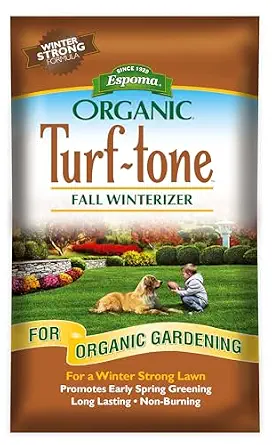 |
| Best Quality Built to a higher standard if you want something more solid | Suståne 8-0-4 Organic Fall/Winter Lawn Fertilizer, 30 lb |  |
| Best Value The sweet spot between price and what you get | Purely Organic Products Lawn Food 10-0-2, 15 lb |  |
| Best Budget The cheapest option that still gets the job done reliably | Down To Earth Bio-Turf Organic Lawn Fertilizer, 8-3-5, 4 lb |  |
| Highest Rated A top-rated pick with lots of positive feedback | CountryMax Organic Lawn Fertilizer 36 lb, 10-6-4 Slow Release |  |
| Most Popular A crowd favorite that many people choose with confidence | Jonathan Green Organic Lawn Food 10-0-1 (5,000 sq ft) |  |
| Best Seller A high-volume bestseller chosen again and again | Milorganite 6-4-0 Slow-Release Fertilizer, 32 lb (with Feeding Tips Brochure) |  |
Espoma Turf-Tone Fall Winterizer 8-0-5 Organic Lawn Food, 30 lb

| Mixing Ratio | 8-0-5 |
|---|---|
| Item Form | Granules |
| Specific Uses For Product | Lawns (Fescues, Bluegrass, Rye Grass, St. Augustine, Zoysia) |
| Coverage | Full |
| Ingredients | Feather Meal, Poultry Manure, Potash |
Espoma Turf-Tone Fall Winterizer is an 8-0-5 granular lawn fertilizer made from natural ingredients such as feather meal, poultry manure, and potash, designed for fall application. It is applied with a drop or broadcast spreader to lawns like fescue, bluegrass, rye, St. Augustine, and zoysia to build root strength before winter dormancy and help recovery after summer stress. The higher potassium content supports hardiness and winter survival while the organic nitrogen sources feed more slowly for steadier uptake and reduced burn risk. A single 30 lb bag covers up to 5,000 sq ft, making it practical for medium to large yards. Because it is organic, results are generally slower than synthetic granules, so expect gradual improvement rather than an immediate green-up. For gardeners prioritizing long-term turf health and reduced synthetic inputs, this product delivers seasonally targeted nutrition with low leaching potential.
Best for: Gardeners focused on long-term lawn performance who want an organic, season-specific fertilizer to strengthen turf going into winter.
Less Ideal for: Users seeking a rapid, immediate green-up or a full-spectrum synthetic fertilizer program for quick correction of specific nutrient deficiencies.
- Organic formula with feather meal and poultry manure for slow, steady nitrogen release
- Higher potassium (8-0-5) to improve winter hardiness and root strength
- Covers up to 5,000 sq ft per 30 lb bag, suitable for medium to large lawns
- Won't burn when applied as directed and is less likely to leach than soluble fertilizers
- Slower visible results compared with synthetic fast-release fertilizers
- Single formulation may not address specific nutrient deficiencies beyond N and K
Verdict: Choose this organic fall winterizer if you want a potassium-rich, slow-release fertilizer that strengthens turf for winter and supports healthier spring recovery.
Suståne 8-0-4 Organic Fall/Winter Lawn Fertilizer, 30 lb

| Item Form | Granules, Powder |
|---|---|
| Specific Uses For Product | Lawns,Organic |
| Application Method | Broadcast Spreader |
| Target Species | Lawn Grass |
| Mixing Ratio | 8-0-4 |
This Suståne 8-0-4 winterizer is an organic granular fertilizer intended for a September or October broadcast application to lawns. It combines aerobically composted turkey litter, green waste compost, feather meal and sulfate of potash to deliver slow-release nitrogen plus potassium for root development and soil improvement. In practice you spread it with a broadcast spreader over a 30 (unit) coverage to feed grass through dormancy and promote a quicker, thicker spring green-up. The product is easy to use, supports soil biology because of its compost-based ingredients, and reduces the need for frequent feeding compared with fast-release synthetics. Expect gradual results rather than immediate greening, and plan to apply in the recommended fall window for best effect. The main limitations are the seasonal timing requirement and the bulk weight that makes handling and storage more cumbersome than smaller bags.
Best for: Homeowners who want an all-purpose, organic fall lawn treatment that improves soil and builds root strength with a single seasonal application.
Less Ideal for: Gardeners who need quick visible results or who prefer frequent small-dose liquid feedings; also not ideal for those who cannot handle or store a large, heavy bag.
- Organic, compost-based formula that supports soil biology
- Slow-release nutrients for sustained feeding through winter
- Specifically balanced for fall use to encourage root development and spring green-up
- Formulated for broadcast spreader application for even coverage
- Bulk 30-pound packaging can be heavy to lift and store
- Effects are gradual and not suited for instant greening
Verdict: A reliable organic fall fertilizer that builds root strength and soil health for a thicker, earlier spring lawn.
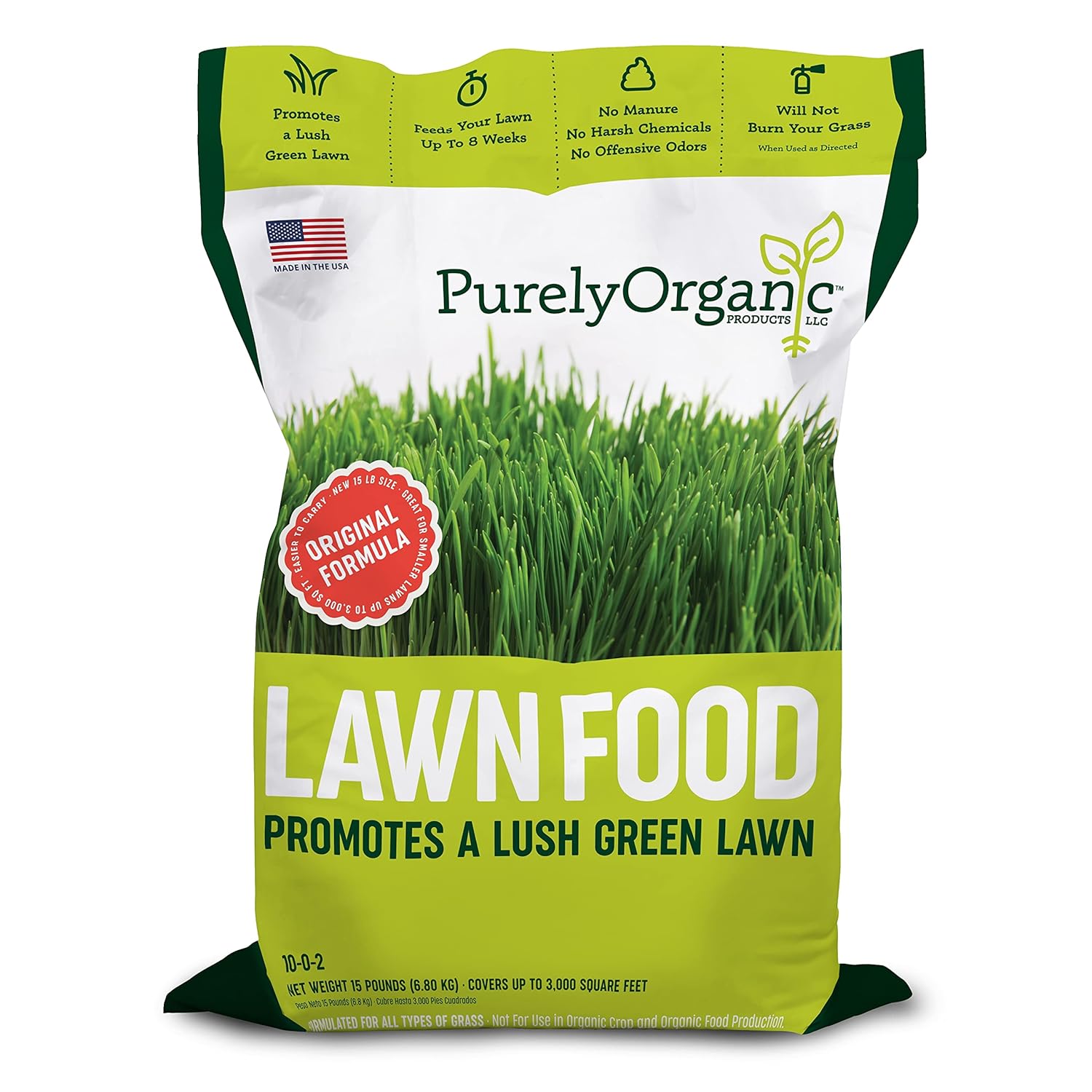
Purely Organic Products Lawn Food 10-0-2, 15 lb
| Item Form | Granules |
|---|---|
| Application Method | Drop or rotary spreader |
| Coverage | 3,000 Square Feet |
| Specific Uses For Product | Plant Growth, Root Development, Soil Conditioning |
| Mixing Ratio | 10:0:2 |
This Purely Organic Lawn Food is a granular, plant-based fertilizer designed for routine lawn feeding on cool- and warm-season grasses. It spreads with a drop or rotary spreader at the recommended 4–8 lbs per 1,000 sq ft and supplies nitrogen-heavy nutrition (10-0-2) for greener leaf growth while also contributing to root development and soil conditioning. The blend uses soybean meal and distillers dried grains instead of synthetic chemicals, which reduces odor and eliminates phosphorus to comply with phosphate-restriction rules in some towns. It is family and pet friendly with no re-entry restrictions noted, making it practical for yards with animals. Expect slower, steady green-up compared with quick-release synthetic fertilizers, so results are gradual rather than instant. Also, coverage is calibrated to the 15 lb bag for roughly 3,000 sq ft, so larger lawns will need multiple bags and more storage space.
Best for: Buyers who want a pet- and family-friendly, plant-based lawn fertilizer that supports steady, natural green-up and prefers practical, regulation-compliant choices over fast-acting chemical feeds.
Less Ideal for: Homeowners who need rapid, dramatic color change or who manage very large lawns and expect each application to cover extensive acreage.
- Plant-based formula using soybean meal and distillers grains instead of synthetic chemicals
- No phosphorus in the 10-0-2 formula to meet phosphate-restriction rules
- Can be applied with common drop or rotary spreaders and covers about 3,000 sq ft per bag
- Family and pet friendly with no re-entry time required
- Slow-release effect means slower visible results compared with synthetic quick-release fertilizers
- 15 lb bag may be insufficient for larger lawns requiring multiple applications or bags
Verdict: Choose this product if you want a practical, pet-safe, plant-based fertilizer that steadily builds greener turf while avoiding phosphorus.
Down To Earth Bio-Turf Organic Lawn Fertilizer, 8-3-5, 4 lb

| Item Form | Granules |
|---|---|
| Specific Uses For Product | Root development in lawns and vegetable gardens |
| Unit Count | 64 Ounce |
| Target Species | Lawns and Vegetable Gardens |
| NPK | 8-3-5 |
Down To Earth Bio-Turf is a compact, all-natural granular fertilizer aimed at strengthening lawns and heavy-feeding vegetables in organic gardens. It is typically applied at the start of the growing season or in fall to promote deep root development and improve drought and temperature-stress tolerance. The 8-3-5 formula supplies a higher proportion of nitrogen for green-up plus extra potassium to help plants cope with seasonal change. Ingredients are derived from natural sources such as feather meal, blood meal, bone meal and langbeinite, which release nutrients more slowly than synthetic fertilizers and support soil biology. Practical benefits include OMRI listing for organic use and a formulation suited to encouraging early growth without synthetic additives. Limitations are the small 4 lb box size, which means frequent repurchasing for larger lawns, and the need to follow package directions for mixing or spreader rates since coverage varies by area. Users should also wear protective gear during handling as the product contains concentrated animal-based meals.
Best for: Home gardeners on a budget who want an organic, slow-release fertilizer to build root strength and reduce seasonal stress in small lawns or vegetable beds.
Less Ideal for: Large-property owners seeking wide coverage per purchase or gardeners who prefer synthetic quick-release fertilizers for immediate greening.
- OMRI-listed and suitable for certified organic use
- Slow-release, natural nutrient sources that support soil microorganisms
- Higher potassium content to help lawns handle temperature and drought stress
- Granular form works with standard lawn spreaders and for garden beds
- Small 4 lb package limits coverage for medium to large lawns
- Contains animal-derived ingredients that require careful handling
Verdict: A compact OMRI-listed organic fertilizer that helps build deeper roots and improve lawn stress tolerance, ideal for small lawns and budget-minded organic gardeners.
CountryMax Organic Lawn Fertilizer 36 lb, 10-6-4 Slow Release

| Net weight | 36 lb |
|---|---|
| NPK | 10-6-4 |
| Release type | Slow release |
This CountryMax 10-6-4 organic lawn fertilizer is a slow-release granular formula intended for both new and established lawns. You spread it with a broadcast or drop spreader to provide steady nutrients that encourage deeper roots, thicker turf, and a richer green color without the rapid flush of synthetic nitrogen. The organic, time-release nutrition reduces the risk of lawn burn and supports recovery from drought and common stresses, so it is suited to lawns that need more resilience during dry spells. In practice it simplifies maintenance because feedings last longer and do not require precise timing to avoid damage. The product is best used as part of a seasonal program rather than a one-off quick fix since organic nutrients act more slowly than synthetic fertilizers. Also, a single 36 lb bag covers a modest area compared with bulk commercial bags, so larger properties will need multiple bags or a professional supply source.
Best for: Homeowners who prioritize reliability and steady, low-risk lawn care and want a product that builds root strength and stress resilience over time.
Less Ideal for: People seeking immediate, fast greening or those with very large properties who prefer concentrated bulk fertilizer for frequent large-area applications.
- Slow-release organic formula feeds turf gradually to reduce risk of burn
- Promotes stronger root development for improved drought and stress tolerance
- Balanced 10-6-4 NPK supports greener, thicker turf without rapid nitrogen spikes
- Suitable for new and established lawns and professional lawn care use
- Organic nutrients work more slowly than synthetic fertilizers, so results take longer to appear
- 36 lb bag may not be cost-effective for very large lawns compared with bulk commercial options
Verdict: Choose this slow-release organic fertilizer if you want a low-risk, reliability-focused feed that builds root strength and helps lawns endure dry conditions.
Jonathan Green Organic Lawn Food 10-0-1 (5,000 sq ft)

| Analysis | 10-0-1 |
|---|---|
| Form | Granules |
| Coverage | 5000 sq ft |
| Application method | Spread |
Jonathan Green Organic Lawn Food is a slow-release granular fertilizer designed to feed established and newly seeded lawns for eight to ten weeks. It is spread with a broadcast, drop, or hand-held spreader and supplies steady nitrogen plus iron to improve color without relying on fast-release synthetics. In practice the granules are easy to apply and the formula is gentle enough that it will not burn turf, which makes it suitable for homes with children and pets. The product covers about 5,000 square feet per bag and is described as containing natural ingredients and no sludge- or manure-based fillers. Important limitations are that its nutrient mix is low in phosphorus and potassium so it is mainly a green-up and maintenance fertilizer rather than a one-step solution for soil deficiencies, and feeding is gradual so results are not instant. For typical home lawns looking for an organic maintenance feed this is a practical, low-risk option.
Best for: Homeowners who want an easy, low-risk organic maintenance feed that improves color and sustains turf between major treatments.
Less Ideal for: Gardeners needing rapid greening, immediate repair of nutrient-poor soil, or a complete fertilizer with higher P and K for soil correction.
- Organic, natural ingredient formula that avoids fast-release synthetic nitrogen
- Slow-release feed provides 8–10 weeks of steady nutrition
- Contains iron to promote deeper green color
- Easy-to-spread homogeneous granules compatible with broadcast, drop, or handheld spreaders
- Low phosphorus and potassium content makes it unsuitable as a complete soil correction
- Gradual action means visible improvement can take multiple weeks
Verdict: A reliable organic slow-release lawn food that delivers steady green-up and maintenance for average home lawns.
Milorganite 6-4-0 Slow-Release Fertilizer, 32 lb (with Feeding Tips Brochure)

| Item Form | Pelletized |
|---|---|
| Application Method | Broadcast, Rotary or Manual |
| Coverage | 2,500 Square Feet |
| Specific Uses For Product | Lawns, Flowers and Gardens, Education |
Milorganite 6-4-0 is an organic, pelletized slow-release fertilizer intended for routine lawn and garden feeding. It is typically broadcast with a rotary or manual spreader and provides nitrogen slowly over 8 to 10 weeks, which reduces the need for frequent applications and lowers burn risk. The product contains organically complex iron for greening without the strong staining associated with iron salts and is low in soluble salts, so it performs well in warm or drier conditions. The 32 lb bag covers roughly 2,500 square feet and comes with a printed feeding and spreader tips brochure to simplify seasonal timing and application rates. Because it is made from heat-dried microbes, it also adds organic matter to improve soil structure in heavy clay or sandy soils. Limitations are that nutrient release is gradual so it is not suited to quick color fixes or rapid turf recovery, and users seeking tightly controlled N-P-K ratios or fast-acting synthetic performance may prefer a different product.
Best for: Buyers who want a low-maintenance, environmentally minded fertilizer that steadily feeds established lawns and mixed garden beds with minimal risk of burn and fewer repeat applications.
Less Ideal for: If you need rapid turf recovery, immediate color correction, or precise synthetic nutrient control for athletic fields or newly sodded lawns, choose a fast-release or specialty fertilizer instead.
- Slow-release nitrogen feeds lawns and plants for 8–10 weeks, reducing application frequency
- Low-salt formulation minimizes fertilizer burn and streaking in hot or dry conditions
- Organically complex iron promotes deep greening without heavy staining of concrete
- Pelletized form works with broadcast, rotary, or manual spreaders for easy application
- Adds organic matter that can improve drainage and soil structure in clay or sandy soils
- Not fast-acting, so it will not deliver an immediate green-up after application
- Contains biosolids which some buyers may prefer to avoid for personal or local reasons
Verdict: Pick this if you want a reliable, low-salt slow-release fertilizer that feeds lawns and gardens for weeks with minimal maintenance.
Choosing the Right Organic Fall Lawn Fertilizer: Key Factors to Consider
Nutrient Ratio Focused on Root Development
Fall applications should favor potassium and modest nitrogen rather than high nitrogen that stimulates leafy growth. Higher potassium helps cells resist winter stress and supports carbohydrate storage in roots. Look for formulas where the N to K ratio supports root buildup and does not encourage late-season top growth.
Also consider the presence of micronutrients like iron and manganese, which help turf store reserves and maintain color late into the season. Micronutrients are most useful when soil tests show deficiencies, but balanced inclusion in an organic fall blend can aid recovery next spring.
Release Pattern and Temperature Sensitivity
Slow-release behavior matters because soil temperatures drop in fall and plant uptake slows. Fertilizers that release nitrogen and other nutrients gradually over weeks allow roots to take up nutrients without forcing new shoots that are vulnerable to frost. Organic sources with predictable mineralization profiles perform better in cool soils than products that rely on warm-weather microbial activity alone.
Assess whether a product specifies temperature-related release or provides guidance for fall timing. Granular organic blends that include a mix of immediately available and slowly mineralizing components give steady feeding across variable fall weather.
Soil Conditioning and Microbial Support
Beyond immediate nutrients, organic fall fertilizers should improve soil structure and microbial activity. Added organic matter can enhance moisture retention and provide a slow nutrient reservoir. Products containing composted inputs, humates, or other carbon-rich amendments help sustain microbial communities that continue nutrient cycling through winter and early spring.
For compacted or low-organic soils, choose blends that explicitly boost soil biology rather than just supplying soluble nutrients. That long-term soil improvement translates to greener, more resilient turf over multiple seasons.
Application Method and Spreadability
How a product applies affects uniformity and results. Granular and pelleted organic fertilizers should spread evenly with common broadcast or drop spreaders. Clumping, variable granule size, or dust can lead to uneven patches and inconsistent root development.
Consider the typical size of your lawn and the equipment you own. Many granular organics work well with homeowner spreaders; if you plan to overseed at the same time, pick a product that does not inhibit seed-to-soil contact. Clear label instructions for recommended spreader settings and coverage rates make application easier and reduce the chance of over- or under-application.
Environmental Impact and Lawn Safety
Organic fall fertilizers are chosen to reduce nutrient runoff and minimize winter leaching. Look for products with low proportions of highly soluble nitrogen and with components that bind or slowly release nutrients. Reduced runoff protects nearby water bodies and prevents nutrient loss during heavy fall rains.
Also check for salt content and the potential for burn. Even organic inputs can cause localized stress if overapplied. Products that specify safe application rates for cool-season grasses and that avoid high-salt carriers are preferable for fall use.
Compatibility With Fall Lawn Tasks
Fall is a time for multiple lawn tasks: aeration, overseeding, and fertilizer application. Choose a fertilizer that pairs well with these activities. For overseeding, a lightly fed seedbed benefits from slow-release nutrients that support seedlings without encouraging excessive top growth.
If you aerate before fertilizing, nutrients reach root zones more effectively. Products that are safe to apply before or after aeration and that do not interfere with seed germination give you more scheduling flexibility during the narrow fall window.
Timing Your Fall Application
Aim to apply organic fall fertilizer when daytime temperatures are falling but before hard freezes. For cool-season lawns, that typically means applying in early to late fall when roots remain active and can take up nutrients. A second, lighter application several weeks later can extend benefits if your product supports multiple feeds.
- Avoid fertilizing after the first heavy freeze.
- If overseeding, time fertilizer application so young seedlings get steady nutrients without being smothered.
Using Organic Fertilizer With Overseeding
When overseeding, choose an organic fall fertilizer that supplies gentle, steady nutrients to encourage root establishment rather than rapid blade growth. Spread seed according to recommended rates, then apply fertilizer at a rate that supports seedlings without creating a thick mulch layer that blocks contact with soil. Light raking or topdressing can improve seed-to-soil contact before applying granular material.
- Consider reduced application rates when seeding to avoid seedling stress.
- Water lightly and frequently until seedlings establish, then transition to deeper, less frequent irrigation.
Applying After Aeration or Core Cultivation
Aeration opens the soil and improves nutrient contact with root zones, so applying organic fall fertilizer immediately after aeration maximizes effectiveness. Granular products that fall into aeration holes release nutrients right where roots can use them, improving root growth and winter carbohydrate storage. If you cannot aerate, a light raking after broadcasting can help move granules into the turf canopy and improve absorption.
- Match spreader settings to product recommendations for even distribution.
- Avoid overapplication on small lawns by measuring area and calculating required mass.
Managing Water and Rain Risk After Application
Organic fall fertilizers typically rely on moisture and soil microbes to begin releasing nutrients. Water lightly after application to move granules into the root zone unless rain is firmly in the forecast. Heavy rain soon after spreading increases the risk of surface runoff; avoid applying immediately before a major storm event. If soil is dry and temperatures are warm, plan a short irrigation cycle to activate nutrient release. In cool, wet conditions, skip extra watering and allow natural moisture to drive mineralization.
- Check weather forecasts to avoid runoff risk.
- Use shorter irrigation cycles after application to prevent washing granules away.
Storing and Handling Organic Lawn Fertilizer
Store products in a cool, dry place to preserve microbial life and prevent caking. Moisture exposure can cause clumping and uneven spread, reducing effectiveness. Keep fertilizers in sealed containers if possible and label with the purchase or opening date to track product age. When applying, wear gloves and avoid inhaling dust. Clean spreader equipment after use to prevent cross-contamination between different amendments or seed types.
- Keep products off concrete or driveways to prevent staining.
- Seal leftover material in waterproof containers to extend shelf life.
How We Chose the Best Organic Fall Lawn Fertilizer
We prioritized products that match the specific needs of cool-season lawns entering dormancy. Primary evaluation criteria included nutrient balance focused on higher potassium and adequate slow-release nitrogen, predictable release pattern across cool temperatures, and soil health benefits such as added organic matter and microbial support. Ease of application and coverage consistency were judged to reflect real homeowner use in yards and larger landscapes. Environmental profile and ingredient transparency were required; formulations with vague or undisclosed inputs were excluded. We also checked suitability across common fall tasks: root-building treatments, overseeding companion use, and compatibility with typical soil pH ranges. Products that relied heavily on fast-release synthetic nitrogen or lacked sufficient potassium or organic matter were filtered out. The final list brings together granular and pelletized organic options that perform reliably in cooler soils, spread evenly, and support winter hardiness without excess top growth.
FAQ
When is the best time in fall to apply organic fertilizer to a cool-season lawn?
Apply when daytime temperatures are dropping but roots are still active, typically early to mid-fall. Avoid applications after hard freezes and consider a follow-up light feeding if recommended by the product.
Can I overseed and fertilize at the same time?
Yes. Use a slow-release organic fertilizer at a reduced rate so seedlings receive steady nutrients without excessive top growth. Ensure good seed-to-soil contact and keep irrigation light and frequent until seedlings establish.
Will organic fall fertilizer prevent winter kill?
Organic fertilizer helps build root reserves and increases winter resilience but cannot guarantee prevention of winter kill. Its role is to strengthen turf health and improve recovery after winter stress, while other factors like snow mold, ice cover, and extreme cold also influence outcomes.
How soon after application will my lawn benefit?
Benefits begin as microbes and moisture start mineralizing organic inputs, but visible improvements in growth may take several weeks. Root development and winter hardiness improve over the season rather than overnight.
Is extra watering necessary after applying organic fall fertilizer?
Light watering can help move granules into the root zone unless rain is expected. In cool, wet conditions avoid extra irrigation to reduce runoff risk. Adjust watering based on soil moisture and temperature.
Final Verdict
Choose an organic fall lawn fertilizer that prioritizes root-building nutrients, steady release in cool soils, and soil-health benefits. Tradeoffs usually involve release speed versus immediate green-up; for fall work, favor formulations that deliver potassium and slow-release nitrogen to strengthen roots rather than push late blade growth. Focus on products with clear spreader guidance, good coverage consistency, and components that improve soil biology. That approach gives the best chance for a winter-ready lawn and quicker, greener recovery in spring.
