

Note: This article contains affiliate links. If you click on these links and make a purchase, I may earn a small commission at no extra cost to you. This helps support my research and content. Read my full affiliate disclosure here.
Choosing the right potting mix for tomato plants makes a big difference in how well they root, set flowers, and ripen fruit. Tomatoes need a light, well-draining medium that still holds enough moisture and available nutrients during bloom and fruit development. This guide covers seven top potting mixes for tomatoes, shortlisted for home gardeners growing in containers, raised beds, patios, or small greenhouse spaces. We evaluate mixes on drainage, nutrient retention, and disease resistance so you can pick an option matched to your growing style and container setup. Read on to see which traits matter most for healthy, productive tomato plants.
Top Picks at a Glance
| Best Overall The best all-around choice for most situations | FoxFarm Ocean Forest Potting Soil, 12 Quart |  |
| Best Quality Built to a higher standard if you want something more solid | Coast of Maine Organic Planting Soil for Vegetables & Tomatoes (20 Qt, 2 Pack) |  |
| Best Value The sweet spot between price and what you get | Gardenera Organic Tomato Potting Soil (2 Quart) |  |
| Best Budget The cheapest option that still gets the job done reliably | Doter Organic Vegetable Potting Soil Mix, 1 qt |  |
| Highest Rated A top-rated pick with lots of positive feedback | FoxFarm Ocean Forest Potting Soil, 12 qt (with 2 Plant Tags) |  |
| Most Popular A crowd favorite that many people choose with confidence | Miracle-Gro Potting Mix, 16 qt. (2-Pack) |  |
| Best Seller A high-volume bestseller chosen again and again | Back to the Roots Premium Organic Potting Mix, 6 Quart |  |
FoxFarm Ocean Forest Potting Soil, 12 Quart

| Item Form | Granules |
|---|---|
| Specific Uses For Product | Dry Fertilizer |
| Coverage | 4.8 sq ft |
| Mixing Ratio | 1:1 |
FoxFarm Ocean Forest is a pre-mixed potting soil that combines aged forest products, sandy loam and sphagnum peat moss with organic amendments like fish meal, crab meal and earthworm castings. It is sold ready to use straight from the bag for planting in containers, seed starting or top dressing; the manufacturer recommends no additional nitrogen fertilizer for the first 30 days. The mix has a light, aerated texture that promotes drainage while still retaining moisture, and the built-in micronutrients make it practical for growers who want strong early growth without immediate feeding. Practical benefits include easy pot filling, good root zone aeration for roses in containers, and built-in organic fertility to support blooms. Limitations to consider are that the bag is best for containers or small beds only and heavier feeders may need supplemental feeding after the initial month; users should also follow handling precautions to avoid skin or eye irritation.
Best for: Gardeners who want a high-quality, nutrient-rich potting medium to get container roses or plant starts off to a strong, flowering start and prefer a ready-made organic blend.
Less Ideal for: Large in-ground rose beds or landscapers needing bulk soil amendments should look for bulk garden soil or custom rose mixes instead.
- Ready-to-use out of the bag so you can pot immediately
- Organic amendments (fish meal, crab meal, earthworm castings) supply early nutrients
- Light, aerated texture that supports drainage and root development
- pH adjusted for optimal nutrient uptake per product description
- Pack size (12 qt) covers a small area and may require multiple bags for several roses
- No long-term feeding provided after the first 30 days so additional fertilizer is needed for sustained heavy bloom
Verdict: Choose this soil if you want a ready-made, organically amended potting mix that jump-starts container roses and seedlings with good drainage and early fertility.
Coast of Maine Organic Planting Soil for Vegetables & Tomatoes (20 Qt, 2 Pack)

| Volume | 20 quarts |
|---|---|
| Unit count | 2 Count |
| OMRI listed | Yes |
| Ingredients highlighted | Composted manure, sphagnum peat moss, seaweed/lobster meal |
This Coast of Maine planting soil is an organic, compost-rich mix designed specifically for vegetables and tomatoes. Gardeners typically use it for seeding, transplanting, topping off raised beds, or filling pots and containers where tomatoes will grow. The formula contains composted manure, sphagnum peat moss and marine-derived amendments such as kelp and lobster meal, which contribute nutrients and support beneficial soil life. Practical benefits include improved moisture balance so roots get both water retention and drainage, and a texture light enough to work easily into existing beds or pots. It is OMRI listed, so it fits into an organic vegetable program and supports soil biodiversity over time. Important limitations are that the product comes in 20 quart bags so larger gardens will require many bags and the mix is not a complete fertilizer package so occasional feeding may still be needed for heavy-feeding tomato varieties. Also follow the safety guidance to avoid inhaling dust during handling.
Best for: A gardener who prioritizes reliable, organically produced soil that supports healthy tomato growth and soil biology, and who values consistent, repeatable results in containers or beds.
Less Ideal for: Large-scale vegetable growers who need bulk volumes or immediate complete nutrient solutions should consider bulk topsoil blends or dedicated fertilizer programs instead.
- OMRI listed organic formula suitable for organic vegetable gardens
- Contains composted manure and marine amendments that boost microbial activity and nutrients
- Balanced texture for both moisture retention and improved drainage
- Versatile for in-ground use, raised beds, and containers
- Small 20 quart bag size means many bags are needed for larger plots
- Does not include a complete, long-term fertilizer schedule for high-demand tomato varieties
Verdict: Choose this OMRI-listed Coast of Maine blend when you want an organic, biology-supporting soil that reliably balances moisture and drainage for healthy tomato plants.
Gardenera Organic Tomato Potting Soil (2 Quart)
| Brand Name | Gardenera |
|---|---|
| Item Type Name | TOMATO Potting Mix |
| Volume | 2 quarts |
| Made in | USA |
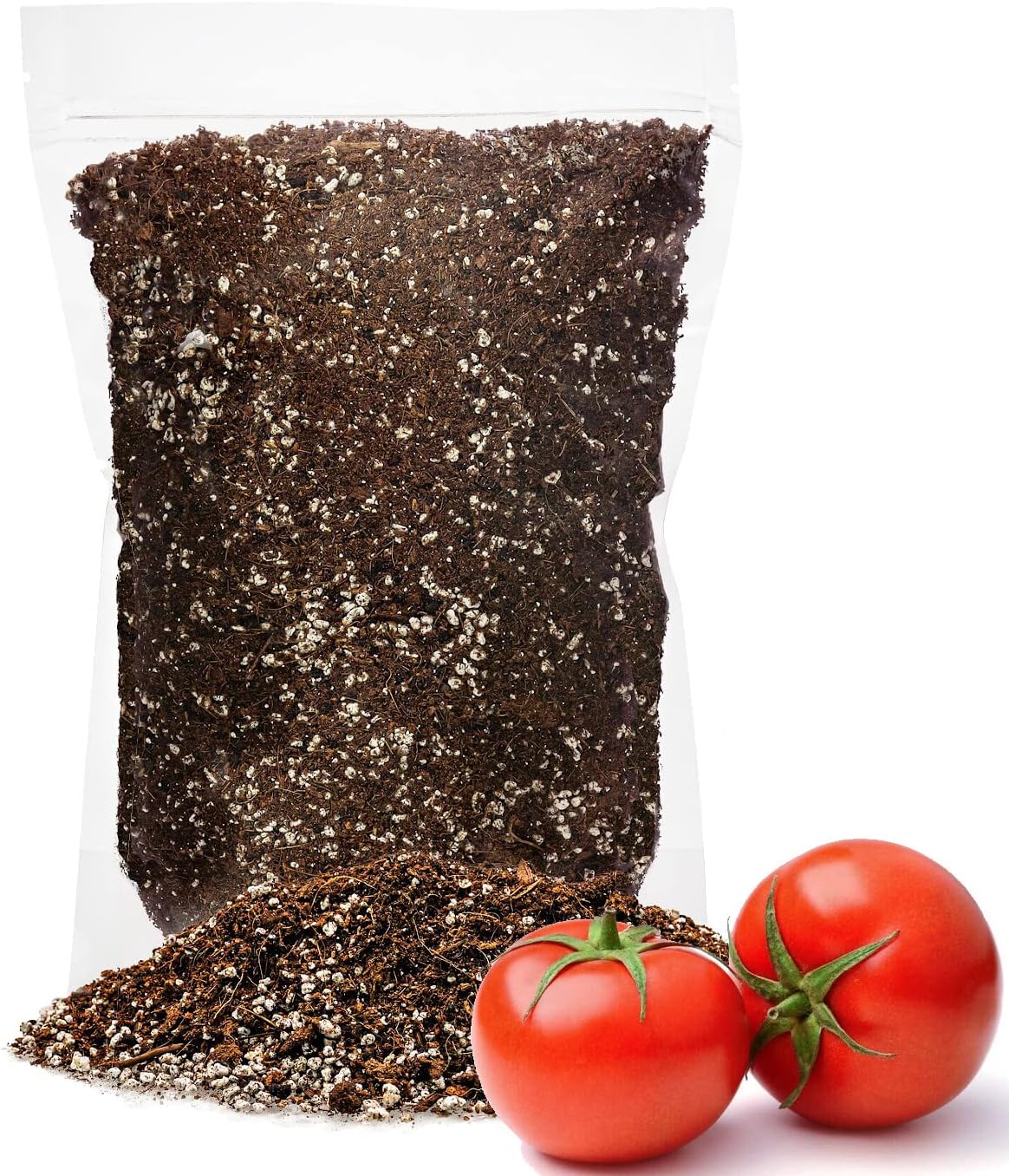
Gardenera Organic Tomato Potting Soil is a purpose-built 2 quart mix aimed at starting or container-growing tomato plants. The blend of coco coir and peat moss holds moisture while perlite improves aeration and drainage, and worm castings add organic nutrients to support early root growth. It is hand-blended on a family farm and intended for both indoor and outdoor use, so it works well for seedlings, patio containers, and small raised beds. Practical benefits include improved root development, reduced risk of waterlogged roots due to extra perlite, and a formulation suitable for organic growing. Limitations are the small bag size, which means multiple bags are needed for larger containers or several plants, and the formulation does not list a specific fertilizer analysis so growers seeking a ready-to-go long-term feed may need to supplement with fertilizer as plants mature. Also handle with care to avoid inhaling dust during bagging.
Best for: Home gardeners who want an organic, ready-mixed small-batch soil for starting tomato seedlings or growing one to a few container tomatoes and who value a well-aerated, moisture-retentive mix.
Less Ideal for: Gardeners planting full-size in-ground tomato beds or equipping many large pots should choose bulk bagged soil or mixes formulated with a long-term fertilizer schedule.
- Organic, natural ingredient blend designed for edible plants
- Perlite and coco coir improve drainage and aeration for healthier roots
- Includes worm castings to provide organic nutrient support
- Suitable for both indoor seed starting and outdoor container use
- Only a 2 quart bag so not cost-effective for planting multiple or large containers
- No detailed nutrient analysis provided, likely needs supplemental feeding for fruiting stage
Verdict: A concentrated organic potting mix that gives tomato seedlings and small container plants improved root development and drainage in a ready-to-use 2 quart bag.
Doter Organic Vegetable Potting Soil Mix, 1 qt

| Brand | Doter |
|---|---|
| Item Type Name | Garden soil |
| Volume | 1 quarts |
This 1 quart Doter vegetable potting mix is a ready-to-use, nutrient-rich media aimed at container vegetable growing. It is formulated to improve drainage and aeration while maintaining balanced pH and added organic matter so seedlings and small pepper plants can establish healthy roots. Typical use is for starting transplants, top-dressing small pots, or refreshing the soil in 1 to 3 quart containers for peppers, lettuce, herbs and similar crops. The mix’s emphasis on aeration and nutrient content helps reduce transplant shock and supports steady early growth, but the small 1 qt volume means you will need multiple bags for larger pots or entire pepper beds. Because it is a blended product rather than a single amendment, performance will depend on pot size and watering habits; heavy feeders or mature pepper plants will need additional fertilizer and larger volumes of soil. For budget-minded gardeners this pack is useful for trialing the brand or for small-scale container pepper production where convenience and a balanced starter mix matter more than bulk quantity.
Best for: Gardeners growing peppers or other vegetables in small containers who want a ready-made, plant-focused starter mix and prefer buying small quantities to control budget and waste.
Less Ideal for: Growers planning to fill large containers, raised beds, or to support mature, high-yield pepper plants who need bulk soil or a long-term nutrient plan.
- Formulated for vegetables with balanced nutrients and pH for better early growth
- Improves drainage and aeration to promote healthy root development
- Convenient ready-to-use 1 qt size ideal for starting transplants or small pots
- Organic components and added organic matter suitable for edible container crops
- Small 1 quart volume requires many bags for larger pots or multiple pepper plants
- Not a complete long-term growing medium for mature heavy-feeding peppers without extra fertilizer
Verdict: A convenient, nutrient-balanced 1 qt organic potting mix that is a practical choice for starting peppers and small container vegetable projects.
FoxFarm Ocean Forest Potting Soil, 12 qt (with 2 Plant Tags)

| Brand Name | FoxFarm |
|---|---|
| Unit Count | 144 Ounce |
| Item Highlight | Light, Aerated Texture with Fish Meal, Crab Meal, Earthworm Castings |
| Volume | 12 quarts |
FoxFarm Ocean Forest is a pre-mixed potting soil built from aged forest products, sandy loam and sphagnum peat moss, amended with organic inputs like fish meal, crab meal and earthworm castings. It is designed to be used straight from the bag for container-grown plants and seedlings, providing a light, well-aerated texture that helps drainage and root development. Typical use is filling pots or raised beds for starts, houseplants and container vegetables or berries; the included plant tags make labeling varieties and planting dates easier. The nutrient-rich formula supplies an initial fertility boost so you can delay heavy nitrogen feeding while young plants establish. On the downside the 12 quart bag is relatively small for larger blackberry plantings in-ground or for filling many large containers and you may need to supplement specific soil pH or long-term fertility requirements for mature brambles. For container blackberries this mix gives an easy, reliable start but plan on larger volumes or soil amendments for permanent beds.
Best for: Gardeners who want a reliable, plug-and-play potting mix to start container blackberries or seedlings and value a nutrient-rich, well-aerated medium that reduces early feeding needs.
Less Ideal for: Growers preparing large in-ground blackberry beds or those needing specific soil pH control should choose bulk soil or amend based on a lab test rather than rely on this bag alone.
- Ready-to-use blend with organic amendments for immediate planting
- Light, aerated texture that promotes drainage and root growth
- Contains fish meal, crab meal and earthworm castings for early nutrient support
- Includes plant tags for easy labeling of varieties and planting dates
- 12 quart bag size is limited for larger plantings or multiple containers
Verdict: Use this nutrient-rich, aerated potting mix to give container or young blackberry plants a strong, low-effort start.
Miracle-Gro Potting Mix, 16 qt. (2-Pack)

| Feeds Plants | Up to 6 months |
|---|---|
| Volume | 16 quarts |
| Number of Packs | 2 |
| Intended Use | Outdoor containers |
| Ingredients | Sphagnum Peat Moss, Peat, Perlite, Compost, Fertilizer |
Miracle-Gro Potting Mix is a general-purpose container soil designed for outdoor pots, planters, and hanging baskets. It combines peat-based media, perlite, compost, and built-in fertilizer so you can pot vegetables, herbs, annuals, perennials, and shrubs without blending amendments. Typical use is straightforward: fill a pot about one third, set the plant at nursery depth, top off, and water until excess drains. Notable features are fast drainage to prevent root rot, an all-purpose nutrient charge that feeds plants for up to six months, and a texture that helps roots establish quickly. In practice this means less upfront prep and fewer immediate feedings compared with plain soil, and it is handy for seasonal repotting and new container plantings. Important limitations are that it is formulated for containers only (not in-ground beds) and the nutrient boost will diminish after the stated feeding period so you will need to supplement or repot for long-term specimens. Also peat-based mixes can compress over time and require refreshing each season.
Best for: Gardeners who want a low-effort, dependable potting soil for seasonal container planting and quick repots, especially those optimizing time and results across many pots.
Less Ideal for: Those wanting a soil to amend in raised beds or long-term in-ground planting should choose a garden soil formulated for in-ground use instead.
- Ready-to-use mix with built-in fertilizer that feeds up to six months
- Formulated for fast drainage to reduce risk of overwatering and root rot in containers
- Versatile for a wide range of outdoor container plants including vegetables, herbs, and flowers
- Not intended for in-ground garden beds
- Fertilizer effect is temporary and requires refeeding or repotting after about six months
Verdict: A convenient, fast-draining potting mix that simplifies container planting while providing up to six months of built-in nutrition.
Back to the Roots Premium Organic Potting Mix, 6 Quart

| Unit Count | 192 Fluid Ounces |
|---|---|
| Volume | 6 quarts |
| Item Highlight | Peat-free potting soil for outdoor plants, indoor plants, vegetables, herbs and flowers |
| Made in | USA |
Back to the Roots Premium Organic Potting Mix is a small-batch, all-purpose soil designed for indoor and outdoor container plants, including flowers, herbs, and vegetables. The 6 quart bag contains a peat-free blend made from upcycled plant matter and wood fines, with added organic plant food, yucca extract to help retain and regulate moisture, and dolomitic limestone to stabilize pH. In practice this mix is easy to use straight from the bag for potting annuals and bedding plants or for refreshing topsoil in containers. Its light, well-draining texture helps roots establish without becoming waterlogged while still holding enough moisture for frequent flowering plants. Because it is organic and made in the USA, it suits growers who want a lower-carbon-footprint option. Limitations are the small bag size for larger projects and that very heavy feeders or long-term container plantings may need periodic fertilization or larger volumes of soil to maintain vigor.
Best for: Buyers who want a safe, organic, ready-to-use potting mix for potted flowers and small container gardens and prefer products with predictable performance and lower environmental impact.
Less Ideal for: Gardeners planning large-scale repotting, heavy-feeding perennials, or long-term container plantings that require bulk soil or extended nutrient release.
- Peat-free organic formula made from upcycled plant matter and wood fines
- Includes yucca extract for improved moisture retention and control
- Dolomitic limestone added to help balance soil pH for flowering plants
- Light, well-draining texture suitable for container-grown flowers and annuals
- Small 6 quart bag is not economical for large pots or multiple containers
- Does not include slow-release fertilizer strong enough for long-term heavy feeders
Verdict: A reliable, peat-free organic potting mix that delivers predictable moisture control and pH balance for potted flowers and small container gardens.
Choosing the Right Plant Potting Mix for Tomatoes: Key Factors to Consider
Particle Size and Texture
The mix's particle size controls how quickly water drains and how much air reaches the roots. Tomato roots need a balance between free drainage and enough fine material to retain moisture between waterings. Too many fines make a mix compact and slow-draining, which raises the risk of root suffocation and rot. Too coarse a mix drains rapidly and requires very frequent watering, adding labor and stress to the plants.
Evaluate a mix by feeling it: it should crumble easily, with a mix of small bark pieces, perlite or pumice, and finer compost. That combination keeps channels open for oxygen while holding a film of moisture around root hairs. For container tomato culture, look for a medium texture that supports steady root growth without water logging.
Drainage and Aeration
Good drainage prevents standing water and keeps roots oxygenated, which is essential for tomato flowers to set fruit. Aeration also supports beneficial soil microbes and helps roots grow outward rather than circled and root-bound. Drainage performance will vary with container material and size; plastic pots retain more moisture than terra-cotta, so the same mix will behave differently in each.
Consider mixes that include inert aggregates like perlite, pumice, or coarse sand to improve pore space. Those components create larger air pockets and speed excess water movement while leaving enough fine material for nutrient exchange.
Nutrient Content and Release Pattern
Tomatoes are heavy feeders during flowering and fruit set, so the mix should supply accessible nutrients for several weeks after transplanting. Many potting mixes include balanced slow-release fertilizers or blended organic amendments that release nutrients steadily rather than in a single flush.
Assess the nutrient strategy: mixes with slow-release granules or stable compost provide a predictable feeding window, while those relying on short-lived soluble fertilizers will need more frequent top-ups. Match the nutrient release to your maintenance routine and whether you plan to side-dress with additional fertilizer.
Moisture-Holding Capacity
A mix that holds moisture reduces watering frequency and limits stress during hot weather, but it must do so without becoming soggy. Materials such as coconut coir, peat substitutes, and finely processed compost increase water retention by holding moisture in small pores. That is helpful in warm climates and for larger fruiting varieties that demand steady hydration.
Balance is key. Too much retention leads to poor aeration and disease risk. Pick a mix formulated to retain enough water for 3 to 7 days between waterings in typical container sizes, and adjust container size or drainage holes if your local climate dries faster.
Disease Control and Cleanliness
Using a clean, pathogen-reduced potting mix cuts the chance of seedling damping-off, root rot, and soil-borne fungal problems. Sterilized or heat-treated base materials reduce initial pathogen load, while mixes that avoid raw manures and poorly composted materials lower the risk of introducing pests.
Also consider whether the mix contains beneficial microbes or mycorrhizal inoculants that can help roots access nutrients and resist stress. Clean mixes paired with good watering practice and clean containers provide the strongest defense against common tomato diseases.
Salt Levels and pH Stability
Tomatoes prefer a slightly acidic to neutral medium for best nutrient uptake. A potting mix with stable pH helps ensure that essential elements like calcium and magnesium remain available during fruit development. High soluble salt levels from concentrated fertilizers or certain composts can burn young roots and impair fruit set.
Look for mixes that state pH range or low salt content, and plan periodic leachings in containers if salts build up. Amending with lime or dolomite should be done based on test results rather than guesswork.
Mixing Your Own Tomato Potting Mix
Many gardeners make custom mixes to control drainage, nutrition, and cost. A reliable base recipe pairs a light aeration component, such as perlite or pumice, with a moisture-holder like coconut coir and a compost or well-aged leaf mold for nutrients. Add a slow-release granular fertilizer calibrated for fruiting vegetables and a small amount of dolomite if a pH adjustment is needed.
When blending your own, test small batches in the container sizes you plan to use. Observe how quickly they dry, whether the soil stays crumbly after several waterings, and whether seedlings or transplants show steady growth. Homemade mixes let you tailor components to local climate and watering habits.
- Typical DIY ratio: 40% aeration, 30% moisture-holding, 30% organic nutrient base
- Sift compost to remove large chunks that can create airless pockets
- Add perlite for small containers and pumice for larger patio tubs
Adjusting Mixes for Different Container Types
Container material and size change how a mix performs. Terra-cotta wicks moisture and dries faster, so you may want a mix with more moisture-holding components. Deep containers favor coarser mixes that encourage deep rooting, while shallow planters work better with mixes that hold more water and nutrients close to the surface.
Account for the sun exposure and wind at your site. Hot, exposed balconies will require mixes that keep moisture longer, while shaded patios will need faster-draining blends to avoid wet feet.
- Use more coir or compost in hot, windy sites
- Increase perlite in small pots or when using plastic containers
- Consider a water-retention granule in long, shallow troughs
Feeding and Recharging Potting Mix During the Season
Even mixes with slow-release nutrients will need feeding for peak fruit production. Plan a mid-season top-dress of organic fertilizer or a liquid feed schedule targeted at flowering and fruit set. Recharging the mix also helps if you reuse potting soil between seasons.
For reused mixes, remove old root mass, refresh with compost or fresh mix, and consider a sterilizing step if disease was an issue last year. Regular monitoring of leaf color and fruit set will tell you when additional nutrients are needed.
- Use balanced feeds with extra potassium as fruit develops
- Top-dress with composted material rather than fresh raw compost
- Flush containers occasionally to prevent salt buildup
Managing Pests and Soil-Borne Diseases in Containers
Good cultural practices minimize pest and disease pressure. Ensure containers have proper drainage, avoid overwatering, and rotate crops if you reuse soil. Inspect transplant roots before planting to avoid introducing pests or pathogens.
Consider mixes that include beneficial microbes or mycorrhizae to improve root health. Also keep good hygiene: clean pots between uses and discard mix that smells sour or shows signs of fungal growth.
- Replace mix after two to three seasons to reduce pest buildup
- Avoid garden soil in containers to limit nematode and fungus transfer
- Use physical barriers like screens over drainage holes to prevent insect entry
Best Practices for Seedlings Versus Fruit-Bearing Plants
Seedlings need a finer, lighter seed-starting mix that holds moisture uniformly and is low in fertilizer. Once plants are ready to transplant into larger containers, move them into a richer potting mix designed for fruiting vegetables with more organic matter and nutrients.
Gradually acclimate young plants to the richer mix to avoid shock. A short period of hardening off and careful watering after transplant helps roots expand into the new medium and supports early fruit set.
- Start seeds in sterile, fine-textured mixes
- Transplant to deeper mixes with higher nutrient content for fruiting
- Avoid overfertilizing seedlings when they move to richer soil
How We Chose the Best Plant Potting Mix for Tomatoes
We focused on the features that most affect tomato performance in containers and small planting areas. Editorial filters prioritized mixes with proven drainage profiles, stable nutrient availability during bloom and fruiting, and components that maintain good aeration for vigorous root growth. We also favored formulations that reduce disease risk by using pasteurized or sterilized base materials and those that hold moisture without becoming waterlogged. Evaluation criteria included particle size and texture for drainage and aeration, organic matter and slow-release nutrient content for sustained feeding, moisture-holding capacity to minimize watering stress, and pathogen control or sterile processing to limit damping-off and root rot. We looked at how mixes perform across common container sizes and whether they adapt to grafted or heirloom tomato varieties. Excluded items were generic garden soil blends and heavy topsoil mixes unsuited to containers, plus any mixes intended only for seedlings or non-fruiting ornamentals. The result is a focused set of potting mixes that gardeners can use immediately for producing healthy, fruiting tomato plants.
FAQ
How often should I water tomatoes in containers with potting mix?
It depends on container size, mix, and weather. Smaller pots may need daily watering in hot weather, while larger containers often hold moisture for several days. Check the top inch of mix and water when it feels dry.
Can I reuse potting mix from last season for new tomato plants?
You can reuse it with caution. Remove old roots, refresh with compost or fresh mix, and sterilize if disease was present. Replacing a portion of the mix reduces pest and salt buildup.
Is coconut coir better than peat in tomato potting mixes?
Both hold moisture, but coir is more sustainable and often has better structure. Peat can compact over time. Choose based on local availability and how long you want the mix to retain water.
Should I add fertilizer to a potting mix labeled pre-fertilized?
Pre-fertilized mixes supply nutrients for a limited window. Monitor plant vigor and leaf color, and plan supplemental feeding at bloom and fruit set as needed. Overfertilizing can cause leaf burn, so follow recommended rates.
How can I tell if my potting mix has too much salt?
Symptoms include browning leaf edges and stunted growth. To test, flush the container with water and observe drainage runoff; a white crust indicates salt buildup. Leach the mix and reduce concentrated fertilizer use.
Final Verdict
Pick a potting mix that balances drainage, aeration, and steady nutrient supply to match your container type and climate. Prioritize mixes with good particle structure and pathogen-reduced components to promote healthy roots and reliable fruit set. Tradeoffs are common: mixes that retain more moisture reduce watering but may need better aeration, while very free-draining mixes require more frequent feeding. Focus on the criteria that match your watering routine and container style to choose confidently.
