

Note: This article contains affiliate links. If you click on these links and make a purchase, I may earn a small commission at no extra cost to you. This helps support my research and content. Read my full affiliate disclosure here.
Selecting the right fertilizer for zoysia grass matters because this warm-season turf responds to timing and nutrient form more than many other lawns. With the proper program you can improve spring green-up, build deeper roots for summer drought, and avoid unnecessary thatch or excessive growth. This guide covers six top-rated fertilizer approaches suited for zoysia lawns and explains why each type made the shortlist. We evaluated nutrient ratios, release mechanism, and seasonal timing to help you match a product to your soil, climate, and mowing routine. Read on to understand the practical factors that influence results in a real yard and how to choose the fertilizer strategy that fits your maintenance plan.
Top Picks at a Glance
| Best Overall The best all-around choice for most situations | Scotts Turf Builder Southern Lawn Food, 14.06 lb |  |
| Best Quality Built to a higher standard if you want something more solid | The Andersons Core 24-6-12 All-Purpose Lawn Fertilizer, 18 lb |  |
| Best Value The sweet spot between price and what you get | Scotts Turf Builder Lawn Food, 37.50 lb |  |
| Highest Rated A top-rated pick with lots of positive feedback | The Andersons PGF Balanced 10-10-10 Granular Fertilizer with Micronutrients and 2% Iron (covers 5,000 sq ft) | 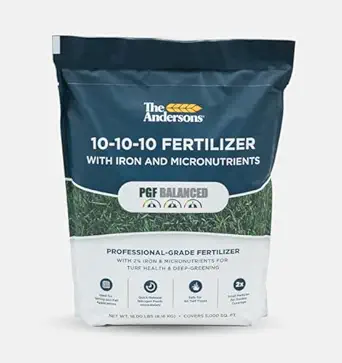 |
| Most Popular A crowd favorite that many people choose with confidence | Scotts Green Max Lawn Food — Granular Lawn Fertilizer with Iron, 5,000 sq. ft. |  |
| Best Seller A high-volume bestseller chosen again and again | Scotts Turf Builder WinterGuard Fall Lawn Food, 10 lb |  |
Scotts Turf Builder Southern Lawn Food, 14.06 lb

| Item Form | Granules |
|---|---|
| Application Method | spreader |
| Coverage | 5,000 sq. ft. |
| Mixing Ratio | 32-0-10 |
| Target Species | Southern lawns, Southern grass |
Scotts Turf Builder Southern Lawn Food is a granular fertilizer designed for warm-season southern grasses like Zoysia, St. Augustine, and Bermudagrass. You apply it with a spreader during the growing season on a wet or dry lawn, then optionally water lightly to speed green-up. The formula uses slow-release nitrogen in uniform all-in-one granules so each particle feeds evenly, which helps produce consistent color and thicker turf over several weeks. It is aimed at strengthening roots and improving heat and drought tolerance, so lawns often hold color better during hot spells. Practical benefits include straightforward application with common spreader settings provided, predictable six-week feeding from a single application, and compatibility with typical seasonal feeding schedules. Limitations are that it does not include weed control and it contains phosphorus so local restrictions may apply in areas concerned about runoff. For best results follow spreader settings and timing recommendations and avoid application within a month of expected frost.
Best for: Homeowners with Zoysia or other southern warm-season lawns who want a simple, reliable granular fertilizer that improves color and root strength with infrequent applications.
Less Ideal for: People who need simultaneous weed control or who must avoid phosphorus due to local regulations should consider alternative products tailored to those needs.
- Formulated specifically for southern warm-season grasses including Zoysia
- Slow-release nitrogen granules provide up to six weeks of feeding from one application
- Uniform all-in-one particles promote even coverage and consistent greening blade by blade
- Simple application with recommended spreader settings for reliable coverage of ~5,000 sq ft
- Does not include weed control or herbicide action
- Contains phosphorus which may be restricted in some jurisdictions
Verdict: A straightforward, slow-release granular fertilizer built to keep Zoysia and other southern warm-season lawns greener and stronger with just one feeding cycle.
The Andersons Core 24-6-12 All-Purpose Lawn Fertilizer, 18 lb

| Item Form | Granules |
|---|---|
| Coverage | 6200 sqft |
| Target Species | Lawn Grass |
| Mixing Ratio | 4:1:2 |
The Andersons Core 24-6-12 is a granular lawn fertilizer designed to deliver both immediate and sustained nitrogen in a single application. It combines quick- and slow-release nitrogen with added iron and micronutrients to promote deep greening and steady growth, and the super-fine particles help achieve even coverage when applied with a broadcast spreader. The product is intended for repeat applications every 4 to 6 weeks during the growing season and covers up to about 6,200 square feet per bag, making it practical for small to medium yards. Practical benefits for zoysia include reliable greening and an extended feeding window so you do not need weekly treatments, plus the micronutrients support turf vigor. Important limitations: as a general-purpose formula it is not zoysia-specific, so for lawns with known soil nutrient imbalances a soil test and targeted amendments may be needed, and timing and watering are important to avoid wash-off or uneven results.
Best for: Gardeners who prioritize strong, consistent performance and want a single fertilizer that provides quick greening plus multi-week feeding for warm-season lawns like zoysia.
Less Ideal for: Homeowners who need a custom fertilizer plan based on a soil test or who prefer organic-only products should consider alternatives.
- Balanced 24-6-12 NPK with both quick- and slow-release nitrogen for immediate green-up and multi-week feeding
- Includes iron and micronutrients to enhance color and overall turf health
- Super-fine granules that promote even distribution when used with a spreader
- Covers up to 6,200 sq ft per bag, suitable for small to medium lawns
- Not formulated specifically for zoysia or for correcting specific soil nutrient deficiencies
Verdict: Choose this fertilizer if you want a performance-focused granular formula that gives fast green-up plus up to six weeks of extended feeding for zoysia and other turfgrasses.
Scotts Turf Builder Lawn Food, 37.50 lb

| Item Form | Granules |
|---|---|
| Specific Uses For Product | Lawn |
| Coverage | 15000 |
| Mixing Ratio | 32:0:4 |
Scotts Turf Builder Lawn Food is a granular fertilizer formulated for use on any grass type and intended to thicken and strengthen lawns over the season. It is typically broadcast with a fertilizer spreader and can be applied to a wet or dry lawn in spring, summer, or fall; one 37.5 lb bag covers about 15,000 sq ft. The product’s NPK ratio (listed as 32:0:4 in the product details and shown elsewhere as 38-0-4) emphasizes high nitrogen for greening and blade growth while avoiding phosphorus. In practice this means faster green‑up and denser turf when used as part of a regular feeding schedule, and the brand provides recommended spreader settings to help get even coverage. Practical benefits include building deeper roots and improving grass ability to absorb water and nutrients compared with unfed turf. Limitations are that it is a general lawn food rather than a zoysia‑specific formula and contains no weed control, so expect to pair it with targeted weed or insect products when needed. You will also need a spreader and occasional light watering if you want quicker visible results.
Best for: Homeowners who want a straightforward, reliable fertilizer to boost turf color and density across a large yard and who plan to follow a seasonal feeding routine.
Less Ideal for: Gardeners seeking a targeted zoysia fertilizer blend with weed control or those who prefer liquid feeds or combined weed‑and‑feed products.
- High nitrogen formula encourages rapid greening and thicker leaf growth
- Large coverage per bag covers up to 15,000 sq ft reducing purchase frequency
- Granular form works with standard broadcast or drop spreaders and brand provides spreader settings
- Can be applied to wet or dry turf and across spring, summer, or fall seasons
- Not formulated specifically for zoysia so it is a general lawn food rather than a tuned zoysia mix
- Does not include weed or insect control so additional products may be needed
Verdict: A practical, high‑nitrogen granular lawn food that gives large lawns a quick green‑up and stronger turf when used as part of a regular feeding schedule.
The Andersons PGF Balanced 10-10-10 Granular Fertilizer with Micronutrients and 2% Iron (covers 5,000 sq ft)

| Item Form | Granules |
|---|---|
| Application Method | spreader |
| Coverage | 5000 square feet |
| Mixing Ratio | 10-10-10 |
| Target Species | Lawns and Gardens |
The Andersons PGF Balanced 10-10-10 is a granular, quick-release fertilizer designed for lawns, gardens, and beds where consistent, even feeding matters. Its standout feature is an extremely fine particle size that delivers more uniform coverage than typical pebble-sized granules, which helps avoid patchy results when applied with a broadcast spreader. The formula is balanced for general growth and includes micronutrients and 2 percent iron to boost color and vigor, making it suitable for periodic spring or fall applications on Zoysia where steady maintenance and color are desired. Use it by spreading on dry foliage, sweeping off paved surfaces, then watering in to activate nutrients. Practical benefits include straightforward spreader application, broad 5,000 square foot coverage from one bag, and immediate nutrient availability thanks to the quick-release nitrogen. Important limitations are that it is a quick-release product so it will not provide long slow feeding, and the iron can stain sidewalks if not cleaned off promptly.
Best for: Homeowners who prioritize consistent, reliable feeding and quick visible improvement in turf color and vigor, especially for seasonal maintenance of warm-season lawns like Zoysia.
Less Ideal for: People looking for a slow-release, low-maintenance fertilizer program or those who prefer to avoid extra cleanup after application due to iron staining.
- Very fine particle size for more even coverage compared with standard granular fertilizers
- Balanced 10-10-10 formula with added micronutrients and 2% iron for improved greening
- Designed for spreader application and covers up to 5,000 square feet per bag
- Quick-release nitrogen provides immediate nutrition to stimulate growth and recovery
- Quick-release formula does not provide long-term slow feeding
- Contains iron that may stain sidewalks or driveways if not removed after application
Verdict: Choose this fine-particle 10-10-10 fertilizer when you want even, reliable coverage and a quick greening boost for Zoysia and other lawns.
Scotts Green Max Lawn Food — Granular Lawn Fertilizer with Iron, 5,000 sq. ft.

| Item Form | Granules |
|---|---|
| Coverage | 5000 square feet |
| Specific Uses For Product | Lawn |
| Target Species | lawn grass |
Scotts Green Max Lawn Food is a granular lawn fertilizer formulated to feed grass quickly while delivering a visible deep green color thanks to 5% iron in the formula. It is intended for broadcast or drop spreader application and the bag covers about 5,000 square feet, so one bag treats a medium-sized yard in a single pass. The label gives specific spreader settings for consistent application and recommends a light watering after spreading for fastest results. The product is labeled safe to re-enter immediately after application and the manufacturer states it is guaranteed not to stain concrete when used as directed. Practical benefits include easy, repeatable application with a spreader, rapid greening suited to lawns that look pale, and one-bag coverage that simplifies scheduling seasonal treatments. Important limitations are that it is a general-purpose lawn food rather than a Zoysia-specific formula and users in some states should check local label exceptions; also granular fertilizers require proper spreading technique to avoid uneven color. For buyers who value proven brand performance and clear application guidance it is a straightforward option, but expect to follow spreader settings and watering recommendations for best results.
Best for: Homeowners who want a reliable, fast-greening granular fertilizer backed by documented instructions and predictable coverage for routine seasonal feedings.
Less Ideal for: Gardeners seeking a Zoysia-specific nutrient program or a liquid foliar treatment for spot feeding should consider more specialized products.
- Contains 5% iron for faster visible greening.
- Covers approximately 5,000 sq ft per 16.67 lb bag, enough for a single-medium lawn treatment.
- Clear spreader settings provided for both broadcast and drop spreaders to help ensure even application.
- Safe to re-enter lawn immediately after application when used as directed and formulated to avoid staining surfaces.
- Not formulated specifically for Zoysia so it lacks nutrients tailored to that species' seasonal needs.
- Requires a spreader and correct settings to avoid uneven coverage, which adds an extra step compared with ready-to-use liquid options.
Verdict: A dependable, easy-to-apply granular lawn food that delivers fast, deep greening for general-purpose lawns.
Scotts Turf Builder WinterGuard Fall Lawn Food, 10 lb

| Item Form | Granules |
|---|---|
| Specific Uses For Product | Lawn Fertilizer |
| Application Method | spread |
| Coverage | 4000 |
| Target Species | lawn grasses |
Scotts Turf Builder WinterGuard Fall Lawn Food is a granular, spread-applied fertilizer designed for autumn feeding to strengthen roots and help turf recover from summer heat and drought. It is intended to be broadcast with a spreader and can be applied to wet or dry lawns, with light watering afterward optional for faster results. The product covers approximately 4,000 sq. ft. from a single 10 lb bag and is labeled for use on all grass types, which makes it straightforward for mixed or single-species lawns. Practical benefits include simple application with recommended spreader settings and a formulation focused on root development to improve winter survival and spring performance. Limitations are that it is a seasonal, fall-targeted product rather than an all-season maintenance feed and it does not include weed or insect control in this formulation, so you may need additional treatments if those problems exist. For homeowners who prefer predictable, easy-to-follow lawn care, this provides a low-risk way to give zoysia a strong fall feeding.
Best for: Homeowners who want a simple, low-risk fall feed to strengthen turf roots and improve winter survival, especially those who prefer clear instructions and predictable results.
Less Ideal for: People seeking an all-in-one product that controls weeds or insects or buyers who need a year-round fertilizing program tailored by nutrient timing.
- Formulated to strengthen roots and aid recovery from heat and drought
- Easy spreader application with published settings for common Scotts spreaders
- Suitable for all grass types so it can be used on zoysia without special variety concerns
- Covers up to 4,000 sq. ft. per 10 lb bag for straightforward yard planning
- Designed for fall feeding only and not intended as a year-round fertilizer
- Does not contain weed or insect control, so additional products may be needed
Verdict: A straightforward fall lawn food that makes it easy to give zoysia the root-strengthening feed it needs before winter.
Choosing the Right Fertilizer for Zoysia Grass: Key Factors to Consider
Nutrient Ratio and Warm-Season Needs
Zoysia is a warm-season grass that typically benefits from nitrogen-driven growth during active months but also needs balanced phosphorus and potassium depending on soil tests. A fertilizer with an N-P-K ratio tuned to encourage dense blades without fueling excessive vertical growth helps maintain a durable turf.
Understanding what each number represents matters because phosphorus supports root development and potassium helps stress tolerance. Rely on a recent soil test to decide whether standard maintenance ratios are appropriate or if targeted corrections are needed.
Release Type and Timing
Whether nutrients are delivered quickly or slowly affects color, disease risk, and mowing workload. Slow-release nitrogen provides steadier growth, reducing flushes that require more frequent mowing and lowering burn risk in hot weather. Quick-release options can correct pale lawns faster but may increase thatch or require careful timing.
Match release type to the season: early spring and late summer often call for different delivery profiles than mid-summer maintenance. Also consider compatibility with scheduled irrigation or rain events to avoid nutrient loss.
Application Rate and Coverage
A product's labeled coverage and application rate determine how many bags or how much liquid you need for your lawn size and influence cost per application. Granular fertilizers and liquids differ in how evenly they spread; poor coverage produces patchy results and makes it hard to assess effectiveness.
Look for clear instructions on spreader settings or sprayer rates and choose a product whose coverage aligns with the granularity of your lawn area. Easier calibration means fewer missed strips and more consistent turf color.
Soil Interaction and Salt Safety
High salt-index fertilizers raise the risk of leaf burn, especially on thin or drought-stressed zoysia. Product formulations that list salt index or that rely on coated slow-release sources typically reduce burn potential when used correctly.
Consider the lawn's irrigation frequency and recent weather when planning applications. If your soil tends to be dry or compacted, choose lower-salt options and incorporate light irrigation after application to help nutrients move into the root zone.
Compatibility with Lawn Practices
Your mowing height, dethatching schedule, and overseeding or patching plans affect fertilizer choice. Zoysia prefers higher mowing heights than some cool-season turf, which alters how quickly a nitrogen application is used. Certain fertilizers can contribute to thatch if overused; others pair well with topdressing and aeration.
Select a fertilizer strategy that fits into your seasonal maintenance rather than forcing changes to your routine. Coordinating fertilizer timing with aeration and irrigation maximizes uptake and reduces waste.
Ease of Use and Storage
Gardeners value products that are easy to apply and store between seasons. Granular fertilizers should include spreader guidance, while liquids should offer clear mixing ratios. Packaging that reseals and resists moisture preserves product performance.
Also consider how easy it is to safely store the fertilizer away from children and pets and whether the product needs special handling. Practical handling reduces mistakes and ensures consistent applications year after year.
When to Fertilize Zoysia Through the Year
Timing influences how efficiently zoysia takes up nutrients. In most warm-season regions, begin light applications after spring green-up when soil temperatures consistently reach the active growth range. A heavier feeding is often useful in late spring, followed by maintenance-rate applications through early summer.
Avoid high-nitrogen pushes during extreme heat to reduce stress and burn risk. As growth slows heading into cooler months, reduce or stop nitrogen to help the turf harden off for winter. If you perform aeration, align a feeding soon after to take advantage of improved root-zone contact.
- Start after consistent spring green-up and soil warming.
- Use moderate maintenance feeds in early to mid-summer.
- Cut back nitrogen late season to encourage dormancy preparation.
- Time fertilizer shortly after aeration for better uptake.
Granular Versus Liquid Fertilizers
Granular products are popular because they are easy to apply with a broadcast spreader and typically have longer residual effects when using coated formulations. They are convenient for homeowners with medium to large lawns who want fewer applications.
Liquid fertilizers act faster and are useful for spot treatments or quick color corrections. They require more frequent applications to maintain color and may need a garden hose sprayer or a tank sprayer. Choose liquids when you need immediate results or localized feeding.
- Granular: longer lasting, lower application frequency.
- Liquid: faster uptake, good for spot treatments and small areas.
Using Soil Tests to Guide Applications
A soil test is the single best tool to target phosphorus and potassium needs and to avoid unnecessary applications. Many lawns already have adequate levels of phosphorus, so routine maintenance fertilizers with a lower phosphorus number are often sufficient unless the test indicates otherwise.
After receiving test results, match the fertilizer to the specific nutrient gaps and follow recommended rates. Retest periodically to track changes, especially if you notice slow growth or discoloration despite regular feeding.
- Test once every 2 to 3 years in stable lawns.
- Adjust N-P-K based on test results, not assumptions.
Safe Application Practices
Follow label rates and spreader settings closely to avoid over-application and runoff. Calibrate your spreader before the first full-coverage application and overlap passes slightly for even distribution. For liquids, ensure proper dilution and even spray patterns.
Rinse application equipment away from storm drains and avoid applying before heavy rain to reduce nutrient runoff. Store fertilizer in a dry, secure place and keep pets and children away from treated areas until products have been watered in or have settled.
- Calibrate spreader, follow label rates, and overlap passes.
- Avoid application before heavy rain and rinse equipment responsibly.
Pairing Fertilizer With Watering and Mowing
Irrigation affects nutrient movement into the root zone; a light irrigation after applying a granular product helps dissolve granules and carry nutrients downward. For liquids, apply when the lawn is dry so the spray sticks to foliage, then water lightly to move nutrients to the roots if the label recommends it.
Mowing height influences how quickly nitrogen is used. Keep zoysia at its recommended height to encourage deeper rooting and reduce stress so applied nutrients support density instead of excessive top growth.
- Light irrigation after application often improves uptake.
- Maintain recommended mowing height to use nutrients efficiently.
How We Chose the Best Fertilizer for Zoysia Grass
We focused on attributes that directly affect zoysia turf performance in home lawns and small properties. Criteria included nutrient balance specific to warm-season grass, with attention to nitrogen, phosphorus, and potassium ratios that support root growth and color without encouraging excessive thatch. Release mechanism was a separate filter: we prioritized both slow-release technologies and controllable quick-release blends so homeowners can choose based on timing and immediate needs. Seasonal timing and application flexibility were evaluated to ensure products work with common zoysia schedules for spring green-up, summer maintenance, and late-season care. Coverage rate and ease of application were considered to minimize missed areas and over-application. Soil-safety factors were also applied, including formulations that reduce burn risk when used per label and compatibility with typical soil test corrections. We excluded specialty turf products meant only for athletic fields and products intended for cool-season lawns, along with any fertilizer lacking clear nutrient labeling or release information. The remaining selections represent common gardener-focused fertilizer strategies that align with the scoring criteria below.
FAQ
How often should I fertilize zoysia grass during the growing season?
Most zoysia lawns do well with two to four targeted applications during the active season, depending on the fertilizer release type and desired density. Slow-release products mean fewer applications, while quick-release mixes often require more frequent feeding.
Can I use a lawn fertilizer labeled for general turf on zoysia?
Often you can, but check the N-P-K ratio and release mechanism to ensure it matches warm-season needs. Also consult a soil test to confirm phosphorus or potassium is required rather than applying them by default.
Will fertilizing help zoysia recover from drought damage?
Fertilizer can support recovery if stress has eased and the soil has moisture for uptake. Avoid heavy nitrogen applications while the turf is actively drought-stressed, and prioritize light irrigation and root-focused nutrients once recovery begins.
Is it safe to fertilize right after overseeding or patching?
Timing depends on whether you seeded with zoysia plugs or broadcast seed. For seedling establishment, use low-nitrogen starter products if recommended and follow label guidance. Avoid high-nitrogen applications that can harm tender new growth.
How can I reduce the risk of fertilizer burn on my lawn?
Choose lower salt-index formulations or slow-release nitrogen, apply at recommended rates, and water lightly after application when the label advises. Avoid applying during peak heat or to drought-stressed turf.
Final Verdict
Prioritize a fertilizer strategy that matches your soil test, seasonal timing, and maintenance habits. For most zoysia lawns, a plan that uses controlled-release nitrogen, addresses any soil-specific phosphorus or potassium needs, and aligns with aeration and watering will deliver the most consistent results. Balance immediate color goals with long-term turf health to avoid excess thatch or burn risk. Decide by matching release type and nutrient ratios to your schedule: choose slow-release for steady maintenance and quicker-release blends only when you need a fast correction. That approach helps you maintain a dense, drought-tolerant zoysia lawn with predictable effort.
