

Note: This article contains affiliate links. If you click on these links and make a purchase, I may earn a small commission at no extra cost to you. This helps support my research and content. Read my full affiliate disclosure here.
Picking the right organic fertilizer for indoor plants changes how your houseplants grow, recover from stress, and resist pests. Indoor plant organic fertilizers behave differently from outdoor blends because they must avoid salt build-up, control odor, and suit smaller pots and container soils. This guide covers our shortlisted top options across five categories, with attention to nutrient balance, form factor, and how each product supports soil biology. Below we evaluate each selection for nutrient profile, application ease, and safety in indoor settings so you can choose the best approach for your light levels, watering routine, and pot size.
Top Picks at a Glance
| Best Overall The best all-around choice for most situations | Grow Queen Organic Liquid Indoor Plant Food 5-5-5 with Sea Kelp, 8 oz | 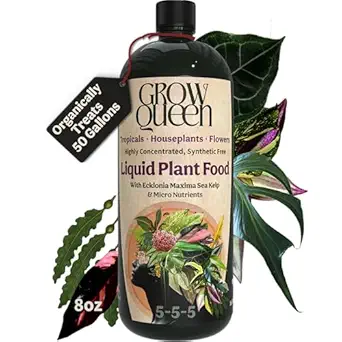 |
| Best Quality Built to a higher standard if you want something more solid | Rosy Soil Organic Plant Food for Indoor Plants, 4 Quart |  |
| Best Value The sweet spot between price and what you get | Purived 16 oz All-Purpose Liquid Plant Fertilizer |  |
| Best Budget The cheapest option that still gets the job done reliably | True Organic All Purpose Liquid Plant Food (16 oz) |  |
| Highest Rated A top-rated pick with lots of positive feedback | Herrdemia Rhizophagus irregularis Mycorrhizal Fungi Granules, 4 oz |  |
Grow Queen Organic Liquid Indoor Plant Food 5-5-5 with Sea Kelp, 8 oz

| Item Form | Liquid |
|---|---|
| Mixing Ratio | 1:1 |
| Specific Uses For Product | Plant Growth |
| Application Method | Watering |
| Target Species | Plants |
Grow Queen's 8 oz concentrated liquid plant food is a balanced 5-5-5 organic fertilizer designed for regular use on houseplants, tropicals and container gardens. You mix one capful (about 4 ml) per gallon of water and either drench the soil or apply as a foliar mist every one to three weeks, which makes it straightforward to fold into a weekly watering routine. The formula includes Ecklonia maxima sea kelp and trace micronutrients, which help support greener foliage, stronger stems and root development without the burning risk of high-strength synthetic feeds. At the stated dilution the bottle treats up to 50 gallons so it will last a small collection for months. It is also labeled safe for aerated hydroponic systems when reservoirs are changed regularly, though it can form a film in stagnant water so fresh mixes are recommended. The product has an earthy ocean scent from real kelp and excludes perfumes and dyes, but that natural smell may bother some users. Directions are simple and the fertilizer pairs well with slow-release feeds for longer-term nutrition.
Best for: Buyers who want a simple, one-bottle solution to feed a mixed collection of houseplants regularly and prefer organic ingredients and seaweed benefits.
Less Ideal for: Growers who need precision nutrient formulas for specific flowering or high-yield vegetable crops or those who require ready-to-use sprays without mixing.
- Balanced 5-5-5 NPK suitable for general indoor plant feeding
- Concentrated formula stretches up to 50 gallons from an 8 oz bottle
- Contains sea kelp and micronutrients to promote foliage color and root strength
- Safe for regular use at recommended dilution with low burn risk
- Natural kelp scent may be noticeable indoors
- Can form a film in standing water so not ideal for non-aerated reservoirs
Verdict: A concentrated, easy-to-use organic 5-5-5 liquid fertilizer with sea kelp that provides straightforward, all-purpose nutrition for indoor plant collections.
Rosy Soil Organic Plant Food for Indoor Plants, 4 Quart

| Brand | Rosy Soil |
|---|---|
| Unit Count | 128 Ounce |
| Item Type Name | Soil |
| Style Name | Potting Soil |
Rosy Soil Organic Plant Food is a 4-quart, microbially active fertilizer designed for regular feeding and repotting of houseplants and container vegetables. It combines biochar, kelp, worm castings, compost, bokashi and mycorrhizae to create a slow-release mix of nutrients and beneficial microbes that integrate with potting soil when top-dressed or mixed in during repotting. Typical use is sprinkling a small handful around the root zone at watering time or blending a bit into fresh potting mix to reduce transplant shock and promote stronger root establishment. The live mycorrhizae and organic amendments mean plants get steadier nourishment over weeks rather than spikes of soluble fertilizer, which suits sensitive tropicals and seedlings. Packaging is resealable for storage and the product avoids peat and synthetic additives. Limitations are that it is not a fast-acting corrective for acute nutrient deficiencies and the performance depends on regular watering and active soil biology, so impatient growers seeking immediate, high-N greening may prefer a soluble feed instead.
Best for: Growers who prioritize steady, long-term plant performance and healthier root systems for houseplants and container edibles and who prefer organic, peat-free inputs.
Less Ideal for: People who need quick visual results or who want a fast-acting liquid fertilizer for emergency nitrogen boosts.
- Contains mycorrhizae and active microbes to support root health and nutrient uptake
- Slow-release organic ingredients reduce risk of overfeeding and give steady nutrition
- Peat-free formula with biochar, kelp, worm castings and compost for improved soil biology
- Resealable packaging suitable for multi-month use and easy top-dressing
- Not designed for rapid correction of nutrient deficiencies
- Performance relies on active soil biology and consistent watering
Verdict: Choose this if you want an organic, microbially active slow-release fertilizer that improves root health and steady growth for indoor plants.
Purived 16 oz All-Purpose Liquid Plant Fertilizer

| Item Form | Liquid |
|---|---|
| Specific Uses For Product | Houseplant Fertilizer |
| Application Method | soil drench, foliar feed, full & semi hydroponics |
| Mixing Ratio | 320:1 |
| Unit Count | 16 Fluid Ounces |
Purived 16 oz All-Purpose Liquid Plant Fertilizer is a concentrated, water-soluble feed for indoor potted plants that mixes at 1 cap per gallon (about 320:1) and yields up to 50 gallons of solution. It is designed for multiple application methods, including soil drench, foliar feeding, and use in full or semi-hydroponic systems, which makes it flexible for different indoor setups. The formula lists the primary macronutrients and a range of micronutrients, so it provides a broad-spectrum boost rather than a single-element correction. Practical benefits include long shelf life, an odorless mix, and easy measuring with the provided cap, which helps stretch a single bottle across many feedings. Limitations to note are that the listing does not specify exact N-P-K numbers on the label shown here, so users wanting precise nutrient ratios for specific species or stages will need to contact the manufacturer or test the solution. Also follow safety directions carefully since it contains concentrated minerals and should be kept away from children and pets.
Best for: Buyers who want a single, flexible indoor plant fertilizer that stretches across many feedings and works with soil, foliar, and hydroponic methods while prioritizing ease and economy.
Less Ideal for: Specialists seeking exact nutrient ratios for stage-specific feeding or growers who prefer certified organic or single-element formulations should look elsewhere.
- Concentrated formula that mixes to make about 50 gallons, extending value per bottle
- Versatile application: soil drench, foliar feed, and compatible with full or semi-hydroponics
- Contains a broad mix of micronutrients in addition to primary nutrients
- Odorless when mixed and has a two year shelf life for infrequent users
- Product information does not list specific N-P-K ratios on the provided details
- Contains concentrated minerals that require careful handling and storage
Verdict: A concentrated, versatile liquid feed that gives indoor plant owners an economical, multi-method fertilizer to cover most houseplant needs.
True Organic All Purpose Liquid Plant Food (16 oz)

| Unit Count | 16 Ounce |
|---|---|
| Item Form | Liquid |
| Specific Uses For Product | Agriculture, Gardening |
| Mixing Ratio | 2 fl oz per gallon; every 2 weeks |
True Organic All Purpose Liquid Plant Food is a 16 ounce, farm-grade liquid fertilizer intended for routine feeding of houseplants and container gardens. It is mixed at 2 fl oz per gallon and applied about every two weeks to soak the soil; in practice that makes it easy to dose small indoor pots or larger groupings without specialized equipment. The formula lists organic inputs such as fish solubles, kelp extract, molasses and soy hydrolysate, which supply a balance of nitrogen, phosphorus and potassium (3-2-2) while also supporting soil microbial activity. Because it is liquid, it dissolves evenly and reaches roots quickly compared with slow-release granules. Important limitations are that the smell and fish-based ingredients may be noticeable indoors and some users prefer synthetic options for very precise NPK control. Also it is a general all-purpose feed rather than a formula tuned for specific needs like high-phosphorus bloom boosters.
Best for: Best for indoor gardeners who want a straightforward, organic all-purpose feed for houseplants and edible container herbs and prioritize natural ingredients over fine-tuned formulations.
Less Ideal for: Not the best choice for growers seeking a scent-free synthetic fertilizer or a crop-specific concentrate tailored for flowering or rapid leafy production.
- OMRI listed and made from organic inputs suitable for edible and indoor plants.
- Liquid format mixes easily and is simple to apply on a two-week schedule.
- Balanced NPK 3-2-2 for steady foliage and general growth rather than aggressive, single-purpose feeding.
- Contains kelp extract and molasses to support microbial activity and soil health.
- Contains fish-based ingredients which can produce an odor indoors.
- Not formulated for specific tasks like flowering booster or high-nitrogen leafy growth.
Verdict: A simple, OMRI-listed liquid fertilizer that makes feeding indoor and edible container plants easy while focusing on organic soil health.
Herrdemia Rhizophagus irregularis Mycorrhizal Fungi Granules, 4 oz

| Item Form | Granules |
|---|---|
| Specific Uses For Product | Indoor House Plants, Root Development, Soil Conditioning |
| Application Method | Soluble Granules |
| Target Species | Houseplants |
| Ingredients | Rhizophagus irregularis |
This product supplies a lab‑grade strain of Arbuscular Mycorrhizal Fungi (Rhizophagus irregularis) in soluble granule form to boost root growth and nutrient absorption for houseplants and small indoor systems. You use it by dissolving the granules in water and applying via hand‑watering, drip lines, or hydroponic reservoirs; the brand emphasizes a low‑temperature cold‑press process and added fulvic acid and fructose to help colonization. Practical benefits include broader root absorption area that can reduce transplant shock and improve drought resilience, and a soluble formula that will not clog irrigation lines. The 4 oz package is concentrated so a small dose treats many plants, which suits steady maintenance routines. Limitations are that this is a single‑strain biological amendment, so results depend on plant species and existing soil life, and benefits usually appear over weeks rather than immediately; it is not a complete fertilizer so you still need to supply macro nutrients separately. For indoor growers seeking a reliable biological root booster this is straightforward to use, but expect gradual improvement rather than instant greening or growth spurts.
Best for: Indoor plant owners who prioritize reliable, science‑based biological amendments and want a low‑maintenance way to strengthen roots and reduce transplant shock.
Less Ideal for: People seeking an all‑in‑one fast‑acting fertilizer or immediate visual results, or growers who prefer chemical fertilizers over biological soil amendments.
- Contains a well‑documented AMF species (Rhizophagus irregularis) known to improve nutrient uptake
- Water‑soluble granules suitable for hand watering, drip irrigation, and hydroponics without clogging lines
- Concentrated formula where small amounts treat many plants, economical for regular use
- Includes fulvic acid and other carriers to aid fungal colonization and root establishment
- Not a complete fertilizer so additional NPK feeding is required
- Effects are biological and develop over weeks so benefits are not immediate
Verdict: A dependable, concentrated mycorrhizal granule designed to strengthen roots and improve nutrient uptake for indoor plant care.
Choosing the Right Indoor Plant Organic Fertilizer: Key Factors to Consider
Nutrient Balance and Release Rate
Indoor plants need a steady supply of primary nutrients without the spikes associated with some synthetic fertilizers. Look for formulas that list balanced ratios of nitrogen, phosphorus, and potassium and that use organic nitrogen sources which release slowly as microbes break them down.
Release rate matters because pots have limited buffering capacity. A too-fast release can cause leaf burn or force you to flush pots frequently. Slow-release organic materials reduce the chance of abrupt nutrient swings and support more consistent growth across watering cycles.
Form Factor and Application Method
Organic fertilizers come as liquids, water-soluble powders, granular slow-release, pellets, or compost teas. Liquids and water-soluble mixes give fast, measurable feeds and are easy to control in small pots. Granular slow-release types are lower maintenance but may be harder to dose precisely in tiny containers.
Consider how you water and fertilize now. If you prefer to fertilize with each watering, a dilute liquid or soluble powder is easier. If you fertilize infrequently, a slow-release granule or spike may fit your schedule better. Also think about mixing requirements, storage, and whether you need an odor-free option for indoor use.
Soil Biology and Microbial Support
One of the main advantages of organic fertilizers is their ability to feed beneficial microbes that help plants access nutrients. Ingredients like composted plant matter, fish hydrolysate, kelp, and humic substances feed soil life and improve structure in potting mixes.
If you repot regularly or use soilless mixes, select products that explicitly support microbial activity or pair well with mycorrhizae and microbial inoculants. Healthier soil biology improves nutrient cycling and can reduce the need for heavy-handed feeding over time.
Salt Buildup and Residue
Indoor containers are prone to salt accumulation because they have less soil to dilute residual minerals. Organic fertilizers tend to have lower soluble salt levels than concentrated synthetics, but not all organics are equal. Some contain concentrated inputs that still leave residue.
Choose fertilizers formulated for containers and follow recommended dilution and occasional leaching practices. Pay attention to visible residue on the soil surface and to declining water infiltration, which can indicate buildup and the need for flushing or repotting.
Odor, Indoor Safety, and Pet Considerations
A fertilizer used indoors should minimize strong odors and be safe around people and pets. Fish-based and manure-based organics can be potent; they may be appropriate in ventilated spaces but less so in small apartments.
Read ingredient lists for potential allergens or components that attract pests. Even benign organic ingredients can cause stomach upset if ingested by pets, so look for low-odor formulations or choose application methods that limit pet access, such as slow-release granules placed below the soil surface.
Compatibility With Potting Mixes and Plants
Different houseplants have different needs. High-nitrogen feeds benefit foliage growers, while bloom-focused plants need higher phosphorus during flowering. Also consider whether you use soilless mixes, peat-free blends, or mixes with added perlite and bark.
Some organic fertilizers interact better with certain media. For example, lightweight soilless mixes may dry faster and need more frequent, lighter feeding, while heavier mixes retain nutrients longer. Match fertilizer type and frequency to your specific potting mix and plant species for best results.
Choosing Between Liquid Feeds and Slow-Release
Liquid feeds deliver nutrients quickly and allow fine control over strength, which is useful when adjusting for sensitivity in young or recently repotted plants. They are convenient for plants that receive routine watering and need a gentle, frequent feed.
Slow-release granules or coated pellets reduce the frequency of application and are helpful for busy gardeners or containers in decorative pots where regular dosing is impractical. They release over weeks or months but can be harder to dial in for very small pots.
- Liquids: easy to titrate, better for weekly feeding habits
- Slow-release: low maintenance, better for infrequent feeders
- Consider pot size: very small pots often need dilute liquids rather than granules
How to Apply Organic Fertilizers Indoors
Always follow label dilution rates but err on the side of weaker mixes for houseplants. A common practice is to use half the recommended strength for container-grown indoor species until you know how a particular mix affects your plants.
Apply liquid feeds with each watering during active growth, or as directed for concentrated products. For granular products, bury lightly below the soil surface or work into the top inch to minimize odor and discourage pests.
- Flush pots occasionally to prevent salt buildup
- Avoid applying to very dry soil; water first to prevent root stress
- Record frequency and concentration so you can replicate what works
Timing Feeds for Growth Cycles
Houseplants typically need more frequent feeding during spring and summer when growth is active. Reduce both frequency and strength in fall and winter when many plants enter a slower phase.
For flowering indoor species, switch to a bloom-support rhythm when buds form. Use organic sources higher in phosphorus or products designed for blooming without abruptly increasing salt levels.
- Active growth: regular dilute feeds
- Dormant season: pause or cut back feeding
- Before repotting: stop feeding a few weeks to allow roots to adjust
Keeping Indoor Air and Space Comfortable
Some organic inputs produce stronger odors as microbes break them down. If you live in a small space or are sensitive to smells, choose low-odor formulas or apply granular options below the soil surface to trap odors.
Ventilation during and after application helps dissipate any scents. Also consider using odor-friendly application techniques such as mixing feeds into water outside before bringing them in to water the plants.
- Test a small dose in a single pot before widespread use
- Store organic fertilizers in sealed containers to prevent smell and pests
- Use odor-free options for bedrooms or small apartments
Pairing Fertilizers With Microbial Amendments
Organic fertilizers often work best when paired with beneficial microbes and mycorrhizal inoculants, which aid nutrient uptake. If your routine includes repotting, incorporate microbial amendments at that time for best root contact.
Be mindful of timing: some high-temperature compost extracts can harm inoculants, so check compatibility. Combining the right fertilizer with soil-life boosts can reduce the need for frequent feeding and improve long-term potting mix health.
- Use microbes when repotting or when establishing new cuttings
- Avoid mixing heat-processed compost directly with live inoculants
- Monitor plant response and adjust combinations gradually
How We Chose the Best Indoor Plant Organic Fertilizer
We evaluated options that are formulated specifically for indoor container plants or that are commonly used by indoor gardeners without causing salt accumulation. Our editorial filters prioritized nutrient balance for foliage and flowering, low-solubility nitrogen sources to reduce burn risk, and ingredients that support beneficial soil microbes. We also considered practical application modes such as water-soluble mixes, concentrated liquids, granular slow-release, and paste/tea-friendly organic materials. Products were excluded if their typical use is outdoor soil amendment only, if they have strong odors unsuitable for living spaces, or if their instructions consistently require large soil volumes not typical of houseplants. Key dimensions we scored were nutrient profile accuracy, impact on soil biology, ease of indoor application, and safety for potted systems and pets. We included options that represent different gardener preferences and maintenance rhythms so readers can match a feed method to their routine.
FAQ
How often should I feed indoor plants with organic fertilizer?
It depends on the product and the plant. Many gardeners use a dilute liquid feed every two to four weeks during active growth, while slow-release granules can last several months. Start with lower strength and increase frequency only if plants show need.
Will organic fertilizer smell up my apartment?
Some organic materials have noticeable odors, particularly fish or fresh manures. Low-odor formulations, purified extracts, or burying granules below the soil surface reduce smell. Good ventilation during and after application also helps.
Can I use outdoor compost or manure for houseplants?
Outdoor compost can be useful if it is well-matured and free of weed seeds and pathogens. Fresh manure or hot compost can burn roots and produce strong odors, so avoid them for indoor potted plants unless fully cured and tested on a small plant first.
Is organic fertilizer safer for pets?
Organic does not automatically mean pet-proof. Some organic ingredients can cause gastrointestinal upset if ingested. Choose low-toxicity formulations, store fertilizers securely, and use application methods that minimize access by pets.
How do I avoid salt buildup when using fertilizer indoors?
Use low-solubility organic sources, apply at reduced strength, and flush pots with plain water periodically to leach accumulated salts. Repot into fresh mix if you notice reduced water absorption or white crust on the soil surface.
Final Verdict
When choosing an indoor plant organic fertilizer, prioritize nutrient balance, release rate appropriate to pot size, and low odor for living spaces. Match the form factor to your routine: liquids for precise, frequent feeding and slow-release for lower-maintenance care. Weigh tradeoffs between convenience and control, and pay attention to soil biology and residue. With the right match between fertilizer type and your plants' needs, you can support steady growth without the common problems of salt buildup or indoor odor.
