

Note: This article contains affiliate links. If you click on these links and make a purchase, I may earn a small commission at no extra cost to you. This helps support my research and content. Read my full affiliate disclosure here.
Choosing the right plants for compost makes a measurable difference in how quickly a pile breaks down and how nutritious the finished compost is. Whether you manage a backyard bin, a small raised-bed composter, or a community garden pile, plant selection affects nitrogen balance, moisture retention, and the need for turning. This guide covers six top plant choices for compost, explaining why each plant type is useful and what role it plays in the composting process. We shortlisted options that perform reliably in home compost systems and evaluated them on decomposition speed and nutrient contribution.
Top Picks at a Glance
| Best Overall The best all-around choice for most situations | Beyond The Ridges Bocking 14 Comfrey Roots (5 Pack) |  |
| Best Quality Built to a higher standard if you want something more solid | Bocking 14 Comfrey Root Cuttings, 12 Count |  |
| Best Budget The cheapest option that still gets the job done reliably | TKE Farms & Gardens Purslane Seeds — 2,000+ Heirloom Non-GMO |  |
| Highest Rated A top-rated pick with lots of positive feedback | Verdant Treasures Russian Comfrey Bocking-14 — 12 Cuttings |  |
| Most Popular A crowd favorite that many people choose with confidence | The Three Company Live Herb Assortment (6-Pack) |  |
| Best Seller A high-volume bestseller chosen again and again | Back to the Roots Heirloom Organic Vegetable & Herb Seeds, 30-Pack |  |
Beyond The Ridges Bocking 14 Comfrey Roots (5 Pack)

| Indoor Outdoor Usage | Outdoor |
|---|---|
| Other Special Features of the Product | Attracts Pollinators |
| Expected Blooming Period | Summer to Fall |
| USDA Hardiness Zone | 2-9b |
| Moisture Needs | Moderate Watering |
Bocking 14 comfrey is offered as fully rooted starter plugs intended for outdoor planting and permaculture use. Gardeners plant these plugs where they want a perennial source of high‑nitrogen, potassium and mineral‑rich leaf material; leaves can be cut several times per growing season and used as a nutrient-dense chop-and-drop mulch, compost accelerator, or compost-tea feedstock. The listing notes the cultivar is sterile, so it flowers without seeding and is much less likely to self-seed than wild comfrey. Key practical benefits are deep taproots that mine subsoil minerals, large rapid foliage for frequent harvests, and established roots for faster establishment. Limitations are that it prefers full sun and loam soil and needs moderate to regular moisture to perform well, and a mature clump can reach several feet tall which may require dedicated space and seasonal maintenance to keep harvesting. This plant is best used as a living fertilizer or compost input rather than an ornamental specimen.
Best for: Buyers who want a low-maintenance, high-yield dynamic accumulator to supply nutrient-rich leaf material for compost piles, mulch, or compost teas in an organized garden system.
Less Ideal for: Small container gardeners, very shaded yards, or those who want a strictly ornamental, compact perennial are better off choosing a different plant.
- Plants sold as established rooted plugs for quicker establishment
- Sterile Bocking 14 cultivar that flowers but does not set seed, reducing spread risk
- Produces large leaves suitable for multiple seasonal harvests for chop-and-drop mulch or compost feed
- Deep taproots that access subsoil minerals to enrich foliage for compost or mulch
- Requires full sun and consistent moisture to reach productive leaf size
- Can form large clumps that need room and periodic cutting to manage
Verdict: Choose Bocking 14 comfrey if you want an easy perennial source of nutrient-dense leaf biomass to accelerate compost and feed garden beds.
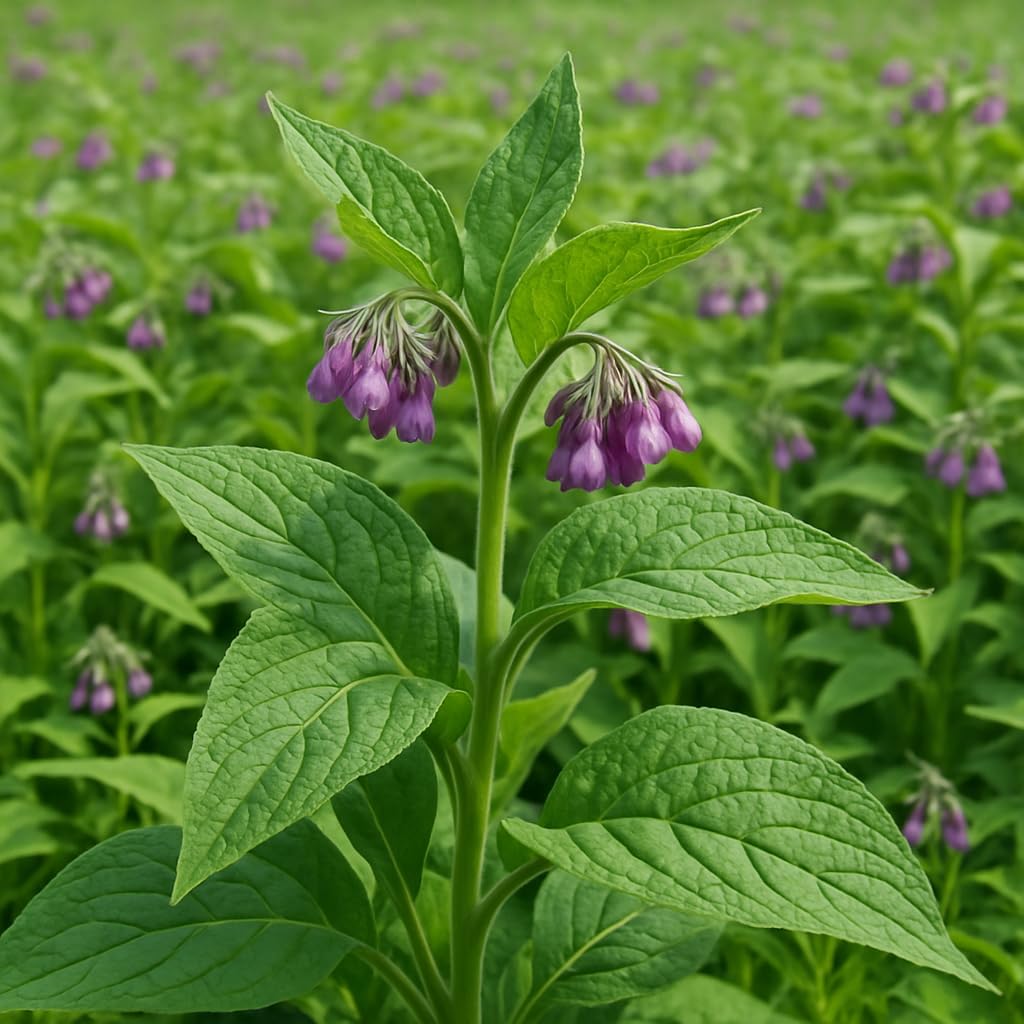
Bocking 14 Comfrey Root Cuttings, 12 Count
| Number of Pieces | 12 |
|---|---|
| Sunlight Exposure | Full Sun to Partial Shade |
| USDA Hardiness Zone | 2-9B |
| Moisture Needs | Regular Watering |
| Other Special Features of the Product | Attracts Pollinators, Drought Tolerant |
These Bocking-14 comfrey root cuttings arrive as 12 cloned root pieces intended for outdoor planting and are described as fast and easy to establish. Bocking-14 is a sterile cultivar that will not self-seed, and once planted in full sun to partial shade it tolerates poor or dry soil after establishment. Gardeners typically grow it in raised beds, orchards, food forests, or along pasture edges and harvest leaves repeatedly through the season for compost, mulch, or high-protein animal feed. Notable features include strong cold hardiness across USDA Zones 2–9B, pollinator-attracting purple flowers, and a high nutrient profile useful for creating a homemade fertilizer or compost activator. Practical benefits are low maintenance after establishment and very high biomass yield that supplies nutrients like potassium and nitrogen back to the garden. Limitations are inherent to root-cutting purchases: success depends on correct planting and early watering until established, and buyers should expect several weeks before large harvests; this cultivar will not produce seed for propagation if you wanted seedlings.
Best for: Gardeners focused on high-performing, low-maintenance biomass crops who want a reliable perennial source of compost material and nutrients for beds, orchards, or food forests.
Less Ideal for: Gardeners seeking plants that reproduce by seed or those who want immediate edible harvests from a purchased plant are better off with different varieties or ready-to-harvest options.
- Sterile Bocking-14 cultivar prevents unwanted self-seeding while producing high biomass
- Cold hardy across USDA Zones 2–9B for reliable performance in diverse climates
- High nutrient content in leaves suitable for compost activator, mulch, or livestock feed
- Tolerates poor, dry soil once established, reducing ongoing maintenance
- Requires correct planting and regular watering until established for reliable take
- Supplied as root cuttings so there is a delay before substantial leaf harvests
Verdict: Choose these Bocking-14 root cuttings when you want a long-lived, high-yielding comfrey source to accelerate compost production and return nutrients to your garden.
TKE Farms & Gardens Purslane Seeds — 2,000+ Heirloom Non-GMO

| Indoor Outdoor Usage | Indoor, Outdoor |
|---|---|
| Other Special Features | Drought Tolerant, High Germination Rate, Low Maintenance, Pest Resistant |
| Sunlight Exposure | Full Sun |
| USDA Hardiness Zone | 5-10 |
| Unit Count | 2000 Count |
These TKE Farms & Gardens purslane seeds are a no-fuss choice when you need a hardy, fast-growing ground cover or edible succulent for poor or compacted soil. The packet contains 2,000+ heirloom, non-GMO seeds selected for high germination, and the instructions call for surface sowing in full sun with light, regular moisture until sprouts appear in about 7 to 14 days. Once established the plants tolerate heat and drought and need only moderate watering, so they are useful in low-input beds, containers, or rock gardens where soil fertility is limited. Practical growing notes: thin seedlings to the suggested spacing, harvest leaves and stems at 45 to 60 days, and the plants will self-seed to extend cover. Notable limitations are that purslane is a spreading succulent that can become invasive in warm climates and will outperform many other greens in deep, rich soils but may be less productive where shade or very wet soils persist. For gardeners looking to quickly stabilize bare patches, add edible greens with minimal care, or fill containers on poor soil, these seeds deliver consistent results.
Best for: Gardeners who want a low-maintenance, edible ground cover to stabilize poor or dry soil and produce frequent harvests with minimal inputs.
Less Ideal for: Those who need shade-tolerant or moisture-loving plants or who prefer strictly contained, non-self-seeding ornamentals.
- High seed count (2000+) suitable for covering large areas or multiple containers
- Non-GMO heirloom seeds with high germination for reliable establishment
- Heat and drought tolerant once established, reducing watering needs
- Versatile for indoor or outdoor use including containers, rock gardens, and ground cover
- Spreading habit can be invasive in warm climates if not managed
Verdict: Choose these purslane seeds when you need a tough, fast-establishing edible ground cover that thrives on poor, dry soils with minimal care.
Verdant Treasures Russian Comfrey Bocking-14 — 12 Cuttings

| Indoor Outdoor Usage | Outdoor |
|---|---|
| Expected Blooming Period | Summer |
| Expected Planting Period | Spring |
| Moisture Needs | Moderate Watering |
| Unit Count | 12 Count |
These 12 cuttings of Bocking-14 comfrey are sold as a hardy, non-seeding cultivar suited to outdoor beds where you want a dependable source of bulky green material. Buyers typically plant the cuttings in spring and let the plants establish for a summer supply of large leaves that can be harvested repeatedly for compost tea, compost pile greens, or supplemental animal feed. Key practical features are the cultivar choice Bocking-14, which does not produce viable seed so it is easier to contain, and the clear planting and usage instructions included with the order. In practice the plants act as dynamic accumulators of nutrients, supplying nitrogen, potassium and trace minerals that speed composting and enrich homemade liquid fertilizers. Limitations to consider are that comfrey is a vigorous perennial once established and requires a spot where repeated harvesting is acceptable, and medicinal uses should be approached cautiously and discussed with a healthcare professional. For gardeners focused on steady, low-maintenance compost inputs, these cuttings are a straightforward way to add a reliable green.
Best for: Gardeners who want a dependable, low-fuss source of high-nutrient green material to boost compost and make liquid fertilizer for outdoor beds.
Less Ideal for: People who need only annual plants, have very small containers, or cannot commit to regular harvesting and management of a vigorous perennial.
- Bocking-14 cultivar chosen to minimize spreading because it does not produce viable seed
- Sold as 12 cuttings to establish multiple plants for repeated leaf harvests
- Specifically recommended for making compost tea and enriching compost as a high-nutrient green
- Grown using beyond organic methods and packaged with planting and usage instructions
- Vigorous perennial growth means it needs a dedicated spot and regular harvesting to control size
- Medicinal claims require caution and consultation with a healthcare professional
Verdict: Choose these Bocking-14 comfrey cuttings when you want a reliable, high-nutrient perennial green specifically to supercharge compost and make homemade fertilizer.
The Three Company Live Herb Assortment (6-Pack)

| Indoor Outdoor Usage | Indoor, Outdoor |
|---|---|
| USDA Hardiness Zone | 3-11 |
| Moisture Needs | Moderate Watering |
| Sunlight Exposure | Full Sun to Partial Shade |
| Unit Count | 6 Count |
This six-pack of live herbs delivers a hand-selected assortment of perennial culinary plants intended for container gardens, balcony planters, and kitchen beds. Plants arrive as small potted starts and are typically used to fill multiple pots or a single long planter; growers can transplant them into well-draining potting mix, place the planter in full sun to partial shade, and water regularly while they establish. Notable features include suitability for indoor or outdoor use across USDA zones 3 to 11 and modest moisture needs, which makes them adaptable to different balcony exposures. The assortment approach means you get variety and immediate usable herbs for cooking or for attracting pollinators, but you cannot choose specific varieties since the selection is the seller's grower choice. Because plants are live, initial condition and vigor may vary, so expect some variation in size and leaf count at delivery. For balcony gardeners this pack is a convenient way to start or expand an herb planter with minimal fuss.
Best for: Balcony gardeners who want an easy, low-effort way to establish a small edible herb collection and prioritize usable variety over picking specific cultivars.
Less Ideal for: Gardeners who need guaranteed specific herb varieties or those who prefer uniform, mature plants for immediate harvest.
- Ready-to-plant live herbs suitable for containers and balcony planters
- Adaptable to full sun or partial shade, widening placement options on balconies
- Perennial varieties cover cooking, tea, and pollinator uses
- Works across a wide USDA zone range (3-11) for broad climate compatibility
- Grower-selected assortment means you cannot choose exact herb varieties
- Live plants may arrive with variable size or vigor depending on shipment and handling
Verdict: An easy starter pack for balcony planters that delivers a mixed set of live culinary herbs ready to transplant and use.
Back to the Roots Heirloom Organic Vegetable & Herb Seeds, 30-Pack

| Material Features | GMO Free, Organic |
|---|---|
| Indoor Outdoor Usage | Outdoor |
| Moisture Needs | Moderate Watering |
| Sunlight Exposure | Partial Sun |
| Unit Count | 30 Count |
This 30-pack from Back to the Roots provides a large, diverse mix of heirloom organic seeds aimed at gardeners who want many planting options without buying individual packets. The bundle contains a surprise assortment of herbs, vegetables, fruits, and flowers that are labeled as germination-tested and compliant with seed law, making them suitable for sowing in raised beds or containers. Use it to fill multiple rows, succession-planting slots, or to experiment with new varieties; many of the included seeds are described as easy to grow and beginner-friendly. Practical benefits include organic and non-GMO sourcing, U.S. grown provenance, and an eco-minded rescued-seed program that reduces waste. Because the assortment varies by batch, you cannot choose specific varieties and exact counts per variety are unpredictable, so it is best for gardeners who prioritize variety and value over selecting particular cultivars. For performance-focused raised-bed gardeners this pack is a convenient way to test multiple crops quickly, but those needing uniformity or guaranteed varieties should look for single-variety packets instead.
Best for: Gardeners who want to trial many heirloom vegetables and herbs in raised beds and value organic, low-cost variety over exact cultivar selection.
Less Ideal for: Growers seeking precise, repeatable performance from a specific variety or those planting large uniform beds that require consistent seed lots.
- Includes 30 heirloom, organic, non-GMO seed packets for wide variety
- Germination-tested and compliant with Uniform State Seed Law
- Suitable for indoor or outdoor planting including raised beds and containers
- Sourced as rescued surplus to reduce waste and packaged simply
- Assortment varies by batch so specific varieties and quantities are not guaranteed
- Not ideal if you need consistent, single-cultivar seed supplies for uniform production
Verdict: A cost-effective, organic 30-pack for raised-bed gardeners who want to experiment with many heirloom vegetables and herbs at once.
Choosing the Right Plants for Compost: Key Factors to Consider
Carbon-to-Nitrogen Balance
A balanced carbon-to-nitrogen ratio is central to efficient composting. Plants high in nitrogen accelerate microbial activity but need to be balanced with carbon-rich browns to avoid odors and slimy textures.
When choosing plants for compost, think about how leafy and green they are versus woody or dry. Fast-decomposing green leaves supply nitrogen quickly, while stalky or woody materials add needed carbon and bulk. Mixing materials in roughly the right proportions reduces the need for extra amendments and leads to a more uniform finished compost.
Decomposition Rate
Different plants break down at widely varying speeds depending on tissue toughness and lignin content. Tender leaves and soft herbaceous stems usually rot quickly, while woody stems and fibrous grasses persist longer and require more turning or shredding.
Pick plants that match the speed you want: if you need compost fast for seasonal beds, favor quick-breaking greens; if you want to build longer-lasting crumbly humus, include slower materials to develop structure over time.
Risk of Regrowth and Seeds
Some plants can regrow from stem fragments or survive the composting process via resilient seeds. Adding these to a pile can unintentionally introduce volunteers into finished compost and garden beds.
Avoid or pre-treat plants known to resprout, such as certain invasive perennials or species with persistent propagative roots. When in doubt, chop, dry, or hot-compost those materials at high temperatures long enough to kill seeds and sprouts before using the compost in gardens.
Bulk and Aeration Contribution
Plants that provide physical structure help keep air spaces in a pile, improving oxygen flow and preventing anaerobic pockets. Woody stalks, coarse stems, and chopped corn or sunflower stalks perform this role well.
Including materials that add bulk reduces compaction and makes turning more effective. If all your inputs are fine-textured, you will need to add bulky browns like straw or wood chips to maintain porosity.
Moisture Content and Behavior
Plant moisture affects how wet or dry a compost pile becomes. Succulent greens and fresh leaves release water as they break down, which can be helpful in dry climates but problematic in already-wet piles.
Observe how a plant behaves in your local pile: some plants retain water and slow airflow, while others dry quickly and act as absorbent browns. Adjust the mix and turning frequency based on how these materials change pile moisture.
Preparation and Handling
Ease of chopping, shredding, or bundling affects how practical a plant is to use in regular composting. Fine-textured leaves can be added with little prep, while tough stems or long grasses are easier to compost if cut into shorter sections or run through a shredder.
Consider the tools you have and the labor involved. If you lack a chipper or shredder, favor plants that decompose well when hand-torn or mown repeatedly into small pieces.
Greens That Speed Up Heat Generation
Certain leafy plants provide a strong nitrogen boost and help raise internal pile temperatures when mixed correctly. Examples include tender annual leaves and fresh garden trimmings that are high in protein and moisture. Adding these greens in layers between browns encourages microbial activity that speeds decomposition and helps reach temperatures that kill weed seeds and pathogens.
When using these plants, chop or shred them to increase surface area. Avoid adding large clumps of wet greens at once, which can create compacted, anaerobic zones. Instead, distribute greens evenly and alternate with coarse carbon materials to maintain airflow.
- Add in thin layers to avoid compaction
- Chop large leaves and stems to speed breakdown
- Monitor moisture and mix with dry browns if pile feels too wet
Fibrous Stems and Stalks for Structure
Fibrous plant parts like corn stalks, sunflower stems, and perennial grass clumps give the pile body and maintain air channels as softer materials collapse. These items decompose more slowly but are valuable for preventing a dense, anaerobic mass.
To compost them efficiently, cut stalks into shorter sections or run them through a shredder. Pair these coarse materials with high-nitrogen greens so microbes have both food and good habitat.
- Cut into 6-12 inch lengths for best results
- Use as alternating layers with greens to retain porosity
- Tougher stems may need extra turning or longer composting time
Herbs and Garden Trimmings as Flavorful Additions
Herb cuttings and soft trimmings from vegetables are excellent for compost because they are nutrient-dense and break down quickly. Aromatic herbs usually decompose just like other greens and do not leave lasting fragrance in finished compost once fully processed.
Remove large woody roots before adding and chop denser stems to help microbes access internal tissues. Herbs also often contain beneficial microbes that can contribute to a lively compost ecosystem.
- Chop woody stems before adding
- Avoid adding diseased plant material without hot composting
- Mix evenly with browns to maintain balance
Weeds and Volunteer Plants: Manage Carefully
Weeds can be a valuable source of nutrients, but many species produce persistent seeds or can regrow from root fragments. Hot composting at sufficient temperatures will kill most seeds and roots, but home piles that never heat up may allow weeds to survive.
If your composting method does not reliably reach high temperatures, either exclude weeds with viable seeds and strong roots or pre-dry and crush them before adding. Hand-pull and compost young, non-seeding weeds for the safest option.
- Exclude seeding weeds unless hot composting
- Chop or wilt weeds before adding to reduce regrowth risk
- Use mature compost cautiously around seedbeds if weeds were included
Leaf Litter and Seasonal Considerations
Autumn leaves are abundant and make excellent compost feedstocks when mixed properly. While leaves are typically higher in carbon than fresh greens, many species break down reasonably fast once shredded or mixed with nitrogen sources.
Shredding leaves or mowing fallen leaves before collecting speeds decomposition. In regions with long wet seasons, add dry, coarse materials to maintain airflow when leaf piles become compacted and soggy.
- Shred leaves to reduce breakdown time
- Mix with nitrogen-rich materials for faster results
- Store and add leaves in thin layers to avoid matting
Practical Tips for Adding Plants to Different Compost Systems
In a hot, managed compost bin, you can include a wider variety of plant materials, including some weeds and thicker stalks, because higher temperatures and active turning speed breakdown and kill seeds. In passive or cold piles, prioritize soft greens, chopped leaves, and avoid seeding weeds to prevent persistence.
For vermicomposting systems, avoid woody stems and high-volume fibrous materials that can create anaerobic zones and are slow for worms to process. Instead, feed worms small, soft plant scraps and shredded leaves in moderation.
- Hot bins tolerate tougher materials; cold piles benefit from pre-shredded inputs
- Worm bins prefer fine, soft plant matter and modest amounts of leaves
- Adjust mixing and turning frequency depending on material toughness
How We Chose the Best Plants for Compost
We evaluated candidate plants based on attributes that directly influence backyard and small-plot compost performance. Key filters included green nitrogen content, lignin and cellulose balance (which affects how long materials take to break down), moisture release during decomposition, typical bulk or fiber structure contribution, and seasonal availability for home gardeners. We also prioritized plants that are safe to compost in home systems, excluding species known to regrow vigorously from fragments or carry persistent seeds that survive standard hot composting. Practical handling considerations, such as how easily stems and leaves can be chopped or shredded before adding to a pile, were included as selection criteria. Finally, we excluded invasive plants and materials that require specialized industrial treatment to break down, focusing on options that integrate well into common backyard compost workflows.
FAQ
Can I compost plants with seeds in a home pile?
It depends. If your pile regularly reaches hot composting temperatures, most seeds will be killed. In cooler, passive piles, seeds can survive and produce volunteers in finished compost. To be safe, avoid adding seeding plants unless you can guarantee sustained high temperatures or pre-treat the material by drying and crushing.
Are woody stems okay to add to compost?
Woody stems add valuable structure and carbon but decompose more slowly. Cut or shred them before adding and mix with nitrogen-rich greens to speed microbial activity. Expect longer composting times or the need for extra turning with heavy woody loads.
Should I include diseased plant material in compost?
Composting diseased plants can be risky unless the pile reliably reaches temperatures high enough to destroy pathogens. For home piles that may not get hot, it is safer to remove diseased material or destroy it through other means to avoid spreading disease back into the garden.
How small should I chop plant pieces before composting?
Smaller pieces expose more surface area to microbes and break down faster. Aim for pieces under a few inches when possible. Tough stalks and woody parts benefit most from chopping or shredding before adding to a pile.
Can I put lawn clippings in my compost?
Yes, lawn clippings are a good green source because they are high in nitrogen and break down quickly. Avoid adding too many fresh clippings at once, which can compact and become anaerobic; spread them thinly or mix with dry browns.
Final Verdict
Choosing plants for compost is a balance between rapid nutrient contribution and maintaining physical structure in the pile. Prioritize a mix of nitrogen-rich greens and carbon-rich, bulky materials while preventing seed and root persistence by using hot composting or pre-treatment when needed. Match plant choices to your compost method and available tools, and you will get finished compost faster and with fewer surprises.
