

Note: This article contains affiliate links. If you click on these links and make a purchase, I may earn a small commission at no extra cost to you. This helps support my research and content. Read my full affiliate disclosure here.
If you propagate succulents regularly, the rooting product you use can make the difference between a slow, rotting cutting and a healthy new plant. Rooting hormone helps callus formation, stimulates fine root growth, and can shorten the time cuttings need in a dry, controlled environment. This guide covers five shortlisted rooting hormones for succulents chosen for ease of use, reliability in dry conditions, and low risk of overwatering-related rot. Below you will find practical notes on application methods, expected results, and what to consider when choosing a rooting hormone for your indoor or outdoor succulent setup. The products here represent the top choices across common gardener needs and propagation styles.
Top Picks at a Glance
| Best Quality Built to a higher standard if you want something more solid | TPS NUTRIENTS Succulent Root Stimulator Liquid, 8 oz |  |
| Best Value The sweet spot between price and what you get | Southside Plants Root Drops Liquid Rooting Hormone (4 oz) |  |
| Best Budget The cheapest option that still gets the job done reliably | Bonide Bontone II Rooting Powder, 1.25 oz |  |
| Highest Rated A top-rated pick with lots of positive feedback | Herrdemia 3-in-1 Rooting Powder (IBA + NAA + Mycorrhizae) |  |
| Most Popular A crowd favorite that many people choose with confidence | Hormex Rooting Hormone Powder #1 for Tender Cuttings, 21 g | 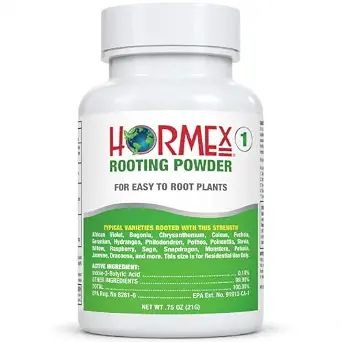 |
TPS NUTRIENTS Succulent Root Stimulator Liquid, 8 oz

| Item Form | Liquid |
|---|---|
| Target Species | succulents |
| Unit Count | 8 Fluid Ounces |
| Mixing Ratio | 1 tsp per quart of water |
This liquid root stimulator is designed specifically for succulents and is used during propagation, repotting, and when establishing cuttings. Mixed at the recommended 1 teaspoon per quart, the formula aims to prompt root initiation without supplying excessive nutrients that can stress low-water succulents. Its probiotic-enriched description and targeted design suggest it supports microbial activity and nutrient availability at the root zone, which can improve establishment success for delicate cuttings. In practical use it is straightforward to mix and apply as a dip or light drench for recently potted plants. The 8 ounce bottle provides multiple treatments for hobbyists and small-scale propagators. Limitations are that it is a specialist product for succulents rather than a broad-spectrum rooting hormone and users should follow dilution guidance carefully to avoid overapplication; results depend on propagation technique and environmental conditions as much as the supplement itself.
Best for: Gardeners who prioritize reliable rooting success for succulent cuttings and small-scale propagation and who value a product tailored to low-water, sensitive plants.
Less Ideal for: Growers seeking a multi-purpose rooting hormone for a wide range of plant types or those doing high-volume commercial propagation.
- Formulated specifically for succulents to encourage root initiation
- Liquid concentrate with an easy mixing ratio of 1 tsp per quart for simple dosing
- Probiotic-enriched formula meant to support root-zone microbial activity
- Suitable for cuttings, repotting, and general propagation tasks
- Small 8 oz volume may be limiting for frequent or large-scale propagation
- Not marketed as a universal rooting hormone for non-succulent species
Verdict: A targeted liquid rooting supplement for succulents that helps improve establishment of cuttings and repotted plants when used at the recommended dilution.
Southside Plants Root Drops Liquid Rooting Hormone (4 oz)

| Item Form | Liquid |
|---|---|
| Specific Uses For Product | Cuttings in water, soil, or newly transferred to soil |
| Application Method | Drops |
| Unit Count | 4 Ounce |
| Target Species | Houseplants |
Southside Plants Root Drops is a concentrated liquid rooting hormone designed to speed and strengthen root formation for indoor plant propagation. It is applied as drops — for water propagation the recommended dose is two drops per cup — and the product is also intended for use when transplanting cuttings into soil or soilless media such as LECA or sphagnum moss. The formula lists 0.025% indole butyric acid plus vitamins and lanolin-based proprietary components, which makes it more comparable to liquid hormone treatments than to powders or gels. Practical benefits include easy, mess-free dosing, suitability across multiple substrates, and a small bottle that lasts because of the low dose. Limitations are that the concentration is fixed so you cannot adjust strength beyond changing dose, and the product is aimed at houseplants rather than outdoor or edible crops. For growers focused on efficient, repeatable propagation this is a simple, usable option; those needing broad agricultural use or adjustable formulations should consider alternatives.
Best for: Buyers who prioritize efficient, low-waste propagation for houseplants and want a hassle-free liquid option that performs across water and soilless setups.
Less Ideal for: Growers who need adjustable-strength rooting solutions or products formulated for large-scale outdoor or edible crop propagation should look elsewhere.
- Concentrated liquid formula that requires only a few drops per propagation session
- Works across multiple media: water, soil, LECA and sphagnum moss
- Includes vitamins and lanolin-based ingredients intended to promote stronger, healthier roots
- Dropper bottle enables clean, mess-free application
- Fixed formulation with a single listed concentration limits ability to fine-tune hormone strength
- Product labeling and ingredients list use proprietary terms so exact composition beyond active IBA percentage is limited
Verdict: A compact, easy-to-use liquid rooting hormone that speeds and supports houseplant propagation across water and soilless media.
Bonide Bontone II Rooting Powder, 1.25 oz

| Item Form | Powder |
|---|---|
| Specific Uses For Product | Root Development |
| Application Method | dip and shake |
| Target Species | azaleas, mums, geraniums, pachysandra, poinsettias and others |
| Unit Count | 1.25 Ounce |
Bonide Bontone II is a classic IBA-based rooting powder sold in a small 1.25 oz dust jar for home gardeners and hobbyists. You apply it by dipping a cutting’s wound into the powder, shaking off excess, and planting into moist media; it can also be used to coat seeds or bulbs in a bag before planting. The product’s straightforward formulation of indole-3-butyric acid targets root initiation and is effective on both softwood and hardwood cuttings as well as many ornamentals and vegetables. In practice the powder is convenient to use, has a medium coverage per package, and reduces the time and failure rate for many common cuttings. Limitations are the small unit size if you plan to take large numbers of cuttings, and because it is a dry powder it can be messier to apply than gel alternatives. Safety precautions are also reasonable to follow since it is a plant hormone rather than an inert filler.
Best for: Gardeners who want a reliable, easy-to-use rooting hormone backed by long-standing use and positive user feedback and who take a cautious approach to selecting proven products for their cuttings.
Less Ideal for: Propagation professionals or growers who take very large numbers of cuttings and need bulk quantities or who prefer the tidier application of gels or liquid dilutions.
- Contains indole-3-butyric acid (IBA), a proven rooting hormone for cuttings
- Ready-to-use powder that is simple to apply by dip and shake
- Versatile for cuttings, seeds, bulbs, and transplants across many ornamental and edible plants
- Compact jar size convenient for occasional home garden use
- Small 1.25 oz package may not be economical for frequent or large-scale propagation
- Powder form can be messier and harder to control than gel or liquid formulations
Verdict: A proven, ready-to-use IBA powder that reliably speeds rooting for home gardeners focused on successful cuttings.
Herrdemia 3-in-1 Rooting Powder (IBA + NAA + Mycorrhizae)

| Item Form | Powder |
|---|---|
| Application Method | dip or mix with water |
| Specific Uses For Product | Root Development, plant propagation |
| Target Species | Houseplants |
| Unit Count | 1.1 Ounce |
This rooting powder is designed to accelerate root initiation and improve survival of cuttings across soil and hydroponic systems. It is typically used as a dip for soil propagation or dissolved in water for water and LECA propagation; the package includes mixing ratios and step-by-step directions. The formula combines IBA for feeder roots, NAA for a strong central root, and R. irregularis mycorrhizae to extend nutrient uptake, plus adjuncts such as seaweed extract and chitosan to reduce stress and protect cut sites. Practical benefits include faster visible rooting in 1–2 weeks in many species, compatibility with popular houseplants and woody cuttings, and an estimated high coverage per bottle suited to repeated propagation projects. Important limitations are the need to follow the dosage carefully because overuse can inhibit rooting, and the product is a concentrated chemical powder that requires careful handling and must be kept away from children and pets. Overall it is a reliable option for gardeners who want consistent rooting performance when propagating a variety of plants.
Best for: Buyers who prioritize dependable, repeatable propagation results and want a single product that works across soil and water systems for houseplants and woody cuttings.
Less Ideal for: Gardeners who prefer purely organic, food-safe options or who will not follow precise dosing and safety precautions should consider alternative gentler methods.
- Broad-spectrum formula combining IBA, NAA, and mycorrhizae for stronger, more complete root systems
- Works in both soil and water propagation and is compatible with hydroponic media like LECA
- Includes practical directions and mixing ratios for dips and water solutions
- High estimated coverage per bottle suitable for many cuttings or repeated propagation sessions
- Concentrated formula requires precise dosing since overuse can suppress rooting
- Contains active ingredients that are hazardous if swallowed or inhaled and must be stored safely
Verdict: Choose this powder when you want a single, lab-tested rooting hormone that reliably speeds and strengthens root formation across soil and water propagation.
Hormex Rooting Hormone Powder #1 for Tender Cuttings, 21 g

| Item Form | Powder |
|---|---|
| Specific Uses For Product | Rooting Hormone Powder for Plant Cuttings |
| Application Method | Dip |
| Coverage | For delicate houseplants, garden herbs and succulent cuttings |
| Ingredients | Indole-3-butyric acid |
Hormex #1 is a dip-and-plant rooting powder designed for soft, easy-to-root cuttings such as pothos, monstera, philodendron, African violets, coleus, herbs and succulents. You prepare a cutting, moisten the base, dip it into the powder and tap off excess before placing the stem into a moist propagation medium like potting soil, coco coir, rockwool or a rooting cube. The product is sold in a small 21 g bottle and the brand states it treats up to about 200 cuttings, so a little goes a long way for routine home propagation. Notable features include a low 0.1% IBA concentration appropriate for tender stems and clear usage instructions plus a plant strength guide for choosing higher strengths if needed. Practical benefits are improved and more consistent root initiation on cuttings and reduced need to re-take cuttings. Limitations are that this is a powder-only, single-strength formula for tender material so it is not meant for woodier cuttings and you must avoid contaminating the jar by not returning unused powder.
Best for: Home gardeners and houseplant owners who propagate common tropicals and herbs and want a low-effort, cost-effective rooting aid for frequent cuttings.
Less Ideal for: People who regularly root woody or difficult-to-root shrubs and trees should choose a stronger concentration or a formula intended for hardwood cuttings.
- Formulated specifically for tender softwood and houseplant cuttings with 0.1% IBA.
- Dip application is simple and familiar to most propagators.
- Small bottle treats many cuttings so the product stretches for repeat propagation projects.
- Includes clear plant-strength guidance so users can match strength to plant type.
- Single gentle strength not suitable for semi-hardwood or hardwood cuttings.
- Powder format requires careful handling to avoid contaminating the bottle.
Verdict: A small, economical powder rooting hormone ideal for household propagation of tender cuttings, stretching far for repeated use.
Choosing the Right Rooting Hormone for Succulents: Key Factors to Consider
Rooting Success Rate
How reliably a hormone produces fibrous roots from succulent cuttings is the single most important factor. Succulent tissues are succulent because they store water; they are prone to rot if left too wet. A good rooting hormone for succulents encourages root initiation without forcing the cutting to remain hydrated for long periods. That means you want evidence the formulation stimulates roots on common succulent propagation types, including leaf propagation for species that produce pups from leaves, stem cuttings for rosette-forming plants, and offsets.
Consider real-world expectations: some cuttings will still fail due to infection or poor callusing, but a product that raises your success rate noticeably under typical home propagation conditions is worth selecting.
Formulation and Concentration
Rooting hormones come as powders, gels, and liquids. Each form behaves differently with succulent tissues. Powders are convenient for dry applications and reduce the chance of over-wetting a callused cutting. Gels can deliver auxin directly and help the hormone adhere to the stem, but they may trap moisture against the tissue if not used sparingly. Liquids offer precise dilution control and can be appropriate for dipping multiple cuttings at once, but strong concentrations risk burning tender succulent tissue.
Pay attention to concentration guidance and whether the product has dilution charts or simple dip times. For succulents, lower-strength applications or quick dips are often safer than long soaks because succulent tissues accept hormones quickly and are vulnerable to rot.
Compatibility with Succulent Substrates
Where you plant the cutting after treatment affects rooting success. Succulents root best in fast-draining, gritty mixes that let the callus dry between minimal misting or light watering. A hormone that pairs well with dry-to-moist propagation methods is preferable. Some formulations are optimized for use with soilless mixes, others for perlite or pumice. Consider whether the hormone can be applied cleanly when you are using coarse substrates that can dislodge powder or gel.
Also think about whether you use trays, individual pots, or propagation boxes. Certain application forms are more suited to batch processing in trays while others work better for one-off cuttings.
Moisture Management and Rot Prevention
Preventing rot is a central concern when propagating succulents. A rooting hormone should help reduce the need to keep cuttings constantly moist. Products that enable shorter wet contact time or that can be used with dry powder applications help limit fungal or bacterial problems. Consider whether a product recommends wound-drying times before application and how its instructions integrate with your usual misting or watering routine.
Also evaluate whether the product's directions include sanitation steps. Clean tools and sterile media reduce infection risks more than any rooting substance, but the product should not require prolonged damp conditions that counteract good sanitation practices.
Ease of Use and Dosing
Propagation is often a repetitive task when you work with many cuttings. Ease of use includes how simple it is to dose the product reliably and how flexible the product is across different cutting sizes. Powders that come in shaker tops or small scoops can be fast for single cuttings. Liquids with clear dilution instructions work well for batch dips. Gels that come in squeeze tubes are convenient but can be messy if the nozzle clogs.
Also consider shelf stability and whether the product requires refrigeration or special storage. Long shelf life and stable formulations reduce waste and the need to replace product between propagation seasons.
Safety and Storage
While most rooting hormones are not highly hazardous, they are active plant growth regulators and should be handled with basic care. Check whether the product requires gloves, eye protection, or particular ventilation during use. Proper storage keeps the active agent stable; exposure to heat or moisture can reduce effectiveness over time.
For home gardeners, straightforward storage instructions and child- and pet-safe packaging are practical pluses. Also consider whether small, resealable packaging is available so you do not expose the entire container every time you take a small amount out.
How to Apply Rooting Hormone to Succulents
Successful application starts with healthy, properly callused cuttings. Let a fresh succulent cutting dry until the wound forms a firm callus before applying any hormone. For leaf propagation, allow the leaf base to dry and callus; for stem cuttings, allow a short air-dry until the cut edge is no longer wet to the touch.
Choose an application method that matches the product form. For powders, lightly dust the callus and tap off excess. For gels, use a small amount pressed onto the wound and wipe away surplus. For liquid dips, follow the recommended dip time-usually a quick dip is sufficient for succulent tissue. Always avoid prolonged soaking.
- Callus first, then apply a small amount of hormone
- Dusts work well with dry, gritty mixes; gels adhere to stems
- Quick dips are usually safer than long soaks for succulents
Best Substrates and Aftercare for Rooted Succulents
Plant treated cuttings into a fast-draining, airy mix such as grit, sand, pumice, or a specialty cactus mix. Avoid heavy, moisture-retentive soils that encourage rot. Use small pots or shallow trays to reduce excess moisture retention around the cutting base.
After planting, keep cuttings in bright, indirect light and avoid direct sun until roots establish. Water sparingly; many gardeners mist sparingly or wait weeks between light waterings depending on ambient humidity. Once roots appear and the plant shows new growth, you can return to a regular, conservative succulent watering schedule.
- Use fast-draining media to minimize rot risk
- Provide bright indirect light and minimal water until roots form
- Transplant to larger pots only after a healthy root system develops
Common Propagation Mistakes to Avoid
A frequent error is applying rooting hormone to a cutting that is still wet or not fully callused. Excess moisture combined with hormone compounds often accelerates rotting rather than rooting. Another mistake is using too high a concentration or leaving cuttings in undiluted liquid for longer than recommended.
Do not crowd cuttings in trays or bury the treated portion too deeply in the substrate. Crowding reduces airflow and increases infection risk. Finally, neglecting sanitation of knives, shears, and containers invites pathogens. Wipe tools with alcohol and start with clean containers and fresh media for the best odds of success.
- Never apply hormone to uncallused, wet wounds
- Avoid overcrowding and burying treated tissue
- Sanitize tools and containers before propagating
Propagation Techniques That Pair Well with Hormones
Leaf propagation, stem cuttings, and offsets each respond differently to hormones. Leaf propagation often benefits from a light powder or a brief gel application at the leaf base when the species naturally produces pups from leaf tissue. Stem cuttings are usually compatible with any formulation but require careful drying before treatment.
For offsets and pups with an exposed root nub, minimal hormone or no hormone may be needed if the offset already has a root primordium. Use hormones primarily to encourage quicker fibrous root development when natural rooting is slow.
- Use light powder for leaf propagation to limit moisture contact
- Reserve gels or dips for thicker stem cuttings with larger wounds
- Offsets often root without hormone but may benefit from light treatment
When Not to Use Rooting Hormone
Rooting hormone is a tool, not a cure-all. Do not use it on cuttings that are diseased, heavily infested with pests, or showing signs of rot. In these cases, sanitation and proper pruning are the priorities. Applying hormone to a compromised cutting can encourage growth in tissues that will not survive.
Also avoid routine overuse on every small nursery division. For vigorous species and offsets that root easily, extra hormone rarely speeds the process enough to justify the application and may waste product.
- Do not apply to diseased or rotting tissue
- Skip hormone for species that root readily from offsets
- Use hormones as a targeted aid for slow-rooting cuttings
How We Chose the Best Rooting Hormone for Succulents
We focused on factors that matter when propagating succulents rather than broad ornamental plant metrics. Key evaluation criteria included effectiveness on succulent cuttings, formulation and application method, control of moisture-related problems, and ease of use for hobby and serious gardeners. Effectiveness measures how consistently cuttings develop fibrous roots in a dry or lightly moist medium. Formulation and application method considers powder, gel, and liquid options and how they affect dosing and waste. Moisture control assesses whether the product reduces the need to overwater cuttings, lowering the chance of rot. Ease of use covers packaging, dosing accuracy, and whether the product suits common propagation workflows like leaf, stem, or offset propagation. We excluded products intended only for woody or herbaceous annuals when their concentrations or application directions are unsuitable for succulent tissues. We also filtered out experimental formulations with minimal user data. The final list emphasizes products with clear dosing guidance, reproducible results in low-humidity or low-water scenarios, and compatibility with typical succulent substrates.
FAQ
How long after applying rooting hormone will succulents show roots?
It depends on species and conditions. Many succulents will begin to show fibrous roots in two to four weeks under optimal conditions. Slower species or those propagated in cooler, lower-light environments can take longer.
Can I use the same rooting hormone for leaves and stem cuttings?
Often yes, but adjust the form and amount. Powders and light gels work well for leaf propagation to avoid excess moisture, while liquids and gels can be useful for thicker stem cuttings when used with brief dip times.
Is more rooting hormone better for tougher cuttings?
Not usually. Higher concentration or longer exposure increases the risk of tissue damage and rot. For succulent cuttings, quick dips or light dustings are typically more effective than heavy applications.
Do I need to mist cuttings after applying rooting hormone?
Misting is optional and depends on humidity and substrate. Many gardeners keep cuttings mostly dry and only mist lightly if the ambient humidity is very low. Excessive misting can encourage rot, so err on the side of drier conditions until roots appear.
How should I store rooting hormone between propagation sessions?
Store in a cool, dry place away from direct sunlight. Resealable, airtight packaging is ideal. Avoid exposing the product to heat or moisture, which can reduce potency over time.
Final Verdict
For succulent propagation, prioritize a rooting hormone that promotes fibrous root formation without forcing prolonged wet contact. Choose a formulation and concentration suited to your favored propagation method, and pair the hormone with fast-draining media and strict sanitation. Remember that some species root easily without aids, so weigh the benefit of faster rooting against the risk of excess moisture. With the right product and careful technique, you can increase your success rate and produce healthy new succulents more reliably.
