

Note: This article contains affiliate links. If you click on these links and make a purchase, I may earn a small commission at no extra cost to you. This helps support my research and content. Read my full affiliate disclosure here.
Picking the right hand saw for cutting wood matters because a well-suited saw makes routine jobs faster, cleaner, and less tiring. Whether you are trimming branches, ripping lumber, or making fine workshop cuts, the saw type, tooth pattern, and handle ergonomics change how the tool behaves in real use. This guide covers seven shortlisted hand saws chosen for their cutting quality, ease of handling, and durability. We explain the practical differences between blades and teeth, show what to expect on different wood types, and highlight the evaluation criteria gardeners and DIYers care about. Read on to find a saw that fits the kinds of cuts and working positions you use most often.
Top Picks at a Glance
| Best Overall The best all-around choice for most situations | CRAFTSMAN 20" Fine Finish Hand Saw (CMHT20881) |  |
| Best Quality Built to a higher standard if you want something more solid | IRWIN Marathon ProTouch 15-Inch Coarse-Cut Carpenter Saw |  |
| Best Value The sweet spot between price and what you get | QYQRQF 14 in. Pro Hand Saw with Ergonomic Soft-Grip Handle |  |
| Best Budget The cheapest option that still gets the job done reliably | Frocopo 6-Inch Double-Edge Pull Hand Saw with Wooden Handle | 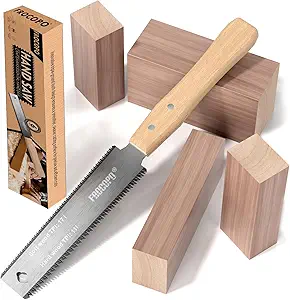 |
| Highest Rated A top-rated pick with lots of positive feedback | Magicbox 4‑Piece Japanese Hand Saw Set, SK5 Steel Pull Saws |  |
| Most Popular A crowd favorite that many people choose with confidence | REXBETI 11-Inch Folding Pruning Saw (SK-5 Steel, 7 TPI) |  |
| Best Seller A high-volume bestseller chosen again and again | REXBETI 8-Inch Folding Hand Pruning Saw (SK5 Steel) |  |
CRAFTSMAN 20" Fine Finish Hand Saw (CMHT20881)

| Blade Length | 20 inches |
|---|---|
| Number of Teeth | 6 |
| Blade Material | High Speed Steel |
| Power Source | Manual Power |
| Handle Material | Composite Materials |
The CRAFTSMAN 20" Fine Finish hand saw is a straightforward wood-cutting tool designed for clean, fast cuts in panel and dimensional lumber. Its 20-inch high-speed steel blade with induction-hardened teeth delivers lasting sharpness and the six teeth per inch profile is tuned for smooth crosscuts and general carpentry tasks. The bi-material ergonomic handle gives good control and includes simple 45- and 90-degree references for square and miter work, which helps when cutting without a box or guide. Because the blade is rectangular and built for fine finish work, it performs best on wood, plywood, and laminate rather than heavy demolition. The saw is lightweight and easy to use for extended periods, making it suitable for finish carpentry, trimming, and DIY projects where a neat edge matters. It lacks specialized features like replaceable blades or extra teeth density for ultra-fine joinery, but as a durable, no-frills hand saw it balances performance and comfort for everyday woodworking tasks.
Best for: A practical homeowner or carpenter who wants a reliable, easy-to-use saw for general woodworking and finish cuts around the house.
Less Ideal for: Woodworkers who need ultra-fine joinery blades, frequent ripping, or modular saw systems with replaceable blades should consider more specialized saws.
- Durable high-speed steel blade with induction-hardened teeth for longer edge life
- Six TPI fine-finish tooth pattern for clean crosscuts in wood and panel materials
- Ergonomic bi-material handle that improves grip and control during cuts
- Lightweight design suitable for extended use and general carpentry
- Tooth count and blade design prioritize finish cuts over aggressive ripping or heavy demolition
- No replaceable blade option for specialized or worn-edge replacements
Verdict: Choose this saw if you need a durable, comfortable 20" hand saw that delivers clean, fast finish cuts for everyday woodworking.
IRWIN Marathon ProTouch 15-Inch Coarse-Cut Carpenter Saw

| Blade Material | Alloy Steel |
|---|---|
| Number of Teeth | 14 |
| Blade Shape | Rectangular |
| Power Source | Hand powered |
The IRWIN Marathon ProTouch 15-inch carpenter saw is built for heavy-duty, performance-focused wood cutting. Its M2 tooth geometry and Tri-Ground teeth deliver fast, efficient cutting across and with the grain, while deep gullets clear chips quickly to maintain cutting speed. The tapered-pitch nose improves clearance and control when starting cuts and working near corners, and the thick-body blade adds rigidity for straighter strokes when ripping or crosscutting. The wood ProTouch handle is shaped for comfort during extended use but remains robust for jobsite wear. This saw is best used for framing, rough carpentry, and general-purpose wood cutting where speed and aggressive material removal matter more than super-fine finish. Limitations include a coarse 9-point tooth pattern that leaves a rougher cut compared with fine-tooth saws and a wooden handle that some users may find less ergonomic than modern composite grips.
Best for: Buyers who prioritize fast, aggressive cutting for framing, rough carpentry, or frequent jobsite use and want a reliable, high-performance hand saw.
Less Ideal for: People who need very fine, smooth finish cuts for trim, cabinetry, or finish carpentry should choose a finer-toothed saw designed for precision.
- Aggressive M2 and Tri-Ground teeth for fast cutting and efficient chip removal
- Deep gullets reduce clogging and keep the cut moving quickly
- Thick-body blade improves rigidity for straighter, controlled strokes
- Tapered-pitch nose aids clearance and starting cuts in tight spots
- Coarse 9-point tooth pattern produces a rougher finish not ideal for fine joinery
- Wooden handle offers durability but less modern ergonomic padding
Verdict: Choose this saw when you need a durable, high-performance carpenter saw that cuts fast and clears chips efficiently for rough and framing work.
QYQRQF 14 in. Pro Hand Saw with Ergonomic Soft-Grip Handle
| Blade Material | Alloy Steel |
|---|---|
| Blade Length | 14 inches |
| Number of Teeth | 11 |
| Handle Material | Thermoplastic Elastomers |
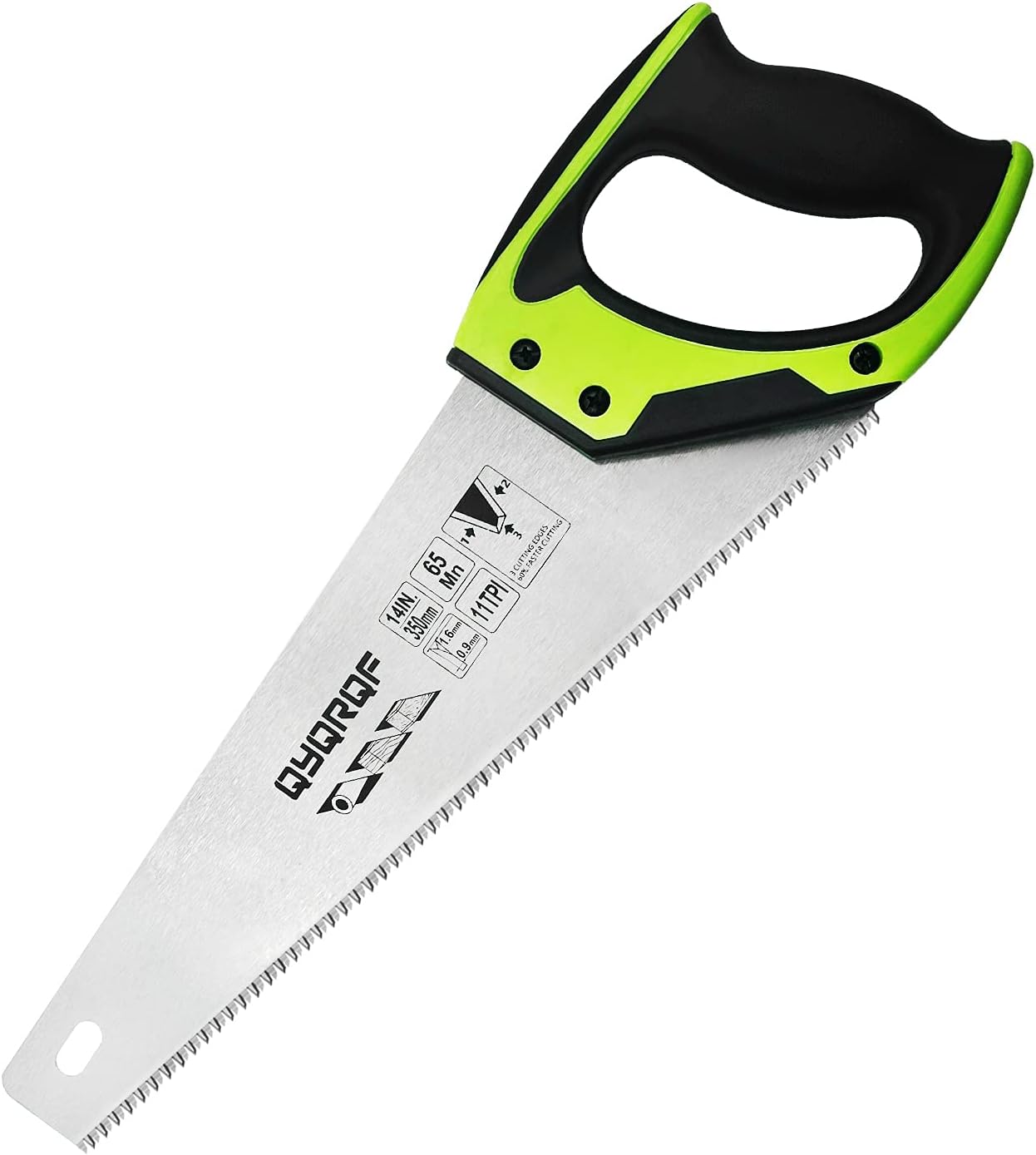
This 14-inch pro hand saw is built for fast, accurate cuts in wood, plywood and PVC pipe. The 65Mn heat-treated alloy-steel blade with three-face grinding and deep gullets clears chips quickly, and the 11 TPI fine-cut tooth pattern makes controlled crosscuts and trim work straightforward. A low-friction coating helps the blade slide through material, while the thermoplastic elastomer soft-grip handle is shaped for comfort during repeated strokes and reduces hand fatigue. It ships with a protective sleeve and a hard case for safe storage. For someone focused on practical performance, the saw delivers durable sharpness and predictable cuts without power tools. Limitations are its manual speed compared with a power saw and that the 11 TPI is a compromise between fast ripping and very fine finishing, so you may need a different tooth count for very fine trim or rip work.
Best for: Buyers who prioritize efficient, reliable hand cutting for routine wood trimming and light carpentry and want a durable tool that reduces hand fatigue during regular use.
Less Ideal for: Users who need the fastest bulk ripping or ultra-fine finish cuts, or those who prefer powered saws for large projects.
- Heat-treated 65Mn alloy-steel blade for long-lasting edge retention
- Three-face grinding and deep gullets for faster chip removal and quicker cuts
- Low-friction coating reduces binding and improves stroke efficiency
- Ergonomic non-slip soft-grip handle reduces hand fatigue during extended use
- Manual saw cannot match the speed of powered cutting tools
- 11 TPI is a middle-ground tooth count and may not be ideal for very fine finish cuts or fast ripping
Verdict: A durable, comfortable 14-inch hand saw that speeds up manual cutting with a heat-treated blade and efficient tooth geometry, ideal for everyday wood and trim work.
Frocopo 6-Inch Double-Edge Pull Hand Saw with Wooden Handle

| Blade Material | SK5 steel |
|---|---|
| Blade Length | 6 inches |
| Number of Teeth | 17 (one edge) and 11 (other edge) |
| Handle Material | Wood |
| Power Source | Hand Powered |
The Frocopo 6-inch hand saw is a compact pull saw built for controlled, precise cutting in woodworking and trim tasks. It has a thin, flexible SK5 steel blade with two tooth patterns — coarser 11 TPI on one edge for faster removal and finer 17 TPI on the other for cleaner finishes — which makes it useful for both rough cuts and detail work. The triple-ground, hardened teeth and rectangular blade shape help produce smooth surfaces when cutting engineered wood and other common materials. A solid wood ergonomic handle keeps the saw comfortable during repeated short jobs and the overall tool is very lightweight, so it is easy to carry in a toolkit or use overhead. Limitations are its short 6-inch blade, which restricts it to small pieces, trim, flush cuts, and tight spots rather than ripping full boards, and the pull-only style may feel unfamiliar to users used to push saws. For budget-minded users who need a compact saw for accuracy and finish work, it offers strong value.
Best for: Buyers looking for an affordable, compact saw for trim, small woodworking projects, and flush cuts who prioritize precision and portability over long cutting capacity.
Less Ideal for: Woodworkers who need to rip full-length boards, tackle large construction framing, or prefer a long cutting stroke should choose a larger panel saw or rip saw instead.
- Double-edged blade with 11 TPI and 17 TPI for both fast cutting and fine finishing
- SK5 steel blade with triple-ground hardened teeth for sharp, smooth cuts
- Ergonomic solid wood handle that stays comfortable during repeated use
- Very lightweight and portable, easy to carry in a basic toolkit
- Suitable for flush cuts and working in tight spaces thanks to a flexible blade
- Six-inch blade length limits use to small pieces, trim, and detail work rather than long rips
Verdict: A budget-friendly, lightweight pull saw that delivers precise, clean cuts for trim and small woodworking tasks.
Magicbox 4‑Piece Japanese Hand Saw Set, SK5 Steel Pull Saws

| Blade Material | Carbon Steel |
|---|---|
| Power Source | hand powered |
| Other Special Features of the Product | Ergonomic Handle |
| Surface Recommendation | Wood |
| Included Components | Case |
This Magicbox set supplies four Japanese-style pull saws that cover most small to medium woodworking tasks. The kit includes large and compact double-edge pull saws for rip and crosscuts, a flush-cut saw for trimming dowels and joints, and a pointed fine saw for tight spaces. SK5 spring steel blades are heat-treated and have fine triple-ground teeth to deliver clean cuts with reduced tear-out, and the included blade guards make storage safer. Wooden ergonomic handles give a comfortable grip for controlled strokes and longer sessions. The set is lightweight and portable, so it works well for hobbyists, trim carpenters, and furniture makers who need reliable hand tools on the bench or at a job site. Limitations are that the blades are hand tools only so they require proper technique for fast work on large stock, and the wooden handles and carbon steel blades will need occasional care to prevent moisture-related wear. Overall this is a dependable, versatile hand saw set that emphasizes clean cutting and practical storage for everyday woodworking use.
Best for: Buyers who prioritize reliable, precise hand tools for furniture making, trim work, and detailed woodworking and who prefer a complete set that covers multiple cutting needs.
Less Ideal for: Users who need high-speed production cutting of large lumber or who prefer low-maintenance synthetic handles and stainless blades should consider other options.
- Includes four complementary saw types (large and compact double-edge, flush cut, and pointed fine saw) for a wide range of cuts
- SK5 spring steel, heat-treated blades with fine triple-ground teeth for cleaner cuts and durability
- Ergonomic non-slip wooden handles for comfortable control during extended use
- Protective blade covers included for safer storage and transport
- Requires basic pull-saw technique and more time than power tools for large or repetitive cuts
- Wood handles and carbon steel blades need occasional maintenance to avoid rust and wear
Verdict: A versatile, dependable four-piece Japanese saw set that delivers clean, controlled cuts for furniture, trim, and detailed woodworking.
REXBETI 11-Inch Folding Pruning Saw (SK-5 Steel, 7 TPI)

| Blade Material | Alloy Steel |
|---|---|
| Blade Length | 11 inches |
| Number of Teeth | 7 |
| Other Special Features of the Product | Foldable |
| Handle Material | Rubber coated polymer |
The REXBETI 11-inch folding pruning saw is a lightweight hand saw built for backyard pruning, camping, and general wood cutting. Its SK-5 steel blade with aggressive 7 TPI staggered teeth slices through green wood and branches efficiently and is rated for cuts up to roughly 6–7 inches in diameter. The blade folds into an ergonomic rubber-coated polymer handle for safer storage and easy carrying in a pack or toolkit. Notable features include a reinforced blade structure to resist bending during heavier cuts and a textured handle that improves grip in wet or cold conditions. Practical benefits are fast, controlled cuts on limbs and small logs, good portability for hikes or emergency kits, and a design that balances hardness and toughness so the blade stays useful with normal use. Limitations are that it is a hand saw so larger logs require more effort or a different saw, and replacement blades or very heavy-duty professional use are not highlighted in the product information. For routine yard work and outdoor use it offers a solid mix of cutting performance and convenience.
Best for: Buyers who want a reliable, portable hand saw for routine pruning, campsite woodcutting, or emergency kits and who prioritize proven performance and customer-backed design.
Less Ideal for: People who frequently process large logs, need a powered chainsaw alternative, or require specialty blades and accessories for professional forestry work.
- SK-5 alloy steel blade with 7 TPI staggered teeth for efficient cutting of green wood and branches
- Folding design and lightweight construction for easy packing and safe storage
- Reinforced blade structure resists bending during heavier cuts
- Ergonomic rubber-coated handle provides a secure grip in wet or dry conditions
- Hand-powered saw that requires more effort on larger diameter logs compared with powered tools
- No clear information about blade replacement options included
Verdict: A portable, well-made folding pruning saw that delivers strong hand-cutting performance for branches and routine wood tasks.
REXBETI 8-Inch Folding Hand Pruning Saw (SK5 Steel)

| Blade Material | Alloy Steel (SK5) |
|---|---|
| Blade Length | 8 inches |
| Number of Teeth | 7 TPI |
| Handle Material | Rubber coated polymer |
The REXBETI 8-inch folding hand saw is a compact pruning saw built for backyard tree work, camp use, and cutting small logs for firewood. It uses an SK5 alloy steel blade with aggressive staggered 7 TPI teeth that cut quickly through green wood and branches up to roughly 4 to 5 inches in diameter. The blade folds into a rubber-coated polymer handle for safer storage and a firmer grip in wet conditions. In practice this saw is easy to carry and deploy for limb trimming, limbing fallen branches, and light woodworking tasks where portability matters. Notable features include a sturdy folding mechanism and a longer handle profile that helps when sawing with two hands. Limitations are its single blade size and manual operation, so it is slower than a powered saw for large or repetitive jobs and best suited to occasional homeowner use rather than professional daily use.
Best for: Homeowners and casual outdoor enthusiasts who want a dependable, portable saw for occasional limb trimming, campsite tasks, and cutting small firewood without relying on power tools.
Less Ideal for: People who need to fell large trees or perform heavy daily pruning where a chainsaw or powered pole saw would be more efficient.
- SK5 alloy steel blade with 7 TPI staggered teeth for efficient cutting of green wood and branches
- Folding design protects the blade for safe transport and storage
- Rubber coated polymer handle provides a secure grip in wet or cold conditions
- Compact and lightweight for easy carrying on hikes, camping trips, or around the yard
- Single 8-inch blade limits efficiency on very large diameter logs
- Manual sawing is slower and more physically demanding than powered options
Verdict: A small, reliable folding pruning saw that gives risk-averse buyers a safe, easy-to-carry option for cutting branches and small firewood without power tools.
Choosing the Right Hand Saw for Cutting Wood: Key Factors to Consider
Blade Type and Tooth Pattern
Blade geometry and tooth pattern determine how a saw cuts across or along the grain. Crosscut teeth are shaped to sever fibers cleanly and leave smoother surfaces, while rip teeth act like small chisels to remove wood faster along the grain. A medium tooth count offers a balance between speed and finish; fewer teeth per inch cut faster but leave rougher edges, and finer teeth give a smoother finish but cut more slowly.
The blade profile also matters. A wider blade resists bending during long strokes, useful for straight rip cuts, while a thinner blade can be easier to start and maneuver for precise work. Tooth set and kerf width affect how easily the saw moves without binding; saws with a controlled set and consistent sharpening need less user force and produce straighter cuts.
Handle Ergonomics and Grip
Handle shape and material affect control and fatigue during extended cutting. A contoured grip that fits your hand reduces hotspots and allows better force transfer, which is important for longer crosscuts or repeated use. Open handles provide ventilation and are lighter, while closed pistol grips give more purchase for powerful ripping strokes.
Consider the hand orientation you most often use. Right- or left-biased handles, cushioned inserts, and finger relief can change comfort. A secure, non-slip grip is especially important if your hands are sweaty or you are working outdoors in damp conditions, because slipping increases the chance of bad cuts or minor injuries.
Blade Material and Edge Retention
Blade steel and heat treatment influence how long a saw holds its edge and how easy it is to resharpen. Higher-carbon steels generally hold a sharper edge longer but may need corrosion protection. Some saws use plated or coated steel to resist rust, which matters if the tool will be stored in an unheated shed or used on wet wood.
Edge retention reduces the frequency of maintenance. If you rely on a saw for frequent projects, favor blades that take and hold a sharp tooth profile or whose replacement blades are readily available. Consider whether the saw is meant to be resharpened in the field or replaced when dull, and whether replacement parts or sharpening files are commonly sold.
Cutting Efficiency and Saw Stroke
How quickly a saw removes wood and how smoothly it runs through a stroke affects both task time and the quality of the cut. Efficiency depends on tooth geometry, rake angle, and kerf. Some saws are tuned for aggressive material removal, which is useful for pruning or rough carpentry, while others prioritize a controlled, fine cut better suited to finish work.
Also consider stroke length and balance. A longer effective stroke makes long crosscuts more efficient, but requires a stiff blade to stay straight. A saw that tracks well without wandering reduces the need for guide fences or clamps, which simplifies many garden and workshop tasks.
Corrosion Resistance and Storage
Hand saws often live in sheds, garages, or on a garden tool rack exposed to humidity. Blades with coatings, rust-resistant alloys, or protective finishes stay usable longer and reduce sharpening frequency caused by micro-pitting. Handles made from synthetic materials or sealed wood also withstand damp conditions better than unsealed timber.
Think about where you will store the saw and how often it will get wet during use. If you frequently work with green wood or in damp weather, prioritize finishes that prevent surface rust and designs that are easy to wipe down and dry between uses.
Maintenance and Sharpening
Regular maintenance affects lifetime value and cutting consistency. Some saws are designed to be easily resharpened with common files and triangular saw files, while others are meant to be replaced when dull. Understand the tooth pitch and file requirements before buying if you expect to maintain the tool yourself.
Also consider blade tensioning, if applicable, and how simple it is to remove pitch or sap buildup. A saw that accepts common sharpening tools and that has user-friendly maintenance instructions will stay serviceable longer and save time over repeated projects.
Which Saw Type Fits Your Tasks
Different hand saw types favor different jobs. For straight ripping cuts on dimensional lumber you want a saw with a wider, stiff blade and a coarse tooth pattern. For crosscuts and finish work, pick a saw with finer teeth and a flatter rake angle that slices cleanly across grain. Pruning tasks typically tolerate rougher cuts, so a faster, more aggressive tooth pattern is acceptable when timeliness matters more than finish.
If you do a mix of tasks, look for a general-purpose saw with a balanced tooth count and a comfortable handle. Keep in mind saws marketed for one use often perform acceptably across several common tasks, but the best finish or speed will come from choosing the type matched to your most frequent cuts.
- Rip-style blades for cutting with the grain and long boards
- Crosscut blades for clean transverse cuts
- Pruning-leaning patterns for quick outdoor branch work
How Tooth Count Affects Finish and Speed
Tooth count, expressed as teeth per inch, is a straightforward tradeoff. Fewer teeth per inch cut aggressively and quickly but leave rougher surfaces requiring more sanding or planing. Higher tooth counts produce a smoother edge but slow progress. Choose a coarse-toothed saw for framing or rough carpentry and a finer-toothed saw for trim or visible cuts.
When you need versatility, a medium tooth count offers a compromise that works for many garden and small construction tasks without extreme sacrifices in speed or finish.
- Lower TPI for speed and aggressive material removal
- Higher TPI for smoother cuts on trim and veneered material
- Medium TPI for general-purpose use
Safe Techniques and Holding the Work
How you secure the workpiece and your body position matter as much as tool choice. Use clamps or a vice to hold boards while sawing to keep cuts straight and reduce the chance of slips. For branch pruning, support the branch to prevent pinching the blade midcut, and use controlled, full strokes rather than short sawing motions that fatigue the wrist.
Keep your cutting line visible and mark it clearly. Start the cut with light scoring strokes to establish a kerf, then use full, steady strokes with consistent pressure. Replace or restore blades that pull to one side or require excessive force to prevent accidents.
- Clamp boards to prevent movement
- Start cuts with light scoring strokes
- Support branches to avoid blade pinching
Care and Storage to Prolong Blade Life
After use, wipe blades to remove pitch, sap, and moisture. A light coat of oil or corrosion inhibitor on the blade helps prevent rust during long storage periods. Keep saws in a dry place and avoid stacking blades against abrasive surfaces that dull teeth.
Sharpen and set teeth as needed rather than waiting until cutting becomes difficult. Regular maintenance preserves cutting performance and reduces the chance of forcing a saw, which can cause wandering cuts or injury.
- Wipe and oil blades after use
- Store in a dry, ventilated area
- Sharpen regularly to maintain cutting quality
Accessory Choices That Matter
Accessories such as blade guards, replacement blades, and sharpening files extend a saw's usefulness. A simple folding guard protects teeth during storage and helps you carry the saw safely in a tool bag. Availability of replacement blades or compatible sharpening files influences long-term maintenance costs and convenience.
Consider whether you want a saw with pickable replacement blades or one intended for resharpening. Both approaches are valid, but the local availability of parts and sharpening tools can make one option more practical.
- Blade guards for safe storage and transport
- Common sharpening files for field maintenance
- Availability of replacement blades
How We Chose the Best Hand Saw for Cutting Wood
We tested selection criteria that reflect how hand saws are used in gardens, yards, and small workshops. Primary evaluation centered on cut quality on both softwoods and common hardwoods, which includes slicing clean crosscuts and efficient ripping strokes. We measured handle ergonomics and vibration control because long or awkward cuts expose hand fatigue and affect accuracy. Blade life and edge retention were assessed by examining steel thickness, tooth configuration, and recommended maintenance such as sharpening or replacement. Cutting speed and chip clearance were included to reflect how quickly a saw removes material without binding. Finally, construction and corrosion resistance were reviewed for tools stored outdoors or used in damp conditions. We excluded specialty power tools and highly specialized industrial saws that are impractical for typical garden or DIY use. Products that lacked clear specification on tooth count or blade temper were screened out. The final picks emphasize practical, durable options that match common cutting tasks and gardener-handling scenarios.
FAQ
What tooth count should I choose for general garden and workshop use?
A medium tooth count provides a good balance between speed and finish for most garden and small workshop tasks. It cuts reasonably fast while leaving a smoother edge than coarse rip teeth, making it versatile for mixed jobs.
Can I sharpen a hand saw myself, or should I replace the blade?
Many traditional hand saws can be sharpened with the right triangular file and a bit of practice. Some modern saws use hardened or plated blades that are harder to sharpen and are designed to be replaced. Check the blade type before assuming resharpening is practical.
Is a coated or plated blade worth it for outdoor use?
Coatings and platings help resist surface rust and can extend blade life if you store tools in a damp shed or work on wet wood. They do not eliminate maintenance, but they reduce the rate of corrosion compared with unprotected steel.
Should I pick a left- or right-handed handle?
Most saw handles are neutral, but some are biased for comfort toward right- or left-handed use. Try handling the saw if possible to see which feels more natural, because a comfortable grip reduces fatigue and improves control.
How do I prevent a saw blade from binding in a cut?
Prevent binding by ensuring the cut has proper chip clearance and by supporting the workpiece so it does not pinch the blade. Use a saw with an appropriate kerf and tooth set for the material, and avoid excessive downward pressure that compresses the wood around the kerf.
What maintenance schedule should I follow for a frequently used hand saw?
Wipe the blade after each use, oil lightly if you store it in a humid area, and inspect teeth regularly. Sharpen or replace the blade when cutting requires noticeably more force or the saw starts to wander. Regular minor maintenance prevents larger problems later.
Final Verdict
Choose a hand saw by matching blade type and tooth pattern to the cuts you make most often, and prioritize a comfortable handle if you expect long periods of use. Pay attention to blade material and corrosion resistance when you work outdoors or store tools in damp spaces. Expect tradeoffs between speed and finish: coarser teeth cut faster, finer teeth leave better edges. Focus on the handful of criteria that affect daily handling and maintenance so you end up with a saw that stays sharp, comfortable, and reliable for the tasks you do most.
