

Note: This article contains affiliate links. If you click on these links and make a purchase, I may earn a small commission at no extra cost to you. This helps support my research and content. Read my full affiliate disclosure here.
If you want a low-risk, plant-safe way to raise vigor, improve stress tolerance, and feed beneficial microbes, organic seaweed fertilizer is a strong choice. These formulations deliver soluble trace minerals, natural growth stimulants, and carbon compounds that work differently than granular synthetic feeds. Choosing the right product matters because concentration, recommended dilution, and application method determine how easily you can use it on vegetables, container plants, or landscape beds. This guide shortlists six top organic seaweed fertilizers and explains how we evaluated them across dosing flexibility, nutrient content, and user handling. Below you will find practical notes on application, compatibility with other amendments, and the situations where seaweed gives the most benefit.
Top Picks at a Glance
| Best Overall The best all-around choice for most situations | Neptune's Harvest Fish & Seaweed Liquid Fertilizer (2-3-1) 1 Gallon |  |
| Best Quality Built to a higher standard if you want something more solid | GS Plant Foods Liquid Kelp Fertilizer (1 Gallon) |  |
| Best Value The sweet spot between price and what you get | Blue Planet Nutrients Liquid Kelp Seaweed Fertilizer Concentrate (32 oz) | 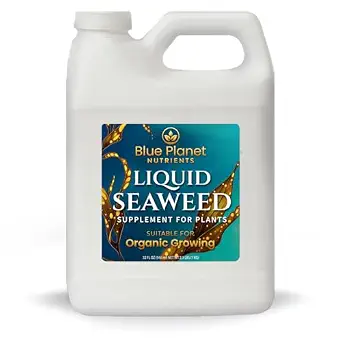 |
| Best Budget The cheapest option that still gets the job done reliably | SymbionixEco Fermented Liquid Seaweed Fertilizer (8 oz) |  |
| Highest Rated A top-rated pick with lots of positive feedback | Whitney Farms Organic Kelp Meal 2 lb. |  |
| Most Popular A crowd favorite that many people choose with confidence | Neptune's Harvest Fish & Seaweed Liquid Fertilizer (2-3-1) 36 oz |  |
Neptune's Harvest Fish & Seaweed Liquid Fertilizer (2-3-1) 1 Gallon

| Item Form | Liquid |
|---|---|
| Specific Uses For Product | Plant Growth, Root Development, Seed Development, Soil Conditioning |
| Coverage | Medium |
| Mixing Ratio | 1 ounce per gallon |
| Unit Count | 128 Fluid Ounces |
Neptune's Harvest Fish & Seaweed is a concentrated liquid fertilizer that combines hydrolyzed fish with seaweed to provide a balanced, readily available nutrient boost for garden and houseplants. It is typically diluted (manufacturer mixing ratio 1 ounce per gallon) and applied as a soil drench or foliar feed every one to three weeks depending on the plant and setting. Notable features include an all-purpose 2-3-1 NPK profile, organic ingredients that feed soil biology, and suitability for vegetables, ornamentals, trees and lawns. In practice the product supports greener foliage, stronger roots and improved flowering or fruit quality when used regularly, and the seaweed component can help plants better tolerate stress. The concentrate is easy to store and measures out for many applications, but it does require careful dilution and can have a noticeable fish odor during application. This fertilizer is best for gardeners who want an organic, broad-use feed that improves both plant growth and soil health rather than a quick chemical fix.
Best for: Gardeners seeking a single organic fertilizer they can use across vegetables, ornamentals and indoor plants who value soil health and consistent seasonal feeding.
Less Ideal for: Buyers who need a scentless product or who prefer fast-acting synthetic fertilizers for one-off quick greening.
- Organic concentrate combining hydrolyzed fish and seaweed for a balanced nutrient source
- Useful for many planting situations including vegetables, flowers, trees, lawns and houseplants
- Feeds soil microbes and can improve soil structure and long-term fertility
- Simple dilution and flexible application as soil drench or foliar feed
- Noticeable fish odor during mixing and application
- Requires regular, careful dilution which adds a small time cost
Verdict: A versatile organic fish-and-seaweed concentrate that reliably feeds plants and improves soil health across garden and indoor uses.
GS Plant Foods Liquid Kelp Fertilizer (1 Gallon)

| Unit Count | 128 Fluid Ounces |
|---|---|
| Item Form | Liquid |
| Application Method | Spray |
| Mixing Ratio | 2 ounces: 1 gallon |
| Specific Uses For Product | Lawns,Organic,Plant Food |
GS Plant Foods Liquid Kelp is a concentrated seaweed extract made from Ascophyllum nodosum that gardeners mix into water and apply by spray to lawns, shrubs, vegetables, and ornamentals. Designed for organic growing, the product is mixed at 2 ounces per gallon and the one-gallon jug claims enough concentrate to make hundreds of gallons of feed solution, which makes it practical for regular turf and landscape applications. Users will notice the fertilizer is low in synthetic nutrients and instead delivers trace minerals and carbohydrates that support root development, nutrient uptake, and stress resilience during heat or drought. Because it is a foliar and soil drench-compatible liquid, it can be used as part of a regular maintenance program or to revive stressed areas. Limitations are that it is not a complete NPK fertilizer so it should be paired with a balanced feed when plants need significant nitrogen or phosphorus for rapid growth, and application requires measuring and mixing rather than a ready-to-use spray.
Best for: Buyers who prioritize plant performance and resilience using organic inputs and who want a concentrated seaweed feed to support root health and stress tolerance across lawns and landscape plants.
Less Ideal for: Gardeners seeking a single-product, high-nitrogen fertilizer for rapid greening or heavy feeding needs should choose a balanced NPK product instead.
- OMRI listed and suitable for certified organic production
- Concentrated formula with a 2 oz per gallon mixing ratio for long-lasting supply
- Contains Ascophyllum nodosum seaweed extract plus trace minerals to support roots and stress tolerance
- Versatile application by foliar spray or soil drench for lawns, vegetables, and ornamentals
- Low macronutrient content so it is not a standalone NPK solution for aggressive growth
Verdict: Choose this concentrated, OMRI-listed kelp extract if you want an organic performance boost that strengthens roots and improves lawn and plant stress resilience.
Blue Planet Nutrients Liquid Kelp Seaweed Fertilizer Concentrate (32 oz)

| Item Form | Liquid |
|---|---|
| Unit Count | 32 Fluid Ounces |
| Specific Uses For Product | Kelp Seaweed Supplement Fertilizer For All Gardens and Plants |
| Mixing Ratio | 1:650, 1:325, 1:162 |
This liquid kelp concentrate is a versatile transplant and growth booster derived from cold-water Ascophyllum nodosum. Gardeners use it as a root drench, foliar spray, transplant soak, or reservoir additive to encourage rapid root development and help plants recover from transplant shock. The product is highly concentrated so a 32 oz bottle dilutes to hundreds of gallons of feed at recommended rates, which makes regular applications affordable for large beds or repeated transplant cycles. Notable features include a pH-neutral, non-clogging formula suitable for seedlings through flowering and compatibility with soil, coco, hydroponic, and aeroponic systems. Practical benefits are stronger roots, improved stress tolerance to heat and drought, and potential yield and flavor improvements in vegetables and herbs. Limitations are that it is a seaweed supplement rather than a complete fertilizer so it should be paired with a balanced nutrient program when plants need specific NPK feeding, and users must follow dilution guidelines carefully to avoid overuse.
Best for: Gardeners and growers who prioritize vigorous transplant recovery and fast root establishment and who plan regular supplemental feedings across beds, containers, or hydro systems.
Less Ideal for: Casual gardeners seeking an all-in-one fertilizer or anyone wanting a single product to meet complete macronutrient needs without pairing it with a balanced nutrient program.
- High concentration stretches one quart into up to 470 gallons of feed making it cost-effective for repeated transplanting
- Derived from Ascophyllum nodosum with natural growth hormones, trace minerals, and amino acids to stimulate root growth
- 100% soluble and pH-neutral so it works in soil, hydroponics, coco, and foliar applications without clogging
- Safe for seedlings to harvest allowing use as a gentle transplant soak and regular weekly applications
- Not a complete NPK fertilizer so you will need to combine it with base nutrients for full feeding schedules
- Requires careful dilution and dosing to match application (multiple recommended mixing ratios)
Verdict: Use this concentrated liquid kelp when you want an effective, budget-friendly transplant and root stimulator to speed recovery and promote strong root systems.
SymbionixEco Fermented Liquid Seaweed Fertilizer (8 oz)

| Item Form | Liquid |
|---|---|
| Application Method | Soil Drench, Foliar Spray |
| Specific Uses For Product | Growth Promotion, Soil Revitalization, Root Development, Yield Improvement, Foliar Feeding |
| Mixing Ratio | Soil: 1–2 fl oz/gal; Foliar: 0.5–1 fl oz/gal |
This 8-ounce bottle of fermented liquid seaweed is a concentrated kelp extract intended as a gentle, organic growth booster for vegetables, herbs, flowers, trees and houseplants. It is used diluted as a soil drench (1–2 fl oz per gallon) or foliar spray (0.5–1 fl oz per gallon) to encourage root vigor, flowering, transplant recovery and tolerance to heat or drought. Notable features include a low-odor, wine-like fermentation profile that makes it practical for indoor use and seed starting, and a microbial inoculant included in the ingredient list for added soil activity. Practical benefits are easy dilution, broad plant compatibility, and the ability to pair with other organic fertilizers to round out nutrition. Limitations are small bottle volume for regular garden use and no guaranteed nutrient analysis levels on the label, so heavier-feeding crops may need supplemental fertilizer and more frequent applications for measurable yield gains.
Best for: Gardeners who prefer organic, low-odor fertilizers and want a simple, concentrated kelp product to boost root health and stress tolerance in vegetables, ornamentals, and houseplants while keeping costs modest.
Less Ideal for: Large-scale vegetable growers or those seeking a complete, quantified nutrient feed who need larger volumes or exact NPK formulations.
- Fermented kelp extract supports root growth and stress resilience.
- Low-odor formulation suitable for indoor use and seed starting.
- Flexible application: soil drench or foliar spray with clear dilution rates.
- Includes microbial inoculant to help soil activity and plant uptake.
- Small 8 fl oz bottle may require frequent repurchasing for larger gardens.
- Does not list specific nutrient concentrations or NPK values for precise feeding plans.
Verdict: A compact, low-odor fermented kelp concentrate that provides an easy organic boost to roots and stress tolerance for small gardens and houseplant collections.
Whitney Farms Organic Kelp Meal 2 lb.

| Item Form | Granules |
|---|---|
| Specific Uses For Product | Vegetables |
| Application Method | Work into soil |
| Coverage | 2 lbs. |
This 2 lb. kelp meal is a straightforward organic soil amendment intended to boost root strength and overall plant resilience. It comes as granules you work into garden beds, around root balls when planting, or into container mixes then water to activate. The listed NPK of 0.7-0.1-2 plus secondary nutrients like calcium and magnesium make it useful as a steady, low-dose feed and a way to add organic matter and micronutrients without harsh chemicals. It is most effective when combined with other targeted amendments, for example pairing it with a phosphorus source at planting or a nitrogen source for leafy growth. Directions to incorporate 6 to 8 inches deep for new plantings and to avoid piling against stems are practical and help prevent localized salt build-up. Expect gradual benefits rather than an immediate green-up since kelp meal releases nutrients slowly. If you need an all-in-one high-N or fast-release fertilizer, this product will not replace those roles but is a reliable organic supplement for long-term soil health.
Best for: Gardeners who prioritize steady, organic soil improvement and want a dependable supplement to support roots and plant resilience across vegetables, flowers, and shrubs.
Less Ideal for: Growers who need quick, high-nitrogen or fast-release feeding for rapid growth or immediate greening should choose a different product.
- Provides a natural source of potassium and micronutrients to support root development
- Slow-release granules suitable for mixing into soil and container media
- Works as a soil conditioner to add organic matter and improve plant resilience
- Simple, easy-to-follow application instructions for new and established plants
- Low NPK values mean it is not a primary fast-acting fertilizer for rapid growth
- Benefits are gradual and require repeated applications for noticeable changes
Verdict: Choose this kelp meal when you want a reliable organic supplement to slowly build root strength and long-term soil health.
Neptune's Harvest Fish & Seaweed Liquid Fertilizer (2-3-1) 36 oz

| Item Form | Liquid |
|---|---|
| Mixing Ratio | 2:3 |
| Specific Uses For Product | Plant Growth |
| Liquid Volume | 946 ml |
Neptune's Harvest Fish & Seaweed Liquid Fertilizer is a concentrated organic plant food that mixes with water for use as a soil drench or foliar feed. It is typically diluted (manufacturer directions give roughly 1 fl oz per gallon for outdoor use and 1 tablespoon per gallon for houseplants) and applied every 1 to 3 weeks depending on the crop. The formula combines hydrolyzed fish and seaweed to deliver nitrogen, micronutrients, and seaweed-derived growth compounds in a plant-ready form, which helps green growth, flowering color, and vegetable flavor. Because it is a liquid concentrate it is easy to measure and applies evenly, and regular use can improve soil biology and structure over time. Limitations are that it is low in phosphorus and potassium relative to some specialty bloom or fruit formulas and it has an odor typical of fish-based fertilizers that some users may find strong. This product suits gardeners who want an effective, organic regular feed that supports both potted houseplants and garden beds.
Best for: Gardeners seeking a reliable, organic everyday fertilizer that simplifies feeding for a mixture of houseplants, vegetables, flowers and shrubs and who value soil health as well as plant vigor.
Less Ideal for: Growers who need a high-phosphorus bloom booster or a fertilizer formulated specifically for fruit set or lawns should look for a targeted specialty product instead.
- Organic concentrate blending hydrolyzed fish and seaweed for plant-ready nutrients
- Versatile application as soil drench or foliar feed for indoor and outdoor plants
- Supports soil biology and structure with regular use
- Easy-to-measure mixing ratios for routine feeding
- Has a strong fish odor that some users may find unpleasant
- Lower phosphorus and potassium compared with specialized bloom or fruit formulas
Verdict: A dependable organic liquid concentrate that provides balanced, plant-ready nutrients and improves soil health for routine feeding of mixed garden and houseplants.
Choosing the Right Organic Seaweed Fertilizer: Key Factors to Consider
Extract Strength and Source
Seaweed extracts vary from weak liquid teas to concentrated hydrolyzed formulas. Extract strength determines dilution ratios and how often you need to apply the product. Stronger concentrates let you treat larger areas with less volume, but they require careful measurement to avoid leaf burn when used as a foliar spray.
Source matters because different seaweed species offer different suites of trace minerals and natural hormones. Look for products that list the seaweed species or state 'kelp extract' versus generic 'seaweed' so you understand what bioactives are likely present. Knowing the extraction method – mechanical, cold-processed, or hydrolyzed – helps predict how readily the plant can use the compounds.
Application Method and Dilution
Seaweed extracts can be applied as a soil drench, foliar feed, or root dip for transplants. The method affects uptake speed and the amount of product used per application. Foliar sprays deliver quick foliar absorption for stress recovery, while soil drenches support root growth and microbial activity.
Dilution clarity is important. Gardeners need explicit ratios for common container sizes and bed areas to avoid under- or over-applying. Products with flexible dilution guidance let you adapt applications for seedlings, established perennials, vegetables, and ornamental containers without guesswork.
Compatibility with Other Fertilizers and Biologicals
Many gardeners use seaweed extracts alongside compost teas, granular fertilizers, or microbial inoculants. Compatibility reduces the risk of chemical interactions that can reduce efficacy or harm plants. Good products provide compatibility notes or mixing instructions so users can safely combine seaweed extract with common inputs like phosphate fertilizers or beneficial microbes.
When compatibility guidance is absent, gardeners should perform a small jar test before mixing larger volumes. Consider scheduling seaweed applications separately from aggressive synthetic feeds if guidance is unclear.
Labeling for Edible Crops and Safety
If you grow vegetables or herbs, choose seaweed fertilizers labeled safe for edible crops and that provide reentry and harvest interval guidance when applicable. Proper labeling indicates the manufacturer considered field use on food plants and supplies instructions to avoid residue risks.
Safety information should cover skin contact, eye protection when spraying, and storage away from direct sunlight. Clear labels reduce uncertainty when using the product in family gardens, community plots, or container kitchens.
Packaging Size and Stability
Liquid seaweed extracts come in a range of sizes from small bottles to bulk jugs. Smaller containers are convenient for balcony gardeners and occasional use, while larger sizes are more economical for big beds but require attention to storage conditions. Packaging that protects the product from light and air helps preserve active compounds.
Stability guidance such as 'refrigerate after opening' or recommended shelf life helps prevent wasted product. Consider whether you will use the entire container within the recommended period to avoid degradation and loss of potency.
How Seaweed Helps Plants Grow
Seaweed extract supplies soluble trace minerals, natural carbohydrates, and hormone-like compounds such as cytokinins and auxins. Those compounds do not replace balanced NPK fertilizer but they support stronger root systems, more resilient seedlings, and improved tolerance to drought and transplant shock.
Gardeners typically notice better leaf turgor, faster recovery after stress, and more vigorous root branching when using seaweed on a regular schedule. Because many of the benefits are physiological rather than nutritional, results are cumulative and often most visible over a season rather than after a single application.
- Foliar sprays deliver quick stress-relief and can be used during heat or drought spells.
- Soil drenches feed roots and soil microbes, improving nutrient uptake over time.
- Regular low-dose applications are safer than infrequent heavy doses.
Timing and Frequency for Common Garden Uses
Use seaweed extract at transplanting to stimulate root establishment. A root dip or light soil drench at planting gives young roots access to bioactive compounds right away. For established vegetables and ornamentals, regular foliar feeds every 2 to 4 weeks during the growing season are common.
Apply more frequently during active growth phases or after stress events such as heavy pruning, heat waves, or pest pressure. For seedlings and young transplants, reduce concentration and increase frequency to avoid overloading delicate tissues.
- Seedlings: very diluted foliar mist every 7 to 14 days.
- Transplants: root dip at planting plus a follow-up drench in 1 to 2 weeks.
- Mature plants: foliar or soil application every 2 to 4 weeks.
Mixing and Storage Best Practices
Mix seaweed extract with water according to label dilution and use within the recommended window. When making foliar sprays, prepare only what you will use the same day because diluted organic extracts can degrade or support microbial growth if stored.
Store unopened concentrate in a cool, dark place and keep lids tightly sealed. If the product includes instructions to refrigerate after opening, follow them to extend shelf life. Always rinse spray equipment after use to prevent residue buildup and nozzle clogging.
- Perform a small jar compatibility test before mixing with other inputs.
- Label spray bottles with dilution rate and date mixed for safe reuse.
- Avoid spraying in the heat of the day; early morning or late afternoon is best.
Using Seaweed with Containers and Small Spaces
Container gardeners benefit from seaweed's ability to support root health and microbial life in limited media. Because potting mixes drain faster and nutrients leach more quickly, regular low-dose seaweed applications can maintain plant vigor without altering fertilizer schedules dramatically.
Use lower concentrations and shorter intervals for small pots and hanging baskets. Overapplying in restricted soil volumes can lead to nutrient imbalance or salt accumulation when used alongside synthetic feeds.
- Adjust dilution for pot size: smaller pots need weaker solutions.
- Combine with slow-release granular fertilizer cautiously to avoid excess nutrients.
- Monitor runoff and flush containers occasionally to prevent buildup.
Environmental Considerations and Sourcing
Sustainably harvested seaweed reduces pressure on coastal ecosystems. Look for products that disclose harvest locations or use certified sustainable sourcing statements. Responsible sourcing also tends to correlate with clearer documentation about extraction processes.
For gardeners concerned about trace contaminants, choose organic-labeled extracts that limit added synthetic ingredients. While the extract itself supplies useful minerals, knowing the environmental practices behind the product helps ensure small-scale garden use aligns with broader stewardship goals.
- Prefer sustainably sourced or certified-organic extracts when possible.
- Avoid products with unnecessary synthetic additives if you prioritize ecological impact.
- Research the manufacturer's sourcing statements for transparency clues.
How We Chose the Best Organic Seaweed Fertilizer
We shortlisted products that demonstrably deliver concentrated seaweed extract while offering clear dosing guidance for home gardeners. Selection prioritized formulations that are certified organic or explicitly labeled for organic gardening, because extraction processes and added ingredients matter for organic use. We also favored options with broad application guidance for foliar spray and soil drench use so gardeners can match the feed method to their crop. Key evaluation criteria included extract concentration and stated nutrient or bioactive content, clarity and flexibility of application rates, compatibility with common fertilizers and biologicals, packaging that preserves product stability, and guidance for safe use on edible crops. We excluded blends dominated by synthetic NPK ratios or those that lacked transparent ingredient lists. Products that relied on unverified performance claims or offered no dilution instructions were also set aside. Our goal was to present reliable, usable seaweed extracts that gardeners can apply confidently across containers, raised beds, and in-ground planting.
FAQ
How soon will I see results after using seaweed fertilizer?
Often you will notice subtle improvements in plant vigor and recovery within one to three weeks, because many benefits are physiological rather than immediate increases in leaf greenness. Root growth and stress tolerance are cumulative and typically become more evident over several applications.
Can I mix seaweed extract with my regular fertilizer?
Usually seaweed extracts are compatible with many fertilizers, but compatibility depends on pH and ingredient interactions. When in doubt, do a small jar test or follow manufacturer guidance. Staggering applications is a safe alternative if mixing instructions are absent.
Is seaweed extract safe on edible plants and seedlings?
Most organic seaweed extracts are labeled safe for edible gardens and seedlings when used at recommended dilutions. Use very mild solutions on young seedlings and follow any reentry or harvest guidance provided on the label.
How do I avoid foliar burn when spraying seaweed?
Use the recommended dilution, avoid spraying in direct midday sun, and test a small area first. Higher concentrations and spraying during hot conditions increase the risk of leaf scorch, so apply in the cooler parts of the day.
Can seaweed replace my regular fertilizer program?
Seaweed supplements plant health but does not replace balanced NPK needs for productive vegetable gardens. Treat it as a biostimulant that improves nutrient uptake and stress resilience rather than a complete source of macronutrients.
How should I store liquid seaweed products between seasons?
Keep unopened concentrate in a cool, dark place and seal tightly after opening. Some products recommend refrigeration after opening; follow label guidance and discard any solution that shows signs of spoilage or strong off-odors.
Final Verdict
Prioritize extract concentration, clear dilution guidance, and organic or sustainable sourcing when choosing an organic seaweed fertilizer. Match application method to your garden situation: foliar sprays for rapid stress recovery and soil drenches for root and microbial support. Consider packaging size and storage needs so you can use the product before potency declines. Ultimately, use seaweed as a regular low-dose biostimulant alongside a balanced fertility program. That approach captures the benefits of natural growth hormones and trace minerals without sacrificing the macronutrient needs of productive gardens.
