

Note: This article contains affiliate links. If you click on these links and make a purchase, I may earn a small commission at no extra cost to you. This helps support my research and content. Read my full affiliate disclosure here.
Seaweed fertilizer can be a gentle, nutrient-rich way to support roots, foliage, and soil biology across gardens, containers, and vegetable beds. Choosing the right seaweed fertilizer matters because formulations differ in concentration, extraction method, and recommended application rates, which affects how often you feed and how quickly plants respond. This guide presents seven shortlisted seaweed fertilizers that represent the range of extraction styles and application formats gardeners use. We evaluated each option against practical garden concerns like nutrient balance, ease of use, coverage, and suitability for edible crops so you can pick one that fits your routine and growing goals.
Top Picks at a Glance
| Best Overall The best all-around choice for most situations | GS Plant Foods Liquid Fish & Kelp Fertilizer (1 Gallon) |  |
| Best Quality Built to a higher standard if you want something more solid | GS Plant Foods Liquid Kelp Fertilizer (1 Gallon) |  |
| Best Value The sweet spot between price and what you get | Blue Planet Nutrients Liquid Kelp (Ascophyllum nodosum) Concentrate, Quart | 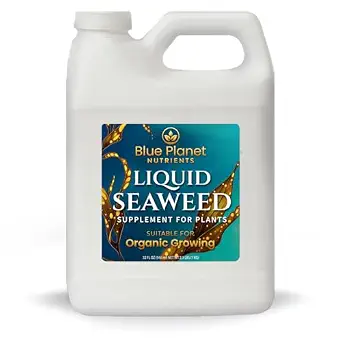 |
| Best Budget The cheapest option that still gets the job done reliably | Greenleaf Nutrients Sea-K Organic Kelp Seaweed Extract Powder (200g) |  |
| Highest Rated A top-rated pick with lots of positive feedback | Ocean's Bounty Organic Seaweed Liquid Kelp Concentrate, 16 oz |  |
| Most Popular A crowd favorite that many people choose with confidence | Neptune's Harvest Fish & Seaweed Liquid Fertilizer (2-3-1) 36 oz |  |
| Best Seller A high-volume bestseller chosen again and again | Bloom City Seaweed and Kelp Liquid Fertilizer, 32 oz |  |
GS Plant Foods Liquid Fish & Kelp Fertilizer (1 Gallon)

| Item Form | Liquid |
|---|---|
| Application Method | foliar spray or soil drench |
| Liquid Volume | 128 fluid ounces |
| Mixing Ratio | 1:128 (Indoor), 1:64 (Outdoor) |
GS Plant Foods Liquid Fish & Kelp is an organic, cold-processed concentrate intended to feed garden plants via soil drenches or foliar sprays. It mixes at recommended rates (about 2 fl oz per gallon for outdoor use) and supplies natural compounds from fresh fish hydrolysate and Ascophyllum nodosum kelp that support root strength, microbial activity, and nutrient uptake. Typical use is every 2–4 weeks on vegetables, flowers, shrubs, lawns, and even houseplants at a weaker indoor dilution. Notable features are its OMRI listing for organic growing, dual application method (foliar or drench), and a large 1 gallon volume that covers multiple feedings. Because it is a biological product, results accumulate over weeks as soil life and plant physiology respond rather than giving an immediate synthetic nutrient spike. Some gardeners may notice an initial odor and will need to follow mixing and application rates carefully to avoid overapplication. The product is straightforward to handle and pairs well with a regular feeding schedule for growers focused on improving soil biology and long-term plant performance.
Best for: Gardeners who prioritize plant performance through soil biology and want an organic, repeatable feeding program for vegetables, ornamentals, and turf.
Less Ideal for: People seeking rapid, high-analysis synthetic nutrient boosts or immediate visible change after a single application should consider a different product.
- OMRI-listed organic formula suitable for certified organic gardens
- Dual application as foliar spray or soil drench for flexible use
- Made from fish hydrolysate and North Atlantic kelp to support soil biology and root development
- Large 1 gallon concentrate provides many feedings for home gardens and hobby farms
- Biological, slow-acting nutrition that does not provide immediate synthetic nutrient spikes
- May have a noticeable fishy odor on mixing
Verdict: Buy this if you want an OMRI-listed, kelp-and-fish concentrate that builds soil biology and long-term plant performance rather than quick synthetic results.
GS Plant Foods Liquid Kelp Fertilizer (1 Gallon)

| Item Form | Liquid |
|---|---|
| Specific Uses For Product | Lawns,Organic,Plant Food |
| Application Method | Spray |
| Mixing Ratio | 2 ounces: 1 gallon |
| Liquid Volume | 128 fluid ounces |
GS Plant Foods Liquid Kelp is a 1-gallon concentrated seaweed extract intended as a regular foliar or soil drench for lawns, vegetables, flowers, shrubs and potted plants. It supplies Ascophyllum nodosum–derived kelp plus trace minerals that support chlorophyll production, root growth, and improved nutrient uptake. Use it diluted to the manufacturer mixing ratio (2 ounces per gallon) and apply by spray for foliar feeding or soil application to encourage stronger roots and better stress resilience during heat or drought. The product is OMRI listed for organic production and comes in a large concentrate that the brand says makes hundreds of gallons, which is convenient for performance-minded gardeners who want frequent, broad coverage without repurchasing often. Limitations are that it is a supplemental biostimulant rather than a complete NPK fertilizer and results depend on consistent application and correct dilution; it does not replace balanced fertilization when plants need macronutrients.
Best for: Gardeners and small-scale growers focused on plant performance who want an organic biostimulant to improve root development, stress tolerance, and bloom quality across beds or containers.
Less Ideal for: Growers who need a complete macronutrient fertilizer or instant correction of major nutrient deficiencies should choose a product formulated with specific NPK values instead.
- Concentrated formula yields a large volume of usable solution from one gallon
- OMRI listed and suitable for certified organic production
- Derived from Ascophyllum nodosum with trace minerals known to support root and foliar health
- Flexible application as foliar spray or soil drench following the provided mix ratio
- Provides trace nutrients and biostimulants but not a full NPK fertilizer
- Requires correct dilution and regular applications to see measurable benefits
Verdict: Choose this OMRI-listed kelp concentrate when you want an organic, performance-focused seaweed biostimulant to strengthen roots and improve plant resilience.
Blue Planet Nutrients Liquid Kelp (Ascophyllum nodosum) Concentrate, Quart

| Item Form | Liquid |
|---|---|
| Specific Uses For Product | Kelp Seaweed Supplement Fertilizer For All Gardens and Plants |
| Mixing Ratio | 1:650, 1:325, 1:162 |
| Ingredients | Ascophyllum Nodosum Seaweed |
Blue Planet Liquid Kelp is a super-concentrated Ascophyllum nodosum seaweed extract sold as a quart that dilutes into hundreds of gallons of ready-to-use feed. It supplies natural growth hormones, trace minerals, and amino acids to promote root development, stronger stems, and improved stress tolerance in vegetables, herbs, flowers, and houseplants. Typical use is simple: shake, dilute at the recommended ratios (from 1:650 for general use to 1:162 for heavy feeding), and apply as a root drench, foliar spray, transplant soak, or add to hydroponic reservoirs. The product is 100 percent soluble and non-clogging, which makes it easy to use across soil, coco, and hydro systems and safe for seedlings through harvest. Practical benefits include long-lasting value from high concentration, compatibility with most nutrient programs, and measurable improvements in transplant survival and drought resistance. Limitations are that it is a plant stimulant rather than a complete fertilizer so growers still need to supply macro nutrients, and precise dosing is required since it is highly concentrated.
Best for: Gardeners who prioritize efficient, value-driven inputs and want a versatile plant stimulant to strengthen roots and improve stress tolerance across soil and hydro systems.
Less Ideal for: Users seeking an all-in-one fertilizer or those who prefer ready-to-use, pre-mixed feeds instead of measuring concentrated solutions.
- Highly concentrated formula turns one quart into up to 470 gallons of feed for long-term value
- Derived from Ascophyllum nodosum with natural growth hormones and 60+ trace minerals
- 100% soluble and non-clogging so it works for soil, hydroponics, coco, and foliar sprays
- Supports root development and improves resistance to heat, cold, drought, and transplant shock
- Not a complete nutrient solution so macronutrients must be provided separately
- Requires careful dilution because small measurement errors can alter strength
Verdict: Buy this if you want a high-value, versatile liquid kelp concentrate that reliably boosts root health and plant stress resistance across multiple growing systems.
Greenleaf Nutrients Sea-K Organic Kelp Seaweed Extract Powder (200g)

| Item Form | Powder |
|---|---|
| Specific Uses For Product | Hydroponics, Soil, Plant Growth, Root Feeding and Foliar |
| Application Method | Dissolve the powder in water and apply to plants |
| Mixing Ratio | 1 tsp per 2 Gal of water |
| Unit Count | 7.05 Ounce |
Sea-K is a concentrated kelp extract powder intended to boost plant vigor, root health, and stress tolerance across soil and soilless systems. You dissolve the powder in water (manufacturer mixing ratio is 1 tsp per 2 gallons) and apply it as a foliar spray or root drench and it is compatible with greenhouse, drip irrigation, hydroponics, coco, peat and rockwool. The formula highlights high soluble potassium plus magnesium, calcium and iron and claims broad bioactive components such as cytokinins and auxins that support germination, flowering and fruit quality. As a buyer-focused practical product, its 100% water soluble form and organic certifications make it easy to integrate into regular feeding schedules and suitable for edible crops. Limitations to note are the relatively small 200 g pouch for larger plantings and the product is not registered for fertilizer use in some western states so check local rules before planning commercial application.
Best for: Smart home gardeners and small-scale growers who want an organic, easy-to-mix seaweed supplement to improve stress tolerance and crop vigor without complex application steps.
Less Ideal for: Large-scale growers or commercial operations that need bulk quantities or state-registered fertilizers should look for larger, compliant products.
- Concentrated, water‑soluble powder that mixes easily for foliar or root application
- Organic certifications suitable for organic gardening and food crops
- Compatible with many systems including hydroponics, drip irrigation and soil
- Formulation supplies potassium plus other soluble micronutrients beneficial for flowering and fruiting
- Small 200 g pack may require frequent repurchasing for medium to large gardens
- Not registered for fertilizer use in Washington, Oregon, and California which limits use in those states
Verdict: A compact, certified organic kelp extract that delivers an easy-to-use seaweed boost for home and small-scale edible gardens.
Ocean's Bounty Organic Seaweed Liquid Kelp Concentrate, 16 oz

| Item Form | Liquid |
|---|---|
| Target Species | plants |
| Liquid Volume | 16 fluid ounces |
This organic liquid kelp concentrate is a seaweed-based fertilizer meant to give plants a nutrient-rich tonic that supports deeper roots and stronger stems. It is typically diluted and applied as a drench or foliar feed for container plants, garden beds, lawns, and indoor plants to encourage greener leaves and improved vigor. Notable features include OMRI certification and a blend of tropical red and brown seaweeds harvested for micronutrients, which makes it appealing for growers who prefer organic inputs. Practical benefits for potato growers include improved root development and stress resilience during tuber formation when used as a supplement to a balanced NPK program. Limitations are that it is not a complete fertilizer by itself and provides primarily micronutrients and biostimulants rather than the higher nitrogen or potassium potatoes need for vigorous foliage and tuber bulking. Expect to use it regularly as a complementary treatment rather than a sole source of fertility.
Best for: Gardeners who prioritize reliable organic inputs and want a consistent, certified seaweed biostimulant to support root health and plant resilience alongside their regular potato fertilization routine.
Less Ideal for: Growers looking for a single product to meet primary nitrogen or potassium needs for high-yield potato production should choose a balanced NPK fertilizer instead.
- OMRI certified organic seaweed concentrate suitable for organic gardening
- Formulated to stimulate root development and strengthen stems
- Works as a foliar spray or soil drench for versatile application
- Sustainably sourced seaweed with community support in harvesting regions
- Not a complete NPK fertilizer so additional fertilization is required for crops like potatoes
- 16 oz bottle may require frequent repurchases for larger gardens
Verdict: Use this OMRI‑certified liquid kelp as a dependable organic root and vigor booster alongside a proper NPK program for healthier potato plants.
Neptune's Harvest Fish & Seaweed Liquid Fertilizer (2-3-1) 36 oz

| Item Form | Liquid |
|---|---|
| Mixing Ratio | 2:3 |
| Specific Uses For Product | Plant Growth |
| Liquid Volume | 946 ml |
Neptune's Harvest Fish & Seaweed Liquid Fertilizer is a concentrated organic plant food that mixes with water for use as a soil drench or foliar feed. It is typically diluted (manufacturer directions give roughly 1 fl oz per gallon for outdoor use and 1 tablespoon per gallon for houseplants) and applied every 1 to 3 weeks depending on the crop. The formula combines hydrolyzed fish and seaweed to deliver nitrogen, micronutrients, and seaweed-derived growth compounds in a plant-ready form, which helps green growth, flowering color, and vegetable flavor. Because it is a liquid concentrate it is easy to measure and applies evenly, and regular use can improve soil biology and structure over time. Limitations are that it is low in phosphorus and potassium relative to some specialty bloom or fruit formulas and it has an odor typical of fish-based fertilizers that some users may find strong. This product suits gardeners who want an effective, organic regular feed that supports both potted houseplants and garden beds.
Best for: Gardeners seeking a reliable, organic everyday fertilizer that simplifies feeding for a mixture of houseplants, vegetables, flowers and shrubs and who value soil health as well as plant vigor.
Less Ideal for: Growers who need a high-phosphorus bloom booster or a fertilizer formulated specifically for fruit set or lawns should look for a targeted specialty product instead.
- Organic concentrate blending hydrolyzed fish and seaweed for plant-ready nutrients
- Versatile application as soil drench or foliar feed for indoor and outdoor plants
- Supports soil biology and structure with regular use
- Easy-to-measure mixing ratios for routine feeding
- Has a strong fish odor that some users may find unpleasant
- Lower phosphorus and potassium compared with specialized bloom or fruit formulas
Verdict: A dependable organic liquid concentrate that provides balanced, plant-ready nutrients and improves soil health for routine feeding of mixed garden and houseplants.
Bloom City Seaweed and Kelp Liquid Fertilizer, 32 oz

| Item Form | Liquid |
|---|---|
| Specific Uses For Product | Lawn,Organic |
| Application Method | watering, root dips, foliar sprays, compost teas |
| Mixing Ratio | 5mL per gallon (veg), 5-10mL per gallon (bloom) |
Bloom City Seaweed and Kelp is a concentrated liquid kelp fertilizer designed for regular use as a watering supplement or weekly foliar spray. It mixes at low rates (about 1 teaspoon per gallon during vegetative growth, up to 1-2 teaspoons per gallon in bloom, and a stronger foliar mix) so small bottles treat many waterings. Typical uses are root dips, adding to a watering can for potted plants and garden beds, or applying with a hose-end sprayer for larger areas. The formula emphasizes root health, transplant recovery, and improved nutrient uptake thanks to multiple algae species and added minerals. Practical benefits include gentle, organic nutrition that can be used with each watering and flexible application methods for both hobbyist and small-scale garden use. Limitations are that it is a supplement rather than a complete fertilizer so it does not provide complete NPK ratios on its own, and users must follow dilution guidelines to avoid overapplication.
Best for: Gardeners who prefer conservative, low-risk organic supplements and want an easy-to-use kelp tonic for improving root health and easing transplant stress.
Less Ideal for: Growers looking for a single product to supply full macronutrient needs or large-scale commercial operations needing bulk-volume fertilizer solutions.
- Organic seaweed and kelp base supports root growth and stress resilience.
- Low dilution rates make the concentrate economical to use.
- Versatile application modes: soil drench, foliar spray, root dips, and hose-end use.
- Formulated for indoor and outdoor plants so it fits many garden setups.
- Not a complete NPK fertilizer so additional feeding may be required for balanced nutrition.
Verdict: A safe, flexible organic kelp concentrate that gives risk-averse gardeners an easy way to boost roots and help transplants recover.
Choosing the Right Seaweed Fertilizer: Key Factors to Consider
Extraction Type and Concentration
Seaweed fertilizers come as liquid extracts, concentrated kelp liquors, or dried meals. Liquid extracts deliver soluble trace elements and bioactive compounds immediately for foliar sprays or soil drenches, while concentrates require dilution and offer stronger pulses of growth stimulants per use. Dried seaweed meals release nutrients slowly as they break down in soil, making them better for long-term soil building rather than quick foliar feeding.
Understanding extraction type helps you match the product to your schedule. If you prefer regular foliar sprays or weekly root drenches, a soluble extract or concentrated kelp liquor gives predictable results. If you want a low-maintenance amendment that improves soil structure over months, a seaweed meal applied at planting or as a side dress may be the better choice.
Nutrient Profile and Micronutrients
Seaweed is typically low in primary macronutrients compared with synthetic fertilizers, but it supplies potassium, trace minerals, and plant growth regulators like cytokinins and auxins. Look for labels that list N-P-K values even if low, along with guaranteed levels of key trace elements such as iron, manganese, and zinc. A clear nutrient panel makes it easier to plan complementary feedings when vegetables or heavy feeders need more nitrogen or phosphorus.
For edible gardens, prefer products with straightforward labeling and no added synthetic chemicals. Micronutrient-rich seaweed feeds are especially useful when soil tests show mineral gaps or when growing in containers where nutrient reserves are limited.
Application Method and Dosing Accuracy
Different formats require different equipment and time. Ready-to-use liquids are convenient but can be more expensive per feed. Concentrates need careful dilution-accurate measuring tools and clear label instructions prevent overapplication. Dry meals are simple to spread but provide less immediate plant response.
Dosing accuracy matters because excessive application of any fertilizer can stress plants or upset soil microbial balance. Choose a format that fits the scale of your garden and your comfort with measuring and mixing. If you spray frequently, a product that dissolves cleanly and leaves no residue is preferable.
Impact on Soil Biology and Organic Compatibility
Seaweed feeds often stimulate beneficial soil microorganisms and improve soil structure by adding organic matter and soluble carbohydrates that microbes use. Products labeled for organic gardening typically avoid synthetic additives and preservatives that harm soil life. When restoring tired beds or building new planting mixes, seaweed can accelerate microbial activity and enhance nutrient cycling.
If you manage a vegetable patch, check for organic certification or ingredient transparency. Some extracts include solvents or stabilizers that reduce microbial benefits. Prefer formulations that emphasize natural extraction and minimal processing to maximize positive effects on soil biology.
Suitability for Containers, Raised Beds, and In-Ground Planting
Containers and raised beds have limited nutrient reserves and often benefit from regular, lower-dose feedings. Liquid seaweed used as a supplemental feed every two to four weeks can keep container plants vigorous without salt buildup. In-ground beds have more buffering capacity and may do well with periodic side dressing of seaweed meal plus occasional liquid drenches.
Consider how often you are willing to feed and whether you need quick top-ups or slow-release soil improvement. For balcony gardeners, soluble, low-salt extracts applied by spray or drench are typically easiest to manage.
Safety for Edible Crops and Residue Concerns
Seaweed is generally safe for edible plants, but formulation matters. Avoid products with unspecified additives or high salt content that could affect young seedlings or container-grown produce. Labels that specify use on vegetables and herbs, plus clear rinsing or withholding instructions before harvest when applicable, are preferable.
If you grow microgreens or leaf crops, use dilute foliar applications and monitor for leaf burn under strong sun. For root crops, focus on soil application and ensure the product does not contain persistent chemicals or heavy metals beyond allowable limits.
How Seaweed Stimulates Plant Growth
Seaweed supplies not only trace elements but also natural plant hormones and soluble carbohydrates that help plants cope with stress. When applied as a foliar spray, these compounds can encourage leaf expansion and quicker recovery after transplanting or drought stress. Root drenches deliver similar benefits directly to the rhizosphere where microbes and roots interact.
- Cytokinins and auxins in extracts support cell division and root development
- Soluble sugars in extracts feed beneficial microbes in the root zone
- Potassium from seaweed helps overall plant vigor and stress tolerance
When to Use Liquid Extracts Versus Dry Meal
Use liquid extracts during the active growing season for quick stimulation and foliar feeding. Apply diluted solutions every two to four weeks for most ornamentals and edible plants. Save dry seaweed meal for pre-plant soil conditioning or autumn bed building when slow-release organic matter is desired.
- Liquids: quick uptake, foliar options, frequent feeding
- Meals: slow release, soil conditioning, minimal immediate response
Mixing and Applying Seaweed Safely
Always follow label dilution rates and test a small area or plant before widespread foliar application to check for sensitivity. Mix concentrates in clean containers and use fresh solution because some extracts can oxidize and lose potency if stored after dilution. For sprays, avoid applying under midday sun to reduce leaf scorch risk.
- Measure concentrates carefully with a syringe or measuring cup
- Apply sprays in morning or late afternoon for best absorption
- Rinse sprayers after use to prevent residue build-up
Combining Seaweed with Other Fertilizers and Amendments
Seaweed is most effective as a complement rather than a complete nutrient program. Use it alongside balanced organic nitrogen sources or phosphorus-rich amendments when crops demand higher macronutrients. Avoid mixing with strong alkaline or acidic solutions without guidance, as that can reduce the activity of bioactive compounds.
- Pair seaweed with compost teas or mild organic feeds for balanced nutrition
- Stagger applications when using high-salt inputs to prevent accumulation
- Monitor plant response and adjust feed frequency accordingly
Storing Seaweed Products
Store dry meals in a cool, dry place away from pests and moisture. Keep concentrated liquids sealed and out of direct sunlight to preserve active compounds. Note any shelf-life info on the label and avoid using diluted solutions beyond recommended time frames.
- Keep powders in breathable bags or sealed containers
- Rotate stock to use older product first
- Discard diluted liquid solutions after 24 to 48 hours if not used
How We Chose the Best Seaweed Fertilizer
We selected products that reflect the main seaweed fertilizer approaches gardeners encounter: whole-seaweed extracts, concentrated kelp liquors, and dry seaweed meal suitable for side-dressing. Our editorial filters emphasized real-world application and safety for edible gardens. Key evaluation criteria included extraction type and nutrient content, application method and dose control, micronutrient and growth-stimulating compound levels, and compatibility with soil biology and organic practices. We reviewed manufacturer-supplied ingredient details and typical recommended use cases to judge how easy each product is to dose accurately and integrate into routine feedings. Exclusions included blends where seaweed was an insignificant component or proprietary mixes with undisclosed active concentrations. We also excluded formulations intended only for industrial or non-garden use. The chosen criteria focus on attributes gardeners can verify and measure: clear labeling of nitrogen-phosphorus-potassium equivalents, visible provenance of source seaweed when available, solubility for foliar or soil drench use, and suitability for edible planting and container culture.
FAQ
Can I use seaweed fertilizer on seedlings and transplants?
Yes. Dilute liquid seaweed at lower-than-normal strength for seedlings and use as a gentle root drench or foliar mist to reduce transplant shock. Avoid concentrated applications until plants are well established.
How often should I apply seaweed fertilizer to vegetables?
Frequency depends on product format. Liquid extracts are often used every two to four weeks during active growth. Dry meals can be applied once at planting or a couple of times per season for soil-building benefits.
Is seaweed fertilizer safe for edible crops?
Generally yes, when you choose formulations labeled for edible gardens and follow dilution instructions. Avoid products with unspecified additives or unusually high salt content to prevent residue issues.
Will seaweed replace my regular fertilizer program?
Not usually. Seaweed supplies trace elements and growth stimulants but is low in primary macronutrients. It works best as a supplement to a balanced feeding plan or as part of an organic soil-building approach.
Can I mix seaweed extract with other garden sprays?
Often you can, but check label instructions. Mild mixes with low-strength organic feeds or biologicals are usually safe. Avoid combining with strong acids, alkalines, or concentrated mineral salts without specific guidance.
Final Verdict
Seaweed fertilizer is a versatile tool for gardeners who want to boost root development, stress resilience, and soil microbial activity without relying on strong synthetic feeds. Prioritize the extraction type and dosing style that fit your routine, and check nutrient and additive labels if you grow edible crops. For quick plant stimulation choose soluble extracts; for long-term bed improvement opt for seaweed meals. With those tradeoffs in mind, select the format that matches how often you will feed and whether you need immediate foliar results or gradual soil conditioning.
