

Note: This article contains affiliate links. If you click on these links and make a purchase, I may earn a small commission at no extra cost to you. This helps support my research and content. Read my full affiliate disclosure here.
Choosing the right reusable seed starting tray matters because it affects how seedlings develop before they ever go into your garden or containers. A well-made tray controls moisture, supports healthy roots, and survives repeated use so you spend less time replacing cracked plastic or struggling with soggy soil. This guide covers seven shortlisted reusable seed starting trays that performed well against practical gardener priorities like drainage, material longevity, and ease of transplanting. Read on for clear evaluation criteria and practical notes that make choosing the right tray for your growing space faster and less fussy.
Top Picks at a Glance
| Best Overall The best all-around choice for most situations | Bonviee 5-Pack Seed Starter Trays with 12-LED Grow Lights |  |
| Best Quality Built to a higher standard if you want something more solid | Hemlock Home Brewing 1020 Seed Starting Trays, 5-Pack |  |
| Best Value The sweet spot between price and what you get | Gardzen 5-Pack 40-Cell Seed Starter Tray Kits with Vented Domes and Bases |  |
| Best Budget The cheapest option that still gets the job done reliably | The Hydroponic City 36-Pack 6-Cell Seed Starter Trays with Plant Stakes |  |
| Highest Rated A top-rated pick with lots of positive feedback | Bootstrap Farmer 5-Pack 1020 Seed Starter Trays (No Drain Holes) |  |
| Most Popular A crowd favorite that many people choose with confidence | Burpee SuperSeed 36-Cell Reusable Silicone Seed Starting Tray |  |
| Best Seller A high-volume bestseller chosen again and again | Burpee SuperSeed 16-Cell Reusable Silicone Seed Starting Tray |  |
Bonviee 5-Pack Seed Starter Trays with 12-LED Grow Lights

| Included components | 5 x 12‑cell trays, 5 x elevated domes with 12‑LED lights, 1 × 1-to-5 USB cable, saucers, 10 labels |
|---|---|
| Material Type | PET, PP |
| Indoor Outdoor Usage | Indoor |
| Number of Pieces | 30 |
| Size | 5 Pack, with Light |
This Bonviee 5‑pack is a compact, ready-to-use seed starting system for indoor gardeners who want straightforward germination and early growth monitoring. Each unit includes a clear 12‑cell insert that sits in a green base tray with drainage holes, an elevated humidity dome with an adjustable vented light cover, and a dome-mounted panel with 12 full‑spectrum LEDs. The transparent inserts make it easy to check moisture and early root development without disturbing seedlings, while drainage and the saucer-style base support bottom watering and reduce overwatering risk. The five light covers run from a single 1-to-5 USB cable so you can power all trays from one adapter (adapter not included). There is no built-in timer and the lights require a 5V/2A adapter, so you will need to add a powered USB wall adapter or external timer if you want automated light cycles. Trays are made from recyclable plastics and are sized for windowsills, grow tents, and compact indoor setups.
Best for: Buyers who want a compact, all-in-one starter kit to germinate many seeds indoors and who value easy monitoring and built-in supplemental lighting for windowsills or small grow spaces.
Less Ideal for: Gardeners who need large commercial-scale capacity or who want a fully automated plug-and-play system with included power adapter and timer should consider larger or more feature-rich options.
- Five 12‑cell clear inserts provide 60 starter cells total for starting multiple varieties at once
- Integrated 12‑LED full‑spectrum lights per dome add reliable supplemental light for indoor seedlings
- Clear inserts and elevated domes allow easy moisture and root observation without disturbing plants
- Drainage holes and saucer-style bases support bottom watering and help prevent overwatering
- Single 1-to-5 USB cable powers all five lights from one source for tidy setup
- Power adapter and timer are not included so you must supply a compatible 5V/2A USB adapter and any automation
- No built-in timer means manual scheduling of light cycles
- Plastic components may need occasional cleaning to remain reusable and disease-free
Verdict: A convenient five‑unit starter kit that combines transparent cells, drainage and integrated LED domes to simplify indoor seed starting on a windowsill or in a small grow space.
Hemlock Home Brewing 1020 Seed Starting Trays, 5-Pack

| Material Type | Plastic, Polypropylene (PP) |
|---|---|
| Unit Count | 5 Count |
| Plant or Animal Product Type | seed |
| Indoor Outdoor Usage | Indoor |
These 1020 seed starting trays are a straightforward, heavy-duty option for anyone who starts seeds, grows microgreens, or runs small propagation projects. Made from extra-thick polypropylene, the five-pack feels rigid under weight and resists cracking and sagging so trays stay usable across multiple seasons. They are designed for tabletop indoor use, stack neatly for storage, and come without drainage holes which makes them easy to line for hydroponics or to use as drip trays. Practical benefits include reusable construction that tolerates handling and drops, compatibility with standard 1020 flats and greenhouse racks, and a simple plastic surface that cleans easily between cycles. Limitations to note are the lack of built-in cells or a dome lid, so you will need inserts or a humidity dome for individual seedlings and germination control, and the trays are intended for indoor use only. For growers focused on consistent, repeatable seed starting, these trays deliver robust, reusable performance but require pairing with inserts or covers for full seed-start rigs.
Best for: Growers who prioritize long-lasting, repeatable seed-starting performance and need sturdy 1020-format trays for regular use, microgreen runs, or propagation cycles.
Less Ideal for: Casual gardeners who want a complete starter kit with cells and lids included or those needing outdoor-rated trays should consider other options.
- Extra-thick polypropylene construction resists cracking and sagging for multi-season reuse
- Standard 1020 footprint stacks for compact off-season storage and fits common racks
- Smooth, unfinished surface is easy to clean between uses
- Five-pack provides enough trays to run multiple batches or larger starter setups
- No drainage holes or individual cell inserts included, so additional accessories are needed for some workflows
- Intended for indoor tabletop use only, not rated for outdoor exposure
Verdict: A rugged, reusable five-pack of 1020 trays built for growers who need dependable, multi-season seed-starting performance.
Gardzen 5-Pack 40-Cell Seed Starter Tray Kits with Vented Domes and Bases

| Unit Count | 5 Count |
|---|---|
| Included Components | Tray, Base, Humidity Dome |
| Material Type | Plastic |
| Other Special Features of the Product | Drainage Hole, Vented Dome |
| Plant or Animal Product Type | seed |
These Gardzen kits provide a complete, budget-friendly setup for starting seeds and propagating cuttings. Each kit includes a 40-cell insert tray, a base to catch drainage, and a clear dome with two adjustable vents so you can control humidity and airflow during germination. The plastic construction is lightweight and durable for repeated seasons, and the integrated drainage holes help prevent waterlogging while keeping surfaces clean. Typical use is straightforward: fill cells with seed mix, place the insert in the base, set the dome, and adjust vents as seedlings emerge; domes also work on a heating mat for earlier starts. The main limitations are basic materials and a simple design that lacks rigid stacking features for heavy greenhouse racks, and the trays are single-level so they occupy bench space when in use. Overall this kit is a practical, no-frills solution that simplifies seed starting for hobby gardeners who want consistent humidity control and tidy drainage without specialist equipment.
Best for: Home gardeners who want a practical, ready-to-use seed starting system that controls humidity and reduces mess while maximizing seed counts per tray.
Less Ideal for: Commercial growers or anyone needing heavy-duty, stackable nursery trays or multi-tier propagation systems.
- Complete kit with tray, base and clear dome for immediate use
- Adjustable vents let you manage humidity and airflow during germination
- Drainage holes and base collect runoff to prevent overwatering and mess
- Generous 40 cells per tray reduce root crowding for healthier seedlings
- Lightweight plastic is durable enough for repeated seasonal use
- Basic plastic construction is not reinforced for heavy stacking or commercial benches
- Single-level trays require bench space and do not nest compactly when in use
Verdict: A simple, all-in-one 5-pack seed tray kit that gives home gardeners reliable humidity control and tidy drainage to start lots of seedlings efficiently.
The Hydroponic City 36-Pack 6-Cell Seed Starter Trays with Plant Stakes

| Unit Count | 36 Count |
|---|---|
| Set Name | 36 Trays (216 Cells) |
| Material Type | Plastic |
| Other Special Features of the Product | Drainage Hole |
| Indoor Outdoor Usage | Indoor |
These seed starter trays provide a low-cost, practical way to start many seedlings indoors. The set includes 36 six-cell trays (216 cells total) and a few plant stakes for labeling, so you can organize large batches of flower, herb, succulent, or vegetable seeds. Each cell is designed with roughly 1.5 inch square by 2.25 inch depth to encourage root development and the trays have drainage slits to help avoid overwatering. Made of unfinished plastic, they are lightweight and reusable across seasons, making them a simple option for hobby growers and community gardens. Because they are tabletop style and sized like common 6-cell inserts, they fit standard seed-starting workflows and trays. Limitations are the basic plastic construction which can warp under high heat and the set includes only five stakes for 36 trays, so you may want additional labels and a humidity dome if you need more precise germination control.
Best for: Budget-focused gardeners who want to start many seedlings at once and prefer a straightforward, reusable tray system for indoor germination.
Less Ideal for: Growers who need heavy-duty commercial trays, integrated humidity domes, or precise temperature control should consider more advanced systems.
- Large quantity: 36 trays (216 cells) lets you start many varieties or large batches at once.
- Reusable plastic construction supports multiple seasons of use when handled carefully.
- Drainage slits in each tray reduce risk of overwatering and promote healthier seedlings.
- Cell depth designed to encourage root development for stronger transplants.
- Basic unfinished plastic may warp or crack if exposed to high heat or rough handling.
- Only five plant stakes included, so additional labeling supplies are usually needed.
Verdict: If you need an economical, high-volume starter solution for indoor seedlings, this 36-pack delivers reusable trays and built-in drainage to get many plants off to a good start.
Bootstrap Farmer 5-Pack 1020 Seed Starter Trays (No Drain Holes)

| Material Type | Plastic |
|---|---|
| Other Special Features of the Product | No Drainage Holes |
| Unit Count | 5 Count |
| Indoor Outdoor Usage | Outdoor |
| Capacity | 35 pounds |
These Bootstrap Farmer 1020 trays are built for growers who run a busy propagation bench and prefer bottom watering. The set includes five opaque, solid-bottom trays sized to nest 1020 inserts or hold standard 3.3 inch pots, so you can keep media and water separated for consistent moisture without mess. Made from tough, BPA-free polypropylene, the trays resist warping and are labeled as manufactured in the USA to withstand repeated use in greenhouse racks. The lack of drain holes is the standout feature: it lets you set up tray-in-tray or capillary mat systems and blocks light to reduce algae during germination. That design does mean you cannot use them for top-draining setups unless you drill holes or pair them with a perforated insert. They are shallow at 2.5 inches, which is ideal for seedlings and microgreens but not for larger transplants. Overall these trays favor growers focused on reliability, repeatable bottom-watering workflows, and heavier-duty, long-lasting gear rather than casual, single-season use.
Best for: Growers who run frequent seed-starting cycles and prioritize reliable, bottom-watering workflows and durable equipment for a productive bench.
Less Ideal for: Casual gardeners who want simple top-draining trays out of the box or anyone needing deeper trays for larger transplants.
- Solid-bottom design enables clean bottom-watering and reduces algae by blocking light
- Durable, food-safe polypropylene construction suited to repeated greenhouse use
- Fits standard 1020 cell trays and 3.3 inch pots so it integrates with common propagation systems
- Five-pack provides enough trays for staging multiple batches or continuous propagation
- No factory drain holes limits use to bottom-watering or requires modification for top drainage
- Shallow 2.5 inch depth is not suitable for larger seedlings or deep-rooted starts
Verdict: Choose these heavy-duty, solid-bottom 1020 trays when you need reliable, bottom-watering seed propagation that stands up to repeated greenhouse use.
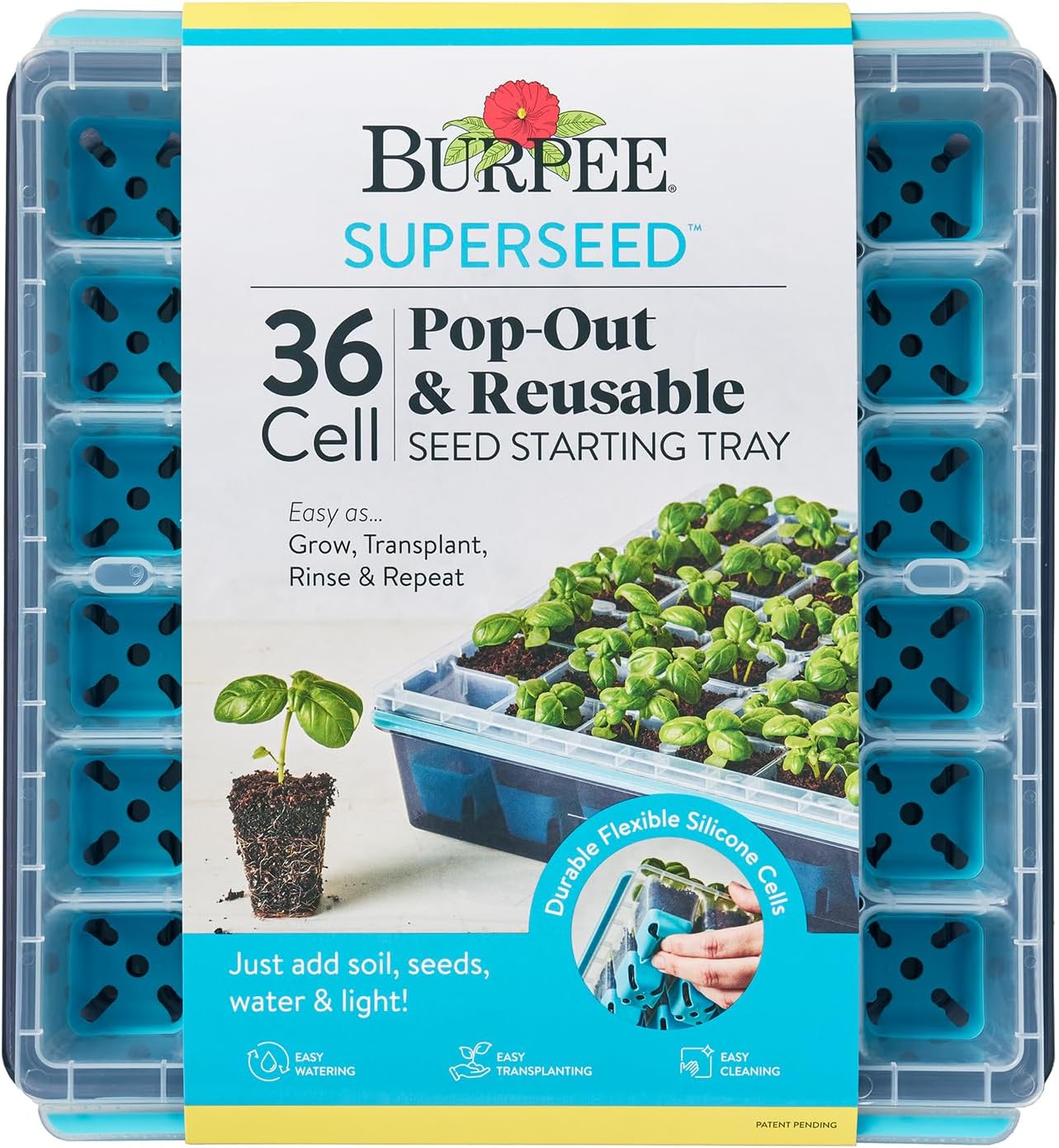
Burpee SuperSeed 36-Cell Reusable Silicone Seed Starting Tray
| Unit Count | 36 Count |
|---|---|
| Material Type | Silicone |
| Other Special Features of the Product | Drainage Hole, Reusable |
| Indoor Outdoor Usage | Indoor |
The Burpee SuperSeed 36-cell tray is designed to simplify indoor seed starting for herbs, flowers and vegetables. You fill each silicone cell with seed-starting mix, sow seeds, and use the raised reservoir and deep channels to manage excess water while the molded corner slots improve drainage and aeration. The soft, food-grade silicone cells flex so seedlings can be popped out with minimal root disturbance for transplanting. Labeled rows and included Plant-o-Gram make it easier to keep varieties organized. In practice the tray is lightweight, easy to lift by the side handles and dishwasher-safe on the top rack, which speeds cleanup between seasons. Limitations to note are that the tray is intended for indoor use only and the silicone material does not provide rigid support the way plastic cells do, so very top-heavy transplants may need extra handling. For gardeners focused on reliable germination and gentle transplanting, this tray streamlines the starting-to-potting workflow.
Best for: Gardeners who want a dependable, low-stress way to start multiple varieties indoors and value gentle transplanting and easy cleanup.
Less Ideal for: People who need heavy-duty outdoor trays or rigid cell structure for large transplants should consider sturdier plastic or individual pots instead.
- Flexible food-grade silicone cells allow seedlings to pop out with minimal root disturbance
- Built-in drainage slots and deep reservoir channels reduce overwatering and spillage
- 36 individually labeled cells and Plant-o-Gram help keep multiple varieties organized
- Top-rack dishwasher safe for easy cleaning and seasonal reuse
- Designed for indoor use only and not suitable as a heavy-duty outdoor planter
- Silicone cells are not rigid, which can make handling larger or top-heavy seedlings trickier
Verdict: Choose this tray if you want a reusable, silicone seed-starting system that protects roots and makes transplanting easier.
Burpee SuperSeed 16-Cell Reusable Silicone Seed Starting Tray

| Unit Count | 16 Count |
|---|---|
| Material Type | Silicone |
| Other Special Features of the Product | Dishwasher Safe, Drainage Hole, Reusable |
| Indoor Outdoor Usage | Indoor |
The Burpee SuperSeed 16-cell tray is designed to make indoor seed starting straightforward and low-risk. You fill each extra-large flexible silicone cell with seed-starting mix, sow seeds, and use the deep watering tray to keep excess moisture away from roots while the raised edge prevents spills. The soft food-grade silicone cells gently flex to pop seedlings out for transplanting, which reduces root disturbance and makes moving fragile starts easier. Molded corner slots in each cell improve drainage and aeration and the tray includes alphanumeric row labels and a Plant-o-Gram diagram to keep varieties organized. It is dishwasher top-shelf safe for easy cleaning and meant to be reused season after season. The main limitations are that it is intended for indoor use and lacks a clear humidity dome for humidity-sensitive seeds, so you may want a separate cover or heat mat for slow-germinating varieties. For gardeners who prefer a simple, durable system that minimizes transplant shock, this tray delivers consistent, beginner-friendly results.
Best for: Buyers who want a durable, easy-to-use seed starting system that reduces transplant shock and simplifies cleanup, especially those who prefer predictable, low-maintenance results.
Less Ideal for: Growers who need an all-in-one germination kit with a humidity dome or built-in heat, or those planning outdoor direct sowing rather than indoor starts.
- Extra-large flexible silicone pop-out cells reduce root disturbance during transplanting
- Built-in drainage slots and deep watering tray keep excess moisture away from cells
- Dishwasher top-shelf safe for straightforward cleaning and reuse
- Alphanumeric row labels and included Plant-o-Gram help keep seedlings organized
- Designed for indoor use only and does not include a humidity dome
- No integrated heating so may need an external heat mat for certain seeds
Verdict: A user-friendly, reusable silicone seed tray that minimizes transplant stress and makes indoor seed starting and cleanup simple.
Choosing the Right Reusable Seed Starting Tray: Key Factors to Consider
Material Durability and Construction
The tray material determines how many seasons it will last and how well it resists cracking from handling or temperature swings. Rigid plastics and thicker recycled resins tend to resist warping when filled with damp mix, while thin, flexible trays can collapse when moved. Durability also affects the tray's ability to survive being stacked, stored, or exposed to greenhouse temperatures over months.
Construction details matter too. Reinforced rims, drip-catch basins under cells, and sturdy corner designs reduce stress points that lead to breaks. If you plan to move flats frequently from bench to sun or into a cold frame, choose trays built to tolerate repeated handling so you are not replacing trays midseason.
Drainage and Aeration
Good drainage prevents standing water in cells that causes root rot or damping off. Look for trays with multiple drainage holes per cell or well-designed channeling that moves excess water away from roots. Trays with shallow cells but lots of lateral airflow can dry faster, while deeper cells with limited drainage hold more moisture and suit longer-term starts.
Aeration comes from hole placement and tray geometry. Some designs promote air pruning, which encourages a dense fibrous root system by exposing root tips to air at cell walls. Consider the balance you need: fast-drying, well-aerated trays for heat-loving, quick-growing seedlings, or trays that retain more moisture for slow-germinating seeds in warm, dry rooms.
Cell Size, Depth, and Spacing
Cell dimensions dictate which seeds and seedlings the tray works best for. Small, densely packed cells are ideal for tiny seeds and for raising many transplants for cut-and-come-again herbs or mass plantings. Larger and deeper cells are better for crops with bigger root systems like brassicas, tomatoes, or peppers and reduce root disturbance when transplanting.
Spacing also affects airflow between cells and how easily you can tease seedlings apart at transplant. If you plan to transplant later rather than pricking out early, choose deeper cells that support longer root growth. Match cell volume to the expected time between sowing and planting out to avoid root-bound starts.
Ease of Cleaning and Disease Prevention
A reusable tray should be easy to clean to prevent seedling diseases from carrying across seasons. Smooth surfaces with few crevices allow thorough scrubbing and rinsing. Materials that tolerate household disinfectants or mild bleach solutions let you sanitize trays between uses.
Avoid designs with glued seams or foam inserts that trap moisture and organic debris. Removable inserts and liners can simplify cleaning, but they should also be durable and compatible with sanitizers. Proper cleaning habits extend a tray's life and protect seedlings from pathogens that thrive in reused, unclean flats.
Compatibility with Accessories and Workflow
Consider how the tray will fit into your existing propagation workflow. Does it sit on standard greenhouse benches, fit under grow lights, or match the size of a heat mat? Trays that nest neatly save storage space, and those with matching humidity domes or covers support controlled germination environments.
Also think about handling: trays with integrated hand grips or reinforced edges are easier to carry full of soil and seed plugs. If you use automated watering or ebb-and-flow setups, pick trays designed to drain cleanly and not retain standing water that interferes with those systems.
Sustainability and End-of-Life Options
Because the product is reusable, the environmental footprint is a practical concern. Durable trays that last multiple seasons reduce overall waste compared with single-use options. Prefer trays made from recycled content or from materials that are recyclable in your local system.
Also consider repairability. Trays you can patch or repurpose at the end of their life provide more value. If sustainability is a priority, choose designs that avoid mixed materials that are hard to separate for recycling and favor uniform plastic types or sturdy metal trays that can be cleaned and reused for other garden tasks.
Best Tray Sizes for Different Garden Projects
Different garden goals call for different tray sizes. For early-season herbs or bedding plants, high-density flats with many small cells let you raise a lot of seedlings from limited seed. Vegetable gardeners planning to transplant tomato or pepper starts benefit from deeper 2- to 4-inch cell options that provide enough volume for a longer nursery period.
- Small cells: Ideal for herbs, annuals, and direct plug production.
- Medium cells: Versatile choice for brassicas and young transplants.
- Deep cells: Best for tomatoes, peppers, and plants kept indoors longer.
Using Trays with Heat Mats and Covers
Heat mats and humidity domes speed germination but create warm, moist conditions that require careful monitoring. Choose trays that sit flat on heat mats without warping, and use domes that allow some venting to prevent condensation drip back onto seeds. Transparent covers with adjustable vents are useful when seedlings first emerge and need gradually increased airflow.
- Start with vents closed for germination, open gradually as seedlings show true leaves.
- Remove domes during daytime in warm rooms to reduce fungal risks.
Transplanting Tips to Reduce Shock
Minimize root disturbance by choosing trays with clear cell separation and appropriate depth. For crowded flats, water well an hour before transplanting to keep the root ball intact, and use a small tool or your fingers to gently lift seedlings from the outer edge of each cell. Keeping some soil around the roots reduces shock and helps the seedling establish quickly in its new spot.
- Use deeper cells for longer nursery periods to avoid root circling.
- Harden off seedlings gradually before planting out to reduce stress.
Storing and Maintaining Reusable Trays Between Seasons
Clean trays promptly after use: remove potting mix, soak briefly, then scrub and disinfect according to the tray material's tolerance. Allow trays to dry completely before stacking to prevent mold growth. Store nested to save space and avoid placing heavy items on top that could warp rims or cells.
- Label trays or keep a simple log of what was grown to track disease issues.
- Inspect trays for cracks and repair minor damage before the next season.
How We Chose the Best Reusable Seed Starting Tray
We focused on features that directly affect seed germination, early root health, and season-to-season durability. Primary evaluation criteria included material durability and rigidity, because a tray that warps or cracks quickly becomes useless; drainage design and hole placement, since excess moisture or poor aeration leads to damping off; cell size and depth to match common seed types from small herbs to larger seedlings; and ease of cleaning and sterilization so trays can be safely reused without spreading disease. We also considered handling and compatibility with common greenhouse or shelf setups, including whether trays nest for storage and whether they fit standard heat mats and propagators. Trays that required single-use inserts or had fixed nonrepairable components were excluded. We filtered out trays made from materials not intended for repeated outdoor or greenhouse use and items with permanent mold or contamination risks. The final list includes options that balance durability, root environment control, and practical maintenance for home and hobby gardeners.
FAQ
How often should I sanitize reusable seed starting trays?
Sanitize trays between each sowing cycle if you reuse them for different species or if seedlings showed any signs of disease. A quick scrub and a mild bleach solution or horticultural disinfectant usually works; always rinse and dry thoroughly before reuse.
What cell depth is best for starting tomatoes?
Tomatoes do best in deeper cells, typically 2 to 4 inches, because they develop larger root systems before transplanting. Deeper cells reduce the need for earlier pricking out and lower transplant shock.
Can I use biodegradable inserts with reusable trays?
You can use biodegradable inserts, but they may reduce the tray's reusability because residues can break down and trap moisture or harbor pathogens. If you choose inserts, select ones that are compatible with cleaning and that do not adhere permanently to the tray.
Are recycled plastic trays as durable as new plastic?
Recycled plastic can be durable if the manufacturing process produces sturdy resin blends, but durability varies. Inspect recycled trays for wall thickness and reinforcement; thicker construction typically lasts longer than thin, flexible recycled sheets.
How do I prevent damping off in seed trays?
Prevent damping off by ensuring good drainage and air circulation, avoiding overwatering, using a sterile seed-starting mix, and providing adequate light so seedlings do not become leggy and weak. Sanitizing trays between uses also lowers pathogen load.
Final Verdict
Prioritize drainage, cell size, and material durability when choosing a reusable seed starting tray because those factors most directly affect seedling health and how long a tray will last. Balance depth and cell count to match the plants you grow and the length of time seedlings will stay in the tray. Finally, commit to cleaning and proper storage to maximize the tray's usable seasons and reduce disease risk. With those priorities in mind, you can confidently pick a tray that fits your workflow and produces healthier transplants season after season.
