

Note: This article contains affiliate links. If you click on these links and make a purchase, I may earn a small commission at no extra cost to you. This helps support my research and content. Read my full affiliate disclosure here.
A seed starting tray with dome changes how reliably seeds germinate indoors by holding humidity, buffering temperature swings, and simplifying moisture management. For gardeners launching flats on a windowsill, in a greenhouse, or under grow lights, the right tray-and-dome combo reduces damping off and uneven germination while giving you easier seed-to-seedling transitions. This guide covers the seven shortlisted seed starting trays with dome that stood out for practical garden use. We evaluated how well each setup controls humidity, manages drainage and airflow, and supports seedling handling and transplanting. Read on for the factors that matter and practical guidance to help you pick the best tray system for your space and crops.
Top Picks at a Glance
| Best Overall The best all-around choice for most situations | Mr. Pen 10-Pack Seed Starter Tray Kit with Humidity Domes and Tools (40‑Cell) |  |
| Best Quality Built to a higher standard if you want something more solid | AC Infinity Humidity Dome 5×8 Seed Starter Propagation Kit |  |
| Best Value The sweet spot between price and what you get | Mr. Pen Seed Starter Tray Kit, 10-Pack of 12-Cell Trays with Domes |  |
| Best Budget The cheapest option that still gets the job done reliably | Gardzen Seed Starter Trays 3-Pack with Adjustable Vented Dome, 36-Cell |  |
| Highest Rated A top-rated pick with lots of positive feedback | Adawook Seed Starter Tray Kit with Tall Humidity Domes, 3-Pack |  |
| Most Popular A crowd favorite that many people choose with confidence | Gardzen 5-Pack 40-Cell Seed Starter Tray Kits with Vented Domes and Bases |  |
| Best Seller A high-volume bestseller chosen again and again | Gardzen 10‑Pack 40‑Cell Seed Starter Trays with Dome and Base |  |
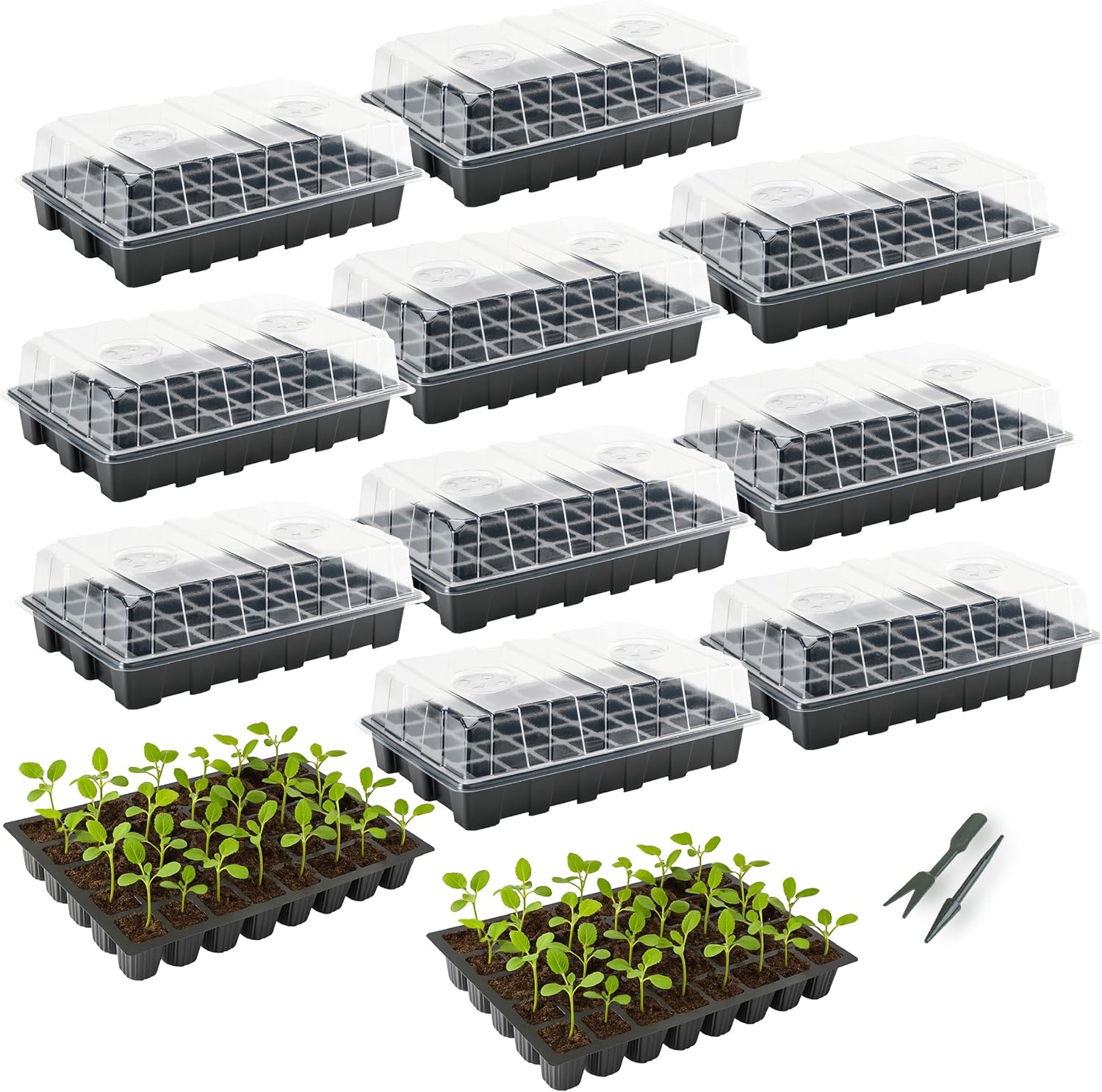
Mr. Pen 10-Pack Seed Starter Tray Kit with Humidity Domes and Tools (40‑Cell)
| Unit Count | 10 Count |
|---|---|
| Included Components | Humidity Dome, Tools, Tray |
| Number of Levels | 40 |
| Indoor Outdoor Usage | Indoor |
This kit brings together the basic components needed to start a lot of seedlings at once. Each set contains ten 40‑cell seed trays with fitted bases and transparent, vented humidity domes that trap warmth and moisture to speed germination while letting you check progress without disturbing seeds. The included dibber and widger are small but useful for accurate sowing and moving delicate seedlings. The trays are lightweight and designed for tabletop indoor use, so they are easy to handle and stack for limited-space setups like windowsills, classroom benches, or compact greenhouses. Because this is a simple plastic kit, it is best for hobbyists and small-scale growers rather than heavy commercial use; the parts are not rigid like thick nursery trays and may wear faster with repeated seasons. Also there is no dedicated drainage control other than the base, so expect to manage watering carefully to avoid overwatering in each cell. For gardeners who want an all-in-one, high‑count starter system, this covers the essentials affordably.
Best for: Gardeners who want an economical, ready‑to‑use indoor seed starting system to raise a large number of seedlings at once for homebeds, containers, or classroom projects.
Less Ideal for: Commercial nurseries or growers who need heavy‑duty, long‑lasting professional trays and precise drainage controls should consider sturdier alternatives.
- Includes ten 40‑cell trays for starting many seedlings at once
- Vented clear domes create a humid microclimate while allowing visual monitoring
- Comes with simple planting tools (dibber and widger) to speed accurate sowing
- Lightweight trays are easy to move, stack, and store for indoor setups
- Construction is lightweight plastic and may show wear after repeated seasons
- No built-in adjustable drainage system beyond the base trays
Verdict: A convenient, high‑count seed starting kit that gives home gardeners everything needed to germinate many seedlings indoors.
AC Infinity Humidity Dome 5×8 Seed Starter Propagation Kit

| Cell Count | 40 |
|---|---|
| Tray Thickness | 3 mm |
| Total Vents | 4 (w/ extender) |
| Plant or Animal Product Type | seed |
| Accepted Voltage Frequency | 100 to 120 Volts and 60 Hertz |
The AC Infinity Humidity Dome 5×8 is a heavy-duty seed starting kit that keeps seedlings and cuttings in a stable, humid microclimate to improve germination and rooting success. The clear 3 mm dome fits over a 40-cell seedling tray to hold moisture and light while optional height extenders and adjustable vents let you control airflow as seedlings grow. The tray is molded to drain excess water and resist leaks, so it works well with regular bottom-watering and propagation mixes. This compact kit is typically used on a bench, shelf, or inside a small grow tent; it can be paired with a heat mat or supplemental LED bars available in larger configurations. Notable strengths are the sturdy construction and simple venting system that reduce the need for constant monitoring. Limitations are that the basic model does not include a heat mat or built-in lighting, so you will need to add separate warmth or light for faster germination in cool or low-light conditions.
Best for: Gardeners who prioritize a dependable, low-maintenance propagation environment and want a robust starter tray that maintains consistent humidity for reliable germination.
Less Ideal for: Growers building a full plug-and-play system who want integrated heat or lighting or those needing larger commercial-scale propagation capacity.
- 3 mm thick clear dome for reliable humidity retention and light penetration
- Compatible height extenders and adjustable vents for staged airflow control
- 40-cell tray supports many seedlings for small-scale starting
- Durable, leak-resistant tray design suitable for repeated reuse
- Does not include heat mat or grow light in this compact kit
- Compact footprint may be too small for larger propagation projects
Verdict: Buy this if you want a sturdy, no-nonsense humidity dome and tray that consistently maintains the microclimate seedlings need for reliable germination.
Mr. Pen Seed Starter Tray Kit, 10-Pack of 12-Cell Trays with Domes

| Unit Count | 10 Count |
|---|---|
| Size | 12-Cells 10-Pack |
| Indoor Outdoor Usage | Indoor |
| Other Special Features of the Product | Lightweight |
These Mr. Pen seed starter tray kits provide a straightforward, no-frills system for starting seeds indoors. Each kit includes ten 12-cell trays made from lightweight plastic plus clear dome lids with adjustable vents to help retain moisture and control humidity during germination. The trays have drain holes at the base of each cell to reduce overwatering and the cell design helps release seedlings with minimal root disturbance when transplanting. The set also includes a small shovel and scoop so you have basic tools on hand for filling cells and moving seedlings. For routine home gardening and propagation work the kit is convenient and space-efficient, letting you run multiple varieties at once. The main limits are simple: these are basic plastic trays without reinforced rims or stacking clips, so they can flex under rough handling and domes are generic rather than lockable for shipping or tall stacking. Expect solid performance for seasonal seed starting but plan to handle trays gently and transfer seedlings to larger pots or flats as they grow.
Best for: Practical home gardeners who want an economical, ready-to-use seed starting system to run multiple seedlings at once and simplify indoor germination.
Less Ideal for: Growers who need heavy-duty, professional-grade trays, integrated heat mats, or domes that lock for transport should consider more robust alternatives.
- Ten 12-cell trays let you start many varieties at once for efficient use of indoor bench space
- Clear dome lids with adjustable vents help maintain humidity and let you control airflow during germination
- Drain holes in each cell reduce the risk of overwatering and root rot
- Lightweight plastic construction is easy to move and store between seasons
- Includes shovel and scoop so you can fill cells and transplant seedlings without buying extra tools
- Plastic is lightweight and can flex or crack under heavy use or rough handling
- Domes are basic and do not lock for secure stacking or transport
Verdict: A budget-friendly, ready-to-use 10-pack of 12-cell trays with domes that lets practical gardeners start lots of seedlings indoors with minimal fuss.
Gardzen Seed Starter Trays 3-Pack with Adjustable Vented Dome, 36-Cell

| Cells per pack | 36 |
|---|---|
| Cell dimensions | 1.5" x 1.5" x 2.25" |
| Includes | Adjustable vented domes |
These Gardzen seed starter trays are a practical, low-cost option for starting seeds indoors. The set includes three 12-cell insert trays plus clear adjustable humidity domes that let you control airflow through vents for consistent germination. Each cell is small but deep enough for seedlings and cuttings, and the trays feature drain holes to reduce the risk of overwatering. In use they are lightweight and stackable so you can run multiple batches on a windowsill or under grow lights without taking much space. Because they are made from thin plastic they are best treated as seasonal consumables rather than heavy-duty long-term gear, but that also keeps the price accessible. These trays work well for starting herbs, annual flowers, and many vegetables, and the clear domes make it easy to monitor moisture and sprout progress. If you want thicker, reusable trays for many seasons or larger cells for big seedlings, you will need a heavier-duty option, but for straightforward, budget-focused seed starting this kit covers the basics effectively.
Best for: Home gardeners looking to start multiple small batches of seeds on a tight budget who prioritize low cost and simple, space-saving trays for herbs, annuals, and vegetables.
Less Ideal for: Growers who need heavy-duty reusable trays, very large cells for big seedlings, or commercial-scale germination systems should consider sturdier alternatives.
- Includes three 12-cell trays and adjustable vented domes for humidity control
- Clear domes make it easy to monitor seedlings without removing the lid
- Drain holes help prevent overwatering and root rot
- Compact, stackable design saves space for indoor setups
- Thin plastic construction is less durable for long-term repeated use
- Cells are relatively small and may require early transplanting for larger plants
Verdict: A cost-conscious, no-frills 3-pack seed tray kit that delivers basic, space-saving germination control for home seed starting.
Adawook Seed Starter Tray Kit with Tall Humidity Domes, 3-Pack

| Material Type | Polypropylene (PP) |
|---|---|
| Included Components | Humidity Dome |
| Unit Count | 3 Count |
| Indoor Outdoor Usage | Indoor, Outdoor |
These Adawook seed starter trays are a straightforward option for gardeners who want a reliable, reusable system for germinating seeds. Each kit includes three large rectangular trays with tall 4.73-inch humidity domes that create a mini greenhouse to retain moisture while adjustable vents let you control airflow to reduce mold risk. The trays are made from polypropylene and have a reinforced design intended to resist cracking through repeated use, so they hold up to regular indoor or tabletop use. The larger flat tray area gives seedlings more room to root and develop sturdy stems before transplanting, which can improve survival rates. Practical touches include transparent domes for easy monitoring and portability for moving trays to optimal light. The main limitations are that these are basic trays without built-in cell dividers or watering systems and they occupy more bench space than compact cell flats, so they work best where you can dedicate surface area to seed starting.
Best for: Gardeners who prioritize a dependable, reusable seed-starting system that reduces mold risk and supports stronger seedlings, and who have dedicated bench or tabletop space for larger trays.
Less Ideal for: Growers who need pre-divided cell trays for precise spacing or those with very limited surface area who prefer compact flats or plug trays.
- Tall humidity domes with adjustable vents for controlled germination conditions
- Durable polypropylene construction with reinforced tray design for season-to-season use
- Larger flat tray area gives seedlings more room for roots and sturdier stems
- Transparent domes allow easy visual monitoring without disturbing seedlings
- No built-in cell dividers or individual cells for exact spacing
- Requires a fair amount of bench or tabletop space compared with compact flats
Verdict: A sturdy, no-nonsense three-pack of large seed trays with tall domes for gardeners who want a reliable, reusable mini greenhouse to improve germination and airflow.
Gardzen 5-Pack 40-Cell Seed Starter Tray Kits with Vented Domes and Bases

| Unit Count | 5 Count |
|---|---|
| Included Components | Tray, Base, Humidity Dome |
| Material Type | Plastic |
| Other Special Features of the Product | Drainage Hole, Vented Dome |
| Plant or Animal Product Type | seed |
These Gardzen kits provide a complete, budget-friendly setup for starting seeds and propagating cuttings. Each kit includes a 40-cell insert tray, a base to catch drainage, and a clear dome with two adjustable vents so you can control humidity and airflow during germination. The plastic construction is lightweight and durable for repeated seasons, and the integrated drainage holes help prevent waterlogging while keeping surfaces clean. Typical use is straightforward: fill cells with seed mix, place the insert in the base, set the dome, and adjust vents as seedlings emerge; domes also work on a heating mat for earlier starts. The main limitations are basic materials and a simple design that lacks rigid stacking features for heavy greenhouse racks, and the trays are single-level so they occupy bench space when in use. Overall this kit is a practical, no-frills solution that simplifies seed starting for hobby gardeners who want consistent humidity control and tidy drainage without specialist equipment.
Best for: Home gardeners who want a practical, ready-to-use seed starting system that controls humidity and reduces mess while maximizing seed counts per tray.
Less Ideal for: Commercial growers or anyone needing heavy-duty, stackable nursery trays or multi-tier propagation systems.
- Complete kit with tray, base and clear dome for immediate use
- Adjustable vents let you manage humidity and airflow during germination
- Drainage holes and base collect runoff to prevent overwatering and mess
- Generous 40 cells per tray reduce root crowding for healthier seedlings
- Lightweight plastic is durable enough for repeated seasonal use
- Basic plastic construction is not reinforced for heavy stacking or commercial benches
- Single-level trays require bench space and do not nest compactly when in use
Verdict: A simple, all-in-one 5-pack seed tray kit that gives home gardeners reliable humidity control and tidy drainage to start lots of seedlings efficiently.
Gardzen 10‑Pack 40‑Cell Seed Starter Trays with Dome and Base

| Unit Count | 10 Count |
|---|---|
| Number of Pieces | 10 |
| Size | 40-Cell Black 10-Pack |
| Material Type | Plastic |
| Other Special Features of the Product | Drainage Hole |
The Gardzen 10‑pack seed starter set gives you ten complete 40‑cell trays with matching bases and clear domes so you can start a lot of seedlings at once. Each insert holds 40 individual cells with about 1.4 inch depth to reduce root crowding, and the domes include two adjustable vents to control humidity and airflow as seedlings develop. The kits stack neatly in the base tray to capture runoff through the built‑in drain hole, which helps keep benches and tables dry and makes bottom watering straightforward. Made of molded plastic, the trays are lightweight and durable for repeated seasons and work well with a heating mat for early starts. You get labels and small tools in the kit for organization. Limitations are the plastic construction, which can become brittle with long sun exposure, and the set is sized for flats rather than individual pots so it is less convenient for growers who need larger root volume early on.
Best for: Gardeners who want a reliable, ready‑to‑use seed starting system to produce many seedlings quickly and value adjustable humidity control and organized staging.
Less Ideal for: Growers who need heavy‑duty, UV‑stable commercial trays or those who want larger individual cells for long‑term container growth should look elsewhere.
- Ten complete 40‑cell kits let you start large numbers of seedlings at once
- Clear dome with adjustable vents lets you fine‑tune humidity and airflow
- Base tray with drainage hole collects runoff and supports bottom watering
- Includes labels and simple tools to keep trays organized during sowing
- Plastic may degrade over years of outdoor sun exposure
- Tray cell size is modest so transplants may need earlier repotting into larger containers
Verdict: This 10‑pack 40‑cell starter set is a practical choice for growers who want to start many seedlings reliably with adjustable ventilation and simple drainable bases.
Choosing the Right Seed Starting Tray with Dome: Key Factors to Consider
Humidity Control and Ventilation
A dome must balance two opposing needs: keep humidity high enough to promote germination and allow enough airflow to prevent mold and damping off. Adjustable vents are useful because seedlings need high humidity during the first days but increasingly more air circulation as true leaves appear. Relying on a sealed dome for the whole seedling stage often leads to fungal problems and weak stems. Consider how easy it is to crack the dome open partially or remove it for brief daily airing without disturbing the tray.
Drainage and Water Management
Good drainage prevents waterlogged media that suffocates seedlings and invites root rot. Look for trays with raised ridges or a recessed gutter that keeps excess water away from cells while still allowing bottom-watering if you prefer that method. Removable inserts or bottom trays that collect runoff make it easier to control moisture and clean up. The tray should allow gentle, even watering so that the seedling root zone stays moist but not saturated.
Cell Size, Depth, and Spacing
Cell dimensions affect how long seedlings can stay in a tray before transplanting. Small cells are fine for quick-sprouting herbs and annuals but require earlier potting on for larger vegetable seedlings. Deeper cells support longer root growth and reduce transplant shock for slower-starting crops. Adequate spacing between cells helps airflow and makes it easier to handle seedlings without damaging neighboring stems and leaves.
Durability and Material Safety
Trays and domes get a lot of wear from repeated seasons of use, cleaning, and exposure to moisture and light. Rigid plastics resist warping and last longer than flimsy sheets, while thicker dome lids handle being set aside or stacked without cracking. Materials should be easy to sanitize between uses to reduce disease carryover. Gardeners growing edible plants will want materials that do not easily leach and that withstand standard cleaning solutions without degrading.
Ease of Cleaning and Storage
Propagation gear should be simple to disassemble and quick to clean because leftover soil and root fragments harbor pathogens. Trays with removable cell inserts or smooth interior surfaces reduce scrubbing time. Consider how compact the system becomes for offseason storage; domes that nest or trays that stack save space in small sheds and garages. Easy-clean designs extend the life of the kit and reduce the chance of contaminating the next crop of seedlings.
Compatibility With Propagation Practices
Different gardeners use bottom-watering, misting, heat mats, or grow lights. Choose a tray-and-dome system that integrates with the methods you use. A shallow tray may not work well with a heat mat, while a tray with a recessed bottom can sit on a mat without trapping moisture. If you plan to mist frequently, a dome with adjustable vents will cut down on mold risk. Think about how you will sow, water, and move seedlings and pick a system that fits those routines.
Best Tray Styles for Small Spaces
If you have limited bench or windowsill space, low-profile trays with compact cell counts let you start a variety of crops without crowding. Look for narrow trays designed to fit most standard shelving or under-grow-light fixtures. Shallow cells work fine when you transplant quickly, and clear domes keep light accessible while preserving humidity.
Choose trays that stack or nest for storage so you can keep multiple sets handy without taking up room. Some compact systems include removable inner cells so you can move only the seedlings you need to another tray or pot while the rest remain protected under the dome.
- Narrow footprint fits shelves and window ledges
- Removable inserts make targeted transplanting easier
- Stackable designs save offseason space
Using Heat Mats and Domes Together
Heat mats speed germination for warm-loving crops but can raise moisture levels under a dome. A tray system that allows controlled venting prevents condensation buildup and keeps media from becoming overly wet. Make sure trays sit flush on the mat and avoid domes that seal fully to the tray edges when using heat.
Place a thin layer of gravel or a mesh shelf between mat and tray if you notice uneven hot spots. Monitor soil temperature with a probe rather than relying on dome condensation as a sign of adequate warmth.
- Use adjustable vents when combining heat and domes
- Check soil temperature directly
- Prevent direct contact that concentrates heat against plastic
Cleaning and Sanitizing Seed Trays
After each use, remove all potting mix and soak trays in warm soapy water to dislodge debris. Follow with a dilute bleach or horticultural disinfectant solution for a few minutes, rinse thoroughly, and allow to dry completely before storing. Clean domes gently to avoid scratching clear plastic, which can trap pathogens in scuffs.
Inspect trays and domes for hairline cracks or stubborn staining; replace parts that cannot be fully sanitized to reduce disease risk in future sowings.
- Soak and scrub to remove organic residue
- Disinfect with an appropriate diluted solution
- Dry completely before storage to prevent mold
Sowing Tips for Dome-Protected Seedlings
Use a fine, well-draining seed-starting mix and press seeds to consistent depth for even emergence. Keep the dome on until you see cotyledons or until sprouts appear, then introduce daily brief airing sessions. Gradually increase venting and remove the dome for longer periods as seedlings develop true leaves.
Avoid overwatering during the high-humidity, low-airflow phase. Light misting or bottom-watering are safer than frequent overhead watering that can compact the mix and promote pathogens.
- Start with consistent seeding depth and spacing
- Air daily once seedlings appear to harden them
- Prefer bottom-watering under a dome to reduce surface sogginess
Transplanting From Cells to Pots or Garden
Plan cell size based on how long you want seedlings to remain before potting on. When roots start to circle the cell or seedlings look crowded, move them to larger pots or plant out. Water seedlings a few hours before transplanting so the root ball holds together and reduces shock.
Handle seedlings by the leaves, not the stem, to avoid crushing stems. If the tray has removable cell plugs, use them to lift young plants with intact root balls for minimal disturbance.
- Pot on before roots become rootbound
- Water before lifting to preserve root integrity
- Lift by leaves or use removable plugs when available
How We Chose the Best Seed Starting Tray with Dome
We focused on makes-ready seed starting tray systems that include a fitted dome and support real-world germination needs. Evaluation prioritized humidity control and ventilation because domes that hold moisture too tightly or not at all undermine germination. Drainage and tray design were weighed to prevent waterlogging and ease bottom-watering. Material durability and ease of cleaning were included to ensure repeated seasonal use. Propagation cell size and depth were checked for suitability with common vegetables, herbs, and flowers. We also considered how easily seedlings transfer from cells to larger pots or the garden. Exclusions: single-use trays without a fitted dome, unvented domes with no adjustable vents, and systems lacking clear drainage features were not included. The resulting picks balance controlled humidity, reliable drainage, practical cell sizes, and durable, easy-to-sanitize materials.
FAQ
How long should I keep the dome on my seed tray?
Keep the dome on through germination and until the cotyledons open. Start brief daily venting once sprouts appear and gradually increase airflow as true leaves develop to prevent fungal issues.
Can I use a heat mat with a tray and dome?
Yes, but use adjustable vents and monitor soil temperature. Heat mats speed germination but can raise condensation under a dome, so allow some airflow and avoid sealing the dome completely.
What is the best way to water seedlings under a dome?
Bottom-watering or light misting is usually safest. Bottom-watering keeps the surface from becoming compacted and reduces splashing that spreads pathogens, while misting can be used sparingly to maintain surface moisture.
How do I sanitize trays and domes between seasons?
Remove all soil, soak in warm soapy water, scrub, then disinfect briefly with a dilute bleach or horticultural disinfectant. Rinse thoroughly and let everything dry before storing to prevent mold.
Are deeper cells always better for starting seeds?
Deeper cells support longer root growth and reduce early transplanting, but they take more space and media. For quick-turn herbs and annuals, shallow cells are fine; choose depth based on how long you want seedlings to remain in the tray.
Final Verdict
A seed starting tray with dome simplifies germination by maintaining higher humidity and protecting fragile seedlings during their earliest stage. Prioritize adjustable ventilation, reliable drainage, and appropriate cell depth for the crops you plan to start. Durable, easy-to-clean materials reduce disease risk and extend the life of your system. Match the tray style to your space and propagation methods to minimize transplant shock and produce healthier seedlings ready for potting on or planting out.
