

Note: This article contains affiliate links. If you click on these links and make a purchase, I may earn a small commission at no extra cost to you. This helps support my research and content. Read my full affiliate disclosure here.
If you start plants from seed, the pots you choose affect how seedlings develop and how smoothly they move into the garden. Biodegradable seedling pots let you plant the whole container or compost it, reducing root disturbance and plastic waste. This guide covers six shortlisted, top-rated biodegradable seedling pots that perform well in real garden conditions. We judged options on drainage, material durability, root friendliness, and ease of handling. Read on to see the practical tradeoffs so you can pick pots that suit your seed types, watering routine, and transplant plan.
Top Picks at a Glance
| Best Overall The best all-around choice for most situations | JNYONG 4-inch Peat Pots, 120-Pack |  |
| Best Quality Built to a higher standard if you want something more solid | Daniel's Plants 4" Natural Biodegradable Seed Starter Pots, 30-Pack |  |
| Best Value The sweet spot between price and what you get | SunVara Seed Starter Peat Pots, 300 Biodegradable Seedling Pots |  |
| Best Budget The cheapest option that still gets the job done reliably | Jiffy 3" Biodegradable Peat Pots for Seedlings, 22 Pack |  |
| Most Popular A crowd favorite that many people choose with confidence | Dalzom 60-Pack 3.1" Biodegradable Peat Starter Pots with 60 Plant Labels |  |
| Best Seller A high-volume bestseller chosen again and again | homenote 4-inch Biodegradable Peat Seedling Pots (60-pack) |  |
JNYONG 4-inch Peat Pots, 120-Pack

| Material Type | Paper |
|---|---|
| Unit Count | 120 Count |
| Size | 4inchs |
| Other Special Features of the Product | Breathable, Drainage Hole |
| Indoor Outdoor Usage | Indoor |
These JNYONG peat pots are a simple, no-frills option for starting seeds and young seedlings. Sold in a 120-pack, each 4-inch round pot is molded from paper pulp and plant fibers so it will biodegrade when planted directly into the garden, which reduces transplant shock and saves time during potting on. The pots include multiple drainage holes to help prevent waterlogging and improve aeration for developing roots. In practice they work well for vegetables, herbs, flowers, and small ornamentals grown indoors or moved outdoors to harden off. Because they are thin paper pulp, they are lightweight and best treated gently when filling and watering to avoid collapse. They are intended for short-term nursery use rather than long-term container culture, and will break down once placed in moist soil. For gardeners who want a large quantity of compostable starters and the convenience of planting containers that do not need removal, these peat pots are an economical, environmentally friendly choice.
Best for: Gardeners who want an eco-friendly, ready-to-plant starter pot in bulk for starting many seedlings and minimizing transplant shock.
Less Ideal for: Anyone needing durable, reusable pots for long-term container growing or frequent repotting should choose plastic or ceramic alternatives.
- Made from biodegradable recycled pulp and plant fibers so pots can be planted directly without removing them
- Includes drainage holes to promote soil drainage and root aeration
- Large 120-count pack supplies many seedlings for a full season
- Suitable for a wide range of seedlings including vegetables, herbs, flowers, and succulents
- Thin paper construction is fragile when wet and can tear if handled roughly
- Not suitable for long-term container growth because they will degrade over time
Verdict: An affordable bulk pack of biodegradable 4-inch starter pots that lets you start lots of seedlings and plant them directly to avoid transplant shock.
Daniel's Plants 4" Natural Biodegradable Seed Starter Pots, 30-Pack

| Material Type | Natural Spruce Fibres |
|---|---|
| Unit Count | 30 Count |
| Indoor Outdoor Usage | Indoor |
| Capacity | 31.26 fluid ounces |
These 4-inch biodegradable pots from Daniel's Plants are designed for starting seedlings indoors and then planting the whole pot into the garden to minimize transplant shock. Made from natural spruce fibers with no peat or adhesives, the pots are porous so roots can penetrate and the root ball integrates into garden soil. Typical use is filling them with potting mix, sowing seeds for tomatoes, cucurbits or tropical starts, and keeping them on a tabletop or seed tray until ready to set out. Notable features include OMRI listing for organic use, a consistent 4-inch diameter favored for larger seedlings, and a pack of 30 that suits multiple sowing rounds. Practical benefits are easier transplanting, reduced plastic waste, and improved aeration for healthier root development. Limitations are that the pots are intended for indoor use and will biodegrade in soil so they are not reusable long term, and the natural fiber construction can dry out faster than plastic requiring more frequent watering.
Best for: Gardeners who prioritize seedling performance and clean transplants, especially growers starting vegetables or larger seedlings who want an organic, low-shock option.
Less Ideal for: People who need durable, reusable pots for many seasons or those who prefer low-maintenance containers that retain moisture longer.
- OMRI-listed and peat-free construction suitable for organic growing
- Porous natural spruce fibres allow roots to grow through and improve aeration
- Consistent 4-inch size ideal for tomato and larger vegetable seedlings
- 30-count pack supports multiple sowing sessions and seedling turnover
- Designed for single-season use since pots will biodegrade and are not durable for repeated reuse
- Material can dry out faster than plastic pots, so watering needs are higher
Verdict: Choose these OMRI-listed spruce-fiber pots when you want organic, transplant-friendly seed starters that let roots grow through for easier, healthier planting out.
SunVara Seed Starter Peat Pots, 300 Biodegradable Seedling Pots
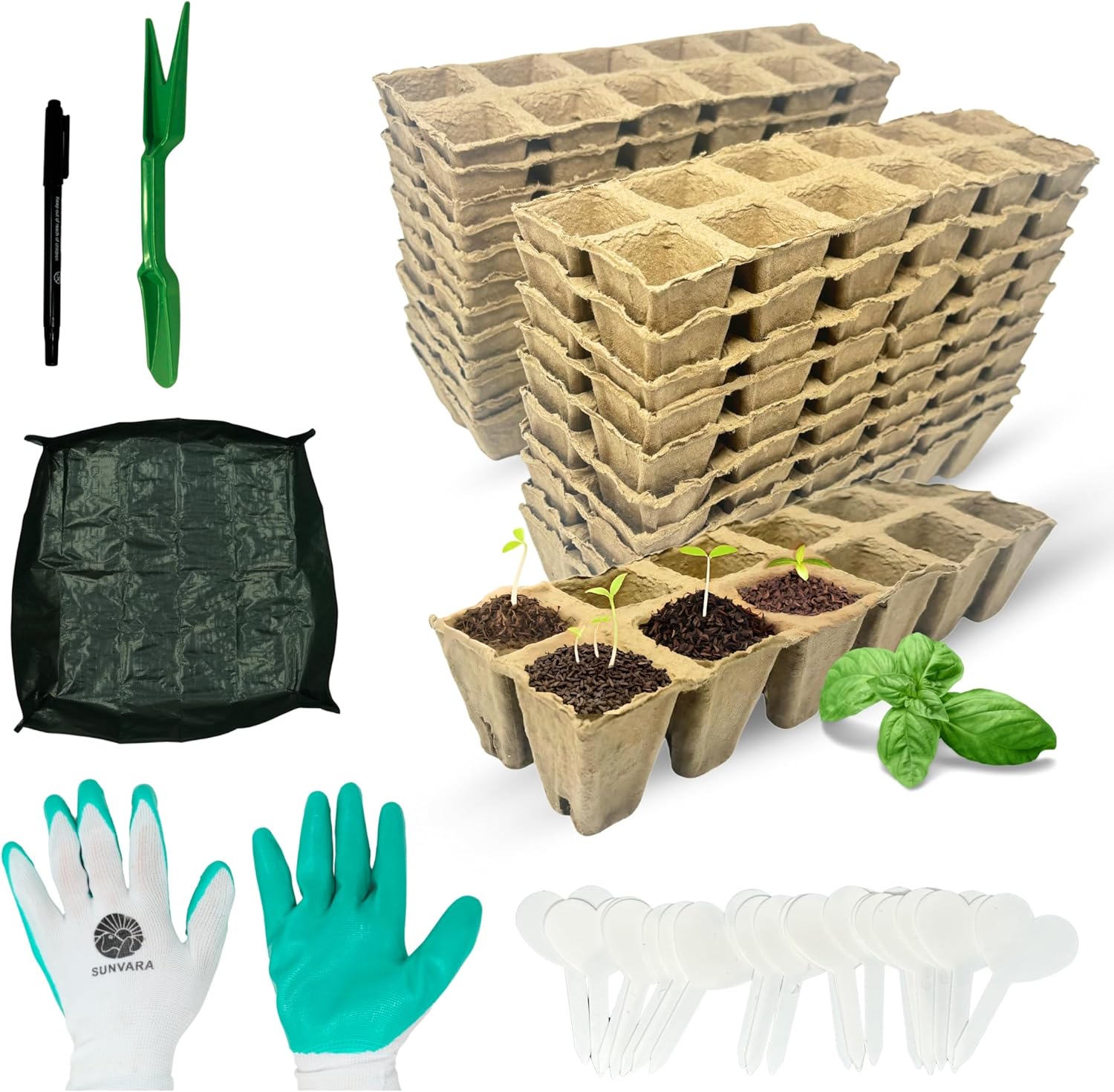
| Unit Count | 300 Count |
|---|---|
| Included Components | Seedling Tray, Planting Cell, Waterproof Mat, Gloves |
| Material Type | Plastic |
| Indoor Outdoor Usage | Indoor, Outdoor |
| Plant or Animal Product Type | Vegetable |
These SunVara peat seed starter pots come as a large 300-count kit with a tray and a few extras to simplify beginning seedlings. The pots are made from compressed peat and other plant fibers so you can sow seeds in each cell, keep them moist on the included tray or waterproof mat, then transplant the whole pot into the garden where the container will naturally break down. That makes setup and transplanting less disruptive to roots and reduces transplant shock. The porous peat walls encourage air pruning and healthier root structure, and the set’s scale and lightweight plastic tray make it convenient for starting many vegetable or flower seedlings at once indoors or on a patio. Limitations are that these are single-use biodegradable pots rather than rigid long-term containers, and peat-based pots can dry out faster than heavier mixes so you need consistent watering. The kit includes gloves and a mat which help keep the process tidy for beginners or parents working with children.
Best for: Buyers who want an efficient, low-fuss way to start large numbers of vegetable or flower seedlings and prefer eco-friendly, plantable containers that simplify transplanting.
Less Ideal for: Gardeners who need reusable or heavy-duty pots for long-term container growing or who want moisture-retentive containers that require less frequent watering.
- Large 300-count set good for starting many seedlings at once
- Biodegradable peat construction allows planting pots directly into soil to reduce transplant shock
- Porous material promotes root air pruning and healthier root development
- Includes tray, waterproof mat and gloves for tidy indoor or patio use
- Peat-based pots are single-use and will decompose rather than serve as permanent containers
- Biodegradable pots can dry out faster than sturdier containers and need regular watering
Verdict: Ideal for gardeners who want a high-volume, eco-friendly seed-starting solution that can be planted directly into soil to reduce transplant shock.
Jiffy 3" Biodegradable Peat Pots for Seedlings, 22 Pack

| Material Type | Peat |
|---|---|
| Number of Pieces | 22 |
| Other Special Features of the Product | Biodegradable |
| Indoor Outdoor Usage | Indoor, Outdoor |
These Jiffy 3-inch peat pots are basic, no-frills seedling containers for gardeners who want an easy, low-waste way to start vegetables, herbs, and flowers. Use them on a tray or greenhouse bench: fill with seed-starting mix, water to expand and saturate the peat, sow seeds, and keep moist until roots fill the pot. When seedlings are ready you can plant the whole pot in the garden to minimize root disturbance and transplant shock. The pots are made from natural peat so they break down in soil over time and eliminate the need to remove plants from plastic cells. They come in a 22-count pack that is large enough for small hobby projects or to test several varieties without overspending. Limitations are that peat pots dry out faster than plastic and can be fragile when handled while wet, so you may need extra watering vigilance and gentler handling during transplanting.
Best for: Gardeners looking for an inexpensive, low-waste way to start seeds who prioritize simple, disposable starter pots over reusable plastic systems.
Less Ideal for: People who prefer long-term reusable trays or need heavy-duty containers for frequent reuse should consider sturdier plastic or fabric alternatives.
- Biodegradable peat material allows planting the pot directly into soil and reduces transplant shock
- Appropriate 3-inch diameter size for starting vegetables, herbs, and flowers
- Comes as a 22-pack that provides enough pots for small seed-starting projects
- Works for indoor or outdoor use and fits standard seed trays
- Peat construction dries out faster than plastic so requires more frequent watering
- Pots can be fragile when saturated and need careful handling during transplanting
Verdict: A budget-friendly biodegradable option for starting small batches of seedlings and planting them root-and-pot for easier transplanting.
Dalzom 60-Pack 3.1" Biodegradable Peat Starter Pots with 60 Plant Labels

| Unit Count | 60 Count |
|---|---|
| Material Type | 100% Recycled Pulp |
| Features | Biodegradable; Drainage Holes |
| Indoor Outdoor Usage | Indoor, Outdoor |
These Dalzom peat pots are a practical seed-starting option for home gardeners who want an eco-friendly alternative to plastic trays. Each pack contains 60 round seedling pots made from 100% recycled pulp and 60 plastic plant labels. The pots have built-in drainage holes and a tapered shape that lets you plant the whole pot directly into the ground to reduce root disturbance at transplant. Typical uses include starting flowers, herbs and vegetable transplants on a windowsill or in a greenhouse before moving them outdoors. Because the material is biodegradable and unfinished, the pots hold moisture while still allowing excess water to drain, but they will soften over time if left constantly wet. The included labels simplify organizing varieties during multi-seedling batches. Limitations to note are the small size suited for early-stage seedlings only and the biodegradable pulp will not last for long-term container use, so plan to transplant before root binding occurs.
Best for: Buyers who prioritize sustainable, low-impact seed starting and want a ready-to-plant peat pot solution for starting many small seedlings and keeping varieties organized.
Less Ideal for: Gardeners who need durable long-term pots or who start large transplants that require more root space should choose sturdier or larger containers.
- Made from 100% recycled pulp so pots are fully biodegradable and plantable into soil
- Built-in drainage holes help prevent overwatering of delicate seedlings
- Includes 60 plant labels for clear variety tracking
- Tapered shape allows transplanting the whole pot to reduce root disturbance
- Pulp material will degrade if kept constantly wet so not suitable for long-term container use
- Small 3.1" diameter size only supports early-stage seedlings, not larger transplants
Verdict: Choose these peat pots if you want an affordable, fully biodegradable way to start many seedlings and plant them directly to reduce transplant shock.
homenote 4-inch Biodegradable Peat Seedling Pots (60-pack)

| Unit Count | 60 Count |
|---|---|
| Size | 4 Inch |
| Material Type | Recycled Pulp |
| Other Special Features of the Product | Biodegradable |
| Plant or Animal Product Type | Seedling |
These 4-inch peat pots from homenote are molded from recycled pulp into compostable nursery cups meant for starting seedlings and then planting directly into soil. In use you fill them with seed mix, sow seeds or transplants, keep them under normal seed-starting moisture and light, then transplant the entire pot into the garden to avoid disturbing roots. Notable features include built-in drainage holes, a textured surface that separates easily without tearing, and included plant labels to keep trays organized. The recycled pulp construction lets the pots breathe like clay while breaking down in the ground, which simplifies transplanting and reduces plastic waste. Limitations are typical of pulp pots: they soften when wet so extra care is needed handling very young seedlings, and they do not offer the rigid support of plastic pots during long-term reuse. For gardeners who prefer low-risk, natural options these make seed starting and direct planting straightforward and environmentally friendly.
Best for: Gardeners who prioritize low-risk, natural solutions and want an easy seed-starting workflow that avoids transplant shock and plastic waste.
Less Ideal for: Growers who need durable, reusable plastic pots or who plan extended indoor cultivation where rigid support is required.
- Biodegradable recycled-pulp construction allows direct planting and composting
- Built-in drainage holes help prevent waterlogging of seedlings
- Textured molding separates easily so pots do not stick together
- Large 4-inch diameter suitable for vegetable and flower seedlings
- Includes plant labels to keep seedlings organized
- Pulp material softens when saturated so pots require careful handling
- Not designed for repeated long-term use or rigid support during growth
Verdict: Choose these peat pots if you want an easy, eco-friendly way to start seedlings and plant them directly without disturbing roots.
Choosing the Right Biodegradable Seedling Pots: Key Factors to Consider
Material Composition And Breakdown Rate
The raw material determines how the pot behaves in soil and during handling. Natural fibers like peat, coir, or unbleached paper tend to break down over weeks to months, while some plant-fiber mixes can take longer depending on thickness. Consider the expected time between sowing and transplanting: fast-degrading pots are helpful for fast-growing warm-season crops, while sturdier materials are better if you plan to keep seedlings indoors for several weeks.
Also think about whether the material leaves residues or alters soil pH as it decomposes. Choose pots made from untreated, natural fibers when possible, because additives or waxy coatings can inhibit decomposition and reduce the environmental benefit.
Drainage And Aeration
Seedlings need both moisture and oxygen at their roots. Pots with pre-made drainage holes or porous walls encourage healthy root systems and reduce the risk of damping off. Porous materials wick moisture away from the seed surface while still holding enough water for young roots.
Inspect how water behaves when you water from above and from the bottom. Good biodegradable pots allow excess water to escape without collapsing, and they promote air exchange through the pot walls so roots develop evenly instead of circling.
Structural Durability During Use
Biodegradable does not mean fragile. You want pots that keep their shape during routine watering, moving, and when you plant multiple seedlings. If a pot falls apart before transplant time it can damage root balls and stress plants.
Balance is key: pots should be robust enough to handle weeks of handling but not so thick that they resist breaking down in soil. Look for consistent wall thickness and joined seams that will hold when wet.
Cell Size And Spacing
Cell dimensions influence how many seedlings you can start in a tray and how easy it is to separate individuals. Small cells are space-efficient for microgreens or small herbs but can cause root crowding for larger vegetable seedlings. Larger cells or deeper pots give roots room to develop, reducing transplant shock.
Think about your seed types and how long you intend to keep seedlings before transplanting. Also consider tray compatibility if you use heat mats or humidity domes; mismatched sizes make staging and moving seedlings awkward.
Transplanting Ease And Root Health
One of the main advantages of biodegradable pots is the ability to plant the container directly. Pots that soften at the soil line and allow roots to pass through reduce root disturbance and transplant shock. Conversely, pots that hold root-bound shapes or slip in the soil can impede root spread.
Assess whether the pot wall is easy to tear or has perforations that allow roots to escape. For gardeners who prefer to remove pots before planting, check that the structure is forgiving and will not crumble into the root ball.
Environmental Safety And Compostability
Not all 'biodegradable' claims are equal. Compostability standards and clear material disclosures indicate a product will return to the soil without toxic residues. Consider whether you will bury pots in garden soil, add them to a home compost pile, or compost them commercially, and choose materials that match your disposal plan.
Also think about the carbon footprint of production and whether the material is sourced from fast-renewing plants. Materials that require chemical processing or bleaching may undermine the environmental benefits of a biodegradable option.
When To Plant In Biodegradable Pots
Timing matters for both seedlings and the pots themselves. Start seeds according to the crop's indoor calendar and the pot's expected breakdown time. For fast-growing annuals, plant out when the pot walls are still intact but starting to soften where roots touch. For slower growers, provide extra support and check pots periodically to make sure they have not degraded prematurely.
A good practice is to monitor pot condition weekly: if walls become too soft to handle, either transplant earlier or place pots in a plantable container to maintain root integrity until conditions are right.
- Match pot breakdown time to expected seedling duration
- Inspect pots weekly for softening or mold
- Move pots to sheltered spots during heavy rains to avoid oversaturation
Watering And Humidity Tips For Seedlings In Biodegradable Pots
Biodegradable pots wick moisture differently than plastic. They often need more frequent light watering rather than long soggy sessions. Overwatering will weaken pot walls and increase risk of collapse or disease.
Water from the bottom when possible and let the surface dry slightly between waterings. If using a humidity dome, ventilate regularly to reduce damping off. For outdoor hardening off, avoid exposing pots to driving rain until roots have stabilized.
- Use bottom watering to encourage deeper roots
- Avoid prolonged saturation which weakens pot walls
- Increase airflow under domes to prevent fungal problems
Preparing Soil And Fertilizer Practices
A light, well-draining seed-starting mix reduces compaction and supports early root development. Because biodegradable pots can alter moisture retention, choose mixes with good aeration, such as those with perlite or fine vermiculite.
Fertilize sparingly until true leaves develop. Once seedlings have several sets of leaves, switch to a diluted feed. Watch for signs of nutrient deficiency that may be masked by pot material effects on soil moisture.
- Use a loose seed-starting mix with perlite or vermiculite
- Delay regular feeding until seedlings show true leaves
- Adjust fertilizer strength based on plant vigor and leaf color
Managing Pests And Diseases Around Biodegradable Pots
Porous materials can harbor fungus gnats if the surface stays constantly damp. Prevent infestations by allowing the surface to dry and using sticky traps or controlled biological measures if needed.
Sanitize trays and tools between sowings to limit pathogen carryover. Rotate pot materials over seasons if you notice recurring microbial issues tied to a specific material type.
- Avoid constantly wet surfaces to reduce fungus gnat risk
- Sanitize trays between uses
- Rotate pot materials if disease recurs
How We Chose the Best Biodegradable Seedling Pots
We evaluated candidates using criteria that reflect how biodegradable seedling pots behave in a working garden. Primary factors included material composition and breakdown rate to ensure pots decompose reliably without harming soil structure. Drainage and root access were assessed because seedlings need oxygen and controlled moisture to avoid damping off and root binding. Structural durability under routine watering and handling was tested conceptually to confirm pots hold shape long enough for seedlings to establish but still allow easy planting or breakdown. Size and cell spacing mattered for common vegetable and flower seedlings, impacting how many plants you can start in a tray and the ease of transplanting. Finally, environmental safety and compostability standards were considered to prioritize materials that do not leave harmful residues. We excluded containers that are effectively single-use plastics or those with proprietary coatings that prevent biodegradation. Products with ambiguous material claims or poor drainage design were also left out. The result is a curated set of biodegradable seedling pots that balance sturdiness, root health, and predictable breakdown in garden soil.
FAQ
Are biodegradable seedling pots safe to plant directly into the garden?
Often yes, but it depends on the material. Pots made of untreated peat, coir, or paper typically break down in garden soil and are safe to plant. Confirm that the pot is free of coatings or additives that would prevent breakdown before planting.
How long do biodegradable pots take to decompose in soil?
Decomposition time varies by material and thickness. Thin paper or coir pots may start to break down in a few weeks, while denser peat or fiber mixes can take several months. Soil temperature and moisture drive the rate of breakdown.
Will roots grow through the pot walls before transplanting?
Sometimes. Porous materials encourage roots to contact and eventually grow through the walls. That is desirable because it reduces root disturbance at transplant, but timing depends on root vigor and pot porosity.
Can biodegradable pots be reused?
They can sometimes be reused for a single growing cycle if they remain structurally sound after use. Repeated wetting and drying usually weakens the walls, so reuse beyond one season is uncommon.
Do biodegradable pots affect watering frequency?
Yes. Porous pots typically need more frequent, lighter watering than plastic because they lose moisture through the walls. Adjust your routine to avoid overwatering and to maintain consistent moisture for seedlings.
Final Verdict
Choose biodegradable seedling pots by matching material durability and breakdown rate to how long you plan to keep seedlings before transplant. Prioritize good drainage and cell size that fits the plants you are starting. Expect a tradeoff between structural strength during handling and ease of decomposition in the soil. The right pot for you depends on seedling speed, transplant timing, and whether you will plant containers directly or remove them. Focus on materials with clear compostability and reliable drainage to reduce transplant shock and support healthy garden starts.
