

Note: This article contains affiliate links. If you click on these links and make a purchase, I may earn a small commission at no extra cost to you. This helps support my research and content. Read my full affiliate disclosure here.
Picking the right seedling pots matters because the first weeks define root structure, moisture control, and how well seedlings handle transplant shock. The wrong container can restrict roots, hold too much moisture, or break down before seedlings are ready to go into the garden. This guide focuses on top seedling pots suited for common garden situations, from windowsill flats to heated greenhouse benches. We shortlisted the best options and evaluated them on practical factors gardeners care about, including drainage, material longevity, and ease of transplanting. Read on to see which seedling pots match your growing habits and setup.
Top Picks at a Glance
| Best Overall The best all-around choice for most situations | MIXC 18-Pack Self-Watering Clear Nursery Pots (6.5, 5, 4 in) |  |
| Best Quality Built to a higher standard if you want something more solid | FUIJOL Clear Plastic Nursery Pots with Saucers, 20‑Pack (4", 5", 6", 7") |  |
| Best Value The sweet spot between price and what you get | Hemikaki 4-Inch Plastic Nursery Pots, 300-Pack with Labels |  |
| Best Budget The cheapest option that still gets the job done reliably | Jiffy 3-inch Biodegradable Peat Seedling Pots, 22-Pack |  |
| Highest Rated A top-rated pick with lots of positive feedback | RooTrimmer 3.15" Square Nursery Pots (100) with 5 Seedling Trays |  |
| Most Popular A crowd favorite that many people choose with confidence | Bluepro Clear Nursery Pots with Drainage Holes, 36-Pack (3.5/4/5 inch) |  |
| Best Seller A high-volume bestseller chosen again and again | Bluepro Clear Nursery Pots 36-Pack (3.5, 4, 5, 7 in) with Drainage Holes |  |
MIXC 18-Pack Self-Watering Clear Nursery Pots (6.5, 5, 4 in)

| Number of Pieces | 18 |
|---|---|
| Material Type | Plastic |
| Other Special Features of the Product | Breathable, Drainage Hole, Lightweight, Portable, Self Watering |
| Indoor Outdoor Usage | Indoor, Outdoor |
These MIXC self-watering nursery pots combine clear plastic visibility with a simple reservoir-and-wick system to keep small plants hydrated for days. The 18-piece set includes six pots each of 6.5-, 5- and 4-inch sizes, each with a detachable bottom saucer that collects excess water and a cotton wick that draws moisture into the soil. Because the base is transparent you can quickly check water level and root development, which helps when propagating seedlings or growing succulents, herbs, and small houseplants outdoors. The pots are lightweight, flexible for easy removal of plants, and include drainage holes to prevent waterlogging while keeping surfaces clean. Expect practical durability from the polished plastic and reinforced rims, though the clear plastic can scratch over time and the small reservoir limits how long very thirsty plants will go without attention. For gardeners who value low-maintenance watering and easy monitoring, this set covers multiple potting stages in one kit, but large or mature outdoor plants will need larger containers and bigger reservoirs.
Best for: Gardeners who want a practical, low-maintenance solution for propagating seedlings, growing herbs, succulents, or small outdoor/indoor plants and who prioritize water monitoring and easy transplanting.
Less Ideal for: People growing large container vegetables, mature shrubs, or plants that need deep soil and longer unattended watering periods should choose larger planters with bigger reservoirs.
- Self-watering reservoir with cotton wick maintains soil moisture for several days
- Clear plastic base lets you monitor water level and root health at a glance
- Three sizes (6.5, 5, 4 in) cover seedling, transplant and small mature stages
- Detachable saucer captures drainage to protect surfaces and simplify watering
- Flexible, lightweight plastic with reinforced rim eases transplanting and handling
- Small reservoir limits water autonomy for larger or very thirsty plants
- Clear plastic is prone to surface scratches and may yellow over time
Verdict: A versatile 18-piece kit that simplifies watering and monitoring for seedlings and small plants with clear reservoirs and a wick-driven self-watering system.
FUIJOL Clear Plastic Nursery Pots with Saucers, 20‑Pack (4", 5", 6", 7")

| Unit Count | 20 Count |
|---|---|
| Included Components | Tray, Saucer |
| Material Type | Plastic |
| Other Special Features of the Product | Drainage Hole |
| Indoor Outdoor Usage | Outdoor |
These FUIJOL clear nursery pots come as a 20‑piece assortment (five each of 4, 5, 6 and 7 inch) with matching saucers and built‑in drainage holes, making them a straightforward choice for propagating seedlings, orchids, succulents and small foliage. The transparent plastic lets you monitor root development without disturbing plants, while the included saucers collect runoff to keep shelves and benches tidy. The pots are lightweight, slightly flexible and rated for outdoor use across a wide temperature range, so they are easy to move when transplanting and reusable between seasons. Because they are basic molded plastic they are not decorative for finished displays and will eventually show wear under heavy UV exposure, so they are best used for nursery work, potting up and short‑term containers rather than long‑term decorative planters. For growers who value visibility, convenience and a range of starter sizes, these pots simplify staging, watering and transplant decisions.
Best for: Practical gardeners who need a versatile, visible set of starter pots for propagation, potting up and moving plants between indoor and outdoor spots.
Less Ideal for: Buyers seeking decorative or heavy‑duty long‑term planters for finished displays should consider ceramic or UV‑stabilized alternatives.
- Clear walls let you check root growth and moisture without disturbing plants
- Includes matching saucers to catch runoff and keep surfaces clean
- Four sizes in one pack cover seedling to small transplant stages
- Drainage holes promote aeration and reduce risk of waterlogging
- Basic plastic finish is not intended for decorative, long‑term display
- May degrade or discolor with prolonged intense sun exposure
Verdict: A practical, visible starter‑pot kit that simplifies propagation and potting up with multiple sizes and matching saucers.
Hemikaki 4-Inch Plastic Nursery Pots, 300-Pack with Labels

| Material Type | Plastic |
|---|---|
| Number of Pieces | 300 |
| Capacity | 4 inches |
| Other Special Features of the Product | Drainage Hole, Lightweight, Portable |
| Indoor Outdoor Usage | Indoor, Outdoor |
These Hemikaki 4-inch nursery pots are a no-frills, high-volume option for starting seedlings and moving on small transplants. The kit includes 300 pots and 300 labels, so it covers multiple batches of seeds or a full season of propagating without running short. The pots are lightweight, flexible plastic with built-in drainage holes that help prevent overwatering and make them easy to lift and reuse. Because they are small and inexpensive, they work well on benches, trays, or tabletop setups and are simple to clean and store between uses. The practical limit is the thin plastic construction: while durable enough for routine seed starting and short-term growth, they are not heavy-duty for long-term container use or large plants. Also the set is basic in features beyond labels and drainage, so growers who want rigid pots, transparent root observation, or decorative finishes should look elsewhere. For efficient, low-cost seedling production this pack is very effective, but expect to replace or transplant into larger containers as seedlings mature.
Best for: Buyers who want an efficient, low-cost way to start many seedlings and keep trays organized across multiple batches, prioritizing quantity and practicality over decorative finishes.
Less Ideal for: Gardners looking for rigid, decorative, or long-term containers for larger plants should choose heavier-duty pots or transparent pots for root observation instead.
- Large 300-piece quantity covers many sowing cycles without needing frequent restock
- Integrated drainage holes reduce risk of overwatering during seedling stage
- Includes 300 plant labels for organized tracking of varieties
- Lightweight and flexible plastic makes pots easy to handle and store
- Thin plastic is suitable for short-term use but not ideal for long-term planting or heavy handling
Verdict: A high-volume, practical seed-starting kit that supplies 300 labeled 4-inch pots for growers who want to maximize efficiency and minimize per-pot cost.
Jiffy 3-inch Biodegradable Peat Seedling Pots, 22-Pack

| Number of Pieces | 22 |
|---|---|
| Material Type | Peat |
| Other Special Features of the Product | Biodegradable |
| Indoor Outdoor Usage | Indoor, Outdoor |
| Plant or Animal Product Type | Herb |
These Jiffy 3-inch peat pots are basic seed-starting containers made from natural peat that will break down when planted directly into the garden. Use them on a tray or tabletop, fill with seed-starting mix, water, and sow seeds for vegetables, herbs, or flowers; the 3-inch diameter gives seedlings room to develop a small root ball before transplanting. The main benefit is convenience: pots are sturdy enough to handle routine watering and moving, and because they are biodegradable you can plant the whole pot to minimize root disturbance. They are also lightweight and come in a 22-count bundle that suits small to moderate seed-starting projects. Limitations are predictable for peat pots: they dry out faster than plastic and can become fragile if left saturated or handled roughly, and they are single-use rather than reusable. For gardeners on a tight budget who want an easy, low-waste way to start many seedlings, these pots are a practical choice.
Best for: Gardeners looking for an inexpensive, low-waste way to start a batch of vegetable, herb, or flower seedlings and who prefer planting pots that can be set into the garden rather than removed.
Less Ideal for: Growers who want reusable plastic trays or long-term containers or those who need heavy-duty pots for repeated use and frequent handling.
- Biodegradable peat material allows transplanting the pot directly into soil
- Convenient 3-inch size suitable for vegetables, herbs, and flowers
- Pack of 22 provides enough pots for multiple small projects
- Simple, no-frills design that works on trays or tabletops
- Peat construction dries out faster than plastic and needs more frequent watering
- Less durable when over-saturated or handled roughly
Verdict: An affordable, low-waste solution for starting vegetable, herb, and flower seedlings that you can plant straight into the garden.
RooTrimmer 3.15" Square Nursery Pots (100) with 5 Seedling Trays

| Unit Count | 105 Count |
|---|---|
| Material Type | Plastic |
| Other Special Features of the Product | No Drainage Hole |
| Indoor Outdoor Usage | Indoor |
This RooTrimmer kit pairs 100 three-inch square nursery pots with five shallow seed-starting trays to simplify indoor propagation and microgreen production. The pots are made from BPA-free plastic with reinforced thickness and an anti-aging additive, so they feel sturdy and reusable for multiple seasons. The trays are non-porous and have no drainage holes, which is useful when you want to bottom-water, retain moisture, or avoid mess on a windowsill, but it means you must manage excess water carefully to prevent root rot. Typical use is filling the pots with seed mix, sitting them in the trays for group watering, and moving trays under grow lights or into a greenhouse shelf. Practical benefits include a large count for starting many seedlings at once, compatibility between pots and trays for tidy organization, and lightweight reusable construction. Important limitations are the lack of built-in drainage in trays and pots so growers who prefer top-draining setups will need to add holes or use alternative trays, and the product is designed for indoor use rather than outdoor plantings.
Best for: Buyers who prioritize a reliable, repeatable seed-starting setup and need a high-count kit for indoor propagation, microgreens, or herb seedlings.
Less Ideal for: Gardeners who want top-draining containers or plan to use the pots outdoors should choose options with built-in drainage or weather-rated materials.
- Large bundle quantity supports starting many seedlings or microgreens at once
- BPA-free plastic with anti-aging additive for repeated indoor use
- Pots and trays sized to work together for neat group watering and organization
- Shallow, non-porous trays retain moisture for bottom-watering and reduced leakage
- Trays and pots have no drainage holes which increases risk of overwatering without careful management
- Designed for indoor use only and not intended for outdoor exposure
Verdict: A dependable, high-count indoor seed-starting kit for growers who want durable reusable pots and trays that retain moisture for bottom-watering.
Bluepro Clear Nursery Pots with Drainage Holes, 36-Pack (3.5/4/5 inch)

| Unit Count | 36 Count |
|---|---|
| Size | 3.5/4/5 Inch-36Pcs |
| Material Type | High Density Polyethylene (HDPE) |
| Drainage | Drainage Hole |
| Indoor Outdoor Usage | Indoor, Outdoor |
These Bluepro clear nursery pots are a practical starter kit for propagating herbs and raising seedlings in containers. The pack includes twelve each of 3.5-, 4- and 5-inch pots so you can start multiple varieties or move plants up a size as they grow. Made from clear PET, the pots let you monitor root development and soil moisture without disturbing plants, and multiple drainage openings reduce the risk of overwatering when used with a tray or saucer. The plastic is flexible enough to ease transplanting by gently flexing the pot to release the root ball, and the pots are designed for indoor or sheltered outdoor use. Because the set is lightweight and reusable it works well for herb windowsill gardens, propagating cuttings, and staging seedlings before potting on. These are basic nursery pots, so you will need separate saucers or humidity domes and the clear plastic is not decorative for finished displays.
Best for: Buyers who want a low-risk, practical solution for starting herbs and seedlings indoors or on a sunny windowsill and who prioritize easy monitoring and straightforward transplanting.
Less Ideal for: If you want decorative display pots, integrated saucers, or larger long-term containers for mature plants, choose purpose-made planters instead.
- Three-size assortment (3.5", 4", 5") covers common seedling and herb stages
- Clear PET material makes it easy to check roots and soil moisture without unpotting
- Drainage holes in the base help prevent standing water when paired with a tray
- Flexible plastic construction aids removal of the root ball for transplanting
- No saucers or humidity domes included so additional accessories are required
- Plain clear finish is utilitarian rather than decorative
Verdict: A simple, risk-averse choice for starting and propagating multiple herbs thanks to clear walls, drainage and a three-size assortment.
Bluepro Clear Nursery Pots 36-Pack (3.5, 4, 5, 7 in) with Drainage Holes
| Unit Count | 36 Count |
|---|---|
| Material Type | PET |
| Drainage Hole | Yes |
| Indoor Outdoor Usage | Indoor |
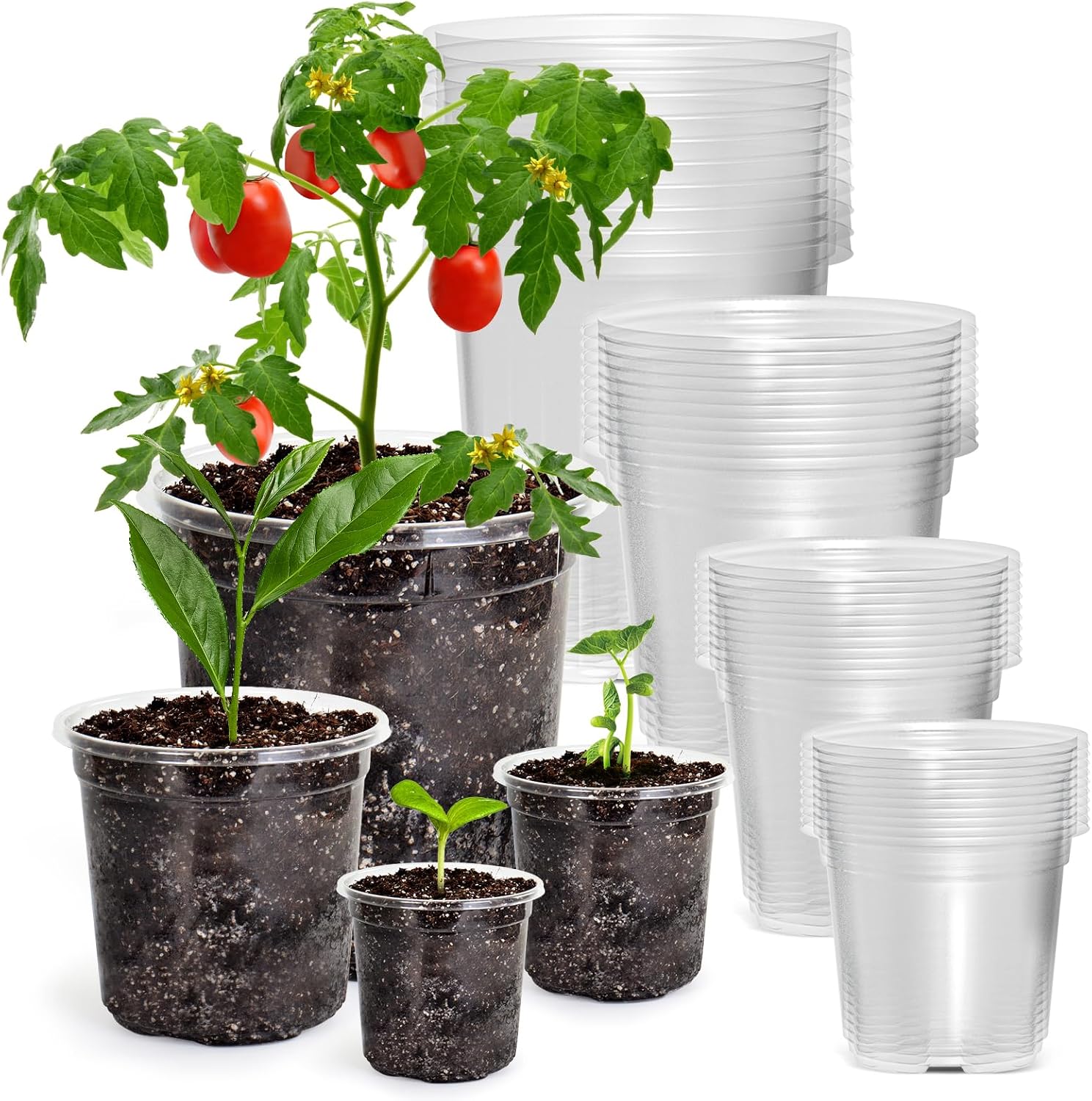
These Bluepro clear nursery pots are a practical starter kit for indoor houseplant care, propagation, and seed starting. The set includes nine pots each of 3.5, 4, 5 and 7 inch sizes so you can match pot size to cuttings, seedlings, or young houseplants without hunting for individual pots. Transparent PET construction makes it easy to monitor root development and soil moisture without disturbing plants, and the molded drainage openings help prevent overwatering when used with a tray or saucer. The plastic is flexible enough to ease transplanting by gently flexing the pot to release root balls, and because the material is lightweight and reusable these pots are convenient to store and move around. Limitations are that the set does not include saucers or humidity domes and the clear plastic shows soil stains over time, so plan to use trays for drainage and occasional cleaning if you want them to look tidy on display.
Best for: Buyers who want a low-risk, ready-to-use kit for propagating and raising indoor plants and who prioritize visible root monitoring and straightforward, no-fuss care.
Less Ideal for: Those wanting finished decorative pots for long-term display or outdoor heavy-duty containers should consider decorative planters or heavier materials instead.
- Assortment of four common nursery sizes suitable for seedlings through young houseplants
- Clear PET walls let you observe roots and soil moisture without disturbing plants
- Molded drainage holes reduce risk of waterlogged soil when paired with a tray
- Flexible, reusable plastic that eases transplanting and storage
- No saucers or humidity domes included so you must provide trays for drainage
- Clear plastic will show soil and water marks and may need regular cleaning
Verdict: A versatile, low-effort starter kit for indoor propagation and young houseplants that makes root and moisture monitoring simple.
Choosing the Right Seedling Pots: Key Factors to Consider
Drainage and Moisture Control
Seedlings need a balance between moist soil and enough aeration at the roots. Pots with well-placed drainage holes and thin-walled profiles that dry slightly between waterings reduce the risk of damping off and root rot.
Consider whether the pot design allows excess water to escape without pooling at the bottom of a larger tray. Some pots have multiple holes or side slits that improve airflow. If you use a humidity dome, factor in how that will affect drying time and whether you can easily lift the dome to check moisture without disturbing fragile seedlings.
Material and Durability
The material determines how the pot responds to watering, sunlight from grow lights, and repeated handling. Rigid plastics hold shape well and are easy to clean, while softer plastics or biodegradable fibers may degrade during extended growing cycles.
Think about whether you want reusable pots you can sanitize between seasons or compostable options that can go directly into the soil. Durability matters if you move flats often or use heat mats and bright lights, which can accelerate wear. Also consider how the material affects root temperature; darker, non-insulated plastics can heat up under lights or in windowsills.
Root Volume and Shape
Appropriate root volume is critical for how quickly seedlings grow and how well they transplant. Too little soil restricts root development and forces early potting up; too much can retain excess moisture and slow root air exchange.
The internal shape matters as well. Vertical cells that encourage downward root growth reduce circling and make transplanting easier. Wider cells suit larger seeds or slower-growing transplants that need more soil before potting on. Match cell size to the crop you plan to start: small cells for herbs and salad greens, larger cells for tomatoes and peppers.
Ease of Transplanting and Handling
How easily seedlings come out of the pot affects survival at planting. Pots that let you push or squeeze seedlings out without damaging the root ball speed up transplanting and reduce shock.
Consider whether the pots nest for storage and how trays or bundles fit into your workflow. If you start many seedlings, look for systems that allow quick removal, clear labeling, and tidy handling. Features like tapered walls, pull-tabs, or thin walls can make transplanting faster and less likely to injure roots.
Compatibility With Equipment and Space
Match pot dimensions to your available space, trays, or greenhouse benches. Some seedling pots are designed to clip into standard flats or sit neatly in propagation trays; others are free-standing and better for individual pots on a windowsill.
Also think about whether you use heat mats, bottom watering, or domes. Pots that conduct heat well will warm seedlings faster on a heat mat, while insulated or thicker materials may require higher mat settings. If you water from below, ensure the pots allow capillary action or have a flat bottom that sits flush in a tray.
Sustainability and Disposal
How you dispose of or reuse pots affects long-term cost and environmental impact. Compostable pots can be planted directly into the garden but may not suit long seed-starting cycles. Reusable plastics reduce waste but require cleaning and storage.
Consider whether the pot material can be recycled locally and whether it leaches chemicals if left in sunlight. For eco-conscious gardeners, balance the convenience of disposable options with the resource use and lifecycle of reusable pots.
Choosing the Right Cell Size for Common Crops
Cell size directly influences how long you can keep a seedling before potting up. Small cells around an inch or two are fine for quick-growing greens and small herb seedlings. Larger cells are better for plants that need more root space before transplanting, such as peppers, tomatoes, and brassicas.
Think about your potting schedule. If you start seeds early indoors, larger cells reduce how often you need to repot. If you prefer a single sowing and quick transplant, smaller cells let you start many varieties in limited space.
- Small cells: best for microgreens, salad greens, and tiny herbs
- Medium cells: good for most annuals and early stage vegetables
- Large cells: ideal for tomatoes, peppers, and late-start transplants
Using Heat Mats and Grow Lights With Seedling Pots
Heat mats and grow lights speed germination and seedling growth, but they interact with pot material. Thin-walled or dark pots warm faster on heat mats, which can be useful for warmth-loving seeds but may dry the medium faster. Monitor moisture more closely when using supplemental heat.
Position pots so airflow from lights or fans prevents fungal problems. If you use domes, lift them daily once seedlings emerge to harden foliage and reduce humidity-related disease.
- Raise seedlings slightly off direct mat heat if pots overheat
- Rotate trays under lights for even growth
- Use light-colored or reflective trays to reduce excess heat buildup
Bottom Watering Versus Top Watering
Bottom watering supplies moisture directly to the root zone and encourages deeper root development, which is beneficial for many seedlings. Pots with flat bottoms and sufficient wicking or holes work best with this method.
Top watering is simpler for a few pots and for checking moisture visually, but it can disturb seeds or compress the soil if the stream is strong. For delicate seedlings use a fine spray or water from the edge of the cell to avoid damaging stems.
- Bottom watering reduces risk of damping off on the soil surface
- Top watering lets you inspect soil moisture and adjust watering frequency
- Combine both methods as seedlings grow: start with bottom watering, finish with gentle top waterings as roots establish
Sanitizing and Reusing Pots
Reusable pots should be cleaned and sanitized between seasons to prevent disease carryover. Scrub away soil, rinse, and use a mild bleach solution or horticultural disinfectant following label directions to kill lingering pathogens.
Inspect pots for cracks, thin spots, or material fatigue. Replace any containers that will not hold shape or that harbor hard-to-remove residues. Proper storage in a dry place extends the usable life of reusable pots.
- Allow pots to dry fully before storage to prevent mold
- Label pots or trays to track sowing dates and reduce mix-ups
- Consider dedicated sets for different plant families to limit cross-contamination
Planting Out and Root Ball Techniques
How you remove seedlings from their pots affects transplant success. For biodegradable pots, plant the whole unit if it will break down promptly in garden soil. For plastic pots, gently tease or compress the sides to ease the root ball free without disturbing roots.
If roots are tightly circling, tease them out or slice the root ball slightly to encourage new outward growth. Harden off seedlings gradually outdoors before planting to reduce shock and let the root system adapt to soil conditions.
- Keep the root ball intact as much as possible during transplant
- Moisten root balls slightly before removing to reduce root breakage
- Harden off for at least a week for tender annuals and vegetables
How We Chose the Best Seedling Pots
We selected seedling pots by focusing on performance characteristics that matter in real seed-starting routines. Our primary filters included drainage behavior, container material and durability, root volume and shape, and ease of transplanting or potting up. We also considered how pots handle repeated watering cycles, compatibility with heat mats or grow lights, and whether the container promotes healthy root growth without excessive root circling. Products were excluded if they lacked clear drainage options, were made from materials known to break down rapidly in typical indoor starting conditions, or had impractical shapes that limit usable soil volume. We prioritized pots that balance moisture control with adequate root space and that fit common seed-tray systems or greenhouse benches. Other practical checks included nesting and storage convenience, suitability for direct-to-ground transplanting where applicable, and whether the materials are compostable or recyclable to support sustainable practices. The evaluation criteria reflect what gardeners notice in the seedling stage: consistent drainage, material performance under repeated use, appropriate root volume for seed varieties, and handling characteristics during transplanting and potting up.
FAQ
Are biodegradable seedling pots better than plastic ones?
Biodegradable pots can be planted directly into the soil, which reduces transplant disturbance. However they sometimes break down too quickly when kept moist for long periods, and may not be suitable if you need to hold seedlings for extended growth. Plastic pots are reusable but require cleaning and storage.
What cell size is best for starting tomatoes?
Tomatoes benefit from larger cells that give ample root volume, typically medium to large cells. Larger cells reduce how often you need to repot and support stronger root development before transplanting outdoors.
How often should I water seedlings in pots?
Watering frequency depends on pot material, cell size, and ambient conditions. Check moisture daily; small cells and heat mats often need more frequent waterings. Aim to keep medium evenly moist but not waterlogged to avoid damping off.
Can I bottom water seedlings in any type of pot?
Bottom watering works best with pots that have flat bottoms and allow the medium to wick moisture up through the soil. Some biodegradable pots may absorb water and become soggy; test a few before relying solely on bottom watering.
When should I transplant seedlings from seedling pots to larger containers?
Transplant when seedlings have a couple of true leaves and a visible, healthy root system that fills but does not severely root-bind the cell. Timing also depends on the crop and your garden schedule; avoid potting up too early or waiting until roots circle tightly.
How do I prevent seedlings from developing root circling in pots?
Choose pots with vertical cell walls and sufficient depth to encourage downward root growth. When you repot, gently loosen circling roots to stimulate outward growth or plant in a wider container to allow roots to spread.
Final Verdict
Choose seedling pots by matching cell size and material to the crops you start and the time you will keep seedlings before planting out. Prioritize drainage and a root-friendly shape to encourage downward growth and reduce transplant shock. Balance the convenience of reusable plastics against the environment and timing advantages of compostable options. Focus on how the pots fit your workflow with heat mats, trays, and watering methods so you can raise healthy, vigorous transplants with minimal stress.
