

Note: This article contains affiliate links. If you click on these links and make a purchase, I may earn a small commission at no extra cost to you. This helps support my research and content. Read my full affiliate disclosure here.
Picking the right hanging grow light changes how plants develop under artificial light. The wrong fixture can cause uneven canopy growth, wasted energy, or heat stress. This guide focuses on five top hanging grow light options suited to indoor gardens and small grow setups. We shortlisted fixtures that deliver consistent coverage, adjustable mounting, and the spectral and electrical features most gardeners need. Below you will find practical notes on how each light performs and the evaluation criteria used to compare them.
Top Picks at a Glance
| Best Overall The best all-around choice for most situations | Barrina 4ft T8 Full Spectrum LED Grow Light, 6-Pack |  |
| Best Value The sweet spot between price and what you get | APICDOM 4ft Full Spectrum Linkable LED Grow Light (30W, 5000K + 660nm Red) |  |
| Best Budget The cheapest option that still gets the job done reliably | APICDOM 2 ft LED Full Spectrum Linkable Grow Light (5000K + 660nm Red) |  |
| Highest Rated A top-rated pick with lots of positive feedback | TuyuBEE Pendant Zoomable Hanging Grow Light with Remote |  |
| Best Seller A high-volume bestseller chosen again and again | VIVOSUN LumaLight 100W LED Full Spectrum Grow Light |  |
Barrina 4ft T8 Full Spectrum LED Grow Light, 6-Pack

| Wattage | 42 watts |
|---|---|
| Brightness | 2100 lumen |
| Color Temperature | 5000 Kelvin |
| Number of Light Sources | 6 |
| Mounting Type | Ceiling Mount |
The Barrina 4ft T8 full‑spectrum LED set is a plug‑and‑play solution for indoor seedling and vegetative stages. Each 42W fixture delivers about 2100 lumens at 5000K, and the included V‑shaped reflector plus aluminum shell improve light throw and heat dissipation for steady performance. Installation is straightforward with mounting clips, tape and connecting cables and you can link multiple fixtures in series to cover a long seedling bench or a small grow tent. Practical benefits for tomato seedlings include even white-spectrum light that encourages compact, balanced early growth and the ability to run an array without complex wiring. Limits to consider are that these are ceiling/indoor fixtures only and not water resistant, and the units use a fixed push‑button on/off control rather than dimming or spectrum adjustment, so you will need a separate timer or controller for precise photoperiods and intensity tuning.
Best for: Growers who prioritize steady, high‑output lighting arrays for fast, uniform seedling growth and want a straightforward, scalable installation for benches or small grow tents.
Less Ideal for: Home gardeners wanting adjustable spectrum or integrated dimming control, or setups where fixtures may be exposed to moisture or occasional splashing.
- Full spectrum 5000K output suited to seedling and vegetative growth
- Linkable design lets you daisy‑chain multiple fixtures to cover benches or tents
- V‑shaped reflector and aluminum body improve light distribution and heat dissipation
- No built‑in dimming or spectrum control so intensity and photoperiod need external timers or controllers
- Not water resistant, so it must be kept away from humidity and overhead watering
Verdict: A reliable, linkable full‑spectrum T8 array that delivers consistent light intensity for vigorous tomato seedlings when you need scalable, performance‑focused coverage.
APICDOM 4ft Full Spectrum Linkable LED Grow Light (30W, 5000K + 660nm Red)

| Light Output Maximum | 3600 lumens |
|---|---|
| Wattage | 30 watts |
| Color Temperature | 5000 Kelvin |
| Light Source Special Features | 660 nm Red Light Enhancement, Full Spectrum |
| Power Source | Corded Electric |
This APICDOM 4-foot LED strip is a compact, energy-efficient fixture intended for small greenhouses, grow tents, or shelving setups. It produces a full spectrum daylight output (5000K) with added 660 nm red light to support seedling development, flowering, and fruiting while drawing only 30 watts and producing up to 3600 lumens. The light is easy to mount or hang using the included hardware and inline power switch, and you can daisy-chain up to four units to cover longer benches without extra connectors. Its slim plastic housing fits neatly under shelves or in narrow greenhouse bays and is damp rated for typical indoor gardening environments. Limitations to consider are a single fixed output with no dimming or spectrum controls and a plastic body that may be less robust than metal fixtures in high-humidity commercial setups. For hobbyist growers who want simple, bright, linkable lighting, this unit balances performance and convenience well.
Best for: Gardeners running a small greenhouse or multi-shelf indoor setup who want bright, plug-and-play fixtures that are easy to install and expand.
Less Ideal for: Large-scale commercial growers or anyone needing adjustable spectrum control or heavy-duty metal fixtures for high-humidity, long-term installations.
- Full spectrum 5000K output with 660 nm red enhancement to support vegetative growth and flowering
- Low energy use at 30 watts while providing up to 3600 lumens
- Daisy-chain linkable up to four units for easy expansion and cleaner cable management
- Includes mounting hardware and supports both hanging and flush mounting for flexible placement
- No dimming or spectrum adjustment built in
- Plastic housing may feel less durable in very humid or commercial environments
Verdict: A space-saving, energy-efficient full-spectrum LED strip that is ideal for hobbyist small greenhouses needing bright, expandable lighting.
APICDOM 2 ft LED Full Spectrum Linkable Grow Light (5000K + 660nm Red)
| Light Source Type | LED |
|---|---|
| Color Temperature | 5000 Kelvin |
| Light Output Maximum | 1900 lumens |
| Wattage | 16 watts |
| Light Source Special Features | 660nm Red-Light enhancement, Linkable design |
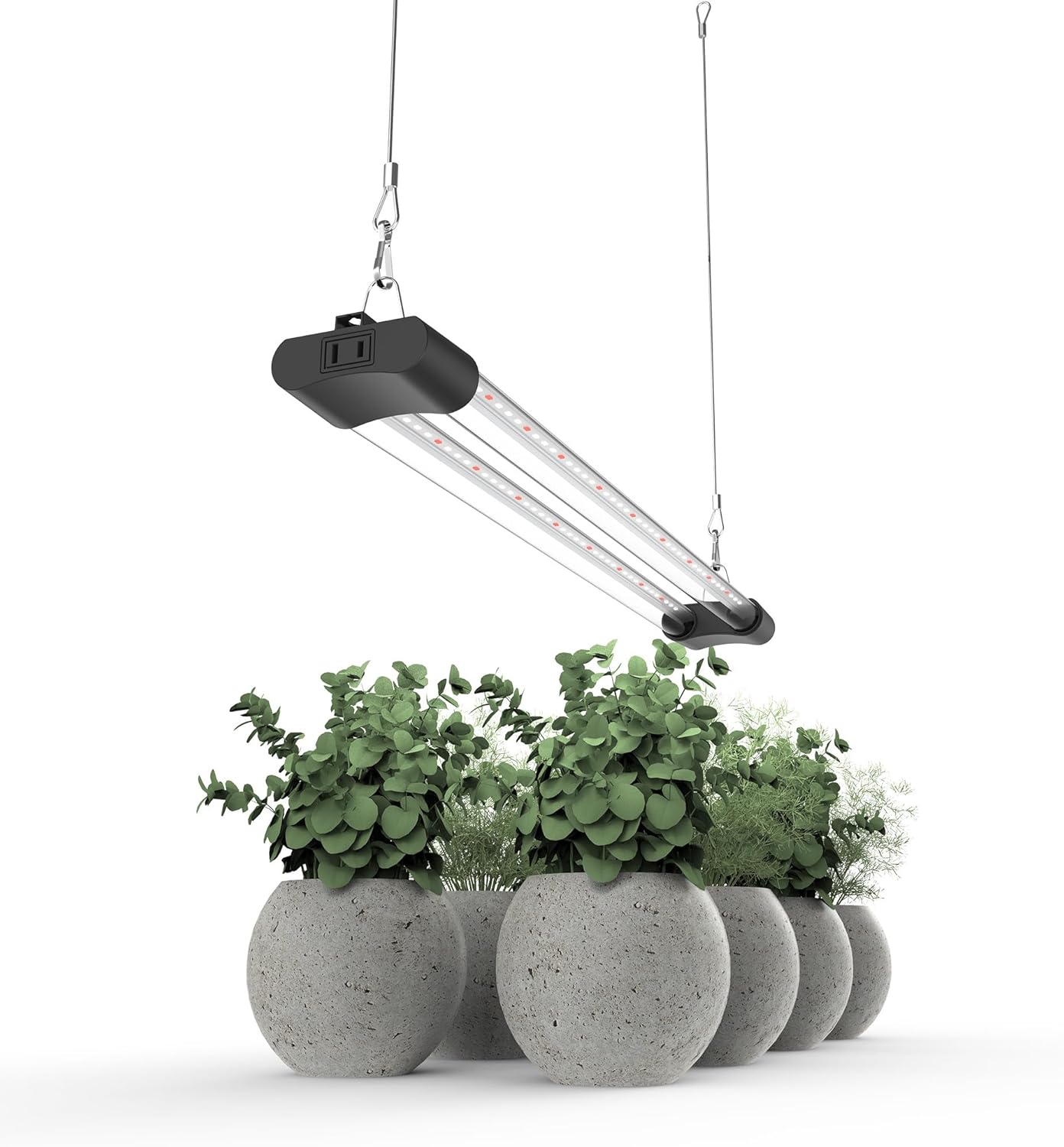
This APICDOM 2 ft LED grow light is a straightforward solution for supplementing indoor plant light on a budget. It delivers a full 5000K spectrum with an added 660nm red band useful for sprouting and flowering, while the integrated LEDs run at 16 watts and produce up to 1900 lumens. Installation is simple: plug in the cord, use the inline on/off switch, and hang or flush mount with the included hardware. A useful practical feature is the daisy chain/linkable design that lets you connect up to four fixtures on one circuit to cover larger benches or shelving. The unit is compact, damp rated for indoor use, and carries FCC certification and a three year limited warranty. Limitations are the small coverage area per fixture and the fixed 16 W output, so multiple units are needed for larger setups or dense plant canopies. Build materials are basic metal and plastic, which keeps cost down but may not match heavier-duty commercial fixtures.
Best for: Buyers who want an affordable, easy-to-install grow light to supplement small indoor gardens or seedling racks and who plan to scale by adding identical fixtures as needed.
Less Ideal for: Growers needing high-output single fixtures for large rooms or dense canopies should consider higher-wattage or professional-grade lights instead.
- Full spectrum 5000K with 660nm red enhancement tailored for vegetative growth and flowering
- Linkable daisy-chain design allows up to four units per circuit to scale lighting across racks or benches
- Simple plug-and-play installation with hanging and flush-mount hardware included
- Low power draw at 16 watts delivers reasonable brightness while keeping energy use down
- Damp rated and FCC certified with a 3-year limited warranty for indoor use
- Compact size and 16 W output limit useful coverage per fixture, requiring multiple units for bigger setups
- Basic metal and plastic construction is less robust than commercial-grade fixtures
Verdict: A budget-friendly, linkable 2 ft LED grow light that gives good full-spectrum performance for small indoor gardens and is easy to expand by adding more units.
TuyuBEE Pendant Zoomable Hanging Grow Light with Remote
| Power | 30 watts |
|---|---|
| Brightness | 2000 lm |
| Control | Remote |
| Color Temperature | 3000K/4000K/5000K |
| Beam Angle | 15°-60° |
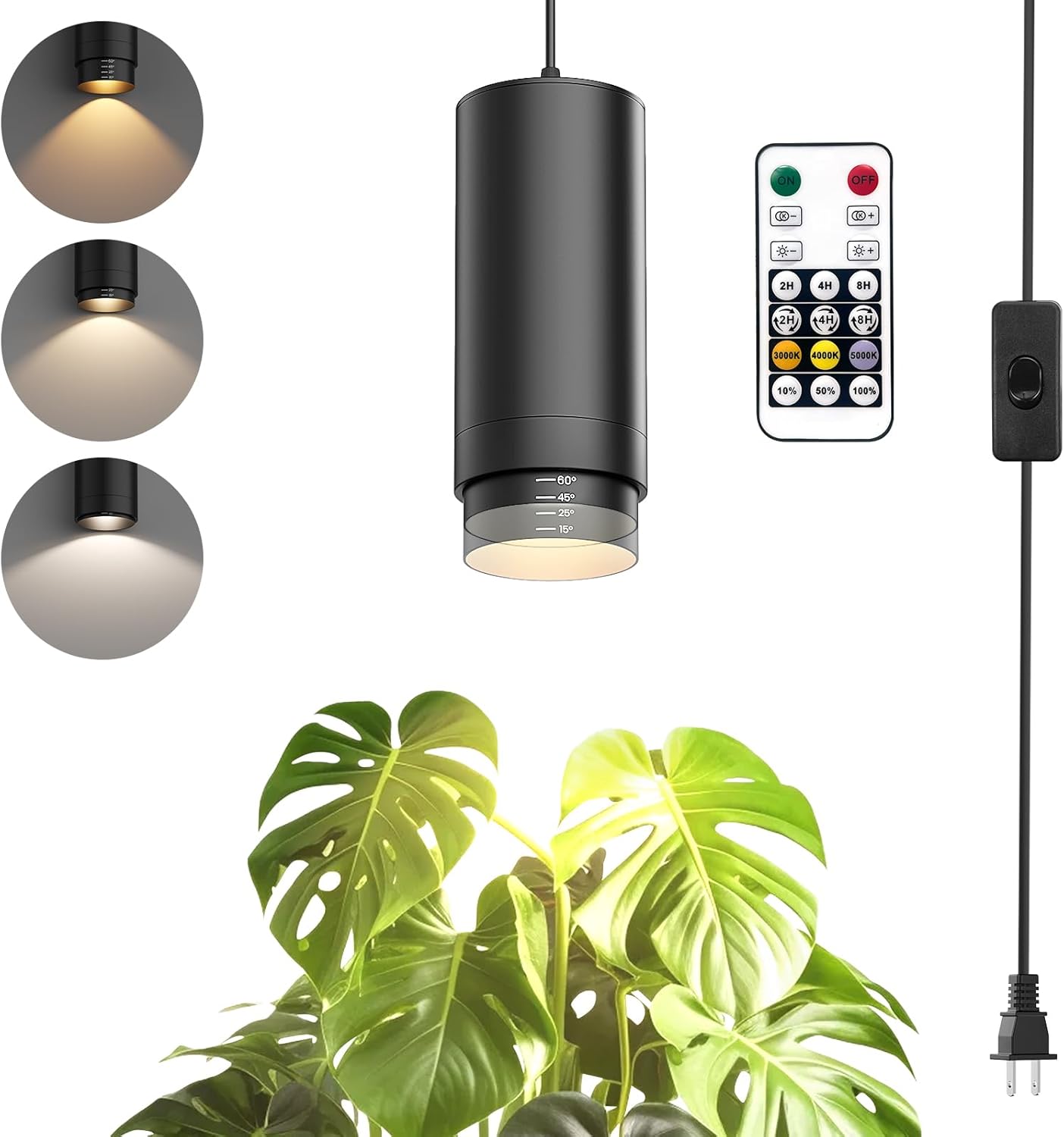
The TuyuBEE pendant grow light is a compact ceiling-hung LED designed to give indoor plants adjustable, repeatable lighting without daily babysitting. It uses a 15°–60° zoomable optic so you can concentrate a bright 2000-lumen spot over a single plant or widen the beam for a small group. The included remote controls brightness from 10% to 100%, switches color temperature between 3000K, 4000K and 5000K, and stores your last settings so the unit returns to the same output. A built-in daily auto-repeat timer (2/4/8 hours) simplifies schedules for seedlings, herbs, or a single hanging specimen. The lamp mounts suspended from the ceiling and arrives with hanging hardware, and its aluminum body keeps it lightweight and discreet. Important limitations are that it is meant for indoor pendant installation only and not water resistant, so it is unsuitable for humid or outdoor setups, and the single-lamp form is best for one to a few plants rather than a large bench.
Best for: Buyers who want a reliable, low-maintenance hanging light to run a consistent daily schedule for a few indoor plants or a dedicated specimen without frequent adjustments.
Less Ideal for: Growers who need weatherproof fixtures, wide multi-shelf coverage, or a complete high-intensity canopy solution for larger gardens should look elsewhere.
- Zoomable beam (15°–60°) lets you focus light on a single plant or widen coverage for small groups
- Remote-controlled dimming (10%–100%) and three color temperatures (3000K/4000K/5000K) for flexible light recipes
- 2000 lumens at 30W provides bright output with relatively low power draw
- Daily auto-repeat timer with 2/4/8-hour options and memory function for consistent unattended schedules
- Lightweight aluminum pendant and included hanging hardware simplify ceiling installation
- Not water resistant so it cannot be used in humid or outdoor environments
- Single fixture design limits effective coverage for larger grow areas
Verdict: A dependable, remotely controlled pendant grow light that delivers bright, adjustable beam and automatic daily timer for fuss-free care of a few indoor plants.
VIVOSUN LumaLight 100W LED Full Spectrum Grow Light

| Wattage | 100 watts |
|---|---|
| Light Source Type | LED |
| Number of Light Sources | 336 |
| Is Waterproof | True |
| Control Method | Remote |
The VIVOSUN LumaLight 100W is a compact full-spectrum LED grow light intended for indoor gardens and patios. It uses a mix of white, blue, red and far-red diodes to support all growth stages from seedlings through flowering, and the array is arranged to deliver uniform intensity across the canopy. Typical use is hanging above a small grow area with the included rope hangers and adjusting intensity via the four-level dimming knob or remote/mobile control when paired with VIVOSUN accessories. Notable features include IP65 water and dust resistance for high-humidity setups, a low-heat design for closer placement to plants, and Bluetooth/remote control compatibility for easier scheduling. Practical benefits are even coverage for several small plants, lower heat stress, and long expected LED life. Limitations are its 100W power level, which is best for small tents or a few plants rather than larger grow rooms, and some advanced scheduling requires the separate GrowHub controller for full smart automation.
Best for: A practical home grower who wants a reliable, compact full-spectrum light for seedlings through flowering and values even coverage and low heat in a small tent or patio setup.
Less Ideal for: Large-scale growers or those outfitting multi-shelf systems who need higher wattage fixtures or broader coverage should consider more powerful models.
- Full-spectrum diode mix (white, blue, red, far-red) suitable for all growth stages
- Dimmable four-level control plus Bluetooth/remote connectivity for convenient intensity adjustments
- IP65 waterproof and dustproof rating allows use in humid or misted environments
- Low-heat design with aluminum body for efficient thermal management and longer LED life
- At 100 watts it is intended for small tents or modest plant counts and not optimized for larger grows
- Advanced smart scheduling requires purchasing the GrowHub controller separately
Verdict: A dependable, compact full-spectrum LED grow light that delivers even coverage and low heat for small indoor grows.
Choosing the Right Hanging Grow Light: Key Factors to Consider
Spectrum and Intensity
Plants respond to specific wavelengths and overall photon flux more than to bulb type. A hanging grow light that provides a full spectrum or tunable channels lets you support strong vegetative growth and efficient flowering. Intensity matters relative to canopy distance; a fixture with high photosynthetic photon flux density can sit higher without losing effectiveness, which reduces heat stress on foliage.
Also consider how the manufacturer reports output. Look for PPF or PPFD figures rather than vague wattage claims. Those numbers give measurable expectations for how well a light will drive photosynthesis across your intended canopy.
Coverage Pattern and Canopy Size
A good hanging grow light should deliver even light across the footprint of your plants. Fixtures with focused beams can create hotspots that force rearranging your canopy, while wide-angle or properly diffused designs reduce the need to move pots frequently. Match the advertised coverage area to your actual plant layout and allow for some overlap between fixtures when needed.
Think about how your garden will change as plants grow. You may need to raise or lower the fixture, or add another light to maintain uniform intensity. Buying a light that covers slightly more than your current canopy gives flexibility as plants expand.
Heat Output and Cooling
Hanging fixtures sit close to foliage and can transfer heat directly to leaves. Lights with effective passive cooling or quiet active cooling prevent heat buildup that can cause leaf burn or increase transpiration. If a light runs hot it forces you to hang it higher, reducing intensity and efficiency.
Consider the ventilation in your grow space. Higher humidity or limited air movement requires fixtures with better thermal control. Also factor in how heat affects nearby equipment and how it interacts with your ventilation or exhaust systems.
Mounting Options and Adjustability
Secure hang points, easy-to-use ratchet ropes, and multiple mounting points simplify installation and day-to-day canopy management. A fixture that allows smooth, safe height adjustments reduces the risk of damage when tuning light distance as plants develop. Look for included hardware that matches your intended ceiling or rack setup.
Durability matters because repeated adjustments and humidity exposure can wear out cheap hardware. Strong hang points and corrosion-resistant fittings extend the useful life of the system and improve safety.
Electrical Efficiency and Controls
Running lights is an ongoing cost, so electrical efficiency affects long-term budgets and heat generation. Choose fixtures with clear efficiency specs such as micromoles per joule or energy draw at different output modes. Dimming capability and programmable control over light cycles let you fine-tune intensity for stages of growth and reduce power use when full output is unnecessary.
Also check compatibility with timers, external controllers, or built-in schedules. Simple manual dimming is helpful, but integrated controls reduce setup complexity and enable automated light recipes.
Matching Light to Plant Types and Growth Stages
Different plants and growth stages need different light intensities and spectral emphasis. Leafy greens generally tolerate lower intensities and benefit from blue-rich light during vegetative growth, while flowering and fruiting plants need more red and far-red content along with higher overall photon flux. Pick a hanging fixture that lets you adjust spectrum or intensity to fit the species you grow.
If you rotate plant types frequently, choose a versatile fixture with either full-spectrum output or selectable channels. That flexibility helps avoid over- or under-lighting when moving from seedlings to mature plants.
- Seedlings and clones: low-to-moderate intensity and cooler spectrum
- Vegetative growth: higher blue content and moderate to high intensity
- Flowering/fruiting: increased red spectrum and higher photon flux
Mounting in Small Spaces and Grow Tents
In compact setups, hanging lights must balance coverage with headroom. Slim-profile fixtures or those with focused reflectors can maximize usable space without sacrificing light quality. Consider a multi-light array for very small tents to spread heat and create uniform intensity.
Secure mounting is especially important in small spaces where accidental contact with foliage or equipment is more likely. Use hardware rated for the fixture weight and check for corrosion resistance if humidity will be high.
- Measure tent or shelf height before selecting fixture depth
- Look for adjustable hangers that lock securely at the desired height
Managing Heat and Ventilation
Hanging fixtures add heat to the canopy zone. Pair your lighting choice with adequate airflow and exhaust to keep temperatures stable. In many setups, running a modest circulating fan near the canopy reduces leaf hotspots and improves transpiration balance.
If heat is a concern, prioritize fixtures with passive cooling fins or low-wattage, high-efficiency LED arrays that produce less waste heat per photon.
- Allow a buffer between hot fixtures and the canopy when ventilation is limited
- Use clip fans or oscillating fans to even canopy temperature
Dimming, Timers, and Light Schedules
Controlling daily light duration and intensity is central to indoor gardening. Built-in dimmers and timer compatibility let you simulate natural daylengths and reduce power consumption during less demanding stages. For photoperiod-sensitive plants, reliable timers maintain consistent schedules to avoid stress or undesired flowering.
Consider whether you want simple manual controls or integration with a smart controller for remote adjustments. Programmable fixtures reduce the need for daily intervention and help maintain stable growth patterns.
- Dimming can extend the usable life of a fixture and lower energy use
- Consistent timers prevent accidental light leaks that disrupt flowering cycles
Durability and Moisture Resistance
Indoor gardening environments can be humid, so choose fixtures with corrosion-resistant hangers and sealed electronics where possible. IP-rated housings provide extra protection in high-humidity situations or when the light may be exposed to occasional misting.
Also evaluate the build quality of cables and connectors. Sturdy wiring and strain relief at connection points reduce the chance of electrical faults and simplify long-term maintenance.
- Look for sealed drivers or rated enclosures in humid setups
- Inspect hang hardware for rust-resistant materials
How We Chose the Best Hanging Grow Light
We evaluated hanging grow lights using practical, garden-focused criteria that matter to everyday indoor growers. First, light spectrum and photosynthetic photon flux density were prioritized to ensure plants receive the right wavelengths and intensity for vegetative and flowering stages. Second, coverage and beam uniformity were assessed so fixtures provide even light across common canopy sizes without hot spots or dark zones. Third, thermal management and heat output were considered because excess heat changes watering needs and can force fixtures too far from plants. Fourth, mounting flexibility and adjustability were examined since easy height adjustment and secure hang points simplify setup and canopy management. Finally, electrical efficiency and dimming options were included to reflect long-term running costs and control over growth cycles. We excluded fixtures that lack clear spectral data, have inadequate mounting hardware, or show poor build quality that could be unsafe in a humid indoor environment. Our process favored lights with measurable output specs and real-world usability rather than marketing claims alone. The scoring metrics reflect these priorities and guided what made the final shortlist.
FAQ
How high should a hanging grow light be above my plants?
Height depends on the fixture output and plant stage. Seedlings need the light a bit farther away to avoid burn, while mature flowering plants require closer, stronger light. Follow manufacturer PPFD guidance when available and adjust upward if leaves show signs of stress.
Can a hanging LED replace fluorescence or HID lights?
Often yes. Modern LEDs can match or exceed older technologies when they supply the right spectrum and photon flux. Check PPF/PPFD and coverage numbers rather than relying on wattage comparisons to older lamp types.
Is ventilation necessary with hanging grow lights?
Usually. Even energy-efficient fixtures produce some heat, and air movement helps manage temperature and humidity at the canopy. Small circulation fans and proper exhaust improve plant health and prevent hot spots.
Do I need a dimmer or programmable schedule?
It depends on your plants and routine. Dimming and scheduling are useful for matching growth stages, saving energy, and ensuring consistent photoperiods for sensitive species. Simple timers work for basic needs, while dimmers offer finer control.
How do I know what coverage area a hanging light will provide?
Coverage is typically given as a footprint at a specified distance and intensity. Compare the advertised coverage and recommended hang height to your canopy dimensions, and allow for overlap if using multiple fixtures to avoid dark zones.
Final Verdict
Choosing the right hanging grow light means balancing spectrum, intensity, coverage, and thermal behavior against your grow space and plant types. Prioritize fixtures that report clear photon output and coverage, offer reliable mounting and adjustment, and provide efficient thermal control. Think about how your garden will change over a season and select a light that gives flexibility through dimming or spectrum control. That approach minimizes surprises and helps you dial in consistent, healthy growth.
