

Note: This article contains affiliate links. If you click on these links and make a purchase, I may earn a small commission at no extra cost to you. This helps support my research and content. Read my full affiliate disclosure here.
If you allot a plot at a community site or maintain a small allotment, the right greenhouse can turn a short growing window into a productive season. A greenhouse for allotment needs to fit limited space, withstand variable weather, and provide reliable ventilation and shelving for crops and seedlings. This guide shortlists six strong options suited to allotment use and evaluates them on structure durability, ventilation control, and usable workspace. Read on to match a greenhouse to your plot layout, weather exposure, and gardening goals.
Top Picks at a Glance
| Best Overall The best all-around choice for most situations | Garvee 6×8 ft Walk-in Greenhouse with Polycarbonate Panels and Aluminum Frame |  |
| Best Quality Built to a higher standard if you want something more solid | IDEALHOUSE 6×8 ft Walk-In Greenhouse with Polycarbonate Panels and Aluminum Frame |  |
| Best Value The sweet spot between price and what you get | EAGLE PEAK 8×6 Pop-Up Walk-In Greenhouse |  |
| Highest Rated A top-rated pick with lots of positive feedback | RUIJOROO Walk-In Tunnel Greenhouse with PE Cover and Mesh Windows (9.8 x 6.5 x 6.5 ft) |  |
| Most Popular A crowd favorite that many people choose with confidence | Greengro Small Walk-In Greenhouse with PE Cover and Zippered Door |  |
| Best Seller A high-volume bestseller chosen again and again | EAGLE PEAK 9×4 Pop-Up Walk-In Greenhouse (Lean-To Design) |  |
Garvee 6×8 ft Walk-in Greenhouse with Polycarbonate Panels and Aluminum Frame

| Cover Material | Polycarbonate (PC) |
|---|---|
| Frame Material | Aluminum |
| Number Of Vents | 1 |
| Indoor Outdoor Usage | Outdoor |
The Garvee 6×8 ft walk-in greenhouse is designed for hobby gardeners who want a durable, year‑round protected space for seedlings, potted plants and small vegetable beds. It uses multiwall polycarbonate panels on a matte aluminum frame to keep sunlight in while blocking harmful UV and to resist dents and discoloration. Practical features include an adjustable roof vent for airflow, a lockable outward‑opening swing door for security and four ground anchors plus mid‑post supports to stabilize the structure. The integrated rain gutter lets you route runoff for collection or away from the foundation. Assembly is mostly straightforward thanks to labeled parts and tool-free panel installation, though an electric driver speeds the process. Expect a single vent and a modest interior size, so airflow management and staging of plants will require some planning. This model balances durability and convenience for small backyard plots but is not a substitute for larger professional houses if you need extensive benching or high headroom.
Best for: Ideal for homeowners and hobby gardeners who want a dependable small greenhouse to extend the growing season and protect seedlings and potted vegetables in a backyard setting.
Less Ideal for: Not the best choice for growers who need large uninterrupted benching space, tall crops, or a commercial production setup.
- Reinforced polycarbonate panels with UV protection preserve plant health and let in light
- Matte aluminum frame resists scratches and requires little maintenance
- Lockable door and included ground anchors add security and stability
- Adjustable roof vent and integrated gutter improve climate control and water management
- Interior is compact with a single vent which limits passive airflow for larger heat loads
- Assembly still requires time and some tools for faster installation
Verdict: A sturdy, compact greenhouse that gives hobby gardeners weatherproof, UV‑protected growing space with practical ventilation and secure features.
IDEALHOUSE 6×8 ft Walk-In Greenhouse with Polycarbonate Panels and Aluminum Frame

| Size | 6×8 FT |
|---|---|
| Cover Material | Polycarbonate (PC) |
| Frame Material | Aluminum Steel |
| Number Of Vents | 1 |
| Indoor Outdoor Usage | Outdoor |
This IDEALHOUSE 6×8 walk-in greenhouse is designed for gardeners who want a durable, easy-to-assemble sheltered growing space. It uses reinforced 720 g/m² polycarbonate panels that transmit light while blocking most UV and slide into an aluminum-steel frame with a slide-in assembly system that speeds setup. The greenhouse includes a roof vent and adjustable ventilation to help control temperature and airflow, plus a gutter-style water management feature for rainwater collection. In practice the structure provides a roomy footprint for seed-starting, overwintering tender plants, or extending the growing season for vegetables and ornamentals. Expect relatively straightforward assembly if you follow the instructions, but plan to handle heavy components carefully and allow for two shipments. The main limitations are the single roof vent for airflow control and the need to anchor the unit properly in exposed sites; the frame and panels are sturdy for typical garden conditions but may require additional bracing in high-wind locations.
Best for: Serious hobby gardeners who prioritize a robust, season-extension structure and want a relatively fast-build walk-in greenhouse for regular cultivation and overwintering of plants.
Less Ideal for: People needing a lightweight, ultra-portable tunnel-style greenhouse for quick seasonal use or gardeners in very windy coastal sites without plans to add extra anchoring or bracing.
- Reinforced 720 g/m² polycarbonate panels provide strong light transmission while blocking most UV
- Aluminum-steel frame offers solid structural support for outdoor use
- Slide-in panel assembly and clear instructions speed setup compared with conventional builds
- Integrated gutter system enables simple rainwater drainage and collection
- Top roof vent and adjustable ventilation help regulate internal temperature
- Only one roof vent limits fine-grained airflow control for larger heat loads
- Heavy components and sharp edges require careful handling during assembly
Verdict: A sturdily built, performance-focused 6×8 walk-in greenhouse that speeds assembly while providing durable protection for season-extension and overwintering.
EAGLE PEAK 8×6 Pop-Up Walk-In Greenhouse

| Cover Material | Polyethylene (PE) |
|---|---|
| Frame Material | Polyester |
| Number Of Vents | 2 |
| Indoor Outdoor Usage | Outdoor |
This EAGLE PEAK 8×6 pop-up walk-in greenhouse is built for gardeners who want a quick, usable growing space without a large build project. The preassembled steel frame uses the PeakPush center lock so one person can erect the unit in minutes with no tools. The scrim-reinforced polyethylene cover is water-resistant and UV-resistant, which helps retain humidity and filter light for winter protection. Practical features include a wide zippered roll-up door and mesh windows for ventilation, plus reinforced corners and supplied wind ropes and stakes for added stability. At 48 sq ft it gives enough room to arrange shelves or a potting bench for seed starting and staging plants for an allotment plot. Limitations are typical for pop-up greenhouses: the PE cover and polyester frame are less durable than rigid polycarbonate or wood in long-term heavy-weather exposure, and it will need periodic tightening and anchoring in windy locations. For gardeners wanting a fast, functional seasonal greenhouse this model balances ease of use with useful working space.
Best for: Gardeners who need a ready-to-use, easy-to-erect greenhouse to extend the growing season and organize seedlings or crops for an allotment without committing to a permanent structure.
Less Ideal for: Users looking for a heavy-duty, permanent greenhouse solution for year-round use or those who prefer rigid polycarbonate or wooden frames for maximum durability.
- One-person pop-up setup with patented PeakPush center lock requires no tools
- PE cover with scrim-reinforced corners offers water resistance and UV protection
- Wide zippered roll-up door and mesh windows provide ventilation control
- Sturdy steel frame with powder-coated finish plus included wind ropes and stakes
- PE cover and polyester frame are less robust than rigid greenhouse materials for long-term exposure
- Pop-up design may require occasional re-tightening and secure anchoring in windy conditions
Verdict: A fast, one-person pop-up greenhouse that gives allotment gardeners a roomy, season-extending workspace with minimal setup effort.
RUIJOROO Walk-In Tunnel Greenhouse with PE Cover and Mesh Windows (9.8 x 6.5 x 6.5 ft)

| Size | 9.8×6.5×6.5 |
|---|---|
| Cover Material | Polyethylene (PE) |
| Number of Doors | 1 |
| Number Of Vents | 6 |
| Indoor Outdoor Usage | Outdoor |
This RUIJOROO walk-in tunnel greenhouse provides a straightforward, no-frills shelter for seedlings, vegetables and potted plants through cool or wet seasons. The powder-coated iron frame with a triangular base design gives the structure extra stability, while the 140 g/m² PE cover is described as sunproof and waterproof to help retain humidity and protect plants from light rain and wind. Ventilation is practical: a zippered mesh door plus six mesh windows let you manage airflow and reduce excess heat build-up on sunny days. Assembly is simple with clear instructions and is suitable for a single person with basic tools. Expect a portable setup that works well on a patio or lawn but requires staking or anchoring in exposed sites because lightweight tunnel greenhouses can struggle in high winds. The PE cover will perform seasonally but is less durable long-term than rigid polycarbonate options, so plan to store it indoors in winter or replace the cover after a few seasons if exposed to intense sun or abrasion.
Best for: Buyers who prioritize a dependable, easy-to-assemble seasonal greenhouse to protect seedlings and vegetable beds and who value straightforward, practical construction over permanent rigidity.
Less Ideal for: Gardeners seeking a permanent, all-weather greenhouse for year-round heavy snow or hurricane-prone locations should choose a rigid-frame or polycarbonate structure instead.
- Sturdy powder-coated iron frame with triangular base for improved stability
- 140 g/m² PE cover that is sunproof and waterproof to retain humidity
- Good ventilation via one zippered mesh door plus six mesh windows
- Walk-in size gives easy access for potting and moving plants
- Simple assembly with clear instructions
- PE cover is less long-lasting than rigid greenhouse panels and may need replacement after several seasons
- Lightweight tunnel design will need secure anchoring in windy locations
Verdict: A reliable, easy-to-assemble walk-in tunnel greenhouse that delivers seasonal protection and ventilation for backyard vegetable and seedling gardening.
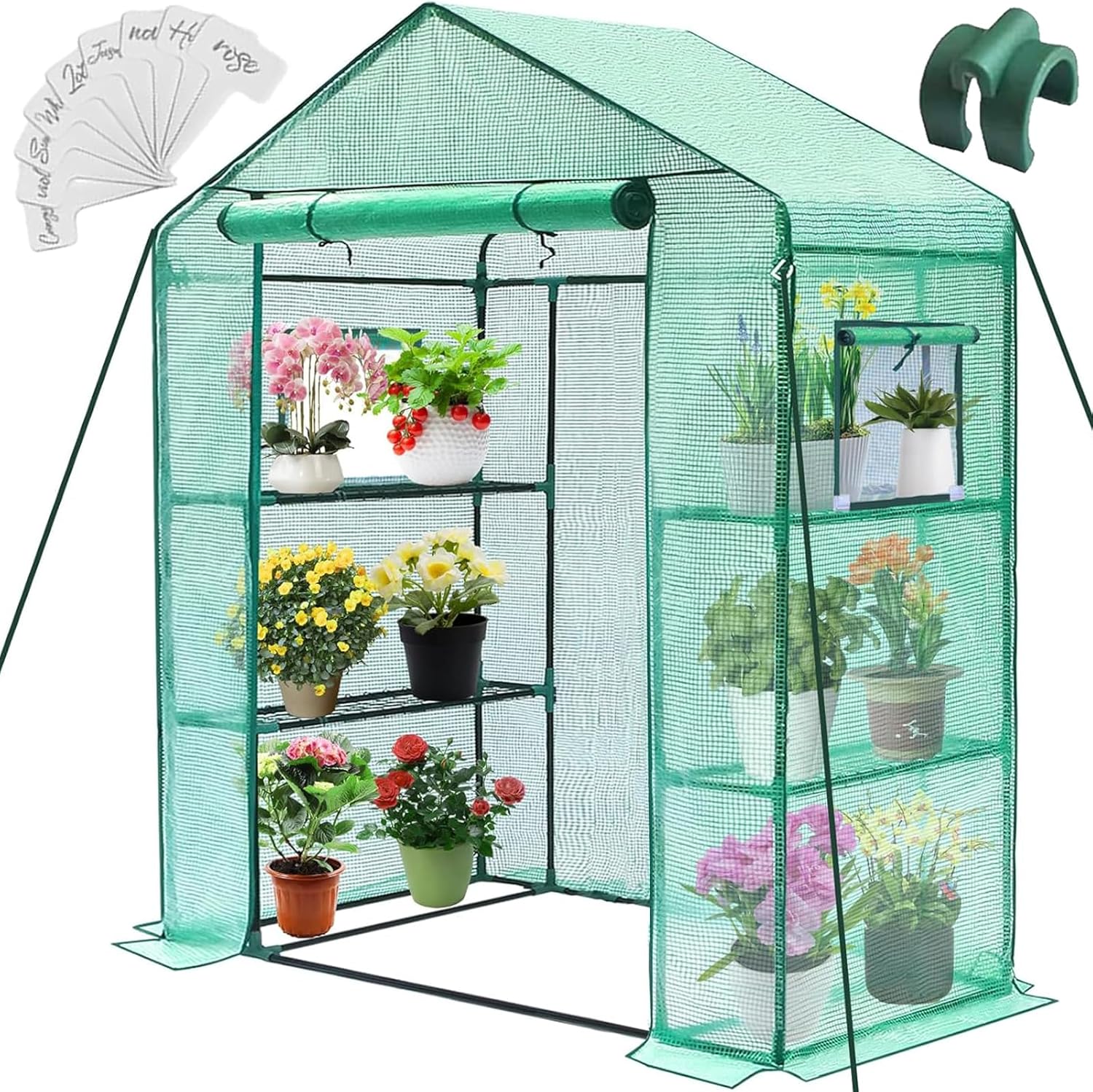
Greengro Small Walk-In Greenhouse with PE Cover and Zippered Door
| Cover Material | Polyethylene (PE) |
|---|---|
| Frame Material | Metal |
| Closure Type | Zipper |
| Nominal Wall Thickness | 16 millimeters |
This Greengro small walk-in greenhouse creates a sheltered microclimate for potted plants, seedlings and herbs by combining a metal framework with a thick PE cover and zippered access. It is typically used on a patio, balcony or in a backyard to extend the growing season, shield plants from wind and rain, and keep pests out. Notable features include screened ventilation windows, a roll-up zippered door, four internal shelves for staging pots, and guy ropes with ground stakes for added stability. Practical benefits are straightforward setup without tools, portability for repositioning, and weather-resistant protection that lets you start seeds earlier or overwinter tender plants. Important limitations are its small footprint and modest shelf weight capacity, so it is best for small to medium pots rather than heavy planters, and the lightweight frame and cover remain less durable than rigid greenhouse structures in long-term, high-wind exposure.
Best for: Buyers who want an efficient, moveable solution to protect and organize several small to medium potted plants and seedlings without investing in a permanent structure.
Less Ideal for: Gardeners who need a long-term, heavy-duty greenhouse for large pots, full-size vegetables, or locations regularly exposed to very strong winds should consider sturdier, permanent options.
- Thick polyethylene cover with reinforced edging offers waterproofing and UV reduction
- Zippered roll-up door and screened windows provide ventilation and easy access
- Tool-free assembly and detachable design for quick setup and relocation
- Integrated shelves create organized vertical growing space for multiple pots
- Small size limits capacity to small and medium pots and seed trays
- Lightweight frame and cover are not as long-lasting as permanent rigid greenhouses
Verdict: A compact, easy-to-assemble micro greenhouse that protects and organizes small to medium potted plants while staying portable and budget friendly.
EAGLE PEAK 9×4 Pop-Up Walk-In Greenhouse (Lean-To Design)

| Size | 9×4 |
|---|---|
| Cover Material | Polyethylene (PE) |
| Frame Material | Alloy Steel |
| Number of Doors | 2 |
| Number Of Vents | 1 |
The EAGLE PEAK 9×4 pop-up walk-in greenhouse is a compact lean-to style shelter meant to protect plants through colder months and for seed starting. It uses a pre-assembled alloy steel frame that pops up for quick, single-person setup and a polyethylene cover that is water-resistant and UV-stabilized to retain humidity while diffusing sunlight. Typical use is against a wall or freestanding on a patio or allotment plot where you need easy frost protection and ventilation through roll-up zippered doors and mesh windows. Notable features include the heavy-duty powder-coated frame, expansion bolts for wall fastening, and included wind ropes and stakes for extra stability. Practical benefits are fast assembly, a walk-in interior that lets you tend plants without stooping, and modest wind and weather resistance compared with flimsy pop-up tents. Important limitations are that the PE cover and lightweight frame are not equivalent to rigid polycarbonate or timber greenhouses for long-term heavy snow or storm exposure, and you may want to add extra anchoring or relocate it in severe weather. Shelving is optional as an accessory rather than built in.
Best for: Buyers who prioritize easy, low-effort protection for an allotment or small plot and want a greenhouse they can set up alone and use seasonally for seed starting and frost protection.
Less Ideal for: Those seeking a permanent, heavy-duty greenhouse for year-round production or locations with frequent heavy snow and strong storms should consider sturdier polycarbonate or timber options.
- One-person pop-up pre-assembled frame for very fast setup
- Powder-coated alloy steel frame with expansion bolts and tie-downs for improved stability
- PE cover that is water-resistant and UV resistant to help retain humidity and protect from frost
- Walk-in design with zippered roll-up doors and mesh windows for easy access and ventilation
- PE cover and lightweight frame are less durable than rigid greenhouse materials for heavy snow or prolonged high winds
- Limited built-in shelving or rigidity so additional anchoring and organization accessories are often needed
Verdict: A quick-to-assemble, walk-in pop-up greenhouse that gives allotment gardeners dependable seasonal frost protection without requiring two people to install.
Choosing the Right Greenhouse for Allotment: Key Factors to Consider
Frame Material and Strength
The frame determines how well a greenhouse handles wind, rain, and the occasional impact in a shared allotment environment. Metal frames such as aluminum offer a good balance of strength and corrosion resistance without heavy weight, while steel can be stronger but may require coatings to prevent rust. Lighter frames can be easier to move or assemble but risk flexing under gusts.
Look at connection points and cross-bracing when assessing frames. Simple square tubes without adequate bracing will twist over time, reducing glazing seals and increasing drafts. For allotments with exposed positions, prioritize frames with reinforced corners, good fasteners, and accessible spare parts so small repairs are manageable.
Glazing Type and Light Transmission
Glazing affects how much light reaches plants, how well the structure retains heat, and how it stands up to knocks or hail. Polycarbonate panels are common for allotment greenhouses because they balance impact resistance, insulation, and ease of replacement. Single-pane glass gives excellent light clarity but is heavier, more fragile, and harder to repair in a communal plot.
Consider panel thickness, UV coatings, and whether the glazing is double-walled for insulation. Thicker, multiwall panels reduce temperature swings and protect seedlings, but they may slightly diffuse light, which can be beneficial for even growth across the benching area.
Ventilation Options and Climate Control
Controlling temperature and humidity is essential for seed starting and preventing fungal problems. A greenhouse for allotment should offer adjustable vents at roof and side levels to encourage natural airflow and reduce stagnant pockets. Passive vents are simple and robust, while automatic vent openers add convenience if you cannot visit the plot daily.
Also think about space for a small fan or heater if you need frost protection. Vent placement affects circulation patterns; roof vents expel hot air while low side vents draw in cooler air, creating a consistent exchange that helps avoid overheating on sunny days.
Usable Layout and Shelving Options
Interior layout determines how many plants you can cultivate and how easy it is to maintain them. A greenhouse with a central path and deep benches uses floor space efficiently and keeps plants accessible without stepping on soil. Higher eaves and headroom matter if you plan to grow taller crops or install tiered staging.
Modular shelving or integrated bench supports let you adapt the space seasonally for seedlings, hanging baskets, or potting. Avoid designs with narrow walkways or awkward corners that reduce practical workspace.
Anchoring and Local Regulations
Allotments often have rules about permanent structures and require secure anchoring to avoid damage to neighboring plots. Check how each greenhouse can be fixed to the ground, whether with ground anchors, concrete bases, or freestanding frames. A system that provides multiple anchor points will better resist uplift in strong winds.
Also consider ease of removal if the allotment requires annual clearance or limits on permanent fixtures. Lightweight structures that still offer secure anchoring strike a useful balance for communal sites.
Maintenance and Repairability
Greenhouses on allotments are exposed to variable care schedules, so choose a design that tolerates occasional neglect and is simple to repair. Accessible replacement panels, standardized fasteners, and widely available spare parts reduce downtime when damage occurs. Materials that resist staining and mold lower the need for frequent cleaning.
Regular maintenance tasks should be straightforward: clearing gutters, adjusting vents, and tightening frame fixings. Complex glazing systems or proprietary parts can delay repairs when volunteers or plot holders share responsibilities.
Sizing Your Allotment Greenhouse
Measure your available plot area and map access routes before selecting a greenhouse. Consider not only the footprint but also the space needed to assemble and anchor the structure, and leave clearance for neighboring plots to avoid shading or access issues.
Think about how you will use the space across the season. If you primarily start seedlings, a narrower, deeper greenhouse with long benches can work well. If you plan on overwintering mature plants or growing taller crops, prioritize eave height and a wider floor plan.
- Account for gate widths and path access when choosing width.
- Leave gap around the base for anchoring and maintenance.
- Plan interior layout for benches, staging, and storage.
Anchoring Techniques for Exposed Plots
Secure anchoring is critical on allotments that are often open to wind. Use ground anchors appropriate to soil type: screw anchors hold well in loamy ground while heavy-duty spikes or concrete pads help in loose or sandy soil. Some greenhouses include base rails that accept bolt-through fixings for a firmer connection.
Where permanent foundations are not allowed, consider removable but robust anchor systems that lock the base to the soil while allowing disassembly. Check lease rules before installing any fixed concrete base.
- Match anchor length and type to soil conditions.
- Use multiple anchor points along the base rail.
- Consider wind straps or tie-downs for extra security.
Practical Ventilation and Shading Tips
Good ventilation prevents overheating and reduces disease pressure. Combine roof vents with low side vents and use automatic openers if you cannot visit the allotment frequently. Shade cloths provide a simple way to lower light and temperature on very sunny days without altering the structure.
For allotment use, lightweight fans on a timer can help with circulation during hot spells, but place them where they will not blow directly on seedlings for long periods. Monitor humidity after shading to avoid creating conditions ideal for fungal growth.
- Install roof vents for hot-air exhaust.
- Use shade cloth that is easy to attach and remove.
- Consider automatic openers for hands-off temperature control.
Seasonal Use and Crop Planning
Plan crops around the greenhouse's strengths. Use the space for early seedlings in spring, for overwintering hardy greens, or for staging tender plants in autumn and spring. Stagger planting heights and bench levels to maximize light access for each crop stage.
Rotate crops and clear benches regularly to reduce pest and disease build-up. Keep a small potting area or storage shelf inside so you can manage plants without leaving the plot frequently.
- Stage seedlings by light and heat needs.
- Clear and dry benches between seasonal shifts.
- Use the greenhouse for overwintering select crops rather than everything.
Maintenance Schedule for Long-Term Use
Establish a simple maintenance schedule that fits typical allotment visits. Monthly checks of fixings, regular clearing of gutters, and inspection of seals and glazing reduce the risk of major failures. Clean glazing twice a year to maintain light transmission.
Keep a small repair kit on hand with spare screws, sealant, and a few replacement panels or tape. Quick fixes keep the greenhouse functional and avoid larger repair jobs that are harder to coordinate on communal plots.
- Inspect frame and anchor points monthly.
- Clean panels in spring and autumn.
- Store a basic repair kit on site or with a plot neighbor.
How We Chose the Best Greenhouse for Allotment
We prioritized features that matter for allotment gardeners and eliminated products that lack clear suitability for small shared plots. Selection began with build quality and weather resistance, favoring rigid framing and glazing options that hold up to wind and rain common on exposed allotments. We also evaluated ventilation and climate control features because airflow and temperature regulation directly affect crop health in a confined plot. Usable footprint and interior layout were key filters: greenhouses that wasted space with awkward shelving or narrow paths were excluded. Ease of assembly and maintenance was assessed, since allotment gardeners often rely on limited trips and help from volunteers. Portability and anchoring options were considered where plots have loose soil or communal rules about permanent structures. Finally, we checked accessory compatibility for shelving, staging, and irrigation to ensure practical daily use. We excluded low-clearance tunnel structures and temporary plastic shelters that do not provide long-term durability or adequate ventilation for allotment cropping.
FAQ
What size greenhouse is best for a standard allotment plot?
Size depends on how you plan to use it. For seed starting and potting, a narrow, deep greenhouse maximizes bench length. If you need overwintering space or taller staging, choose a wider model with higher eaves. Always measure access and leave clearance for anchoring.
Can I install a greenhouse on an allotment without a concrete base?
Yes. Many allotment gardeners use ground anchors, screw anchors, or removable base rails to secure greenhouses without pouring concrete. Choose anchors suited to your soil and confirm any allotment rules on permanent installations.
How much ventilation do allotment greenhouses need?
They need enough adjustable ventilation to prevent overheating on sunny days and to manage humidity. Roof vents plus low side vents create effective natural airflow. Automatic openers are useful if you cannot visit the plot daily.
Are polycarbonate panels better than glass for allotments?
Polycarbonate is often better for allotments because it balances impact resistance, insulation, and ease of replacement. Glass offers clarity but is heavier and more fragile, which can complicate repairs in a communal setting.
How do I protect my greenhouse from strong winds at the allotment?
Use multiple anchor points, heavy-duty ground fixings, and cross-bracing in the frame. Consider wind straps and clear nearby obstructions that can channel gusts. Regularly check fixings and re-tension anchors after storms.
What routine maintenance keeps a greenhouse reliable on a shared plot?
Regularly tighten frame fixings, clear gutters, clean glazing to maintain light transmission, and inspect seals after bad weather. Keep basic spare parts and a small repair kit to handle common issues promptly.
Final Verdict
Choose a greenhouse for allotment with a strong frame, accessible ventilation, and a usable interior layout that fits your gardening plan. Prioritize anchoring and repairability if your plot is exposed or has limits on permanent fixtures. Balance height and footprint against how you will use the space across seasons to ensure the greenhouse adds productive days to your growing year. With the right tradeoffs, you can expand seed starting, protect tender plants, and make better use of a shared plot throughout the season.
