

Note: This article contains affiliate links. If you click on these links and make a purchase, I may earn a small commission at no extra cost to you. This helps support my research and content. Read my full affiliate disclosure here.
If you want greener leaves, fuller growth, and fewer chemical inputs, choosing the right natural nitrogen plant food matters. Different nitrogen sources behave very differently in a garden: some give a quick flush of green but wear off fast, while others release slowly and support steady growth for weeks. This guide shortlists seven top options so you can pick a feeding approach that matches your planting style and schedule. We evaluated each option for how quickly it supplies usable nitrogen, how evenly it releases over time, and how it affects soil health and odor. Read on for practical notes that will help you match a natural nitrogen feed to vegetables, ornamentals, container plants, or lawns, then move into the product summaries below.
Top Picks at a Glance
| Best Overall The best all-around choice for most situations | True Organic Blood Meal — High‑Nitrogen Organic Fertilizer, 3 lb |  |
| Best Quality Built to a higher standard if you want something more solid | Down To Earth Feather Meal Organic Slow-Release Nitrogen 12-0-0, 4 lb |  |
| Best Value The sweet spot between price and what you get | Purived All-Purpose Liquid Houseplant Fertilizer, 16 fl oz (Makes 50 Gallons) |  |
| Best Budget The cheapest option that still gets the job done reliably | Down To Earth Organic Alfalfa Meal (2-0-1) – 8 oz |  |
| Highest Rated A top-rated pick with lots of positive feedback | Down To Earth Feather Meal Organic Fertilizer 12-0-0, 20 lb |  |
| Most Popular A crowd favorite that many people choose with confidence | Burpee Organic Blood Meal Fertilizer, 3 lb |  |
| Best Seller A high-volume bestseller chosen again and again | Dr. Earth Organic Tomato, Vegetable & Herb Fertilizer (64 oz) |  |
True Organic Blood Meal — High‑Nitrogen Organic Fertilizer, 3 lb

| Item Form | Granules |
|---|---|
| Unit Count | 48 Ounce |
| Mixing Ratio | 12-0-0 |
| Specific Uses For Product | Agriculture, Gardening |
True Organic Blood Meal is a simple, single-ingredient granular fertilizer that supplies a concentrated source of nitrogen for leafy, heavy-feeding vegetables and ornamentals. It is typically applied to soil in spring and fall or worked into potting mixes for container crops to encourage rapid green growth. The product is made from blood meal and labeled with a 12-0-0 analysis, so it delivers mostly nitrogen without added phosphorus or potassium. Practical benefits include easy application, suitability for both beds and containers, and an organic input that supports soil microbial activity rather than introducing synthetic chemicals. The 3 lb bag is sized for small to medium gardens and the stated coverage gives a clear guideline for treating around 100 sq ft. Important limitations are that it only supplies nitrogen so it should be paired with a balanced fertility plan for blooms or root development, and like all high-nitrogen amendments it can burn plants if overapplied or placed in direct contact with roots. For risk-averse gardeners, following the mixing ratio and recommended timing will help get vigorous foliage without surprises.
Best for: Gardeners who prioritize predictable, organic nitrogen boosts for leafy crops and want a straightforward product with established application timing and coverage guidance.
Less Ideal for: Growers seeking an all-in-one fertilizer for blooms, fruits, or complete feeding regimes should choose a balanced or blended product instead.
- High nitrogen content (12-0-0) that rapidly promotes leafy growth
- Single-ingredient blood meal with no synthetic additives
- Suitable for both in-ground beds and container plants
- Clear coverage guidance for planning applications
- Provides only nitrogen so additional nutrients are needed for flowering and fruiting
- Risk of root burn if overapplied or placed in direct contact with plant roots
Verdict: Use this concentrated organic blood meal when you need a reliable, high-nitrogen boost to rapidly green up heavy-feeding vegetables and leafy plants.
Down To Earth Feather Meal Organic Slow-Release Nitrogen 12-0-0, 4 lb

| N-P-K | 12-0-0 |
|---|---|
| Item Form | Granules |
| Unit Count | 64 Ounce |
| Mixing Ratio | 1/3 cup per plant or 12 Pounds per 1000 sq. ft. |
Down To Earth Feather Meal is a granular, organic source of nitrogen formulated for steady, long-term green-up rather than a quick feed. With a 12-0-0 analysis it supplies concentrated nitrogen in a slow-release form that feeds plants and encourages vigorous foliage over weeks as microbes break it down. Typical use is top-dressing beds, working into soil at planting, or broadcasting on lawns using the recommended rate of 1/3 cup per plant or 12 lb per 1,000 sq ft. It is OMRI-listed and designed to support soil microbial activity, so it fits into organic vegetable, flower, and lawn programs where persistent nitrogen is wanted without synthetic inputs. Notable benefits include reduced risk of burn compared with soluble nitrogen and an extended feeding window that lowers application frequency. Limitations are its slower uptake when immediate correction of yellowing is needed and the need to rely on soil biology and moisture for activation, so results are not instant in cool or dry conditions.
Best for: Gardeners focused on performance who want a reliable organic nitrogen source that promotes steady, long-term vegetative growth with fewer repeat applications.
Less Ideal for: People needing a fast-acting corrective feed for acute yellowing or those who prefer soluble synthetic fertilizers for immediate results.
- High nitrogen concentration (12-0-0) for strong, sustained leafy growth
- Slow-release granules reduce risk of fertilizer burn and extend feeding duration
- OMRI-listed and suitable for organic gardening systems
- Supports soil microbial activity to improve nutrient availability over time
- Slow release means it will not quickly correct acute nitrogen deficiencies
- Requires active soil biology and adequate moisture to break down effectively
Verdict: Choose this feather meal when you want a high-performance organic nitrogen fertilizer that feeds steadily and supports soil biology for lasting green growth.
Purived All-Purpose Liquid Houseplant Fertilizer, 16 fl oz (Makes 50 Gallons)

| Item Form | Liquid |
|---|---|
| Application Method | soil drench, foliar feed, full & semi hydroponics |
| Target Species | Houseplants |
| Mixing Ratio | 320:1 |
Purived All-Purpose Liquid Houseplant Fertilizer is a concentrated 16 fl oz bottle that mixes 1 cap per gallon to treat up to 50 gallons of water. It is formulated for indoor potted plants and supports multiple application methods including soil drench, foliar spray, and full or semi-hydroponics, so you can use the same product whether you water, mist, or run nutrient solutions. The formula lists primary macronutrients and a range of micronutrients, which helps correct common deficiencies and supports steady growth when used at the recommended dilution. Practical benefits include an easy-to-follow mixing ratio, an odorless solution that is simple to store, and broad compatibility with different feeding routines. Important limits are that the label gives no N-P-K percentages, so precise nutrient planning for sensitive seedlings or specialty plants is not possible, and safety precautions mean you must handle and store it carefully. For new plants, start at or below the recommended dilution and observe growth before increasing frequency.
Best for: Buyers who want a versatile, no-fuss fertilizer for establishing and maintaining new houseplants and who value a single product that works across watering, misting, and basic hydroponic setups.
Less Ideal for: Growers who need exact N-P-K formulations for seedlings, specialty plants, or strict hydroponic nutrient regimens should consider a product with full nutrient breakdown and concentration details.
- Very concentrated so one bottle treats up to 50 gallons, reducing repurchase frequency
- Suitable for multiple application methods: soil drench, foliar feed, and hydroponics
- Includes a range of micronutrients in addition to primary NPK components
- Simple, clear mixing ratio (320:1) that is easy to follow
- No N-P-K ratio listed on the product information, limiting precise nutrient management
- Requires careful handling and storage due to safety warnings
Verdict: A concentrated, easy-to-use all-purpose fertilizer that covers feeding, foliar, and basic hydroponic needs for new houseplants.
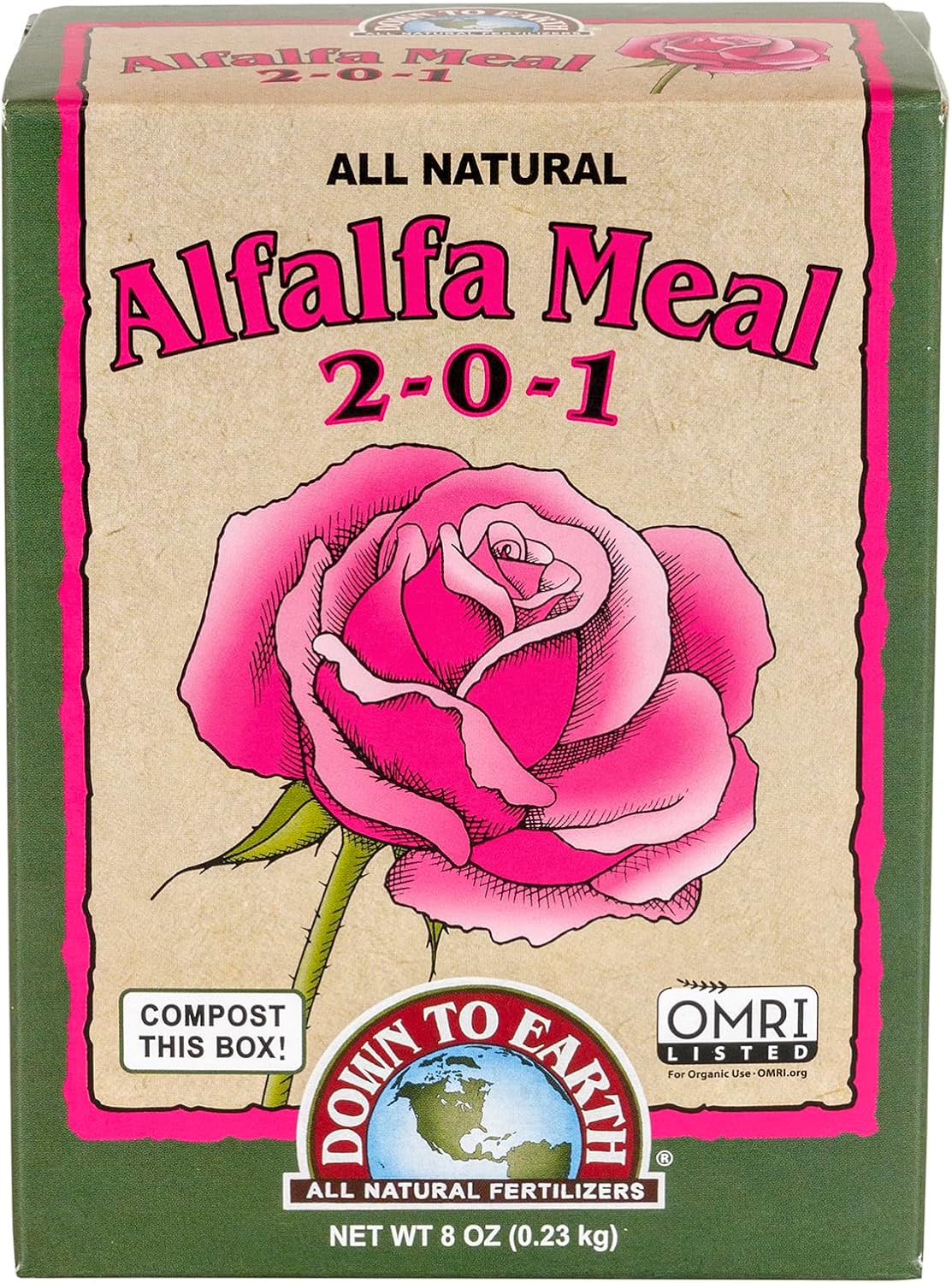
Down To Earth Organic Alfalfa Meal (2-0-1) – 8 oz
| Item Form | Powder |
|---|---|
| Specific Uses For Product | Plant Growth |
| Coverage | Organic |
| Target Species | Flower |
| Mixing Ratio | 2-0-1 |
Down To Earth Organic Alfalfa Meal is a small-format, powdered organic fertilizer that supplies a slow-release source of nitrogen (label N-P-K 2-0-1) while also adding natural growth stimulants and trace minerals. Typical use is as a soil amendment at transplant or mixed into potting media and compost — directions note rates for beds, containers and compost piles. Because it is OMRI listed and 100% organic alfalfa meal, it fits into organic gardening systems and promotes microbial activity and improved soil structure rather than producing a quick foliage spike. The product is convenient for small gardens or container growers thanks to the 8 ounce size and powder form that is easy to measure and incorporate. Limitations are the low immediate N value compared with synthetic fertilizers and the small unit size if you need to treat larger beds regularly. Also handle with care around children and pets and follow the label for application rates to avoid overuse.
Best for: Gardeners who prioritize natural, organic inputs and want a gentle, steady nitrogen source for vegetables, flowers and container plants without switching to synthetic fertilizers.
Less Ideal for: Large-scale vegetable producers or gardeners who need fast, high-strength nitrogen responses should choose higher‑volume or higher‑N products instead.
- OMRI listed organic source suitable for certified organic gardens
- Slow-release nitrogen (2-0-1) that supports steady plant growth
- Contains natural growth stimulants and trace minerals to boost soil biology
- Powder form and small pack size make it easy to measure for containers and trial use
- Low immediate nitrogen concentration compared with synthetic fertilizers
- Small 8 oz unit is not economical for large beds or heavy feeding schedules
Verdict: A compact, OMRI-listed slow-release nitrogen source that’s ideal for organic gardeners testing alfalfa meal on beds and containers.
Down To Earth Feather Meal Organic Fertilizer 12-0-0, 20 lb

| Item Form | Granules |
|---|---|
| Specific Uses For Product | Organic,Plant Growth,Potting |
| Coverage | Medium |
| Target Species | Vegetables, containers, trees, shrubs, row crops/acreage |
| Mixing Ratio | 12-0-0 |
Down To Earth Feather Meal is a granular, poultry-feather based fertilizer formulated as 12-0-0 to deliver slow-release nitrogen over the growing season. It is typically worked into the soil before planting or applied as a side dress for heavy-feeding crops like corn, tomatoes, brassicas and other long-season vegetables. Because the nitrogen releases gradually, it supports steady leaf and shoot development without the quick flush and potential burn of soluble synthetic fertilizers. The product is OMRI-listed for organic use and presented in a 20 pound bag, which is practical for backyard plots, raised beds, and small acreage. Practical benefits include long-lasting nitrogen supply, suitability for a wide range of plants, and minimal reapplication compared with fast-release formulas. Important limitations are that uptake can be slower in cool soils so benefits appear later in the season and it offers no phosphorus or potassium so you will need separate sources for a balanced feed when flowers or fruiting are the focus.
Best for: Gardeners who prioritize reliable, long-lasting organic nitrogen for vegetable beds, heavy-feeding annuals, and small acreage where steady growth is more important than instant greening.
Less Ideal for: Growers wanting a complete N-P-K single product, immediate quick-release nitrogen, or quick corrective feeds for deficiency symptoms should consider other options.
- High nitrogen analysis (12-0-0) for strong vegetative growth in heavy feeders
- Slow-release granular form reduces risk of burn and limits frequent reapplications
- OMRI-listed and made from natural poultry feather material suitable for organic systems
- Large 20 lb bag provides season-long feeding for small gardens or multiple beds
- No phosphorus or potassium included so additional fertilizers are needed for flowering and fruiting stages
- Nitrogen mineralization is temperature dependent so results are slower in cool soils
Verdict: Choose this feather meal when you want a dependable, slow-release organic source of nitrogen to keep heavy-feeding vegetables and plants growing steadily all season.
Burpee Organic Blood Meal Fertilizer, 3 lb

| Item Form | Granules |
|---|---|
| Specific Uses For Product | Organic,Potting |
| Coverage | 450 Square Feet |
| Target Species | vegetables, flowers |
| Mixing Ratio | 3:1 (potting soil:blood meal) |
Burpee Organic Blood Meal is a granular, high-nitrogen soil amendment designed primarily as a starter or side-dress for heavy-feeding vegetables and fruiting plants. Gardeners mix it into potting soil or apply it to garden beds to quickly boost nitrogen availability, following the package mixing ratio for potting mixes. Notable features include a 12-0-0 NPK formulation, OMRI listing for organic gardening, and a coverage claim useful for planning small beds. Practical benefits for collard greens and other leafy brassicas include faster green growth and support for soil microorganisms that aid plant health. The product can also act as a deterrent to some garden pests that dislike the scent. Limitations to consider are that it only supplies nitrogen and must be used carefully to avoid overfertilizing; it is not a balanced feed and should be paired with other amendments for phosphorus and potassium when needed. As a concentrated animal-derived fertilizer it may not suit gardeners who avoid animal products or require slow-release feeding schedules.
Best for: Buyers who want a proven organic nitrogen boost for leafy vegetables like collard greens and prefer straightforward, quick-acting soil amendments to encourage vigorous green growth.
Less Ideal for: Growers seeking a complete or slow-release organic fertilizer program or those who avoid animal-derived inputs should consider alternative organic fertilizers.
- High nitrogen content (12-0-0) supplies readily available nitrogen for leafy crops
- OMRI listed for organic gardening so it fits organic soil management
- Granular form is easy to mix into potting soil or side-dress garden beds
- Can help deter some mammals and pests due to its odor
- Provides only nitrogen and does not supply phosphorus or potassium
- Concentrated product that requires careful measuring to avoid burning or overfeeding plants
Verdict: If you need a fast, organic nitrogen boost for collard greens, this OMRI-listed blood meal delivers concentrated, easy-to-use results.
Dr. Earth Organic Tomato, Vegetable & Herb Fertilizer (64 oz)

| Unit Count | 64 Ounce |
|---|---|
| Item Form | Granules |
| Specific Uses For Product | Organic |
| Target Species | Herb |
| Coverage | Medium |
This granular organic fertilizer is designed to boost vegetable and herb production by supplying balanced nutrients and soil biology support. It is typically broadcast into beds, mixed into potting mixes, or applied at planting and midseason for a nutritional lift; the manufacturer recommends reapplying every six weeks for containers. Notable features include a fully organic ingredient list, fast but sustained nutrient release, and a blend of probiotic microbes plus ecto and endo mycorrhizae intended to improve nutrient uptake and drought tolerance. In practice that means healthier root systems and potentially better yields and flavor in crops like cucumbers when used as part of an organic program. Limitations are that it is a medium coverage product in a 64 ounce bag so larger plots will need more frequent purchases, and it contains phosphorus so local runoff rules should be checked before use. Follow the directions for pH and application timing to avoid overapplication in small containers.
Best for: Gardeners who prioritize organic soil health and want a single, biology‑focused fertilizer to support vegetables like cucumbers in beds or containers.
Less Ideal for: Large‑scale growers seeking a bulk, high‑coverage fertilizer or those who must avoid phosphorus due to local regulations should consider other options.
- 100 percent organic formula suitable for certified organic gardens
- Contains beneficial microbes and eight strains of mycorrhizae to support root health and nutrient uptake
- Granular form releases nutrients quickly and continues feeding for several months
- Works for beds, raised planters and containers and can be used at planting, transplanting or midseason
- Bag is medium coverage so not economical for very large vegetable plots
- Includes phosphorus which may be restricted in some local jurisdictions
Verdict: Choose this product if you want an organic, microbe‑rich granular fertilizer that supports root health and steady feeding for cucumber and other vegetable plantings.
Choosing the Right Natural Nitrogen Plant Food: Key Factors to Consider
Nitrogen Release Rate
How quickly a nitrogen source becomes available to plants affects both short-term appearance and feeding frequency. Fast-release materials produce a visible green-up within days, which is useful for correcting deficiencies or for fast-growing vegetable crops. Slow-release sources feed steadily over weeks and reduce the risk of leaching and foliage burn, which makes them better for potted plants and long-term beds.
Consider your planting schedule and watering habits. If you water heavily or have sandy soil, a slow-release feed reduces loss to leaching. If you need a quick corrective feed, choose a faster-release material and follow it with a slower option for maintenance.
Form and Ease of Application
Natural nitrogen feeds come as solids to broadcast, granules, powders to dissolve, or liquid concentrates. Broadcastable granules and topdress materials are convenient for beds and lawns but can be harder to meter in containers. Dissolvable powders and liquids allow precise dosing for pots and hanging baskets but require mixing and more frequent applications.
Think about the tools you have and where you garden. For small patios and containers, a soluble feed or liquid concentrate gives control. For larger beds or turf, a dry topdress or granular product often saves time and distributes more evenly.
Impact on Soil Biology
Some natural nitrogen sources also feed soil microbes and earthworms, building long-term fertility. Materials that include organic matter or feed beneficial microbes can improve soil structure and nutrient cycling over seasons. Conversely, highly concentrated nitrogen sources fed repeatedly without organic amendments can temporarily upset microbial balance.
If you manage raised beds or poor soils, favor options that add organic matter or that are known to support microbial activity. In established, biologically active soils, you can often use more concentrated feeds intermittently without harm.
Odor, Handling, and Safety
Many effective natural nitrogen materials have strong odors or require care during handling. Some fish-based or manure-derived feeds can be pungent and may not be suitable for close-in patios or indoor use. Other materials may attract pests if not incorporated into soil. Consider storage stability, whether a product needs refrigeration after opening, and basic safety when measuring and applying concentrated forms.
If odor or household proximity is a concern, select low-odor or enclosed-application formats. Follow label guidance on gloves and dust control when handling concentrated powders or granules.
Nutrient Concentration and Balance
Natural nitrogen sources vary in their percentage of available nitrogen and in accompanying nutrients like phosphorus, potassium, and micronutrients. Some materials are primarily nitrogen with little else, while others offer a broader nutrient profile that can reduce the need for separate amendments.
Match concentration to plant needs: leafy crops and heavy feeders often need higher nitrogen levels, while flowering and fruiting plants need balanced mixes to avoid excessive vegetative growth. When using concentrated feeds, measure carefully to avoid burning roots or causing excessive vegetative growth at the expense of flowers and fruit.
Suitability for Containers Versus In-Ground Beds
Container-grown plants respond differently to nitrogen feeding than in-ground plantings because containers hold less soil and nutrients can build up more quickly. Natural nitrogen feeds that release slowly are often safer in pots because they minimize spikes in soluble salts and reduce the frequency of necessary flushes.
For in-ground beds or lawns with deep rooting zones, a mix of quick- and slow-release options can supply immediate needs while maintaining longer-term fertility. Consider the root volume and frequency of watering when selecting the product strength and form.
Matching Release Patterns to Plant Types
Different plants benefit from different release patterns. Fast-growing leafy vegetables and young transplants often benefit from a faster nitrogen release to support rapid leaf production. Mature ornamentals, shrubs, and container plants usually perform better with a steady, slow release that avoids nitrogen spikes and promotes balanced growth.
Apply fast-release feeds as corrective or seasonal boosts and pair them with slow-release feeds for ongoing maintenance. For mixed beds, place quicker releases near fast-growing annuals and use slower options in the root zones of shrubs and perennials.
- Leafy vegetables: faster-release, but monitor for leaching in sandy soils
- Containers: slow-release to avoid salt buildup and frequent reapplication
- Lawns: timed topdressings that match growth flushes and mowing schedule
Using Natural Nitrogen in Vegetable Gardens
Vegetable gardens typically need regular nitrogen to support leafy growth and high yields. Integrating a mix of immediate and sustained-release feeds keeps plants productive without excessive reapplication. Apply stronger feeds early in the season for leafy crops, then taper or switch to balanced feeds as plants begin to flower and set fruit.
In veggie beds, also consider soil testing and adding organic matter alongside nitrogen to maintain fertility. Incorporating compost or well-rotted manure improves nutrient-holding capacity and helps buffer plants against rapid swings in nitrogen availability.
- Time higher nitrogen feeds before rapid vegetative growth
- Shift to balanced feeding during flowering and fruit set
- Combine with compost to moderate release and improve soil structure
Tips for Containers and Small Spaces
Containers concentrate salts and nutrients, so choose low-odor, slow-release or soluble feeds designed for pots. Measure doses carefully and flush containers occasionally if salts build up. Use smaller, more frequent feedings with dilute soluble formulations for fine control.
Remember that smaller pots dry out more quickly, which can speed nutrient uptake and increase the perceived intensity of a feed. Adjust application rate and frequency seasonally and according to plant response.
- Prefer slow-release or dilute soluble feeds
- Flush pots periodically to prevent salt accumulation
- Adjust feeding frequency for smaller pots that dry faster
Environmental Considerations and Timing
Applying natural nitrogen at the wrong time can increase leaching or runoff risk. Avoid heavy nitrogen applications before heavy rain or during very wet seasons, especially on slopes or sandy soils. Time feeds to periods of active root growth and plant demand to improve uptake efficiency.
Use split applications rather than one large dose to reduce losses and match supply to demand. For turf and high-demand beds, plan feeding schedules around growth cycles and major maintenance tasks to integrate fertilizer with irrigation and mowing.
- Avoid major applications ahead of heavy rain
- Prefer split applications to match plant uptake
- Consider soil type and slope to reduce runoff risk
Storing and Handling Natural Nitrogen Materials
Proper storage preserves effectiveness and reduces nuisances like odor and pests. Keep dry materials in sealed containers to prevent moisture uptake and caking. Store conspicuous-smelling materials in ventilated storage away from living spaces and food preparation areas.
When handling powders or concentrated materials, wear basic protection like gloves and a dust mask if necessary. Clean tools and spreaders after use to avoid cross-contamination between different amendments.
- Store dry products in sealed, dry containers
- Keep odorous materials ventilated and away from living areas
- Use gloves and dust protection for concentrated powders
How We Chose the Best Natural Nitrogen Plant Food
We focused on attributes gardeners can measure or observe in the field and excluded any products that rely primarily on synthetic nitrogen. Our selection criteria emphasized nutrient release behavior, nitrogen concentration and balance, effects on soil biology, ease of application, and handling concerns like odor and storage. Nutrient release behavior matters because it determines how quickly foliage responds and how often you must reapply. Nitrogen concentration and balance were checked to ensure options deliver usable amounts without overwhelming plants or creating salt build-up. Soil biology effects were included to favor feeds that support microbes and long-term fertility rather than just a short-term green-up. Ease of application covered whether a product can be spread, dissolved, or used as a topdress without special equipment. Handling concerns looked at smell, storage stability, and any special precautions for gardeners. We excluded blends that depend on added synthetic urea or ammonium nitrate, boutique mixes with unverifiable ingredient lists, and products intended primarily as starter fertilizers for seedlings. The final picks represent a range of release patterns and formats suitable for vegetables, ornamentals, containers, and small lawns.
FAQ
How soon will plants respond to a natural nitrogen feed?
Response time depends on the material. Fast-release sources can show greener foliage in a few days, while slow-release options may take several weeks to show steady improvement. Soil temperature and moisture also affect how quickly nitrogen becomes available.
Can I use natural nitrogen feeds on flowering and fruiting plants?
Yes, but apply with care. High nitrogen can favor leafy growth over flowers and fruit. Use lower rates or switch to a more balanced feed once plants start flowering to encourage blooms and fruit set.
Are natural nitrogen sources safe for container plants?
Many are safe when used at appropriate rates. Slow-release or dilute soluble forms are generally better for containers to avoid salt buildup. Monitor plants and flush pots occasionally if you see signs of salt stress.
Will natural nitrogen feeds attract pests or wildlife?
Some organic sources with strong odors or animal-derived components can attract pests or wildlife if left on the surface. Incorporate smelly materials into the soil or use enclosed application methods to reduce attraction.
How often should I apply natural nitrogen to a vegetable garden?
Frequency depends on the release rate of the product and crop needs. Fast-release feeds may be applied every few weeks for high-demand crops, while slow-release options can last a month or more. Split applications timed with growth phases are usually most effective.
Can I combine different natural nitrogen sources?
Combining fast- and slow-release sources is a common strategy to provide immediate nutrition and longer-term supply. Ensure you adjust rates to avoid overfeeding, and consider soil tests to guide combined application.
Final Verdict
Choose a natural nitrogen solution based on how quickly your plants need nitrogen, the growing medium, and how often you want to feed. Fast-release options deliver quick green-up for heavy feeders, while slow-release choices preserve soil health and reduce reapplication in containers and beds. Factor in odor, handling, and soil biology support when selecting a format. Prioritize matching release patterns to plant type and timing applications to growth cycles. With those tradeoffs in mind, you can confidently pick a natural nitrogen plant food that fits your garden and feeding schedule.
