

Note: This article contains affiliate links. If you click on these links and make a purchase, I may earn a small commission at no extra cost to you. This helps support my research and content. Read my full affiliate disclosure here.
Choosing the right potting soil for vegetable seeds matters because seedling success starts in the first few weeks. The wrong mix can stay too wet, stay too dry, or lack the nutrients young roots need, producing leggy or slow-starting seedlings. This guide focuses on mixes formulated for vegetable seed starting and early growth, and it highlights shortlisted potting soils tested against real garden needs. We evaluated mixes for seed-starting texture, moisture retention versus drainage, and nutrient support for the first true leaves. Use this information to pick the mix that best suits your sowing method, container type, and climate.
Top Picks at a Glance
| Best Overall The best all-around choice for most situations | Espoma Organic Seed Starter Premium Potting Mix, 16 qt |  |
| Best Quality Built to a higher standard if you want something more solid | FoxFarm Ocean Forest Potting Soil, 12 Quart |  |
| Best Value The sweet spot between price and what you get | Back to the Roots Organic Expanding Coco Coir Potting Soil Brick (10 lb) |  |
| Best Budget The cheapest option that still gets the job done reliably | SunGro Horticulture Organic Seedling Mix (8 Quart) |  |
| Highest Rated A top-rated pick with lots of positive feedback | FoxFarm Light Warrior Seed Starter Growing Medium, 12 Quart |  |
| Most Popular A crowd favorite that many people choose with confidence | Miracle-Gro Indoor Potting Mix for Seed Starting, 8 qt. (2-Pack) |  |
| Best Seller A high-volume bestseller chosen again and again | Back to the Roots Organic Seed Starting Mix — Expanding 12 Quart Block |  |
Espoma Organic Seed Starter Premium Potting Mix, 16 qt

| Brand Name | Espoma |
|---|---|
| Volume | 16 quarts |
| Unit Count | 598.4 Ounce |
| Model Number | SS16 |
Espoma Organic Seed Starter is a peat-based, lightweight potting mix designed specifically for germinating seeds and rooting cuttings. The blend of sphagnum peat moss and perlite gives good aeration and drainage while the formula includes yucca extract to improve wetting and lime to balance pH. It also contains Myco-tone mycorrhizae to help early root establishment and improve nutrient access during the seedling stage. Typical use is filling trays, cells, or small pots for seeds and softwood cuttings; its fine texture and moisture retention reduce damping-off risk when used with proper sanitation and watering. Because it contains no synthetic fertilizers, it is appropriate for organic growing but you will need to begin light feeding once true leaves form or when transplanting. The bag size covers routine home-seed-starting needs, and the product is straightforward to handle and mix for small-scale propagation projects.
Best for: Gardeners focused on reliable seed germination and strong early root development who want an organic, ready-to-use mix for trays and small pots.
Less Ideal for: Growers wanting a peat-free or pre-fertilized seed mix or those starting very large volumes commercially should consider alternatives tailored to those needs.
- Formulated for seedlings with peat and perlite for balanced aeration and moisture retention
- Includes Myco-tone mycorrhizae to support early root development
- Organic ingredients with no synthetic fertilizers, suitable for organic growing
- Contains yucca extract to improve wetting and lime to help stabilize pH
- No starter nutrients included so plants need feeding after true leaves appear
- Peat-based mix is not the most sustainable choice for gardeners preferring peat-free media
Verdict: Choose this organic seed starter when you want a ready-to-use mix that promotes rapid root development and reliable germination for home seedlings and cuttings.
FoxFarm Ocean Forest Potting Soil, 12 Quart

| Item Form | Granules |
|---|---|
| Specific Uses For Product | Dry Fertilizer |
| Coverage | 4.8 sq ft |
| Mixing Ratio | 1:1 |
FoxFarm Ocean Forest is a pre-mixed potting soil that combines aged forest products, sandy loam and sphagnum peat moss with organic amendments like fish meal, crab meal and earthworm castings. It is sold ready to use straight from the bag for planting in containers, seed starting or top dressing; the manufacturer recommends no additional nitrogen fertilizer for the first 30 days. The mix has a light, aerated texture that promotes drainage while still retaining moisture, and the built-in micronutrients make it practical for growers who want strong early growth without immediate feeding. Practical benefits include easy pot filling, good root zone aeration for roses in containers, and built-in organic fertility to support blooms. Limitations to consider are that the bag is best for containers or small beds only and heavier feeders may need supplemental feeding after the initial month; users should also follow handling precautions to avoid skin or eye irritation.
Best for: Gardeners who want a high-quality, nutrient-rich potting medium to get container roses or plant starts off to a strong, flowering start and prefer a ready-made organic blend.
Less Ideal for: Large in-ground rose beds or landscapers needing bulk soil amendments should look for bulk garden soil or custom rose mixes instead.
- Ready-to-use out of the bag so you can pot immediately
- Organic amendments (fish meal, crab meal, earthworm castings) supply early nutrients
- Light, aerated texture that supports drainage and root development
- pH adjusted for optimal nutrient uptake per product description
- Pack size (12 qt) covers a small area and may require multiple bags for several roses
- No long-term feeding provided after the first 30 days so additional fertilizer is needed for sustained heavy bloom
Verdict: Choose this soil if you want a ready-made, organically amended potting mix that jump-starts container roses and seedlings with good drainage and early fertility.
Back to the Roots Organic Expanding Coco Coir Potting Soil Brick (10 lb)

| Item Highlight | 10 lb compressed coco coir brick; peat-free; OMRI Listed |
|---|---|
| Item Type Name | Coconut Coir |
| Volume | 2 cubic feet |
| Ingredients | Coconut Coir |
| Style Name | Expanding Potting Soil |
This compressed coco coir brick provides a lightweight, peat-free potting medium that expands when you add water to create loose, airy substrate for containers and seed flats. It is typically used by hydrating the 10 lb block to about 2 cubic feet of coir and then using it alone for potted plants, mixing it into garden soil to improve drainage and aeration, or blending with compost for starting seeds. Notable features include OMRI listing for organic use, a balanced pH suited to a wide range of plants, and compact storage before expansion which saves space. Practical benefits are improved root aeration and water retention compared with heavy garden loam, easier handling than bulky bags, and versatility across vegetables, herbs, and ornamentals. Important limitations are that coco coir is a soilless substrate and does not supply significant nutrients on its own so you will need to add fertilizer or compost for long-term potted herbs like rosemary, and the product requires time and a water source to expand before use.
Best for: Buyers who prioritize low-risk, easy-to-handle, organic potting media and want a versatile base for container herbs and seed starting without dealing with heavy bags.
Less Ideal for: Gardeners who want a ready-to-plant, nutrient-rich potting mix out of the box or those who prefer soil with built-in slow-release fertilizer.
- Peat-free OMRI listed organic coco coir suitable for organic growing
- Expands from a compact brick to about 2 cubic feet for easy storage and transport
- pH balanced and airy texture that improves drainage and root aeration
- Versatile use: can be used alone, for seed starting, or mixed into existing soil
- Provides little inherent fertility so supplemental feeding or compost is needed for nutrient-hungry plants
Verdict: A compact, peat-free coco coir brick that expands into an airy, pH-balanced base ideal for low-risk organic container gardening and seed starting when paired with fertilizer or compost.
SunGro Horticulture Organic Seedling Mix (8 Quart)

| Brand Name | SUN GRO |
|---|---|
| Style Name | Peat Moss |
| Volume | 8 quarts |
SunGro Horticulture Seedling Mix is a fine-textured, peat-based starting mix formulated to germinate seeds in flats, pots, and plug trays. It contains sphagnum peat moss, perlite for lightness and drainage, and an organic wetting agent to promote even water absorption, which helps maintain consistent moisture for small seeds. The mix also includes a silicon-enriched additive called RESiLIENCE intended to support stronger seedlings and reduce wilting during establishment. Typical use is filling trays or small pots, keeping the medium evenly moist but not waterlogged, then transplanting seedlings once roots are established. Practical benefits include predictable moisture retention, a clean fine texture that allows delicate roots to develop, and OMRI listing for organic onion transplants and other edible starts. Limitations are its small 8 quart volume for larger onion seed programs and that peat-based mixes dry out faster than heavier soils, so frequent monitoring is required; it also provides limited long-term nutrients so potting up into a richer mix or fertilizing before transplant is necessary.
Best for: Gardeners who want an organic, predictable seed starting medium for small to medium onion seed batches and who prioritize reliable germination over bulk volume.
Less Ideal for: Commercial growers or anyone starting very large quantities of onion seedlings should choose larger-volume or more nutrient-dense starting media.
- Fine, light texture suitable for delicate seed germination
- Organic wetting agent promotes uniform water absorption
- OMRI listed so safe for organic edible starts
- Contains perlite for improved drainage and root aeration
- Small 8 quart bag may not be cost-effective for starting large onion batches
- Peat-based mix has low long-term nutrient content and needs fertilizing before transplant
Verdict: A reliable OMRI-listed seed starting mix that delivers even moisture and a fine texture ideal for producing healthy onion seedlings in small home gardens.
FoxFarm Light Warrior Seed Starter Growing Medium, 12 Quart

| Volume | 12 quarts |
|---|---|
| Unit Count | 1 Count |
| Brand Name | FoxFarm |
| UPC | 752289790089 |
FoxFarm Light Warrior is a premixed seed-starting medium designed for growers who want a plug-and-play option for germination, cuttings, and young seedlings. The bag combines sphagnum peat moss and perlite for light, airy texture, plus added soil microbes, humic acid, and earthworm castings to encourage root efficiency and nutrient uptake. It arrives ready to use so you can sow seeds or pot cuttings immediately without blending amendments. In practice the mix stays well drained while retaining enough moisture for consistent germination, and the biological additives can help seedlings establish stronger root systems. Because it contains a fertilizer component, you may need to delay additional feeding for a few weeks to avoid overfertilizing delicate seedlings. The 12-quart bag is convenient for small-scale indoor seed flats or multiple pots, but larger growers will need multiple bags or a bulk option. If you want a performance-focused, no-fuss starter medium that supports fast rooting and healthy early growth, Light Warrior is a solid choice.
Best for: Growers who prioritize quick, reliable seed germination and healthy root development and want a convenient, preamended medium for indoor seed starting.
Less Ideal for: People seeking large-volume, unamended sterile mixes for commercial-scale propagation or those who prefer completely fertilizer-free starting media.
- Ready-to-use out of the bag so you can sow immediately
- Light, well-draining texture from sphagnum peat moss and perlite
- Contains soil microbes and humic acid to improve root efficiency and nutrient uptake
- Includes earthworm castings for gentle, natural seedling nutrition
- Contains fertilizer which may require delaying supplemental feeding for young seedlings
- Sold in a 12-quart size that may be small for larger or repeated sowing projects
Verdict: Choose Light Warrior when you want a ready-made, performance-focused seed starter that promotes fast rooting and healthier seedlings.
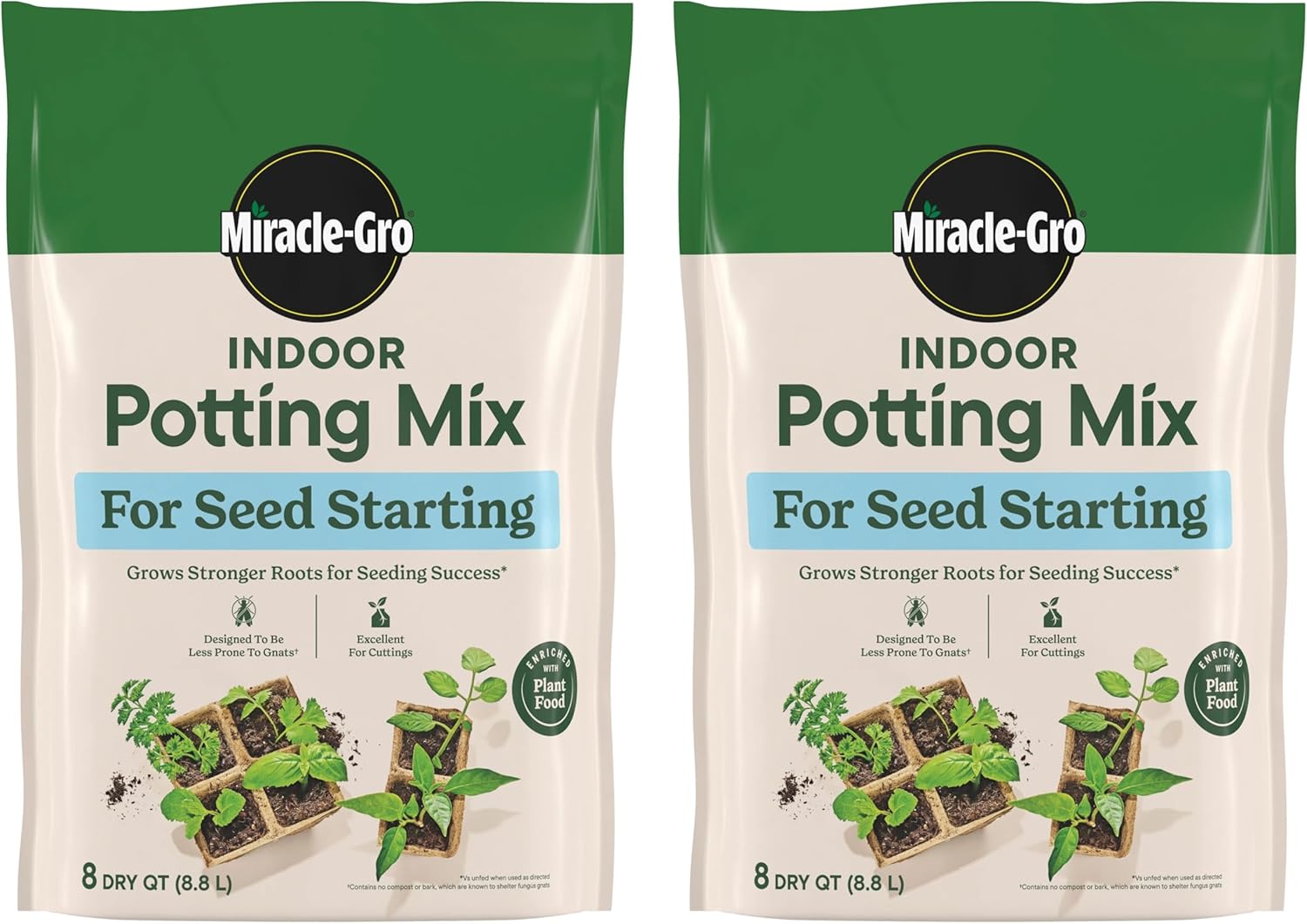
Miracle-Gro Indoor Potting Mix for Seed Starting, 8 qt. (2-Pack)
| Brand Name | Miracle-Gro |
|---|---|
| Item Type Name | Potting Mix |
| Number of Packs | 2 |
| Volume | 8 quarts |
This two-pack of Miracle-Gro Indoor Potting Mix is designed specifically for starting seeds and rooting cuttings indoors. The blend is lightweight and pre-enriched with plant food so seedlings get a nutrient boost during early root development, and the manufacturer says it yields stronger roots compared with unfed mixes when used as directed. It is intended for vegetables, flowers, and herbs and works well in cell trays and small containers; one 8 qt. bag will fill roughly three 72-cell trays. Notably, the formula omits compost and bark, which helps lower the chance of fungus gnat infestations in damp seed-starting setups. Use it by filling trays or pots, keeping the mix evenly moist, and shielding newly sown seeds from direct sun until germination. Important limitations are standard for enriched mixes: it contains fertilizer (so handle carefully) and it is a seed-starting medium rather than an all-purpose potting soil for mature plants, so you will likely transplant seedlings into a different mix or amend soil later.
Best for: Buyers who want a low-effort, indoor seed-starting medium that supports faster root development and reduces common pest risks while following proven seed-starting practices.
Less Ideal for: Gardeners who need a permanent potting soil for mature container plants or who prefer fully organic, compost-rich mixes should consider alternatives.
- Lightweight, ready-to-use formula tailored for seed germination and cuttings
- Pre-enriched with plant food to support early root and seedling growth
- Excludes compost and bark to reduce habitat for fungus gnats
- Comes as a two-pack so you have enough mix for multiple trays
- Contains fertilizer which requires careful handling and storage
- Intended for seed starting so not formulated as long-term potting soil for mature plants
Verdict: A practical, low-risk seed-starting mix that boosts early root growth and reduces fungus gnat risk, making it a reliable choice for indoor vegetable seedlings.
Back to the Roots Organic Seed Starting Mix — Expanding 12 Quart Block

| Volume | 12 quarts |
|---|---|
| Item Type Name | Seed Starting Mix |
| Unit Count | 384 Fluid Ounces |
| OMRI Listed | Yes |
| Peat Free | Yes |
This compressed seed starting mix is a coir-based block that expands to 12 quarts of loose, ready-to-use seedling soil after adding water. It is designed for starting seeds, potting up seedlings, and amending small pots for herbs, vegetables, and flowers. Notable features include an OMRI-listed organic formulation, balanced pH and low electrical conductivity to support nutrient uptake, and compact storage compared with bulky soil bags. In practice the block is easy to hydrate and fluffs up quickly, producing a light, airy medium with good water retention and aeration for root development. The convenience of a single expanding block and beginner-friendly handling makes it a reliable choice for cautious gardeners who want predictable results without mixing multiple ingredients. Limitations are that it is a single-purpose starter mix rather than an all-in-one fertilized potting soil and larger projects will need multiple blocks, so plan quantities ahead.
Best for: Practical gardeners who want a reliable, easy-to-use organic starter medium for small-scale seed trays, pots, and indoor seedlings and who prioritize predictable, low-fuss results.
Less Ideal for: Gardeners needing a ready-to-use, fertilized all-purpose potting soil for large container gardens or immediate long-term container plantings should consider an enriched potting mix instead.
- Expands to 12 quarts from a compact compressed block for easy storage and transport
- OMRI-listed organic and peat-free formulation suitable for organic growing
- Neutral pH and low electrical conductivity support seedling nutrient uptake
- Light, fluffy texture promotes good aeration and root development
- Simple to hydrate and use, friendly for beginners and low-effort setups
- Sold as a bare starting mix without added fertilizer for later stages
- Single block size requires purchasing multiple units for larger seed batches
Verdict: A compact, OMRI-listed organic seed starter that reliably expands into a light, neutral-pH medium for predictable, beginner-friendly seed starting.
Choosing the Right Potting Soil for Vegetable Seeds: Key Factors to Consider
Texture and Particle Size
Texture determines how well seeds make contact with the soil and how evenly water moves through the mix. A fine, uniform texture helps small seeds sit close to particles so they can imbibe water evenly without being buried too deep.
Larger particles such as perlite or coarse sand improve airflow around the root but reduce surface contact for tiny seeds; blends that balance fine humus with some coarse material usually perform best for a wide range of vegetable seeds. Avoid mixes that are heavy with uncomposted wood chips or very dense peat, as those can create dry pockets or slow germination.
Drainage and Aeration
Young vegetable roots need oxygen as much as water. Poor drainage leads to soggy conditions that encourage damping off and root rot, especially in cool indoor conditions.
Look for mixes with components that create pore space, such as perlite, coarse sand, or aged bark. Good aeration supports quick root growth and makes it easier for seedlings to transition when transplanted outdoors. The ideal seed-starting mix drains freely after watering yet retains enough moisture at the surface for small seeds.
Moisture Retention and Watering Window
A balanced moisture retention helps you avoid daily watering while preventing prolonged saturation. Some mixes include moisture-holding elements like coir or sphagnum peat, which hold water near seed zones and reduce the risk of dessication between waterings.
If you grow in a warm, dry home or start seeds in small cells, choose a mix with slightly higher water retention. In cooler, poorly lit setups where damping off is a concern, a faster-draining mix that you water more frequently is safer. Consider how long you can realistically monitor seedlings when selecting a retention profile.
Starter Nutrients and pH Buffering
Many seed-starting mixes are low in nutrients to avoid burning sensitive roots, but a small, balanced starter charge can help seedlings produce their first true leaves without early fertilization. Look for mixes that list a mild starter nutrient or that recommend a light feeding schedule after cotyledons open.
pH buffering matters because extreme pH can lock out key nutrients. A neutral to slightly acidic mix generally suits most vegetable seeds. If you plan to pot up seedlings into larger containers, ensure the initial mix will not cause a nutrient shock when combined with potting blends.
Cleanliness and Pathogen Control
Sterile mixes reduce the risk of soilborne diseases and weed seeds that compete with tiny seedlings. Sterilization or heat-treated components lower damping-off incidents in indoor environments where air circulation and light may be limited.
While completely sterile mixes are not always necessary for outdoor sowing, they are highly beneficial for indoor seed-starting. Avoid soils with vague sourcing claims or visible debris that can harbor pests and pathogens.
Best Mixes for Small Seeds and Fine-Sprouted Varieties
Very small vegetable seeds like lettuce and carrot need a fine, even surface to germinate reliably. A mix with a high proportion of fine particles and minimal large chunks lets seeds stay close to moisture without being buried.
When sowing tiny seeds, sow thinly on the surface and use a gentle mist rather than heavy watering. Covers such as clear domes or plastic wrap can help retain humidity until cotyledons appear, at which point increase air circulation to prevent fungal issues.
- Sow evenly and press seeds lightly into the surface
- Use a light mist for first waterings
- Remove humidity cover once first leaves appear
Mixes That Speed Early Root Growth for Transplanting
If you plan to transplant seedlings into outdoor beds, choose a mix that encourages robust root branching without excessive top growth. Coarser particles mixed with fine humus support root penetration and help seedlings establish quickly after transplant.
Also consider mixes that are slightly lighter in nutrient concentration so you can control feeding after potting up. This reduces the risk of soft, leggy transplants caused by too much nitrogen early on.
- Look for balanced particle sizes to encourage root spread
- Hold off on heavier feeding until after the first pot-up
Adapting Mixes for Containers, Trays, and Jiffy Pots
Different container types change how a mix holds water. Small cells dry out quickly, so a mix with added coir or peat may be preferable. Larger pots retain moisture longer and need better drainage to avoid waterlogging.
When using biodegradable pots or plugs, beware of mixes with large wood particles that can interfere with pot breakdown. Match mix composition to container size and material for consistent results.
- Small cells: choose higher water-holding mixes
- Large pots: ensure strong drainage components
- Biodegradable pots: avoid heavy bark content
How Lighting and Temperature Affect Your Mix Choice
Warm, bright conditions speed evaporation and increase nutrient uptake, so mixes with higher moisture retention work well under grow lights or greenhouse benches. In cool, dim indoor setups, faster-draining mixes reduce the risk of fungal diseases.
If you use bottom heat, a lighter mix transmits warmth better and accelerates germination. Consider the interaction between your environmental setup and the mix properties when selecting a potting soil.
- Grow lights: consider higher retention to offset heat
- Cooler setups: prefer well-draining mixes to prevent rot
- Bottom heat: lighter mixes warm and germinate faster
Amending Seed-Starting Mixes Safely
You can tweak a base seed-starting mix to better suit particular seeds. Add perlite or coarse sand to increase drainage, or fold in a small amount of finely screened compost for a gentle nutrient boost. Make amendments in small batches and test with a tray before scaling up.
Avoid heavy garden soil additions early on, as uncomposted material often brings pests, weed seeds, and inconsistent texture. When adding amendments, keep the mix sterile and well-mixed for consistent seed placement and moisture.
- Add perlite or sand to improve drainage
- Use screened compost sparingly for nutrients
- Avoid raw garden soil in seed-starting mixes
How We Chose the Best Potting Soil for Vegetable Seeds
We focused on attributes that matter during germination and early seedling growth. Key evaluation criteria included particle texture and uniformity, which affects seed-to-soil contact and consistent moisture; drainage and aeration, since oxygen around the young root is critical to prevent damping off; moisture retention, to reduce the need for constant watering but not hold standing water; starter nutrient level and buffering, which supports the first true leaves without burning fragile roots; and sterilization and cleanliness, to reduce pathogens and weed seeds that can overwhelm seedlings. We also considered mix versatility for different container sizes and propagation methods, and the mix's compatibility with common watering regimes and indoor light conditions. Products that relied heavily on uncomposted fines or had no description of sterilization were excluded. Final selections balanced real-garden usability over marketing claims and focused on mixes that let gardeners control water and nutrients during the seed-to-seedling transition.
FAQ
When should I move seedlings out of seed-starting mix?
Move seedlings when they have their first true leaves and roots have filled the cell or pot. Usually this is when transplanting into larger containers or outdoors, depending on weather and root development.
Can I use garden soil for starting vegetable seeds?
Garden soil is usually too heavy and may contain pathogens or weed seeds. It can compact and restrict root growth, so a sterile, loose seed-starting mix is typically a better choice for reliable germination.
How often should I water seeds in potting soil?
Watering frequency depends on mix and container size but generally keep the surface consistently moist until germination. Use a light mist or bottom-watering to avoid disturbing seeds and let the surface dry slightly between deeper waterings to prevent standing moisture.
Do I need to fertilize seed-starting mixes?
Most seed-starting mixes are low in nutrients by design. A mild, balanced feed after the first true leaves appear helps growth. Too much fertilizer early can burn delicate roots, so start with a diluted, gentle feeding schedule.
Is sterilized potting soil necessary for indoor seed starting?
Sterilized or heat-treated mixes reduce the likelihood of damping off and other soilborne diseases in indoor setups. While not strictly necessary outdoors, sterilized mixes provide a cleaner start for seeds started under lights or in crowded trays.
Final Verdict
For vegetable seeds, prioritize mixes that balance fine texture for seed-to-soil contact with enough coarse material for drainage and aeration. Consider your container sizes, indoor environment, and how much hands-on watering you will do when choosing a mix. Focus on moisture control, starter nutrient levels, and cleanliness. That combination gives seedlings the best chance to germinate quickly and develop sturdy roots, making transplanting into garden beds or larger pots smoother and more reliable.
