

Note: This article contains affiliate links. If you click on these links and make a purchase, I may earn a small commission at no extra cost to you. This helps support my research and content. Read my full affiliate disclosure here.
Choosing the right fertilizer for tomatoes and peppers makes a measurable difference in fruit set, flavor, and plant health. These crops have similar nutrient needs but respond differently to feeding schedules and nutrient ratios, so a one-size-fits-all approach often underperforms. This guide shortlists seven top options suited for tomatoes and peppers in gardens, containers, and raised beds. We evaluate each choice on nutrient formulation, application method, and how it supports bloom and fruit development to help you pick the right feeding plan for your growing situation.
Top Picks at a Glance
| Best Overall The best all-around choice for most situations | Espoma Organic Tomato-tone Organic Fertilizer 3-4-6 (4 lb) |  |
| Best Quality Built to a higher standard if you want something more solid | FoxFarm Happy Frog Tomato & Vegetable Fertilizer, 5-7-3, 4 lb |  |
| Best Value The sweet spot between price and what you get | Scotts All Purpose Flower & Vegetable Continuous Release Plant Food, 3 lb |  |
| Best Budget The cheapest option that still gets the job done reliably | Miracle-Gro Water Soluble Tomato Plant Food, 1.5 lb |  |
| Highest Rated A top-rated pick with lots of positive feedback | FoxFarm Grow Big Liquid Plant Food, 1-Quart Concentrate (6-4-4) |  |
| Most Popular A crowd favorite that many people choose with confidence | Miracle-Gro Water Soluble All Purpose Plant Food, 1.5 lb |  |
| Best Seller A high-volume bestseller chosen again and again | Jobe's Organics Granular Tomato & Vegetable Fertilizer (4 lb) |  |
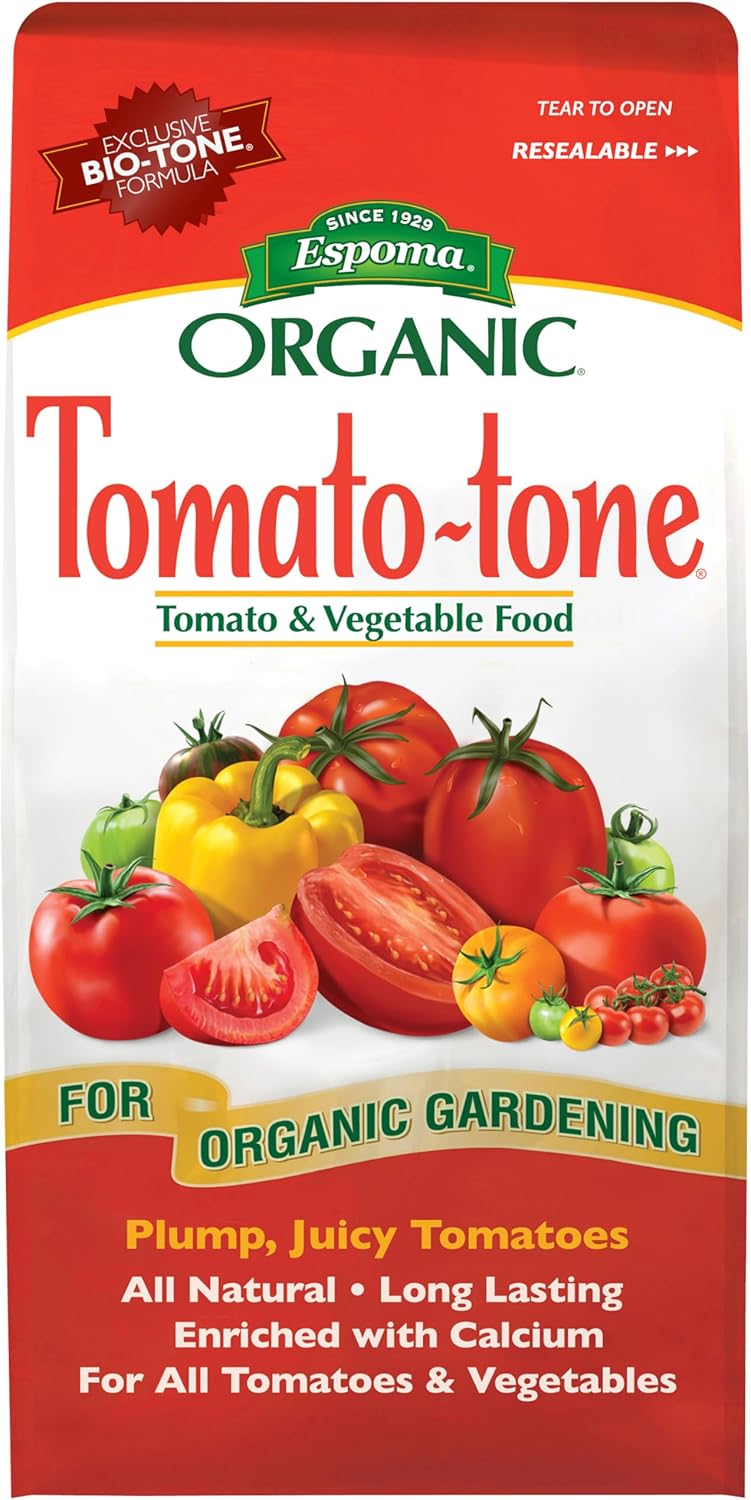
Espoma Organic Tomato-tone Organic Fertilizer 3-4-6 (4 lb)
| Unit Count | 64 Ounce |
|---|---|
| Item Form | Granules or Pellets |
| Target Species | tomatoes and vegetables |
| Mixing Ratio | 3:4:6 |
Espoma Organic Tomato-tone is a ready-to-use granular fertilizer made for tomatoes and other vegetables, designed to be applied to the soil around plants every two weeks during the growing season. Its 3-4-6 formula supplies steady nitrogen, phosphorus, and potassium while the added 8 percent calcium helps reduce blossom end rot in susceptible varieties. The granule form makes application simple for beds or containers and it is approved for organic gardening, so it fits into certified organic practices. Practical benefits include promoting flower and fruit production without encouraging excessive leafy growth, and the built-in Bio-tone microbial blend supports steady nutrient availability. Limitations are that the bag is relatively small for larger gardens so frequent purchases or bulk buying are needed for big plots, and being an organic granular product it releases nutrients more slowly than soluble feeds so results are not instantaneous after a single application.
Best for: Gardeners who want a reliable, organic feed that focuses on consistent fruit set and reduced blossom end rot for tomatoes and mixed vegetable beds, and who prefer low-maintenance granular applications.
Less Ideal for: Growers who need rapid nutrient correction or who manage large-scale vegetable plots that require fewer refill cycles should consider faster-acting or bulk commercial fertilizers instead.
- Organic formulation approved for organic gardening
- Contains 8% calcium to help prevent blossom end rot
- Granular, ready-to-use form is easy to apply around the drip line
- Balanced 3-4-6 NPK geared toward fruit development rather than excessive foliage
- 4 lb bag may be small for larger gardens or heavy feeders
- Slower nutrient release than water-soluble fertilizers for quick correction
Verdict: Choose this if you want an easy, certified-organic granular fertilizer that promotes tomato fruiting and helps prevent blossom end rot.
FoxFarm Happy Frog Tomato & Vegetable Fertilizer, 5-7-3, 4 lb

| Item Form | Granules |
|---|---|
| Specific Uses For Product | Vegetables, Tomatoes, Soft Fruits, and Berries |
| Mixing Ratio | 5:7:3 |
| Unit Count | 64 Ounce |
FoxFarm Happy Frog Tomato & Vegetable Fertilizer is a granular, performance-focused plant food designed for fruiting vegetables and soft fruits. It is typically applied to in-ground beds, rows, or containers following the package mixing guidance; the 5-7-3 NPK emphasizes balanced vegetative growth and support for flowering and fruit set. Notable features include added calcium to reduce blossom end rot risk and mycorrhizal fungi to encourage better root nutrient and water uptake. For growers chasing larger, consistent yields, the formula supplies readily available nutrients plus micronutrients useful through the season. The product is OMRI listed which fits organic-minded production, and the granule form makes storage and measured applications straightforward. Expect visible vigor and improved fruit development when used as part of a regular feeding program, but plan to follow the recommended rates to avoid overfeeding and pair it with good watering and soil management since fertilizer alone cannot correct poor soil structure. The bag size suits small to medium plots and container setups but heavier feeding schedules may need larger quantities over a season.
Best for: Gardeners focused on maximizing tomato and pepper yields who want an organic-compatible, fruiting-focused fertilizer to use in containers, raised beds, or small plots.
Less Ideal for: Large-scale growers who need bulk commercial quantities or gardeners who prefer quick-dosage liquid feeds for frequent foliar applications.
- 5-7-3 NPK blend supports vegetative growth and fruit production for tomatoes and peppers
- Includes calcium to help prevent blossom end rot in fruiting crops
- Contains mycorrhizal fungi to improve root efficiency and nutrient uptake
- OMRI listed for use in organic gardening and safe for container or in‑ground use
- 4 lb bag may be small for large vegetable plots or repeated heavy feedings
- Granular form requires mixing or spreading and is less convenient than liquid feeds for quick foliar feeding
Verdict: Choose this fertilizer when you want an organic-compatible, fruiting-focused granular formula that supports strong growth and reduces blossom end rot in tomatoes and peppers.
Scotts All Purpose Flower & Vegetable Continuous Release Plant Food, 3 lb

| Item Form | Granules |
|---|---|
| Application Method | Sprinkle on soil and rake into top 1-3 inches |
| Target Species | All Purpose Flower & Vegetable Continuous Release Plant Food |
| Unit Count | 48 Ounce |
This Scotts granular plant food is designed for in-ground gardens and provides steady nutrient release for roughly two months after application. You sprinkle the granules around plants, rake them into the top 1 to 3 inches of soil, and water to start nutrient release. The formula is intended for broad use across flowers, annuals, perennials and edible plants such as tomatoes and peppers, so it simplifies fertilizing mixed vegetable beds. Practical directions on coverage and rates make it easy to plan applications during the growing season every two months. Because it is continuous-release rather than fast‑acting soluble fertilizer, you get longer-lasting feeding with less frequent work but slower immediate uptake, so it pairs well with regular watering rather than spot feeding. The 3 lb bag covers about 150 sq ft, which is convenient for small to medium plots but means frequent repurchasing for larger vegetable beds.
Best for: Gardeners who want a low‑maintenance, set‑and-forget nutrient source for small to medium tomato and pepper plots and prefer scheduled feeding over frequent liquid applications.
Less Ideal for: Growers who need rapid correction of nutrient deficiencies or who manage large vegetable plots and prefer concentrated, high‑volume fertilizer options.
- Continuous-release feeding that supplies nutrients for up to two months
- Clear application instructions for easy use in in-ground beds
- Suitable for both flowers and common vegetables including tomatoes and peppers
- Granular form is simple to apply without special equipment
- Small 3 lb bag covers only about 150 sq ft, requiring more frequent purchases for larger gardens
- Not a fast‑acting water‑soluble feed if you need immediate nutrient uptake
Verdict: A convenient continuous‑release granular feed that keeps tomatoes and peppers nourished for up to two months with minimal effort.
Miracle-Gro Water Soluble Tomato Plant Food, 1.5 lb

| Item Form | Liquid |
|---|---|
| Application Method | Water Soluble |
| Target Species | Tomatoes and vegetables |
| Mixing Ratio | 18-18-21 |
| Unit Count | 24 Ounce |
Miracle-Gro Water Soluble Tomato Plant Food is a ready-to-mix liquid fertilizer designed to feed tomatoes and other vegetables every 7 to 14 days. It comes as a concentrated powder that dissolves in a watering can or the Miracle-Gro Garden Feeder and is used to soak the base of plants for quick uptake. The listed NPK mixing ratio is 18-18-21, which supplies a balanced amount of nitrogen, phosphorus, and potassium for steady vegetative growth and fruit development. Practical benefits include fast action, simple dosing (1 tablespoon per gallon for outdoor use), and compatibility with common garden feeders so you can cover beds or containers efficiently. Because it is water soluble it is easy to apply during regular watering and shows results faster than slow-release granules. Limitations are that it requires frequent reapplication during the season and proper measuring to avoid overfeeding, and the concentrated format means you must store and handle the powder carefully to prevent spills or accidental overdose.
Best for: Home gardeners who want a straightforward, effective fertilizer to boost tomato and pepper yields and who prefer the control of a water-soluble feed applied with a watering can or feeder.
Less Ideal for: Gardeners seeking a low-maintenance, set-and-forget option or those preferring organic or slow-release granular fertilizers.
- Fast-acting water-soluble formula that feeds plants immediately after application
- Balanced 18-18-21 NPK suitable for both leafy growth and fruit production
- Works with a watering can or Miracle-Gro Garden Feeder for flexible application
- Clear, simple mixing instructions for outdoor and indoor use
- Requires reapplication every 1 to 2 weeks during the growing season
- Concentrated powder needs careful measuring and handling to avoid overuse
Verdict: Choose this if you want a fast-acting, easy-to-mix fertilizer that reliably boosts tomato and pepper production when fed every one to two weeks.
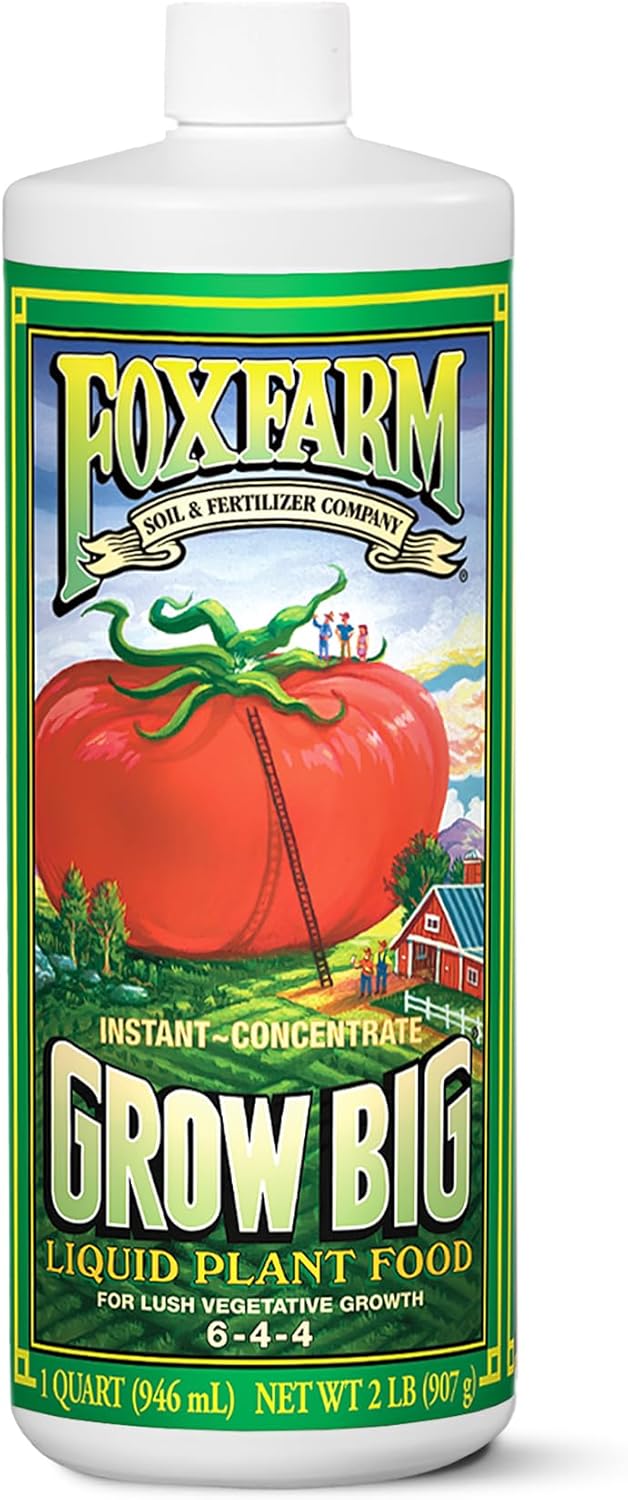
FoxFarm Grow Big Liquid Plant Food, 1-Quart Concentrate (6-4-4)
| Unit Count | 32 Fluid Ounces |
|---|---|
| Item Form | Liquid |
| Mixing Ratio | 2-3 teaspoons per gallon of water |
| Application Method | watering |
FoxFarm Grow Big is a 1-quart liquid concentrate designed to boost vegetative growth in vegetables, ornamentals, and houseplants. You mix 2 to 3 teaspoons per gallon and apply through watering or foliar feeding to deliver a balanced 6-4-4 NPK that encourages larger plants and stronger structure before flowering. The low pH formula helps keep micronutrients stable so plants can absorb them quickly, which is useful for tomatoes and peppers during the active growth phase. Practical benefits include easy measuring, flexible application (soil drench or spray), and clear feeding instructions that suit both new and experienced gardeners. Limitations to note are that this formula emphasizes vegetative growth rather than bloom or fruit-specific feeding, so you may want to switch to a bloom or fruit-focused fertilizer as flowering and fruit set progress. Also, it contains phosphorus so check local restrictions on phosphorus use for turf and follow runoff precautions.
Best for: Gardeners who prioritize consistent, easy-to-apply feeding to build strong, healthy tomato and pepper plants during the vegetative stage and who value predictable performance. It fits growers who want a straightforward concentrate they can rely on throughout early and mid-season growth.
Less Ideal for: Growers seeking a single product to maximize flowering or fruit set without changing fertilizers, or those who need an organic-certified bloom/fruit-specific feed for late-season production.
- Balanced 6-4-4 NPK supports strong vegetative growth for tomatoes and peppers.
- Concentrated liquid mixes easily for quick nutrient uptake and flexible application by watering or foliar spray.
- Low pH formulation stabilizes micronutrients for consistent availability.
- Clear mixing ratio and usage guidance suitable for beginners and experienced growers.
- Formulation favors vegetative growth so it is not optimized for peak fruiting or bloom stages.
Verdict: A reliable, easy-to-use liquid concentrate that builds vigorous vegetative growth in tomatoes and peppers so plants are strong and ready for productive flowering.
Miracle-Gro Water Soluble All Purpose Plant Food, 1.5 lb

| Item Form | Powder |
|---|---|
| Application Method | Watering Can |
| Target Species | All flowers, vegetables, trees, shrubs and houseplants |
| Mixing Ratio | 24-8-16 |
Miracle‑Gro Water Soluble All Purpose Plant Food is a powder fertilizer designed to be mixed with water and applied with a watering can or garden feeder to give plants a quick nutrient boost. It supplies a high nitrogen formula (24-8-16) that encourages rapid leafy growth and is marketed for use on flowers, vegetables, houseplants, trees, shrubs, and roses. Typical use is straightforward: measure the scoop for indoor or outdoor rates, dissolve in the recommended volume of water, and soak the soil around the plant every 7 to 14 days. The product works quickly because nutrients are water‑soluble and available to roots right away, making it useful during active growth or when plants need recovery. Limitations to consider are the high nitrogen balance, which favors foliage over fruiting and flowering when overused, and the need for regular reapplication versus slow‑release options. It is also a concentrated powder that requires careful measuring and dry storage to maintain potency.
Best for: Buyers who want a proven, easy‑to‑use feed that produces quick growth and prefer products with strong user feedback for common garden crops like tomatoes and peppers.
Less Ideal for: Growers who want a low‑maintenance, slow‑release fertility plan or who prioritize blossom and fruit production over leafy growth should consider a bloom‑boosting or balanced fertilizer instead.
- Fast‑acting water‑soluble formula delivers nutrients to roots immediately
- Clear mixing instructions for indoor and outdoor use make application simple
- Versatile for container and in‑ground plants across many species
- Compact 1.5 lb container feeds roughly 600 sq ft, suitable for small to medium plots
- High nitrogen NPK (24-8-16) can promote foliage at the expense of fruiting if used too frequently
- Requires regular reapplication every 1–2 weeks rather than providing long‑term feeding
Verdict: A reliable, fast‑acting soluble fertilizer that gives quick vegetative growth and easy application for tomato and pepper gardeners seeking visible results.
Jobe's Organics Granular Tomato & Vegetable Fertilizer (4 lb)

| Item Form | Granules |
|---|---|
| Target Species | Vegetable and tomato |
| NPK | 2-5-3 |
| Application | Every 4-6 weeks |
| Certification | OMRI listed |
Jobe's Organics Granular Tomato & Vegetable Fertilizer is a slow-release granular formula designed to feed roots and support fruiting vegetables. You apply it around established tomato, pepper, cucumber and similar plants every 4 to 6 weeks during the growing season; the granules break down slowly so you get steady nutrient delivery rather than a short burst. Notable features include an OMRI listing for organic gardening, a balanced NPK of 2-5-3 with added calcium and magnesium, and formulation from bone meal and processed poultry manure. Practically this means stronger root development and improved flowering and fruit set without synthetic chemicals, which is helpful if you prefer organic produce or have children and pets nearby. Because it is granular and measured by weight or scoop, it is easy to control application and avoids messy runoff when used as directed. Limitations are the modest nitrogen level, so foliage response is gentler than high-nitrogen products, and slower action compared with water-soluble feeds if you need an immediate boost.
Best for: Buyers who prioritize organic, low-risk feeding for tomatoes and peppers and prefer steady, predictable nutrition with minimal fuss.
Less Ideal for: Gardeners who need rapid corrective feeding or who want very high nitrogen formulas for heavy leafy growth should consider fast-acting soluble fertilizers instead.
- OMRI listed for organic gardening so suitable for certified organic plots
- Slow-release granules supply steady nutrients to roots with less risk of overfeeding
- Balanced 2-5-3 NPK plus calcium and magnesium supports fruiting and root development
- Simple application schedule of every 4–6 weeks makes feeding predictable and low-effort
- Lower nitrogen level means slower leafy green growth compared with high-nitrogen fertilizers
- Granular form acts slower than water-soluble feeds for immediate correction
Verdict: A dependable OMRI-listed granular fertilizer that delivers steady, organic nutrition to tomatoes and peppers with minimal risk.
Choosing the Right Fertilizer for Tomatoes and Peppers: Key Factors to Consider
Nutrient Ratio and Timing
Tomatoes and peppers benefit from different nutrient ratios at each stage. Early growth needs moderate nitrogen to build sturdy foliage without excessive leafiness that reduces fruiting. During bloom and fruit set, higher phosphorus and potassium relative to nitrogen support flower formation and fruit development. Understanding the labeled N-P-K and how it matches crop stage allows you to choose a fertilizer that supports the specific phase your plants are in.
Timing matters because overfeeding at the wrong stage can reduce yield or cause physiological issues like blossom drop. Match fertilizer strength and cadence to whether you are starting seedlings, transplanting, or entering the heavy fruiting period.
Release Profile and Longevity
Granular slow-release products release nutrients over weeks to months and reduce the need for frequent feeding, which is convenient in raised beds and homeowner plots. Water-soluble and liquid feeds act quickly and are useful for correcting deficiencies or giving a boost at bloom time, but they require a regular schedule. Choose a release profile that fits your willingness to feed and the water regime you use; frequent dry spells or infrequent watering change how quickly nutrients become available.
Consider how rainy seasons or drip irrigation will influence release. A product that releases too fast in heavy irrigation can leach nutrients, while a very slow-release formula might not supply enough immediately when plants need a rapid response.
Formulation and Application Method
Fertilizers come as granular, water-soluble, concentrated liquid, or coated slow-release forms. Granules are easy to broadcast and work well when incorporated into soil or top-dressed. Water-soluble formulas are best for foliar feeding and precise, quick corrections. Liquids are convenient for potted plants and can be applied through watering cans or injector systems.
Think about the labor and tools you have. If you grow in containers, a soluble feed or liquid is often more effective because container media drains quickly. For in-ground beds, a balanced granular product may be more practical.
Compatibility with Soil and Amendments
Soil type and existing amendments affect how fertilizer behaves. Sandy soils drain quickly and benefit from more frequent, smaller feedings or slow-release products to avoid leaching. Heavy clay holds nutrients longer but may need soil conditioning to improve root access. Organic matter and compost influence nutrient retention and can buffer fertilizer effects, sometimes reducing the need for high rates.
If you regularly add compost, select a fertilizer with a complementary release profile and avoid overapplication. Also consider pH interactions, since nutrient availability for tomatoes and peppers is best in a slightly acidic to neutral range.
Container Suitability and Root Volume
Containers limit root volume and nutrient reserves, so plants in pots typically need a different feeding approach than those in open beds. Quick-release soluble feeds let you correct deficiencies rapidly but require careful dosing to avoid salt build-up in the potting mix. Slow-release capsules or coated granules can reduce maintenance for containers by providing a steady nutrient supply without repeated dosing.
Evaluate pot size, media composition, and how often you repot when choosing a fertilizer formula for container-grown tomatoes and peppers.
Safety for Edible Crops and Clarity of Instructions
Because these plants are grown for food, clear labeling about edible-crop safety, withholding periods, and application rates is essential. Look for fertilizers that give exact mixing rates, recommended frequency, and guidance for different planting situations like transplants, in-ground, and containers. Products that omit instructions or use ambiguous language increase the risk of misapplication and crop stress.
Also consider environmental safety. Products with a high potential for leaching deserve cautious use near waterways and in sandy soils.
Soil Testing and Baseline Corrections
Start with a basic soil test to know pH and baseline nutrient levels. A test helps you decide whether you need a balanced feed or targeted corrections like calcium or magnesium that commonly affect tomatoes and peppers.
If pH is off, correct it before relying on fertilizer alone because nutrient uptake depends on available pH. Adjusting lime or sulfur takes time, so plan ahead of the main growing season.
- Collect samples from root zone depth for accurate results
- Interpret results with local extension or garden center guidance
- Address pH or micronutrient gaps before heavy feeding
Feeding Schedules for Different Growth Stages
Match fertilizer strength and frequency to the plant stage. Seedlings and transplants need milder, more frequent feeds with lower phosphorus and higher nitrogen to encourage roots and foliage. Once plants set flowers, switch to formulations or schedules that favor bloom and fruit development.
Keep a calendar for foliar feeds or side-dressing so you do not overlap applications that could push nutrient levels too high.
- Seedling stage: dilute, low-strength feeds every 7 to 10 days
- Pre-bloom: moderate feeding to support canopy growth
- Bloom and fruiting: increase potassium and phosphorus focus
Addressing Common Problems with Targeted Feeding
Blossom end rot, poor fruit set, and uneven ripening are often nutrient-related problems that targeted feeding can help correct. Blossom end rot commonly stems from calcium imbalance or inconsistent moisture rather than a simple lack of calcium in the soil.
A combination of consistent watering, mulch to retain soil moisture, and appropriate calcium management reduces incidence. Use targeted supplements only after confirming the underlying cause.
- Blossom end rot: check moisture and calcium availability
- Poor fruit set: ensure adequate phosphorus and avoid excess nitrogen
- Yellowing leaves: compare symptoms to nutrient deficiency charts before correcting
Organic Vs Conventional Fertilizer Options
Organic fertilizers release nutrients as soil microbes break them down and often improve soil structure and microbial life. They can be slower to act but enhance long-term fertility. Conventional mineral fertilizers provide predictable, immediate nutrient availability and are useful when a quick correction is needed.
Consider your garden management style. If you build soil health over seasons, organic feeds may be preferable. If you need precise, quick adjustments during a critical fruiting window, conventional soluble feeds can be more practical.
- Organic feeds: slower, soil-building, good for long-term health
- Conventional feeds: fast-acting, precise dosing for critical periods
- Combine approaches thoughtfully to get both immediate and lasting benefits
Practical Tips for Container Growing
Containers dry faster and lose nutrients quicker than in-ground beds. Use a potting mix with good water retention and choose a feeding schedule that compensates for faster leaching. Slow-release granules can reduce maintenance, but periodic soluble feeds keep plants vigorous during peak fruiting.
Flush containers occasionally to prevent salt build-up and repot with fresh media when plants become root-bound to restore nutrient balance.
- Use a balanced transplant feed when moving seedlings to larger pots
- Top-dress or apply liquid feed during heavy fruiting
- Monitor runoff salt levels if using concentrated soluble fertilizers
How We Chose the Best Fertilizer for Tomatoes and Peppers
We selected products by focusing on practical gardeners' needs for tomatoes and peppers. Our primary evaluation criteria were nutrient balance and availability, because correct proportions of nitrogen, phosphorus, and potassium directly affect foliage growth, flowering, and fruiting. We also tested by reading product specs to assess application method and ease of use, since granules, liquids, and slow-release formulas behave differently in soil and containers. Compatibility with common soil types and amendments was considered to ensure predictable results across garden beds and pots. Longevity of feed and release profile mattered because frequent side-dressing is not viable for every gardener. Finally, safety for edible crops and clarity of feeding instructions were required; any product lacking clear directions for fruiting vegetables was excluded. Excluded items include fertilizers formulated only for lawns, ornamental-only blends without vegetable guidelines, and products with inadequate nutrient labeling. The criteria used reflect how fertilizers perform in real garden conditions, align with the scoring metrics below, and prioritize predictable fruit production for tomatoes and peppers.
FAQ
How often should I fertilize tomatoes and peppers?
Frequency depends on the product. Slow-release granules may only need application once at planting or monthly, while water-soluble feeds often require feeding every one to two weeks during active growth. Adjust based on plant vigor and soil type.
Can I use the same fertilizer for seedlings and mature plants?
You can use the same product if it offers adjustable dilution rates or stage-specific instructions. Seedlings generally need much weaker mixes, so choose a fertilizer that provides clear dosing guidance to avoid burning young roots.
Will adding more fertilizer increase my harvest?
More is not always better. Excessive nitrogen can produce lush foliage at the expense of flowers and fruit. Follow recommended rates and focus on the right N-P-K balance for flowering and fruiting stages to increase harvest safely.
Do organic fertilizers work as well as synthetic ones for fruiting?
Organic fertilizers support soil health and can produce excellent results but usually release nutrients more slowly than synthetic options. For immediate correction during bloom, synthetic soluble feeds act faster, but combining methods can give both quick supply and long-term improvement.
How do I treat blossom end rot with fertilizer?
Blossom end rot is often linked to inconsistent moisture and calcium availability. Improve watering consistency and consider a calcium supplement if soil tests show a deficiency. Addressing moisture and root health is usually as important as adding calcium.
Is foliar feeding useful for tomatoes and peppers?
Foliar feeding can quickly correct micronutrient deficiencies and provide a short-term boost during critical stages. It is not a substitute for good root feeding and should be used as a targeted supplement when specific deficiencies are identified.
Final Verdict
Pick a fertilizer that matches your growing system and the plant stage you are managing. Prioritize the correct N-P-K balance and a release profile that fits your watering habits and maintenance cadence. For containers, favor soluble or combined approaches that avoid salt build-up; for in-ground beds, slow-release or granular products often reduce labor. Recognize tradeoffs between speed and soil building. Use soil testing and observed plant symptoms to fine-tune feeding rather than increasing rates. With the right match of formulation and schedule, you can reliably improve fruit set, flavor, and overall vigor in tomatoes and peppers.
