

Note: This article contains affiliate links. If you click on these links and make a purchase, I may earn a small commission at no extra cost to you. This helps support my research and content. Read my full affiliate disclosure here.
Picking the right peat moss matters because it changes how water, air, and nutrients behave in seed trays, containers, and raised beds. The right product improves moisture retention without turning heavy or sour, helps seedlings establish roots quickly, and makes potting mixes easier to manage over the season. This guide narrows the field to seven shortlisted peat moss options chosen for predictable water-holding, consistent acidity, and ease of use in home gardening. Below we summarize what each option does best and how they scored on practical criteria gardeners care about, including moisture management and pH stability. Read on to match peat moss to your growing needs.
Top Picks at a Glance
| Best Overall The best all-around choice for most situations | Hoffman Canadian Sphagnum Peat Moss, 10 qt (pack of 2) |  |
| Best Quality Built to a higher standard if you want something more solid | Sun Gro Black Gold Organic Sphagnum Peat Moss — 2.2 cu ft bag |  |
| Best Value The sweet spot between price and what you get | Perfect Plants Organic Sphagnum Peat Moss — 8 qt soil additive |  |
| Best Budget The cheapest option that still gets the job done reliably | Doter Peat Moss 1 qt — Organic Soil Amendment |  |
| Highest Rated A top-rated pick with lots of positive feedback | Gardenera Premium Natural Sphagnum Peat Moss (4 Quart) |  |
| Most Popular A crowd favorite that many people choose with confidence | Hoffman Canadian Sphagnum Peat Moss, 10 Qt Soil Conditioner |  |
| Best Seller A high-volume bestseller chosen again and again | Miracle-Gro Sphagnum Peat Moss, 8 qt. (2-Pack) |  |
Hoffman Canadian Sphagnum Peat Moss, 10 qt (pack of 2)

| Unit Count | 120 Ounce |
|---|---|
| Item Type Name | FERTILIZER |
| Ingredients | 100% Sphagnum Peat Moss |
| Volume | 10 quarts |
This Hoffman Canadian sphagnum peat moss is a straightforward soil conditioner for garden beds, containers, and DIY potting mixes. It is 100% sphagnum peat moss that you work into heavy soil to loosen clay, increase aeration, and boost the soil organic fraction so roots develop more easily. Gardeners typically blend it with native soil at planting, mix with perlite or vermiculite for soilless mixes, or top-dress containers to improve moisture holding without compacting. The product comes in two 10-quart bags that are easy to tear open and measure, and the visible fibrous texture indicates good water retention and structure. Limitations are the small bag size for larger projects and the usual environmental concerns around peat extraction, so plan quantities accordingly and consider alternatives if sustainability is a priority. It does not contain added nutrients, so you will want to pair it with fertilizer when potting or amending actively growing plants.
Best for: Gardeners who want a simple, effective soil conditioner for containers, raised beds, or small in-ground projects and who prioritize getting reliable moisture retention and improved soil structure.
Less Ideal for: Buyers with large landscaping projects who need bulk material or gardeners seeking a peat-free or more sustainable growing medium.
- 100% sphagnum peat moss for reliable moisture retention
- Improves aeration and loosens heavy or clay soils
- Useful for making soilless mixes when blended with perlite or vermiculite
- Pack of two 10-quart bags is convenient for small to medium projects
- Small volume per bag means multiple bags needed for large beds
- Contains no added fertilizer or nutrients
Verdict: A reliable, no-frills Canadian sphagnum peat moss that improves moisture retention and soil structure for containers and small to medium garden projects.
Sun Gro Black Gold Organic Sphagnum Peat Moss — 2.2 cu ft bag

| Brand Name | Sun Gro |
|---|---|
| Volume | 2.2 cubic feet |
| Unit Count | 1 Count |
| Item Weight | 36.5 pounds |
This Sun Gro Black Gold peat moss is a performance-focused soil amendment for gardeners who want reliable moisture retention and improved soil structure. Gardeners typically use it mixed into potting soil or blended with perlite for seed starting, transplanting, and container-grown herbs or ornamentals. The fine sphagnum texture soaks up and holds water while still allowing air to reach roots, which helps seedlings and shallow-rooted herbs establish faster. The 2.2 cu ft bulk bag is convenient for repeat projects and blends easily into existing soil without large clumps. Practical benefits include reduced watering frequency, better root aeration, and a neutral medium for creating custom mixes. Important limitations are that peat moss acidifies soil over time and does not supply nutrients, so it should be used with compost or fertilizer and checked for pH-sensitive plants. Also, handling dry peat can be dusty so gloves and a mask are sensible for larger jobs.
Best for: Gardeners focused on maximizing plant performance who mix their own potting blends and want a reliable medium for seed starting, transplanting, and container herbs.
Less Ideal for: Those seeking an all-in-one potting mix with nutrients or gardeners who prefer peat-free, sustainable alternatives.
- High-quality Canadian sphagnum peat for good moisture retention and aeration
- Fine texture that mixes easily with perlite or compost for seed starting and container mixes
- Bulk 2.2 cu ft bag suitable for multiple projects
- Helps reduce watering frequency by improving soil water-holding capacity
- Does not provide nutrients or pH buffering so additional amendments are required
- Can be dusty to handle when dry and requires precautions during use
Verdict: Choose this peat moss when you want a high-performance base material for custom potting mixes that improves water retention and root aeration.
Perfect Plants Organic Sphagnum Peat Moss — 8 qt soil additive

| Brand Name | PERFECT PLANTS |
|---|---|
| Item Type Name | Peatmoss 8qt. |
| Volume | 8 quarts |
| Unit Count | 8 Count |
Perfect Plants Organic Sphagnum Peat Moss is a straightforward soil amendment designed to improve moisture retention and loosen compacted potting media. Use it mixed into potting soil (the manufacturer recommends about a 4:1 potting mix to peat ratio) to increase the container’s water-holding capacity and create more pore space so roots can expand. Notable features are its claimed high absorbency and the fact it contains only peat moss with no added fillers or fertilizers. In practice it helps keep seedlings and container-grown plants consistently moist and reduces compaction over time, which is especially useful for mixes that tend to compress. Important limitations are its naturally acidic pH, which may not suit plants that prefer neutral to alkaline media, and that peat is not a nutrient source so you will still need to feed plants. Also handle carefully to avoid inhaling dust. For gardeners optimizing potting mixes, this is a simple, single-ingredient option that blends easily with other amendments.
Best for: Gardeners who want a no-frills soil amendment to boost moisture retention and improve container mix structure without changing other inputs; good for optimizing potting mixes and starting seedlings.
Less Ideal for: Growers seeking a complete potting mix with nutrients or those who prefer nonpeat, peat-free amendments should look at formulated mixes or alternatives like coco coir.
- 100% peat moss with no fillers for predictable performance
- High absorbency to hold moisture and nutrients near roots
- Lightweight and resists compaction, improving aeration in containers
- Slightly acidic pH may require adjustment for some plants
- Contains no nutrients so additional fertilization is necessary
Verdict: A simple, single-ingredient peat moss that reliably improves moisture retention and loosens container mixes for gardeners focused on optimizing potting media.
Doter Peat Moss 1 qt — Organic Soil Amendment
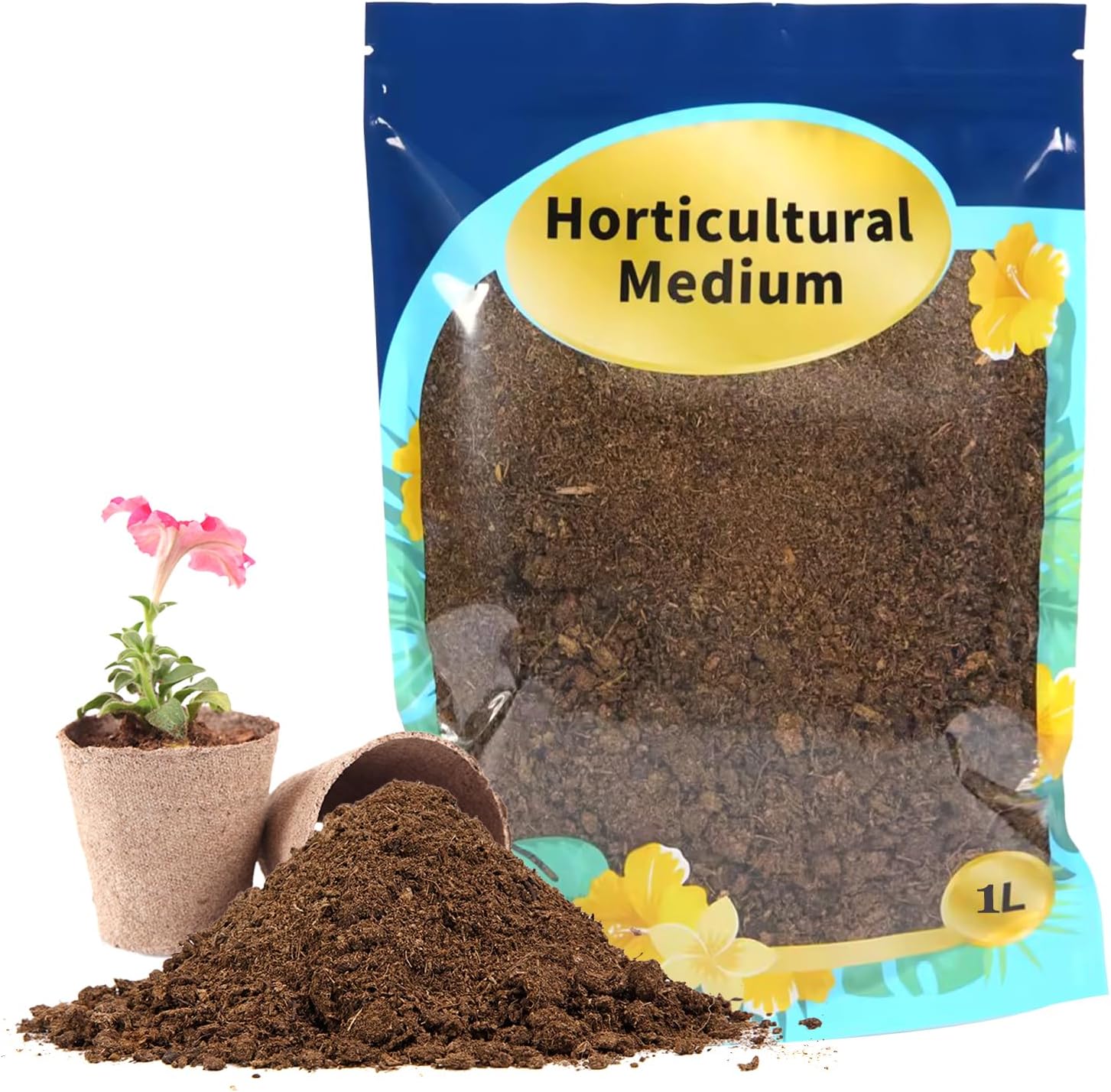
| Brand Name | Doter |
|---|---|
| Unit Count | 32 Ounce |
| Volume | 1 quarts |
| Style Name | Peat Moss |
Doter Peat Moss is a small-format peat product intended as a soil amendment and seed-starting medium. Gardeners typically work it into garden beds, mix it with potting media or combine it with perlite/vermiculite for lighter potting mixes. The material's porous structure holds moisture while improving aeration, which helps root development and can raise germination success for seeds. Its natural acidity makes it useful for acid-loving plants and for adjusting alkaline soils. The 1 quart size is easy to handle for small projects and container gardening, and the product is presented ready to use without further processing. Limitations are the small volume for larger beds and the inherent caution about dust that can irritate skin or eyes, so use a mask or gloves when mixing. Also peat is a nonrenewable resource compared with some alternatives, so buyers seeking fully sustainable options may prefer coconut coir or compost-based amendments.
Best for: Gardeners working on small containers, seed starting, or spot soil amendments who want a ready-to-use organic peat to boost moisture retention and root aeration without buying bulk bags.
Less Ideal for: People renovating large garden beds or landscaping multiple beds who need larger volumes or those prioritizing fully renewable growing media.
- Good water retention paired with improved soil aeration for healthier roots
- Naturally acidic, useful for acid-loving plants and correcting alkaline soil
- Lightweight and easy to mix into potting mixes or small garden beds
- Sold in a small, manageable 1 quart package convenient for trial or container use
- Small 1 quart volume is not economical for large garden beds
- Peat is a nonrenewable resource compared with coir or compost alternatives
Verdict: A convenient small-package peat moss for trialing or topping up potting mixes when you need better moisture retention and aeration.
Gardenera Premium Natural Sphagnum Peat Moss (4 Quart)

| Brand Name | Gardenera |
|---|---|
| Unit Count | 128 Ounce |
| Item Type Name | PEAT MOSS |
| Volume | 4 quarts |
This Gardenera peat moss is a straightforward, no-frills sphagnum product meant for gardeners who need a water-retentive, acidic organic base for mixes and bog plants. You can use it straight in carnivorous plant pots or blend it with perlite and sand to make custom mixes for ferns, terrariums, and other moisture-loving plants. The moss holds water well and helps increase pore space in containers so roots avoid compaction, and its high carbon content slows organic decay when mixed into potting media. Packaged in a 4-quart bag, the product is convenient for small projects and trial mixes. Limitations are its small volume per bag for larger beds and the typical acidity and low nutrient content of pure peat, which means you will usually need to combine it with other amendments or fertilizers depending on plant needs. There are no additives listed, so expect raw peat behavior rather than a ready-to-use potting soil.
Best for: Gardeners who prioritize dependable, natural soil amendments for moisture-loving plants and who mix their own potting media rather than using preblended soils.
Less Ideal for: Growers who want an all-in-one, nutrient-rich potting mix or who need bulk quantities for large beds should consider ready-to-use soils or larger-volume amendments.
- 100% natural sphagnum peat suitable as a base for bog and terrarium plants
- High water retention helps keep roots moist and reduces frequent watering
- Improves container structure by increasing pore space and reducing compression
- Convenient 4-quart bag size for small projects and mixing trial batches
- Small bag volume may require multiple purchases for larger garden beds
- Low inherent nutrients and acidic pH mean additional fertilizers or amendments are often needed
Verdict: Buy this peat moss when you need a dependable, natural water-retentive base for making custom mixes for bog plants and terrariums.
Hoffman Canadian Sphagnum Peat Moss, 10 Qt Soil Conditioner

| Item Type Name | Peat Moss |
|---|---|
| Brand Name | Hoffman |
| Volume | 17.9 ml |
| Unit Count | 1 Count |
| Style Name | Peat Moss |
Hoffman Canadian Sphagnum Peat Moss is a straightforward peat-based soil conditioner intended to boost water retention and loosen compacted soils. Gardeners typically work it into native soil or mix it with perlite and vermiculite when making potting media; it is also commonly used as a top dressing or component in mulches for acid-loving plants. The product is made from sphagnum peat harvested from Canadian bogs and sold in a 10 quart bag that is easy to handle for small beds and containers. Practical benefits include improved aeration in heavy or clay soils, increased organic content, and better moisture holding capacity—qualities that help shallow-rooted shrubs establish and stay evenly moist. Important limitations are that peat acidifies soil over time and does not readily break down to supply nutrients, so it is best used as part of a balanced amendment plan rather than the sole soil amendment. Peat is also a nonrenewable resource, so gardeners concerned with sustainability may prefer alternatives like composted bark or coconut coir.
Best for: Buyers who want a reliable, easy-to-use soil conditioner to hold moisture and improve structure in small beds and containers, especially when preparing acidic soil mixes for shrubs and berries.
Less Ideal for: Gardeners prioritizing sustainable or renewable amendments or those who need a nutrient-rich amendment as a primary soil improvement should consider compost or bark alternatives.
- Improves moisture retention for plants that need consistent soil moisture
- Loosens dense or clay soils to improve drainage and root penetration
- Premium-grade sphagnum peat from Canadian bogs suggests consistent texture and performance
- Acidifying nature means pH effects should be monitored for certain plants
- Provides little in the way of nutrients and breaks down slowly
- Peat is a nonrenewable material compared with some alternatives
Verdict: A practical moisture-retentive soil conditioner that reliably improves aeration and structure for acid-loving plants like blueberries.
Miracle-Gro Sphagnum Peat Moss, 8 qt. (2-Pack)

| Brand Name | Miracle‑Gro |
|---|---|
| Item Type Name | Sphagnum Peat Moss |
| Number of Packs | 2 |
| Unit Count | 256 Fluid Ounces |
This two‑pack of Miracle‑Gro sphagnum peat moss is a straightforward soil amendment for gardeners who want to improve water retention and root development in containers or beds. Use it to lighten heavy native soils, blend into potting mixes, or create seed‑starting media when combined with perlite. The product is enriched with Miracle‑Gro plant food, so it contributes basic nutrients while helping soil hold moisture longer and reducing how often you need to water. Practical benefits include easier repotting of container plants because the peat resists compaction and a simple recipe for gardeners to mix their own blends. Important limitations are inherent to peat moss: it is acidic and not a complete fertilizer, so it is best paired with balanced amendments for neutral pH plants and additional nutrients over time. Also follow handling guidance to avoid inhalation or skin contact and wear gloves when working with dry peat.
Best for: Gardeners looking for a reliable, easy‑to‑use amendment to improve soil structure and moisture retention for containers, raised beds, or seed starting who value proven products with positive reviews.
Less Ideal for: Those growing plants that require neutral or alkaline soils or gardeners seeking an all‑in‑one fertilizing solution without adding other amendments.
- Helps retain moisture and nutrients, reducing watering frequency
- Lightens heavy potting soil and improves aeration for roots
- Enriched with plant food to give an initial nutrient boost
- Versatile use for containers, in‑ground beds, and seed starting mixes
- Acidic by nature so not ideal for plants that prefer neutral to alkaline soil
- Not a long‑term complete fertilizer so additional feeding is needed
Verdict: A dependable peat moss blend that improves moisture retention and lightens heavy soils, making it an easy choice for gardeners refining their own potting or seed mixes.
Choosing the Right Peat Moss: Key Factors to Consider
Water-Holding Capacity
Water-holding capacity determines how long containers and seed flats stay moist between waterings. Peat moss with high water retention reduces watering frequency and helps seedlings avoid dry stress. However, very high retention in a fine, compacted peat can also limit oxygen around roots, so gardeners often balance retention with aeration to avoid root rot and poor root development.
Different growing situations change the ideal retention level. For indoor seed starting and lightweight mixes for hanging baskets you may prioritize retention more. For deep containers or heavy soils that already retain moisture, a peat with moderate retention combined with other porous amendments will perform better.
Particle Texture and Aeration
Texture affects drainage, root penetration, and how easily the peat mixes with other ingredients. Coarser peat with visible fibrous strands promotes air space and root growth, while very fine, dust-like peat compacts more quickly and can create a dense layer that impedes roots and water movement.
Gardeners should match particle size to use. Fine peat works well in seed mixes where a close contact with tiny roots is helpful, but it often needs perlite or coarse sand added to preserve aeration. Coarser peat is better for long-term container mixes and soil amendment where maintaining structure over months is important.
pH Consistency
Peat moss is naturally acidic, and its pH affects nutrient availability and how much lime you may need to add. Stable, consistent pH across bags reduces guesswork when preparing potting mixes or amending soil beds. Highly variable pH between batches can lead to uneven germination or nutrient lockout for sensitive plants.
Consider the plants you grow most often. Acid-loving crops and ornamentals may thrive with minimal adjustment, while neutral- or alkaline-preferring plants will require liming. Knowing the typical pH range of your peat helps you plan amendments accurately.
Contamination Risk and Purity
Peat can carry weed seeds, fine dust, and occasional organic contaminants depending on harvest and processing. Lower contamination risk means fewer unexpected seedlings, reduced disease vectors, and cleaner handling for indoor seed starting. Purity also matters if you need a predictable base for propagation or sensitive crops.
Look for peat described with screening, pasteurization, or manufacturing steps that remove large debris and reduce viable weed seed loads. Even so, gardeners should always monitor for stray seedlings and sterilize containers and tools when starting seeds indoors.
Ease of Rewetting and Handling
Some compressed or dried peat bricks can be difficult to rehydrate evenly, creating dry clumps alongside overly wet pockets. Ease of rewetting affects prep time and how consistent mixes are when you plant. Peat that flakes and rehydrates evenly saves labor and reduces the need for mechanical breaking or prolonged soaking.
Handling also includes dustiness and mess. Less dusty peat is more pleasant for indoor use and is safer for gardeners with respiratory sensitivities. Consider whether you will mix by hand, use machinery, or need a quick hydrate-and-mix routine when choosing a format.
Formats and How They Fit Garden Tasks
Peat moss comes in loose, compressed blocks, and screened bags. Loose screened peat is ready to blend into potting mixes and amend soils, while compressed bricks save storage space and require rehydration. Screened bags reduce large debris and are often less dusty, making them a good choice for indoor seed starting.
Choose a format based on storage, prep time, and the scale of work. Small-scale gardeners who start many seeds may prefer loose screened peat for convenience, while those with limited storage might accept the extra prep that bricks demand.
- Loose screened peat: minimal prep, lower dust.
- Compressed bricks: compact storage, need thorough soaking.
- Bulk sacks: cost-effective for large beds but require storage space and handling.
Mixing Peat Into Potting Soil and Seed Mixes
When blending peat into potting soil, aim for a balance of moisture retention and drainage. For seed starting, a common approach is to use a higher proportion of peat for moisture control paired with a sterile mineral like perlite to maintain aeration. For general container mixes, combine peat with compost and a coarse amendment to avoid compaction.
Measure by volume and pre-wet peat to an even, crumbly consistency before mixing. This ensures even moisture distribution and reduces the risk of dry pockets that can stunt seedlings.
- Seed mixes: higher peat, add perlite for aeration.
- Container mixes: moderate peat, add compost for nutrients.
- Soil amendment: mix peat into topsoil to improve structure in sandy or clay soils.
Environmental and Ethical Considerations
Peat extraction affects carbon stores and bog ecosystems, so many gardeners weigh the environmental impact when choosing products. If peat is a preferred growing medium for specific tasks, consider using it sparingly and combining it with renewable alternatives over time.
Alternatives such as coir, composted bark, and leaf mold can substitute in many applications. Using peat for seed starting and propagation where its properties are most beneficial, while shifting to other materials for bulk soil improvement, can reduce overall peat demand.
- Limit peat use to propagation or mixes where its properties are critical.
- Explore renewable amendments to reduce overall peat consumption.
Storing and Rehydrating Peat Moss
Store peat in a cool, dry place in its sealed bag or in an airtight container to minimize moisture loss and dust. For compressed forms, fully submerge or saturate the block and allow it to absorb water until it can be broken apart easily. Break up rehydrated peat with gloved hands or a garden fork to achieve an even texture.
If rehydrating large quantities, pre-soak in a container and stir periodically to avoid dense clumps. Allow excess water to drain before mixing into potting soil to prevent overly wet blends.
- Keep bags sealed to avoid compaction and moisture loss.
- Soak compressed blocks thoroughly, then fluff to restore texture.
Using Peat Moss Across Common Garden Projects
Peat works well for seed starting, potting mixes, and improving structure in sandy soils. For seedlings, it provides consistent moisture that helps tiny roots take hold. In pots and raised beds, peat blended with compost and a coarse amendment supports steady moisture while maintaining air space.
Adjust the peat proportion to the project: more for propagation, less when adding to garden beds where native soil drainage and nutrient levels already contribute significantly.
- Seed trays: higher peat ratio for moisture retention.
- Large containers: balanced peat with compost and grit.
- Garden beds: peat as a component to improve texture, not the sole amendment.
How We Chose the Best Peat Moss
We focused on characteristics that matter to gardeners who use peat moss for seed starting, potting mixes, soil amendment, and container gardening. Our selection criteria emphasized measurable, garden-relevant dimensions: water-holding capacity, particle texture and aeration, pH consistency and buffering, contamination risk and purity, and ease of rewetting and handling. We checked manufacturer specifications and technical descriptions to screen for moss harvested or processed in ways that preserve structure and lower fine dust. Our editorial filters excluded blends that dilute peat with other primary ingredients unless peat remained the dominant component. We also excluded products that lacked basic specification data on particle size or moisture retention. Each shortlisted peat moss met minimum standards for horticultural use and was evaluated against the same criteria so gardeners can compare how choices affect seed germination, transplant health, and long-term container performance.
FAQ
How much peat moss should I use in a seed-starting mix?
Often a mix with a higher peat proportion, such as 60 to 80 percent by volume, gives consistent moisture for germination. Add a small amount of perlite or sand to keep the mix airy and prevent compaction.
Can peat moss be reused from old pots and mixes?
Usually peat in old mixes breaks down and compacts over time, reducing aeration. You can reuse it after refreshing with compost and coarse amendments, but watch for disease or weed seeds and consider pasteurizing if reusing for seed starting.
What pH should I expect from peat moss and do I need to adjust it?
Peat moss is naturally acidic, often in the 3.5 to 5.5 range depending on source. Whether you adjust pH depends on the plants you grow. Many gardeners add lime before planting if the crop prefers neutral conditions.
Is compressed peat different from loose screened peat for performance?
Performance is similar once properly rehydrated, but compressed peat can be harder to wet evenly and may contain more fine dust. Loose screened peat is more convenient and typically mixes more consistently into potting blends.
Are there scent or mold concerns with stored peat moss?
Stored peat should smell earthy but not sour. A musty or sour odor can indicate prolonged wet storage and potential mold growth. Keep peat dry and use sealed containers to avoid these issues.
Can I mix peat with composted materials for container gardens?
Yes. Mixing peat with well-rotted compost adds nutrients and biological activity while peat regulates moisture. Balance proportions so the final blend remains loose and drains well to avoid waterlogged roots.
Final Verdict
Choose peat moss based on how you use it: prioritize water-holding and fine texture for seed starting, and favor coarser, more stable peat for long-term containers and soil amendment. Balance peat with coarse amendments and compost to avoid compaction and nutrient shortfalls. Weigh environmental considerations and aim to use peat where its characteristics offer the most benefit. By matching retention, texture, and pH to your projects you can pick the right peat moss with confidence.
