

Note: This article contains affiliate links. If you click on these links and make a purchase, I may earn a small commission at no extra cost to you. This helps support my research and content. Read my full affiliate disclosure here.
If you have a sunny patio, balcony, or rooftop, picking the right summer plants for pots in full sun makes the difference between a thriving display and constant stress. Containers heat up and dry out faster than garden soil, so you need plants that tolerate strong sun, high surface temperatures, and periodic drought. This guide covers six shortlisted summer container plants chosen because they perform well in hot, exposed locations and suit a range of container sizes and maintenance levels. Below we outline how each plant handles sun exposure, irrigation needs, and seasonal appearance, plus practical notes on pot selection and care. Use these picks and the evaluation criteria to match a plant to your time, climate, and aesthetic goals.
Top Picks at a Glance
| Best Overall The best all-around choice for most situations | American Plant Exchange Summer Sunset Jasmine 6-inch Live Flowering Vine with Pot |  |
| Best Quality Built to a higher standard if you want something more solid | Plants for Pets Euphorbia 'Crown of Thorns' Live Succulent (4" Pot) |  |
| Best Value The sweet spot between price and what you get | Perfect Plants Peach Drift Rose, 1 Gallon Live Flower Plant |  |
| Best Budget The cheapest option that still gets the job done reliably | BuggyBeds Double Dwarf Petunia Seeds (300+), Mixed Colors |  |
| Highest Rated A top-rated pick with lots of positive feedback | ELLA'S HOMES Lantana Live Plants (2-Pack) |  |
| Most Popular A crowd favorite that many people choose with confidence | The Three Company Lavender (2-Pack) Live Fragrant Purple Perennials in 1-Qt Pots |  |
American Plant Exchange Summer Sunset Jasmine 6-inch Live Flowering Vine with Pot

| Indoor Outdoor Usage | Indoor, Outdoor |
|---|---|
| Expected Blooming Period | Spring to Summer |
| Sunlight Exposure | Partial Sun |
| USDA Hardiness Zone | 7 |
| Moisture Needs | Moderate Watering |
The Summer Sunset Jasmine arrives as a small, ready-to-display 6-inch potted vine that combines striking variegated foliage with summer-blooming, fragrant white flowers. It is typically kept on a windowsill, balcony or patio where it receives full sun to partial shade and temperatures around 60 to 75°F. Notable features include colorful marbled leaves that make each plant visually unique, moderate water needs, and suitability for both container culture and groundcover in USDA zone 7 and warmer. Practical benefits are immediate decorative impact from the foliage, seasonal fragrance when it blooms, and relatively low maintenance compared with many flowering vines. Important limitations are that it remains small (recommended 6–12 inches tall in the listing), can be toxic if ingested so it is not pet-safe to chew, and may need 3–4 weeks to acclimate after shipping before repotting. Expect to manage regular watering and provide appropriate light for best color and flowering.
Best for: Buyers who want an eye-catching, low-effort flowering plant for a 6-inch pot to brighten small indoor or outdoor spaces and who value visible, colorful foliage and seasonal fragrance.
Less Ideal for: Gardeners seeking large vines, tall screening plants, or pet-safe houseplants should consider other species better suited to those needs.
- Distinctive variegated foliage that adds instant color in a small pot
- Fragrant white flowers in spring to summer for seasonal scent
- Easy-care habit suited to container growing on windowsills, patios, or balconies
- Ships in a nursery pot with potting soil so it is display-ready
- Toxic if ingested which makes it unsuitable for households with curious pets or children
- Limited mature height so it will not provide tall screening or large-scale coverage
Verdict: A compact, low-maintenance flowering vine that delivers bold variegated foliage and summer fragrance ideal for display in 6-inch pots.
Plants for Pets Euphorbia 'Crown of Thorns' Live Succulent (4" Pot)

| Indoor Outdoor Usage | Indoor, Outdoor |
|---|---|
| Other Special Features | Drought Tolerant |
| Sunlight Exposure | Full Sun |
| Moisture Needs | Moderate Watering |
This Crown of Thorns (Euphorbia milii) is a small, showy succulent shrub sold in a 4-inch nursery pot that works well as a sunny patio or sunny-window houseplant. It produces clusters of pink bracts for much of the year in mild climates and stays compact enough for pots, mixed containers, or small garden beds. The plant stores water in its thick stems so it can handle dry spells and requires well-draining soil and allowing the potting mix to dry between waterings. Notable features are its tolerance for full sun and partial shade, low pest pressure, and year-round decorative color in suitable climates. Buyers should handle it carefully because injured stems exude a caustic, irritating sap that can harm skin and eyes and is toxic if ingested. As a practical, low-maintenance flowering succulent for sunny spots, it delivers reliable color without much fuss, but keep it out of reach of children and pets and use protective gloves when pruning.
Best for: Buyers who want a low-maintenance, sun-loving flowering succulent to add reliable color to pots, sunny patios, or bright indoor windows without frequent watering or pest work.
Less Ideal for: Homes with small children or curious pets where a poisonous, sap-producing plant would be a safety concern or for gardeners who prefer completely sap-free, non-spiny plants.
- Drought tolerant and stores water in stems, reducing watering frequency
- Compact 4-inch nursery pot size fits small pots, mixed containers, and tight garden spaces
- Produces colorful pink bracts most of the year in mild climates for long-lasting visual interest
- Tolerates full sun and partial shade, making placement flexible for sunny patios or bright windows
- Releases a caustic, toxic sap when injured that can irritate skin and eyes and is hazardous if ingested
Verdict: A compact, sun-tolerant flowering succulent that delivers long-lasting pink bracts with minimal watering, ideal for pots and sunny spots.
Perfect Plants Peach Drift Rose, 1 Gallon Live Flower Plant

| Indoor Outdoor Usage | Outdoor |
|---|---|
| Sunlight Exposure | Full Sun |
| Other Special Features of the Product | Drought Tolerant |
| Expected Blooming Period | Winter |
| Moisture Needs | Moderate Watering |
The Peach Drift rose is a compact, groundcover-style rose sold as a 1-gallon live plant intended for outdoor planting in full sun. It produces peach-colored blooms for much of the year and is offered with plant food to help establishment. Typical uses are massing along walkways, in pots on sunny patios, or as a low hedging/groundcover where a 1 to 2 foot plant height and spreading habit are desired. Notable features listed are drought tolerance, winter hardiness across multiple USDA zones, and moderate water needs, which together make it forgiving for busy gardeners and suitable for containers that drain well. Practical benefits include long bloom periods, attractive low-maintenance form, and easy placement in full-sun spots. Limitations are that it ships as a small 1-gallon specimen so it will take a season or two to fill a space, and it is not suitable for shady locations or climates outside the listed hardiness zones.
Best for: Buyers who want a low-maintenance, sun-loving container plant or groundcover that provides long-lasting color with minimal fuss and proven customer satisfaction.
Less Ideal for: Gardeners seeking an instant, mature specimen or plants for shady locations should look elsewhere.
- Long bloom period with peach-colored flowers for seasonal interest
- Drought tolerant and winter hardy across several USDA zones for low-maintenance care
- Compact, groundcover growth habit works well in pots or mass plantings
- Includes easy-to-use plant food to support establishment
- Arrives as a 1-gallon plant so it needs time to reach mature spread and height
Verdict: An easy-care, sun-loving rose that delivers long-lasting peach blooms in containers or mass plantings for gardeners who prioritize reliable performance.
BuggyBeds Double Dwarf Petunia Seeds (300+), Mixed Colors
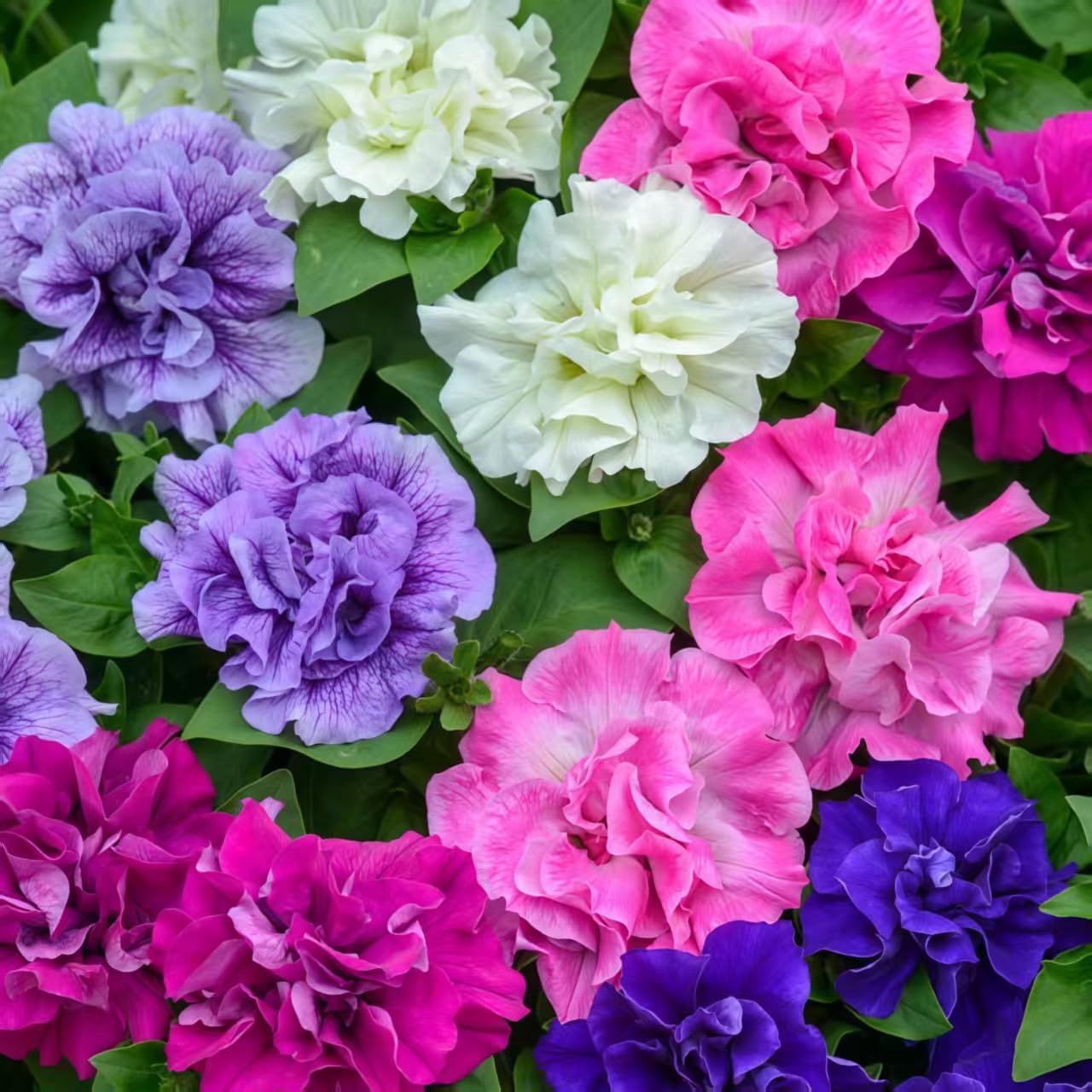
| Indoor Outdoor Usage | Indoor, Outdoor |
|---|---|
| Expected Blooming Period | Summer |
| Sunlight Exposure | Full Sun |
| Moisture Needs | Moderate Watering |
These BuggyBeds double dwarf petunia seeds produce a profusion of compact, colorful blooms well suited to hanging baskets, window boxes, and small container gardens in full sun. They are typically sown indoors or directly in containers, then transplanted or thinned so each plant has room to spill and fill a basket. The mix includes reds, pinks, purples, and whites and is described as heat and sun tolerant, which helps maintain steady flowering through spring and summer with moderate watering and routine feeding. The plants have a compact habit that keeps baskets full without overwhelming small spaces, and their flowers attract pollinators so they add both color and garden life. Limitations are that germination and color distribution can vary seed to seed and that these are a seasonal annual choice that needs replanting each year; performance also depends on good drainage and regular deadheading or trimming for the longest bloom period.
Best for: Gardeners who want an easy, colorful hanging-basket solution for full-sun locations and prefer starting many plants from seed to fill multiple containers affordably.
Less Ideal for: People seeking instant, uniform mature plants or a no-maintenance perennial solution should consider nursery-grown transplants or perennial alternatives instead.
- Large seed count (300+), enough to populate multiple hangers or containers
- Compact double-dwarf habit ideal for filling hanging baskets and small planters
- Heat and full-sun tolerance supports reliable summer flowering in sunny spots
- Attracts pollinators such as bees and butterflies
- Seed-grown variability means colors and bloom timing are not uniform
- As annuals, plants must be replanted each year to maintain displays
Verdict: A high-count packet of compact, sun- and heat-tolerant petunia seeds that fills hanging baskets with continuous summer color when started and cared for properly.
ELLA'S HOMES Lantana Live Plants (2-Pack)

| Unit Count | 2 Count |
|---|---|
| Plant Type | Perennial Flower Plant |
| Sun Exposure | Full sun |
| Size at Shipment | 5-12 Inches Tall |
This 2-pack of Lantana live plants arrives ready to transplant into pots or garden beds and is aimed at straightforward, low-maintenance summer color. Each plant is described as well-rooted and 5 to 12 inches tall, with random blooming colors that provide mixed orange, yellow, red, and purple clusters. In practice these lantanas perform best in full sun and are valued for long bloom periods and drought tolerance once established, making them a reliable option for sunny patios and containers. The plants are perennial where climate allows but go dormant in winter, so they are best used as outdoor seasonal or multi-year accents depending on your zone. Limitations are the random color selection and modest initial size, so buyers who need specific color schemes or instant large specimens may want larger or labeled starts. For gardeners seeking fuss-free, sun-loving container plants, these lantanas are an easy way to add sustained bloom without heavy care requirements.
Best for: Buyers who want dependable, low-effort full-sun container plants that provide long-lasting color on patios and in sunny beds.
Less Ideal for: Gardeners who need specific flower colors on demand or immediate large displays should consider larger nursery specimens or labeled varieties.
- Ready-to-transplant, well-rooted plants for quick establishment
- Long-blooming, colorful flower clusters that thrive in full sun
- Low maintenance and drought-tolerant once established
- Sold as a two-pack for easy pairing in pots or beds
- Color is random so exact flower shades are not guaranteed
- Plants are small on arrival and may take a season to reach full size
Verdict: A simple, dependable two-pack of sun-loving lantanas that delivers long-lasting color with minimal care.
The Three Company Lavender (2-Pack) Live Fragrant Purple Perennials in 1-Qt Pots

| Sunlight Exposure | Full Sun |
|---|---|
| USDA Hardiness Zone | 5-9 |
| Moisture Needs | Low |
| Expected Blooming Period | Late Spring to Summer |
These lavender plants arrive as two 1‑quart pots of Lavandula Purple intended for outdoor planting in full sun. They are compact, mounded perennials that reach roughly 12–18 inches tall and are typically used in containers, balcony planters, or low hedge borders where their purple blooms and strong scent add visual and aromatic interest. The plants prefer well‑draining soil and low moisture once established, which makes them low‑maintenance for sunny balconies. Notable features include pollinator‑attracting flowers, deer‑deterring scent, and suitability for USDA zones 5–9, which covers many temperate climates. Because these are live plants shipped from a greenhouse, success depends on initial care during the first weeks after planting and ensuring pots have drainage. Plant size on arrival and bloom timing will vary by season, and buyers in very hot or very cold microclimates should adjust care accordingly. For small‑space gardeners wanting fragrant, drought‑tolerant color in full sun, these lavenders are a practical choice when tended promptly after delivery.
Best for: Gardeners with sunny balconies who want low‑maintenance, fragrant flowering plants that perform well in containers and attract pollinators.
Less Ideal for: People with shaded or mostly north‑facing balconies or those unwilling to water and pot the plants promptly after delivery.
- Compact habit suited to containers and balcony planters
- Fragrant purple blooms that attract pollinators
- Low water needs once established for easy care
- Shipped as live plants directly from greenhouse so you receive established starts
- Success depends on prompt transplanting and initial watering care after arrival
- Not suitable for shady balconies since it requires full sun
Verdict: A compact, fragrant lavender pair that gives sunny balconies long‑lasting color and low‑maintenance scent when planted in well‑draining containers.
Choosing the Right Summer Plants for Pots in Full Sun: Key Factors to Consider
Sun and Heat Tolerance
Plants in full-sun pots must survive high light intensity and often elevated leaf and root temperatures. Direct midday sun can scorch foliage and stress plants quickly in a small soil volume. Choose species with physiological or structural adaptations such as small or hairy leaves, succulent tissues, or reflective leaf surfaces that reduce transpiration stress.
Heat tolerance also affects bloom longevity. Some plants stop flowering or drop buds when exposed to prolonged heat spikes. For container plantings you expect to look good through July and August, prioritize varieties specifically noted for enduring sustained full sun rather than those that only tolerate morning sun.
Water Needs and Drought Resilience
Pots dry out far faster than garden beds because they have less soil to hold moisture and are exposed to air on all sides. Watering frequency and the plant's drought tolerance determine how often you will need to water. Choose plants that can tolerate intermittent drying between deep waterings, or plan for larger pots or soil mixes that retain moisture.
Consider root depth and water-storage capacity. Shallow-rooted plants will need more frequent attention, while succulent or deep-rooting species manage longer between waterings. Also factor in your microclimate: a windy rooftop pot will dry faster than a sheltered courtyard container.
Blooming Reliability in Containers
Flowering behavior in pots can differ from in-ground growth because of limited nutrients and fluctuating moisture. Some summer plants respond well to container life and produce steady blooms when fed lightly and deadheaded, while others decline unless given large rooting space.
Assess whether you want continuous bloom, seasonal peak displays, or foliage interest. Continuous bloomers may need more fertilizer but deliver consistent color. If you prefer low maintenance, pick plants that maintain good form and foliage even when bloom cycles ebb.
Pot Size and Root Space
The size of the pot controls root temperature and moisture buffering. Small pots warm and dry quickly, restricting available root space and often limiting plant size. Match plant mature size and root habit to container volume. Compact cultivars and trailing types can thrive in smaller pots, while larger, bushier summer plants need deeper, wider containers to avoid stress and premature flowering decline.
Consider heavy-bottomed or insulated pots in very hot locations to reduce temperature swings. Also factor in how often you want to repot; some plants rapidly outgrow small containers and require annual repotting to stay vigorous.
Soil Mix and Fertility
Container soil needs to balance drainage with moisture retention. A mix that drains too quickly leaves roots starving, while one that holds too much water can cause root rot under high temperatures. For summer pots choose mixes with good organic matter and moisture-holding components but also ample drainage materials like pumice or coarse sand.
Fertilizer strategy matters because nutrients leach faster with regular summer watering. Slow-release fertilizer incorporated at potting and light periodic liquid feeding support sustained blooms. Tailor feeding frequency to bloom intensity and plant type to avoid leggy growth or reduced flowering.
Pest and Disease Considerations
Containers placed close together or near house walls can create microclimates where pests and diseases spread. Full-sun pots often face stress-related pest issues because stressed plants are more attractive to pests and less able to recover. Look for species with known resistance to common pests like aphids or spider mites, or plan to monitor and intervene early.
Good airflow, avoiding overcrowding, and choosing healthy transplants reduce disease risk. Also think about sanitation: spent blooms and fallen leaves should be removed promptly to prevent fungal problems in warm, humid conditions.
Container Choice and Placement for Hot Sites
Selecting the right pot makes summer container gardening in full sun much easier. Light-colored, thicker-walled pots reflect heat and protect roots better than thin, dark containers that absorb and retain heat. Size matters: larger containers buffer temperature and moisture fluctuations so plants experience fewer stress cycles between waterings.
Placement affects microclimate. Group pots to create shared shade in the hottest midday hours or move sensitive containers to a spot where they get morning sun and afternoon partial shade. On balconies and rooftops allow for airflow but avoid constant wind that will increase water demand.
- Use saucers or drip trays and check drainage to avoid root rot.
- Consider self-watering or double-pot setups to reduce daily watering.
- Elevate pots slightly to allow air circulation under the base.
Irrigation Strategies for Sunny Pots
Watering in full sun requires regular monitoring. Early morning watering reduces evaporative loss and lets plants take up moisture before the heat of the day. Deep watering that wets the entire rootball encourages deeper rooting and better drought resistance than frequent shallow misting.
For extended hot spells, consider soaker hoses, drip irrigation, or self-watering wicking systems to maintain consistent moisture. Mulching the top of the pot with decorative gravel or organic mulch reduces surface evaporation and keeps roots cooler.
- Check moisture with a finger or moisture meter an inch or two below the surface.
- Water until excess drains from the pot to ensure the whole rootball is moistened.
- Adjust frequency for wind, heatwaves, and pot material.
Designing Color and Texture Combinations
Full-sun pots give you the chance to use bold colors and strong textures because the plants will typically produce more blooms and hold color longer in high light. Pair upright bloomers with trailing foliage to soften edges and create a layered look. Use foliage contrast-silver, blue-green, or variegated leaves-against bright flower colors for impact.
Think season-long interest. Combine steady foliage plants with intermittent heavy bloomers so the container looks good even when one plant's flowering cycle is over. Regular deadheading and light feeding keep displays tidy and prolong the show.
- Mix different bloom shapes to add depth: sprays, single blooms, and clusters.
- Include at least one trailing element to spill over the pot edge.
- Balance bold colors with neutral foliage to avoid a visually chaotic display.
Maintenance Calendar for Summer Pots
A simple routine keeps full-sun pots flourishing: check moisture every morning during heat waves, deadhead spent flowers weekly, and apply a light liquid feed every two to four weeks depending on bloom intensity. Inspect foliage routinely for pests and remove damaged leaves promptly.
At the start of the season, repot or refresh the top layer of potting mix for older containers. Mid-summer is not ideal for major repotting unless the plant is clearly rootbound, in which case do it carefully and avoid transplant shock by shading the plant for a few days afterward.
- Establish a weekly checklist: water check, deadhead, pest inspection.
- Increase watering during heatwaves and reduce during cool, cloudy stretches.
- Top-dress with slow-release fertilizer at the season start and supplement as needed.
Succession and Overwintering Planning
Plan for succession so containers do not sit empty between plantings. Fast-growing annuals make great mid-summer fills but swapping in longer-lasting perennials and tender shrubs can extend interest into late summer and early fall. Keep a small stock of quick-start seedlings or rooted cuttings to replace tired plants when needed.
Overwintering depends on your climate and plant choices. Some summer container plants are tender perennials that can be moved indoors or into protected spaces for winter, while others are true annuals that will be replaced next season. Consider the ease of lifting and storing pots when designing your display.
- Keep seeds or cuttings of reliable annuals on hand for quick replacement.
- Label pots with planting dates and fertilization schedule for easier seasonal planning.
- Select plants that match your willingness to overwinter or replant each year.
How We Chose the Best Summer Plants for Pots in Full Sun
We focused on plants that reliably flower or remain attractive in containers placed in direct sun for most of the day. Selection emphasized real-world container performance rather than looks alone, so we prioritized species and cultivars known to tolerate heat, reflected high light, and the frequent drying that pots cause. Key evaluation dimensions included sun tolerance and midday heat survival, water-use efficiency and drought resilience, flowering consistency in containers, and suitability for common pot sizes and mixes. We also considered pest and disease resilience when grown in close quarters, and seasonal longevity so container displays last through the core summer months. Plants were excluded if they require regular shade, very large soil volumes not typical of pots, or specialized greenhouse conditions. We filtered out varieties that need intensive daily care or constant misting to thrive. The final list balances low to moderate maintenance with dependable visual impact for sunny outdoor living spaces.
FAQ
How often should I water pots in full sun?
It depends on pot size, potting mix, and weather. Many small pots need daily checks during heatwaves and deep watering every one to two days, while larger containers may only need water every two to four days. Always water deeply until excess drains and adjust for wind and temperature.
Can I grow flowering perennials and annuals together in full-sun pots?
Yes. Combining steady foliage perennials with high-bloom annuals gives continuous interest. Make sure both choices have similar water and sun requirements and use a pot large enough to accommodate differing root habits.
Are self-watering pots a good idea for sunny locations?
Self-watering systems can reduce daily watering and maintain steadier moisture in hot conditions. They work best with plants that do not like to dry out completely. Monitor for salt buildup and follow pot manufacturer guidance on maintenance.
What soil mix is best for summer containers in full sun?
Choose a well-draining potting mix with organic matter plus components that improve aeration and moisture retention, like coconut coir or compost blended with perlite or pumice. Avoid garden soil alone because it compacts and holds excess moisture.
How do I protect pots from extreme heat spikes?
Move containers to partial shade during the hottest hours if possible, use light-colored or insulated pots, apply a surface mulch, and increase watering frequency temporarily. Grouping pots can also reduce temperature swings by creating shared microclimates.
When should I fertilize full-sun container plants?
Start with a balanced slow-release fertilizer at potting time, then supplement with light liquid feeds every two to four weeks during active bloom periods. Adjust frequency if plants show signs of nutrient deficiency or excessive vegetative growth.
Final Verdict
Choosing summer plants for pots in full sun is about matching heat tolerance, water habits, and container constraints to your maintenance rhythm. Prioritize species that tolerate high light and intermittent dryness, select appropriately sized pots, and use soil mixes that balance drainage with moisture retention. Tradeoffs include bloom intensity versus watering frequency and container size versus portability. Use the evaluation criteria in this guide to weigh those tradeoffs and pick plants that fit your time and site. With the right plant choices and predictable maintenance, you can enjoy vibrant, low-stress container displays through the hottest months.
